
Introduction to Plants What is a plant A
- Slides: 23
Introduction to Plants
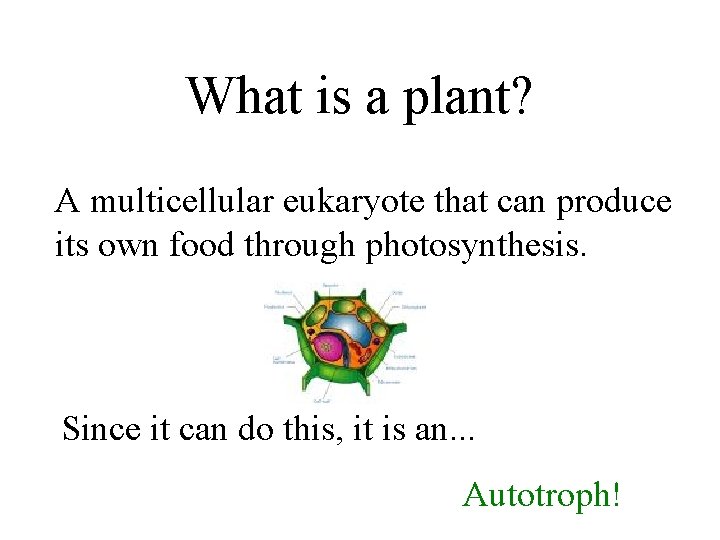
What is a plant? A multicellular eukaryote that can produce its own food through photosynthesis. Since it can do this, it is an. . . Autotroph!
Plants have thick walls made of cellulose
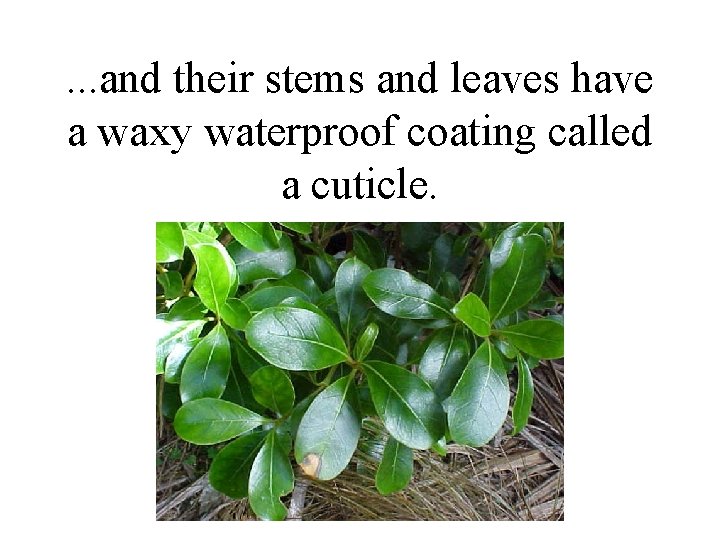
. . . and their stems and leaves have a waxy waterproof coating called a cuticle.
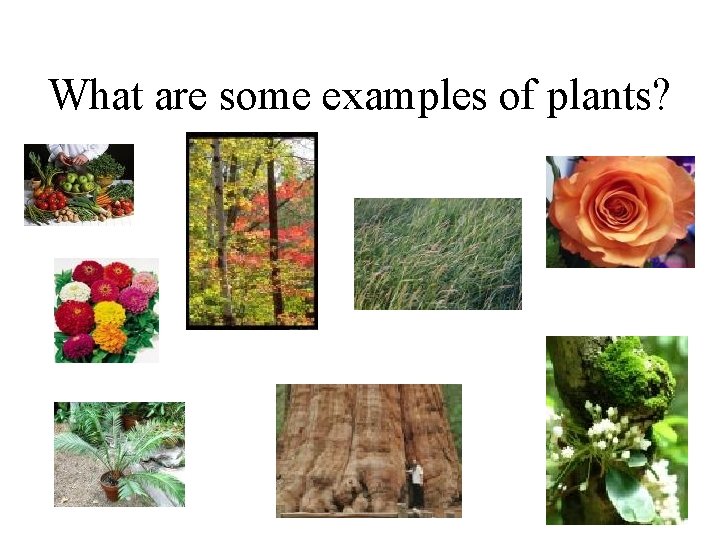
What are some examples of plants?
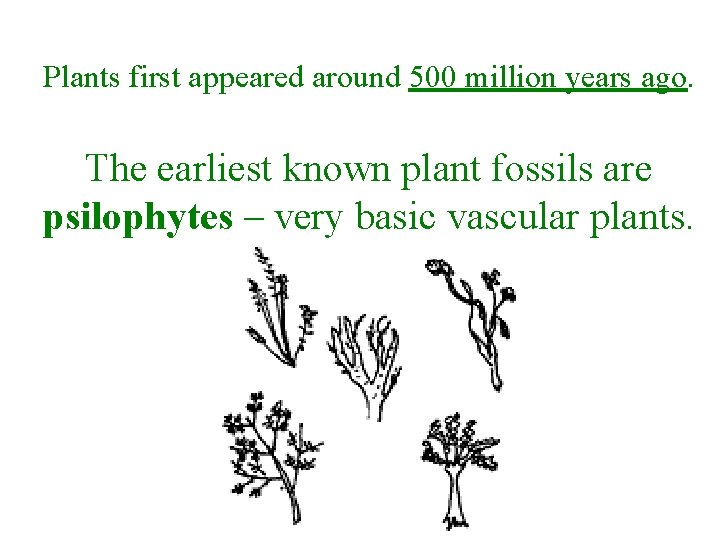
Plants first appeared around 500 million years ago. The earliest known plant fossils are psilophytes – very basic vascular plants.
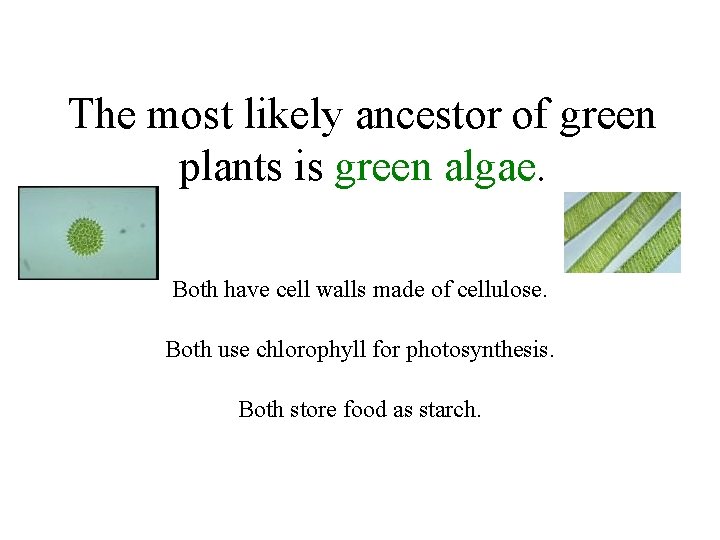
The most likely ancestor of green plants is green algae. Both have cell walls made of cellulose. Both use chlorophyll for photosynthesis. Both store food as starch.
Land plants have developed lots of adaptations to help them survive. What are some of these adaptations?
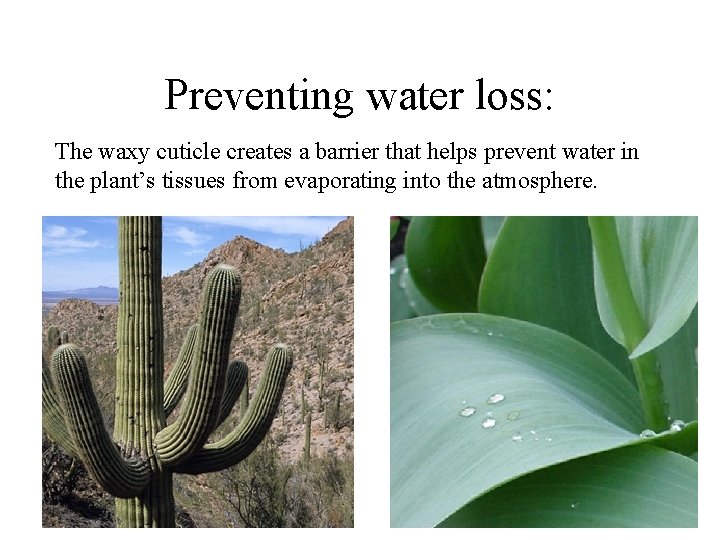
Preventing water loss: The waxy cuticle creates a barrier that helps prevent water in the plant’s tissues from evaporating into the atmosphere.
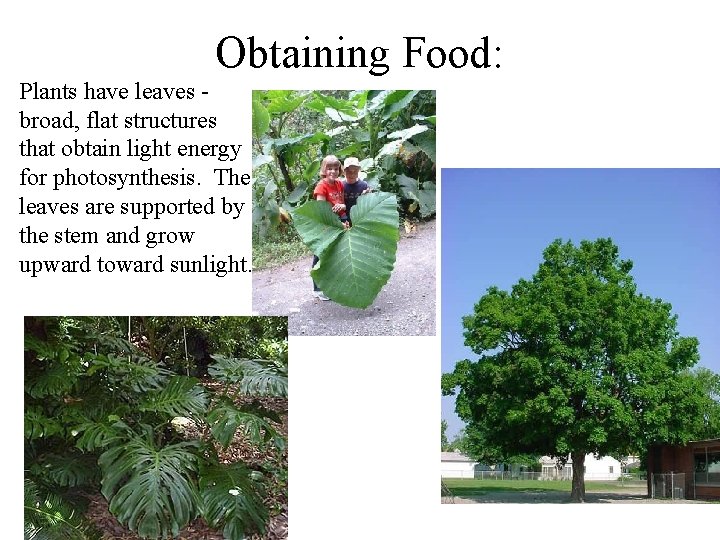
Obtaining Food: Plants have leaves broad, flat structures that obtain light energy for photosynthesis. The leaves are supported by the stem and grow upward toward sunlight.
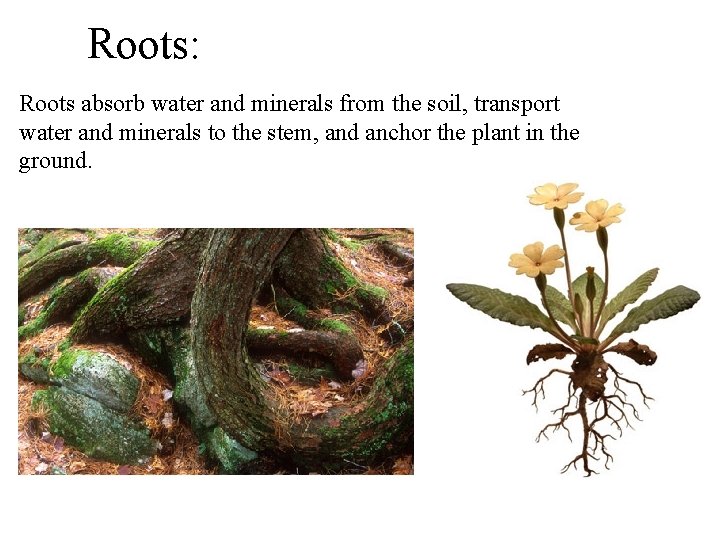
Roots: Roots absorb water and minerals from the soil, transport water and minerals to the stem, and anchor the plant in the ground.
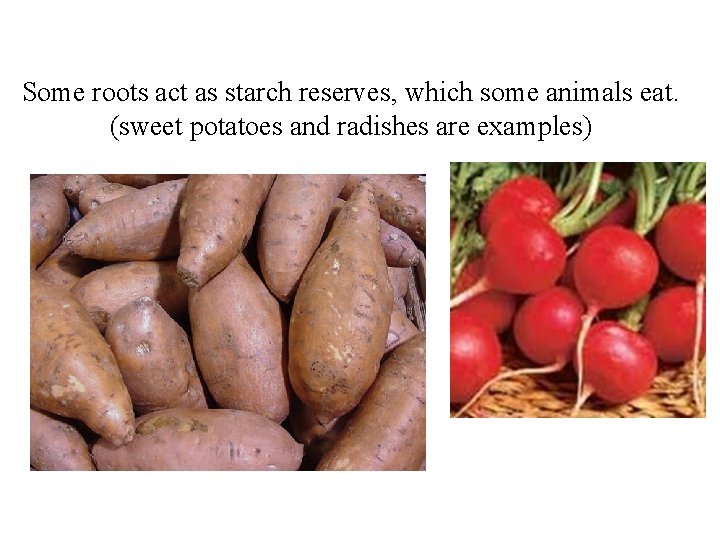
Some roots act as starch reserves, which some animals eat. (sweet potatoes and radishes are examples)
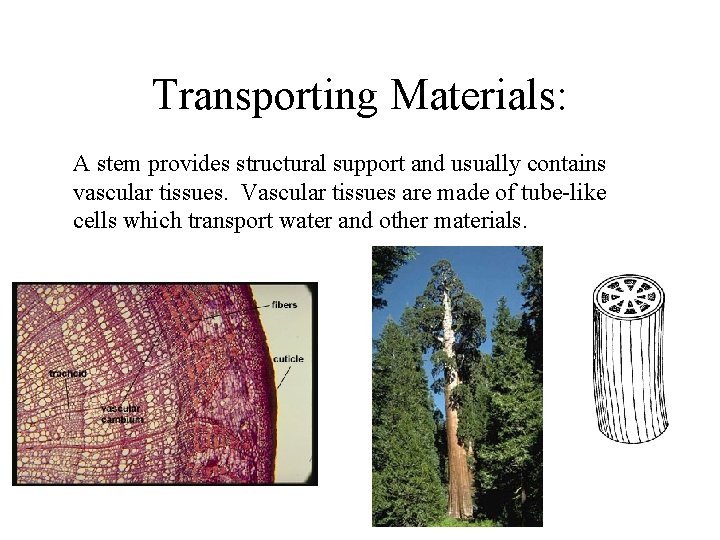
Transporting Materials: A stem provides structural support and usually contains vascular tissues. Vascular tissues are made of tube-like cells which transport water and other materials.
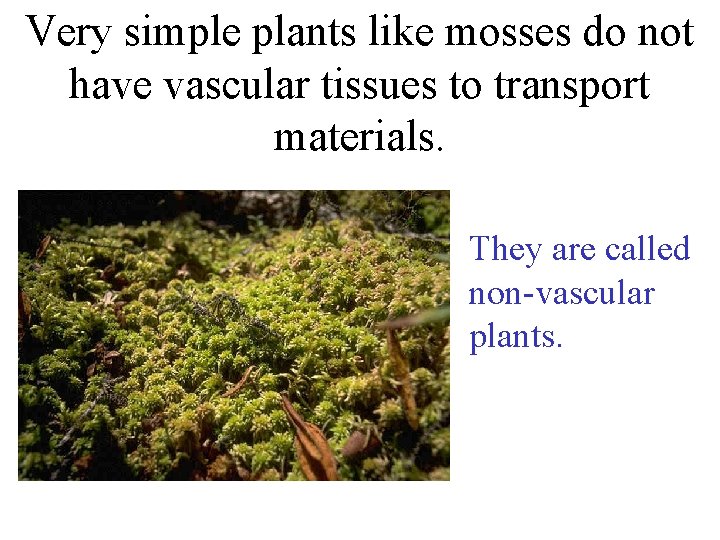
Very simple plants like mosses do not have vascular tissues to transport materials. They are called non-vascular plants.
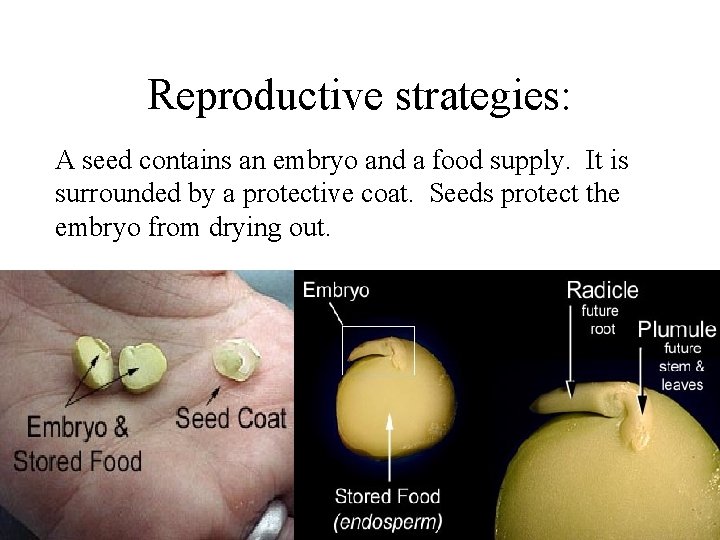
Reproductive strategies: A seed contains an embryo and a food supply. It is surrounded by a protective coat. Seeds protect the embryo from drying out.
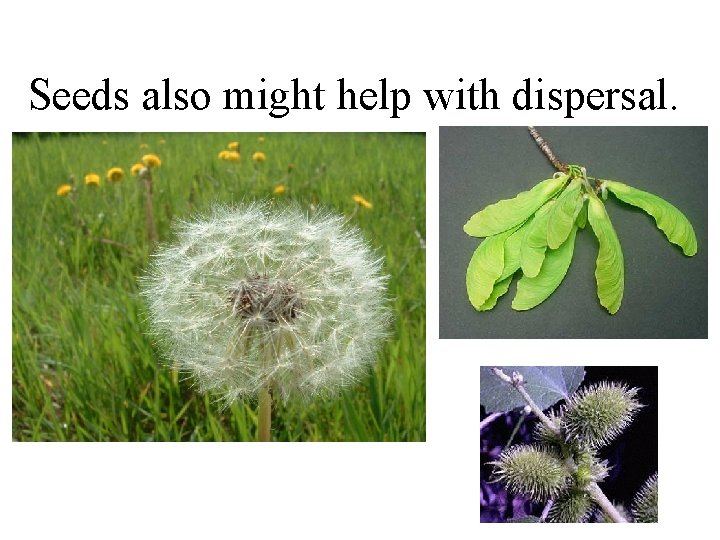
Seeds also might help with dispersal.
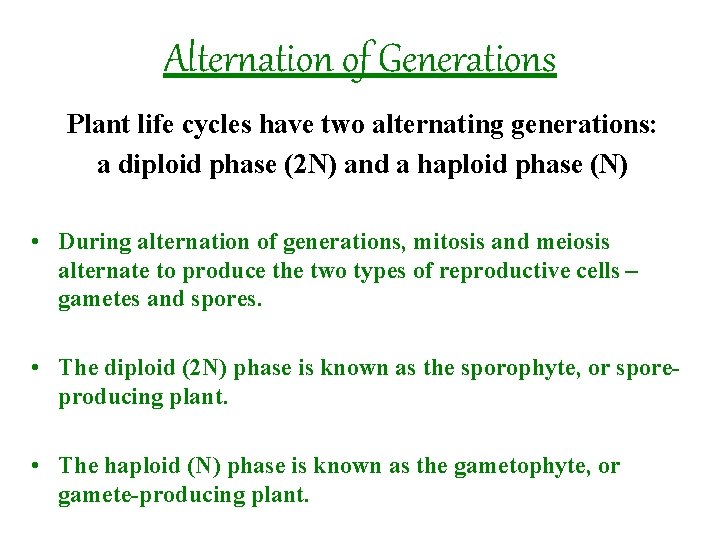
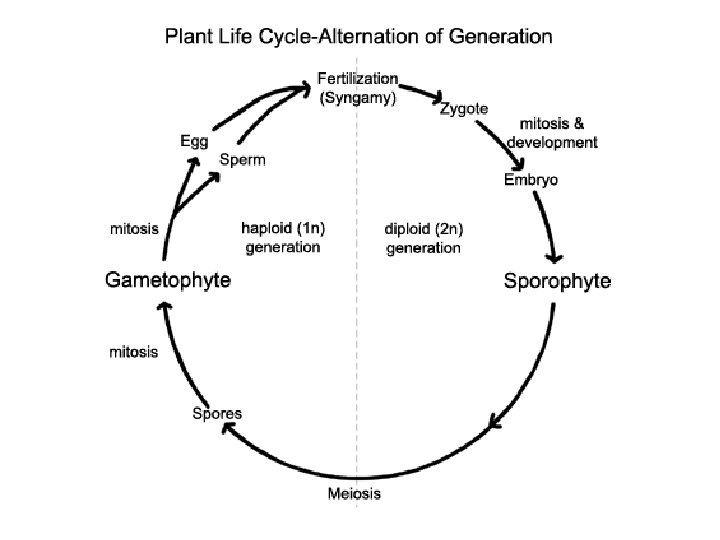
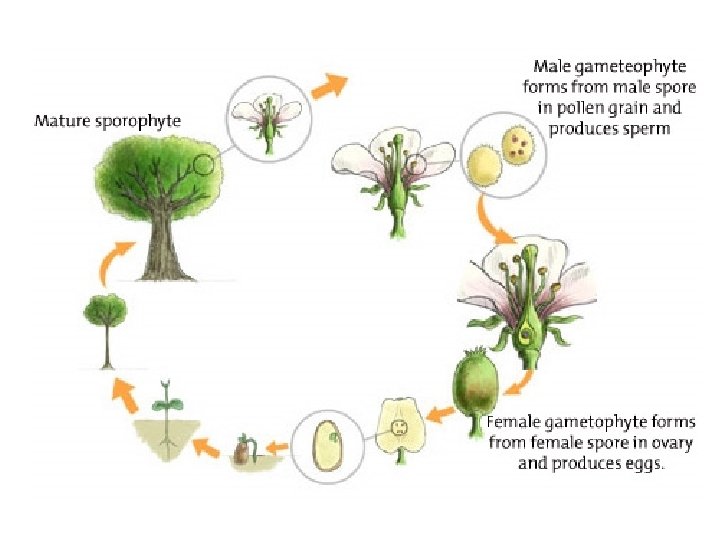
Alternation of Generations Plant life cycles have two alternating generations: a diploid phase (2 N) and a haploid phase (N) • During alternation of generations, mitosis and meiosis alternate to produce the two types of reproductive cells – gametes and spores. • The diploid (2 N) phase is known as the sporophyte, or sporeproducing plant. • The haploid (N) phase is known as the gametophyte, or gamete-producing plant.
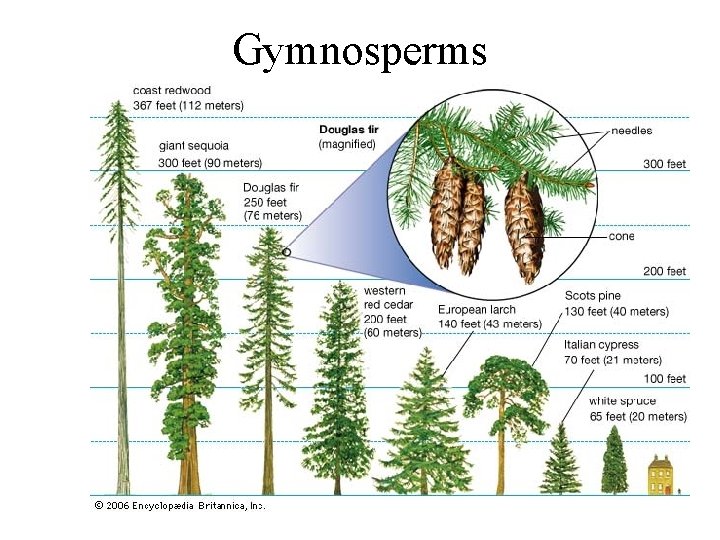
Gymnosperms
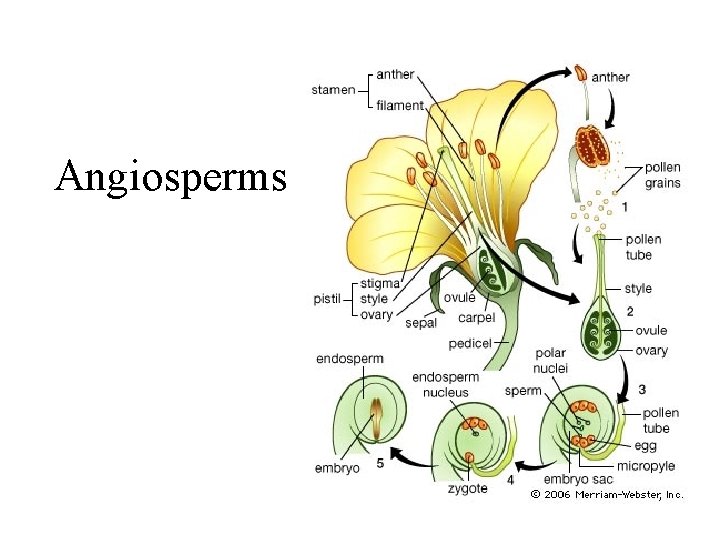
Angiosperms
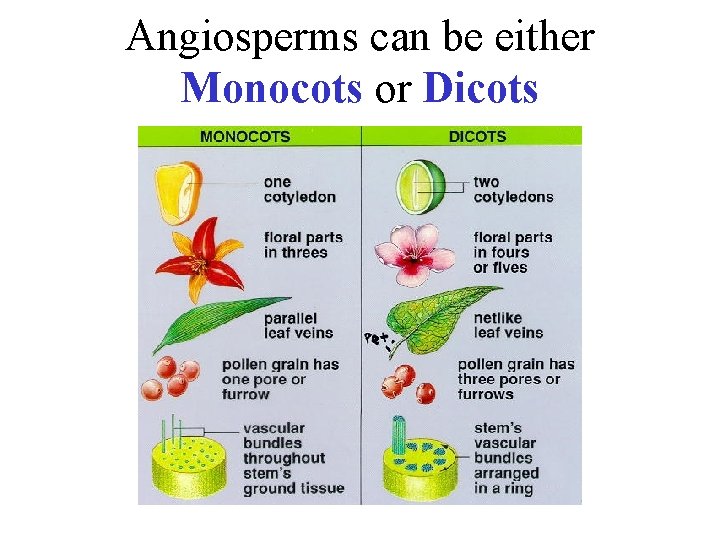
Angiosperms can be either Monocots or Dicots
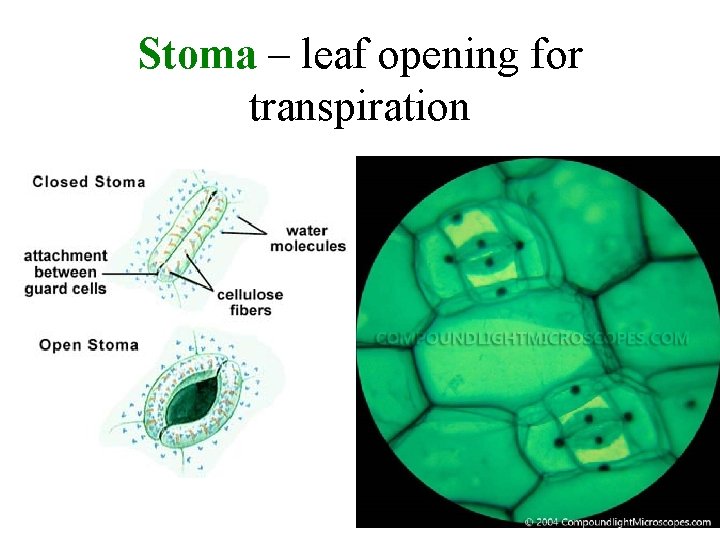
Stoma – leaf opening for transpiration