
Introduction to Physiology the cell and general physiology
- Slides: 57
Introduction to Physiology: the cell and general physiology
Physiology studies the normal mechanical, physical, and biochemical processes of animals and plants. In human physiology, we attempt to explain the specific characteristics and mechanisms of the human body that make it a living being. The human being is actually an automaton, and the fact that we are sensing, feeling, and knowledgeable beings is part of this automatic sequence of life; these special attributes allow us to exist under widely varying conditions.
The basic living unit of the body is the cell; Each organ is an aggregate of many different cells held together by intercellular supporting structures; The entire body, then, contains about 100 trillion cells. Although the many cells of the body often differ markedly from one another, all of them have certain basic characteristics that are alike.
For instance, in all cells, oxygen reacts with carbohydrate, fat, and protein to release the energy required for cell function; The general chemical mechanisms for changing nutrients into energy are basically the same in all cells, and all cells deliver end products of their chemical reactions into the surrounding fluids. Almost all cells also have the ability to reproduce additional cells of their own kind. Fortunately, when cells of a particular type are destroyed from one cause or another, the remaining cells of this type usually generate new cells until the supply is replenished.
Distribution of water in the organism About 60 percent (total body water) of the adult human body is fluid, mainly a water solution of ions and other substances. This percentage can change, depending on age, gender, and degree of obesity.
Distribution of water in the organism As a person grows older, the percentage of total body weight that is fluid gradually decreases (due in part to the fact that aging is usually associated with an increased percentage of the body weight in fat) Because women normally have more body fat than men, they contain slightly less water than men in proportion to their body weight.
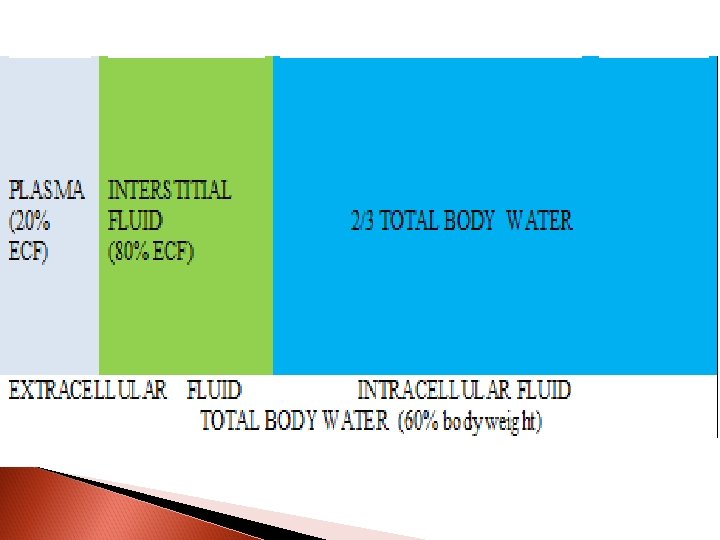
Distribution of water in the organism Although most of this fluid is inside the cells and is called intracellular fluid, about one third is in the spaces outside the cells and is called extracellular fluid. This extracellular fluid is in motion throughout the body. It is transported rapidly in the circulating blood and then mixed between the blood and the tissue fluids by diffusion through the capillary walls.
Distribution of water in the organism The extracellular fluid is also called the internal environment of the body. Extracellular fluid volume (about 20 per cent of the body weight) (ECV) refers to the interstitial and the plasma volume. Interstitial fluid (ISF) is the tissue fluid between the cells in the extravascular space. The plasma is the noncellular part of the blood; it exchanges substances continuously with the interstitial fluid through the pores of the capillary membranes.
Distribution of water in the organism There is another small compartment of fluid that is referred to as transcellular fluid: includes fluid in the synovial, peritoneal, pericardial, and intra-ocular spaces, as well as the cerebrospinal fluid; it is usually considered to be a specialized type of extracellular fluid, although in some cases, its composition may differ markedly from that of the plasma or interstitial fluid. All the transcellular fluids together constitute about 1 to 2 liters.
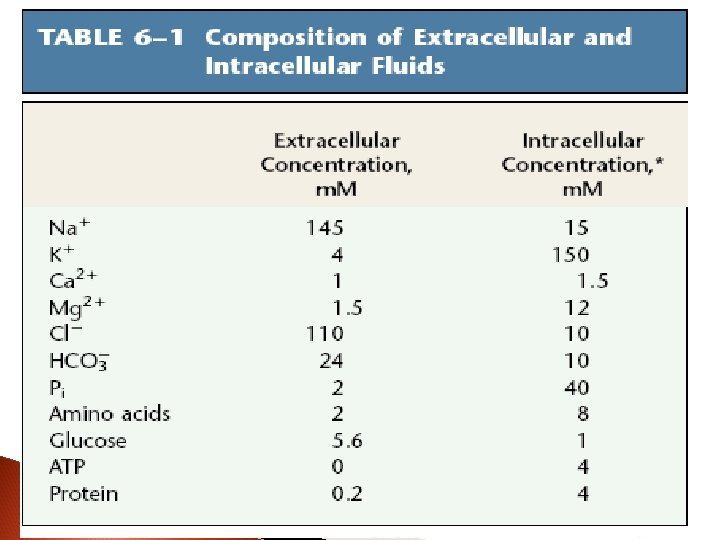
Distribution of water in the organism The extracellular fluid contains large amounts of sodium, chloride, and bicarbonate ions plus nutrients for the cells, such as oxygen, glucose, fatty acids, and amino acids. It also contains carbon dioxide that is being transported from the cells to the lungs to be excreted, plus other cellular waste products that are being transported to the kidneys for excretion.
Distribution of water in the organism The intracellular fluid differs significantly from the extracellular fluid; specifically, it contains large amounts of potassium, magnesium, and phosphate ions instead of the sodium and chloride ions found in the extracellular fluid. Special mechanisms for transporting ions through the cell membranes maintain the ion concentration differences between the extracellular and intracellular fluids.
Distribution of water in the organism Extracellular fluid is transported through all parts of the body in two stages. The first stage is movement of blood through the body in the blood vessels, and the second is movement of fluid between the blood capillaries and the intercellular spaces between the tissue cells.
Distribution of water in the organism Water permeable membranes separate three compartments, so that they contain almost the same number of osmotically active particles per kg. The compartments have the same concentration expressed as m. Osmol per kg of water (300 m. Osmol/ l) of water or the same freeze-point depression. They are said to be isosmolal, because they have the same osmolality.
Distribution of water in the organism The relative constancy of the body fluids is remarkable because there is continuous exchange of fluid and solutes with the external environment as well as within the different compartments of the body. Water is added to the body by two major sources: (1) it is ingested in the form of liquids or water in the food, which together normally add about 2100 ml/day (2) it is synthesized in the body as a result of oxidation of carbohydrates, adding about 200 ml/day. This provides a total water intake of about 2300 ml/day
Distribution of water in the organism Intake of water, however, is highly variable among different people and even within the same person on different days, depending on climate, habits, and level of physical activity. Water is lost in the urine (1500 ml), in the stools (100 ml), in sweat and evaporation from the respiratory tract (900 ml). The total loss of water is 2500 ml, and this corresponds perfectly to the intake
Distribution of water in the organism Because the plasma and interstitial fluid are separated only by highly permeable capillary membranes, their ionic composition is similar. The most important difference between these two compartments is the higher concentration of protein in the plasma; because the capillaries have a low permeability to the plasma proteins, only small amounts of proteins are leaked into the interstitial spaces in most tissues.
Distribution of water in the organism Edema refers to the presence of excess fluid in the body tissues. In most instances, edema occurs mainly in the extracellular fluid compartment, but it can involve intracellular fluid as well.
Homeostasis maintenance of nearly constant conditions in the internal environment. Essentially all organs and tissues of the body perform functions that help maintain these constant conditions. For instance, the lungs provide oxygen to the extracellular fluid to replenish the oxygen used by the cells, the kidneys maintain constant ion concentrations, and the gastrointestinal system provides nutrients.
Regulation of body functions 1. Nervous System. The nervous system is composed of three major parts: the sensory input portion, the central nervous system (or integrative portion), and the motor output portion. Sensory receptors detect the state of the body or the state of the surroundings.
Regulation of body functions The central nervous system is composed of the brain and spinal cord. The brain can store information, generate thoughts, create ambition, and determine reactions that the body performs in response to the sensations. Appropriate signals are then transmitted through the motor output portion of the nervous system to carry out one’s desires.
Regulation of body functions 2. Hormonal System of Regulation. Located in the body are eight major endocrine glands that secrete chemical substances called hormones. Hormones are transported in the extracellular fluid to all parts of the body to help regulate cellular function.
Regulation of body functions For instance, § thyroid hormone increases the rates of most chemical reactions in all cells; § Insulin controls glucose metabolism; § adrenocortical hormones control sodium ion, potassium ion, and protein metabolism; and § parathyroid hormone controls bone calcium and phosphate.
Regulation of body functions Thus, the hormones are a system of regulation that complements the nervous system. The nervous system regulates mainly muscular and secretory activities of the body, whereas the hormonal system regulates many metabolic functions.
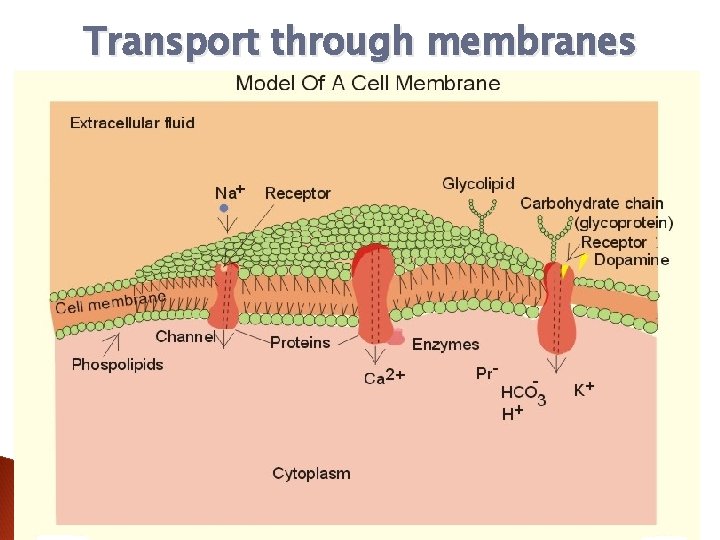
Transport through membranes Membrane transport refers to solute and solvent transfer across both cell membranes, epithelial and capillary membranes. Biological membranes are composed of phospholipids stabilized by hydrophobic interactions into bilayers. The membranes contain approximately 50% lipids and 50% proteins.
Transport through membranes Phospholipids are amphipathic. One region is polar consisting of charged choline, ethanolamine and phosphate headgroups The other region is non-polar, consisting of tails of fatty acyl chains. The non-polar regions tend to avoid contact with water by self-association. Integral proteins are deeply imbedded in the membrane (i. e. , trans membrane proteins).
Transport through membranes
Transport through membranes The proteins carry receptors to which transmitter substance bind. Carbohydrate chains are shown forming glycolipids with antigenic or receptor function or glycoproteins with other receptor functions. Mechanical, electrical, thermal, or gravitational forces drive migration of molecules. These forces move the molecules passively in a direction determined by the vector of the force.
Transport through membranes Transport mechanisms are: Osmosis, diffusion, filtration (when fluid is under pressure), facilitated diffusion (diffusion through a membrane with help from a transport protein), and active transport (use of energy to move materials through a membrane).
Transport through membranes Diffusion is a net transport of atoms or molecules caused by their random thermal motion in an attempt to equalize concentration differences. A molecule diffuses from higher to lower concentration that is down its concentration gradient. This relationship was first recognized as early by the anatomist and physiologist Fick, and it has since been named after him: Fick's first law of diffusion. The flux by simple passive diffusion is directly proportional to the concentration dissolved molecules.
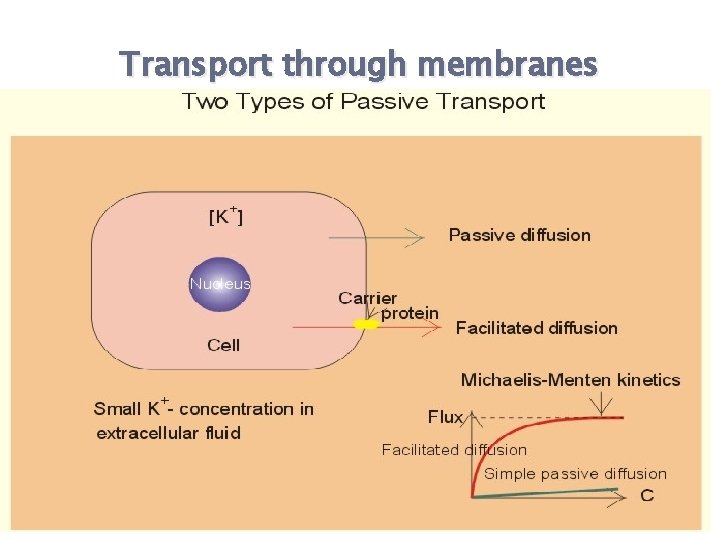
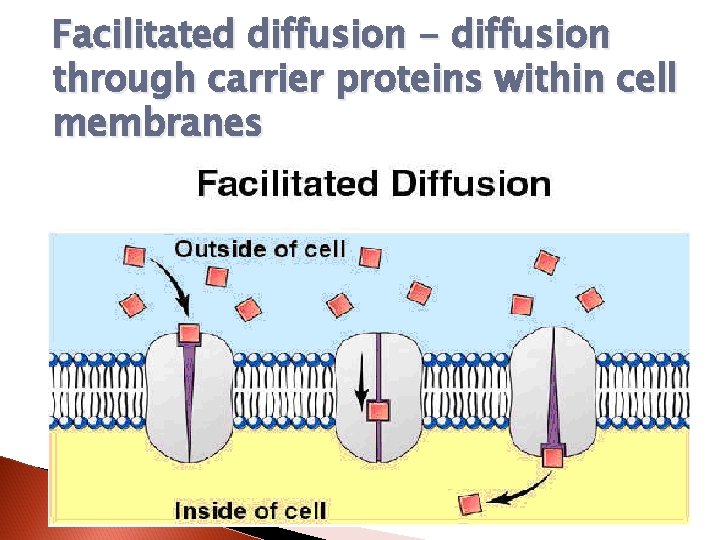
Transport through membranes Diffusion (passive transport) - the movement of a substance from an area of high concentration to an area of lower concentration (a concentration gradient). Facilitated diffusion takes place through transport proteins not linked directly to metabolic energy processes. Facilitated diffusion shows saturation or Michaelis-Menten kinetics, because the number of transport proteins is limited.
Transport through membranes
Transport through membranes Amino acids, glucose, galactose and other monosaccharides cross many cell membranes by facilitated diffusion
Facilitated diffusion - diffusion through carrier proteins within cell membranes
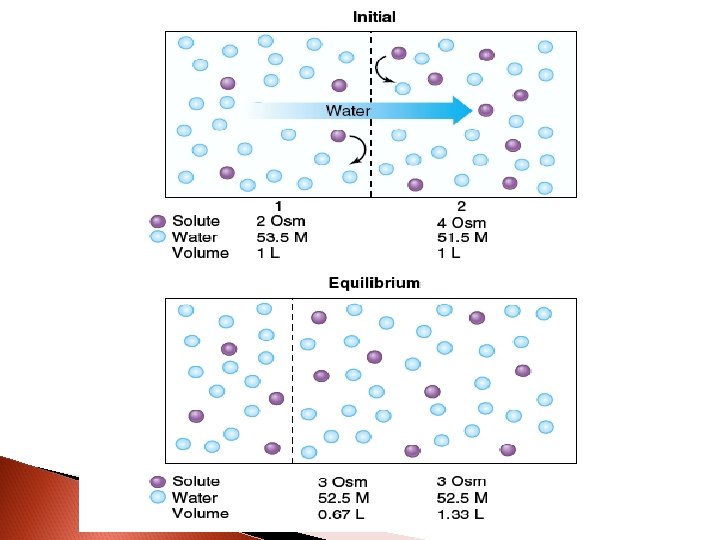
Transport through membranes Osmosis is transport of solvent molecules (mainly water) through a semipermeable membrane. The water flows from a compartment of high water concentration (or low solute concentration) to one of low water concentration (or high solute concentration). The greater difference between the solute concentration of the two compartments, the more is water unevenly distributed between the two compartments.
Transport through membranes Osmotic pressure is the hydrostatic pressure, that must be applied to the side of an ideal semipermeable membrane with higher solute concentration in order to stop the water flux, so that the net water flux is zero. The size of the osmotic pressure of a solution depends of the number of dissolved particles per volume unit. The osmotic pressure p depends on the absolute temperature (T Kelvin or K) and on the number of dissolved particles per volume unit (N/V equal to the molar fraction).
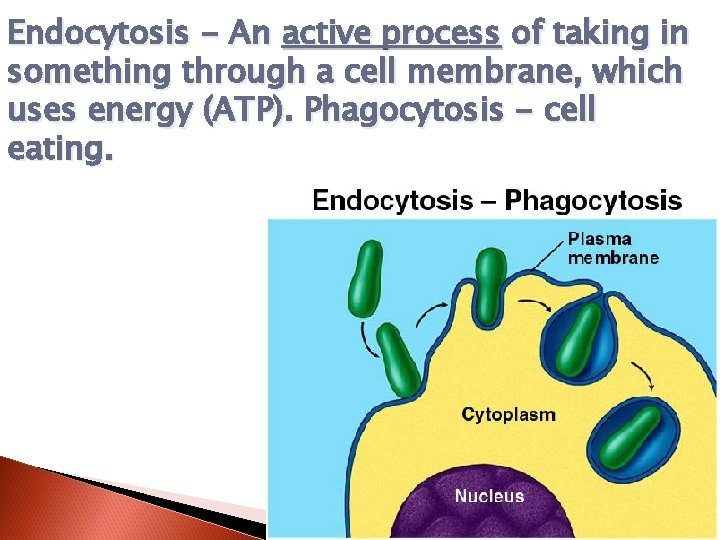
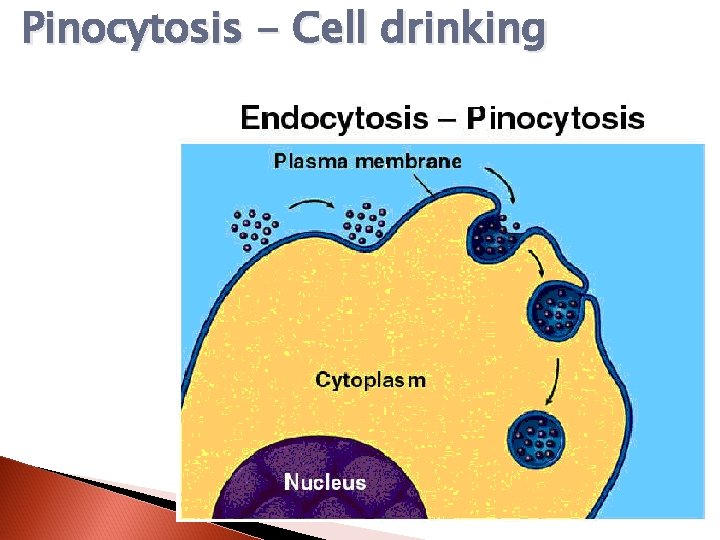
Endocytosis - An active process of taking in something through a cell membrane, which uses energy (ATP). Phagocytosis - cell eating.
Pinocytosis - Cell drinking
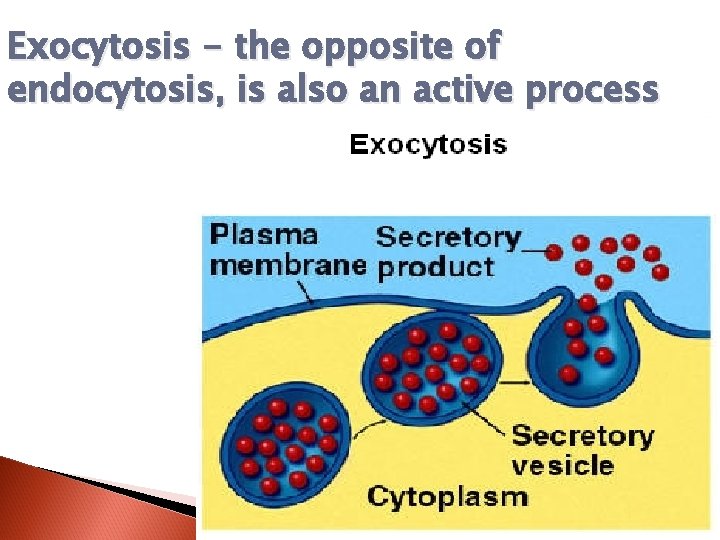
Exocytosis - the opposite of endocytosis, is also an active process
Transport through membranes Active transport - transport proteins within the membrane must use energy (ATP) to move substances either to the inside or outside of the membrane.
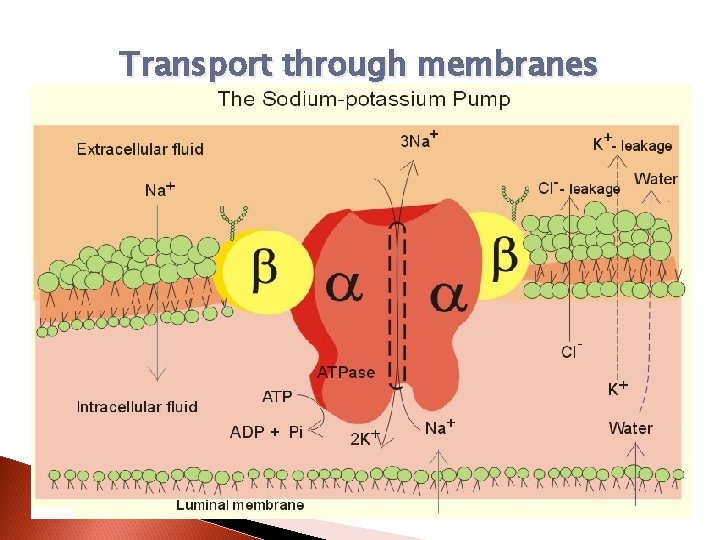
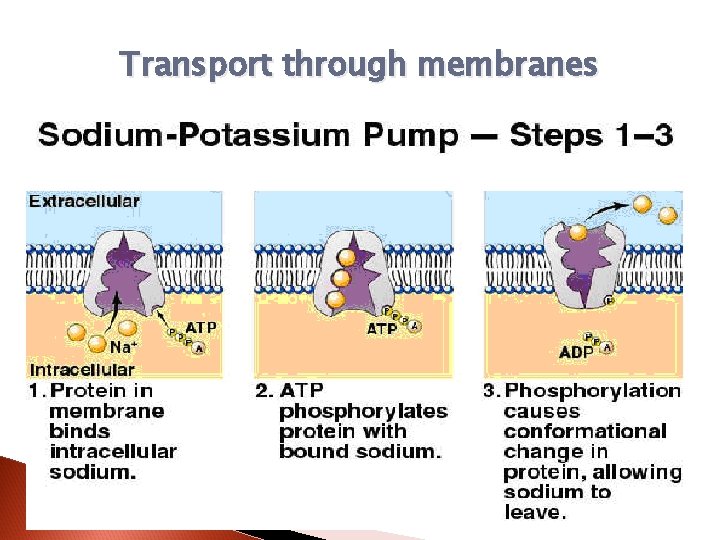
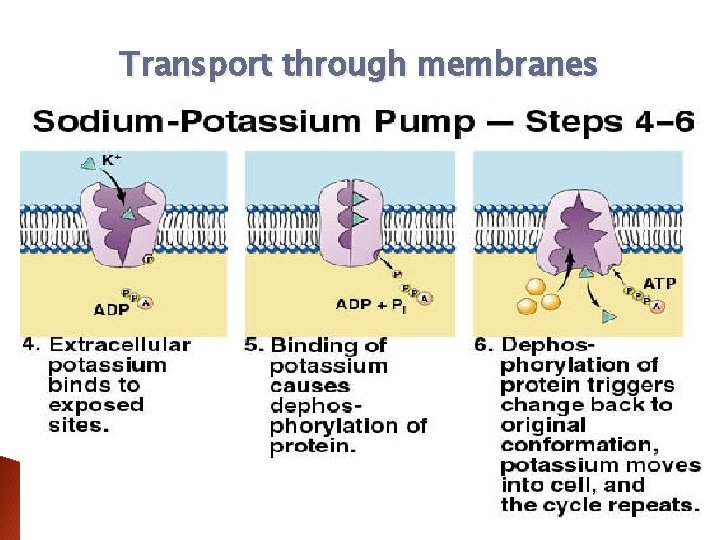
Transport through membranes The Na+-K+-pump is a trans membrane protein in the cell membrane. The pump contains a channel, which consists of two double subunits: 2 alfa - and 2 beta subunits; the catalytic subunit (alfa ) is an Na+-K+-activated ATP- ase and the beta subunit is a glycoprotein.
Transport through membranes
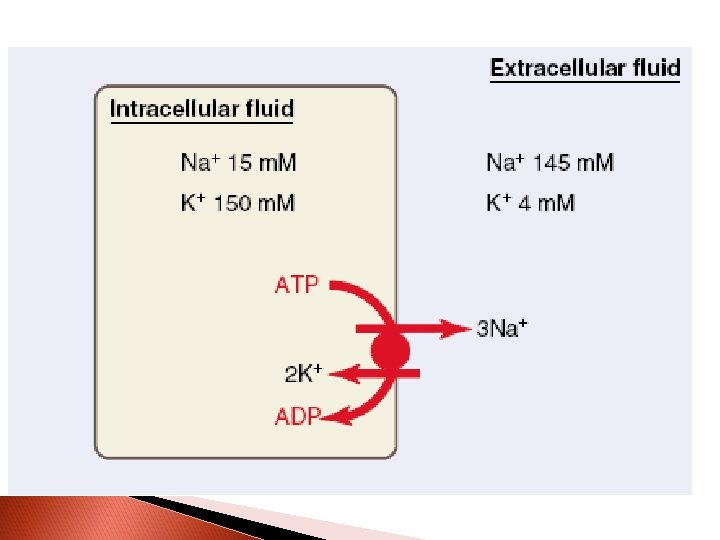
Transport through membranes The Na+-K+-pump transports 3 Na+ out of the cell and 2 K+ into the cell for each ATP hydrolyzed. This is a net movement of positive ions out of the cell, and therefore called an electro genic transport. The constant influx of Na+ is shown as well as the leakage of K+- and Cl-. The Na+-K+-pump is located in the basolateral exit-membrane of the epithelial cell. The primary active ion transport provides metabolic energy for the secondary water absorption through the luminal membrane.
Transport through membranes The Na+-K+-pump builds up a high cellular electrochemical gradient for K+ and indirectly for Cl-. The water out flux is coupled to the outward transport of K+ and Cl-. The interstitial fluid receives ions and glucose, causing its osmolarity to increase. The osmotic force causes water to enter the interstitial fluid via the cell membranes and the gaps between the cells.
Transport through membranes In a healthy standard person nutrients and oxygen are transported into the cell interior from the extracellular fluid through the cell membrane. The Na+-K+-pump is responsible for maintaining the high intracellular [K+] and the low intracellular [Na+].
Transport through membranes
Transport through membranes
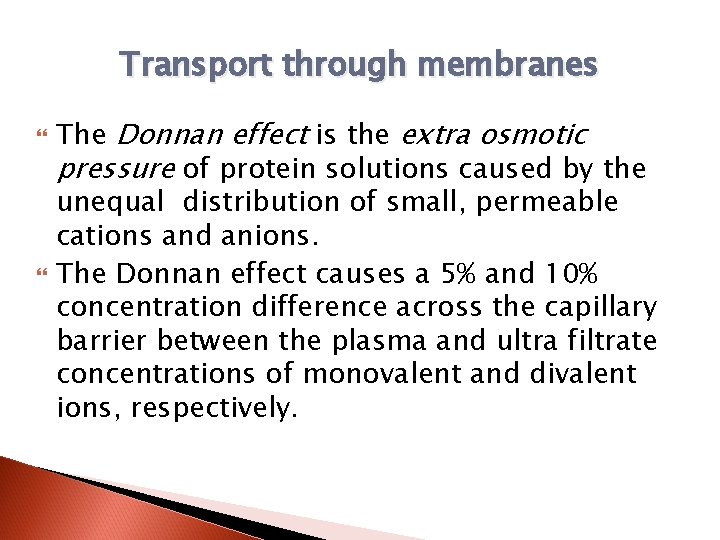
Transport through membranes The Donnan effect is the extra osmotic pressure of protein solutions caused by the unequal distribution of small, permeable cations and anions. The Donnan effect causes a 5% and 10% concentration difference across the capillary barrier between the plasma and ultra filtrate concentrations of monovalent and divalent ions, respectively.
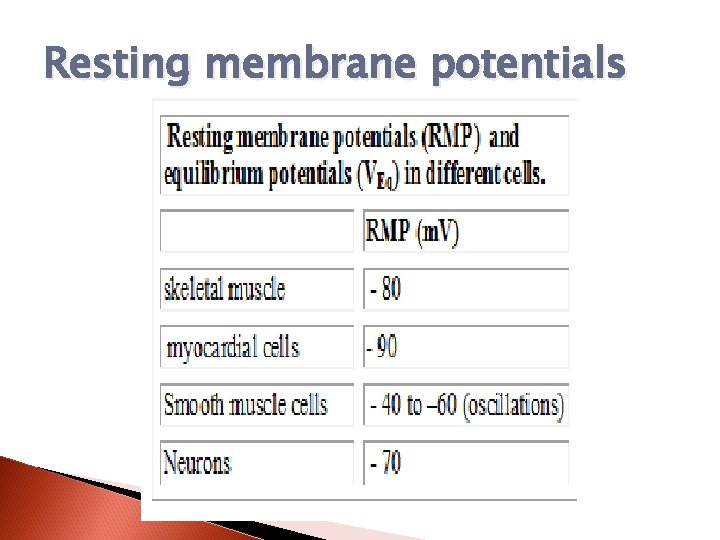
Resting membrane potentials A membrane potential difference is conventionally defined as the intracellular minus the extracellular electrical potential. When a microelectrode penetrates a membrane, it records a negative potential with respect to an external reference electrode caused by different permeability of anions and cations. This is the resting membrane potential (RMP ). The resting membrane potential is an essential mechanism in storing and processing information in neurons and other cells.
Resting membrane potentials Concentration gradients across cell membranes are present for several ions, whereby they diffuse from one location to another. The ion with the highest permeability and concentration gradient, such as the potassium ion, establishes a membrane potential.
Resting membrane potentials The chloride ion diffuses extremely rapidly, but otherwise positive ions (cations) diffuse more rapidly than negative ions (anions) through a membrane. However, as an example the permeability for Na+ is low compared to that of K+ in neurons.
Resting membrane potentials