
Introduction to Person Centred Thinking Example only By
Introduction to Person Centred Thinking Example only By Bobbi Rohrer Elman
What is Person Centred Thinking? • Brief history of Person Centred Planning. • Person Centred Thinking refers to the foundational skills and tools that underlie all the discovery of who a person is and how they want to be supported. Example only • It is an ongoing process intended to change the way we plan, design and deliver care & support, ultimately aimed at helping people get better lives by listening to them well.
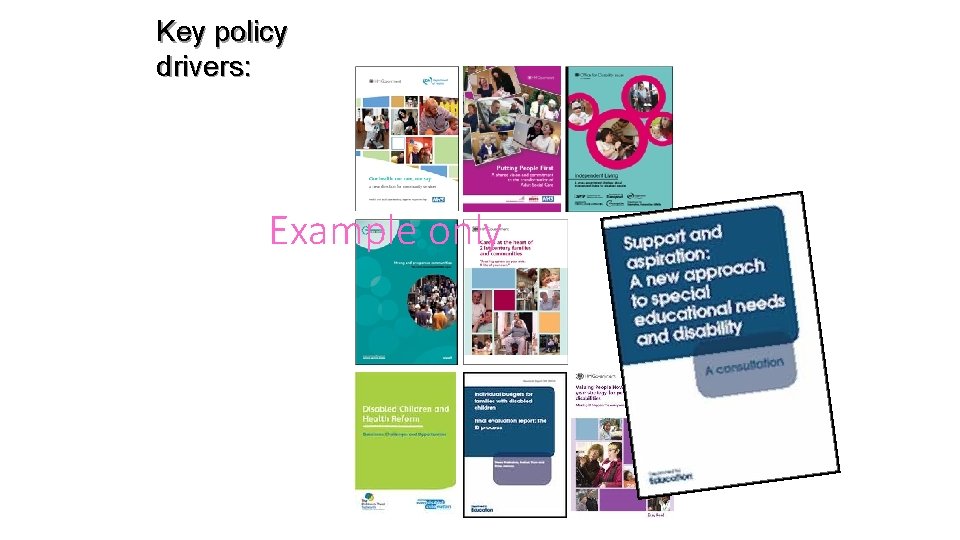
Key policy drivers: A bit of background. . . Example only
Person Centred Thinking links with. . . • Person Centred Reviews • Support Planning processes being piloted for Personal Budgets / Education, Health & Care Plans Example only • Government plans to involve parents/carers more in planning and commissioning of services • Government plans to give individuals with SEN/disabilities more control and choice in their own lives
Person Centred Thinking Tools • sorting Important to/for • like and admire • one page profile (family or indiv. ) • roles & responsibilities (doughnut) Example only • matching staff • relationship circle • communication charts • learning log • sorting what’s working/not working • 4 + 1 questions • citizenship • decision making agreement • presence to contribution • dreaming
One page profile : Who can benefit? Individuals: • Offers more consistency in the way the person is understood and supported • Helps the person to adapt to new people and new situations • Ensures needs are met and communication is understood from outset in a new situation. Example only Professionals: • Can give a head start in building a good relationship with the young person • Provides a good focus for a first meeting with a family • Can offer more consistency in the way the person is understood and supported, pre-empting potential difficulties Parents: • Can help to present information about the young person in an organised way • Is flexible enough to be adapted for different occasions • Allows parents to share important information to keep their child safe, but in a format that is a celebration of who the child is, rather than a list of needs. When can you use it? • when the young person is about to start in a new place or with a new person • when you feel that the people who already support your child are stuck in a rut • To introduce someone in a positive and constructive way.
Example only Please contact us for more information: contactus@advocateautism. co. uk
- Slides: 7