
Introduction to Performance Testing Performance testing is the
- Slides: 9
Introduction to Performance Testing • Performance testing is the process of determining the speed or effectiveness of a computer, network, software program or device. • Before going into the details, we should understand the factors that governs Performance testing: ü Throughput ü Response Time ü Tuning ü Benchmarking
Throughput • Capability of a product to handle multiple transactions in a give period. • Throughput represents the number of requests/business transactions processed by the product in a specified time duration.
Response Time • It is equally important to find out how much time each of the transactions took to complete. • Response time is defined as the delay between the point of request and the first response from the product. • The response time increases proportionally to the user load.
Tuning • Tuning is the procedure by which product performance is enhanced by setting different values to the parameters of the product, operating system and other components. • Tuning improves the product performance without having to touch the source code of the product.
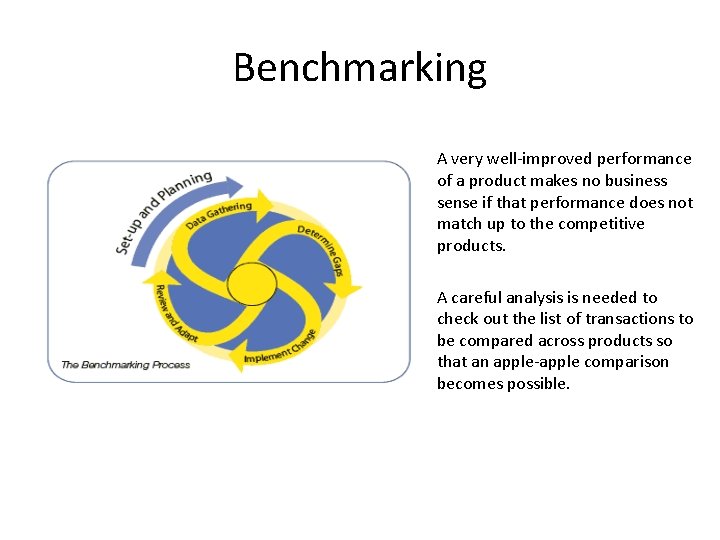
Benchmarking • A very well-improved performance of a product makes no business sense if that performance does not match up to the competitive products. • A careful analysis is needed to check out the list of transactions to be compared across products so that an apple-apple comparison becomes possible.
Performance Testing- Definition • The testing to evaluate the response time (speed), throughput and utilization of system to execute its required functions in comparison with different versions of the same product or a different competitive product is called Performance Testing. • Performance testing is done to derive benchmark numbers for the system. • Heavy load is not applied to the system • Tuning is performed until the system under test achieves the expected levels of performance.
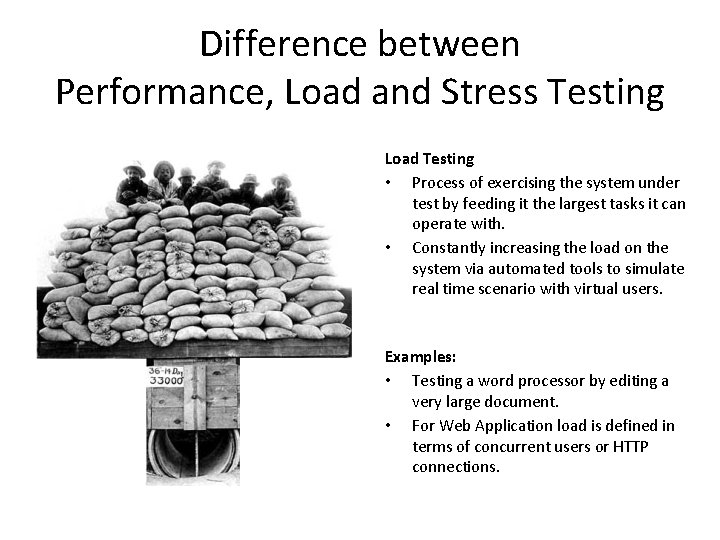
Difference between Performance, Load and Stress Testing Load Testing • Process of exercising the system under test by feeding it the largest tasks it can operate with. • Constantly increasing the load on the system via automated tools to simulate real time scenario with virtual users. Examples: • Testing a word processor by editing a very large document. • For Web Application load is defined in terms of concurrent users or HTTP connections.
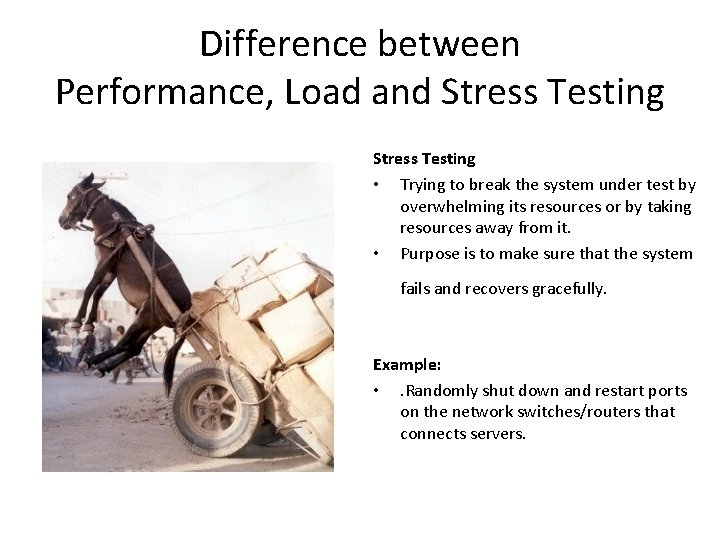
Difference between Performance, Load and Stress Testing • Trying to break the system under test by overwhelming its resources or by taking resources away from it. • Purpose is to make sure that the system fails and recovers gracefully. Example: • . Randomly shut down and restart ports on the network switches/routers that connects servers.
What should be tested? • High frequency transactions: The most frequently used transactions have the potential to impact the performance of all of the other transactions if they are not efficient. • Mission Critical transactions: The more important transactions that facilitate the core objectives of the system should be included, as failure under load of these transactions has, by definition, the greatest impact. • Read Transactions: At least one READ ONLY transaction should be included, so that performance of such transactions can be differentiated from other more complex transactions. • Update Transactions: At least one update transaction should be included so that performance of such transactions can be differentiated from other transactions.