
INTRODUCTION TO PERFORMANCE MANAGEMENT Since my last report
- Slides: 24
INTRODUCTION TO PERFORMANCE MANAGEMENT • “ Since my last report, this employee has reached rock bottom and shows signs of starting to dig. ” • “ I would not allow this employee to breed. ” • “ Works well under constant supervision and cornered like a rat in a trap. ” • “ He sets low personal standards and then consistently fails to achieve them. ” • “This associate is really not so much of a has-been, but more of a definitely won’t be. ”
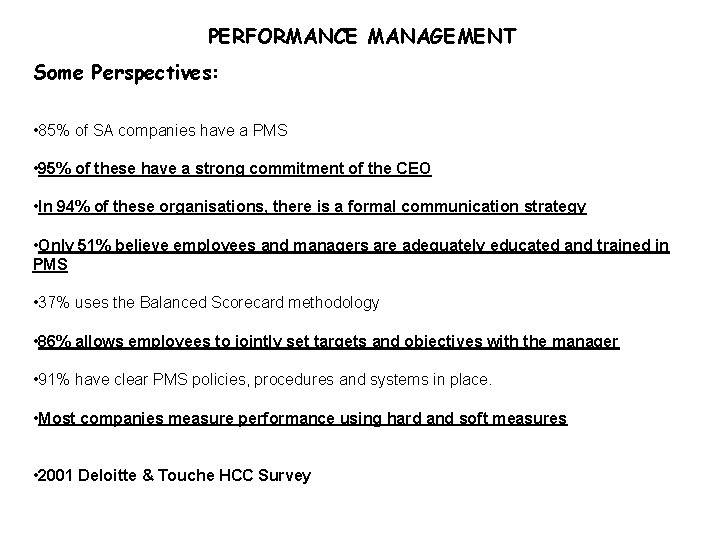
PERFORMANCE MANAGEMENT Some Perspectives: • 85% of SA companies have a PMS • 95% of these have a strong commitment of the CEO • In 94% of these organisations, there is a formal communication strategy • Only 51% believe employees and managers are adequately educated and trained in PMS • 37% uses the Balanced Scorecard methodology • 86% allows employees to jointly set targets and objectives with the manager • 91% have clear PMS policies, procedures and systems in place. • Most companies measure performance using hard and soft measures • 2001 Deloitte & Touche HCC Survey
PERFORMANCE MANAGEMENT “So what is Performance Management”? (if 85% of companies apply it, what do they actually do)? Group Discussion:
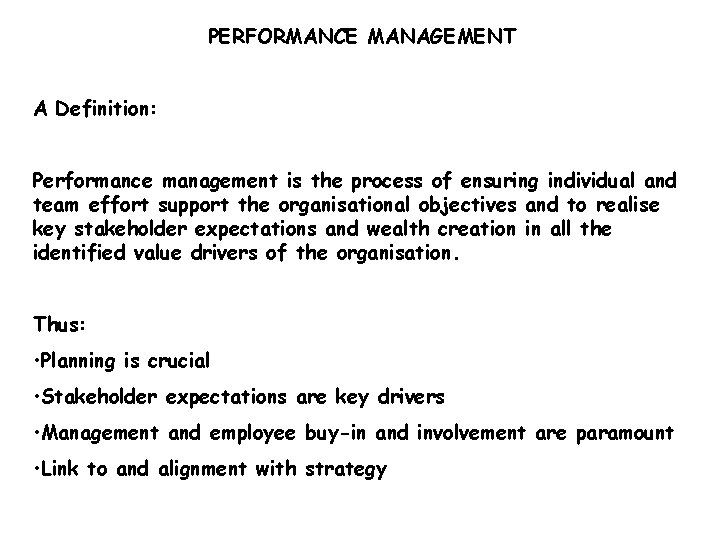
PERFORMANCE MANAGEMENT A Definition: Performance management is the process of ensuring individual and team effort support the organisational objectives and to realise key stakeholder expectations and wealth creation in all the identified value drivers of the organisation. Thus: • Planning is crucial • Stakeholder expectations are key drivers • Management and employee buy-in and involvement are paramount • Link to and alignment with strategy
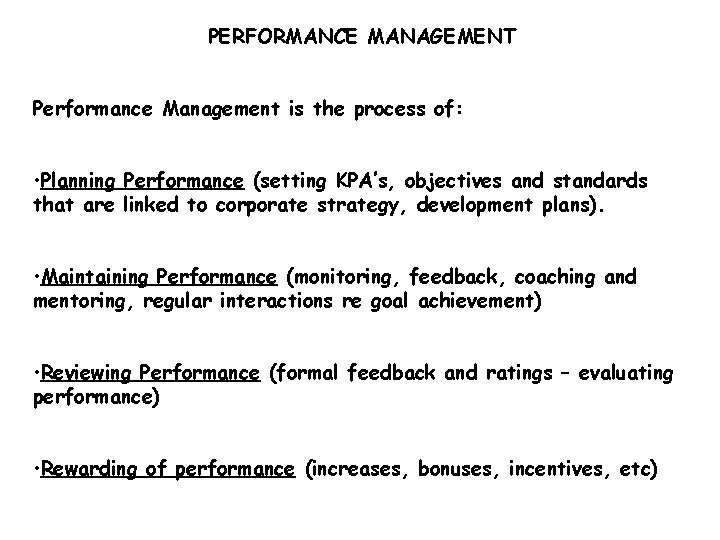
PERFORMANCE MANAGEMENT Performance Management is the process of: • Planning Performance (setting KPA’s, objectives and standards that are linked to corporate strategy, development plans). • Maintaining Performance (monitoring, feedback, coaching and mentoring, regular interactions re goal achievement) • Reviewing Performance (formal feedback and ratings – evaluating performance) • Rewarding of performance (increases, bonuses, incentives, etc)
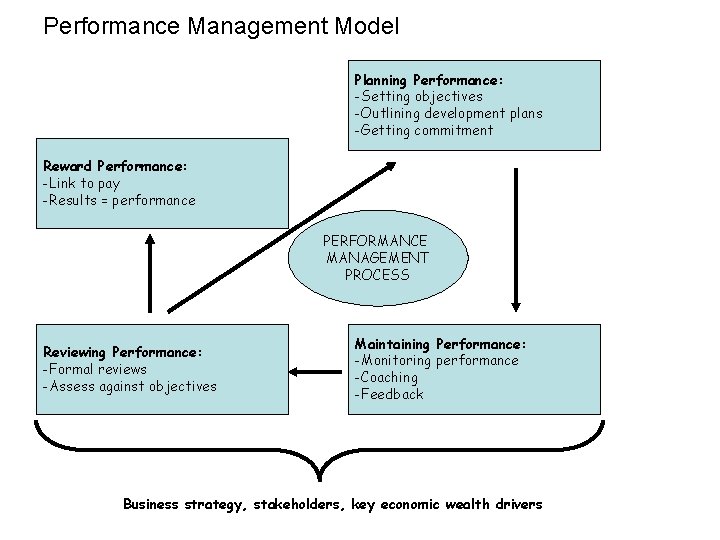
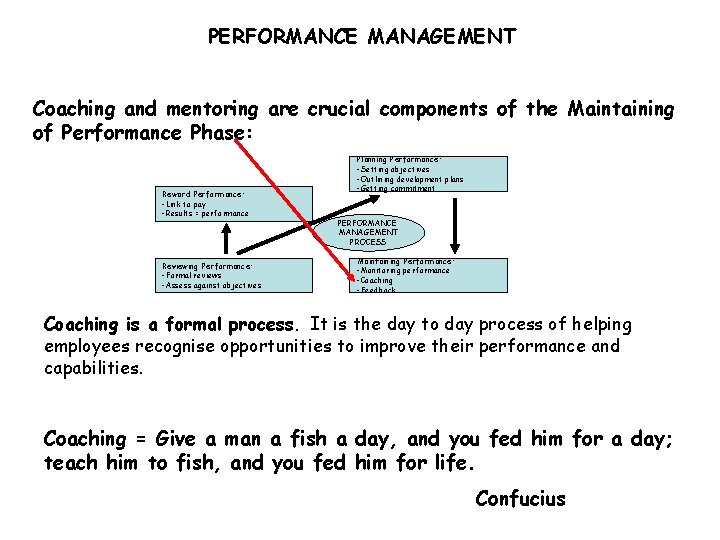
Performance Management Model Planning Performance: -Setting objectives -Outlining development plans -Getting commitment Reward Performance: -Link to pay -Results = performance PERFORMANCE MANAGEMENT PROCESS Reviewing Performance: -Formal reviews -Assess against objectives Maintaining Performance: -Monitoring performance -Coaching -Feedback Business strategy, stakeholders, key economic wealth drivers
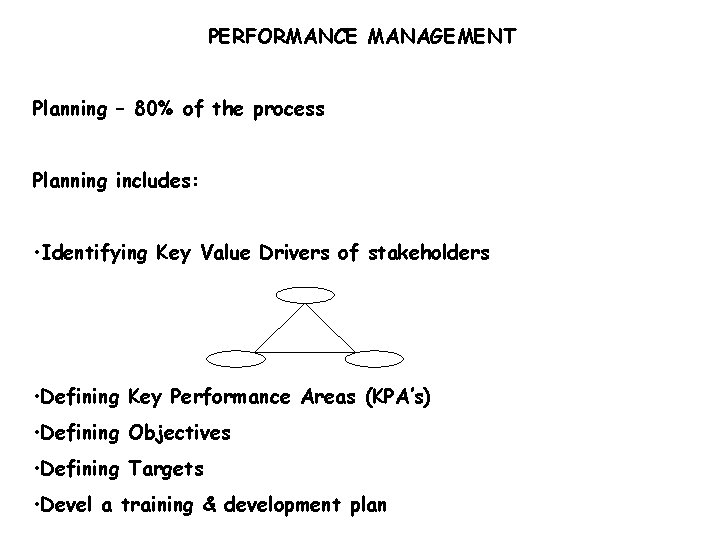
PERFORMANCE MANAGEMENT Planning – 80% of the process Planning includes: • Identifying Key Value Drivers of stakeholders • Defining Key Performance Areas (KPA’s) • Defining Objectives • Defining Targets • Devel a training & development plan
PERFORMANCE MANAGEMENT STRATEGY, STAKEHOLDER EXPECTATIONS – THE CHALLENGE OF ALIGNMENT • “With no harbour, no wind will be the right wind” • Between 92 -97% of Companies have a vision and some strategy statement. Only between 3 -7% of staff know and work by it.
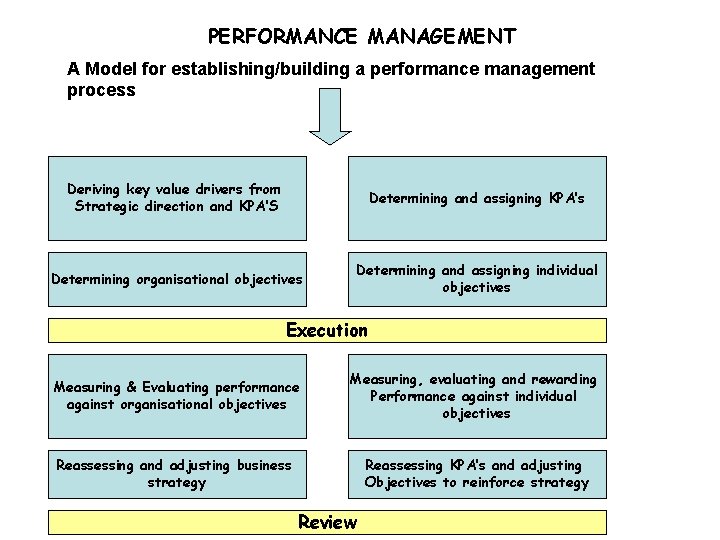
PERFORMANCE MANAGEMENT A Model for establishing/building a performance management process Deriving key value drivers from Strategic direction and KPA’S Determining and assigning KPA’s Determining organisational objectives Determining and assigning individual objectives Execution Measuring & Evaluating performance against organisational objectives Measuring, evaluating and rewarding Performance against individual objectives Reassessing and adjusting business strategy Reassessing KPA’s and adjusting Objectives to reinforce strategy Review
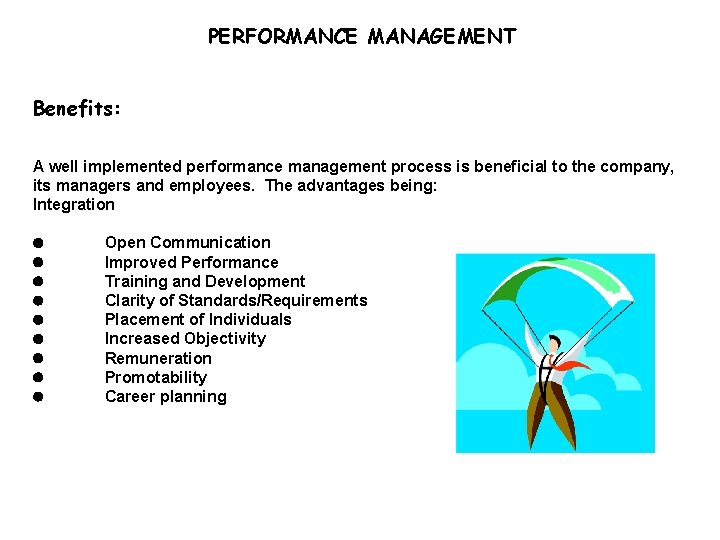
PERFORMANCE MANAGEMENT Benefits: A well implemented performance management process is beneficial to the company, its managers and employees. The advantages being: Integration Open Communication Improved Performance Training and Development Clarity of Standards/Requirements Placement of Individuals Increased Objectivity Remuneration Promotability Career planning
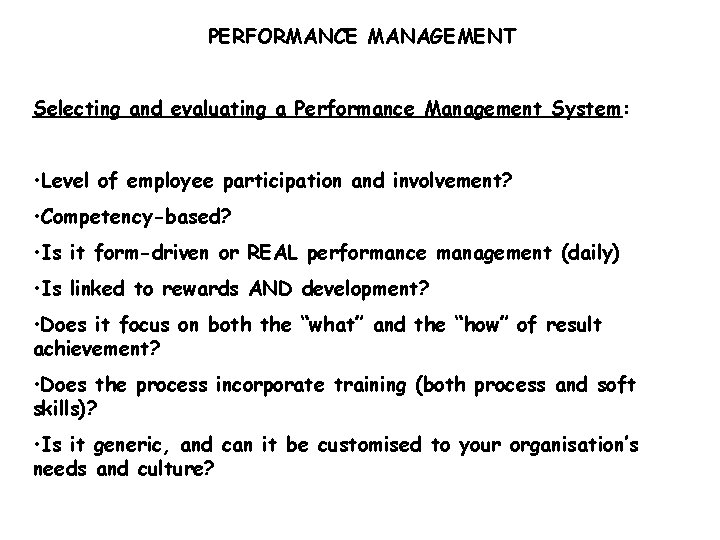
PERFORMANCE MANAGEMENT Selecting and evaluating a Performance Management System: • Level of employee participation and involvement? • Competency-based? • Is it form-driven or REAL performance management (daily) • Is linked to rewards AND development? • Does it focus on both the “what” and the “how” of result achievement? • Does the process incorporate training (both process and soft skills)? • Is it generic, and can it be customised to your organisation’s needs and culture?
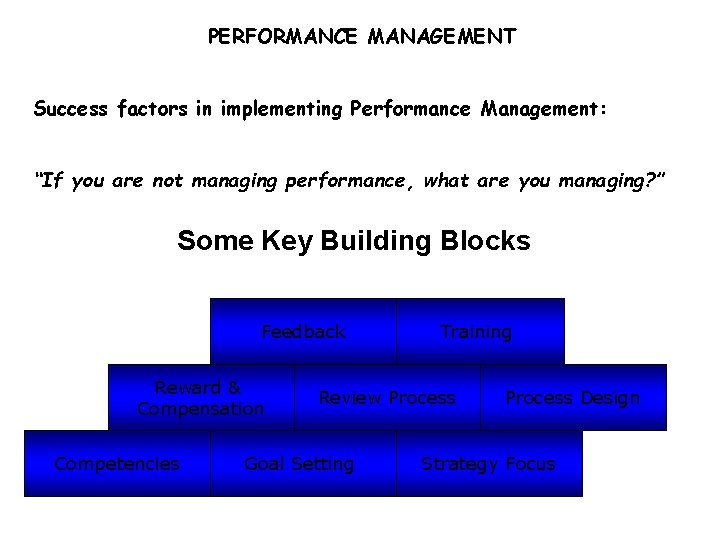
PERFORMANCE MANAGEMENT Success factors in implementing Performance Management: “If you are not managing performance, what are you managing? ” Some Key Building Blocks Feedback Reward & Compensation Competencies Training Review Process Goal Setting Process Design Strategy Focus
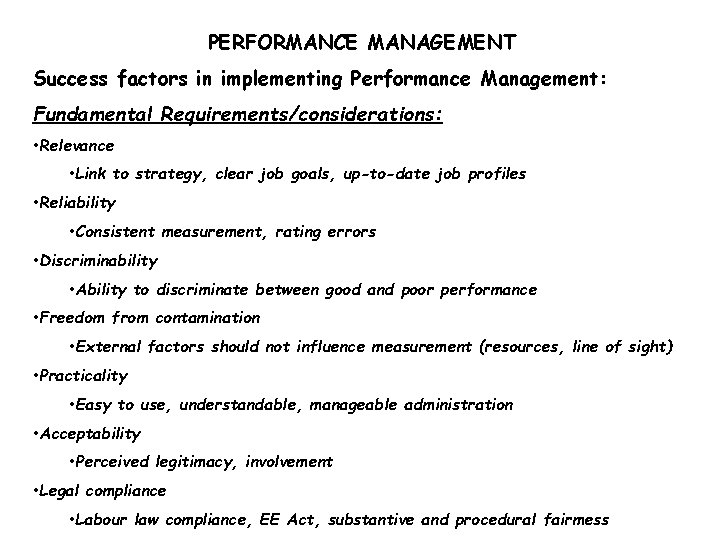
PERFORMANCE MANAGEMENT Success factors in implementing Performance Management: Fundamental Requirements/considerations: • Relevance • Link to strategy, clear job goals, up-to-date job profiles • Reliability • Consistent measurement, rating errors • Discriminability • Ability to discriminate between good and poor performance • Freedom from contamination • External factors should not influence measurement (resources, line of sight) • Practicality • Easy to use, understandable, manageable administration • Acceptability • Perceived legitimacy, involvement • Legal compliance • Labour law compliance, EE Act, substantive and procedural fairmess
PERFORMANCE MANAGEMENT Coaching and mentoring are crucial components of the Maintaining of Performance Phase: Reward Performance: -Link to pay -Results = performance Reviewing Performance: -Formal reviews -Assess against objectives Planning Performance: -Setting objectives -Outlining development plans -Getting commitment PERFORMANCE MANAGEMENT PROCESS Maintaining Performance: -Monitoring performance -Coaching -Feedback Coaching is a formal process. It is the day to day process of helping employees recognise opportunities to improve their performance and capabilities. Coaching = Give a man a fish a day, and you fed him for a day; teach him to fish, and you fed him for life. Confucius
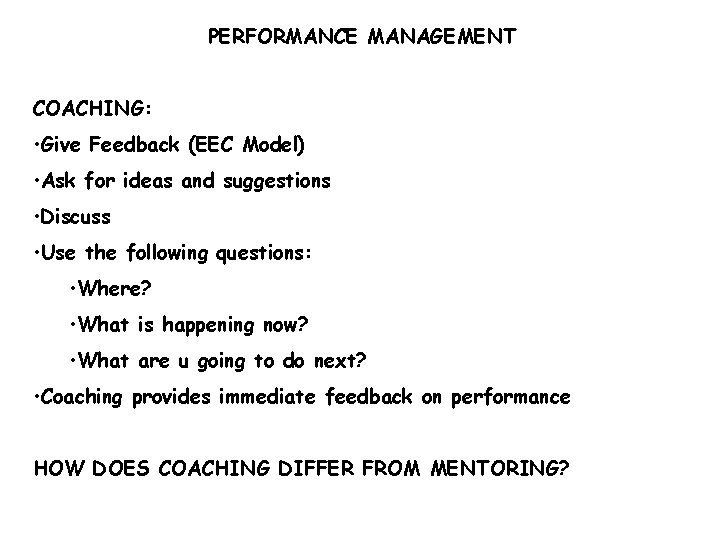
PERFORMANCE MANAGEMENT COACHING: • Give Feedback (EEC Model) • Ask for ideas and suggestions • Discuss • Use the following questions: • Where? • What is happening now? • What are u going to do next? • Coaching provides immediate feedback on performance HOW DOES COACHING DIFFER FROM MENTORING?
PERFORMANCE MANAGEMENT PERFORMANCE AUDITS Case Study 1: Mining Company in Southwest Africa Case Study 2: Global Company Key topics: • What do you audit • How do you audit Performance Management? • What can you expect?
PERFORMANCE MANAGEMENT PERFORMANCE AND REWARD – What gets measured gets done – What gets rewarded is sustained – Measures give rewards relevance, and rewards give measures meaning (TB Wilson) – The majority of workers want recognition for achievement – Dilemma’s in reward: • • Objectivity Transparency Affordability Baggage – Retention Value NB
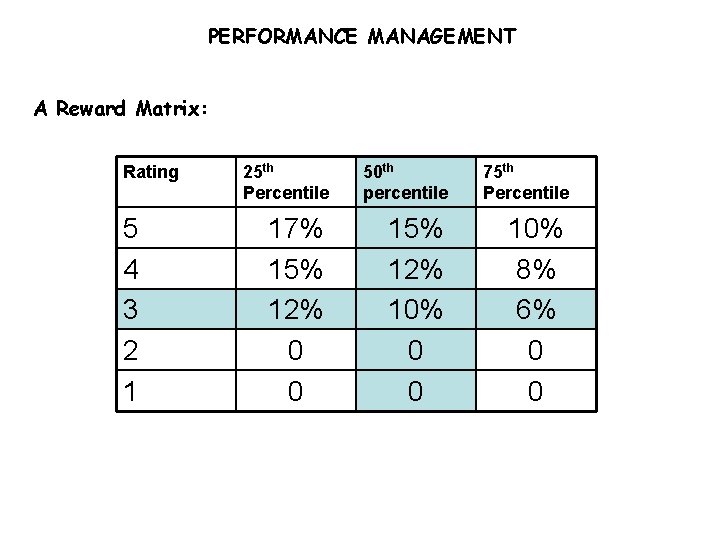
PERFORMANCE MANAGEMENT A Reward Matrix: Rating 5 4 3 2 1 25 th Percentile 50 th percentile 75 th Percentile 17% 15% 12% 0 0 15% 12% 10% 0 0 10% 8% 6% 0 0
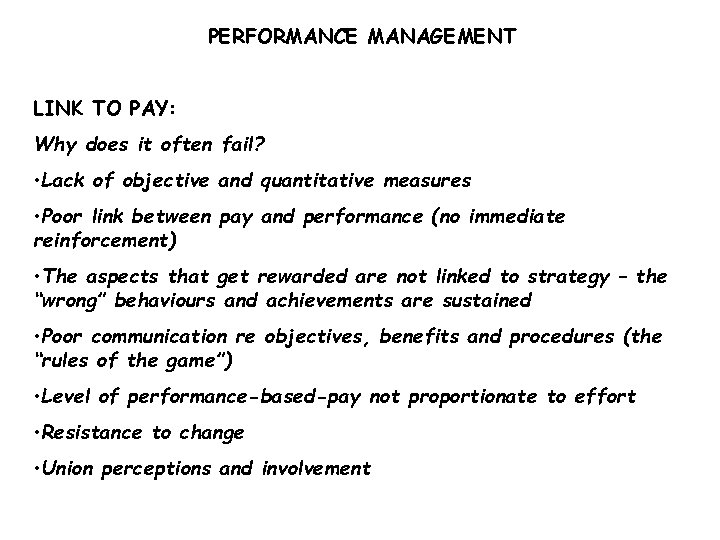
PERFORMANCE MANAGEMENT LINK TO PAY: Why does it often fail? • Lack of objective and quantitative measures • Poor link between pay and performance (no immediate reinforcement) • The aspects that get rewarded are not linked to strategy – the “wrong” behaviours and achievements are sustained • Poor communication re objectives, benefits and procedures (the “rules of the game”) • Level of performance-based-pay not proportionate to effort • Resistance to change • Union perceptions and involvement
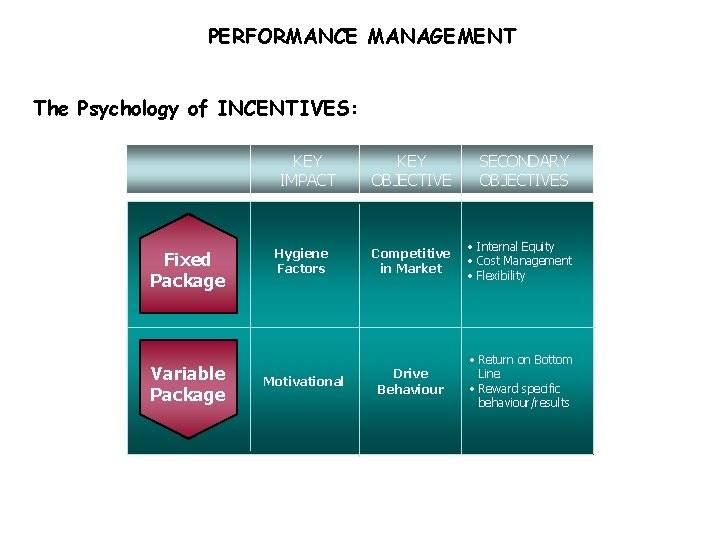
PERFORMANCE MANAGEMENT The Psychology of INCENTIVES: KEY IMPACT Fixed Package Variable Package KEY OBJECTIVE SECONDARY OBJECTIVES Hygiene Factors Competitive in Market • Internal Equity • Cost Management • Flexibility Motivational Drive Behaviour • Return on Bottom Line • Reward specific behaviour/results
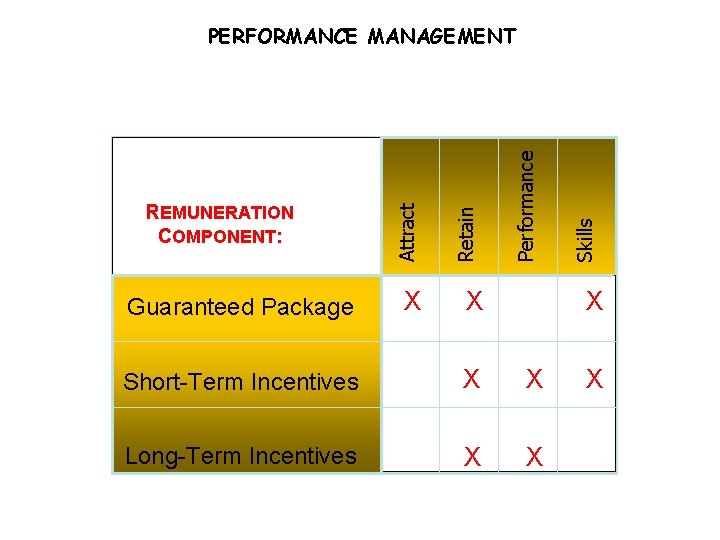
Guaranteed Package X X Skills Performance Retain REMUNERATION COMPONENT: Attract PERFORMANCE MANAGEMENT X Short-Term Incentives X X Long-Term Incentives X X X
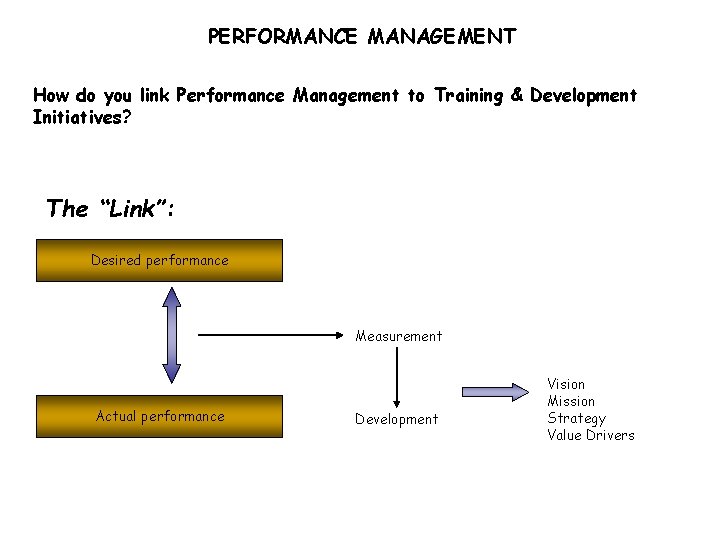
PERFORMANCE MANAGEMENT How do you link Performance Management to Training & Development Initiatives? The “Link”: Desired performance Measurement Actual performance Development Vision Mission Strategy Value Drivers
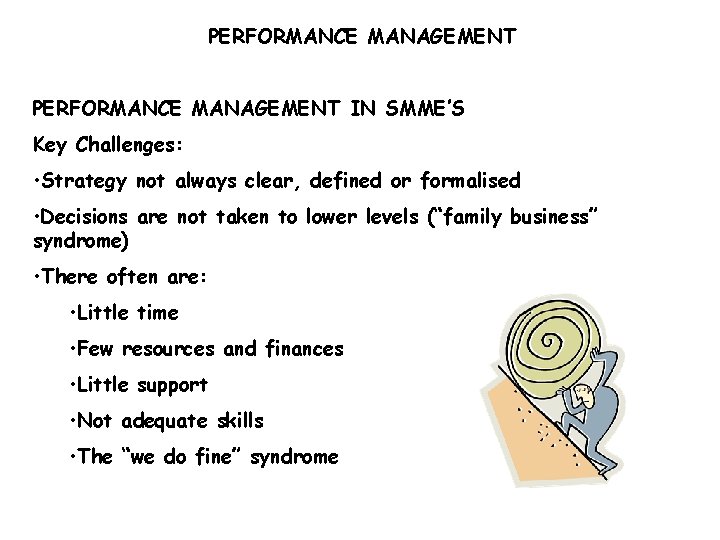
PERFORMANCE MANAGEMENT IN SMME’S Key Challenges: • Strategy not always clear, defined or formalised • Decisions are not taken to lower levels (“family business” syndrome) • There often are: • Little time • Few resources and finances • Little support • Not adequate skills • The “we do fine” syndrome
PERFORMANCE MANAGEMENT Q & A