
Introduction to People Organisations Building Performance Through People
Introduction to People & Organisations Building Performance Through People James Gordon-Hall jgordonhall@lincoln. ac. uk
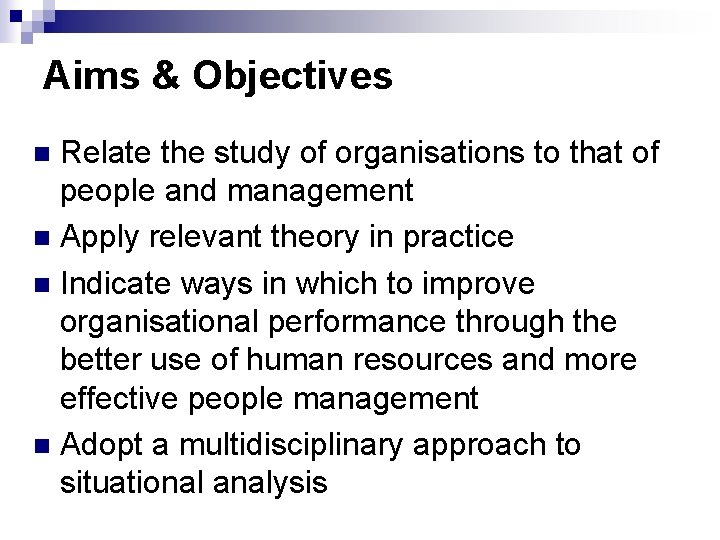
Aims & Objectives Relate the study of organisations to that of people and management n Apply relevant theory in practice n Indicate ways in which to improve organisational performance through the better use of human resources and more effective people management n Adopt a multidisciplinary approach to situational analysis n
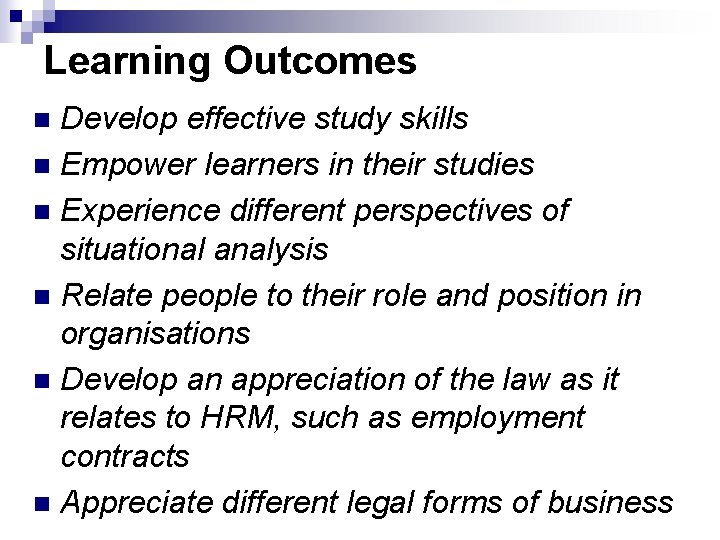
Learning Outcomes Develop effective study skills n Empower learners in their studies n Experience different perspectives of situational analysis n Relate people to their role and position in organisations n Develop an appreciation of the law as it relates to HRM, such as employment contracts n Appreciate different legal forms of business n
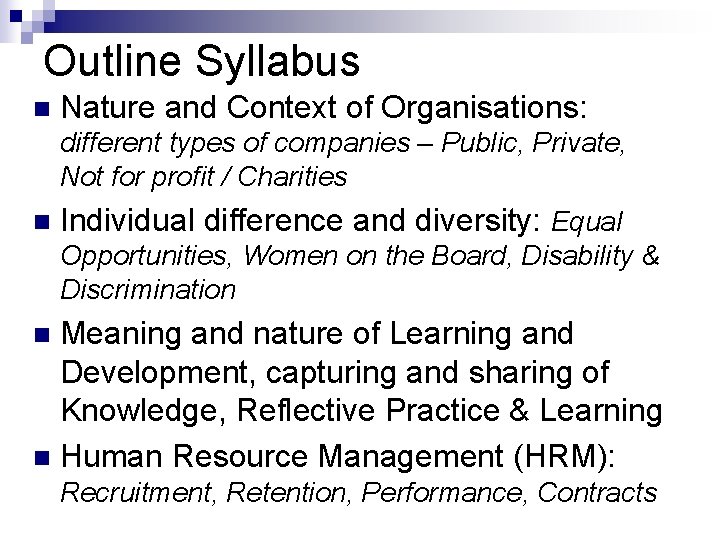
Outline Syllabus n Nature and Context of Organisations: different types of companies – Public, Private, Not for profit / Charities n Individual difference and diversity: Equal Opportunities, Women on the Board, Disability & Discrimination Meaning and nature of Learning and Development, capturing and sharing of Knowledge, Reflective Practice & Learning n Human Resource Management (HRM): n Recruitment, Retention, Performance, Contracts
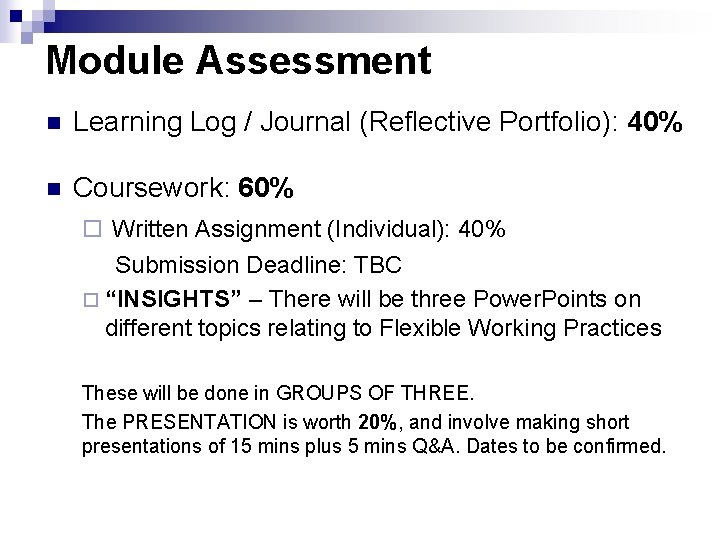
Module Assessment n Learning Log / Journal (Reflective Portfolio): 40% n Coursework: 60% ¨ Written Assignment (Individual): 40% Submission Deadline: TBC ¨ “INSIGHTS” – There will be three Power. Points on different topics relating to Flexible Working Practices These will be done in GROUPS OF THREE. The PRESENTATION is worth 20%, and involve making short presentations of 15 mins plus 5 mins Q&A. Dates to be confirmed.
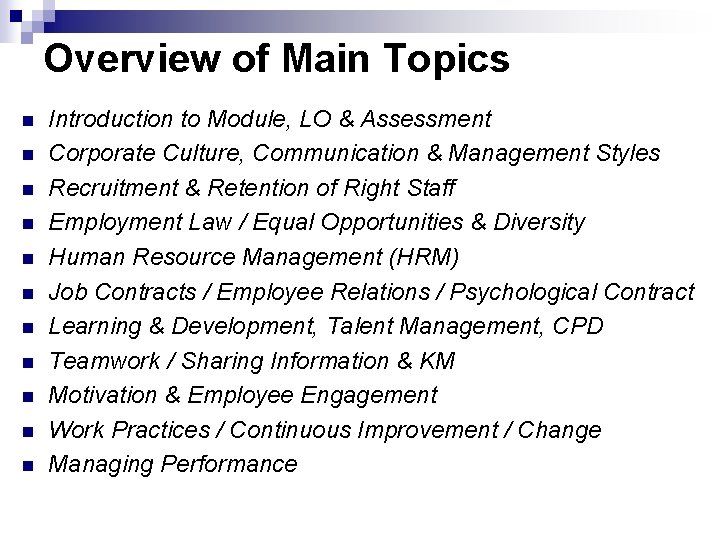
Overview of Main Topics n n n Introduction to Module, LO & Assessment Corporate Culture, Communication & Management Styles Recruitment & Retention of Right Staff Employment Law / Equal Opportunities & Diversity Human Resource Management (HRM) Job Contracts / Employee Relations / Psychological Contract Learning & Development, Talent Management, CPD Teamwork / Sharing Information & KM Motivation & Employee Engagement Work Practices / Continuous Improvement / Change Managing Performance
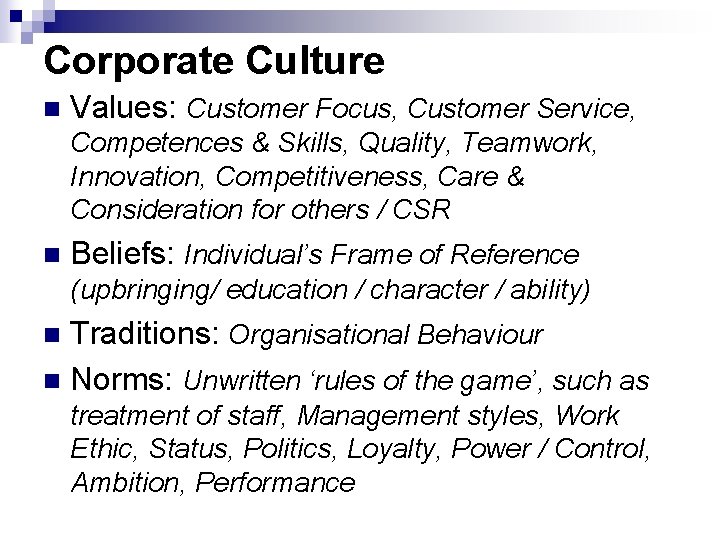
Corporate Culture n Values: Customer Focus, Customer Service, Competences & Skills, Quality, Teamwork, Innovation, Competitiveness, Care & Consideration for others / CSR n Beliefs: Individual’s Frame of Reference (upbringing/ education / character / ability) Traditions: Organisational Behaviour n Norms: Unwritten ‘rules of the game’, such as n treatment of staff, Management styles, Work Ethic, Status, Politics, Loyalty, Power / Control, Ambition, Performance

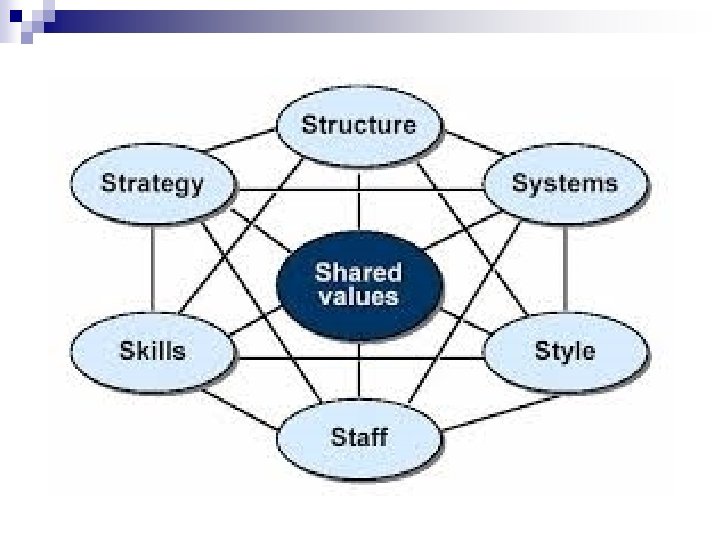
Human Resource Management Selecting and recruiting the correct people, ensuring that employment contracts are in place, salary and terms of employment n Performance appraisals n Induction, Learning & Development, CPD n Talent Management n Disciplinary Procedures n Worklife Balance n Redundancies / Retirement n
Knowledge Management (KM) How do organisations know what they know? n Sharing information and knowledge n Developing new and innovative ideas n Adapt, Adopt and Apply skills and learning n Implement new & best work practices n Facilitate decision making processes to embrace employee empowerment n Accept more autonomous / distance working n
Motivation & Employee Engagement Consider the significance of having a motivated workforce n Management styles facilitate greater staff motivation, involvement, commitment and develop Employee Engagement n Support individual ambitions and aspirations while encouraging teamwork n Employee Relations that are conducive to innovation & higher performance n Strong morale and pride in organisation n


Culture that allows people to … CONNECT COMMUNICATE COLLABORATE CHALLENGE CREATE CHANGE CONFIRM
Flexible Working Practices n n n External pressures – Brexit Changing face of the workplace Part time / Flexible Working / Job Share Zero Hour Contracts / Short Term Contracts Distance Working / Home Working Outsourcing – has it had its day? Continual increase in use of technology Constant requirement for up-skilling Staff retention Down sizing / Cost Reduction / Lean Variable attempts at EO / Diversity
Potential drawbacks in workplace Poor levels of involvement n Lack of inclusiveness / Teamwork issues n Inefficient processes / Low productivity n Mistakes / High Wastage / Poor quality n Feelings of stress / strain / added pressure n Unfair treatment / Low morale n Negativity about future prospects n Threat of job loss / risk of redundancy n General uncertainty/ changing expectations n
Keep an eye open for HRM issues n n Frequently there are items in the Press regarding Work Practices, Women in Senior Management or similar matters Develop your reading: ¨ Laurie Mullins’ Management & Organisational Behaviour ¨ Michael Armstrong’s Handbook of HRM Practice Visit www. cipd. co. uk, www. mindtools. com, and www. accel-team. com View: www. Building. Performance. Through. People. com
INSIGHTS – Working Together We will be looking at a variety of important aspects concerning People, Practices and Performance, and evaluating how organisations can benefit from embracing Flexible Working Practices to facilitate Building Performance Through People. n You will work in Groups of Three, so be thinking about who you wish to present with. Topics / Dates TBC. n
Looking Forward to Reflection n n For the Reflective Learning Logs / Journal, you will be working with Ian Ulyatt Consider the role of Reflection in your daily and working lives, and your studying at University Ask how will it help you learn better and improve your skills and knowledge Consider the broader aspects of what reflection will enable you to do better Imagine how reflection might change your attitudes and behaviour towards other people and improve your understanding of situations
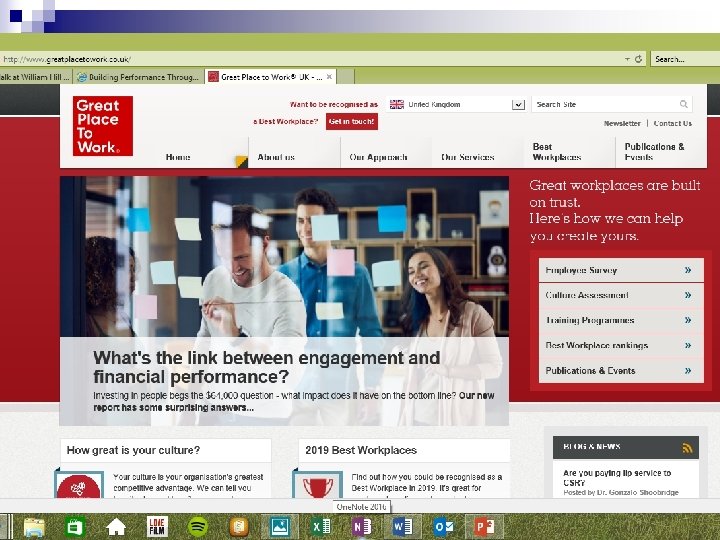
Planning ahead Tomorrow we will organise who you will presenting the Insights with in pairs n We will also be talking about culture and organisations people know and admire, great places to work, and thinking about their recruitment strategies n We will also be considering the broader issues of Building Performance Through People and what that might mean n
- Slides: 21