
Introduction to Peer Group Supervision Kent headteachers Annual

- Slides: 34
Introduction to Peer Group Supervision Kent headteachers Annual CONFERENCE 22. 11. 18. Presented by Dr Tina Rae
To understand the process of forming of a peer supervision groupcontracting To understand the experience of peer supervision- roles/ pitfalls/ strengths To clarify how peer group supervision provides a safe place and emotional support whilst developing skills and experience of participants Aims To consolidate awareness of the continuing need for supervision of supervision
A quotation ‘The unexamined life is not worth living – the unexamined work is not worth doing’ Aristotle
Definition • Supervision is ‘what happens when people who work in the helping professions make a formal arrangement to think with another or others about their work with a view to providing the best possible service to clients, and enhancing their own personal and professional development. ’ (Scaife, 2009).
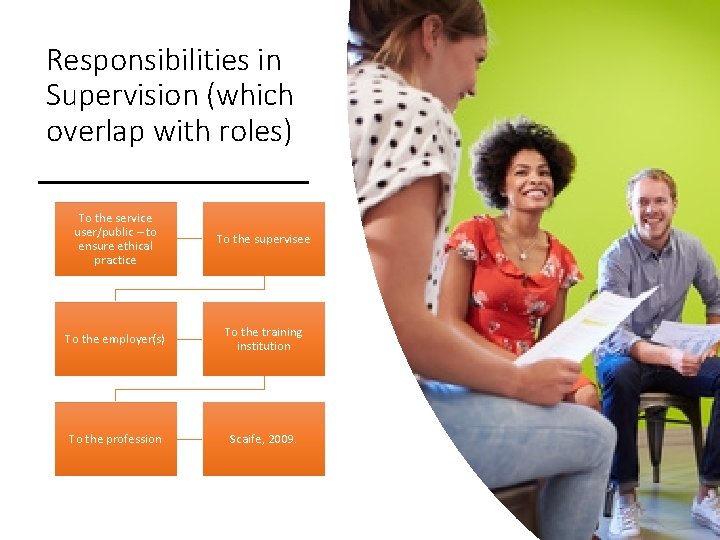
Responsibilities in Supervision (which overlap with roles) To the service user/public – to ensure ethical practice To the supervisee To the employer(s) To the training institution To the profession Scaife, 2009.
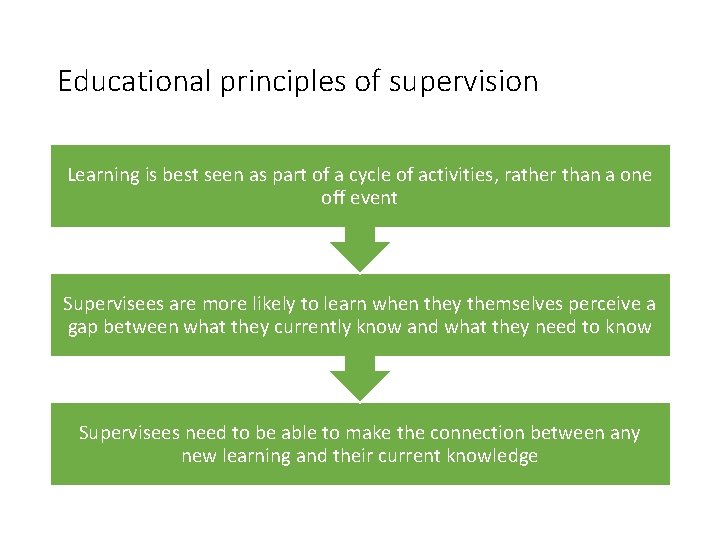
Educational principles of supervision Learning is best seen as part of a cycle of activities, rather than a one off event Supervisees are more likely to learn when they themselves perceive a gap between what they currently know and what they need to know Supervisees need to be able to make the connection between any new learning and their current knowledge
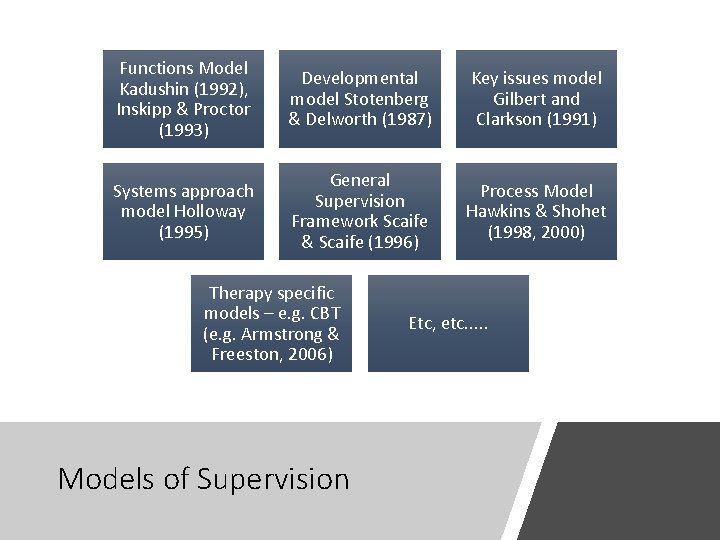
Functions Model Kadushin (1992), Inskipp & Proctor (1993) Developmental model Stotenberg & Delworth (1987) Key issues model Gilbert and Clarkson (1991) Systems approach model Holloway (1995) General Supervision Framework Scaife & Scaife (1996) Process Model Hawkins & Shohet (1998, 2000) Therapy specific models – e. g. CBT (e. g. Armstrong & Freeston, 2006) Models of Supervision Etc, etc. . .
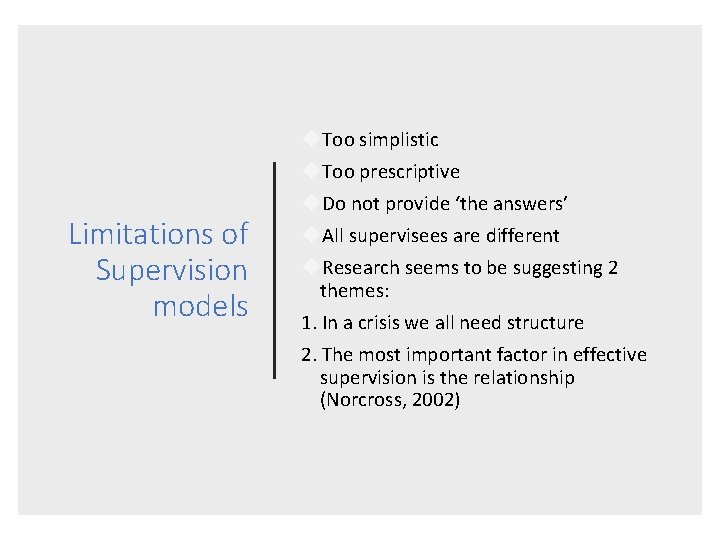
Limitations of Supervision models Too simplistic Too prescriptive Do not provide ‘the answers’ All supervisees are different Research seems to be suggesting 2 themes: 1. In a crisis we all need structure 2. The most important factor in effective supervision is the relationship (Norcross, 2002)
Peer Group Supervision
What is Peer group supervision? Peer group supervision is an effective form of leaderless peer group counselling Participants confer with one another by reciprocating key topics of their professional everyday lives, in order to provide solutions to difficult problems Participants learn better ways to manage professional problems and reduce stress and emotional ‘burnout’ associated with the caring professions
Functions of Peer Supervision Groups Qualitative analysis by Jenny Hawkey (2004) of peer supervision found these functions to be as follows: • Meeting own emotional needs • Using others as a problem-solving tool • Drawing on others knowledge/resources to broaden scope
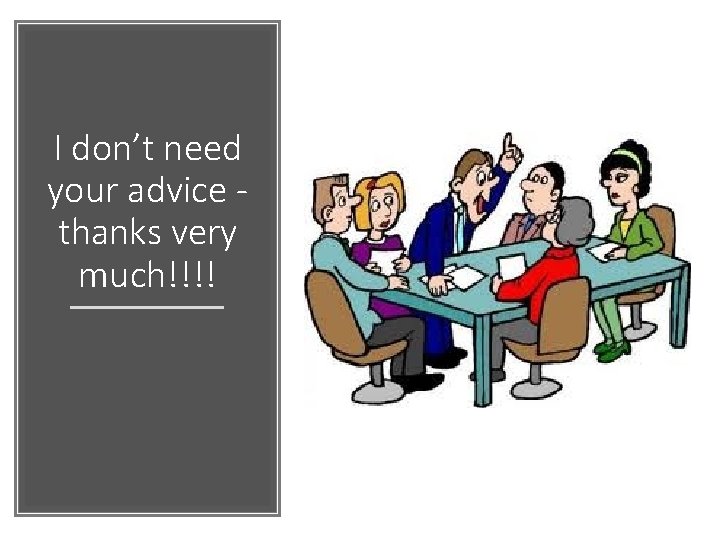
I don’t need your advice thanks very much!!!!
Pitfalls/traps/games in groups (Houston, 1985, cited in Hawkey, 2004) Measuring cocks Ain’t it awful? We are all so wonderful Who is the best supervisor? Hunt the patient
7 factors for effective peer group supervision • 1. equality • 2. supportive culture • 3. structure • 4. place high value on attendance • 5. super ‘plus’ vision • 6. self directed – you are in charge • 7. no ‘post mortems’
Experiences of supervision Consider your experiences of supervision What models have you used?
Peer Supervision Groups for Probation Officers Mark Tisdall and Kieran O’Donoghue (2003) To develop group rapport and emotional safety. Identify and discuss common problems in our professional practice. Support and guide each other in managing workplace politics. Create a forum to discuss professional and practice ethical dilemmas and develop strategies. Bring positive outcomes of our work as well as problems. To develop and update knowledge and skills in working with students, parents and other client groups. To enjoy the sessions and be empowered by them.
Function of group supervision According to Rapp, (1998) a strengths based form of group supervision is designed to accomplish three purposes: 1. Support and affirmation 2. Ideas 3. Learning
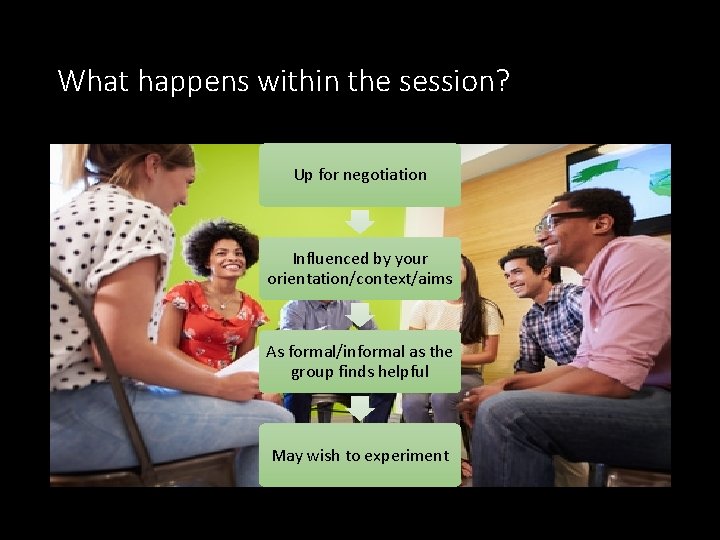
What happens within the session? Up for negotiation Influenced by your orientation/context/aims As formal/informal as the group finds helpful May wish to experiment
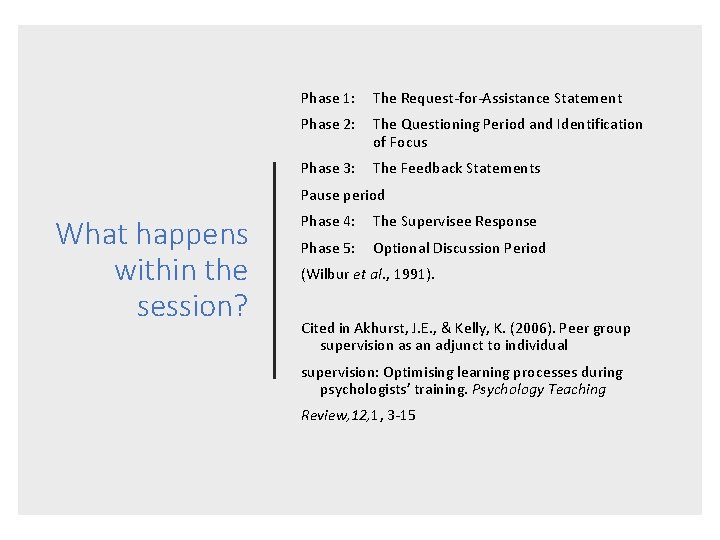
Phase 1: The Request-for-Assistance Statement Phase 2: The Questioning Period and Identification of Focus Phase 3: The Feedback Statements Pause period What happens within the session? Phase 4: The Supervisee Response Phase 5: Optional Discussion Period (Wilbur et al. , 1991). Cited in Akhurst, J. E. , & Kelly, K. (2006). Peer group supervision as an adjunct to individual supervision: Optimising learning processes during psychologists’ training. Psychology Teaching Review, 12, 1, 3 -15
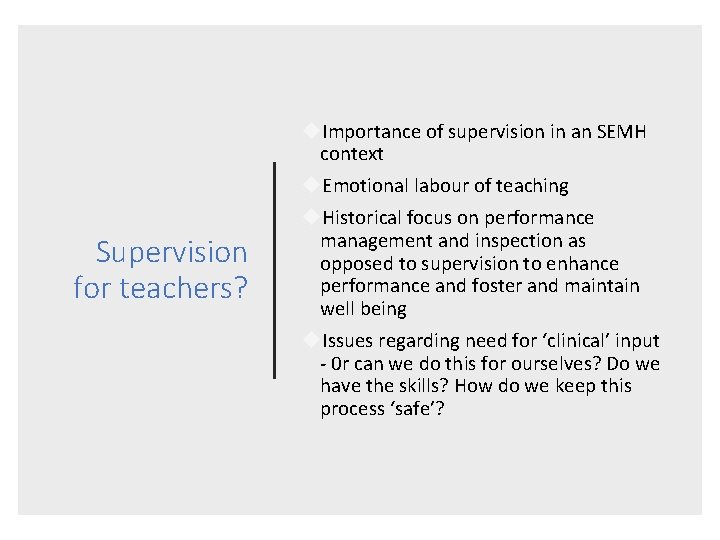
Supervision for teachers? Importance of supervision in an SEMH context Emotional labour of teaching Historical focus on performance management and inspection as opposed to supervision to enhance performance and foster and maintain well being Issues regarding need for ‘clinical’ input - 0 r can we do this for ourselves? Do we have the skills? How do we keep this process ‘safe’?
What are we REALLY trying to prevent? What do you think?
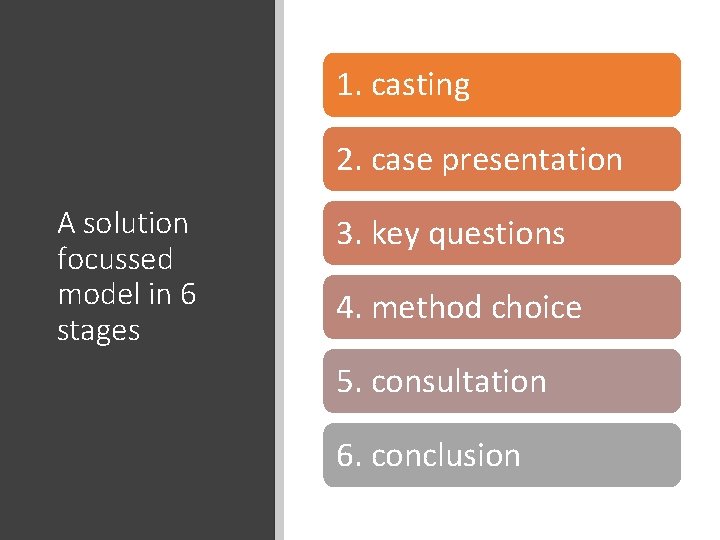
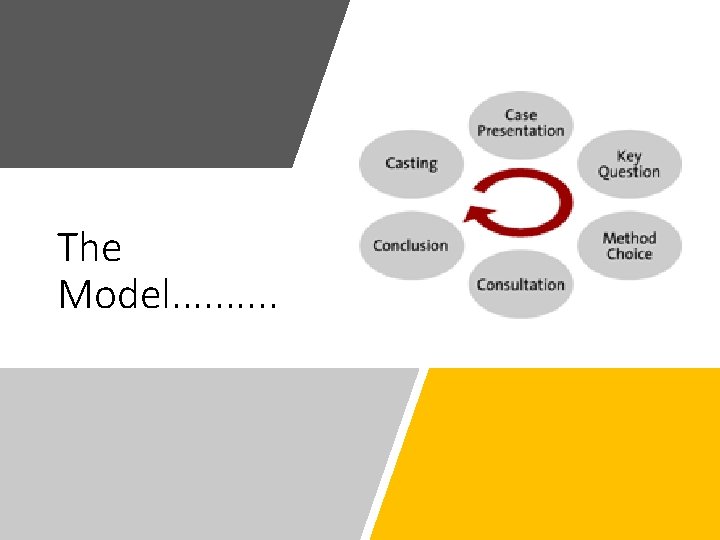
1. casting 2. case presentation A solution focussed model in 6 stages 3. key questions 4. method choice 5. consultation 6. conclusion
The Model. .
Phase 1 casting The following roles have to be assigned: Moderator Case presenter Consultants The group agrees on who will be the moderator and he/she then guides the process. Potential case presenters give a brief outline of their case/issue and all other members become consultants for the session
Phase 2 Case Presentation • The case presenter has 5 -7 minutes to outline case, ensuring important information is presented. • The moderator guides the case presenter by asking clear and focused questions • The consultants listen and then ask 2 -3 comprehensive questions which do not include solutions!
Phase 3 Key Question • The Moderator asks the Case presenter to formulate 1 key question. The key question will set the focus for the following phases of the peer group supervision • If the case presenter finds this difficult, the moderator can support them by offering several key questions from which to choose from
Phase 4 method choice The moderator guides the process of selecting a consulting model to be used to collect various proposals, ideas and SOLUTIONS Thought storming, good pieces of advice, collecting key questions, sound boarding etc…. what other methods might you use?
The consultants give their ideas in order to answer the case presenter’s key question A secretary is nominated to take notes of the contributions Phase 5 Consultation Their task is to produce a great variety of ideas in order to extend the case presenter’s capabilities to solve his/her problem The case presenter is to listen and consider whether these ideas make sense The moderator keeps an eye on time and also pays attention to the attentiveness of the case presenter
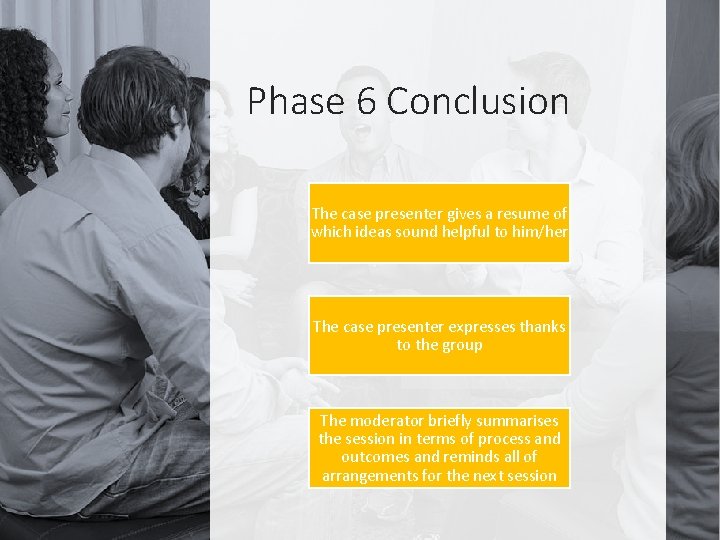
Phase 6 Conclusion The case presenter gives a resume of which ideas sound helpful to him/her The case presenter expresses thanks to the group The moderator briefly summarises the session in terms of process and outcomes and reminds all of arrangements for the next session
The Professional Contract • what accountability is expected of participants • Code of Ethics & Code of Practice • confidentiality in context • overall ration of supervision to contact hours • participant’s rights, responsibilities, and lines of communication with all employers
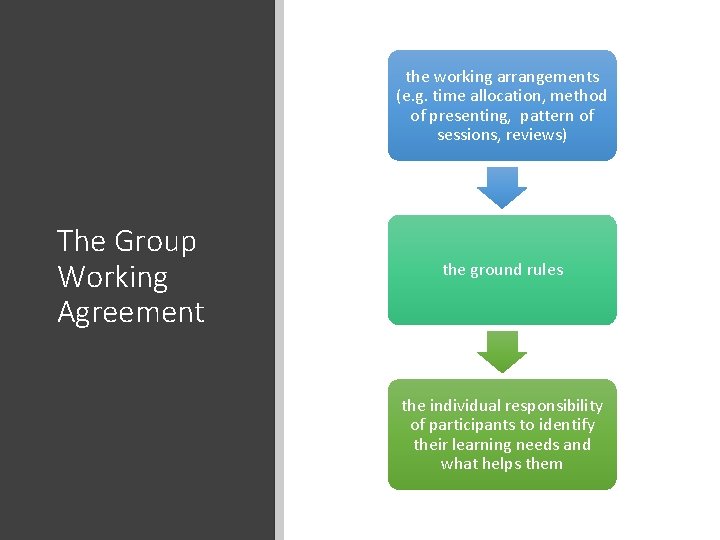
the working arrangements (e. g. time allocation, method of presenting, pattern of sessions, reviews) The Group Working Agreement the ground rules the individual responsibility of participants to identify their learning needs and what helps them
The task Try out the 6 stage model and evaluate the process = 25 minutes and feedback Remember – supervision skills can be learnt and developed in your groups! Future focus – the well being of staff AND students!
Remember – no one knows as much as all of us!
• Thank you for listening and participating! • Tinarae@hotmail. co. uk