
INTRODUCTION TO PARTS OF 7 PARTS OF SPEECH

- Slides: 12
INTRODUCTION TO PARTS OF
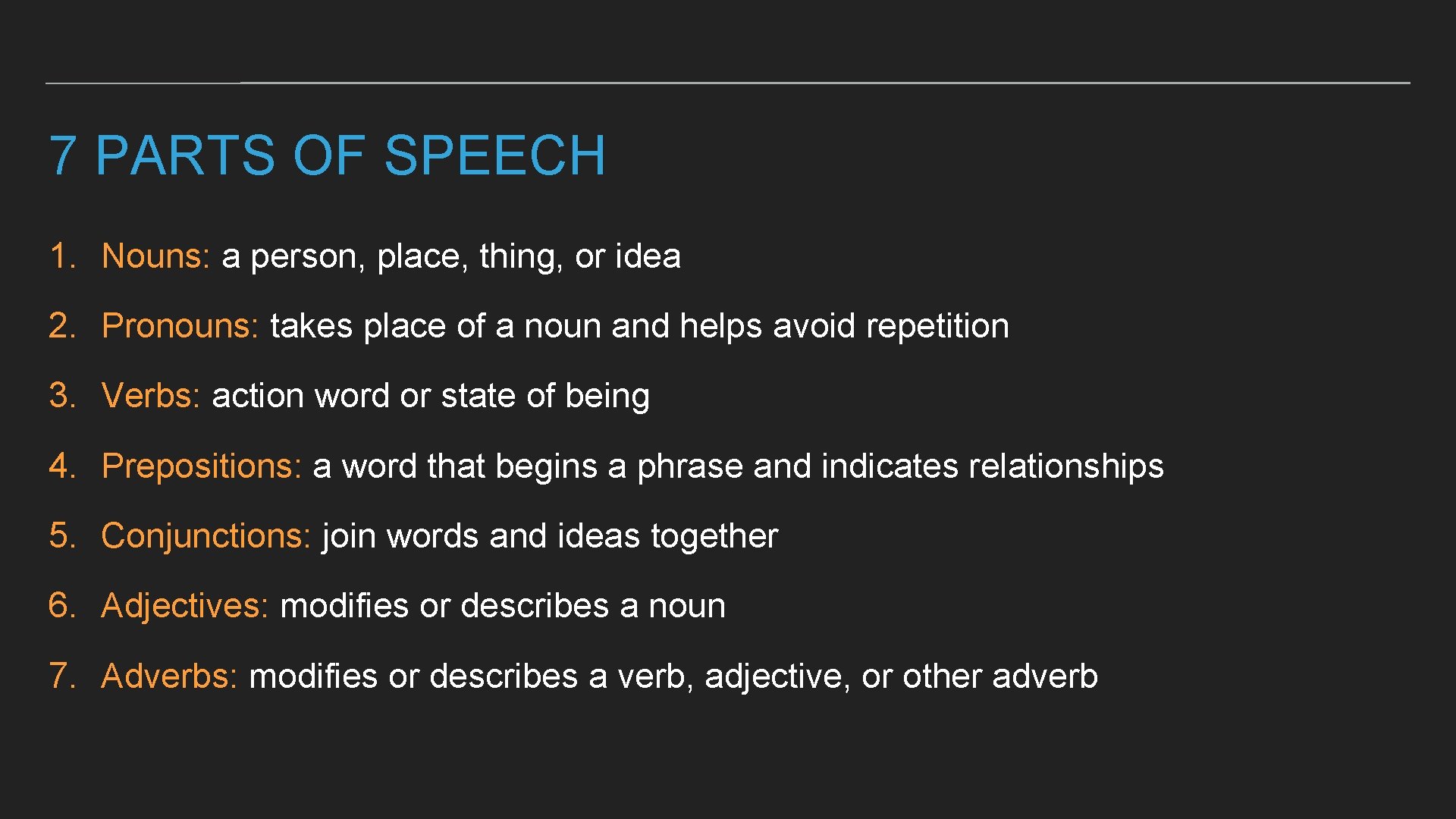
7 PARTS OF SPEECH 1. Nouns: a person, place, thing, or idea 2. Pronouns: takes place of a noun and helps avoid repetition 3. Verbs: action word or state of being 4. Prepositions: a word that begins a phrase and indicates relationships 5. Conjunctions: join words and ideas together 6. Adjectives: modifies or describes a noun 7. Adverbs: modifies or describes a verb, adjective, or other adverb
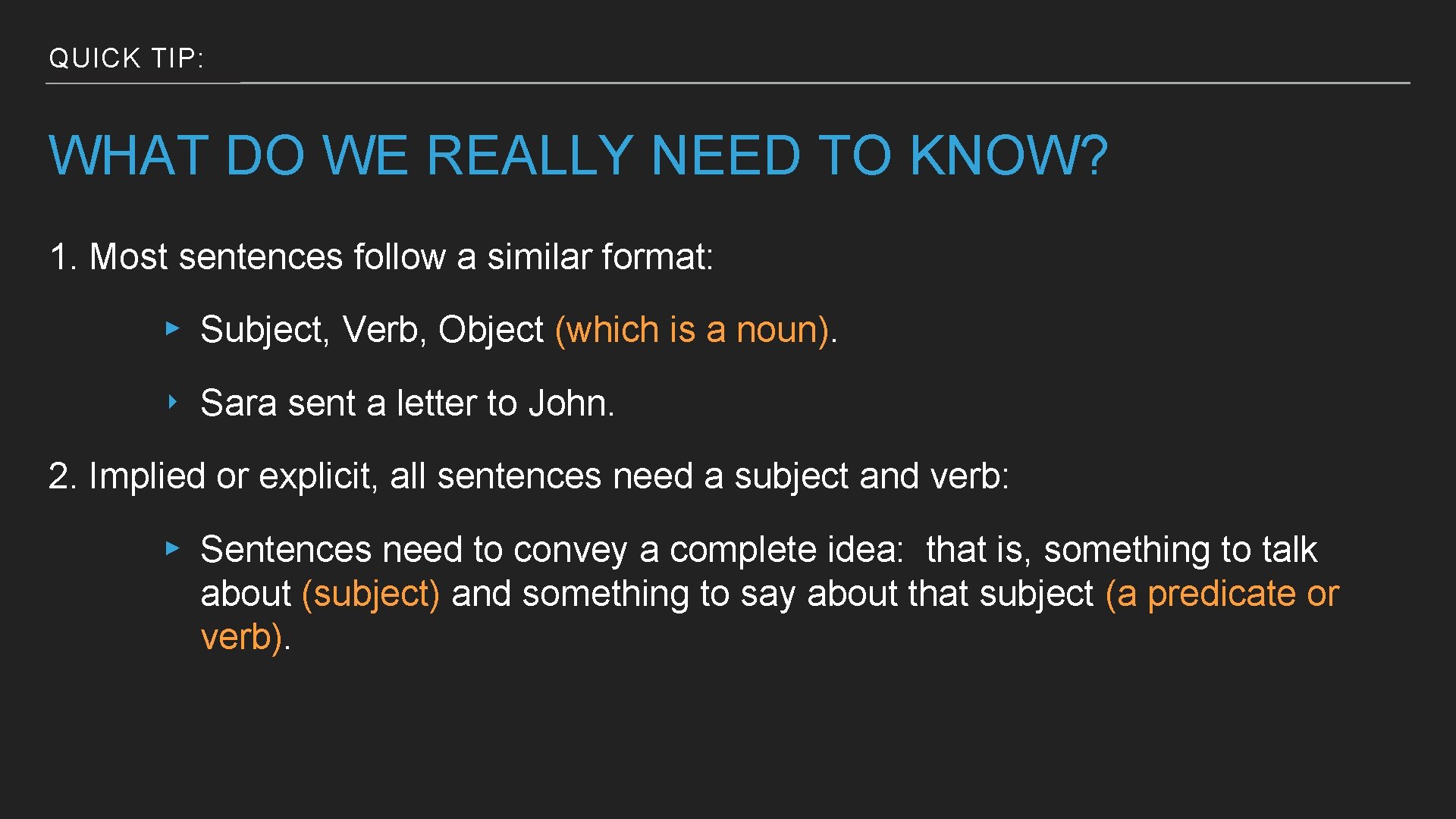
QUICK TIP: WHAT DO WE REALLY NEED TO KNOW? 1. Most sentences follow a similar format: ▸ Subject, Verb, Object (which is a noun). ‣ Sara sent a letter to John. 2. Implied or explicit, all sentences need a subject and verb: ▸ Sentences need to convey a complete idea: that is, something to talk about (subject) and something to say about that subject (a predicate or verb).
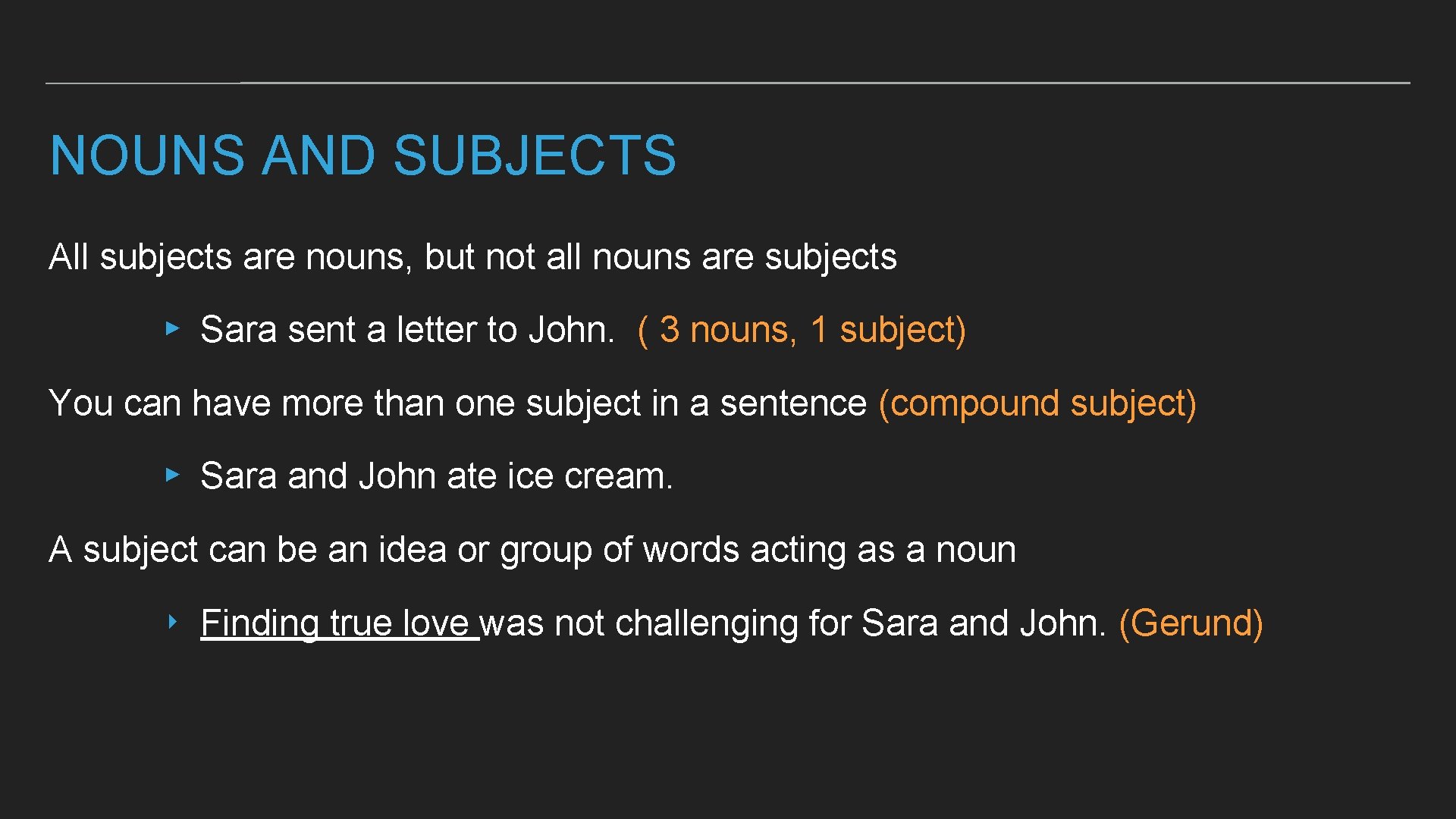
NOUNS AND SUBJECTS All subjects are nouns, but not all nouns are subjects ▸ Sara sent a letter to John. ( 3 nouns, 1 subject) You can have more than one subject in a sentence (compound subject) ▸ Sara and John ate ice cream. A subject can be an idea or group of words acting as a noun ‣ Finding true love was not challenging for Sara and John. (Gerund)
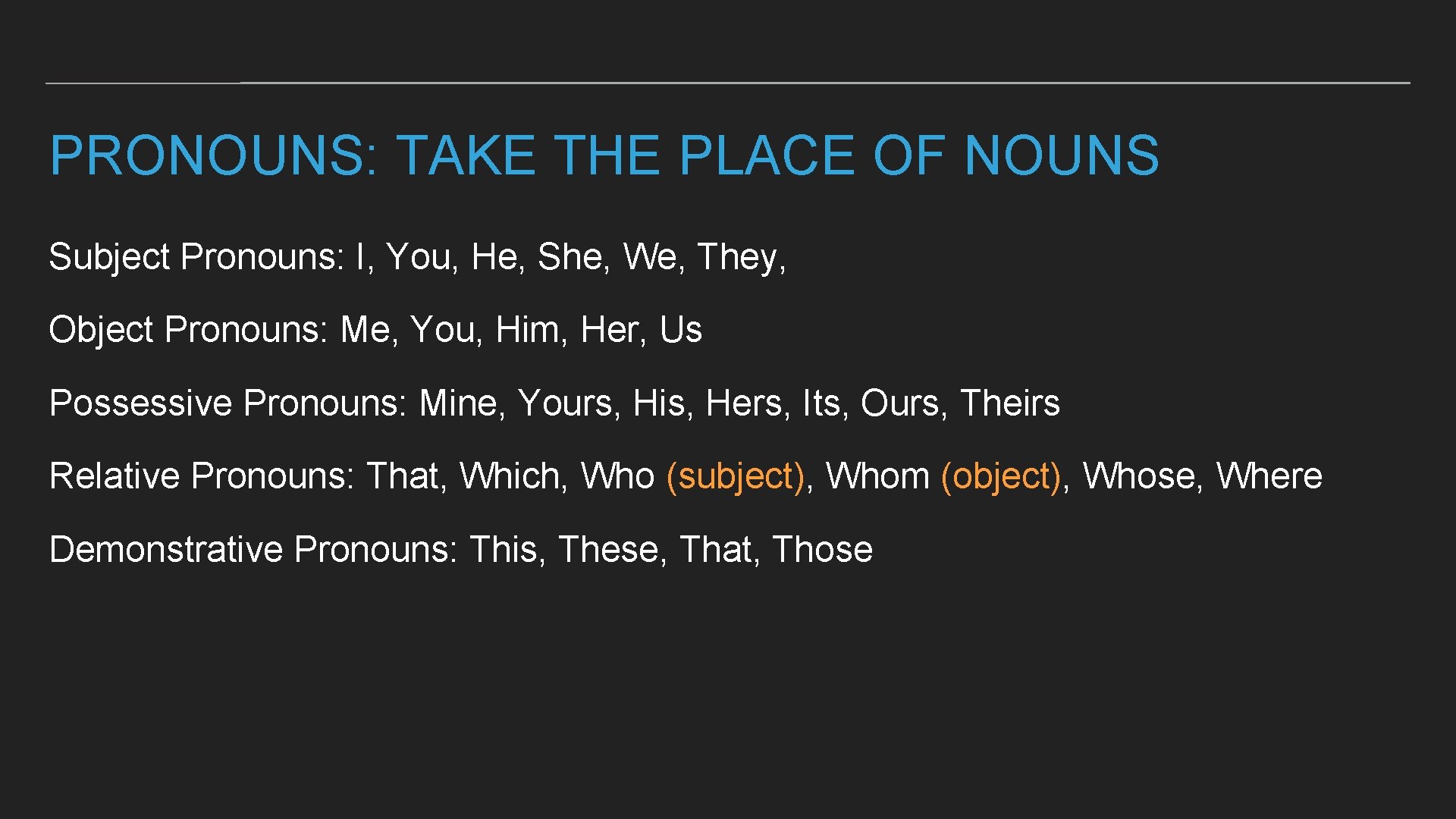
PRONOUNS: TAKE THE PLACE OF NOUNS Subject Pronouns: I, You, He, She, We, They, Object Pronouns: Me, You, Him, Her, Us Possessive Pronouns: Mine, Yours, His, Hers, Its, Ours, Theirs Relative Pronouns: That, Which, Who (subject), Whom (object), Whose, Where Demonstrative Pronouns: This, These, That, Those
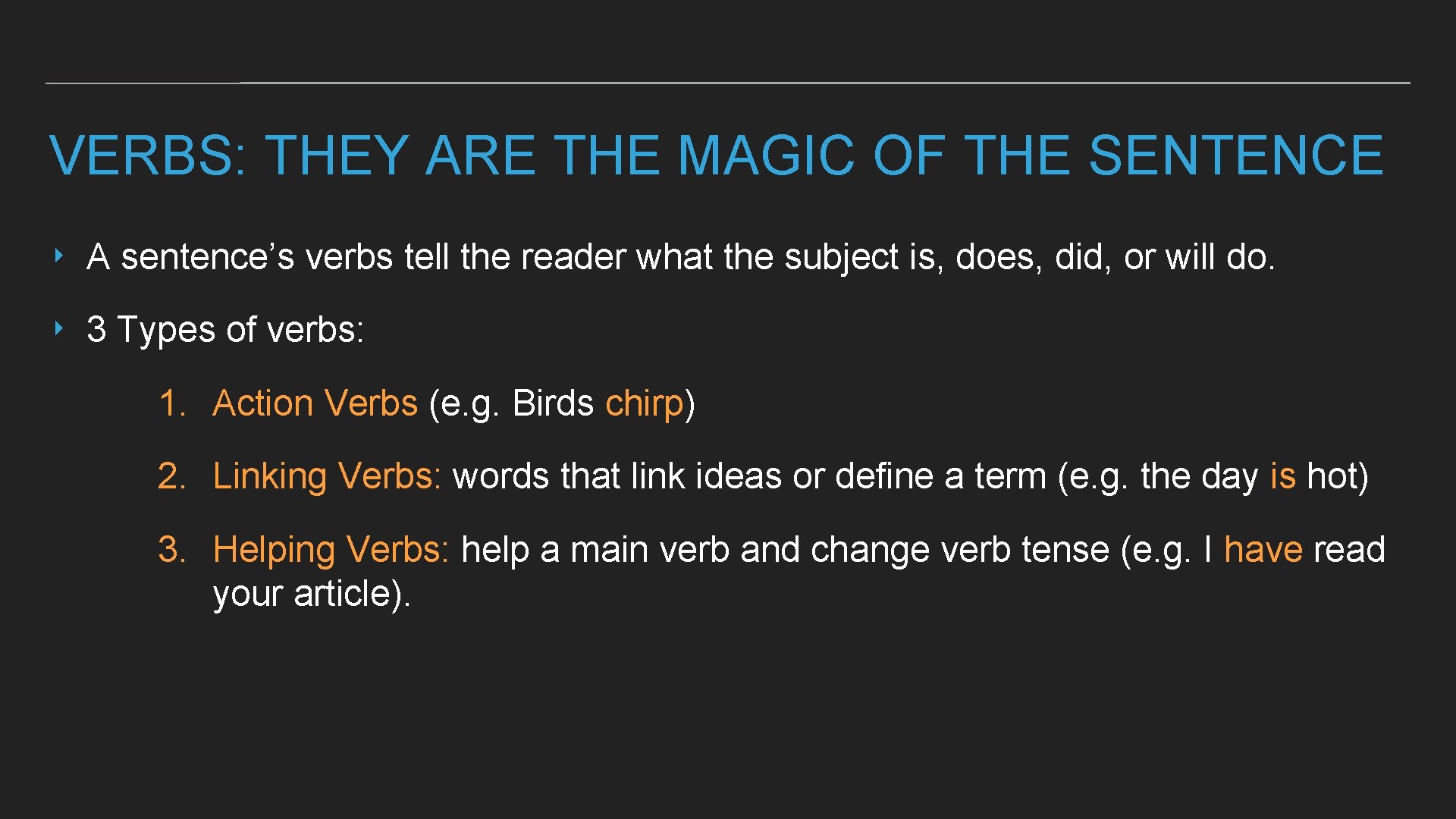
VERBS: THEY ARE THE MAGIC OF THE SENTENCE ‣ A sentence’s verbs tell the reader what the subject is, does, did, or will do. ‣ 3 Types of verbs: 1. Action Verbs (e. g. Birds chirp) 2. Linking Verbs: words that link ideas or define a term (e. g. the day is hot) 3. Helping Verbs: help a main verb and change verb tense (e. g. I have read your article).
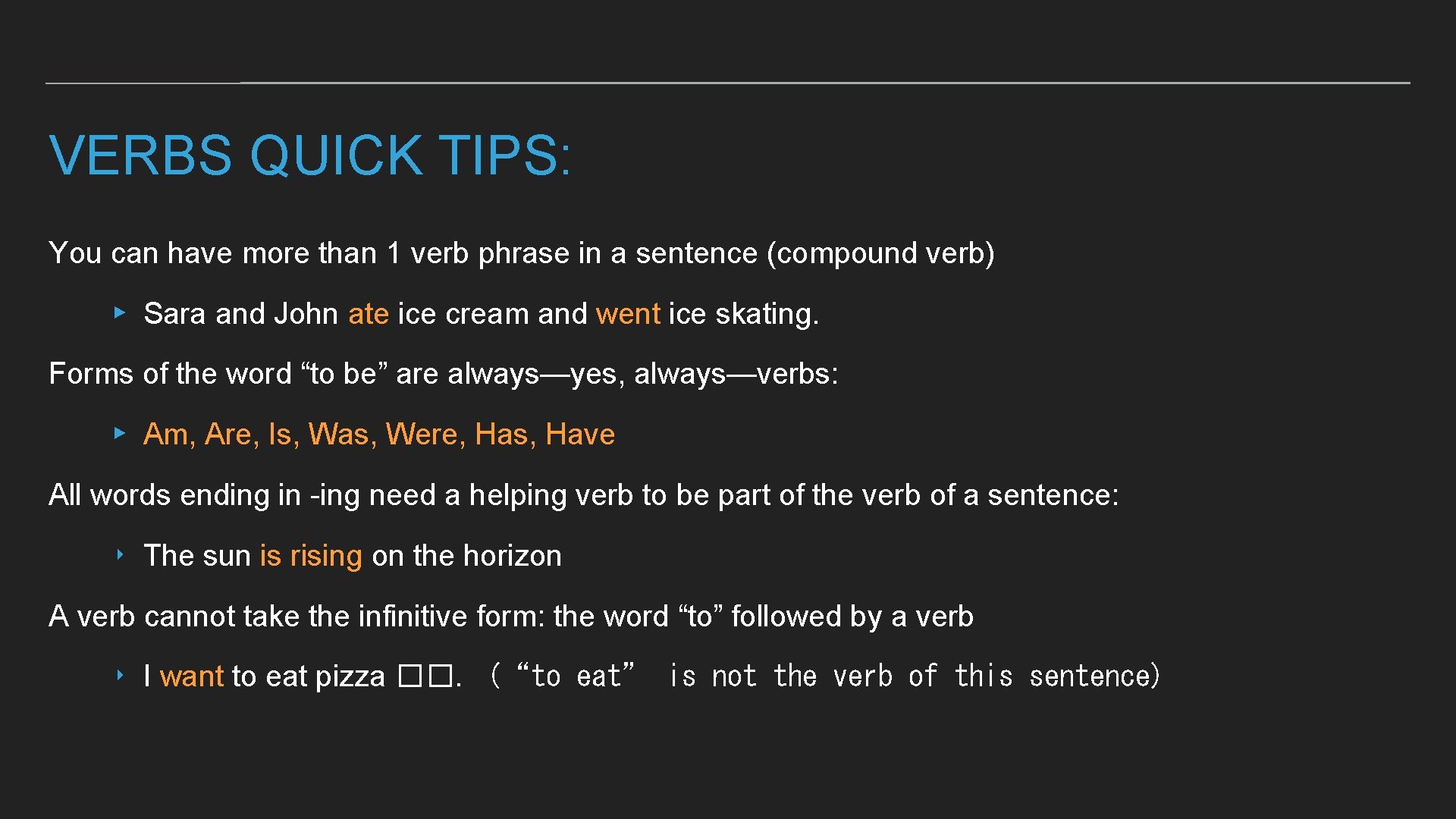
VERBS QUICK TIPS: You can have more than 1 verb phrase in a sentence (compound verb) ▸ Sara and John ate ice cream and went ice skating. Forms of the word “to be” are always—yes, always—verbs: ▸ Am, Are, Is, Was, Were, Has, Have All words ending in -ing need a helping verb to be part of the verb of a sentence: ‣ The sun is rising on the horizon A verb cannot take the infinitive form: the word “to” followed by a verb ‣ I want to eat pizza ��. (“to eat” is not the verb of this sentence)
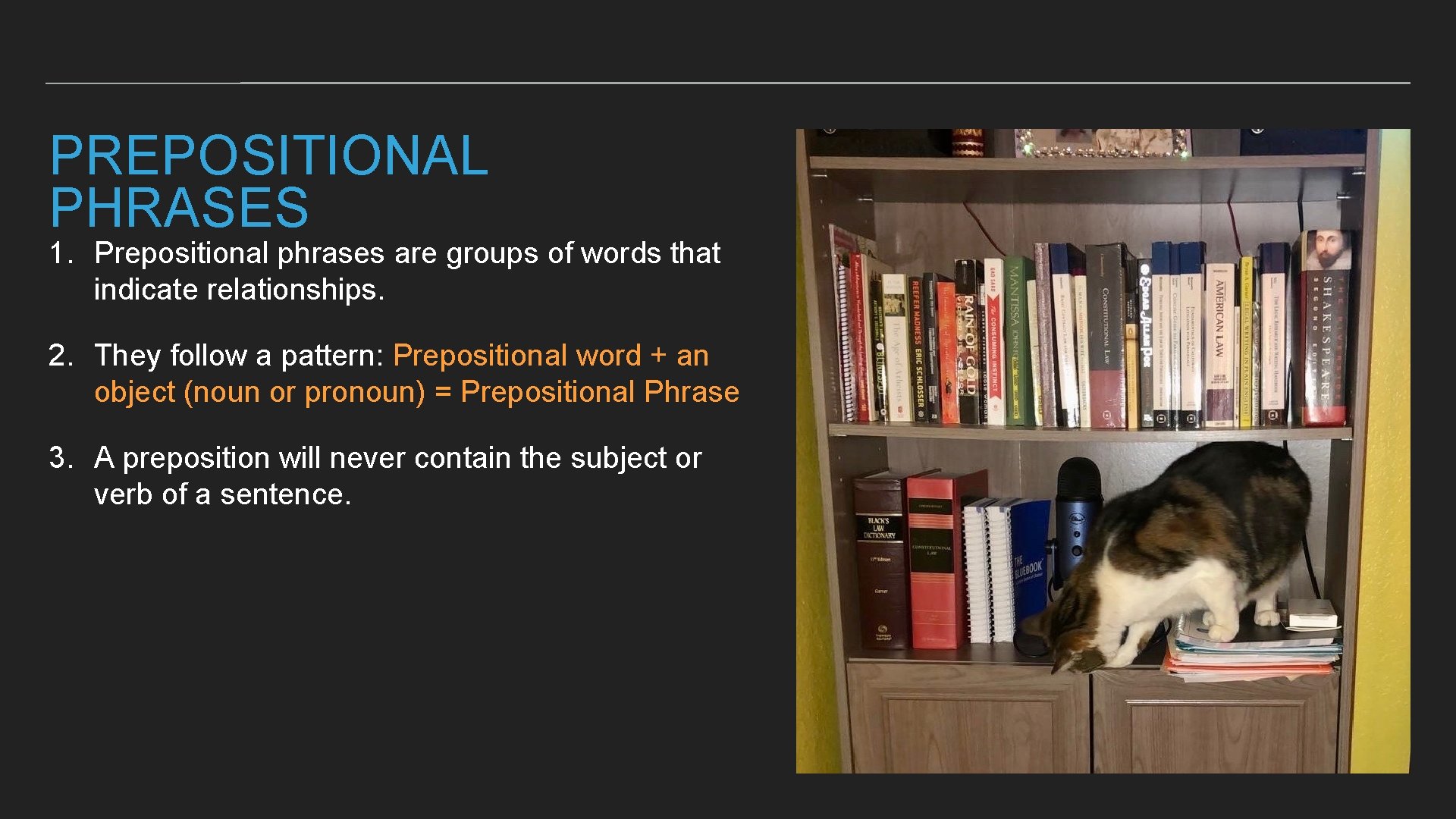
PREPOSITIONAL PHRASES 1. Prepositional phrases are groups of words that indicate relationships. 2. They follow a pattern: Prepositional word + an object (noun or pronoun) = Prepositional Phrase 3. A preposition will never contain the subject or verb of a sentence.
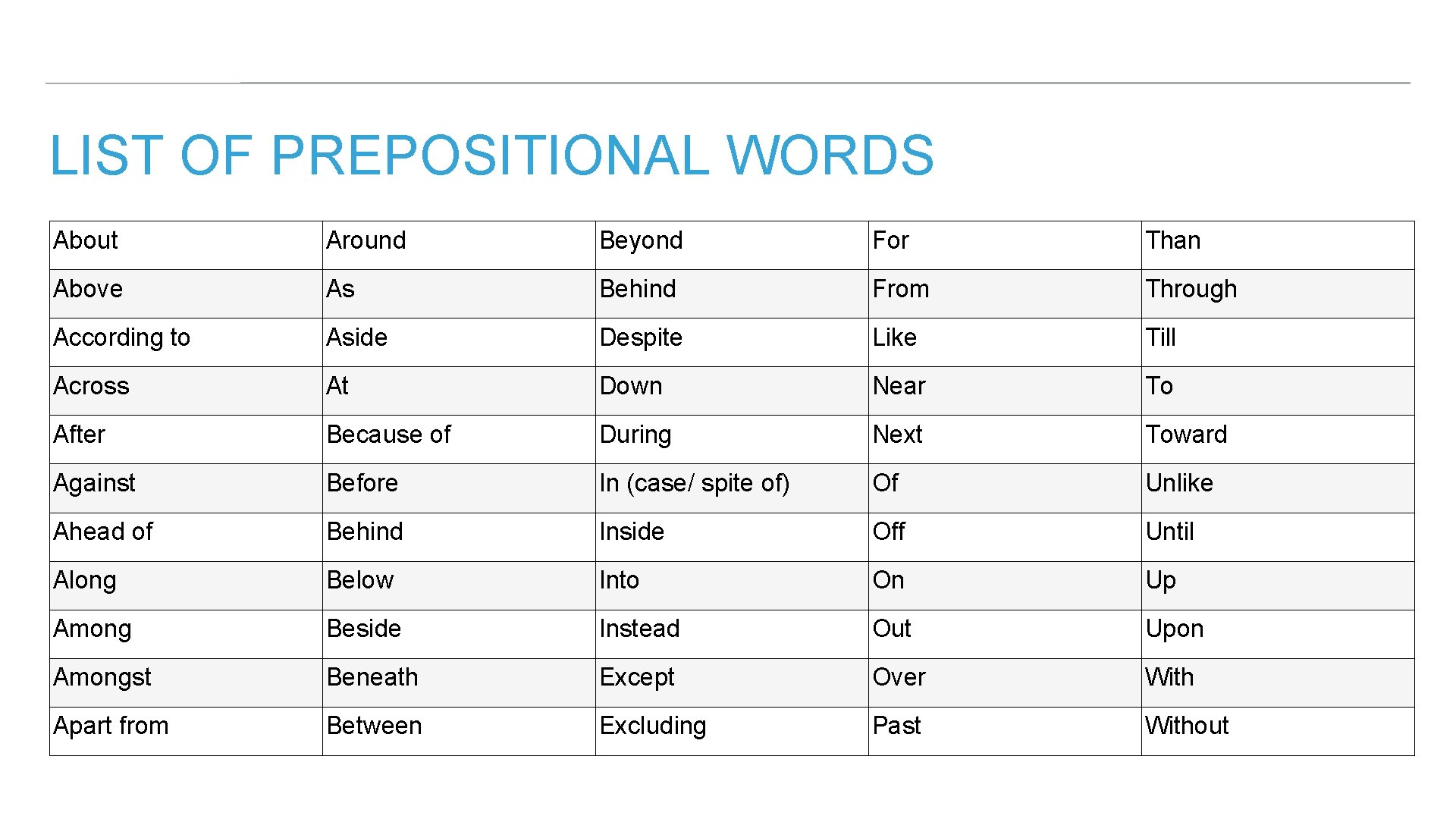
LIST OF PREPOSITIONAL WORDS About Around Beyond For Than Above As Behind From Through According to Aside Despite Like Till Across At Down Near To After Because of During Next Toward Against Before In (case/ spite of) Of Unlike Ahead of Behind Inside Off Until Along Below Into On Up Among Beside Instead Out Upon Amongst Beneath Except Over With Apart from Between Excluding Past Without
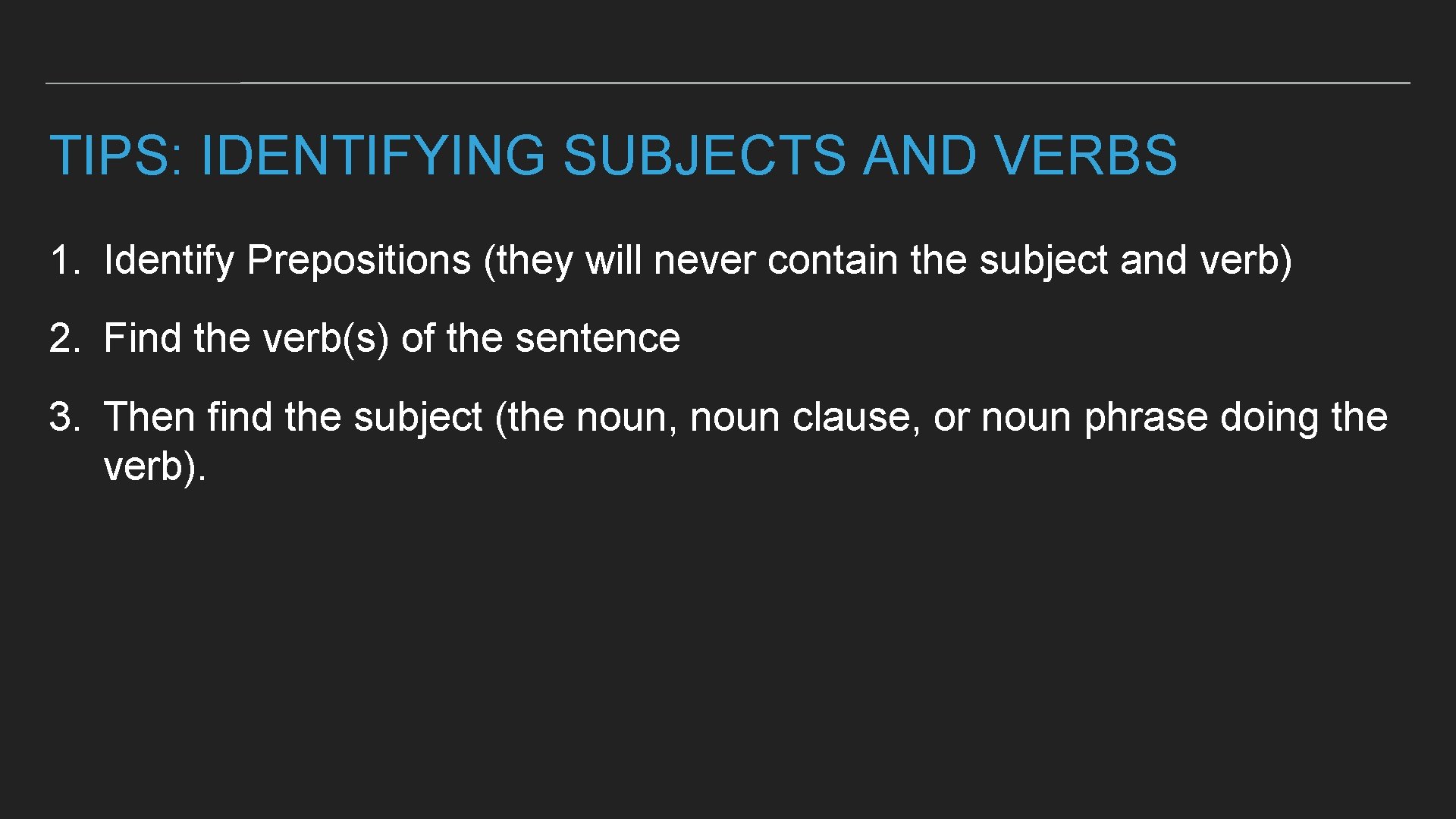
TIPS: IDENTIFYING SUBJECTS AND VERBS 1. Identify Prepositions (they will never contain the subject and verb) 2. Find the verb(s) of the sentence 3. Then find the subject (the noun, noun clause, or noun phrase doing the verb).
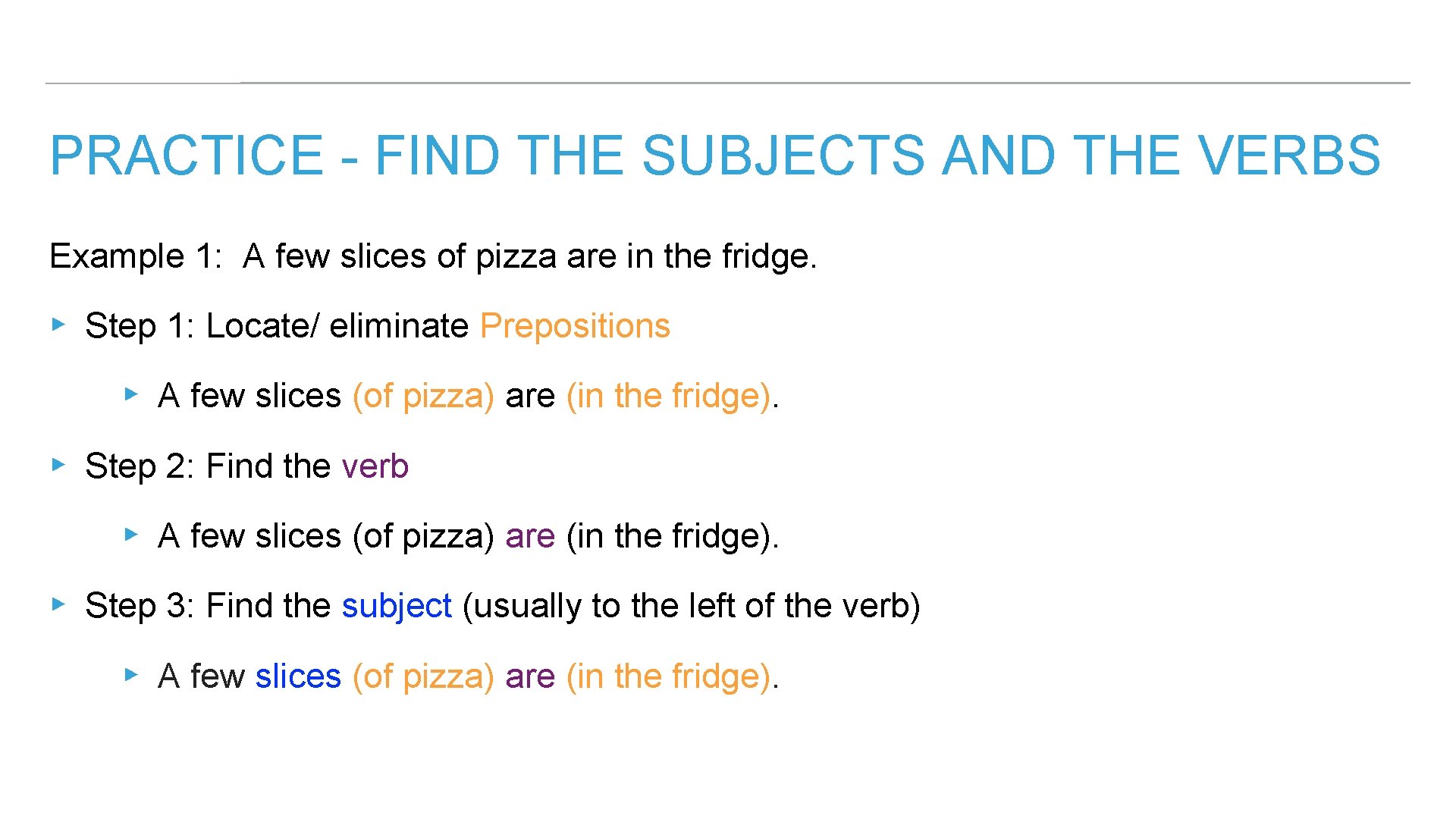
PRACTICE - FIND THE SUBJECTS AND THE VERBS Example 1: A few slices of pizza are in the fridge. ▸ Step 1: Locate/ eliminate Prepositions ▸ A few slices (of pizza) are (in the fridge). ▸ Step 2: Find the verb ▸ A few slices (of pizza) are (in the fridge). ▸ Step 3: Find the subject (usually to the left of the verb) ▸ A few slices (of pizza) are (in the fridge).
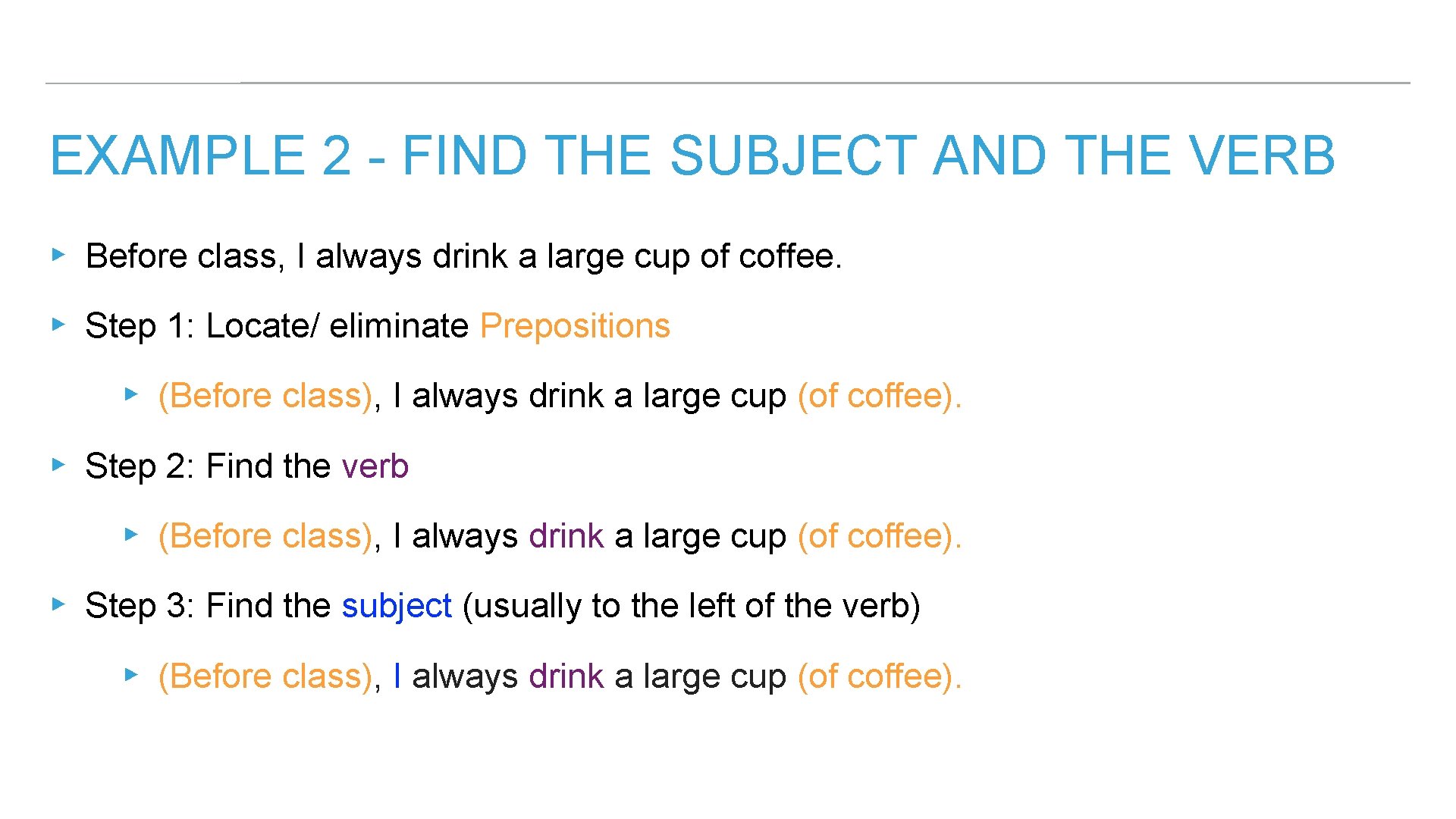
EXAMPLE 2 - FIND THE SUBJECT AND THE VERB ▸ Before class, I always drink a large cup of coffee. ▸ Step 1: Locate/ eliminate Prepositions ▸ (Before class), I always drink a large cup (of coffee). ▸ Step 2: Find the verb ▸ (Before class), I always drink a large cup (of coffee). ▸ Step 3: Find the subject (usually to the left of the verb) ▸ (Before class), I always drink a large cup (of coffee).