
INTRODUCTION TO PARASITOLOGY and Lab Safety Common terminology
INTRODUCTION TO PARASITOLOGY and Lab Safety

Common terminology: � Parasite � Host � Definitive host � Intermediate host � Infective stage � Diagnostic stage � Vector � Life cycle

Practical classification of parasites of medical importance: � Protozoa: single-celled organisms “Multiply in human host” � Helminthes: multicellular worms “Do not normally multiply in human host”
Protozoa: Amoeba: Entamoeba histolytica Acanthamoeba Species Naegleria Species Flagellates: Giardia lamlia Trichomonas vaginalis Trypanosoma species Leishmania species
Ciliates: Balantidium coli Coccidia: Blood and tissue coccidia: Plasmodium species Toxoplasma gondii Intestinal coccidia: Isospora belli Cryptosporidium parvum
Helminthes: Trematodes (Flukes): Schistosoma species Paragonimus species Fasiolopsis buski Cestodes (Tapeworms): Taenia species Echinococcus granulosus Diphyllobothrium latum Hymenolepis nana (less important)
Nematodes (Roundworms): Intestinal nematodes: Ascaris lumbricoides Enterobius vermicularis Tricuris trichiura Strongyloides stercoralis Ancylostoma duodenale Filarial and other tissue nematodes: Wuchereria bancrofti
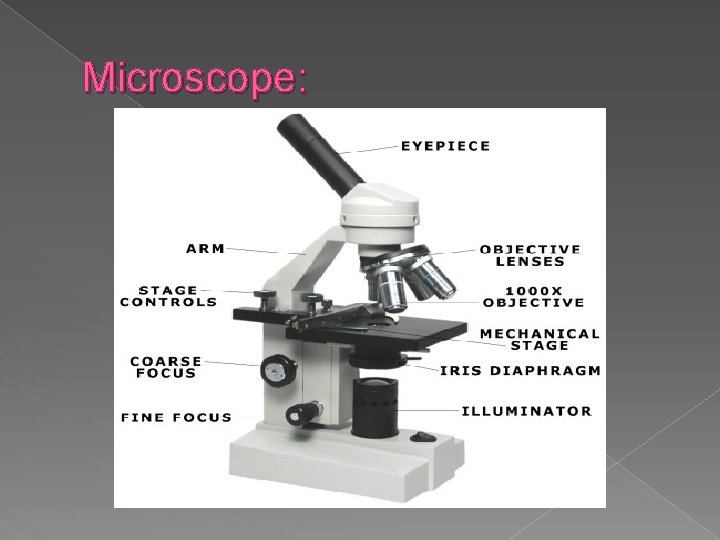
Microscope:
Lab Safety: General lab. Safety: 1 - Wear lab coats, gloves, 2 - Don’t eat or drink 3 - Carefully handle the samples, because it’s contagious 4 - Containers must be labeled probably and after used closed very well 5 - How to dispose wastes 6 - Cleaning 7 - Safety equipments
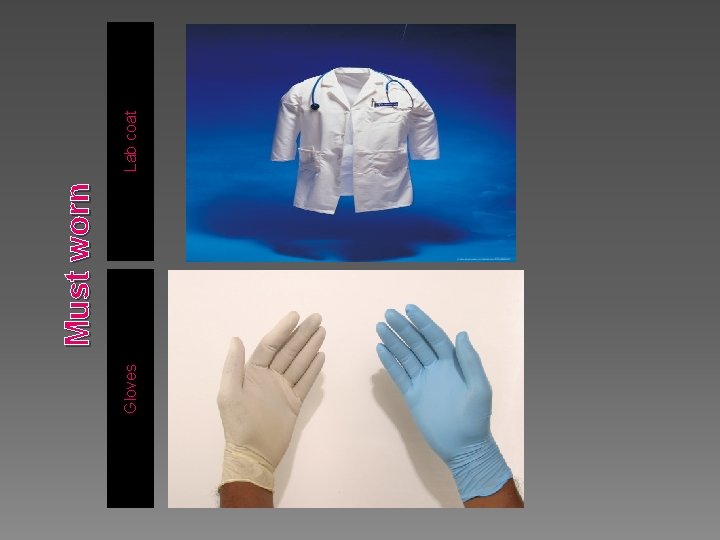
Gloves Must worn Lab coat
Samples used in parasitology lab: Mainly we deal with stool as a general specimen We can receive also : 1 - urine, in case of S. haematobium, S. mansoni , T. vaginalis. 2 - Blood, in case of Plasmodium spp, trypanosoma, W. bancrofti. 3 - Vaginal discharge, in case of T. vaginalis. 4 - Sputum, in case of Paragonimus spp.
5 - CSF, in case of Trypanosoma spp, Naegleria. 6 - Bone Marrow, in case of L. donovani. 7 - Lymph Gland Aspirate, in case of Trypanosoma spp, L. donovani. 8 - Liver Aspirate, in case of E. histolytica, L. donovani. 9 - Biopsies: - Skin, in case of Leishmania spp, D. medinensis. - Muscles, in case of Trichinella. 10 - Duodenal Aspirate, in case of G. lamblia, S. stercoralis. 11 - Rectal Scraping, in case of E. histolytica, Schistosoma spp.

How to collect stool samples: � Precautions � Containers � Request form � Time of examination � Macroscopic examination � Microscopic examination
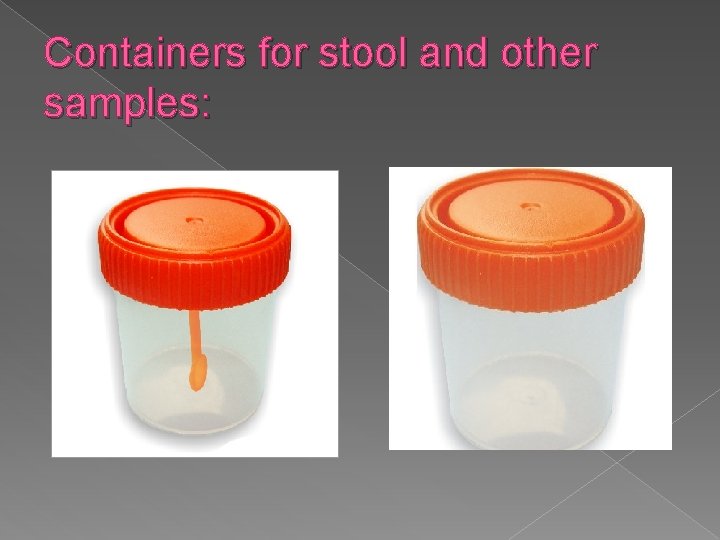
Containers for stool and other samples:
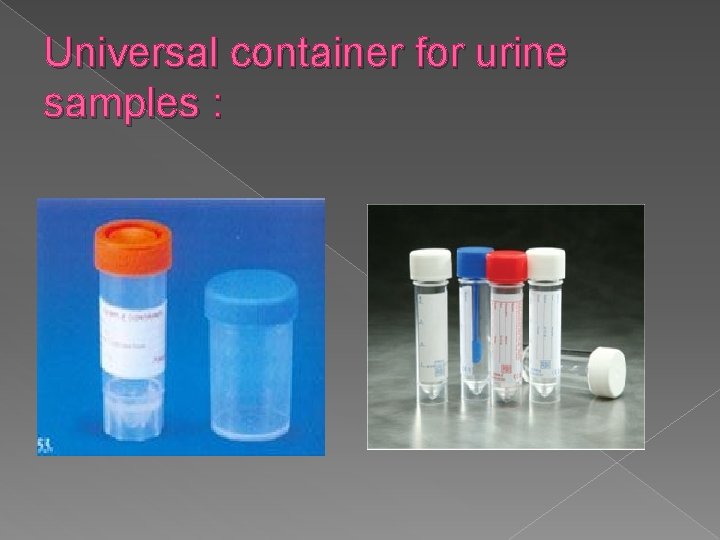
Universal container for urine samples :
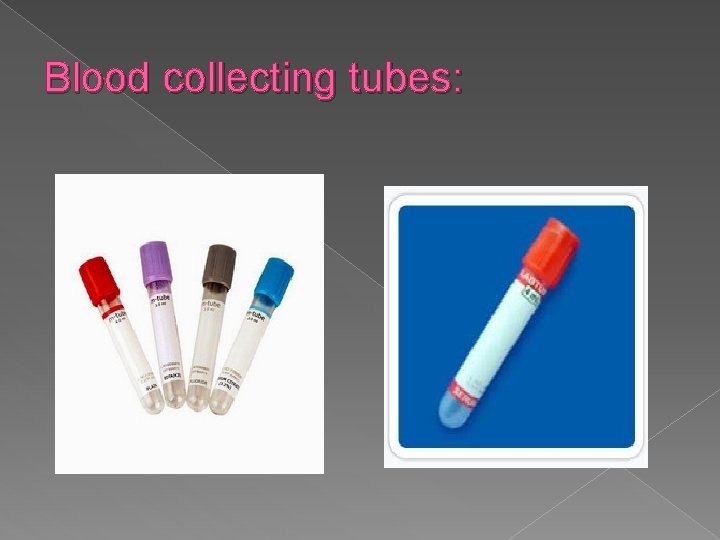
Blood collecting tubes:
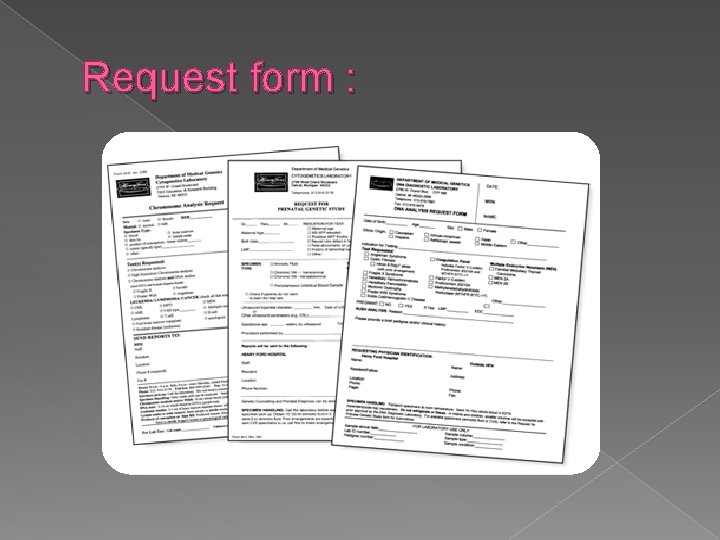
Request form :
Macroscopic examination: � Color : normally brown not pale or dark. � Consistency: whether formed, semi formed, unformed, watery. � Composition: Presence of mucus, blood and or Pus � Odor � Whether the specimen contains worms, part of the worm(segments), larva.
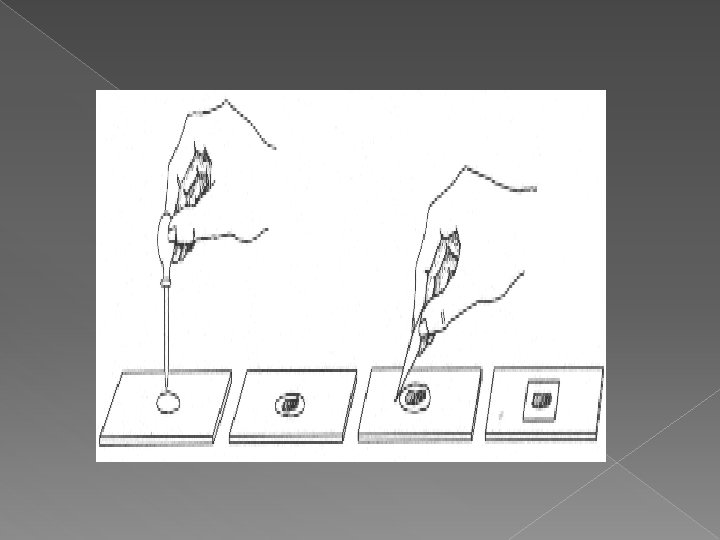
Microscopic examination: � Wet mount : Either saline or iodine: usually we see the Cyst stage, we loose the trophozoite because it’s a fragile stage. We use 2 clean glass slides: in the first 1 drop of saline and in the other drop of iodine then by wooden stick take a small part of sample mix, cover then examine after removing your gloves.
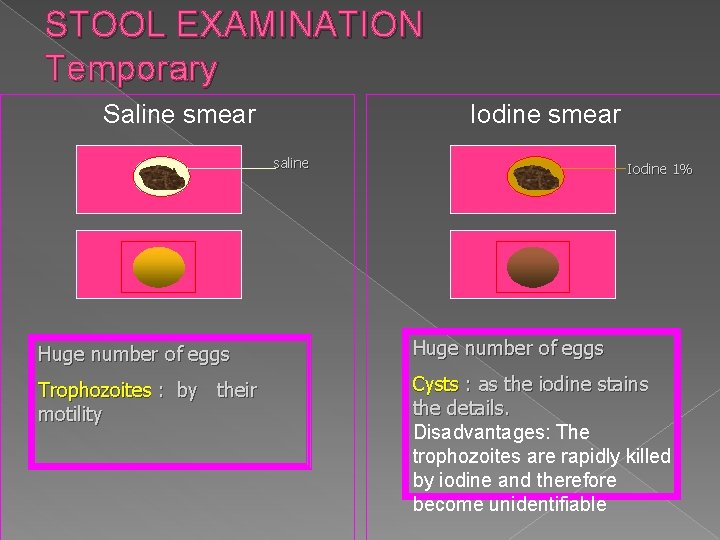
STOOL EXAMINATION Temporary Saline smear Iodine smear saline Iodine 1% Huge number of eggs Trophozoites : by their motility Cysts : as the iodine stains the details. Disadvantages: The trophozoites are rapidly killed by iodine and therefore become unidentifiable
Other examinations of samples in parasitology lab: � Serological tests: ELISA, Passive haemoagglutination test: these tests deals with serum Ag and Ab’s. � Molecular tests: PCR, most commonly used in researches.
- Slides: 22