
Introduction to palliative care Palliative Care for Caregivers

- Slides: 18
Introduction to palliative care Palliative Care for Caregivers
Learning Outcomes At the end of the session you will be able to: 1. Define palliative care 2. Describe why palliative care is needed and who may need it 3. Discuss models of care and a holistic approach to care 4. Explain what quality of care means 5. Describe examples of ways of providing care PALLIATIVE CARE FOR CAREGIVERS
Palliative Care What words do you associate with palliative care and hospice? PALLIATIVE CARE FOR CAREGIVERS
Definition Palliative care is an approach that improves the quality of life of patients and their families facing the problem associated with life-threatening illness, through the prevention and relief of suffering by means of early identification and impeccable assessment and treatment of pain and other problems, physical, psychosocial and spiritual. Palliative care: • Affirms life and regards dying as a normal process • Neither hastens nor postpones death • Provides relief from pain and other distressing symptoms • Integrates the psychological and spiritual aspects of patient care • Offers a support system to help patients live as actively as possible until death • Offers a support system to help the family cope during the patient’s illness and in their own bereavement” 1 1 World Health Organisation (2002), WHO: Geneva PALLIATIVE CARE FOR CAREGIVERS
Aims of palliative care • Provide effective control of pain and other symptoms • Create a support system that provides physical, emotional, social, spiritual and cultural care for people with life limiting illness • Provide care and support for the person’s family, whanau and friends during the illness and after death • Establish a team that includes the person with life limiting illness and their family, whanau and friends, staff and other healthcare professionals with good communication between the team members PALLIATIVE CARE FOR CAREGIVERS
Palliative approach A palliative approach is applicable to all people who have life threatening illness. It is a person centred approach to care and considers all aspects of care, not just their physical needs. It recognises that dying, death and bereavement are all an important part of life PALLIATIVE CARE FOR CAREGIVERS
Who should receive palliatve care? Anybody living with a life limiting illness What illnesses have you seen people living with who were receiving palliative care or who could benefit from a palliative approach? PALLIATIVE CARE FOR CAREGIVERS
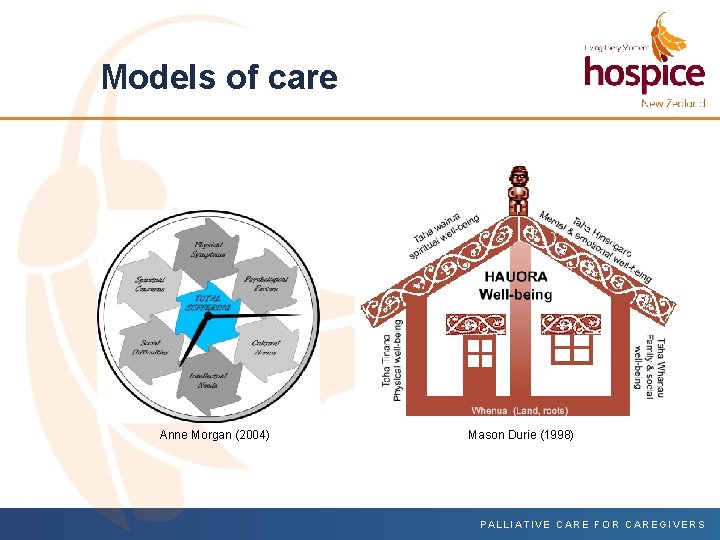
Models of care Anne Morgan (2004) Mason Durie (1998) PALLIATIVE CARE FOR CAREGIVERS
What about your culture? What health practices/beliefs are common in your culture/communities around: • dying • death • bereavement PALLIATIVE CARE FOR CAREGIVERS
Whole person care In small groups discuss physical, emotional, social, cultural and spiritual needs that you have observed in people you have cared for. Think about how the person described their needs. What were some of the words they used? PALLIATIVE CARE FOR CAREGIVERS
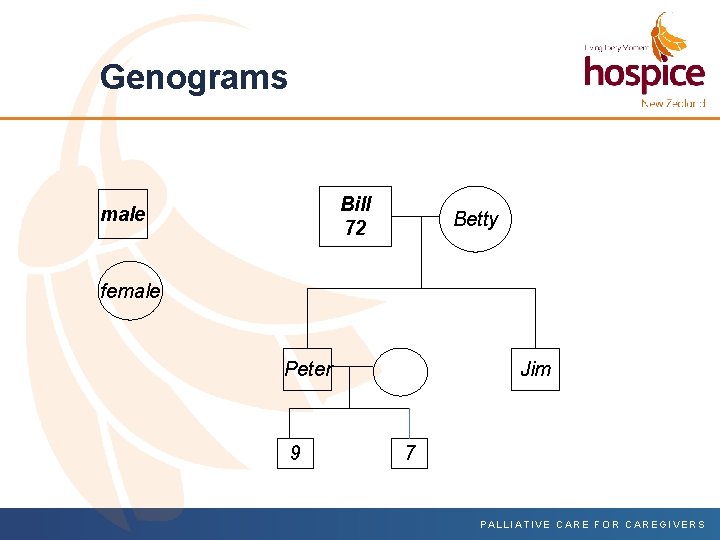
Genograms Bill 72 male Betty female Peter 9 Jim 7 PALLIATIVE CARE FOR CAREGIVERS
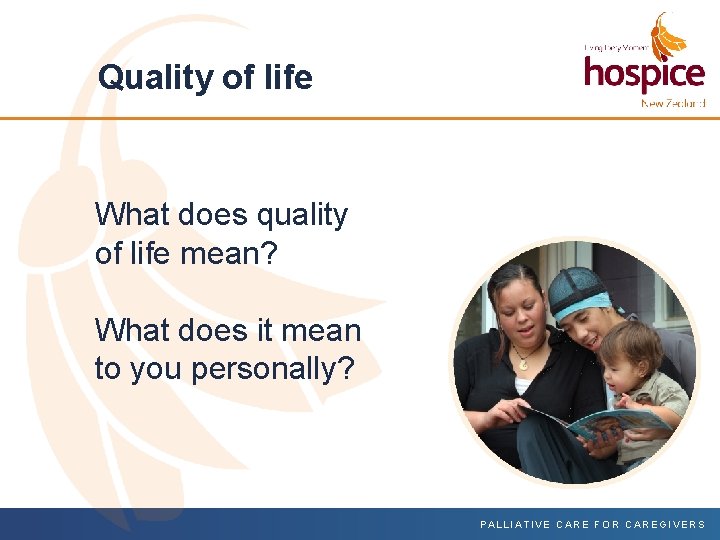
Quality of life What does quality of life mean? What does it mean to you personally? PALLIATIVE CARE FOR CAREGIVERS
Stages of incurable illness • Diagnosis of a life-threatening illness – intense emotions, shock, confusion • Treatment with intent of cure or prolongation of life • Transition from active to palliative management • Deterioration • Terminal phase • Bereavement PALLIATIVE CARE FOR CAREGIVERS
Recognising dying • What is the advantage of being able to predict when someone is going to die? • Think about what makes that difficult • What do you notice when someone is dying? PALLIATIVE CARE FOR CAREGIVERS
Advantages of knowing a person is dying • Time for the person, their family, whanau and friends to prepare for death • Time to involve a religious or spiritual support if appropriate • Time for people, including staff and other residents, to say goodbye PALLIATIVE CARE FOR CAREGIVERS
Ways of caring There are many different ways you can help care for people with palliative needs. Think back to the models of care we discussed and the case studies and to your day to day work and list all the ways you can care. PALLIATIVE CARE FOR CAREGIVERS
Words to reflect on… “It is only when we truly know and understand that we have limited time on earth – and that we have no way of knowing when our time is up, we will then begin to live each day to the fullest, as if it was the only one we had. ” Kubler-Ross, E (1969), On Death and Dying. Scribner PALLIATIVE CARE FOR CAREGIVERS
Personal reflection PALLIATIVE CARE FOR CAREGIVERS