
Introduction to Organic Chemistry Every compound contains carbon
Introduction to Organic Chemistry • Every compound contains carbon • Carbon is able to form 4 covalent bonds and take on many shapes (rings and chains) • Carbon can form single, double, and triple bonds • Other common elements include: Oxygen, Nitrogen, Phosphorus, and Hydrogen
Carbon Compounds Carbohydrates Lipids Proteins Nucleic Acids
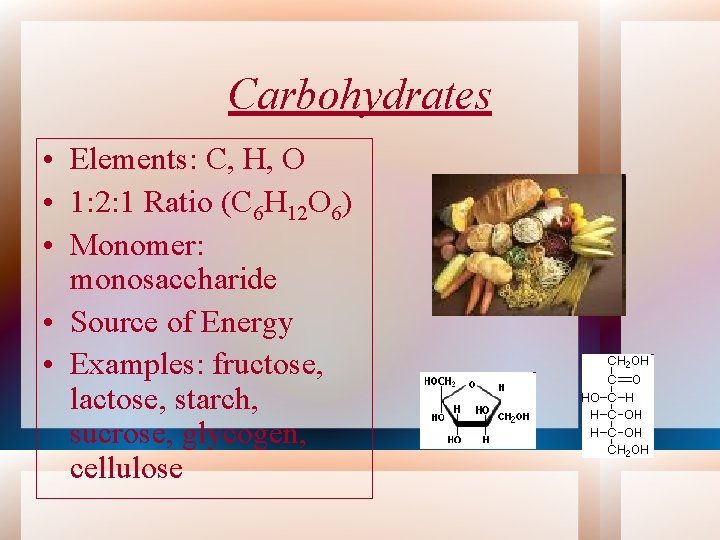
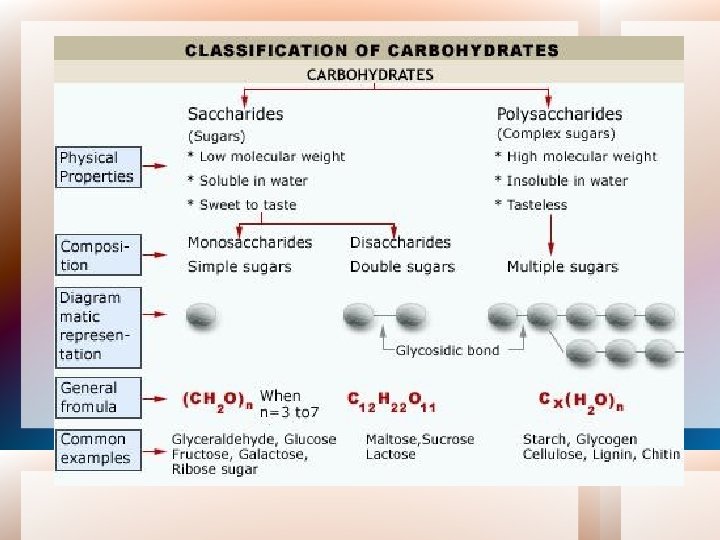
Carbohydrates • Elements: C, H, O • 1: 2: 1 Ratio (C 6 H 12 O 6) • Monomer: monosaccharide • Source of Energy • Examples: fructose, lactose, starch, sucrose, glycogen, cellulose
Classes of Sugars Monosaccharide – simple sugar Glucose and fructose Disaccharide – 2 sugar carbohydrate Sucrose Lactose Polysaccharides – many monosaccharides Starch, glycogen, cellulose

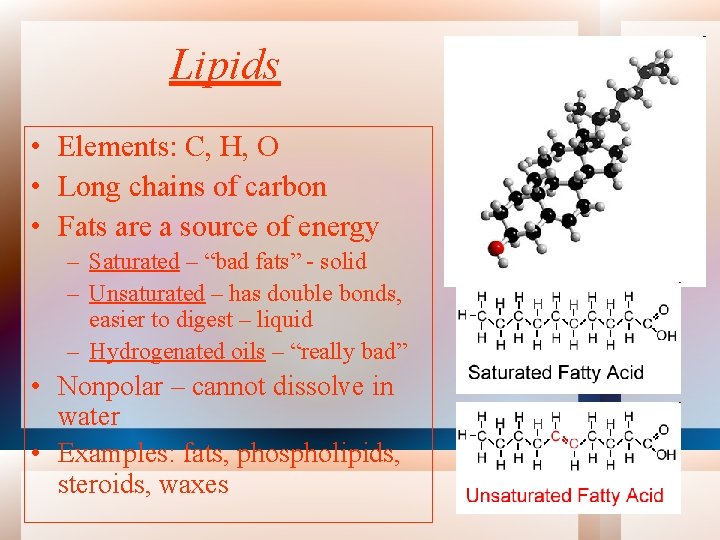
Lipids • Elements: C, H, O • Long chains of carbon • Fats are a source of energy – Saturated – “bad fats” - solid – Unsaturated – has double bonds, easier to digest – liquid – Hydrogenated oils – “really bad” • Nonpolar – cannot dissolve in water • Examples: fats, phospholipids, steroids, waxes
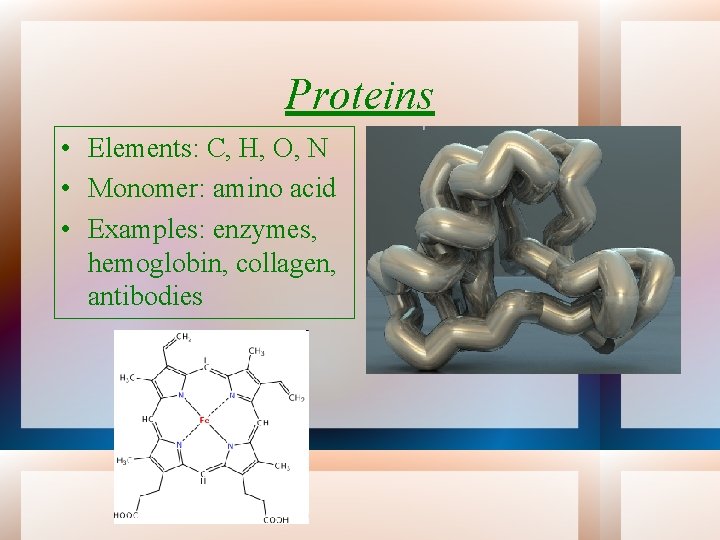
Proteins • Elements: C, H, O, N • Monomer: amino acid • Examples: enzymes, hemoglobin, collagen, antibodies
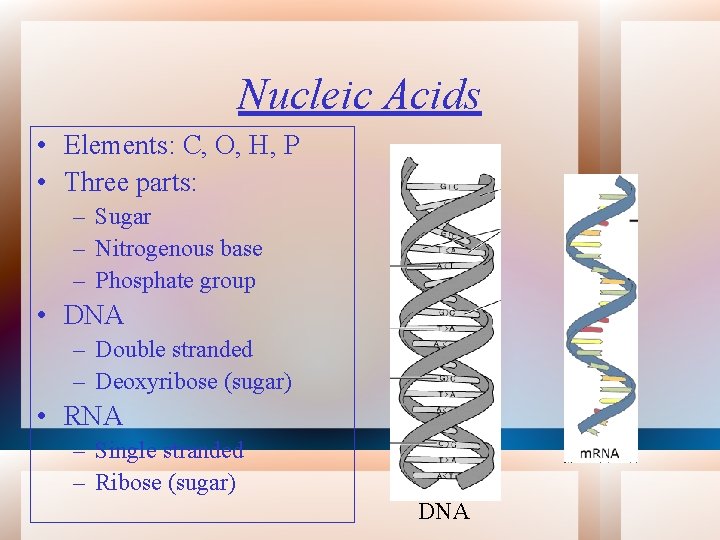
Nucleic Acids • Elements: C, O, H, P • Three parts: – Sugar – Nitrogenous base – Phosphate group • DNA – Double stranded – Deoxyribose (sugar) • RNA – Single stranded – Ribose (sugar) DNA
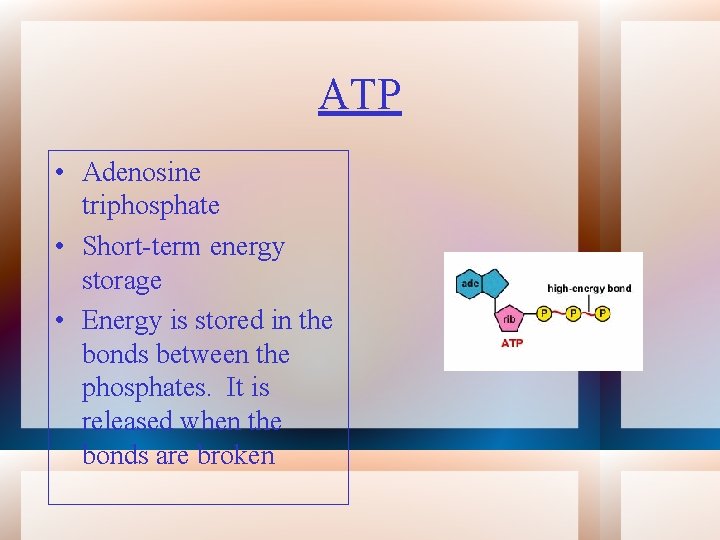
ATP • Adenosine triphosphate • Short-term energy storage • Energy is stored in the bonds between the phosphates. It is released when the bonds are broken
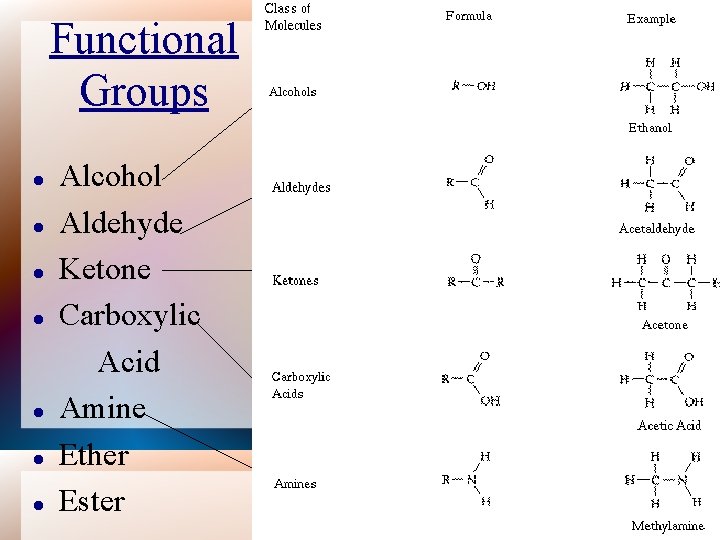
Functional Groups Alcohol Aldehyde Ketone Carboxylic Acid Amine Ether Ester
Alkane – carbon is bonded only with single bonds to other carbons Alkene – carbon is double bonded to other carbons Alkyne – carbon has a triple bond with another carbon
- Slides: 12