
Introduction to Operating System Operating System Basics Operating
Introduction to Operating System
Operating System Basics • • Operating System Objectives Layers of Computer Systems Services Provided by the Operating System Functions of Operating Systems Types of Operating Systems Enhancing an OS
Operating System • • A program that controls the execution of application programs An interface between applications and hardware
Operating System Objectives • Convenience § • Efficiency § • Makes the computer more convenient to use Allows computer system resources to be used in an efficient manner Ability to evolve § Permit effective development, testing, and introduction of new system functions without interfering with service
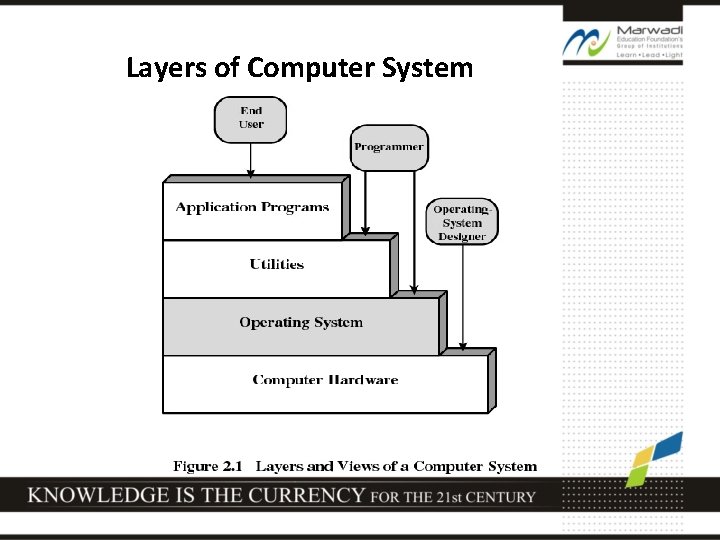
Layers of Computer System
Services Provided by the Operating System • Program development § • • Editors and debuggers Program execution Access to I/O devices Controlled access to files System access
Services Provided by the Operating System • Error detection and response § internal and external hardware errors § memory error § device failure § software errors § arithmetic overflow § access forbidden memory locations § operating system cannot grant request of application
Services Provided by the Operating System • Accounting collect statistics § monitor performance § used to anticipate future enhancements § used for billing users §
Functions of Operating Systems • • Provide a user interface Run programs Manage hardware devices Organized file storage 7 A-9
Providing a User Interface • User interface How a user interacts with a computer § Require different skill sets §
Providing a User Interface • Graphical user interface (GUI) § Most common interface § Windows, OS X, Gnome, KDE § § § Uses a mouse to control objects Uses a desktop metaphor Shortcuts open programs or documents Open documents have additional objects Task switching Dialog boxes allow directed input
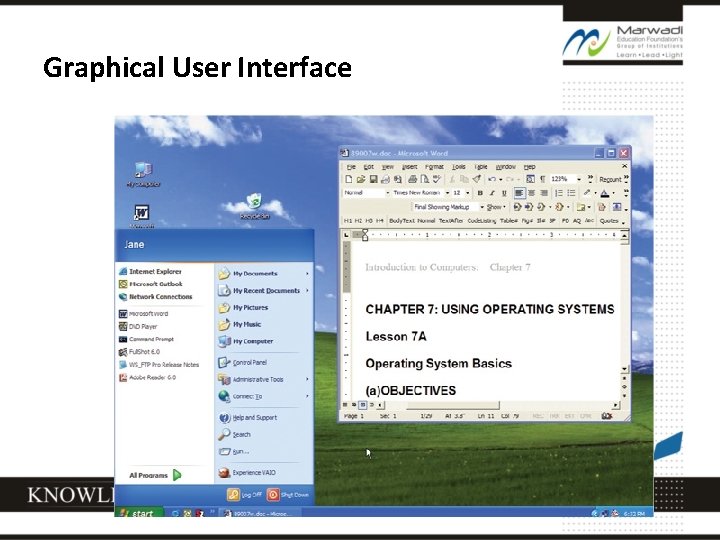
Graphical User Interface
Providing a User Interface • Command line interfaces § Older interface § DOS, Linux, UNIX User types commands at a prompt § User must remember all commands § Included in all GUIs §
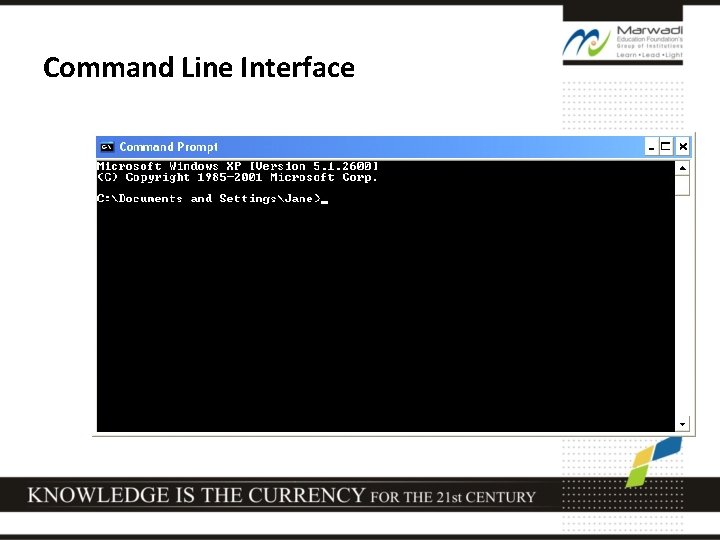
Command Line Interface
Running Programs • • Many different applications supported System call § • Provides consistent access to OS features Share information between programs Copy and paste § Object Linking and Embedding §
Managing Hardware • • Programs need to access hardware Interrupts CPU is stopped § Hardware device is accessed § • Device drivers control the hardware
Organizing Files and Folders • • Organized storage Long file names Folders can be created and nested All storage devices work consistently
Types of Operating Systems • Real-time operating system Very fast small OS § Built into a device § Respond quickly to user input § MP 3 players, Medical devices §
Types of Operating Systems • Single user/Single tasking OS § § § One user works on the system Performs one task at a time MS-DOS and Palm OS Take up little space on disk Run on inexpensive computers
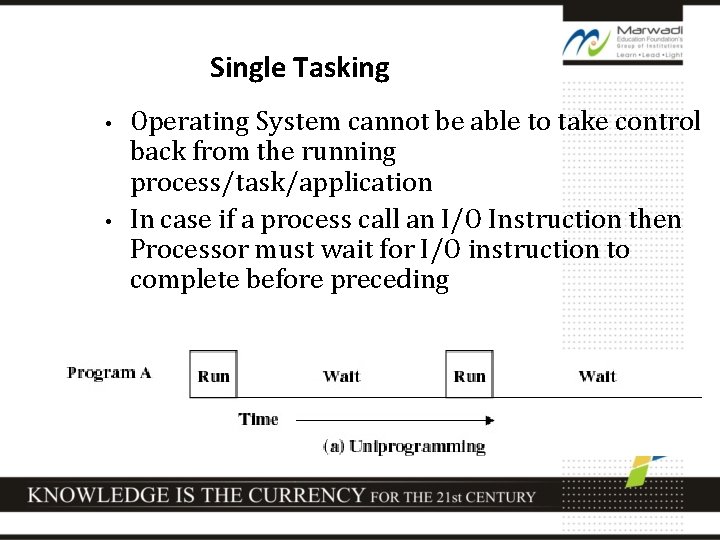
Single Tasking • • Operating System cannot be able to take control back from the running process/task/application In case if a process call an I/O Instruction then Processor must wait for I/O instruction to complete before preceding
Types of Operating Systems • Single user/Multitasking OS § § § User performs many tasks at once Most common form of OS Windows XP and OS X Require expensive computers Tend to be complex
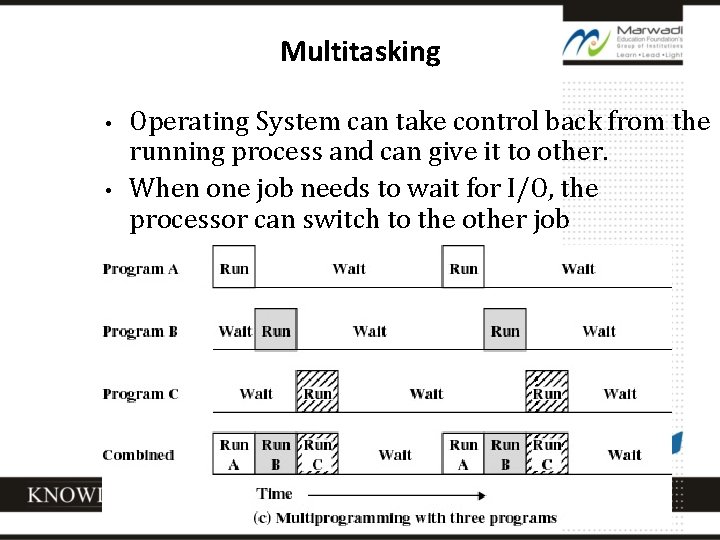
Multitasking • • Operating System can take control back from the running process and can give it to other. When one job needs to wait for I/O, the processor can switch to the other job
Types of Operating Systems • Multi user/Multitasking OS § § § Many users connect to one computer Each user has a unique session UNIX, Linux, and VMS Maintenance can be easy Requires a powerful computer
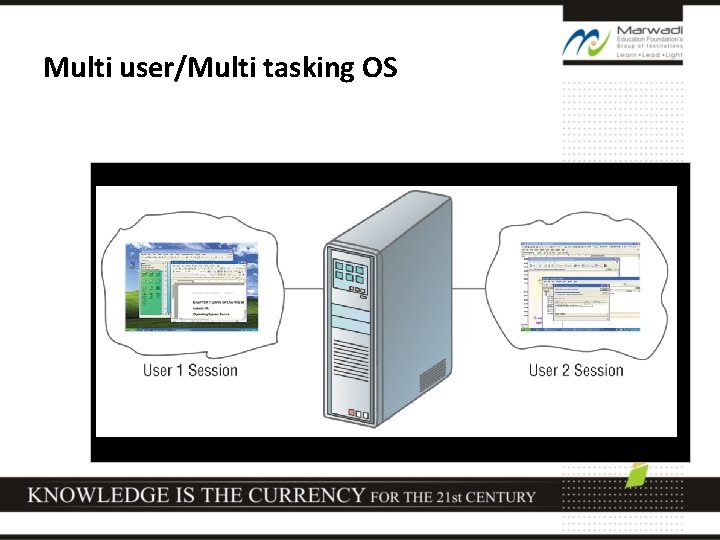
Multi user/Multi tasking OS
Enhancing an OS • Utilities Provide services not included with OS § Goes beyond the four functions § Firewall, anti-virus and compression § Prices vary §
Enhancing an OS • Backup software Archives files onto removable media § Ensures data integrity § Most OS include a backup package § Many third party packages exist §
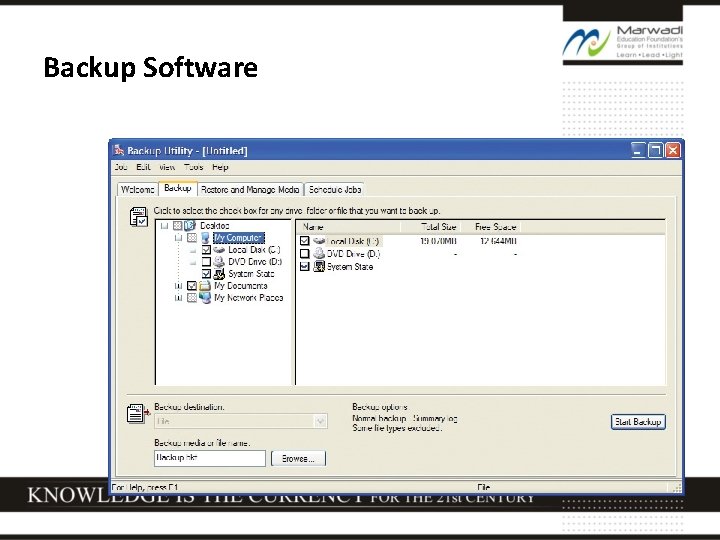
Backup Software
Enhancing an OS • Anti-virus software Crucial utility § Finds, blocks and removes viruses § Must be updated regularly § Mc. Afee and Norton Anti-Virus §
Enhancing an OS • Firewall § § § Crucial utility Protects your computer from intruders Makes computer invisible to hackers Zone Labs is a home firewall Cisco sells hardware firewalls
Enhancing an OS • Intrusion detection Often part of a firewall package § Announces attempts to breach security § Snort is a Linux based package §
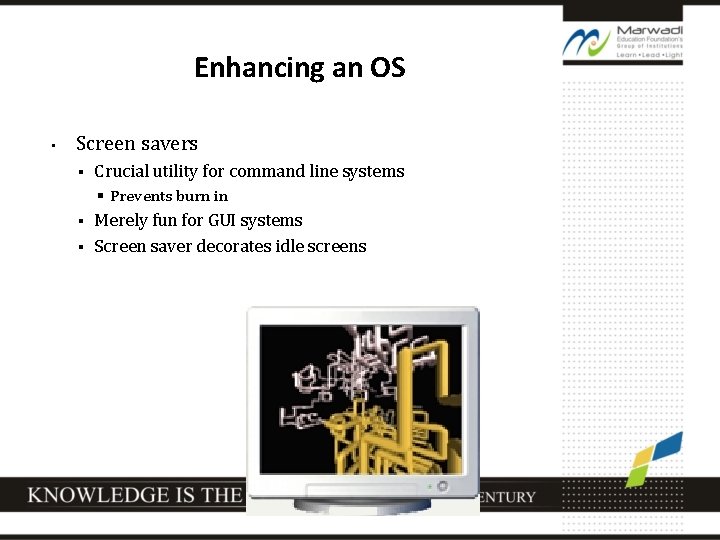
Enhancing an OS • Screen savers § Crucial utility for command line systems § Prevents burn in Merely fun for GUI systems § Screen saver decorates idle screens §
- Slides: 31