
Introduction to Observational Physical Oceanography 12 808 Class
Introduction to Observational Physical Oceanography 12. 808 Class 7, 1 October 2009 these slides are available online at http: //www. whoi. edu/science/PO/people/jprice/class/miscart/Class 7 -1 Oct 09. ppt
Class 7 Last time -Non-conservative Tracers, O 2, Phosphate -AOU, preformed phosphate Today -Transient Anthropogenic Tracers – CFCs
REMINDER HW #3 part 1 3. 1) Help us figure out where the five mystery stations, Amysterystas 2009. mat, were taken. Major hint – somewhere in the Atlantic. Use T/S properties to figure out what basin the station must have been in. To load these mystery station data into Matlab, see readme_hydrography. m. You will need to edit the input data file name, and make a T/S diagram. May be helpful to annotate the T/S diagram with the major Atlantic water types. This will be due Oct 8 (one week).
Required reading Reading: 1) Wiley, Global chlorofluorocarbon inventory, GRL, 2004 2) Barnett, Penetration of human-induced warming, Science, 2005 Read by Tuesday, October 6
NEW HOMEWORK 2 readings (Wiley et al. 2004, Barnett et al. 2005, ) AND HW #3 part 2 3. 2) Pacific mystery stations. Find the location of the 5 mystery stations in the Pacific. You may have to use tracers other than T/S to locate the station! Be sure to indicate how you chose a particular location. This will be due Oct 8 (in one week).
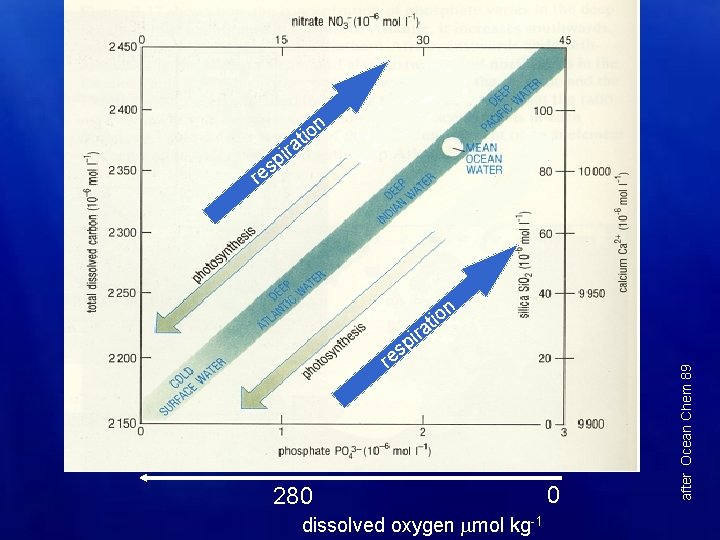
tio ra i p s n re io at n re 280 dissolved oxygen mmol kg-1 0 after Ocean Chem 89 r i p s
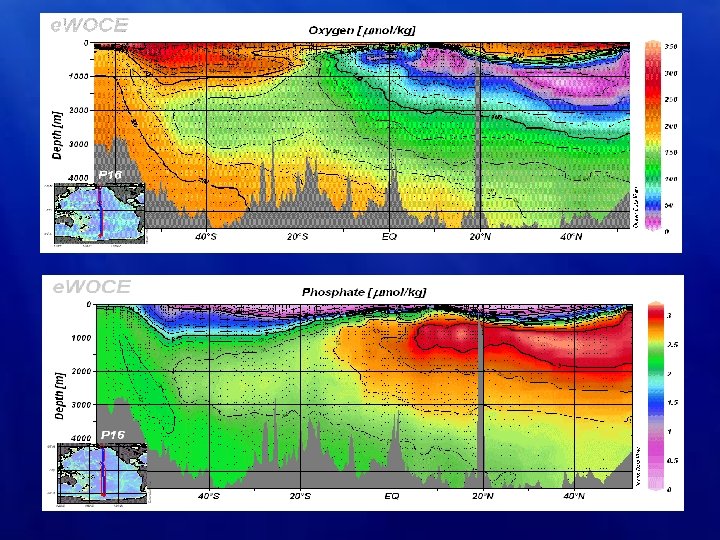
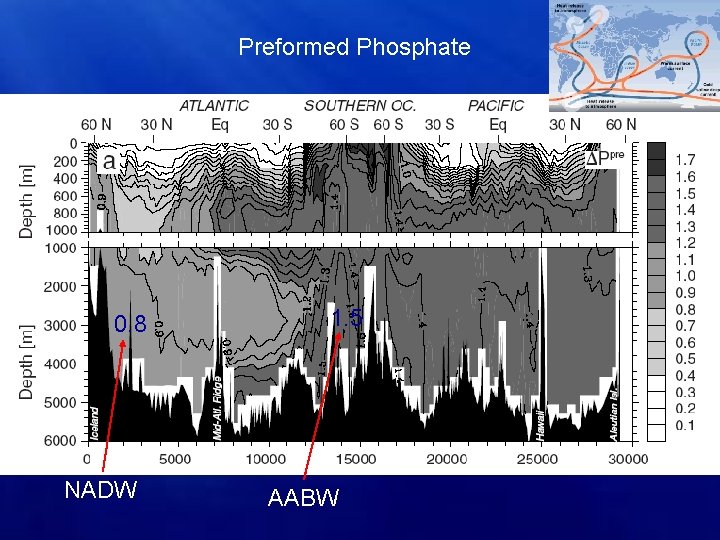
Preformed Phosphate 0. 8 NADW 1. 5 AABW
Transient, anthropogenic (man-made) tracers 1) CFCs, inert chemicals that can be detected in minute amounts. They make a nearly perfect ‘dye’. 2) radioactive tracers from nuclear bomb testing: tritium, carbon 14, and others.
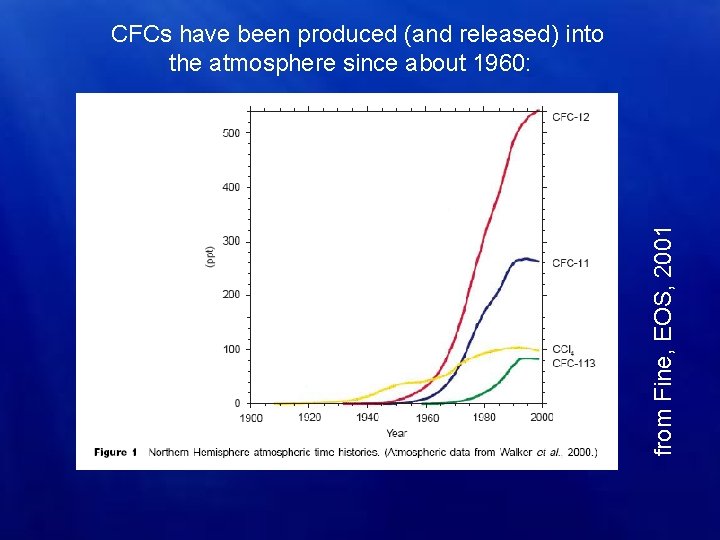
from Fine, EOS, 2001 CFCs have been produced (and released) into the atmosphere since about 1960:

Air-Sea Gas Exchange
Air-Sea Gas Exchange - From high to low concentration - gas exchange rate depends on many factors: wind speed, waves, ice-cover, mixing, surfactants - Depends on solubility (which in turn depends on temperature), typically increases at lower temperatures - Depends on concentration
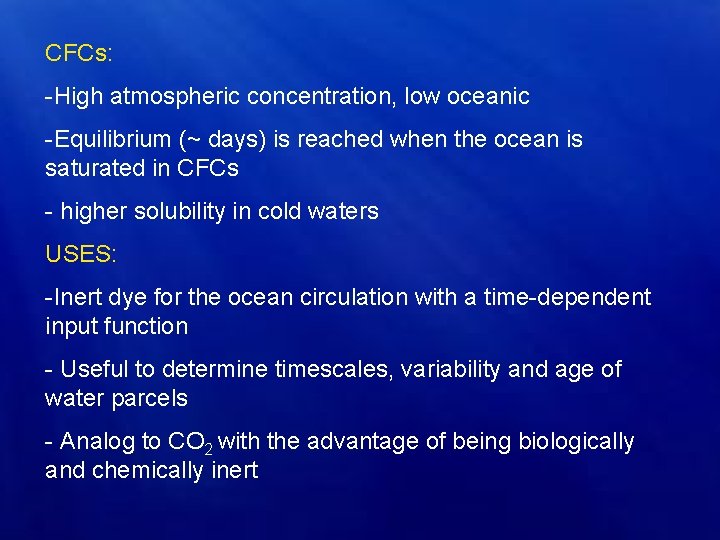
CFCs: -High atmospheric concentration, low oceanic -Equilibrium (~ days) is reached when the ocean is saturated in CFCs - higher solubility in cold waters USES: -Inert dye for the ocean circulation with a time-dependent input function - Useful to determine timescales, variability and age of water parcels - Analog to CO 2 with the advantage of being biologically and chemically inert
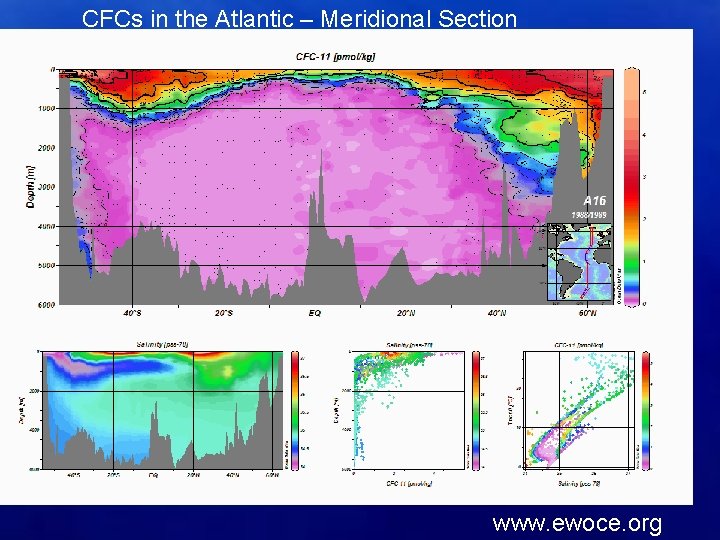
CFCs in the Atlantic – Meridional Section www. ewoce. org
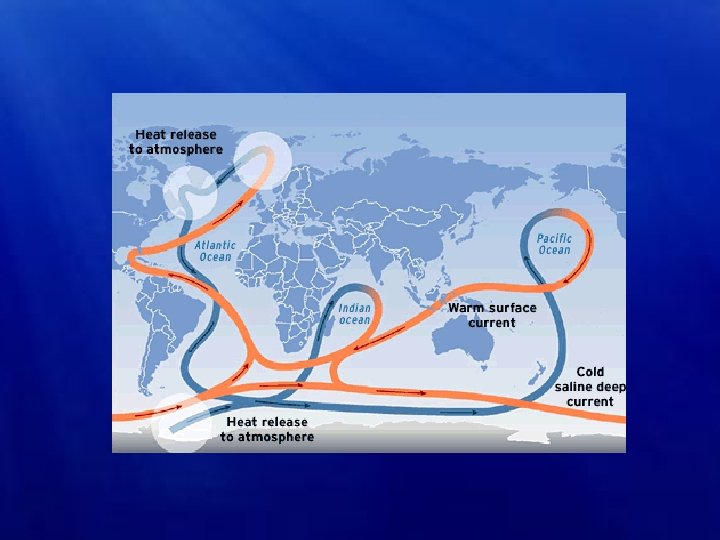
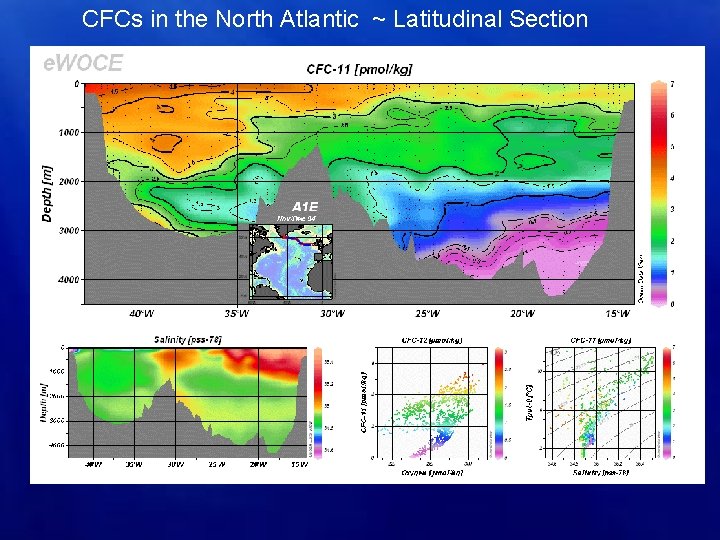
CFCs in the North Atlantic ~ Latitudinal Section
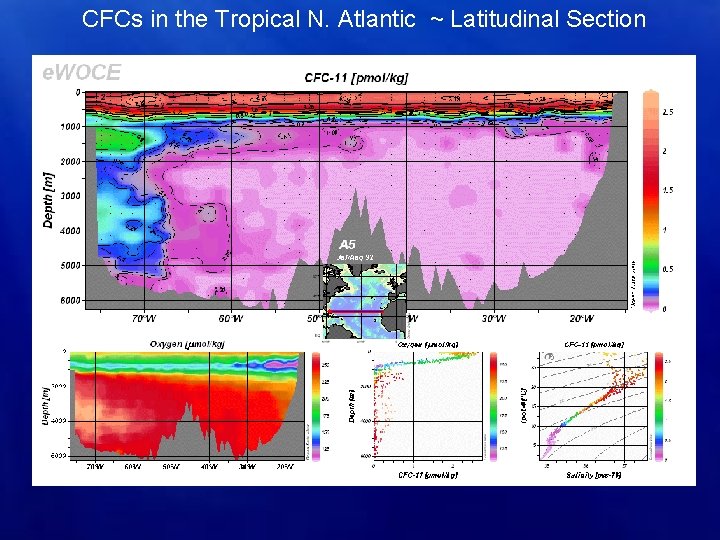
CFCs in the Tropical N. Atlantic ~ Latitudinal Section
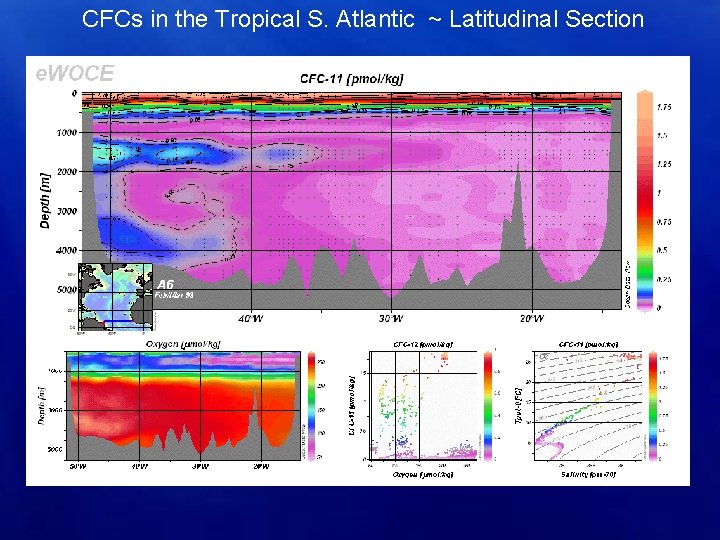
CFCs in the Tropical S. Atlantic ~ Latitudinal Section
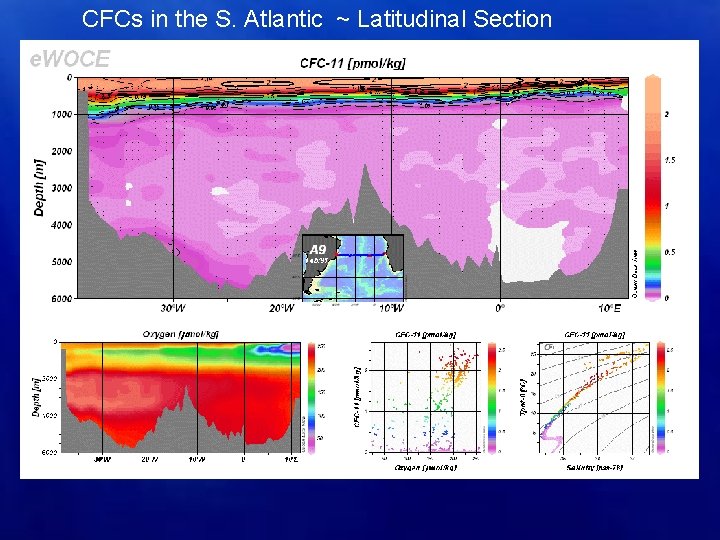
CFCs in the S. Atlantic ~ Latitudinal Section
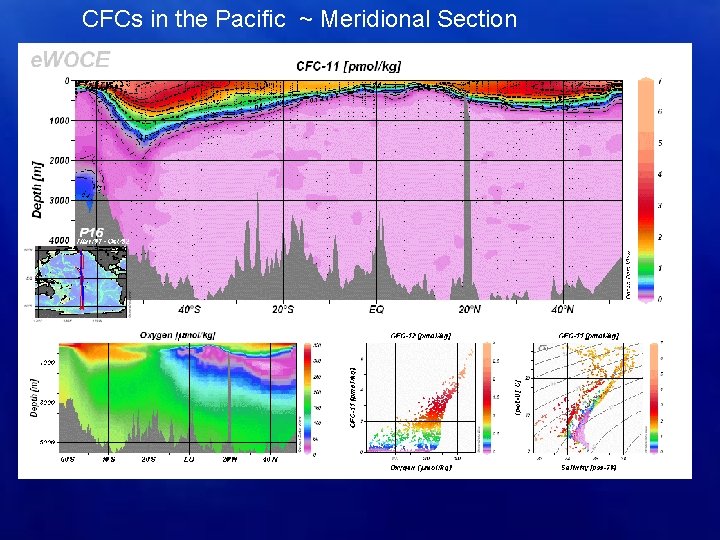
CFCs in the Pacific ~ Meridional Section
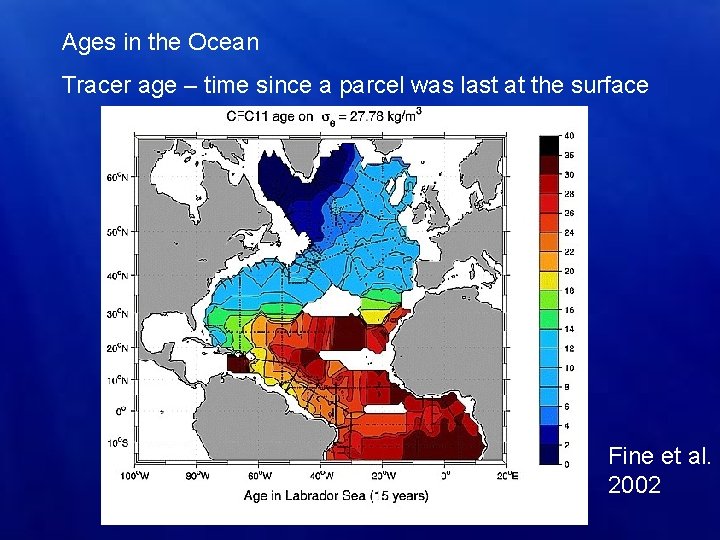
Ages in the Ocean Tracer age – time since a parcel was last at the surface Fine et al. 2002
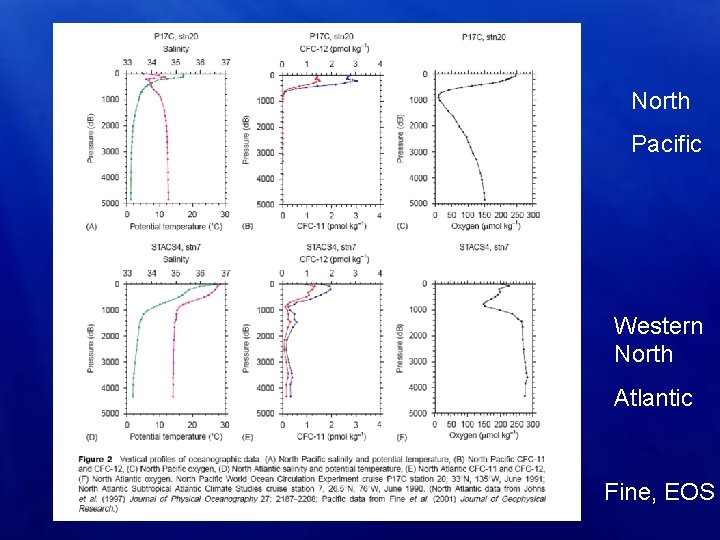
North Pacific Western North Atlantic Fine, EOS
- Slides: 23