
Introduction to Night In your composition book NOTES
Introduction to Night In your composition book NOTES
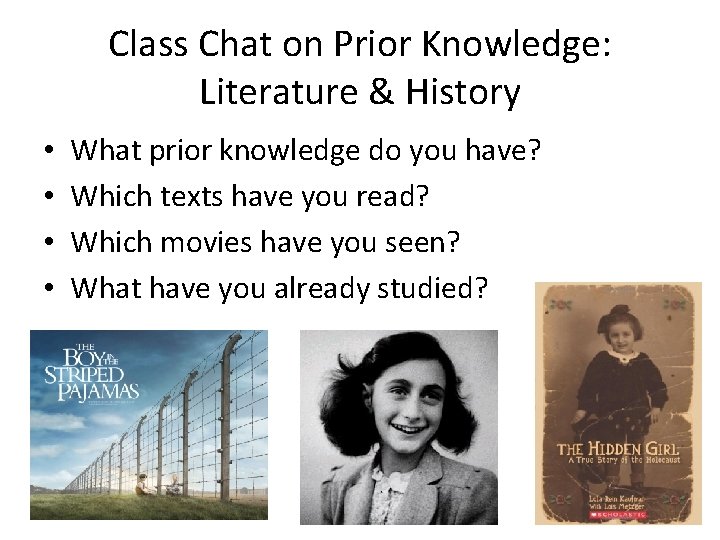
Class Chat on Prior Knowledge: Literature & History • • What prior knowledge do you have? Which texts have you read? Which movies have you seen? What have you already studied?
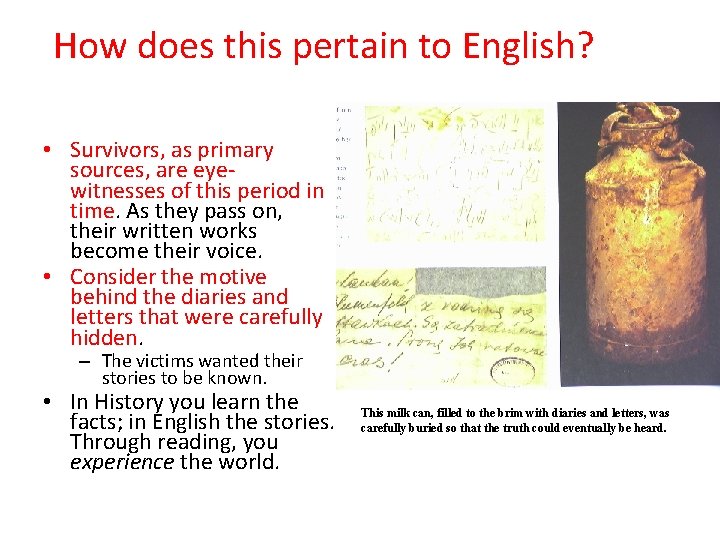
How does this pertain to English? • Survivors, as primary sources, are eyewitnesses of this period in time. As they pass on, their written works become their voice. • Consider the motive behind the diaries and letters that were carefully hidden. – The victims wanted their stories to be known. • In History you learn the facts; in English the stories. Through reading, you experience the world. This milk can, filled to the brim with diaries and letters, was carefully buried so that the truth could eventually be heard.
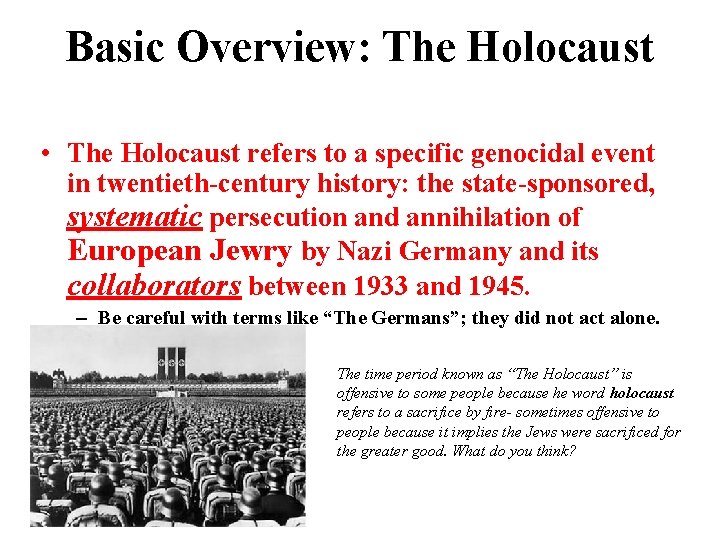
Basic Overview: The Holocaust • The Holocaust refers to a specific genocidal event in twentieth-century history: the state-sponsored, systematic persecution and annihilation of European Jewry by Nazi Germany and its collaborators between 1933 and 1945. – Be careful with terms like “The Germans”; they did not act alone. The time period known as “The Holocaust” is offensive to some people because he word holocaust refers to a sacrifice by fire- sometimes offensive to people because it implies the Jews were sacrificed for the greater good. What do you think?
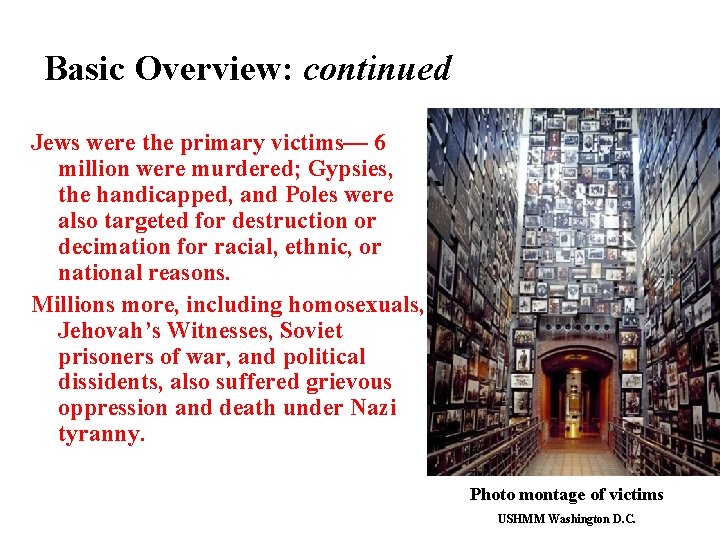
Basic Overview: continued Jews were the primary victims— 6 million were murdered; Gypsies, the handicapped, and Poles were also targeted for destruction or decimation for racial, ethnic, or national reasons. Millions more, including homosexuals, Jehovah’s Witnesses, Soviet prisoners of war, and political dissidents, also suffered grievous oppression and death under Nazi tyranny. Photo montage of victims USHMM Washington D. C.
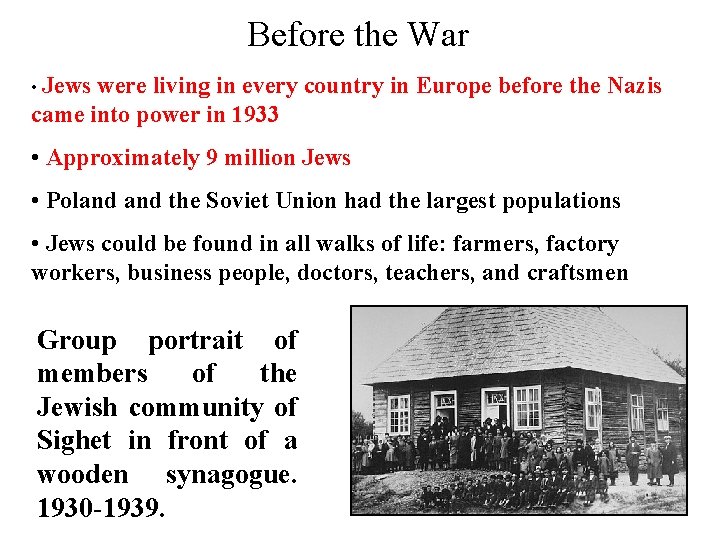
Before the War • Jews were living in every country in Europe before the Nazis came into power in 1933 • Approximately 9 million Jews • Poland the Soviet Union had the largest populations • Jews could be found in all walks of life: farmers, factory workers, business people, doctors, teachers, and craftsmen Group portrait of members of the Jewish community of Sighet in front of a wooden synagogue. 1930 -1939.
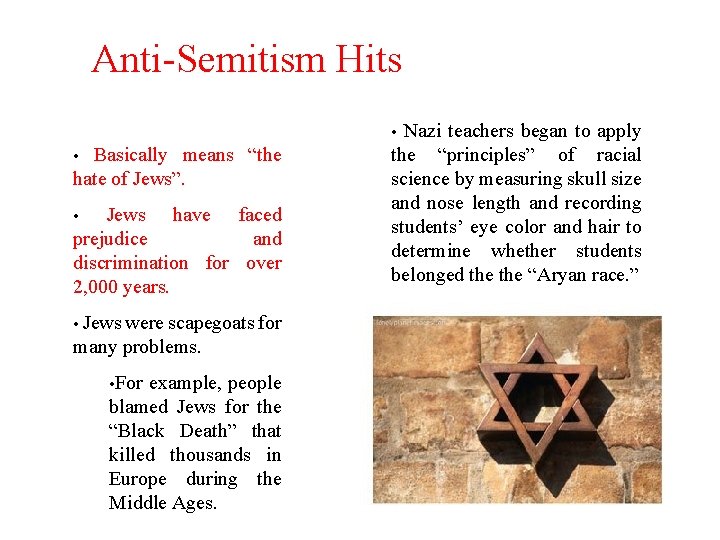
Anti-Semitism Hits • Nazi teachers began to apply • Basically means “the hate of Jews”. • Jews have faced prejudice and discrimination for over 2, 000 years. • Jews were scapegoats for many problems. • For example, people blamed Jews for the “Black Death” that killed thousands in Europe during the Middle Ages. the “principles” of racial science by measuring skull size and nose length and recording students’ eye color and hair to determine whether students belonged the “Aryan race. ”
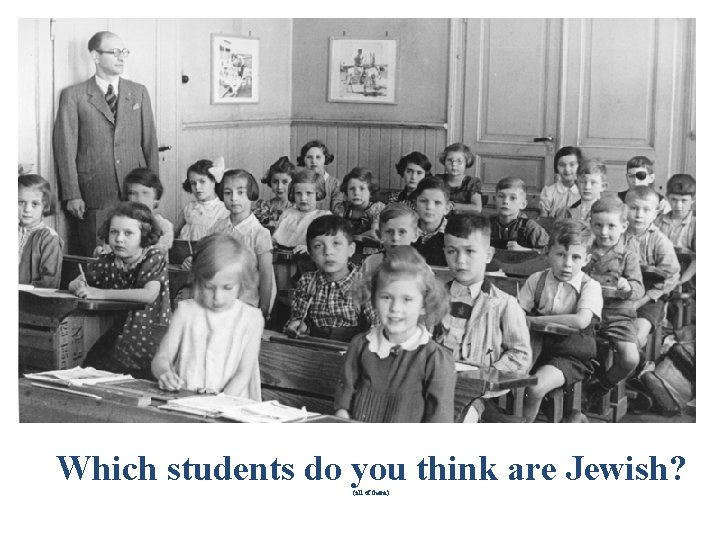
Which students do you think are Jewish? (all of them)
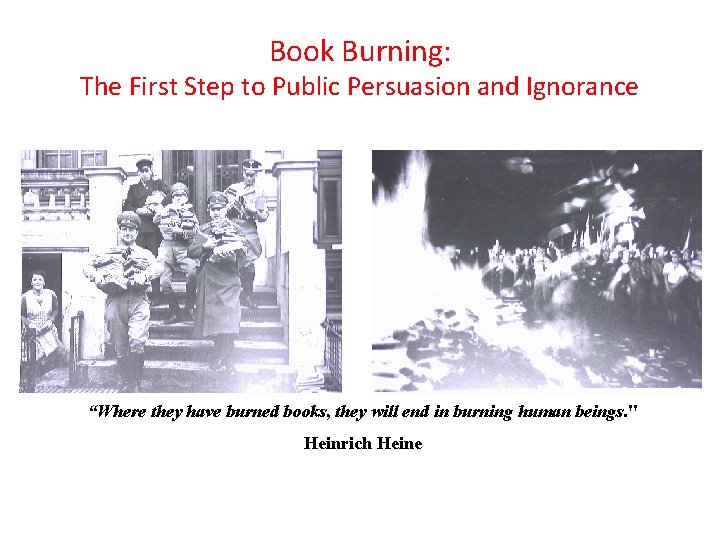
Book Burning: The First Step to Public Persuasion and Ignorance “Where they have burned books, they will end in burning human beings. " Heinrich Heine
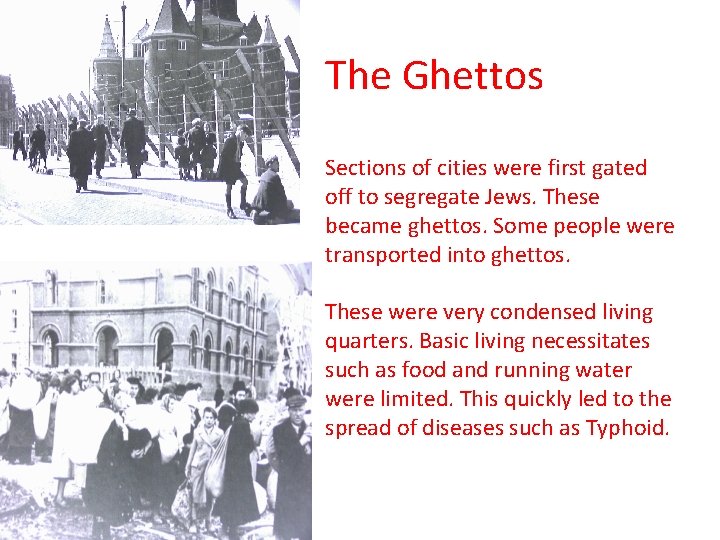
The Ghettos Sections of cities were first gated off to segregate Jews. These became ghettos. Some people were transported into ghettos. These were very condensed living quarters. Basic living necessitates such as food and running water were limited. This quickly led to the spread of diseases such as Typhoid.
![Typhoid • Typhoid fever — also known simply as typhoid[1] — is a common](http://slidetodoc.com/presentation_image_h/14213dcb4182da4556a18fd5f50b71ad/image-11.jpg "Typhoid • Typhoid fever — also known simply as typhoid[1] — is a common")
Typhoid • Typhoid fever — also known simply as typhoid[1] — is a common worldwide bacterial disease transmitted by the ingestion of food or water contaminated with the feces of an infected person,
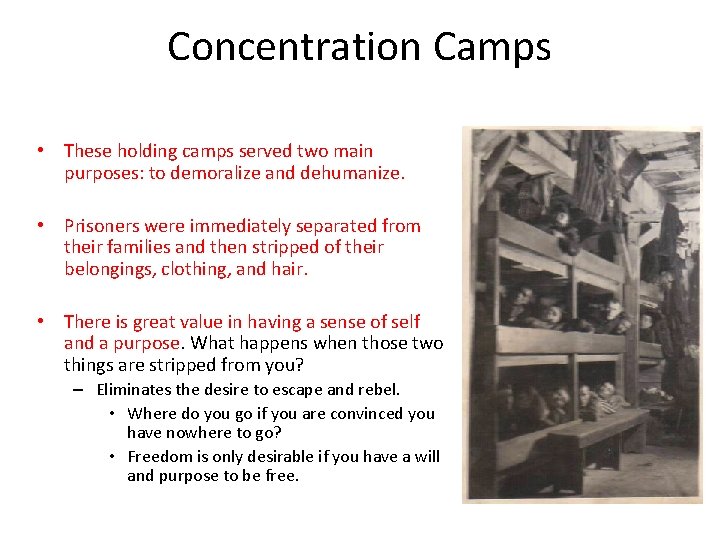
Concentration Camps • These holding camps served two main purposes: to demoralize and dehumanize. • Prisoners were immediately separated from their families and then stripped of their belongings, clothing, and hair. • There is great value in having a sense of self and a purpose. What happens when those two things are stripped from you? – Eliminates the desire to escape and rebel. • Where do you go if you are convinced you have nowhere to go? • Freedom is only desirable if you have a will and purpose to be free.

Labor Camps • Prisoners were forced to engage in strenuous penal labor and production to aid the war.
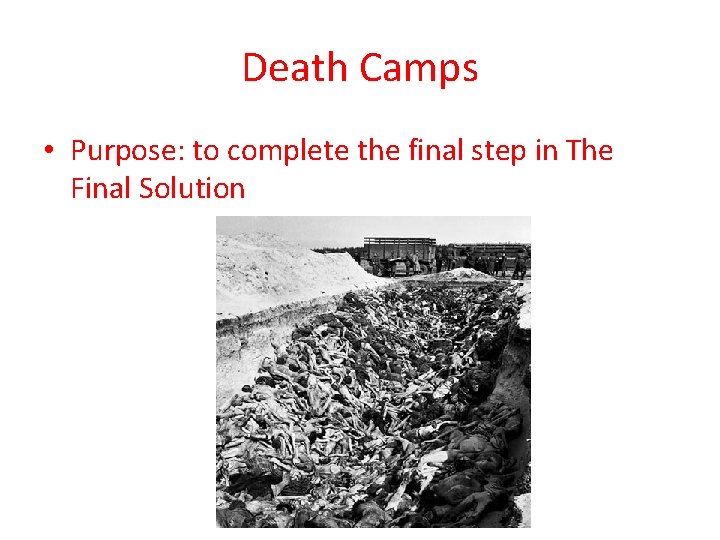
Death Camps • Purpose: to complete the final step in The Final Solution
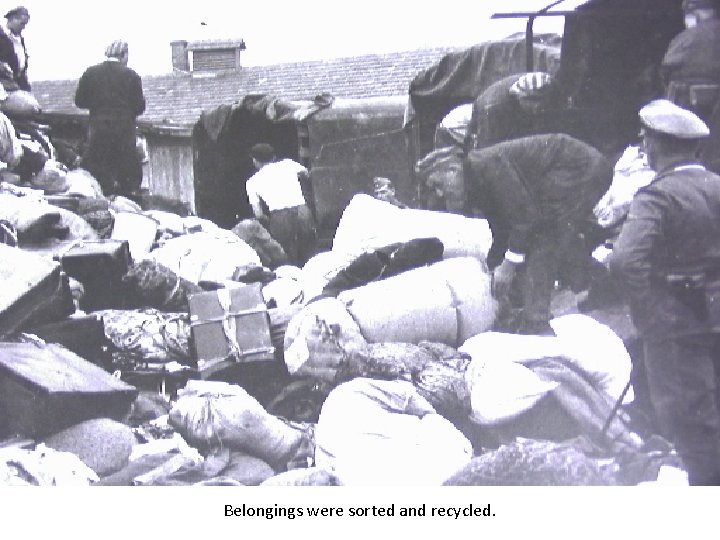
Belongings were sorted and recycled.
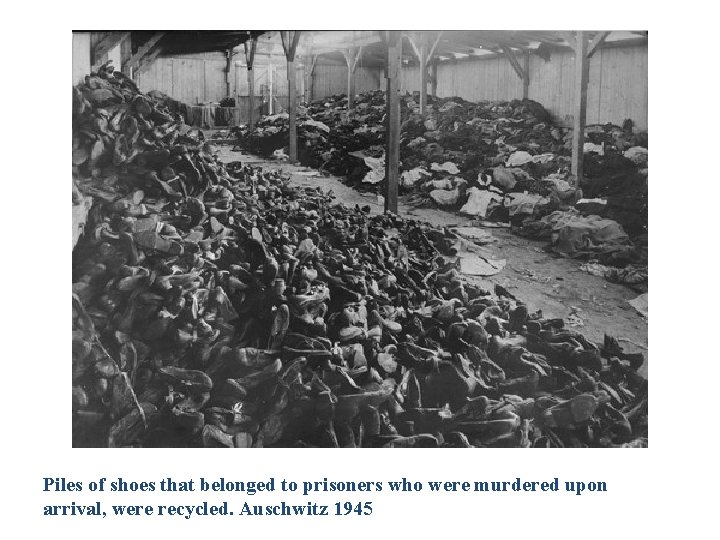
Piles of shoes that belonged to prisoners who were murdered upon arrival, were recycled. Auschwitz 1945
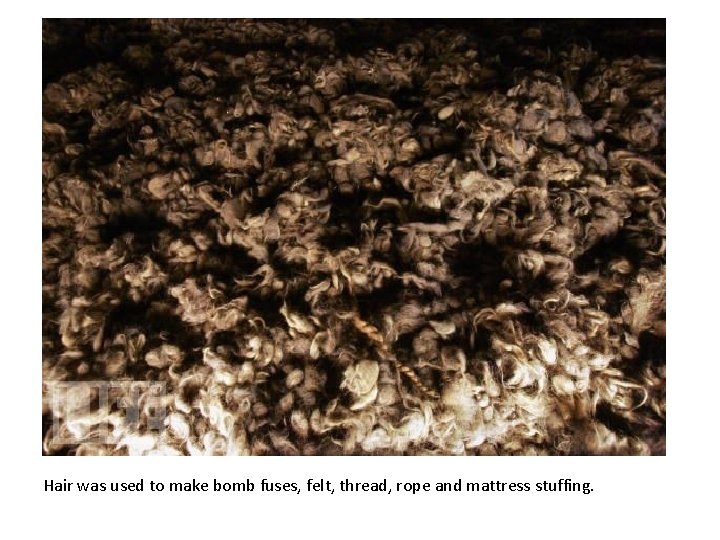
Hair was used to make bomb fuses, felt, thread, rope and mattress stuffing.
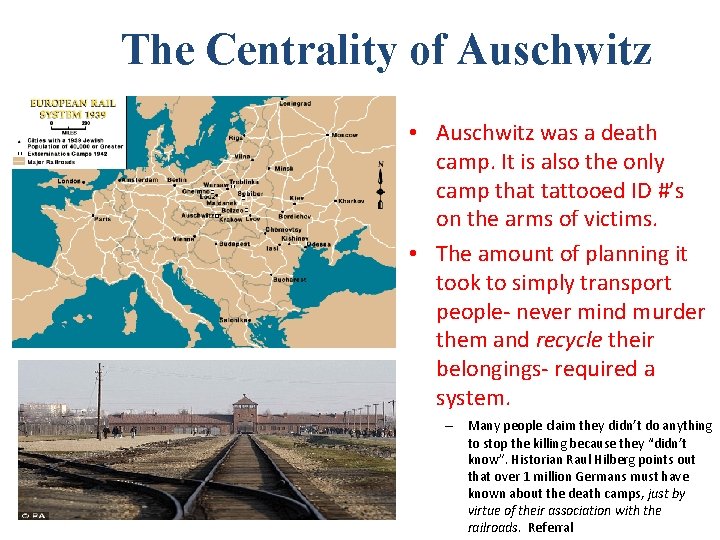
The Centrality of Auschwitz • Auschwitz was a death camp. It is also the only camp that tattooed ID #’s on the arms of victims. • The amount of planning it took to simply transport people- never mind murder them and recycle their belongings- required a system. – Many people claim they didn’t do anything to stop the killing because they “didn’t know”. Historian Raul Hilberg points out that over 1 million Germans must have known about the death camps, just by virtue of their association with the railroads. Referral
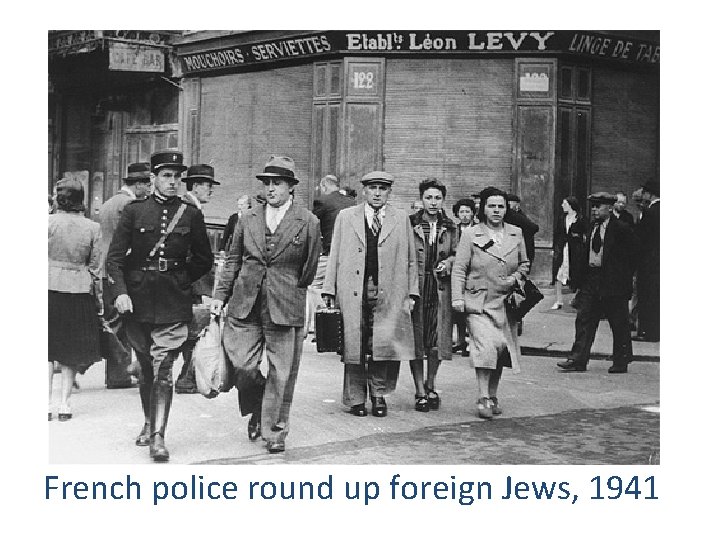
French police round up foreign Jews, 1941
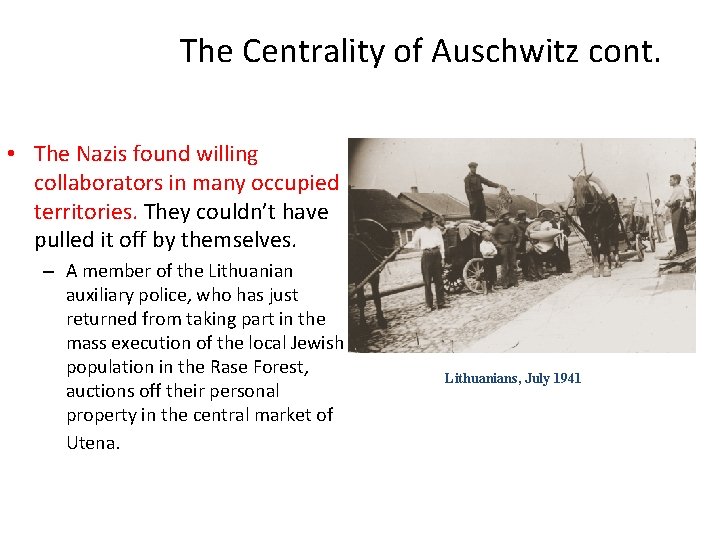
The Centrality of Auschwitz cont. • The Nazis found willing collaborators in many occupied territories. They couldn’t have pulled it off by themselves. – A member of the Lithuanian auxiliary police, who has just returned from taking part in the mass execution of the local Jewish population in the Rase Forest, auctions off their personal property in the central market of Utena. Lithuanians, July 1941
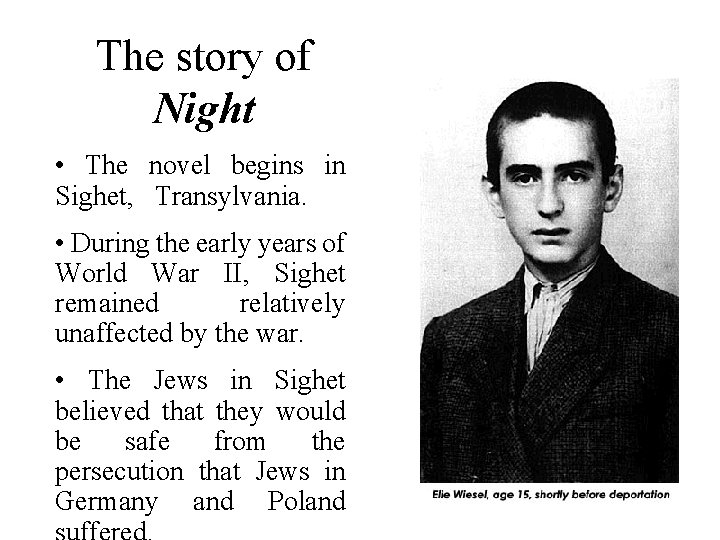
The story of Night • The novel begins in Sighet, Transylvania. • During the early years of World War II, Sighet remained relatively unaffected by the war. • The Jews in Sighet believed that they would be safe from the persecution that Jews in Germany and Poland
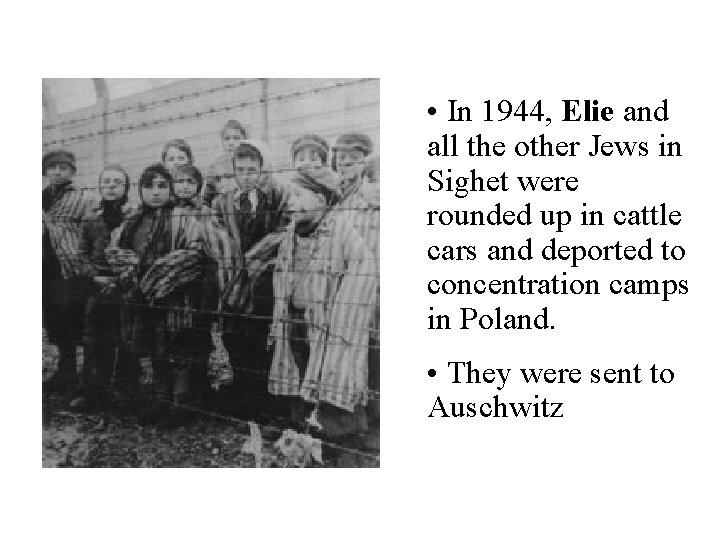
• In 1944, Elie and all the other Jews in Sighet were rounded up in cattle cars and deported to concentration camps in Poland. • They were sent to Auschwitz
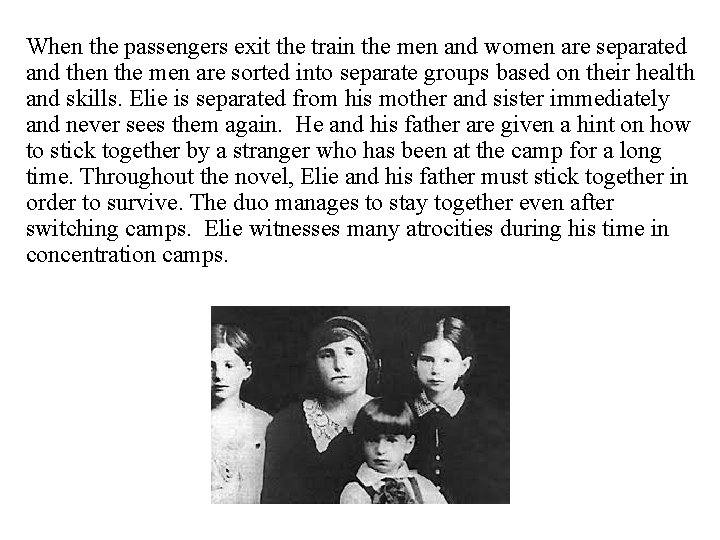
When the passengers exit the train the men and women are separated and then the men are sorted into separate groups based on their health and skills. Elie is separated from his mother and sister immediately and never sees them again. He and his father are given a hint on how to stick together by a stranger who has been at the camp for a long time. Throughout the novel, Elie and his father must stick together in order to survive. The duo manages to stay together even after switching camps. Elie witnesses many atrocities during his time in concentration camps.
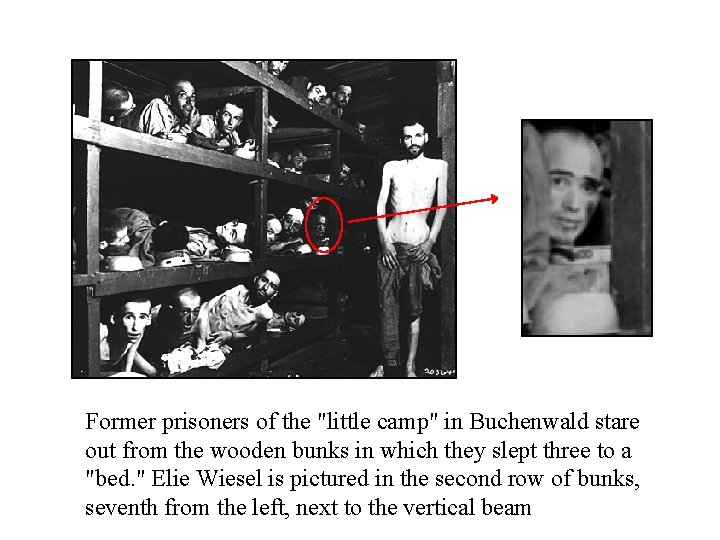
Former prisoners of the "little camp" in Buchenwald stare out from the wooden bunks in which they slept three to a "bed. " Elie Wiesel is pictured in the second row of bunks, seventh from the left, next to the vertical beam
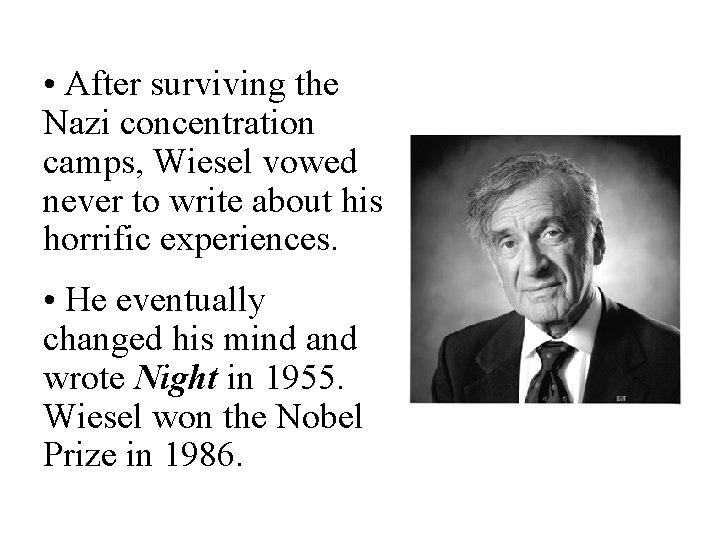
• After surviving the Nazi concentration camps, Wiesel vowed never to write about his horrific experiences. • He eventually changed his mind and wrote Night in 1955. Wiesel won the Nobel Prize in 1986.
Preface to Night Why did I write it? Did I write it so as not to go made or, on the contrary, to go mad in order to understand the nature of madness, the immense, terrifying madness that had erupted in history and in the conscience of mankind? Was it to leave behind a legacy of words, of memories, to help prevent history from repeating itself? Or was it simply to preserve a record of the ordeal I endured as an adolescent, at an age when one’s knowledge of death and evil should be limited to what one discovers in literature? There are those who tell me that I survived in order to write this text. I am not convinced. I don’t know how I survived; I was weak, rather shy; I did nothing to save myself. A miracle? Certainly not. If heaven could or would for me, why not for others more deserving than myself? It was nothing more than chance. However, having survived, I needed to give some meaning to my survival. Was it to protect that meaning that I set to paper an experience in which nothing made any
- Slides: 27