
Introduction to Night and Elie Wiesel Anti Semitism
- Slides: 9
Introduction to Night and Elie Wiesel
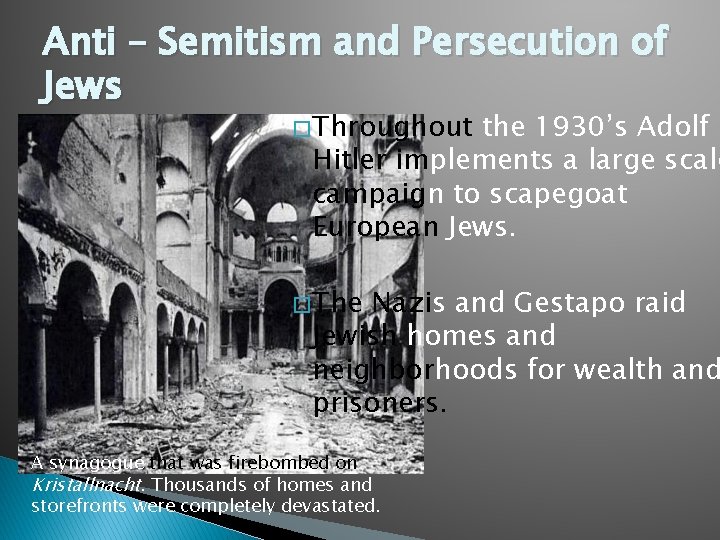
Anti – Semitism and Persecution of Jews � Throughout the 1930’s Adolf Hitler implements a large scale campaign to scapegoat European Jews. � The Nazis and Gestapo raid Jewish homes and neighborhoods for wealth and prisoners. A synagogue that was firebombed on Kristallnacht. Thousands of homes and storefronts were completely devastated.
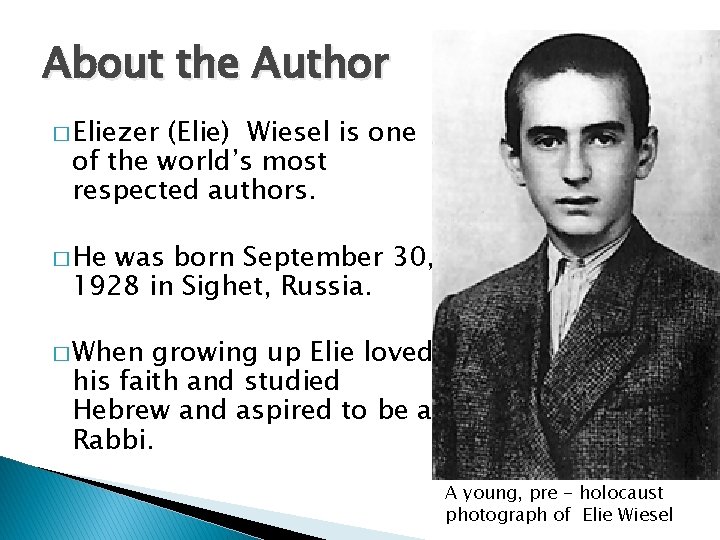
About the Author � Eliezer (Elie) Wiesel is one of the world’s most respected authors. � He was born September 30, 1928 in Sighet, Russia. � When growing up Elie loved his faith and studied Hebrew and aspired to be a Rabbi. A young, pre - holocaust photograph of Elie Wiesel
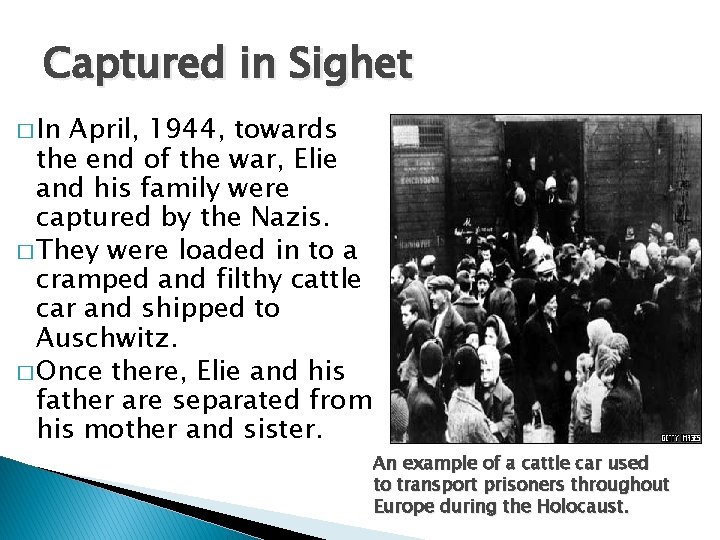
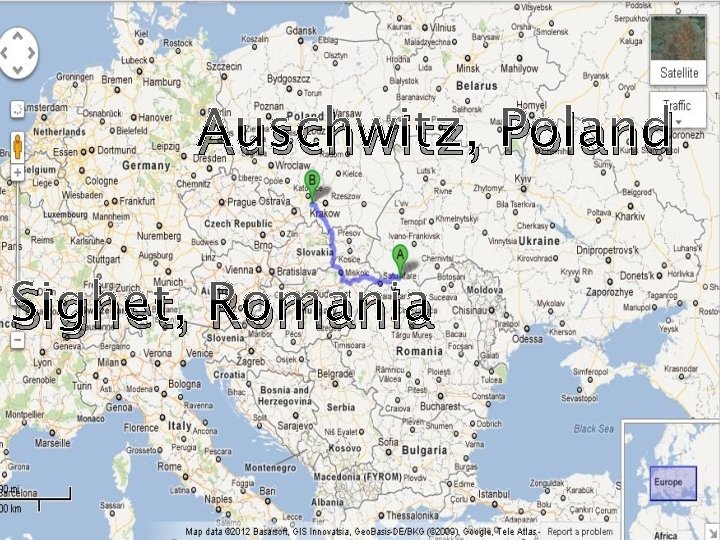
Captured in Sighet � In April, 1944, towards the end of the war, Elie and his family were captured by the Nazis. � They were loaded in to a cramped and filthy cattle car and shipped to Auschwitz. � Once there, Elie and his father are separated from his mother and sister. An example of a cattle car used to transport prisoners throughout Europe during the Holocaust.
Auschwitz, Poland Sighet, Romania
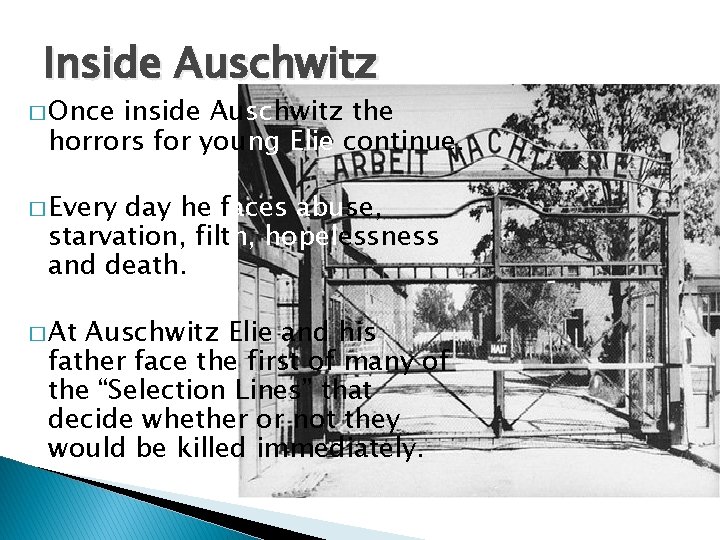
Inside Auschwitz � Once inside Auschwitz the horrors for young Elie continue. � Every day he faces abuse, starvation, filth, hopelessness and death. � At Auschwitz Elie and his father face the first of many of the “Selection Lines” that decide whether or not they would be killed immediately.
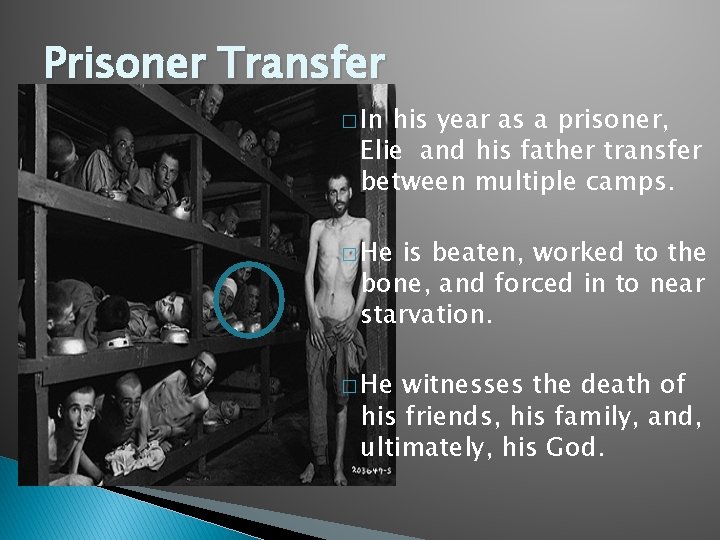
Prisoner Transfer � In his year as a prisoner, Elie and his father transfer between multiple camps. � He is beaten, worked to the bone, and forced in to near starvation. � He witnesses the death of his friends, his family, and, ultimately, his God.
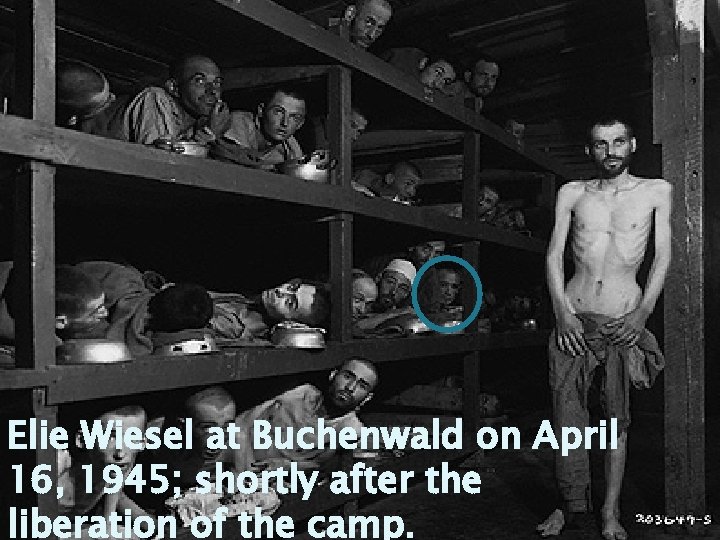
Elie Wiesel at Buchenwald on April 16, 1945; shortly after the liberation of the camp.
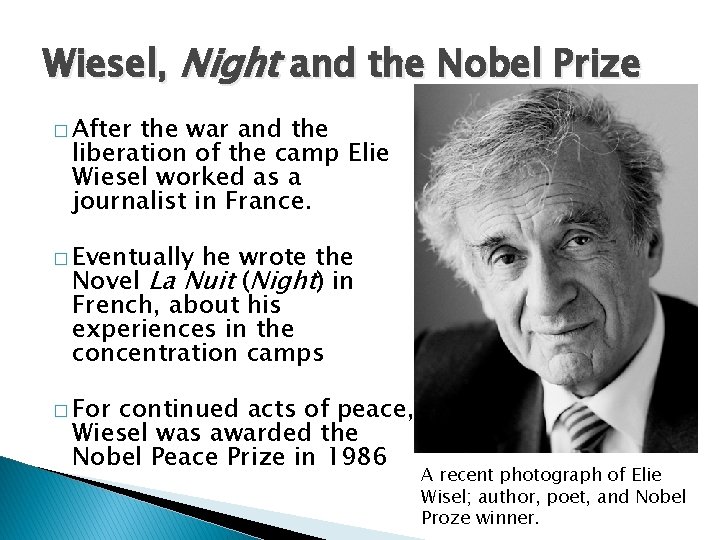
Wiesel, Night and the Nobel Prize � After the war and the liberation of the camp Elie Wiesel worked as a journalist in France. � Eventually he wrote the Novel La Nuit (Night) in French, about his experiences in the concentration camps � For continued acts of peace, Wiesel was awarded the Nobel Peace Prize in 1986 A recent photograph of Elie Wisel; author, poet, and Nobel Proze winner.