
Introduction to MRI Head Imaging Ryan Hakimi DO

- Slides: 21
Introduction to MRI Head Imaging Ryan Hakimi, DO, MS Director, Critical Care Neurology Assistant Professor Department of Neurology The University of Oklahoma Health Sciences Center January 16, 2015 OU Neurology
DISCLOSURES n FINANCIAL DISCLOSURE ØNothing to disclose n UNLABELED/UNAPPROVED USES DISCLOSURE ØNothing to disclose OU Neurology
Objectives n Describe the pros and cons of MRI versus CT when imaging the head n Discuss some common MRI sequences n Illustrate the appearance of acute ischemic stroke on various MRI head sequences n Present MRI head imaging of other common neurological diagnoses OU Neurology
Principles of Magnetic Resonance Imaging n Uses a magnet and radio waves to create an image based on changes in alignment of protons in the tissue n Terminology ØHyperintense (bright, white) ØHypointense (dark, black) OU Neurology
Advantages of MRI over CT Head n No radiation n Can image in multiple planes (axial, sagital, coronal, oblique) n Superior soft tissue imaging n Can image some vessels without contrast (MRA head) n Many different sequences allow for specialized imaging n Can image the brainstem and cerebellum OU Neurology
Disadvantages of MRI vs CT Head n Inferior bone imaging n Cost n Longer study time n Images degraded by motion n Can not image patient with pacemaker, claustrophobia, metallic foreign bodies (bullet) OU Neurology
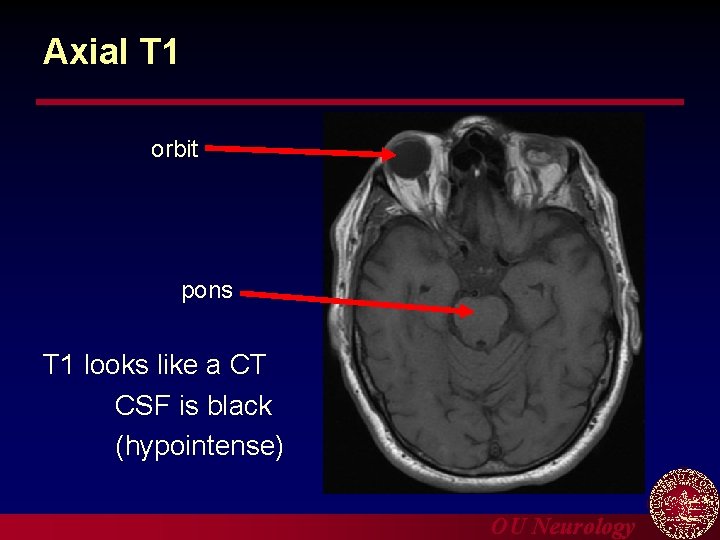
Axial T 1 orbit pons T 1 looks like a CT CSF is black (hypointense) OU Neurology
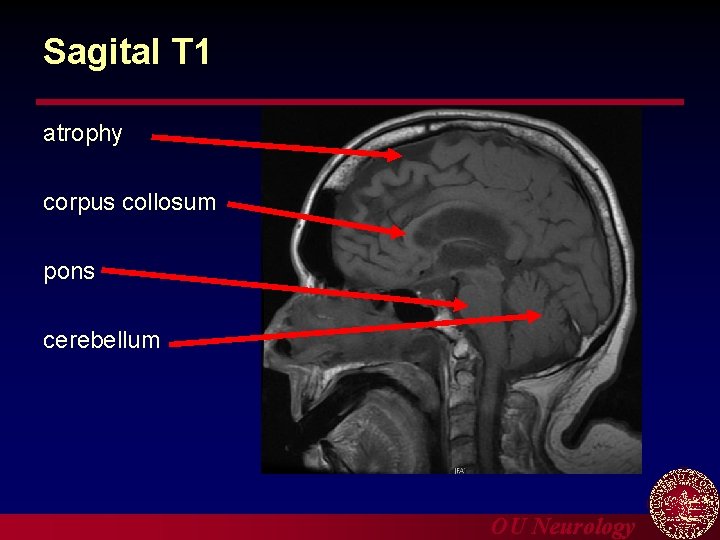
Sagital T 1 atrophy corpus collosum pons cerebellum OU Neurology
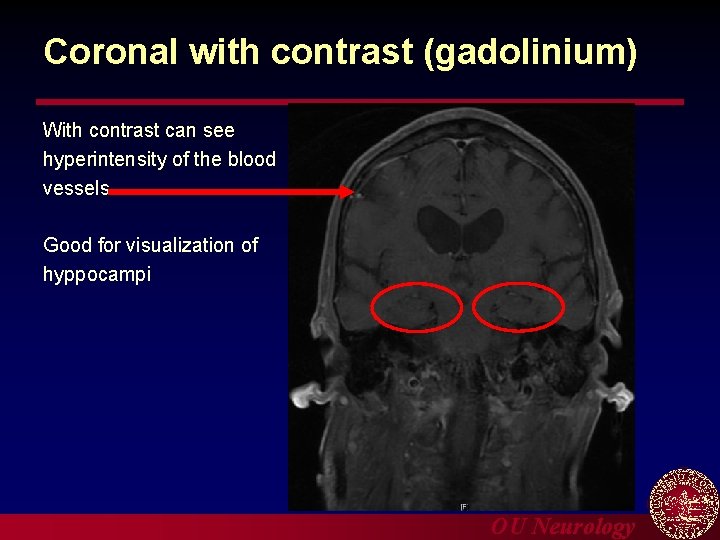
Coronal with contrast (gadolinium) With contrast can see hyperintensity of the blood vessels Good for visualization of hyppocampi OU Neurology
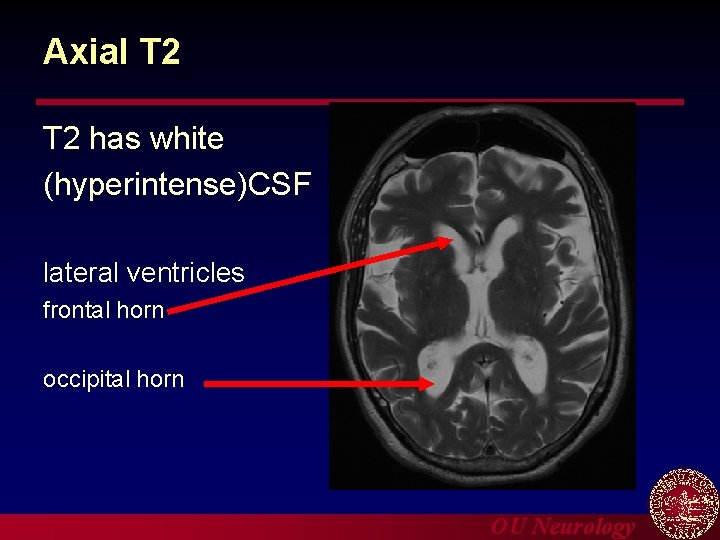
Axial T 2 has white (hyperintense)CSF lateral ventricles frontal horn occipital horn OU Neurology
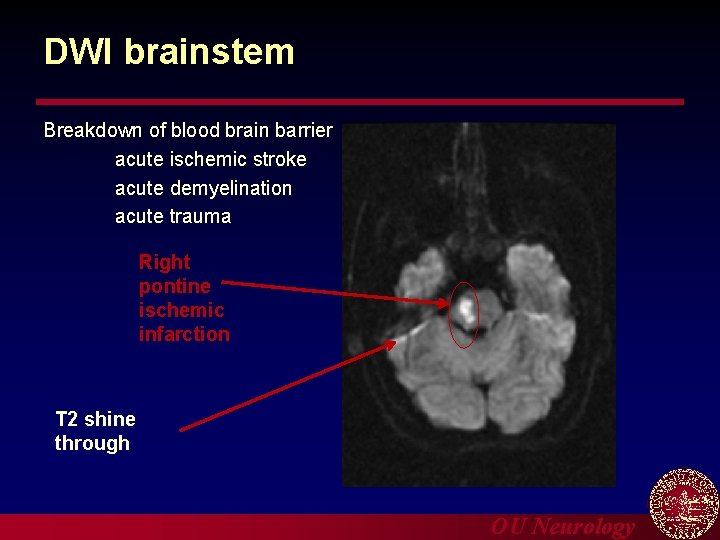
DWI brainstem Breakdown of blood brain barrier acute ischemic stroke acute demyelination acute trauma Right pontine ischemic infarction T 2 shine through OU Neurology
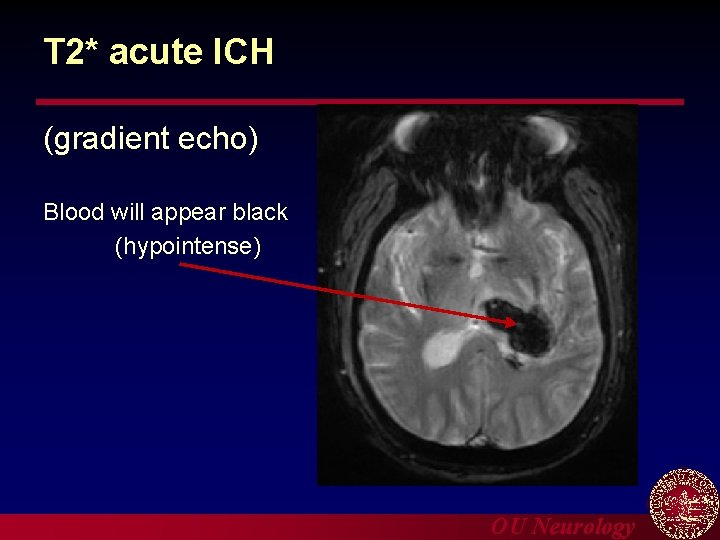
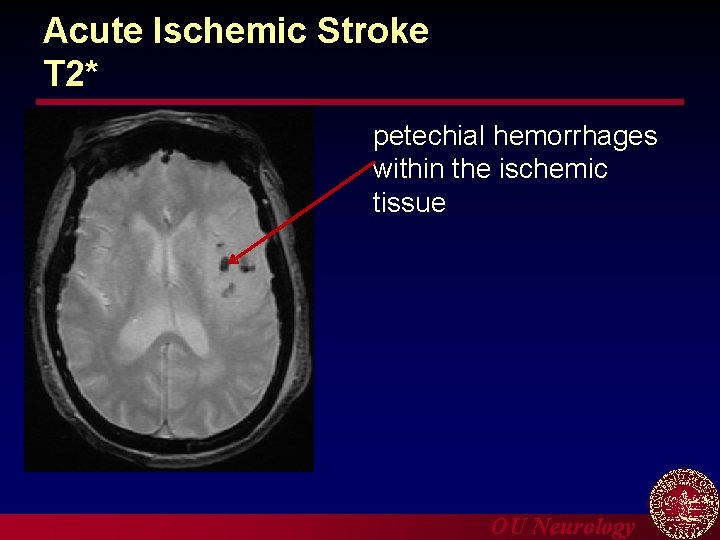
T 2* acute ICH (gradient echo) Blood will appear black (hypointense) OU Neurology
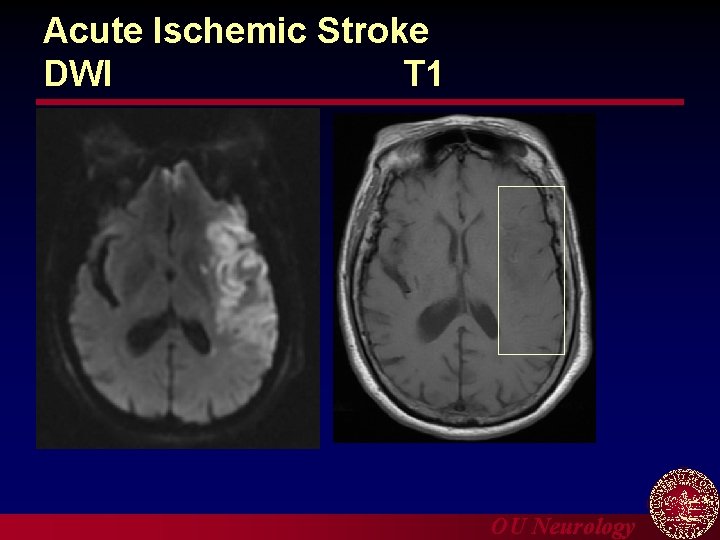
Acute Ischemic Stroke DWI T 1 OU Neurology
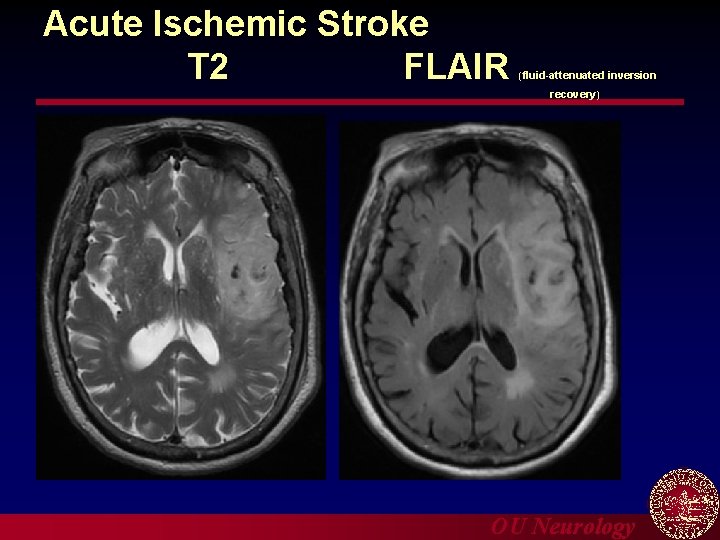
Acute Ischemic Stroke T 2 FLAIR (fluid-attenuated inversion recovery) OU Neurology
Acute Ischemic Stroke T 2* petechial hemorrhages within the ischemic tissue OU Neurology
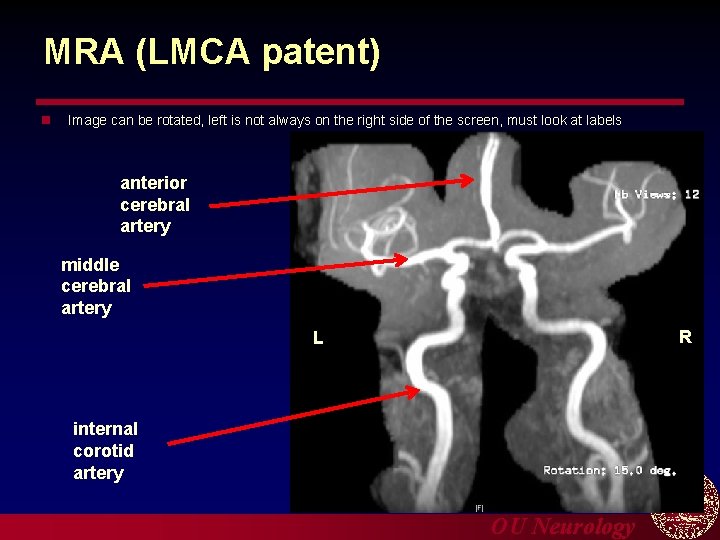
MRA (LMCA patent) n Image can be rotated, left is not always on the right side of the screen, must look at labels anterior cerebral artery middle cerebral artery R L internal corotid artery OU Neurology
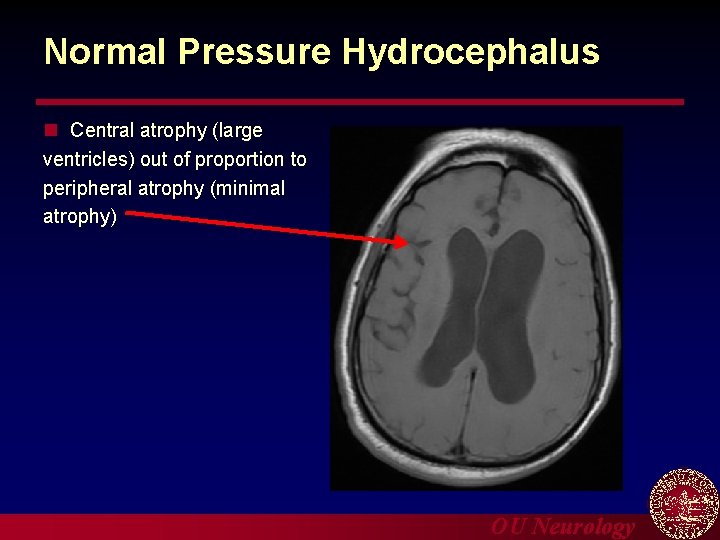
Normal Pressure Hydrocephalus n Central atrophy (large ventricles) out of proportion to peripheral atrophy (minimal atrophy) OU Neurology
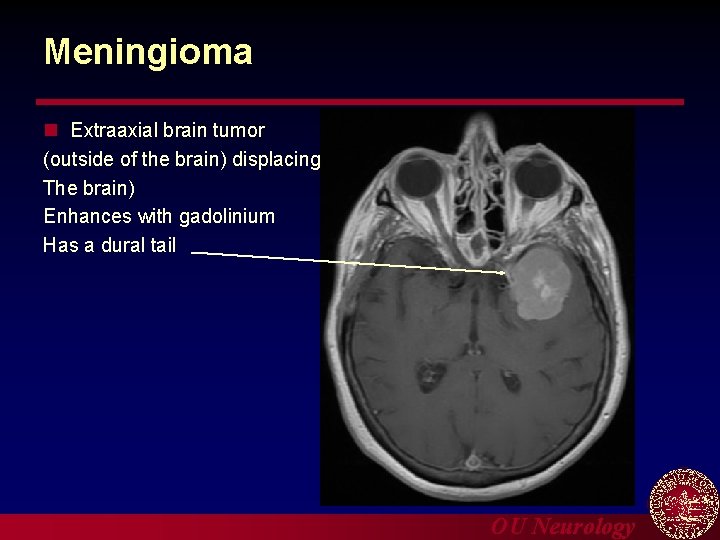
Meningioma n Extraaxial brain tumor (outside of the brain) displacing The brain) Enhances with gadolinium Has a dural tail OU Neurology
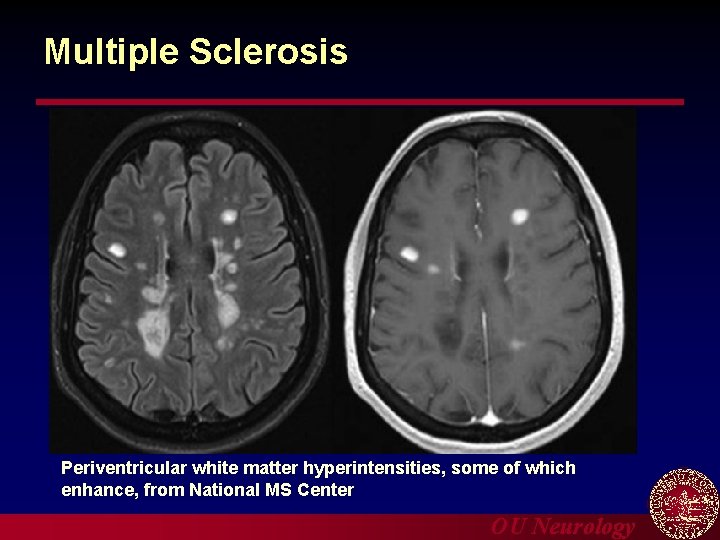
Multiple Sclerosis Periventricular white matter hyperintensities, some of which enhance, from National MS Center OU Neurology
GAD with NSF n Puts patients at risk for nephrogenic systemic fibrosis ØFibrosis of skin, eyes, organs n Gadolinium can not be administered in patients: ØGlomerular filtration rate (GFR) of 30 or less ØOn dialysis OU Neurology
Questions Thank you OU Neurology