
Introduction To Molecular Epidemiology Ioanna Tzoulaki itzoulakcc uoi

- Slides: 15
Introduction To Molecular Epidemiology Ioanna Tzoulaki itzoulak@cc. uoi. gr With thanks to David C. Muller And Marc Gunter for developing much of this material
What is Molecular Epidemiology? • Not a separate discipline but a focus • Defined as: “the study of exogenous and endogenous determinants of disease, identified at the molecular level” • Opportunity to study both nature and nurture with sophisticated and molecular-level tools
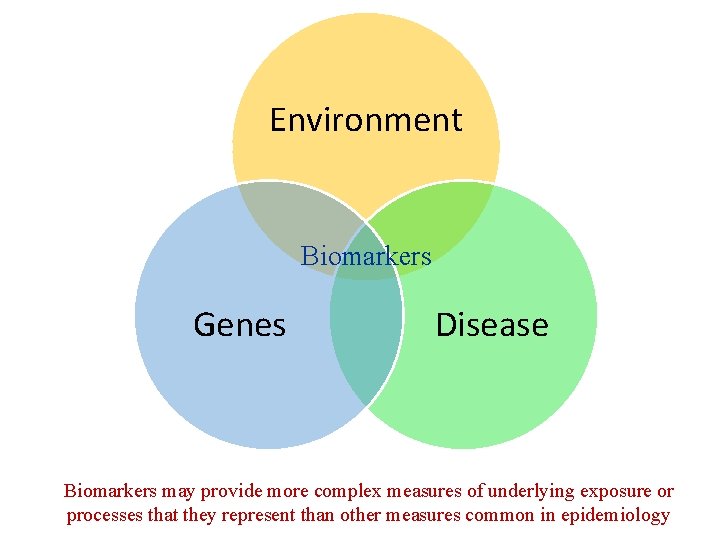
Environment Biomarkers Genes Disease Biomarkers may provide more complex measures of underlying exposure or processes that they represent than other measures common in epidemiology
Molecular Epidemiology • What defines molecular epidemiology is its focus on: • The validation of relevant biomarkers of exposure (i. e. , precision, accuracy, sensitivity, specificity, reproducibility) • Methods to accurately determine clinical endpoints, including surrogate (intermediate) endpoints; and • Efficient study design methods to address the high costs of laboratory testing. All towards the goal of understanding the causes of disease, and ultimately the prevention and treatment of disease.
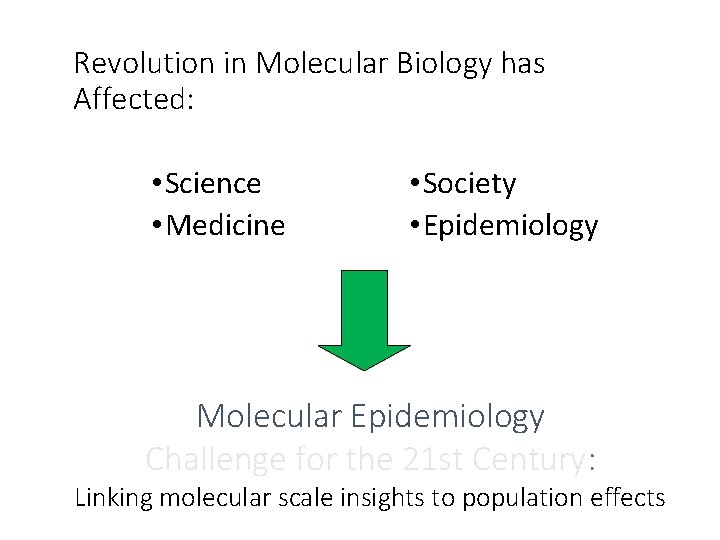
Revolution in Molecular Biology has Affected: • Science • Medicine • Society • Epidemiology Molecular Epidemiology Challenge for the 21 st Century: Linking molecular scale insights to population effects
Potential of Molecular Epidemiology • Will facilitate the ability of scientists to conduct aetiologic research • Will increase our knowledge about the determinants of disease • Will contribute to the development of approaches for disease prevention • Will improve public health
Molecular Epidemiology Notable Contributions: • HPV is responsible for 100% of cervical cancer; prevention reality (vaccine) • ‘Cutting down’ on smoking is ineffective; biomarker studies demonstrate carcinogen levels don’t decline • ‘Cutting down’ or quitting smoking is effective; DNA methylation changes associated with smoking are reversible • GWAS studies based on biospecimen collections have identified numerous genetic variants associated with >100 disease endpoints
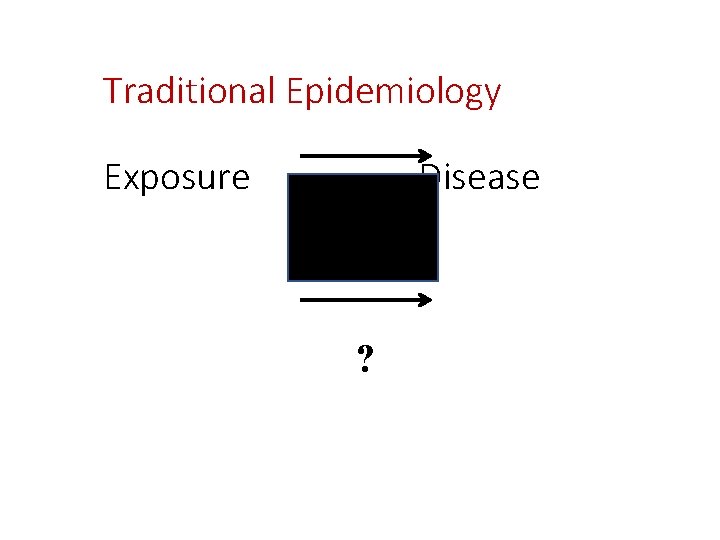
Traditional Epidemiology Exposure Disease ?
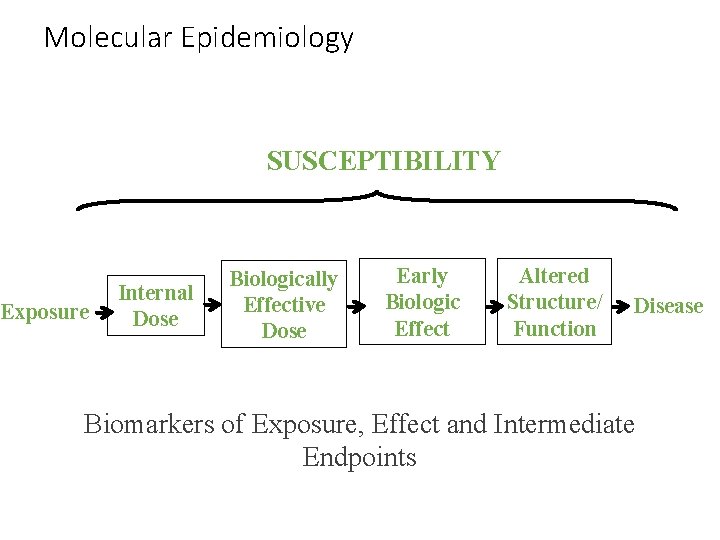
Molecular Epidemiology SUSCEPTIBILITY Exposure Internal Dose Biologically Effective Dose Early Biologic Effect Altered Structure/ Function Disease Biomarkers of Exposure, Effect and Intermediate Endpoints
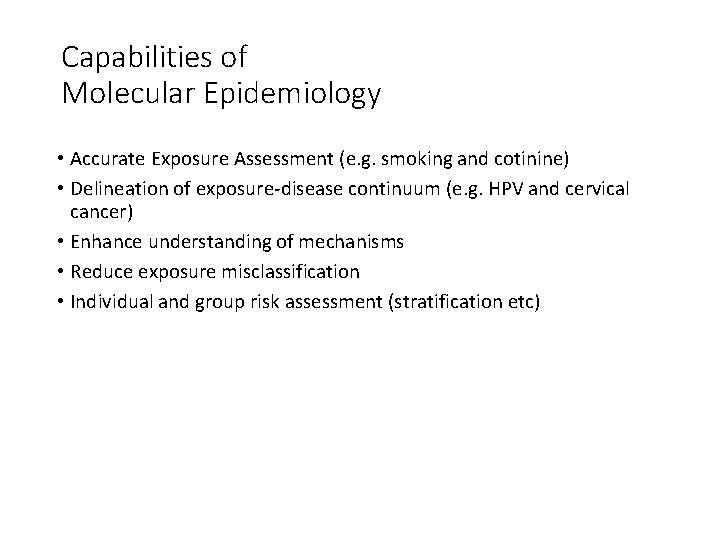
Capabilities of Molecular Epidemiology • Accurate Exposure Assessment (e. g. smoking and cotinine) • Delineation of exposure-disease continuum (e. g. HPV and cervical cancer) • Enhance understanding of mechanisms • Reduce exposure misclassification • Individual and group risk assessment (stratification etc)
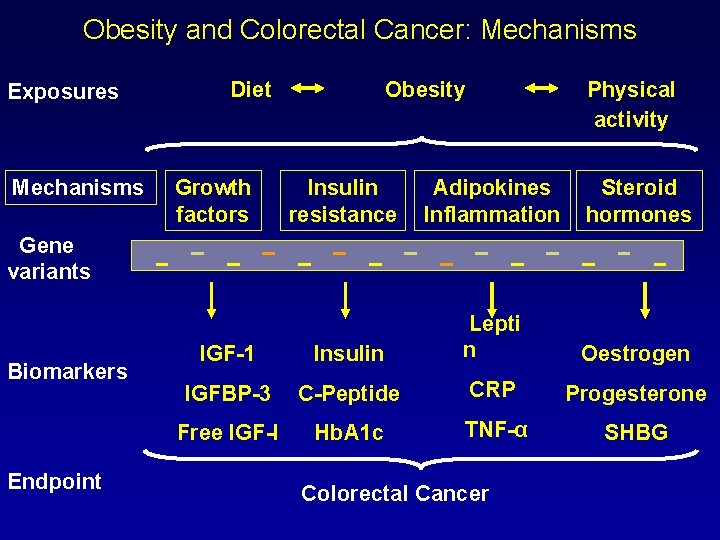
Obesity and Colorectal Cancer: Mechanisms Exposures Mechanisms Diet Growth factors Obesity Physical activity Insulin resistance Adipokines Inflammation Steroid hormones IGF-1 Insulin Lepti n Oestrogen IGFBP-3 C-Peptide CRP Progesterone Free IGF-I Hb. A 1 c TNF-α SHBG Gene variants Biomarkers Endpoint Colorectal Cancer
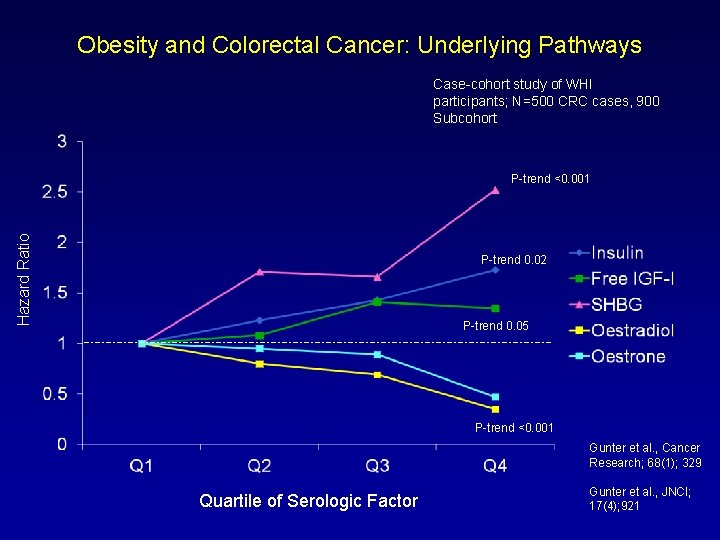
Obesity and Colorectal Cancer: Underlying Pathways Case-cohort study of WHI participants; N=500 CRC cases, 900 Subcohort Hazard Ratio P-trend <0. 001 P-trend 0. 02 P-trend 0. 05 P-trend <0. 001 Gunter et al. , Cancer Research; 68(1); 329 Quartile of Serologic Factor Gunter et al. , JNCI; 17(4); 921
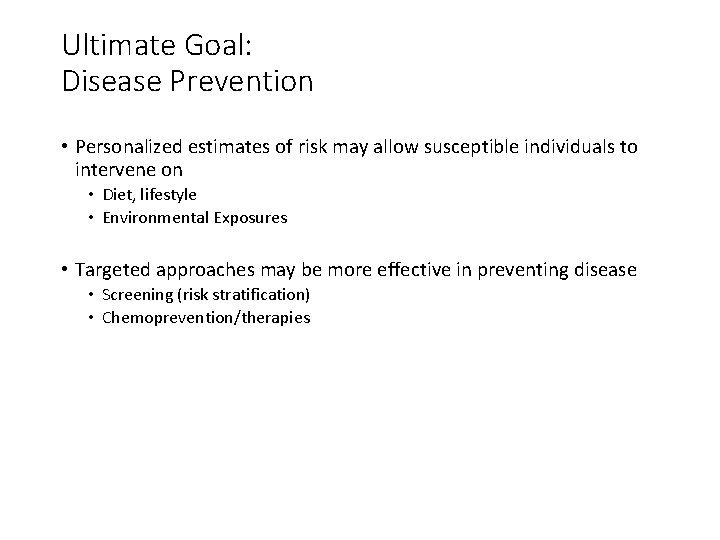
Ultimate Goal: Disease Prevention • Personalized estimates of risk may allow susceptible individuals to intervene on • Diet, lifestyle • Environmental Exposures • Targeted approaches may be more effective in preventing disease • Screening (risk stratification) • Chemoprevention/therapies
Towards the Exposome…. The exposome concept refers to the totality of environmental exposures from conception onwards, The internal exposome is based on measurements in biological material of complete sets of biomarkers of exposure, using repeated biological samples especially during critical life stages. Biomarkers which can be measured in this context cover a wide range of molecules, ranging from xenobiotics and their metabolites in blood (metabolomics) to covalent complexes with DNA and proteins (adductomics).
Reading • A Rundle, P Vineis and H Ahsan. Design options for molecular epidemiology research within cohort studies. Cancer Epidemiology Biomarkers and Prevention. 2005 14; 1899 -1904. • N Caporaso. Integrative study designs-next step in the evolution of molecular epidemiology? Cancer Epidemiology Biomarkers and Prevention. 2007 16; 365 • N Holland, L Pfleger, E Berger, A Ho and M Bastaki. Molecular epidemiology biomarkers-sample collection and processing considerations. Toxicology and Applied Pharmacology. 2005; 261 -268.