
Introduction to Modeling Introduction Why Model Management Models
- Slides: 13
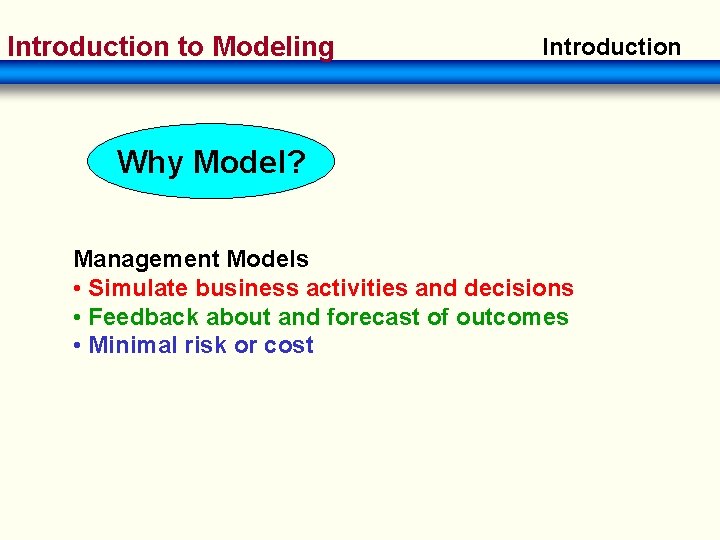
Introduction to Modeling Introduction Why Model? Management Models • Simulate business activities and decisions • Feedback about and forecast of outcomes • Minimal risk or cost
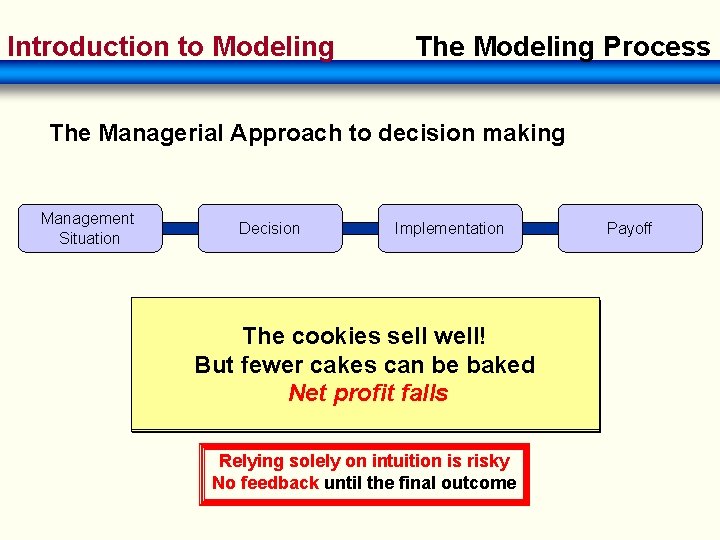
Introduction to Modeling The Modeling Process The Managerial Approach to decision making Management Situation Decision Implementation The been cookies sell well! Owner has a baker for 50 years The. Should company spends 50, 000 litas on new our baking company make Butthinks fewer the cakes can bewill baked and cookies sell: machinery and advertising. cookies in addition to cakes? Net“Taip!” profit falls Relying solely on intuition is risky No feedback until the final outcome Payoff
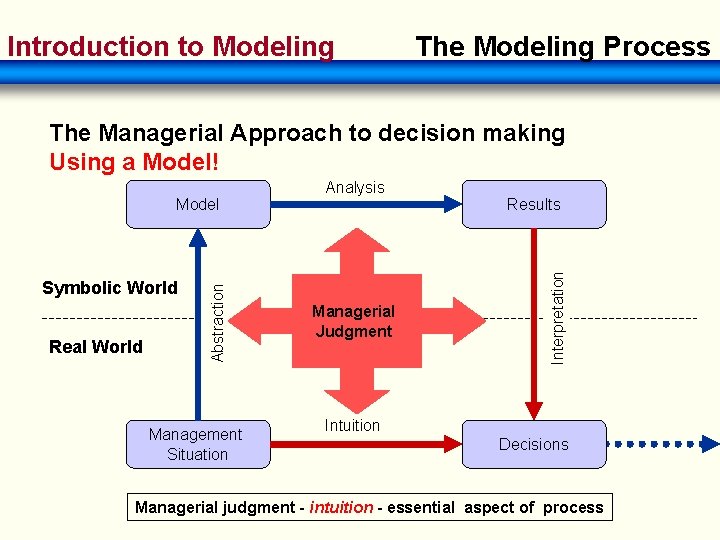
Introduction to Modeling The Modeling Process The Managerial Approach to decision making Using a Model! Real World Management Situation Managerial Judgment Results Interpretation Symbolic World Abstraction Model Analysis Intuition Decisions Managerial judgment - intuition - essential aspect of process
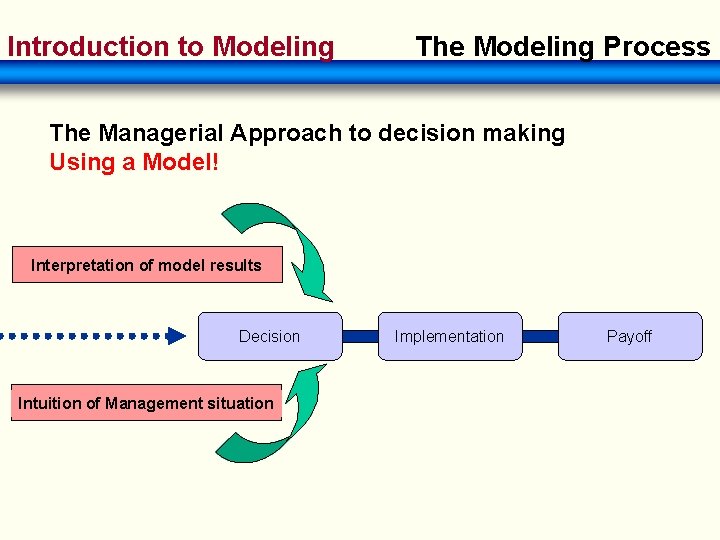
Introduction to Modeling The Modeling Process The Managerial Approach to decision making Using a Model! Interpretation of model results Decision Intuition of Management situation Implementation Payoff
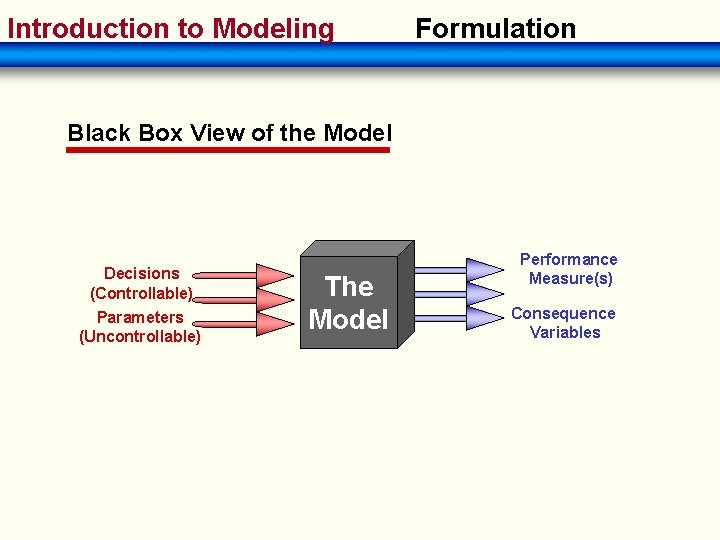
Introduction to Modeling Formulation Black Box View of the Model Decisions (Controllable) Parameters (Uncontrollable) The Model Performance Measure(s) Consequence Variables
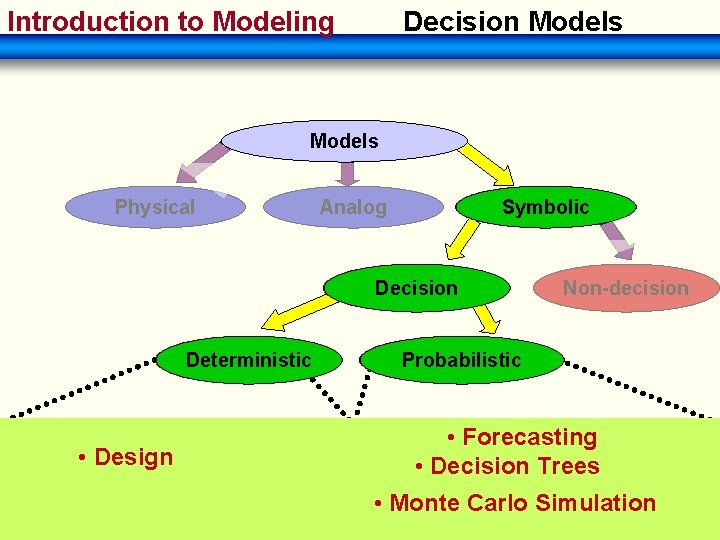
Introduction to Modeling Decision Models Physical Analog Symbolic Decision Deterministic • Design Non-decision Probabilistic • Forecasting • Decision Trees • Monte Carlo Simulation
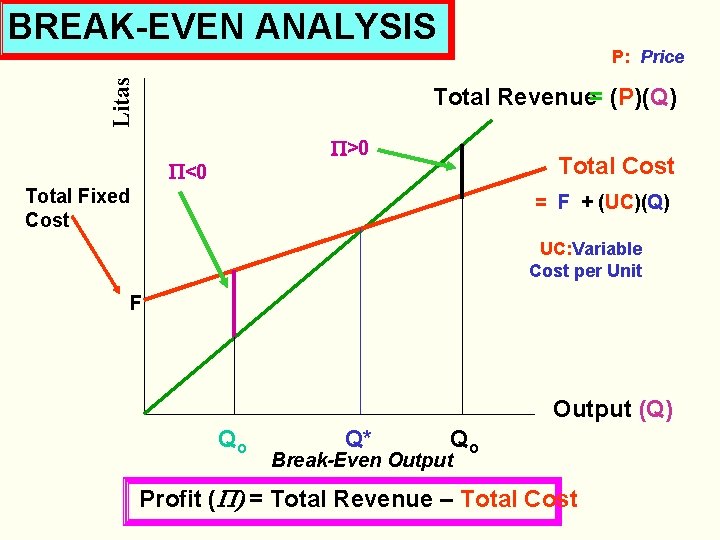
BREAK-EVEN ANALYSIS Litas P: Price Total Revenue= (P)(Q) P>0 P<0 Total Cost Total Fixed Cost = F + (UC)(Q) UC: Variable Cost per Unit F Output (Q) Qo Q* Qo Break-Even Output Profit (P) = Total Revenue – Total Cost
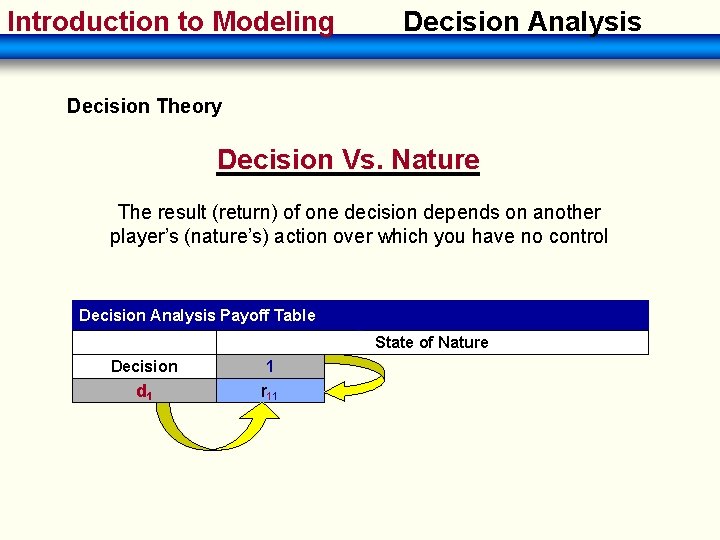
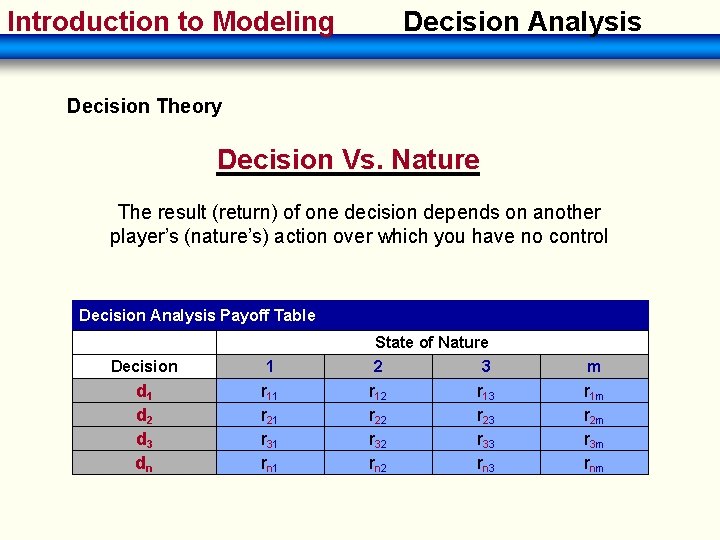
Introduction to Modeling Decision Analysis Decision Theory Decision Vs. Nature The result (return) of one decision depends on another player’s (nature’s) action over which you have no control Decision Analysis Payoff Table State of Nature Decision 1 d 1 r 11
Introduction to Modeling Decision Analysis Decision Theory Decision Vs. Nature The result (return) of one decision depends on another player’s (nature’s) action over which you have no control Decision Analysis Payoff Table Decision 1 State of Nature 2 3 d 1 d 2 d 3 dn r 11 r 21 r 31 rn 1 r 12 r 22 r 32 rn 2 r 13 r 23 r 33 rn 3 m r 1 m r 2 m r 3 m rnm
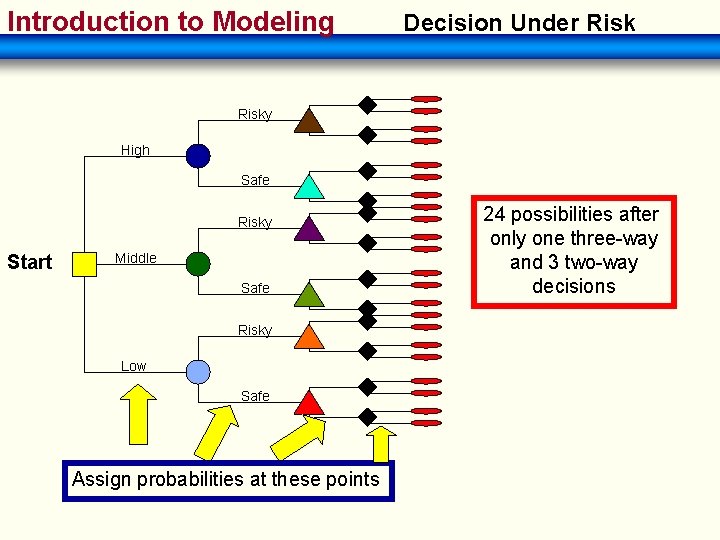
Introduction to Modeling Decision Under Risky High Safe Risky Start Middle Safe Risky Low Safe Assign probabilities at these points 24 possibilities after only one three-way and 3 two-way decisions
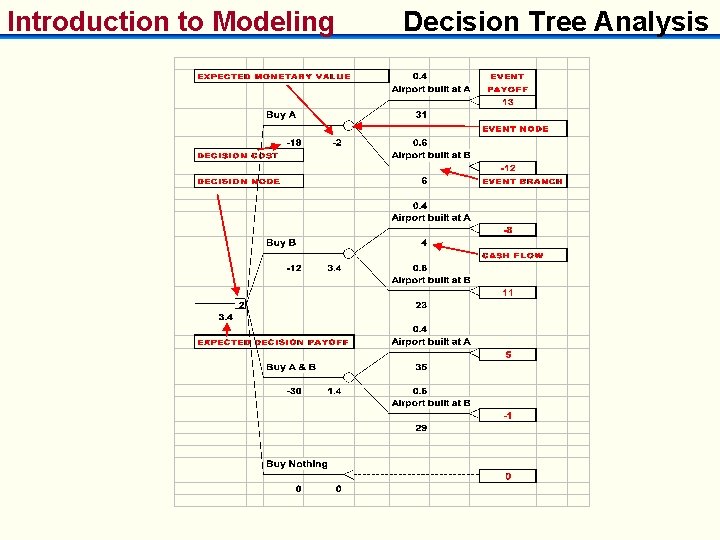
Introduction to Modeling Decision Tree Analysis
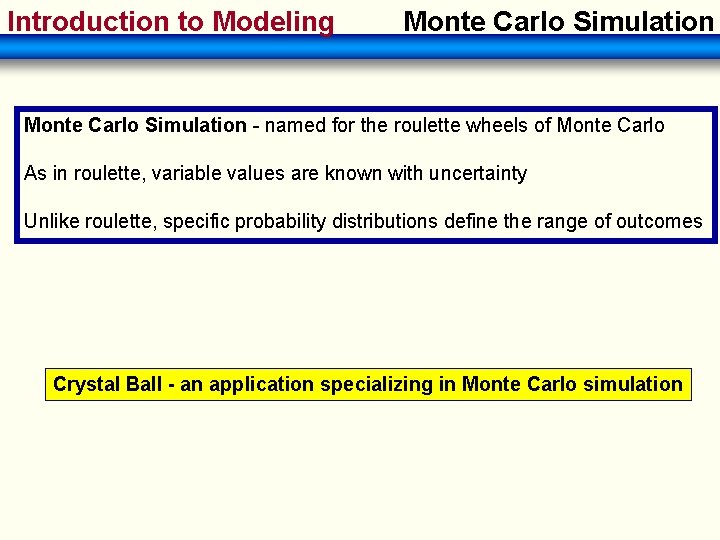
Introduction to Modeling Monte Carlo Simulation - named for the roulette wheels of Monte Carlo As in roulette, variable values are known with uncertainty Unlike roulette, specific probability distributions define the range of outcomes Crystal Ball - an application specializing in Monte Carlo simulation
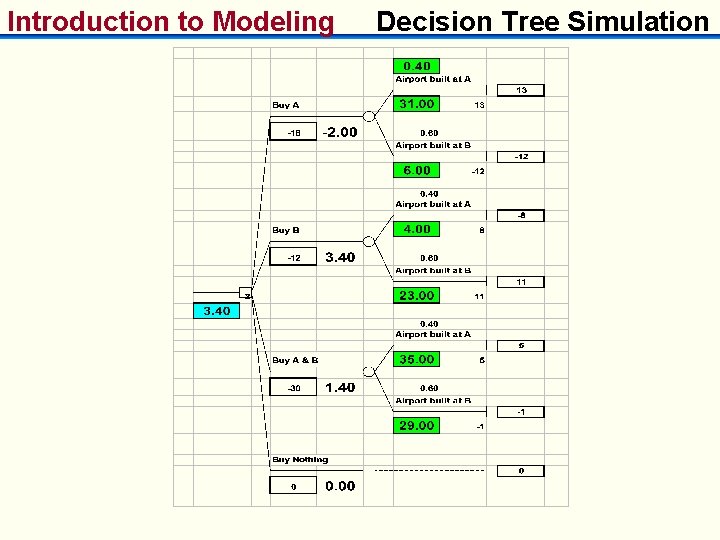
Introduction to Modeling Decision Tree Simulation