
Introduction to Mobile Computing Presented by Dr ANIL
Introduction to Mobile Computing Presented by Dr. ANIL KUMAR MISHRA, Professor DEPARTMENT OF COMPUTERSCIENCE AND ENGINEERING VISAKHA INSTITUTE OF ENGINEERING & TECHNOLOGY
Presentation Outline What is mobile computing? Comparison to wired networks Why go mobile? Types of wireless devices Mobile objects Moving object databases (MOD) Query language for MOD Applications of mobile computing Challenges Future of mobile computing Conclusion 2
What Is Mobile Computing? What is computing? Operation of computers (according to oxfords advance learner’s dictionary) What is the mobile? That someone /something can move or be moved easily and quickly from place to place What is mobile computing? Users with portable computers still have network connections while they move 3
What Is Mobile Computing? (Cont. ) Is using a digital camera “Mobile Computing”, or using an MP 3 player or handheld computer (e. g. 3 Com’s Palm Pilot or Compaq’s i. PAQ 3660)? 4
What Is Mobile Computing? (Cont. ) A simple definition could be: Mobile Computing is using a computer (of one kind or another) while on the move Another definition could be: Mobile Computing is when a (work) process is moved from a normal fixed position to a more dynamic position. A third definition could be: Mobile Computing is when a work process is carried out somewhere it was not previously possible. 5
What Is Mobile Computing? (Cont. ) Mobile Computing is an umbrella term used to describe technologies that enable people to access network services anyplace, anytime, and anywhere. 6
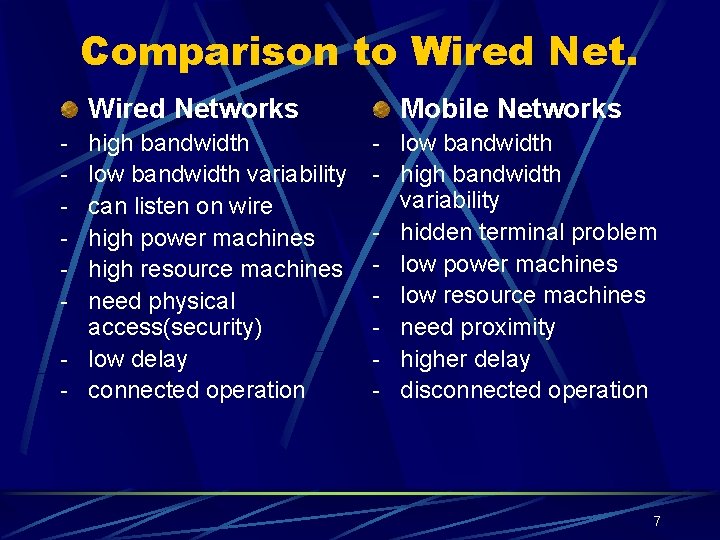
Comparison to Wired Networks Mobile Networks - high bandwidth - low bandwidth variability - high bandwidth - can listen on wire - high power machines - - high resource machines - - need physical - access(security) - low delay - connected operation - variability hidden terminal problem low power machines low resource machines need proximity higher delay disconnected operation 7
Why Go Mobile? Enable anywhere/anytime connectivity Bring computer communications to areas without pre-existing infrastructure Enable mobility Enable new applications An exciting new research area 8
Types of Wireless Devices Laptops Palmtops PDAs Cell phones Pagers Sensors 9
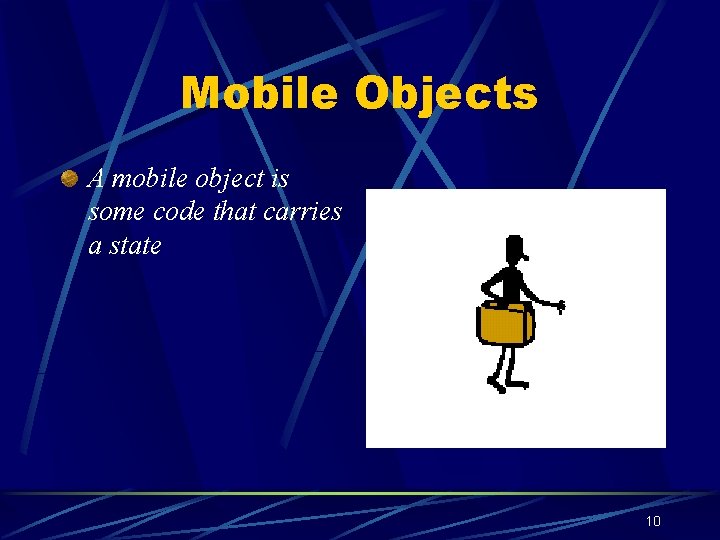
Mobile Objects A mobile object is some code that carries a state 10
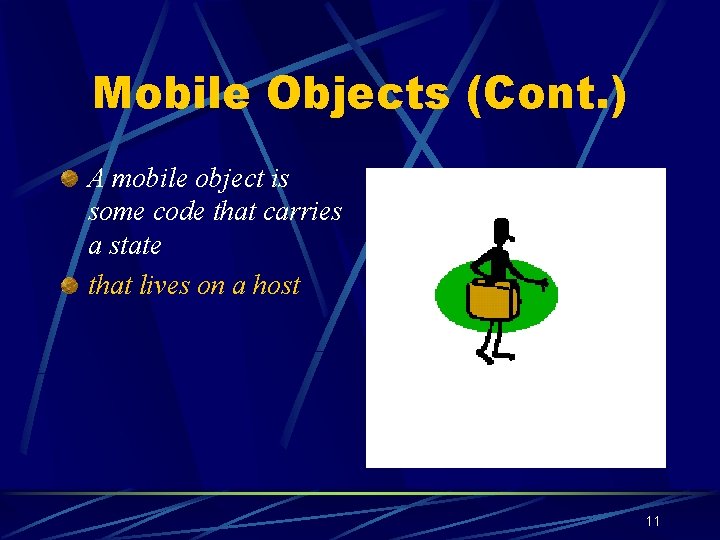
Mobile Objects (Cont. ) A mobile object is some code that carries a state that lives on a host 11
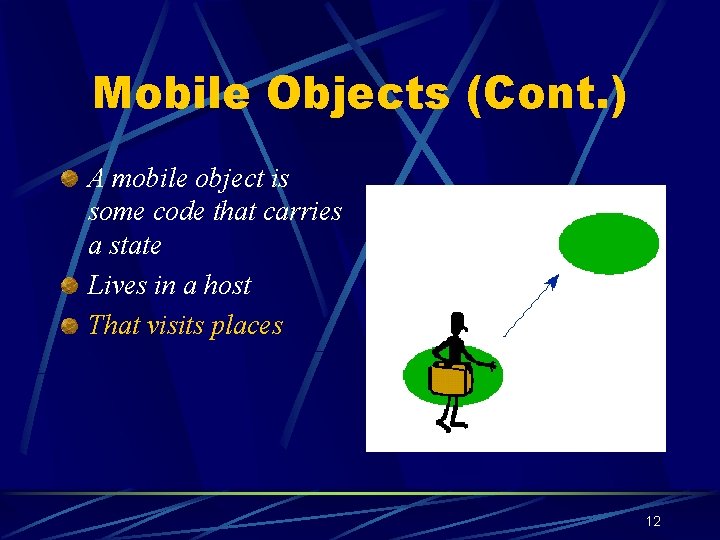
Mobile Objects (Cont. ) A mobile object is some code that carries a state Lives in a host That visits places 12
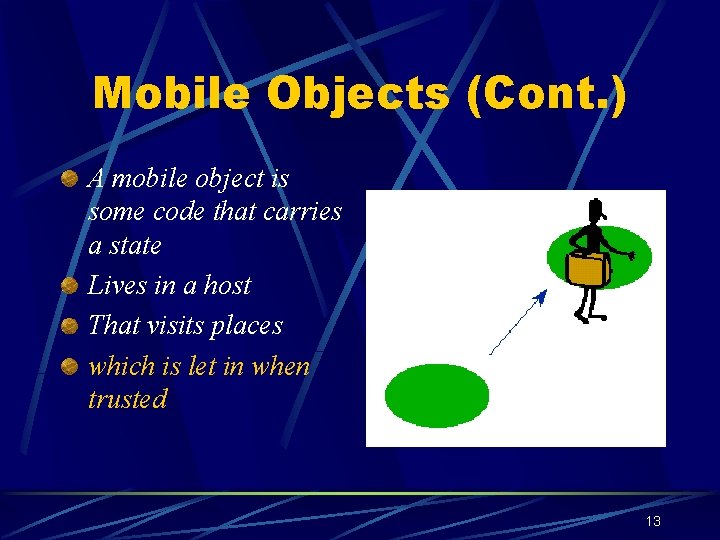
Mobile Objects (Cont. ) A mobile object is some code that carries a state Lives in a host That visits places which is let in when trusted 13
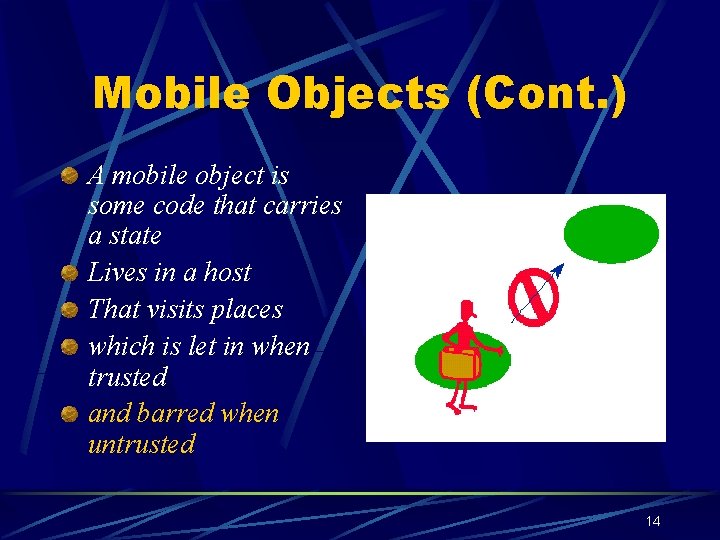
Mobile Objects (Cont. ) A mobile object is some code that carries a state Lives in a host That visits places which is let in when trusted and barred when untrusted 14
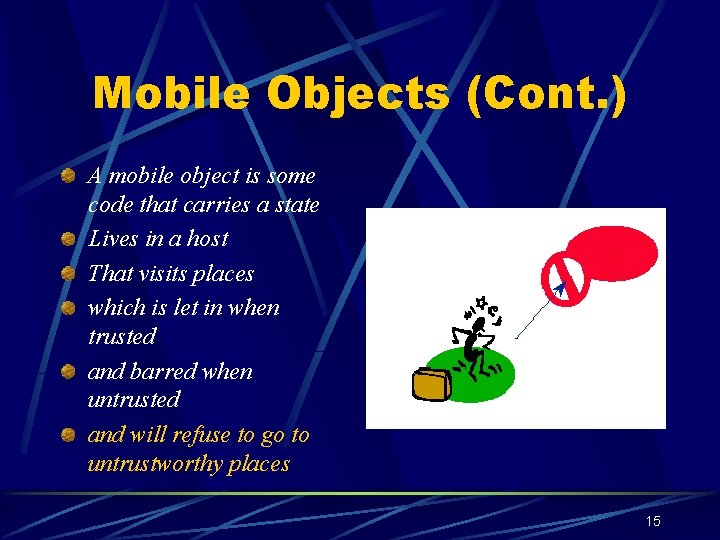
Mobile Objects (Cont. ) A mobile object is some code that carries a state Lives in a host That visits places which is let in when trusted and barred when untrusted and will refuse to go to untrustworthy places 15
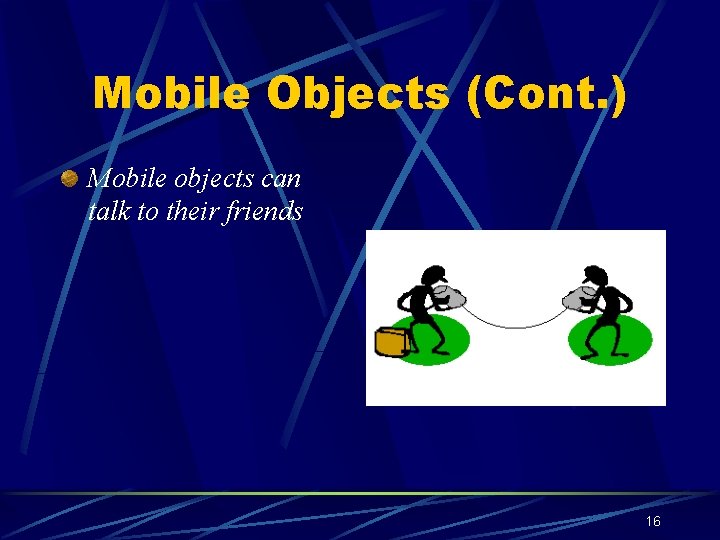
Mobile Objects (Cont. ) Mobile objects can talk to their friends 16
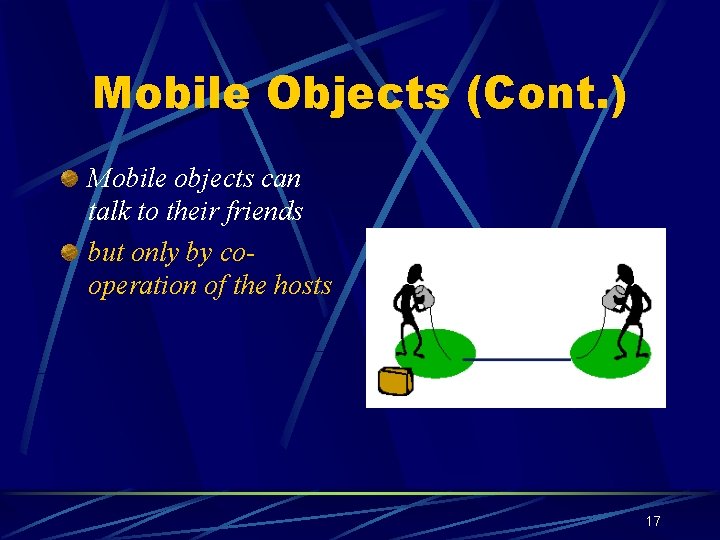
Mobile Objects (Cont. ) Mobile objects can talk to their friends but only by cooperation of the hosts 17
Moving Object Databases (MOD) Deals with Mobile Objects whose geometry, position changes over time Traditional DBMS alone is incapable for this purpose MOD is built on top of existing DBMS to support a critical set of capabilities 18
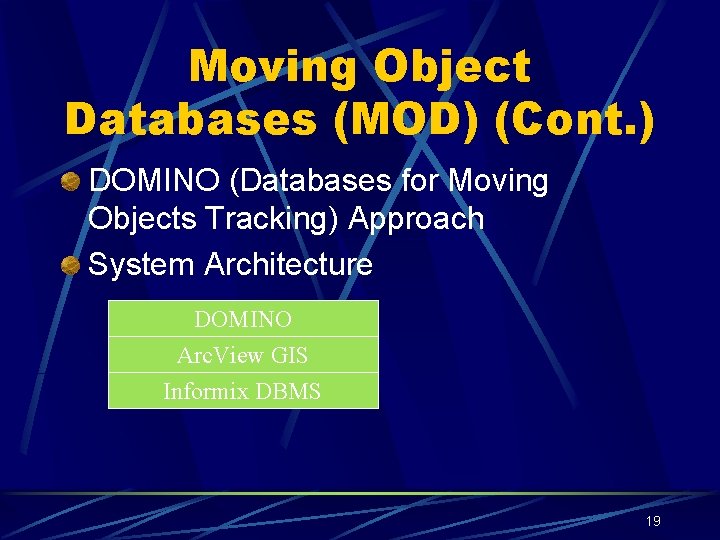
Moving Object Databases (MOD) (Cont. ) DOMINO (Databases for Moving Objects Tracking) Approach System Architecture DOMINO Arc. View GIS Informix DBMS 19
Moving Object Databases (MOD) (Cont. ) - Omnitracs developed by Qualcomm Is a commercial system used by the transportation industry Provides location management by connecting vehicles, via satellites, to company DB Vehicles are equipped with GPS, and they automatically and periodically report their location 20
Query Language for MOD Regular query language (SQL) is nontemporal For MOD we need Spatial and Temporal Query language “Where is the nearest station? ” “What is the distance of the closest taxicab? ” 21
Query Language for MOD (Cont. ) Some proposed query language: - Future Temporal Logic (FTL) - Mob. SQL like query languages with specific predicates and operators to address temporal issues 22
Query Language for MOD (Cont. ) What is the nearest station? SELECT station. name, station. address FROM station in Stations WHERE NEAREST (HERE, station); “At what time truck 12 A arrive to Windsor ” SELECT t FROM v in Trucks, c in Cities WHERE v WITHIN(t) c and v. id = 12 A and c. name=Windsor 23
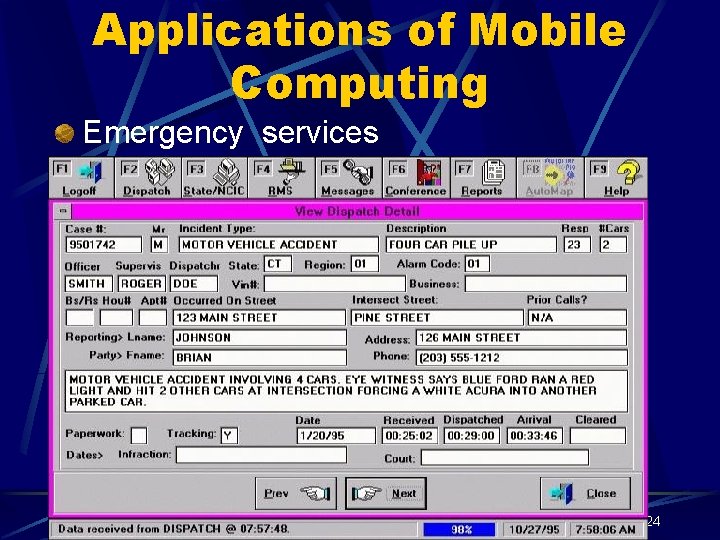
Applications of Mobile Computing Emergency services 24
Applications of Mobile Computing (Cont. ) For Estate Agents In courts In companies Stock Information Collection/Control Credit Card Verification Taxi/Truck Dispatch Electronic Mail/Paging 25
Challenges Disconnection Low bandwidth High bandwidth variability Low power and resources Security risks Wide variety terminals and devices with different capabilities Device attributes Fit more functionality into single, smaller device 26
Future of Mobile Computing Use of Artificial Intelligence Integrated Circuitry -> Compact Size Increases in Computer Processor speeds 27
Conclusion Mobile computing has severe limitations - however, it is far from impossible, and technology improves all the time Lots of challenges - some have (good) solutions, many others are still waiting to be solved 28
Thank You Questions and Comments? 29
- Slides: 29