
Introduction to Microscopes Now Seeing IS Believing A
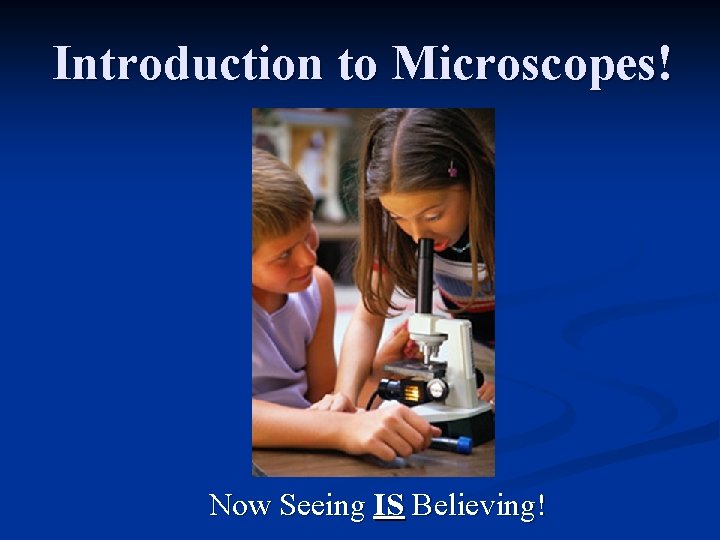
Introduction to Microscopes! Now Seeing IS Believing!
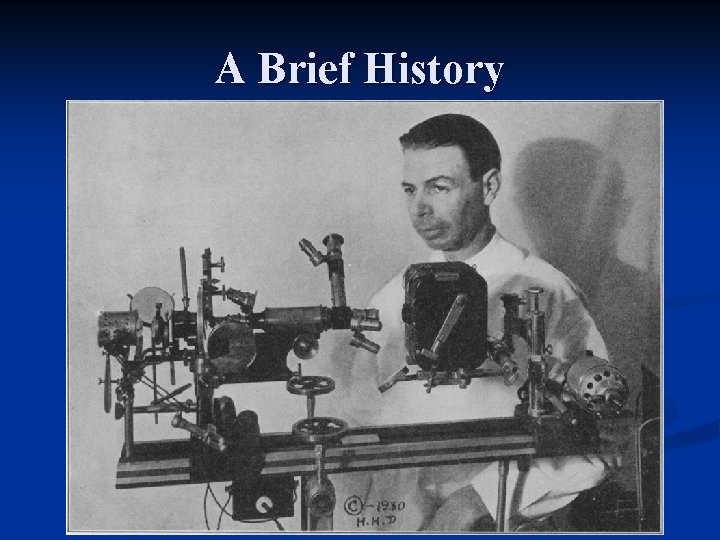
A Brief History
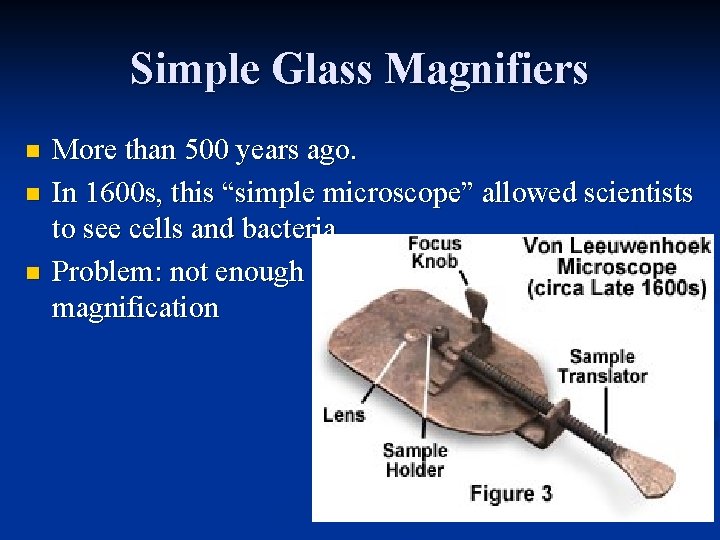
Simple Glass Magnifiers n n n More than 500 years ago. In 1600 s, this “simple microscope” allowed scientists to see cells and bacteria Problem: not enough magnification
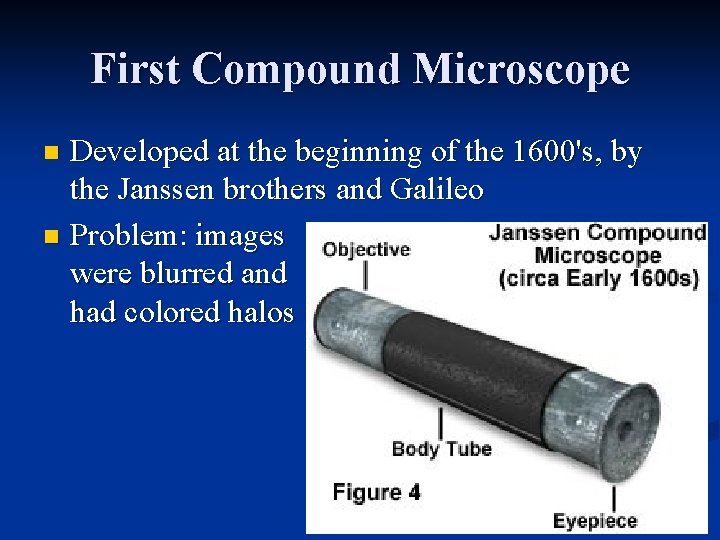
First Compound Microscope Developed at the beginning of the 1600's, by the Janssen brothers and Galileo n Problem: images were blurred and had colored halos n
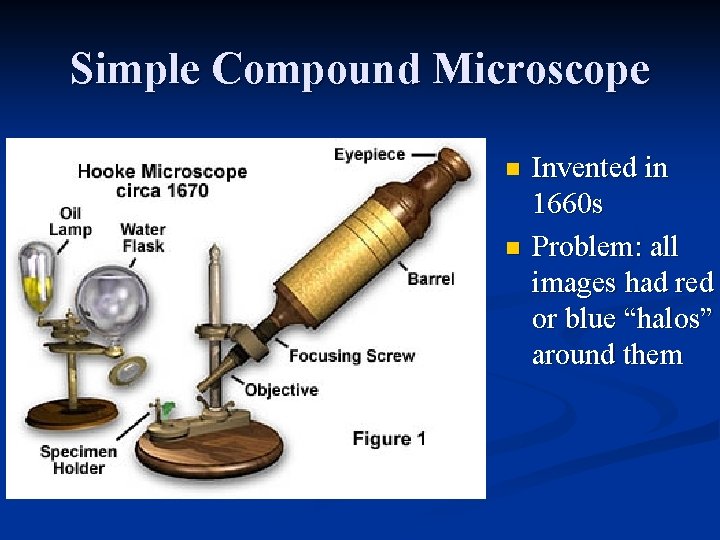
Simple Compound Microscope n n Invented in 1660 s Problem: all images had red or blue “halos” around them
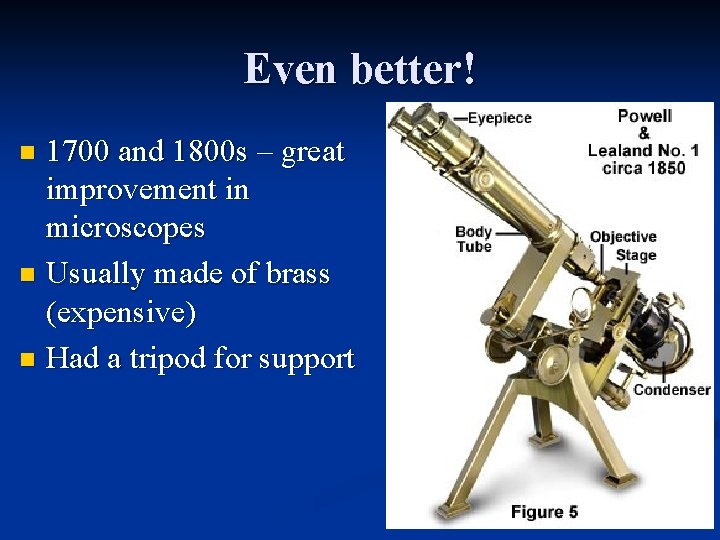
Even better! 1700 and 1800 s – great improvement in microscopes n Usually made of brass (expensive) n Had a tripod for support n
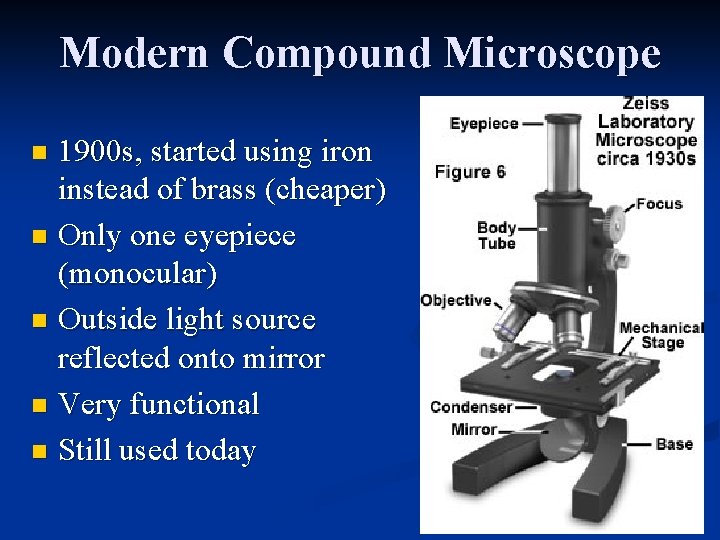
Modern Compound Microscope 1900 s, started using iron instead of brass (cheaper) n Only one eyepiece (monocular) n Outside light source reflected onto mirror n Very functional n Still used today n
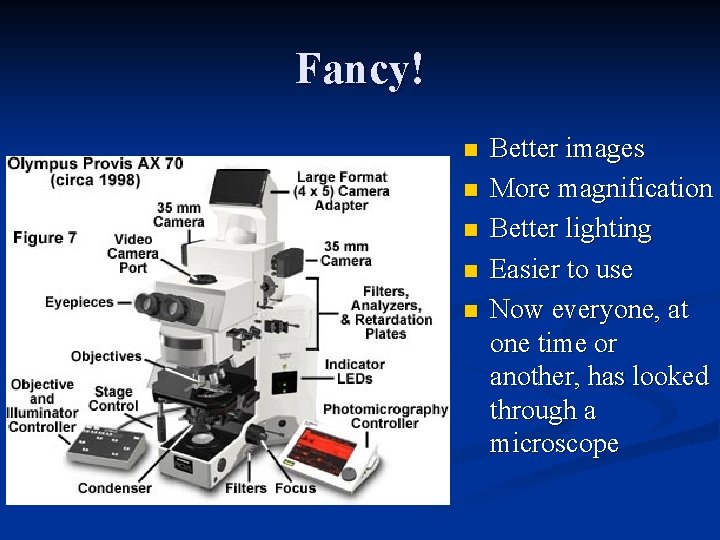
Fancy! n n n Better images More magnification Better lighting Easier to use Now everyone, at one time or another, has looked through a microscope
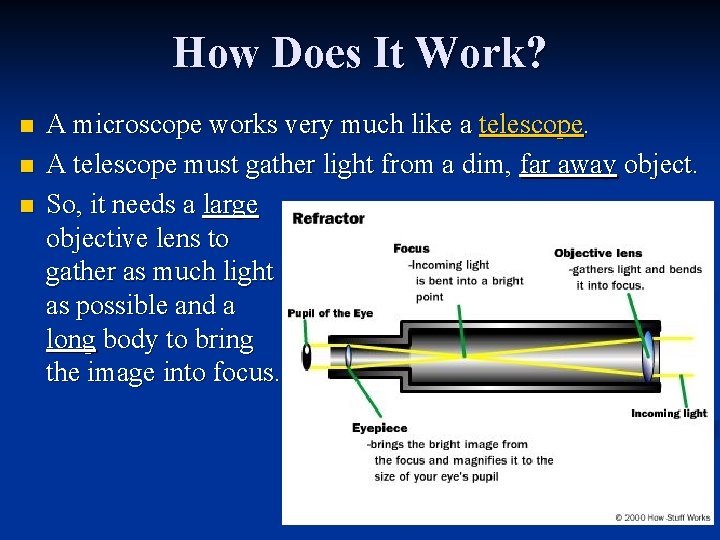
How Does It Work? n n n A microscope works very much like a telescope. A telescope must gather light from a dim, far away object. So, it needs a large objective lens to gather as much light as possible and a long body to bring the image into focus.
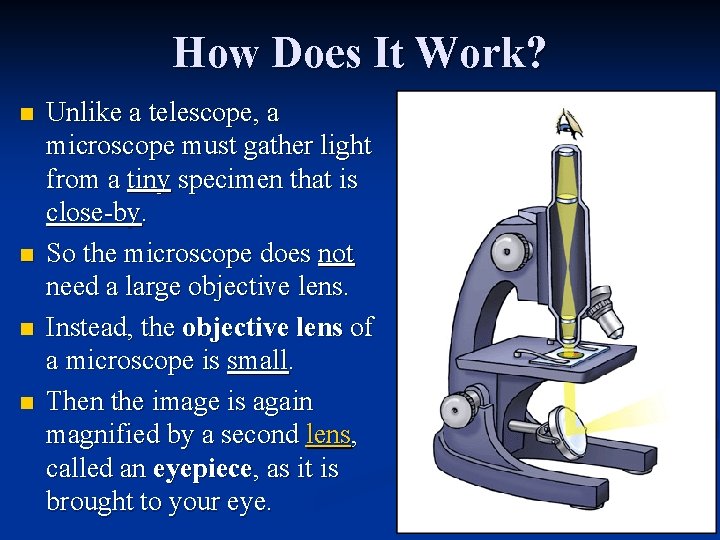
How Does It Work? n n Unlike a telescope, a microscope must gather light from a tiny specimen that is close-by. So the microscope does not need a large objective lens. Instead, the objective lens of a microscope is small. Then the image is again magnified by a second lens, called an eyepiece, as it is brought to your eye.
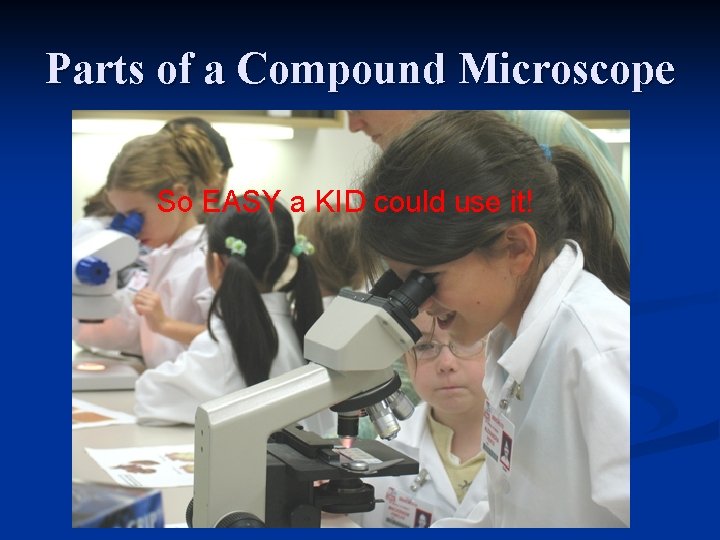
Parts of a Compound Microscope So EASY a KID could use it!
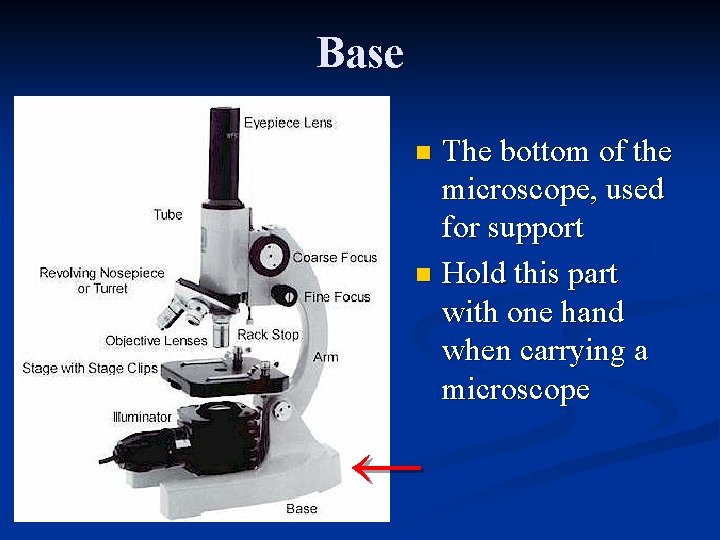
Base The bottom of the microscope, used for support n Hold this part with one hand when carrying a microscope n ←
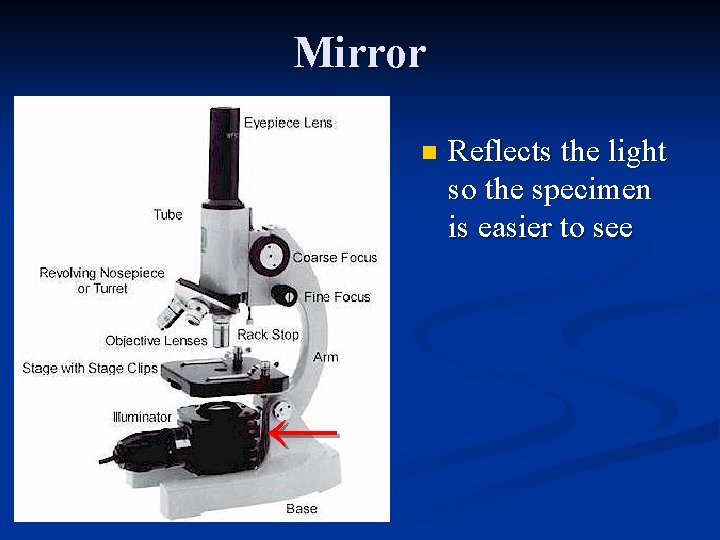
Mirror n ← Reflects the light so the specimen is easier to see
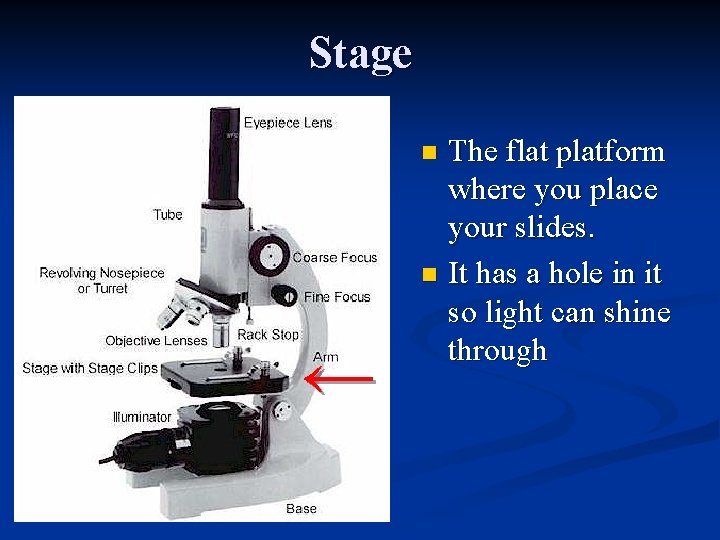
Stage The flat platform where you place your slides. n It has a hole in it so light can shine through n ←
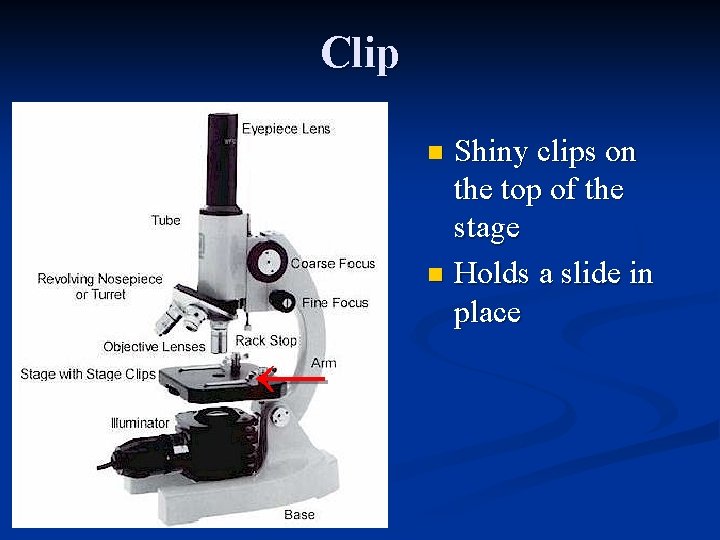
Clip Shiny clips on the top of the stage n Holds a slide in place n ←
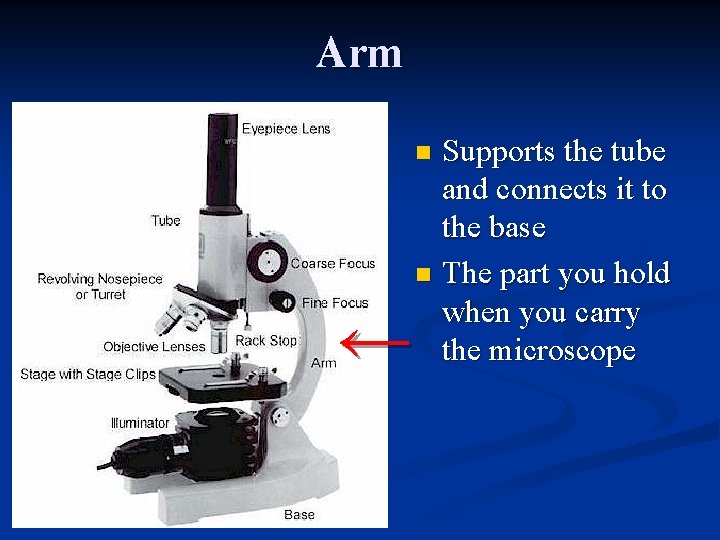
Arm Supports the tube and connects it to the base n The part you hold when you carry the microscope n ←
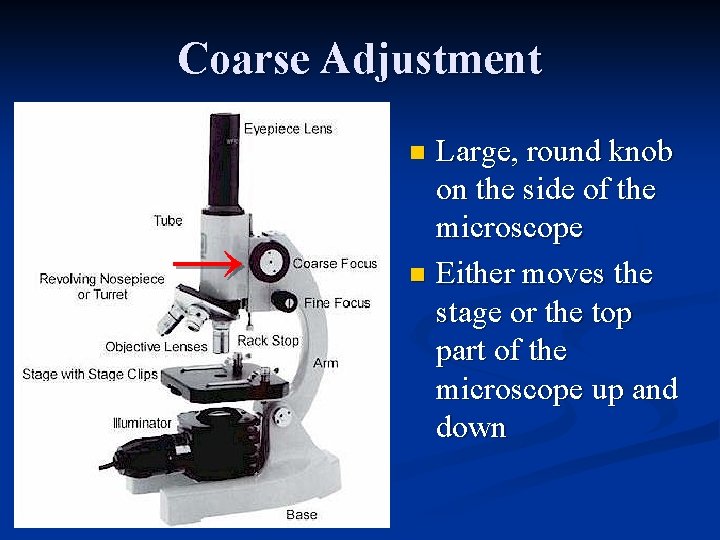
Coarse Adjustment Large, round knob on the side of the microscope n Either moves the stage or the top part of the microscope up and down n →
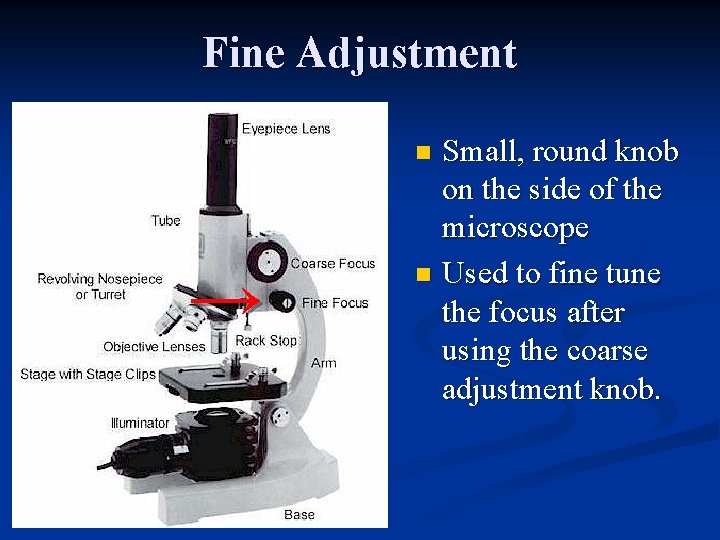
Fine Adjustment Small, round knob on the side of the microscope n Used to fine tune the focus after using the coarse adjustment knob. n →
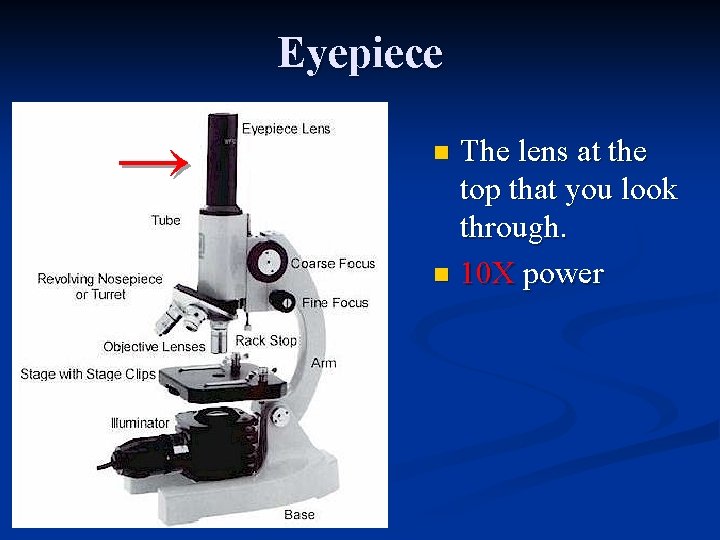
Eyepiece → The lens at the top that you look through. n 10 X power n
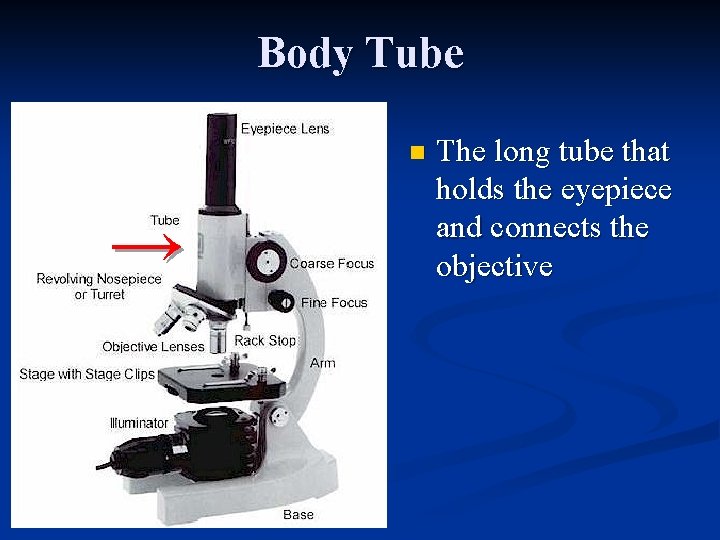
Body Tube n → The long tube that holds the eyepiece and connects the objective
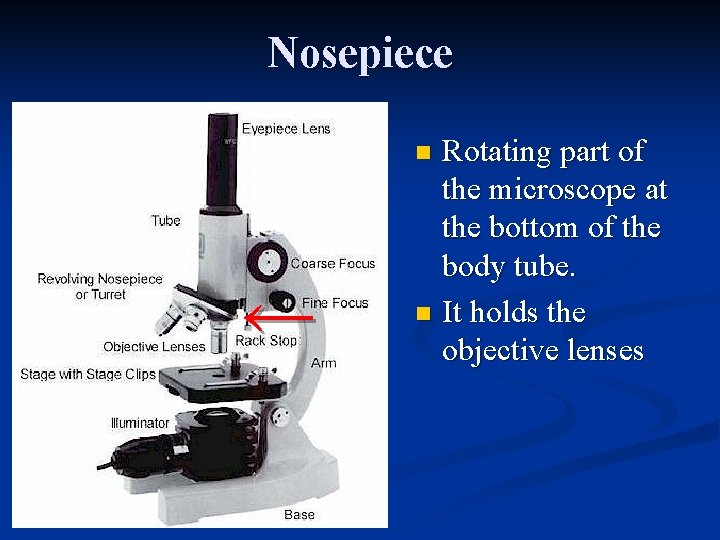
Nosepiece Rotating part of the microscope at the bottom of the body tube. n It holds the objective lenses n ←
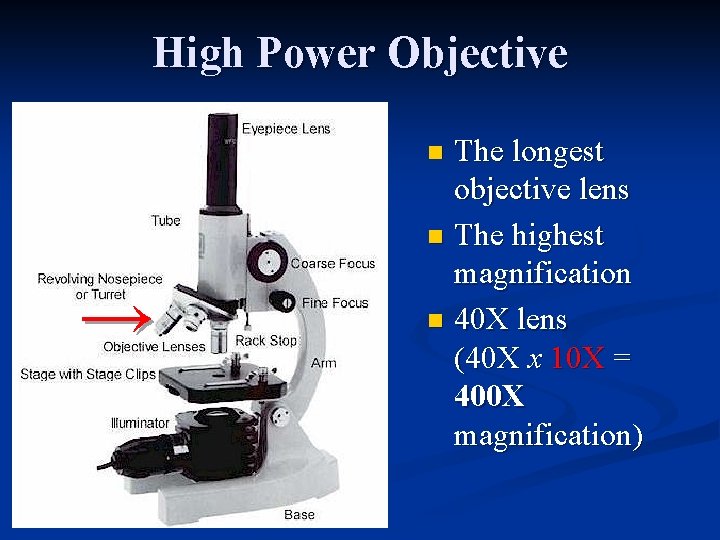
High Power Objective The longest objective lens n The highest magnification n 40 X lens (40 X x 10 X = 400 X magnification) n →
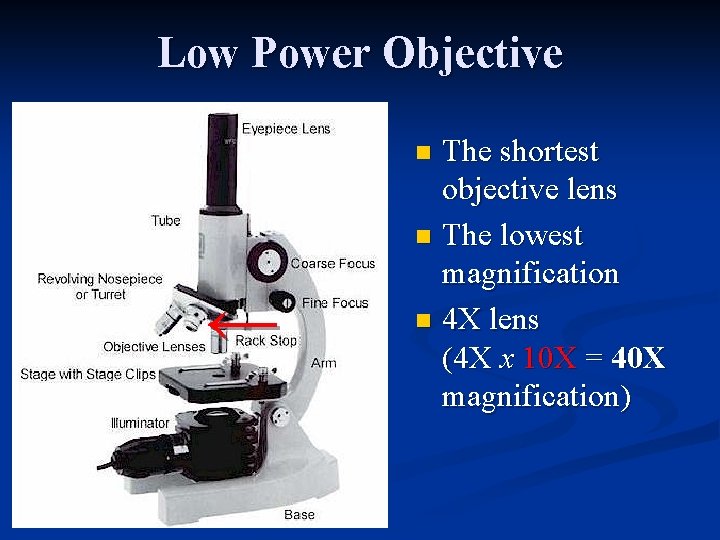
Low Power Objective The shortest objective lens n The lowest magnification n 4 X lens (4 X x 10 X = 40 X magnification) n ←
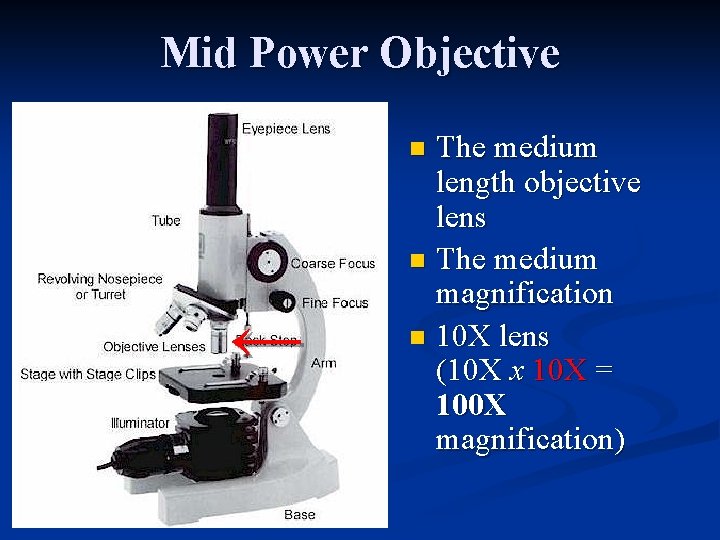
Mid Power Objective The medium length objective lens n The medium magnification n 10 X lens (10 X x 10 X = 100 X magnification) n ←
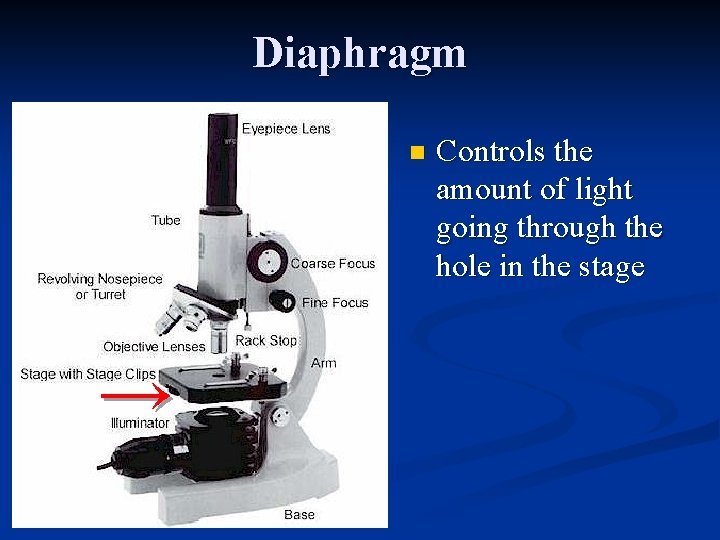
Diaphragm n → Controls the amount of light going through the hole in the stage
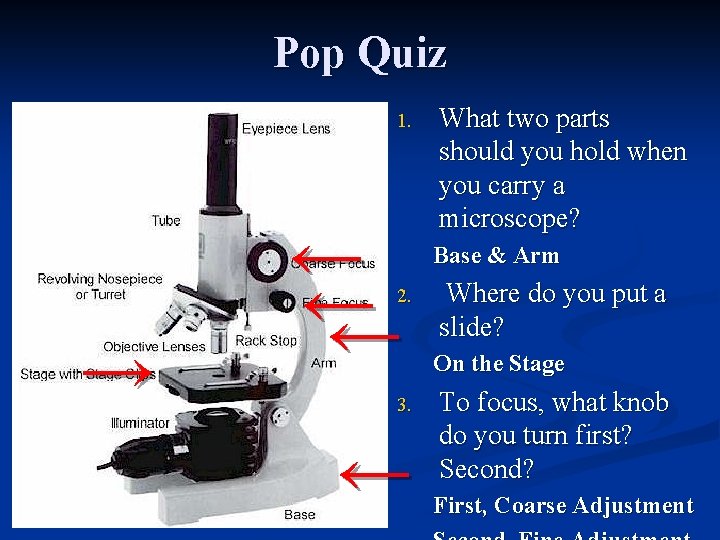
Pop Quiz 1. ← ← ← 2. → 3. ← What two parts should you hold when you carry a microscope? Base & Arm Where do you put a slide? On the Stage To focus, what knob do you turn first? Second? First, Coarse Adjustment
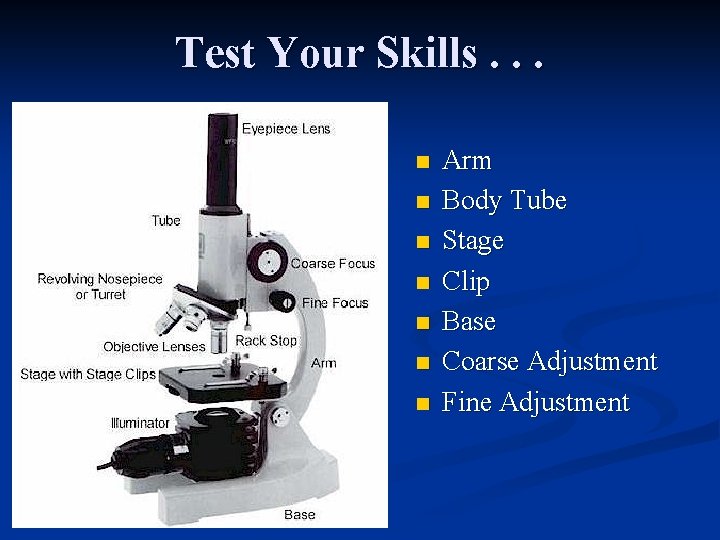
Test Your Skills. . . n n n n Arm Body Tube Stage Clip Base Coarse Adjustment Fine Adjustment
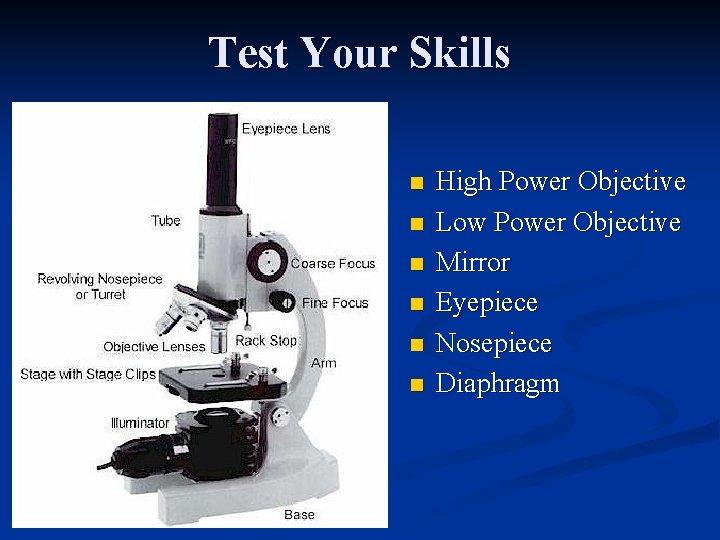
Test Your Skills n n n High Power Objective Low Power Objective Mirror Eyepiece Nosepiece Diaphragm
- Slides: 28