
Introduction to Metadata title DEFINITIONS Data about data
Introduction to Metadata </title>
DEFINITIONS
“Data about data. ”
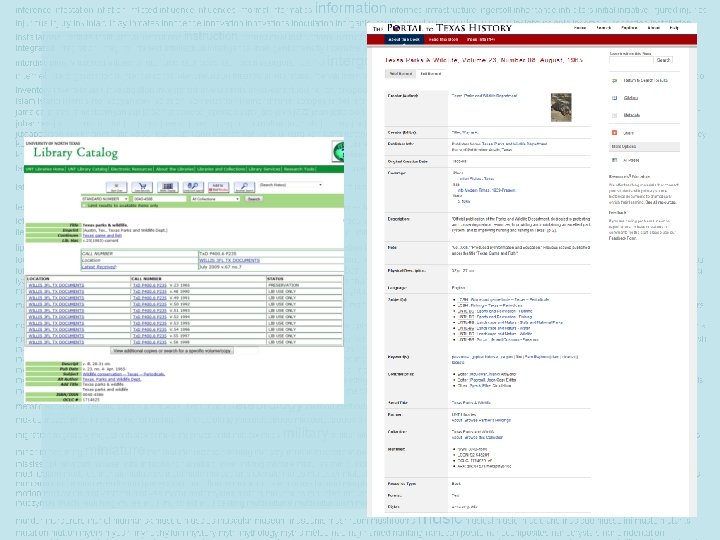
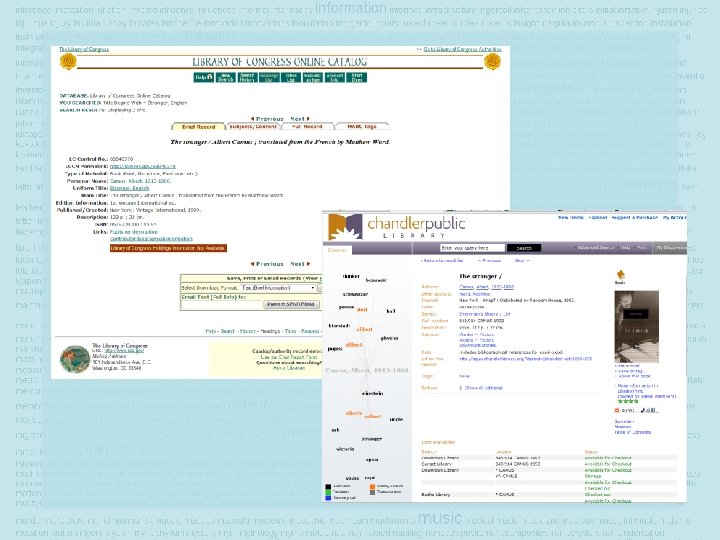
Online Dictionary for Library and Information Science: Literally, "data about data. " Structured information describing information resources [or] objects for a variety of purposes. Although AACR 2/MARC cataloging is formally metadata, the term is generally used in the library community for nontraditional schemes such as the Dublin Core Metadata Element Set, the VRA Core Categories, and the Encoded Archival Description (EAD)

Syntax vs. Semantics
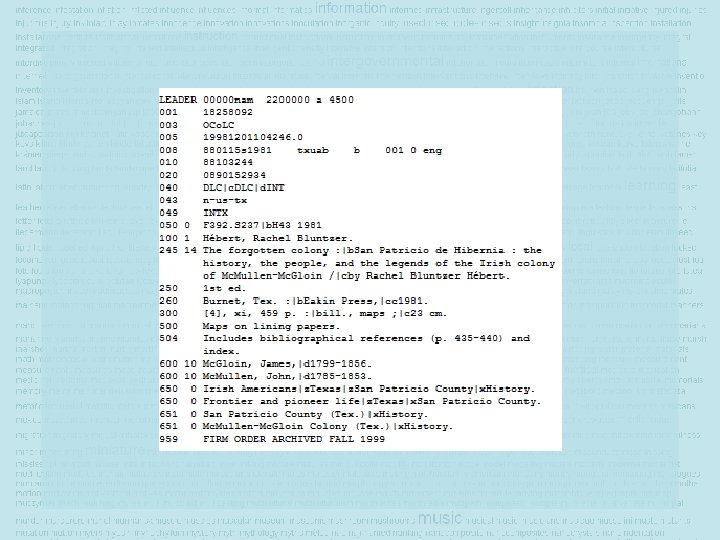
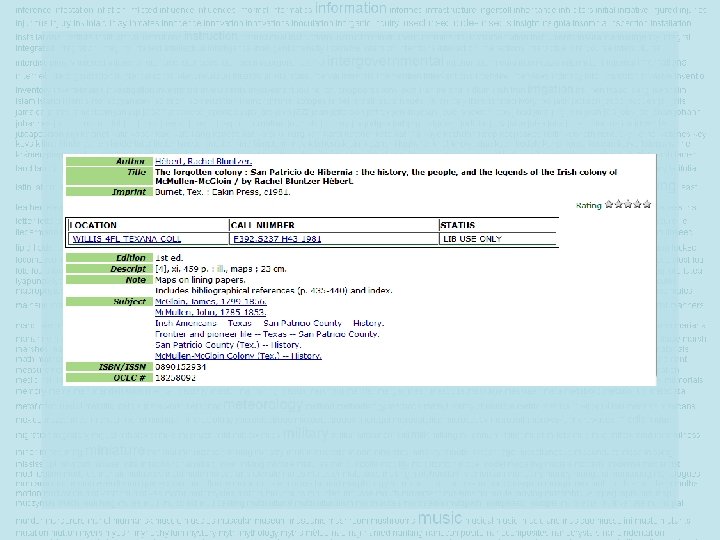
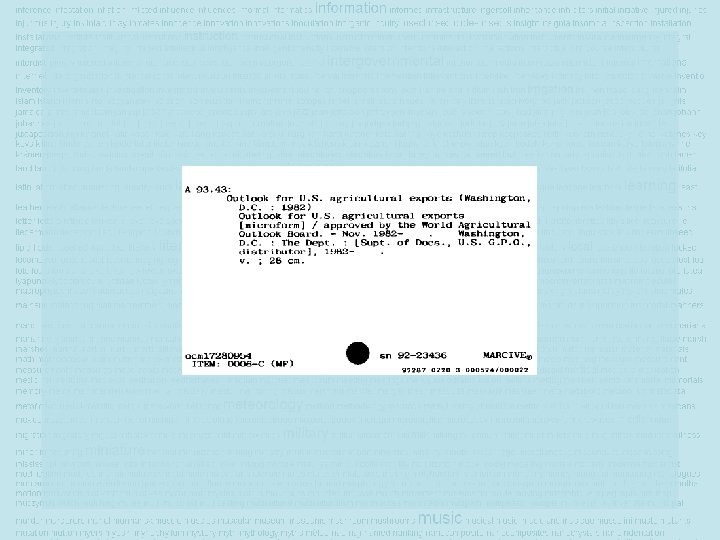
Examples of Semantics
PREMIS (PREservation Metadata: Implementation Strategies) • Created by OCLC (Online Computer Library Center) and RLG (Research Libraries Group) • Specifically meant for archiving digital objects • Sets out guidelines for describing digital objects generically • Focuses on the most basic information needed to describe objects
VRA Core (Visual Resources Association) • Meant for the “cultural heritage community” • “Core” set of elements for describing objects • Includes basic guidelines with example values • Available in an XML schema • Endorsed by METS
DCMI (Dublin Core Metadata Initiative) • “Core” set of 15 elements for describing objects • Meant to increase interoperability • Has a simple and a qualified version for layers of complexity • Includes basic guidelines about how to format information
Examples of Syntax
EAD (Encoded Archival Description) • Initially started by the University of California, Berkeley • Meant to provide a non-proprietary way of structuring information • Specifically developed for describing and maintaining relationships in descriptive information • Uses Standard Generalized Markup Language (SGML)
METS (Metadata Encoding & Transmission Standard) • Created by the Library of Congress • Available as an XML schema • Created to record administrative information and to share metadata more easily
MODS (Metadata Object Description Schema) • Created by the Library of Congress • Available as an XML schema • MODS can be used alone, or with other schemas • It is meant to complement other schemas by making them more descriptive and more compatible for sharing
XML (e. Xtensible Mark-up Language)
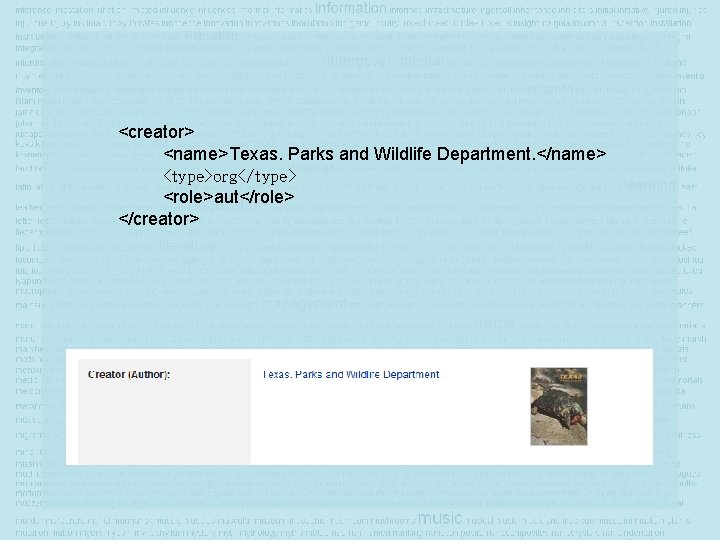
<creator> <name>Texas. Parks and Wildlife Department. </name> <type>org</type> <role>aut</role> </creator>
</presentation>
Questions?
Bibliography • DC (Dublin Core): http: //dublincore. org/ • EAD (Encoded Archival Description): http: //www. loc. gov/ead/ • Metadata Principles and Practicalities: http: //www. dlib. org/dlib/april 02/weibel/04/weibel. html Full citation: Duval, E. , Hodgins, W. , Sutton, S. , & Weibel, S. L. (2002, April). Metadata Principles and Practicalities. D-Lib Magazine, 8(4). • METS (Metadata Encoding Standard): http: //www. loc. gov/standards/mets/ • MODS (Metadata Object Description Schema): http: //www. loc. gov/standards/mods/ • Online Dictionary for Library and Information Science: http: //lu. com/odlis/ • PREMIS: http: //www. loc. gov/standards/premis/ • VRA (Visual Resources Association) Core: http: //www. vraweb. org/projects/vracore 4/ • UNT Libraries Metadata Input Guidelines: http: //www. library. unt. edu/digitalprojects/metadata/descriptive-metadata
Metadata Record Sources: • Chandler Public Library: http: //aqua. chandlerlibrary. org/ • Denton Public Library: http: //library. cityofdenton. com/ • Flagstaff Public Library: http: //www. flagstaffpubliclibrary. org/ • Library of Congress: http: //catalog. loc. gov • Northern Arizona University Library: http: //library. nau. edu/research. html • Portal to Texas History: http: //texashistory. unt. edu/ • UNT Digital Library: http: //digital. library. unt. edu • UNT Library: http: //www. library. unt. edu • World. Cat: http: //www. worldcat. org/
- Slides: 30