
Introduction to Message Mapping Dr Vincent Covello Director
- Slides: 20
Introduction to Message Mapping Dr. Vincent Covello Director Center for Risk Communication
Why Use Message Mapping? • It is a tool to define better ways to communicate effectively in high-concern, highstress situations • Appropriate for use in many situations, including: – – Crisis and noncrisis Epidemics Obesity Smoking
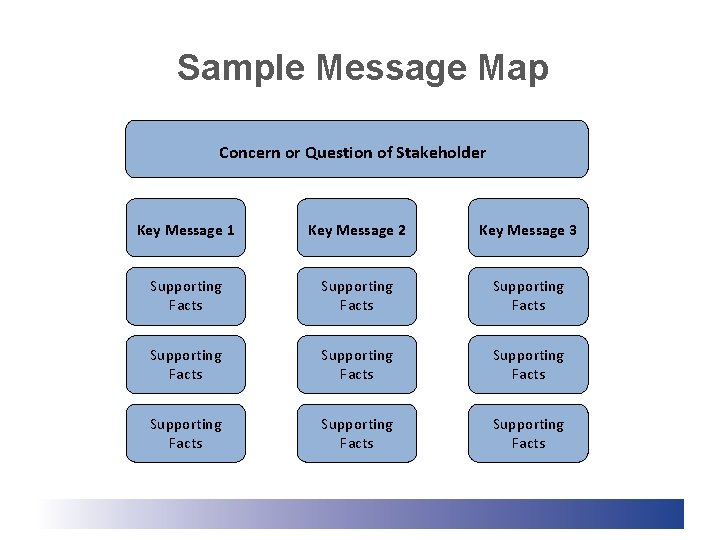
Sample Message Map Concern or Question of Stakeholder Key Message 1 Key Message 2 Key Message 3 Supporting Facts Supporting Facts Supporting Facts
Message Mapping Goals 1. Enhance knowledge and understanding 2. Build trust and credibility 3. Encourage appropriate behaviors and levels of concern
Message Mapping Structure • Detailed, hierarchically organized information • Visual aid that provides, at a glance, the organization’s messages on a high-concern issue
Key Messages • Message Mapping – is a science-based discipline – is consistent with the way information is processed in high-concern situations – helps us to better respond to anticipated questions and concerns
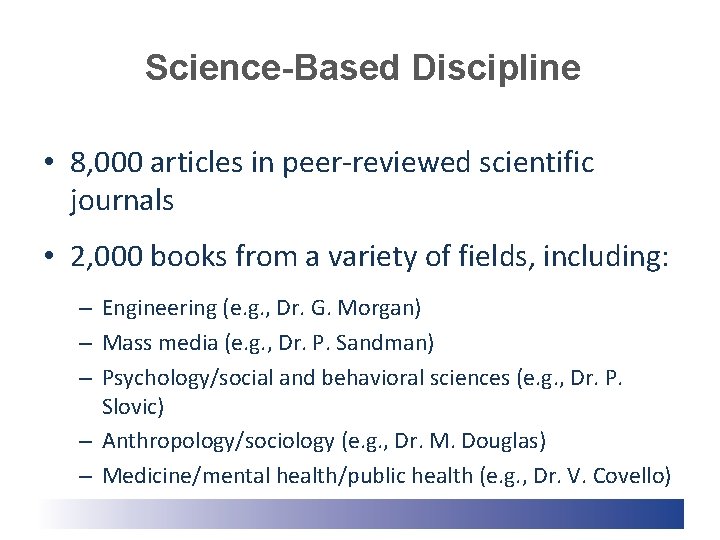
Science-Based Discipline • 8, 000 articles in peer-reviewed scientific journals • 2, 000 books from a variety of fields, including: – Engineering (e. g. , Dr. G. Morgan) – Mass media (e. g. , Dr. P. Sandman) – Psychology/social and behavioral sciences (e. g. , Dr. P. Slovic) – Anthropology/sociology (e. g. , Dr. M. Douglas) – Medicine/mental health/public health (e. g. , Dr. V. Covello)
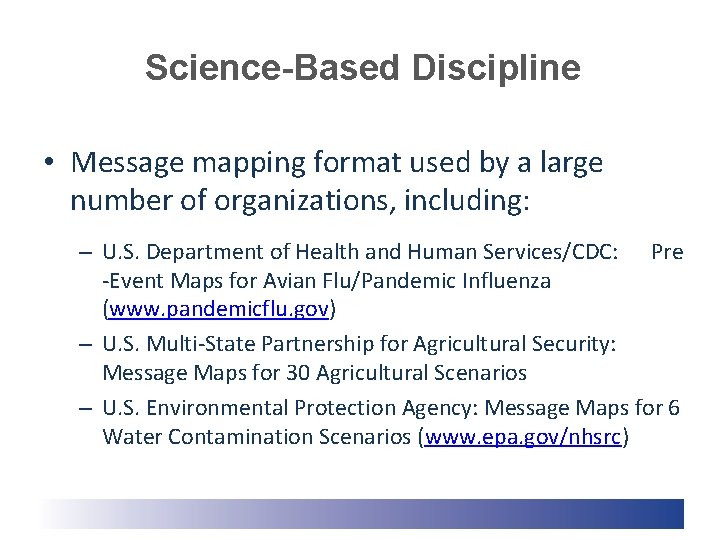
Science-Based Discipline • Message mapping format used by a large number of organizations, including: – U. S. Department of Health and Human Services/CDC: Pre -Event Maps for Avian Flu/Pandemic Influenza (www. pandemicflu. gov) – U. S. Multi-State Partnership for Agricultural Security: Message Maps for 30 Agricultural Scenarios – U. S. Environmental Protection Agency: Message Maps for 6 Water Contamination Scenarios (www. epa. gov/nhsrc)
Key Messages • Message Mapping – is a science-based discipline – is consistent with the way information is processed in high-concern situations – helps us to better respond to anticipated questions and concerns
High-Concern Situations • Three basic findings of people in a state of high concern that relate to message mapping: – have difficulty hearing, understanding, and remembering information – want to know that you care before they care what you know – focus most on what they hear first and last
Key Messages • Message Mapping – is a science-based discipline – is consistent with the way information is processed in high-concern situations – helps us to better respond to anticipated questions and concerns
Respond to Questions/Concerns • Helps to avoid communicator’s regret – Not saying something that we wish we had OR – Saying something we wish we had not
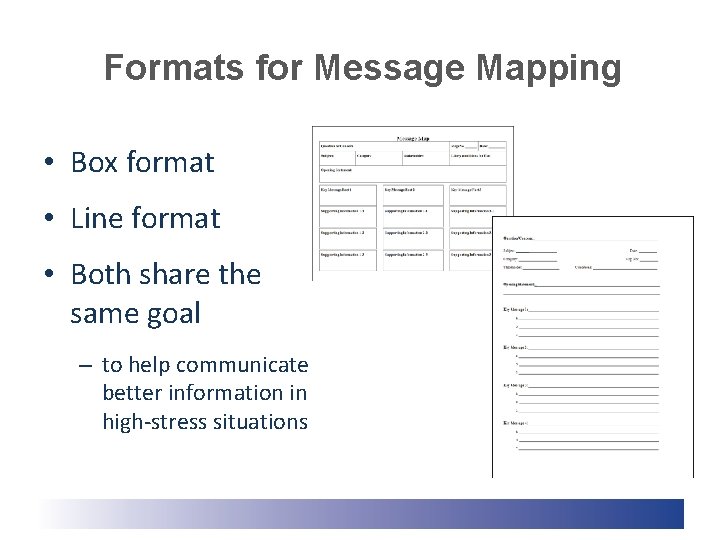
Formats for Message Mapping • Box format • Line format • Both share the same goal – to help communicate better information in high-stress situations
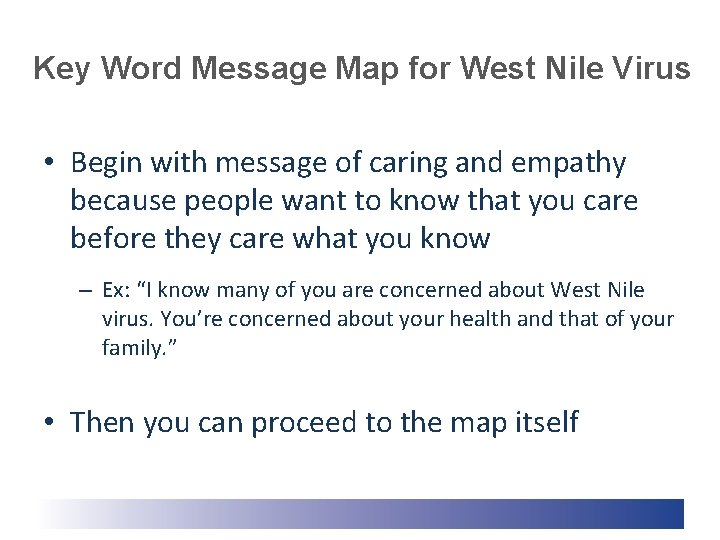
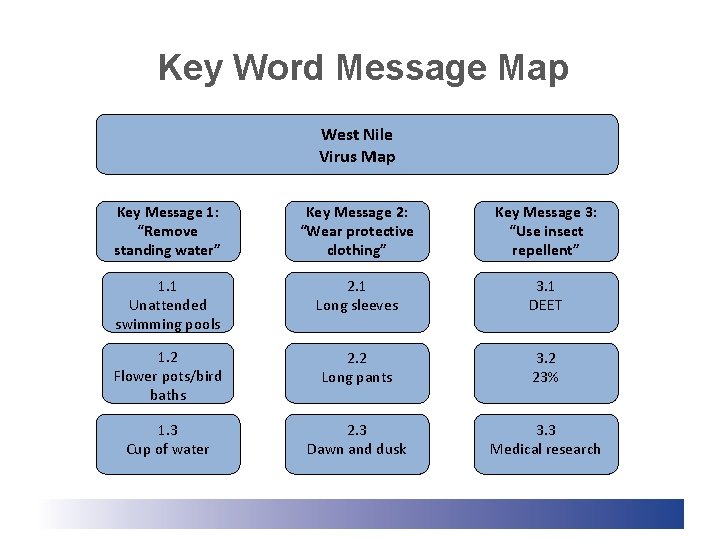
Key Word Message Map for West Nile Virus • Begin with message of caring and empathy because people want to know that you care before they care what you know – Ex: “I know many of you are concerned about West Nile virus. You’re concerned about your health and that of your family. ” • Then you can proceed to the map itself
Key Word Message Map West Nile Virus Map Key Message 1: “Remove standing water” Key Message 2: “Wear protective clothing” Key Message 3: “Use insect repellent” 1. 1 Unattended swimming pools 2. 1 Long sleeves 3. 1 DEET 1. 2 Flower pots/bird baths 2. 2 Long pants 3. 2 23% 1. 3 Cup of water 2. 3 Dawn and dusk 3. 3 Medical research
Message Mapping Goals 1. Enhance knowledge and understanding 2. Build trust and credibility 3. Encourage appropriate behaviors and levels of concern
Introduction to the Seven Steps
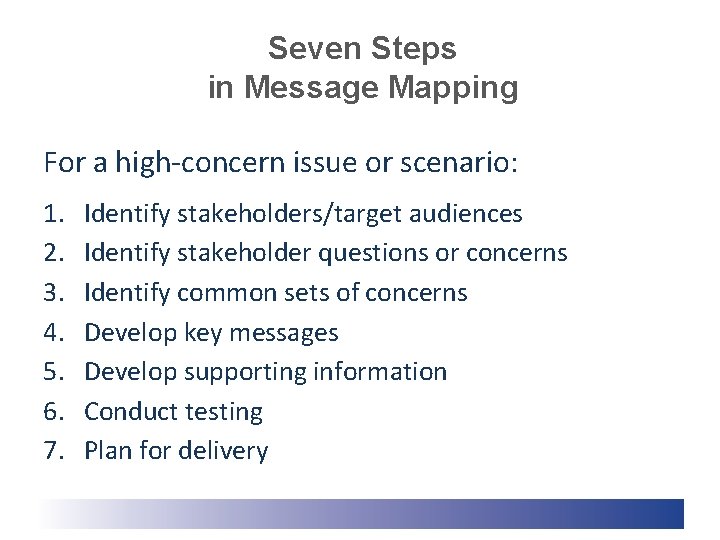
Seven Steps in Message Mapping For a high-concern issue or scenario: 1. 2. 3. 4. 5. 6. 7. Identify stakeholders/target audiences Identify stakeholder questions or concerns Identify common sets of concerns Develop key messages Develop supporting information Conduct testing Plan for delivery
Before Step 1 You Must: • Identify which high-concern issues to address • Prioritize those issues • Assemble message mapping team
Message Mapping Team Should consist of the following: • Subject matter expert • Communicator • Representative from management