
Introduction to Membranes Sandia is a multiprogram laboratory
Introduction to Membranes Sandia is a multi-program laboratory operated by Sandia Corporation, a Lockheed Martin Company, for the United States Department of Energy’s National Nuclear Security Administration under contract DE-AC 04 -94 AL 85000.
Introduction to Membranes • Low pressure membranes • Ultrafiltration • Microfiltration • High pressure membranes • Nanofiltration • Reverse osmosis • Membrane fouling • Mineral scaling • Biofilm formation 2
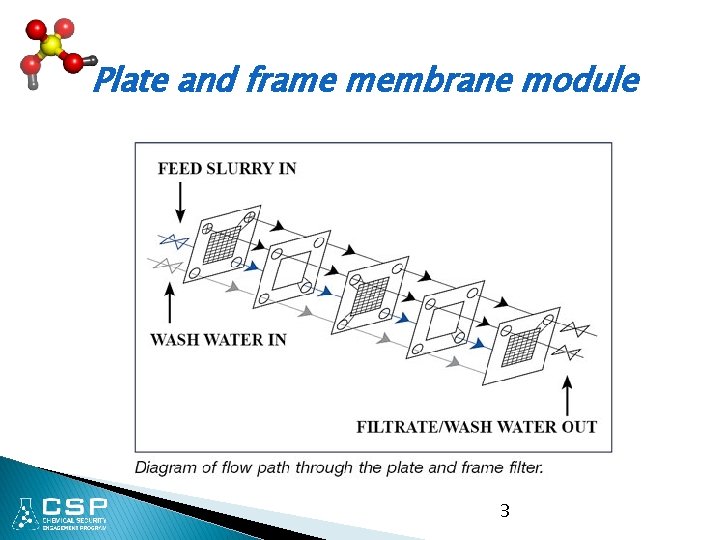
Plate and frame membrane module 3
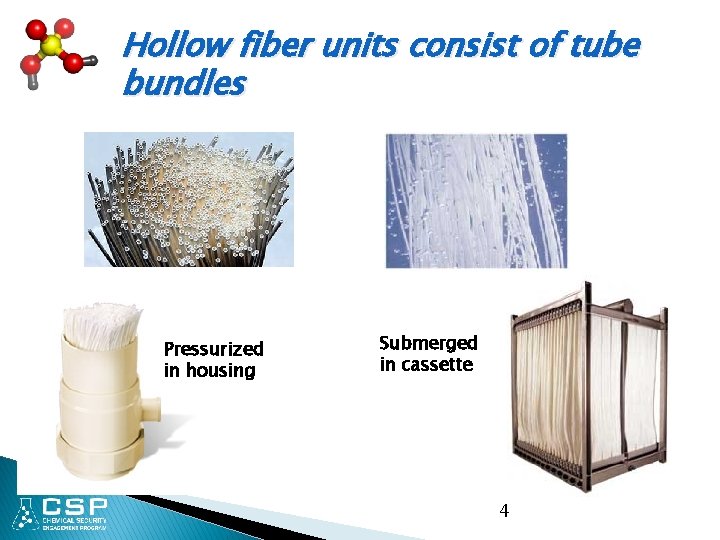
Hollow fiber units consist of tube bundles Pressurized in housing Submerged in cassette 4
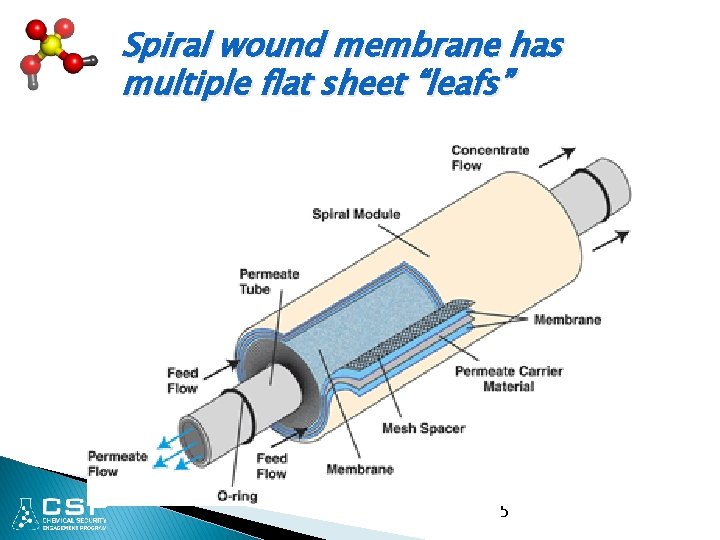
Spiral wound membrane has multiple flat sheet “leafs” 5
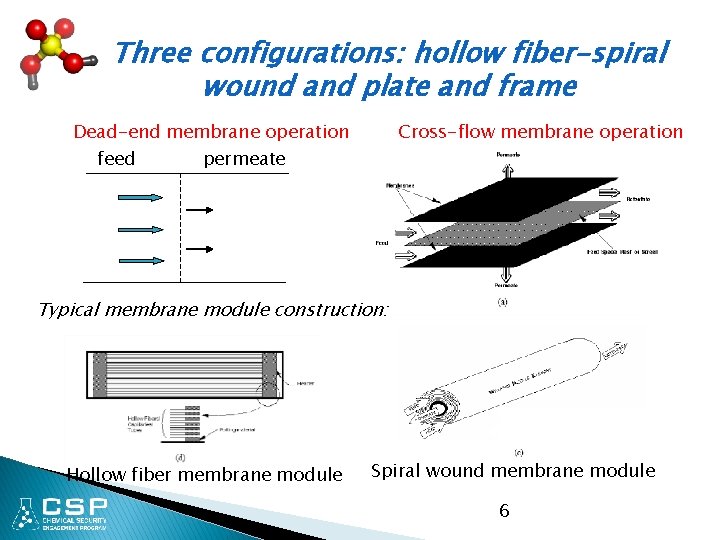
Three configurations: hollow fiber-spiral wound and plate and frame Cross-flow membrane operation Dead-end membrane operation feed permeate Typical membrane module construction: Hollow fiber membrane module Spiral wound membrane module 6
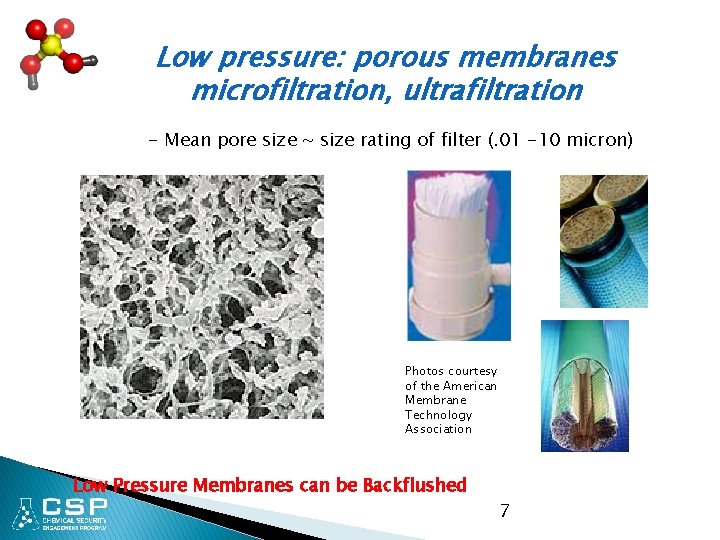
Low pressure: porous membranes microfiltration, ultrafiltration - Mean pore size ~ size rating of filter (. 01 -10 micron) Photos courtesy of the American Membrane Technology Association Low Pressure Membranes can be Backflushed 7
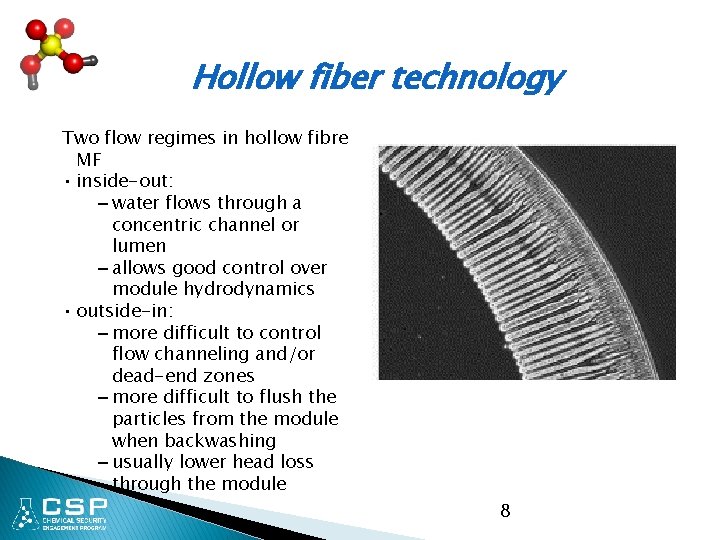
Hollow fiber technology Two flow regimes in hollow fibre MF • inside-out: – water flows through a concentric channel or lumen – allows good control over module hydrodynamics • outside-in: – more difficult to control flow channeling and/or dead-end zones – more difficult to flush the particles from the module when backwashing – usually lower head loss through the module 8
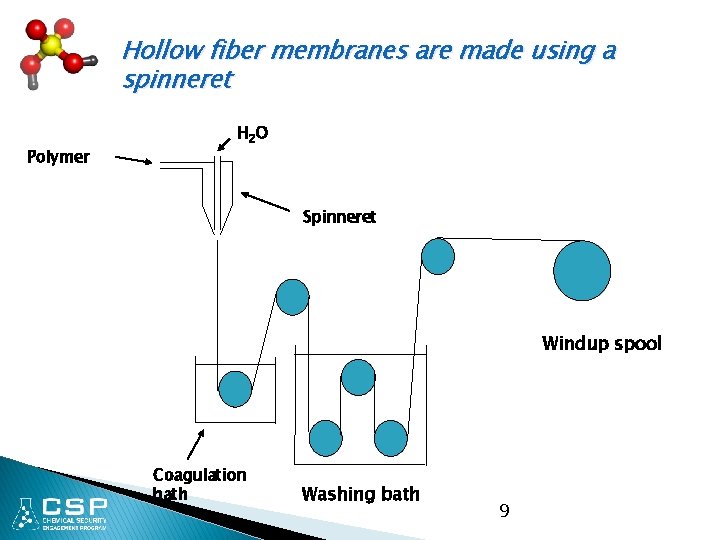
Hollow fiber membranes are made using a spinneret Polymer H 2 O Spinneret Windup spool Coagulation bath Washing bath 9
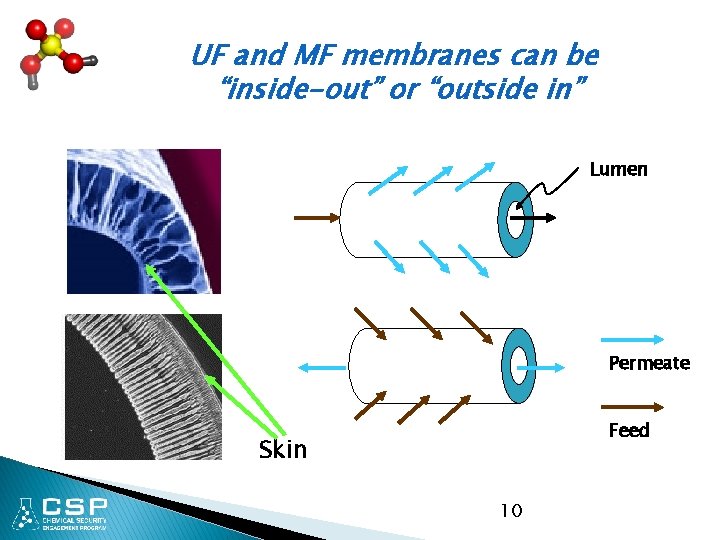
UF and MF membranes can be “inside-out” or “outside in” Lumen Permeate Feed Skin 10
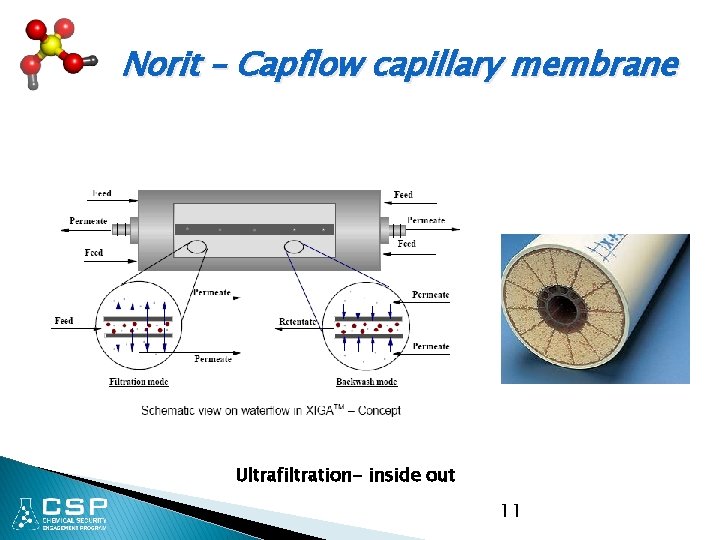
Norit – Capflow capillary membrane Ultrafiltration- inside out 11
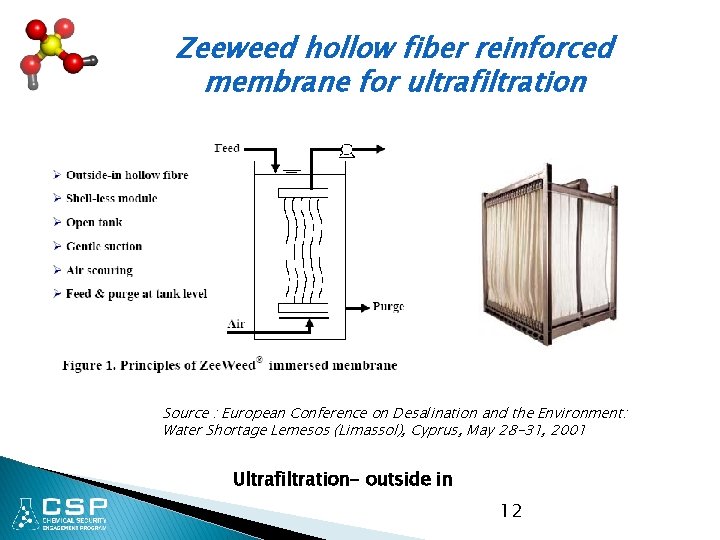
Zeeweed hollow fiber reinforced membrane for ultrafiltration Source : European Conference on Desalination and the Environment: Water Shortage Lemesos (Limassol), Cyprus, May 28 -31, 2001 Ultrafiltration- outside in 12
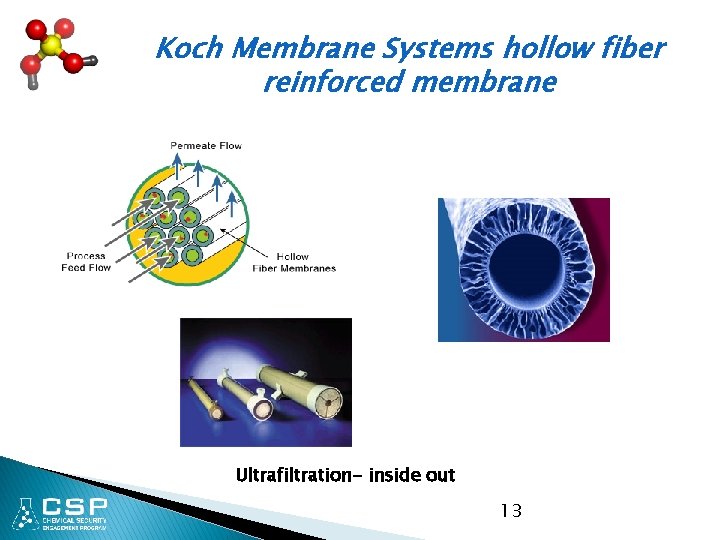
Koch Membrane Systems hollow fiber reinforced membrane Ultrafiltration- inside out 13
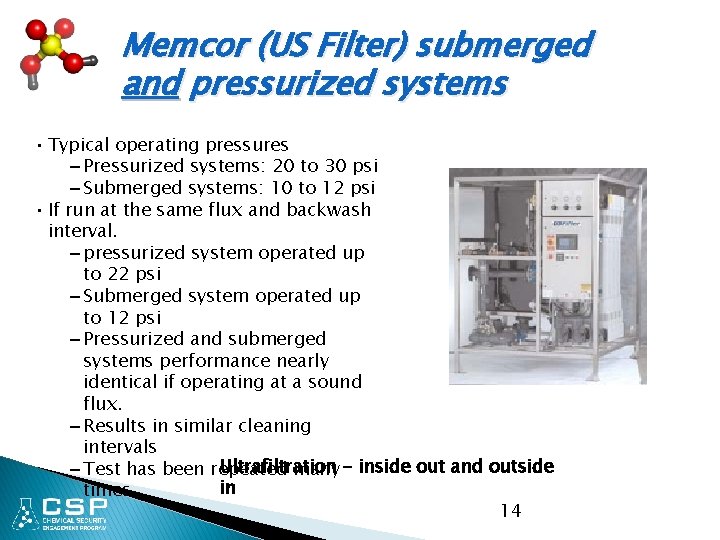
Memcor (US Filter) submerged and pressurized systems • Typical operating pressures – Pressurized systems: 20 to 30 psi – Submerged systems: 10 to 12 psi • If run at the same flux and backwash interval. – pressurized system operated up to 22 psi – Submerged system operated up to 12 psi – Pressurized and submerged systems performance nearly identical if operating at a sound flux. – Results in similar cleaning intervals Ultrafiltration – Test has been repeated many - inside out and outside in times 14
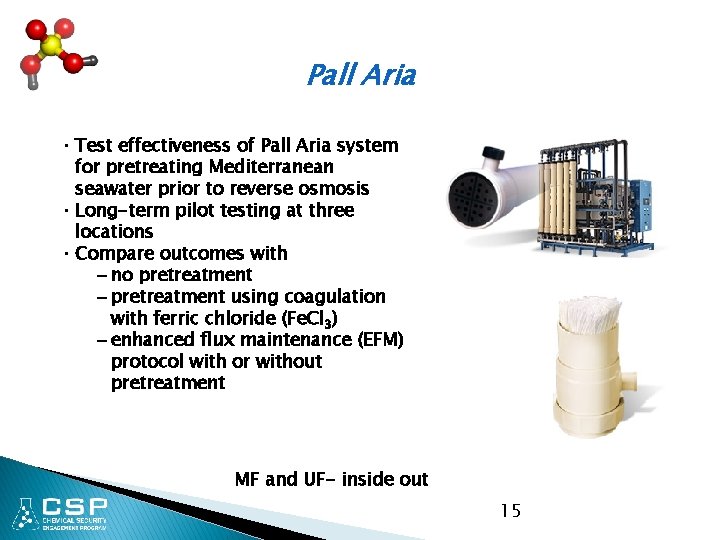
Pall Aria • Test effectiveness of Pall Aria system for pretreating Mediterranean seawater prior to reverse osmosis • Long-term pilot testing at three locations • Compare outcomes with – no pretreatment – pretreatment using coagulation with ferric chloride (Fe. Cl 3) – enhanced flux maintenance (EFM) protocol with or without pretreatment MF and UF- inside out 15
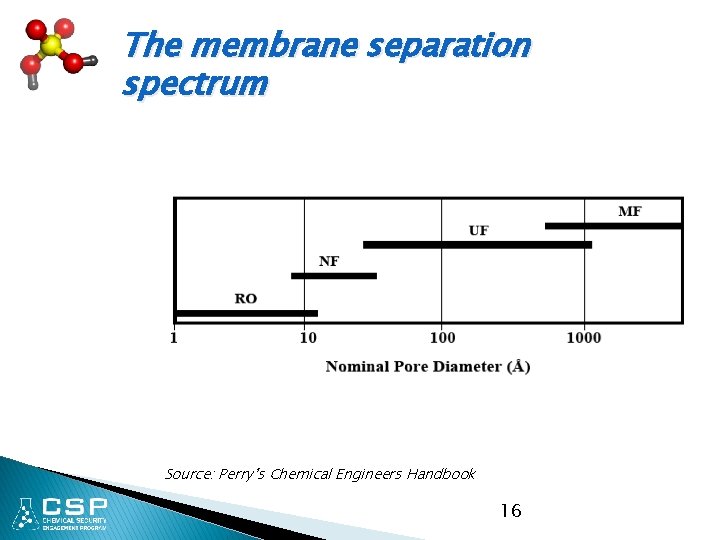
The membrane separation spectrum Source: Perry’s Chemical Engineers Handbook 16
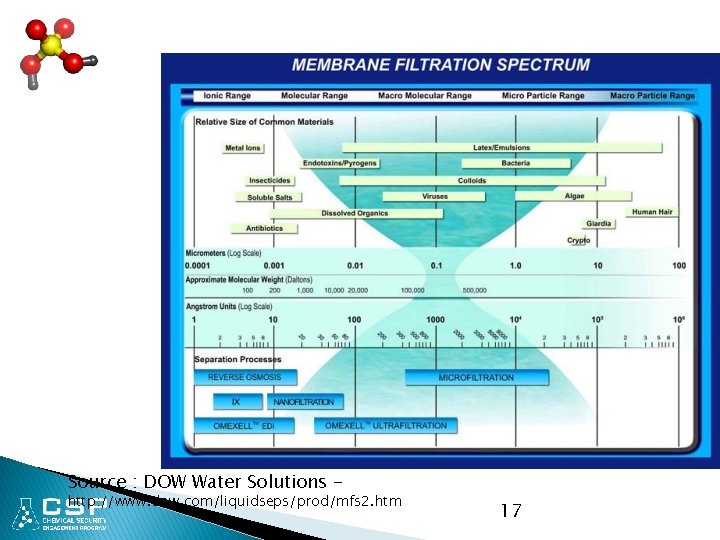
Source : DOW Water Solutions - http: //www. dow. com/liquidseps/prod/mfs 2. htm 17
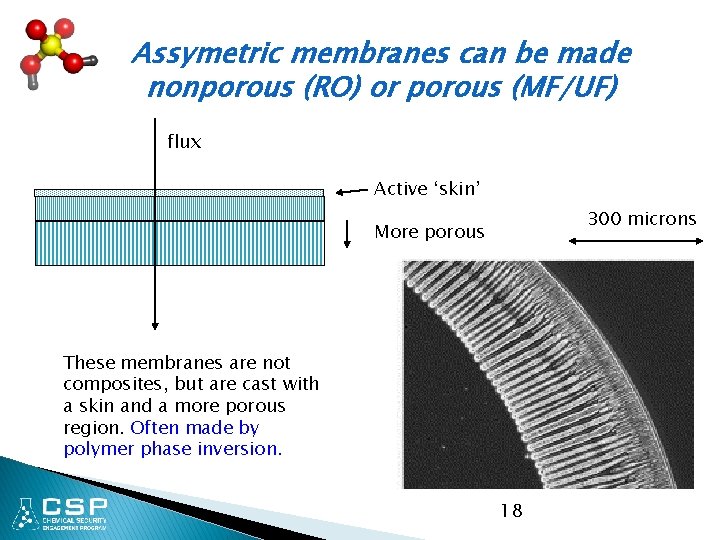
Assymetric membranes can be made nonporous (RO) or porous (MF/UF) flux Active ‘skin’ 300 microns More porous These membranes are not composites, but are cast with a skin and a more porous region. Often made by polymer phase inversion. 18
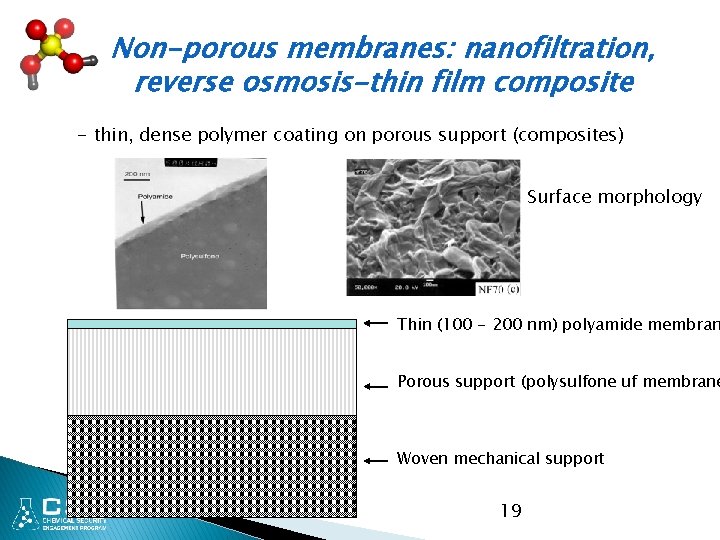
Non-porous membranes: nanofiltration, reverse osmosis-thin film composite - thin, dense polymer coating on porous support (composites) Surface morphology Thin (100 - 200 nm) polyamide membran Porous support (polysulfone uf membrane Woven mechanical support 19
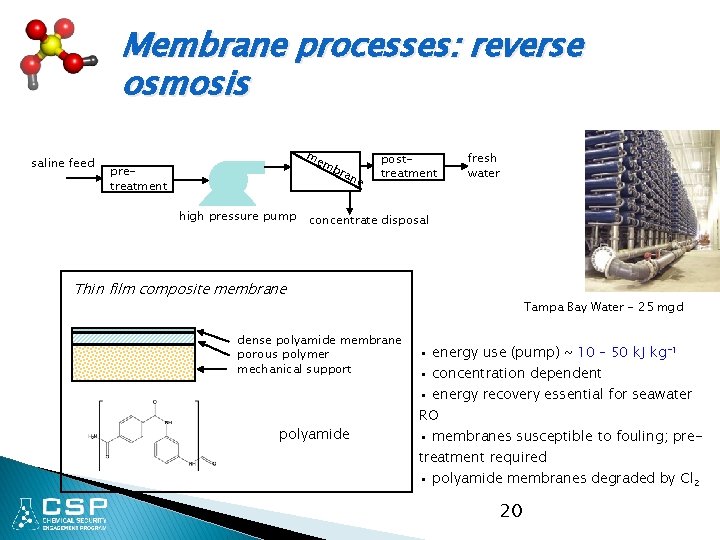
Membrane processes: reverse osmosis saline feed me mb ran pretreatment high pressure pump e posttreatment fresh water concentrate disposal Thin film composite membrane dense polyamide membrane porous polymer mechanical support polyamide Tampa Bay Water - 25 mgd • energy use (pump) ~ 10 – 50 k. J kg-1 • concentration dependent • energy recovery essential for seawater RO • membranes susceptible to fouling; pretreatment required • polyamide membranes degraded by Cl 2 20
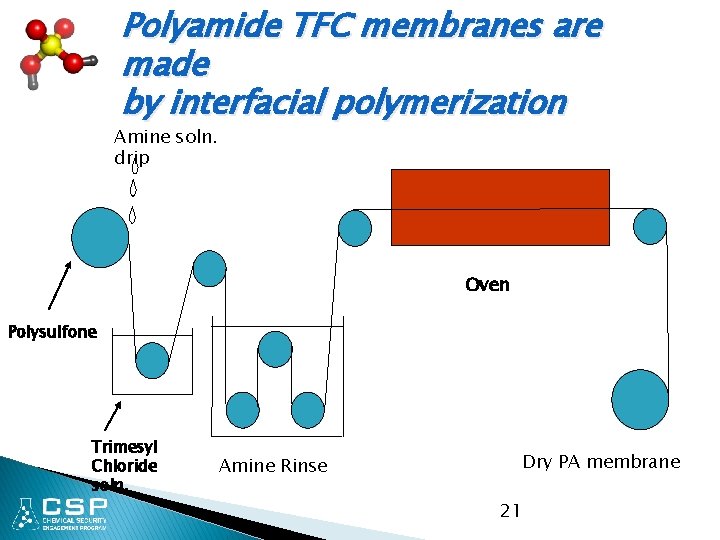
Polyamide TFC membranes are made by interfacial polymerization Amine soln. drip Oven Polysulfone Trimesyl Chloride soln. Dry PA membrane Amine Rinse 21
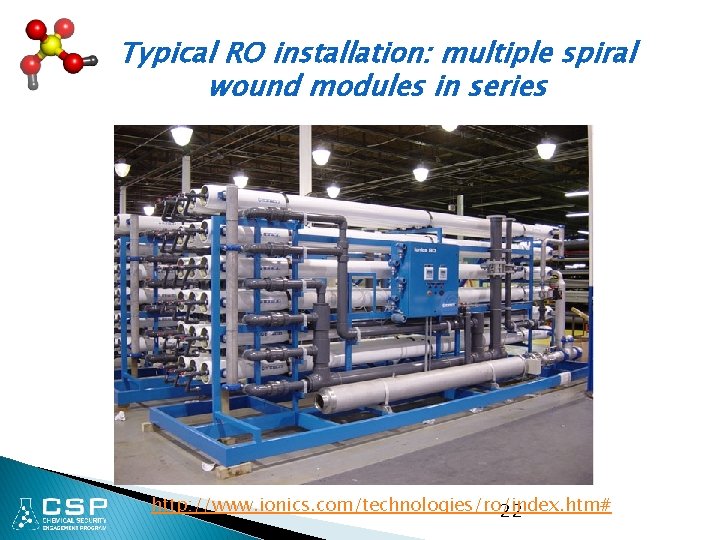
Typical RO installation: multiple spiral wound modules in series http: //www. ionics. com/technologies/ro/index. htm# 22
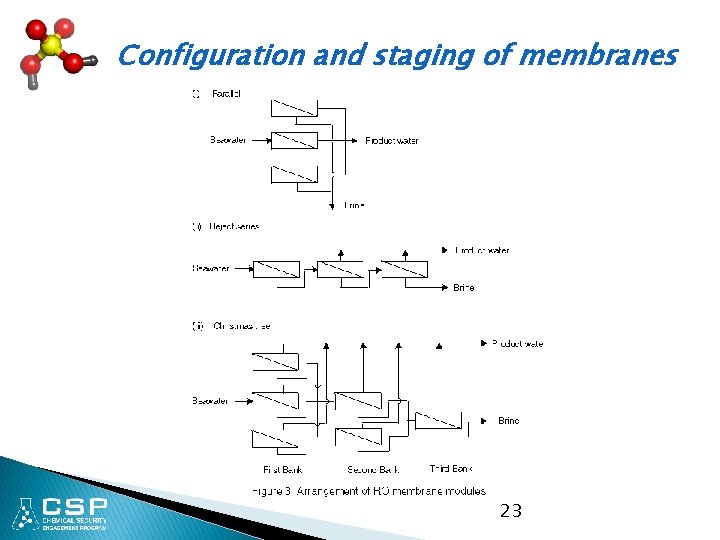
Configuration and staging of membranes 23
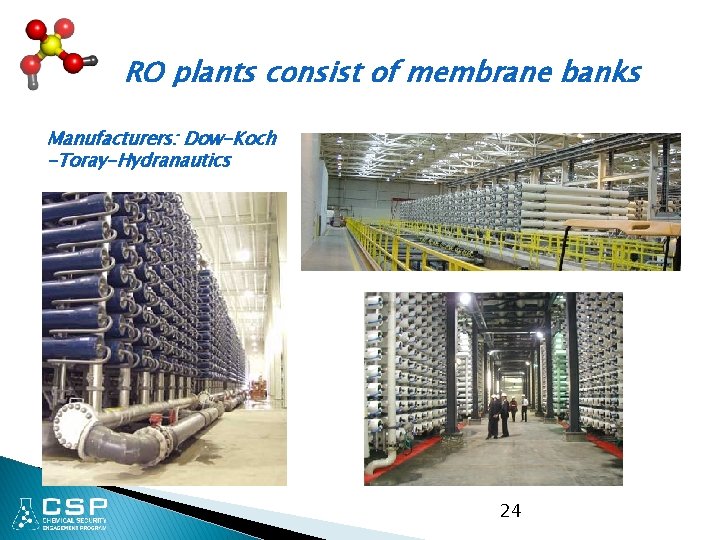
RO plants consist of membrane banks Manufacturers: Dow-Koch -Toray-Hydranautics 24
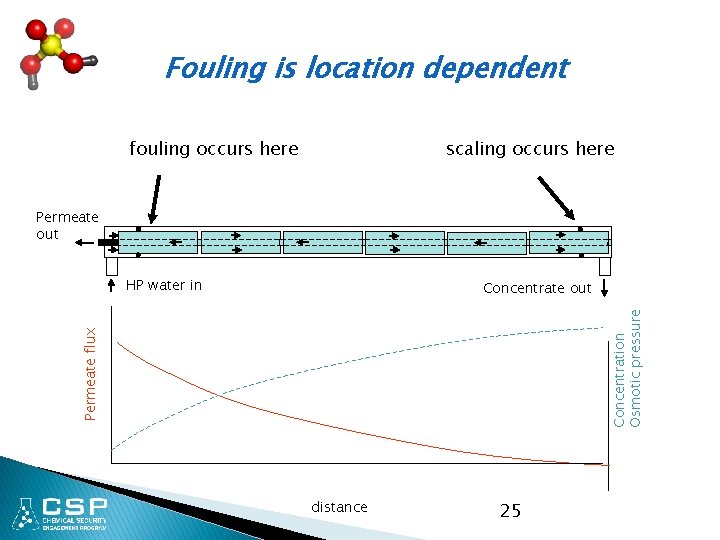
Fouling is location dependent fouling occurs here scaling occurs here Permeate out HP water in Permeate flux Concentration Osmotic pressure Concentrate out distance 25
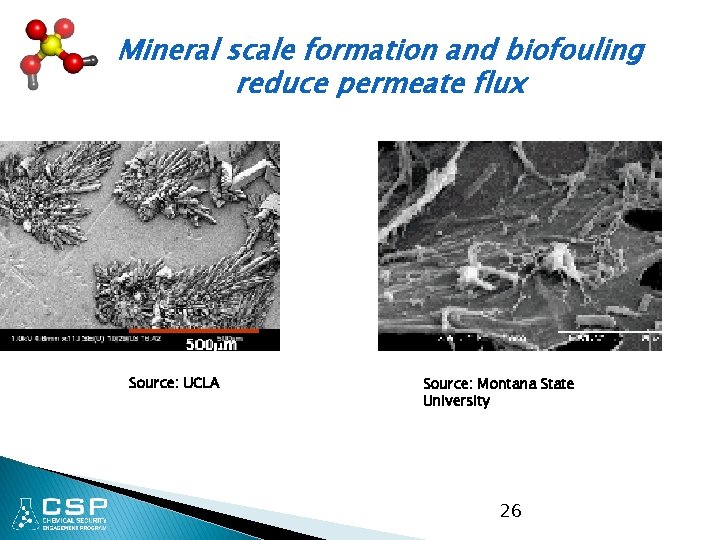
Mineral scale formation and biofouling reduce permeate flux Source: UCLA Source: Montana State University 26
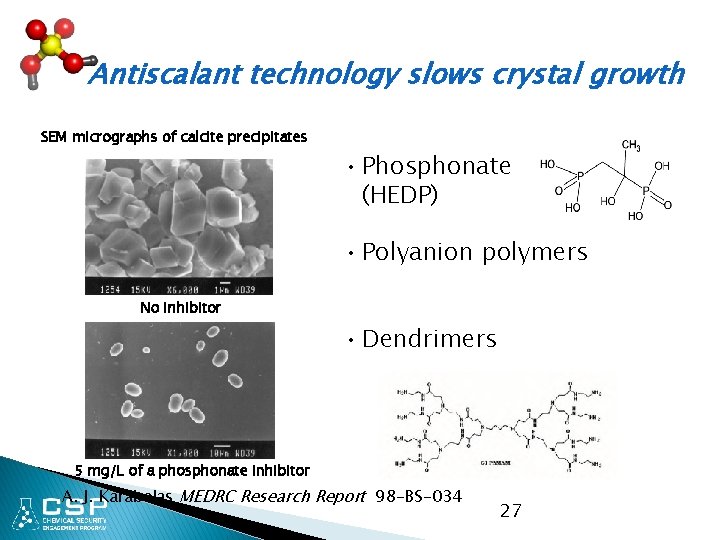
Antiscalant technology slows crystal growth SEM micrographs of calcite precipitates • Phosphonate (HEDP) • Polyanion polymers No inhibitor • Dendrimers 5 mg/L of a phosphonate inhibitor A. J. Karabelas MEDRC Research Report 98 -BS-034 27
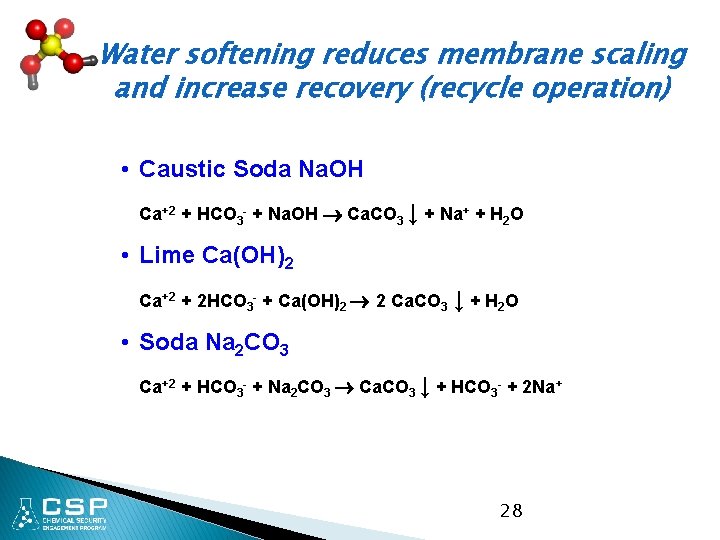
Water softening reduces membrane scaling and increase recovery (recycle operation) • Caustic Soda Na. OH Ca+2 + HCO 3 - + Na. OH Ca. CO 3 ↓ + Na+ + H 2 O • Lime Ca(OH)2 Ca+2 + 2 HCO 3 - + Ca(OH)2 2 Ca. CO 3 ↓ + H 2 O • Soda Na 2 CO 3 Ca+2 + HCO 3 - + Na 2 CO 3 Ca. CO 3 ↓ + HCO 3 - + 2 Na+ 28
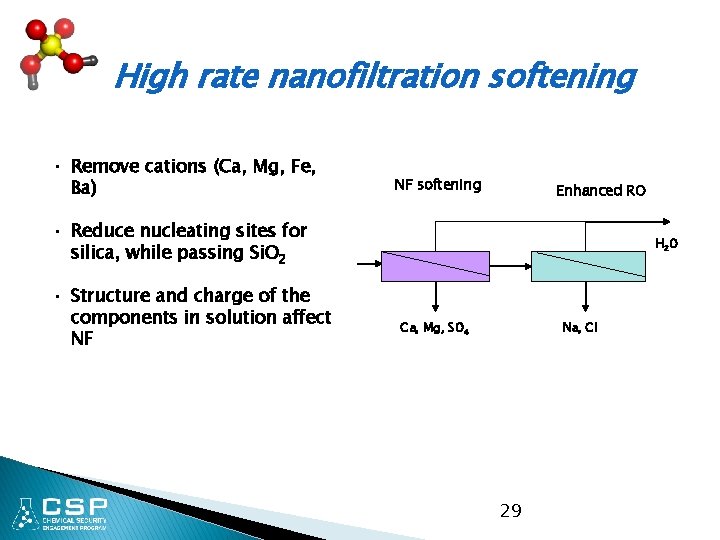
High rate nanofiltration softening • Remove cations (Ca, Mg, Fe, Ba) NF softening Enhanced RO • Reduce nucleating sites for silica, while passing Si. O 2 • Structure and charge of the components in solution affect NF H 2 O Ca, Mg, SO 4 Na, Cl 29
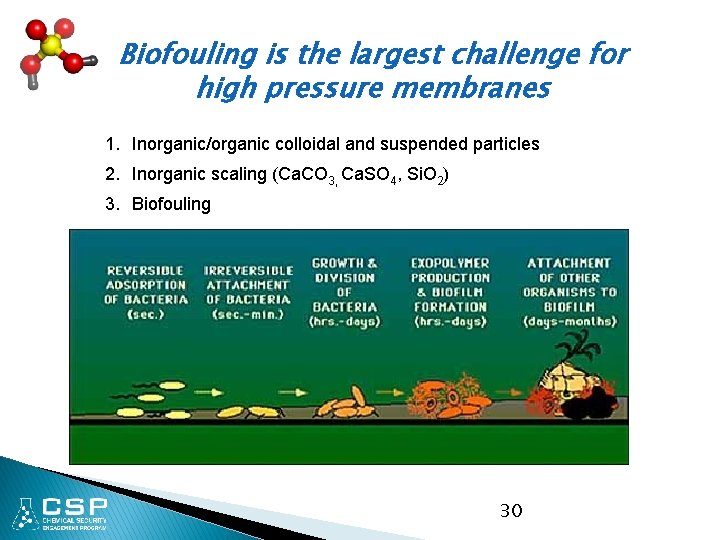
Biofouling is the largest challenge for high pressure membranes 1. Inorganic/organic colloidal and suspended particles 2. Inorganic scaling (Ca. CO 3, Ca. SO 4, Si. O 2) 3. Biofouling 30
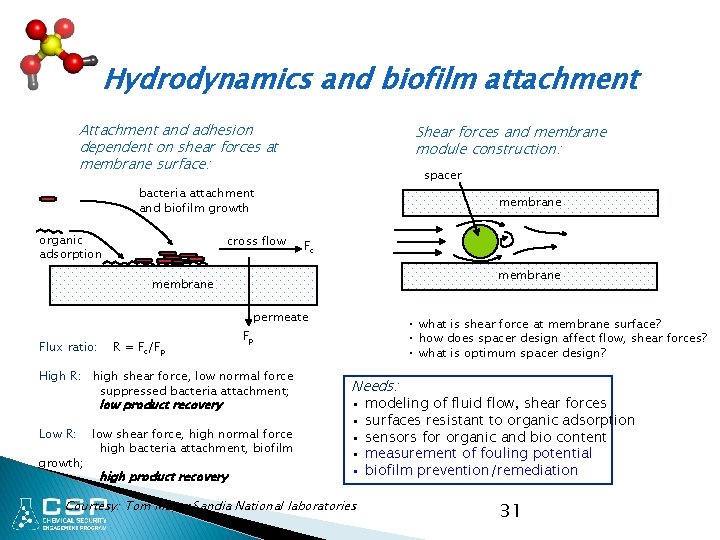
Hydrodynamics and biofilm attachment Attachment and adhesion dependent on shear forces at membrane surface: Shear forces and membrane module construction: spacer bacteria attachment and biofilm growth organic adsorption cross flow membrane Fc membrane permeate Flux ratio: R = Fc/Fp Fp High R: high shear force, low normal force suppressed bacteria attachment; low product recovery Low R: growth; low shear force, high normal force high bacteria attachment, biofilm high product recovery • what is shear force at membrane surface? • how does spacer design affect flow, shear forces? • what is optimum spacer design? Needs: • modeling of fluid flow, shear forces • surfaces resistant to organic adsorption • sensors for organic and bio content • measurement of fouling potential • biofilm prevention/remediation Courtesy: Tom Mayer Sandia National laboratories 31
Reverse osmosis membranes opportunities • Reverse osmosis membranes suffer from fouling by biofilms • Disinfection with oxidizing agents can destroy the TFC polyamide membranes • New Research is aimed at making a chlorine tolerant RO membrane 32
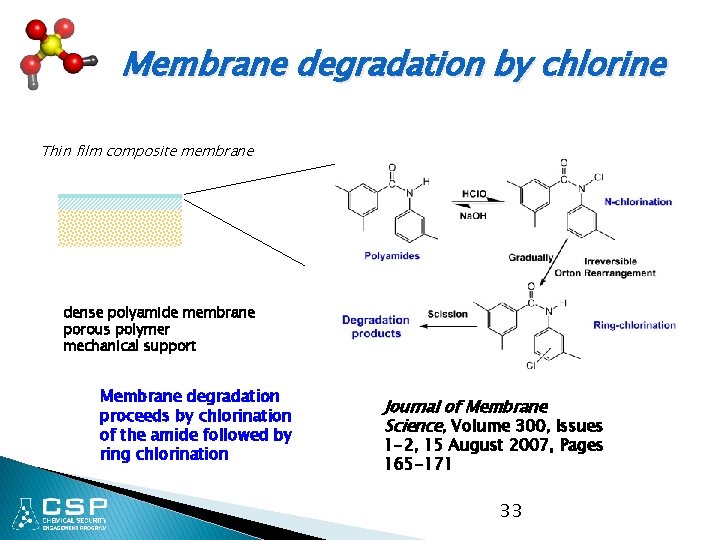
Membrane degradation by chlorine Thin film composite membrane dense polyamide membrane porous polymer mechanical support Membrane degradation proceeds by chlorination of the amide followed by ring chlorination Journal of Membrane Science, Volume 300, Issues 1 -2, 15 August 2007, Pages 165 -171 33
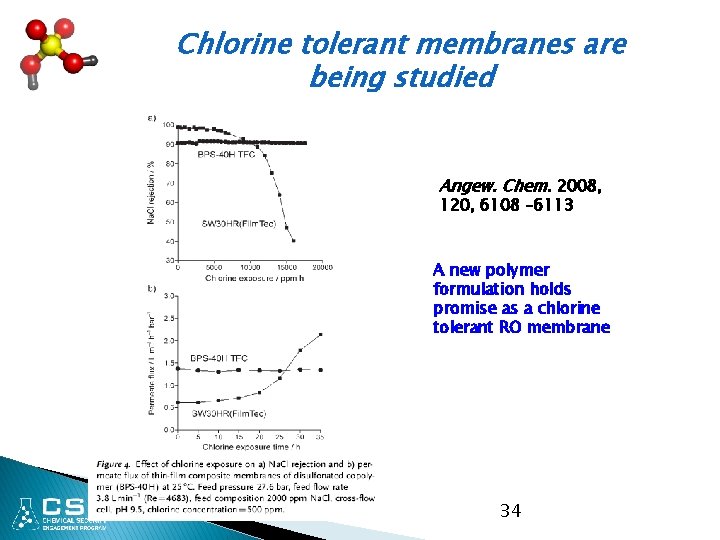
Chlorine tolerant membranes are being studied Angew. Chem. 2008, 120, 6108 – 6113 A new polymer formulation holds promise as a chlorine tolerant RO membrane 34
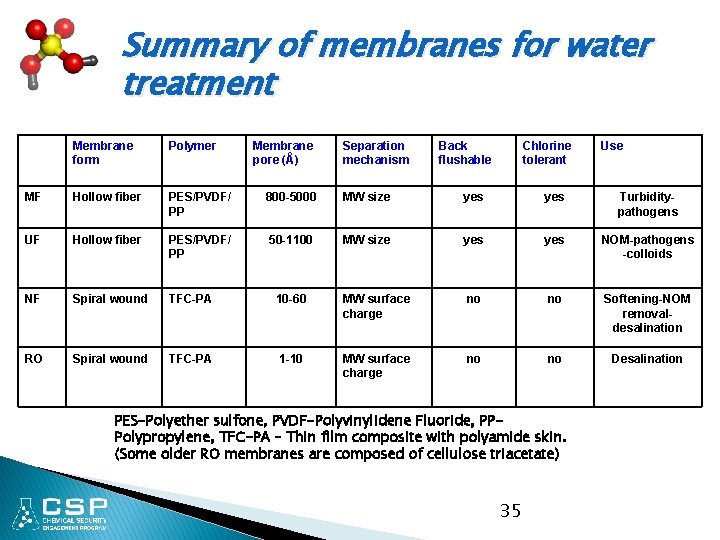
Summary of membranes for water treatment Membrane form Polymer Membrane pore (Å) Separation mechanism Back flushable Chlorine tolerant MF Hollow fiber PES/PVDF/ PP 800 -5000 MW size yes Turbiditypathogens UF Hollow fiber PES/PVDF/ PP 50 -1100 MW size yes NOM-pathogens -colloids NF Spiral wound TFC-PA 10 -60 MW surface charge no no Softening-NOM removaldesalination RO Spiral wound TFC-PA 1 -10 MW surface charge no no Desalination PES-Polyether sulfone, PVDF-Polyvinylidene Fluoride, PPPolypropylene, TFC-PA – Thin film composite with polyamide skin. (Some older RO membranes are composed of cellulose triacetate) 35 Use
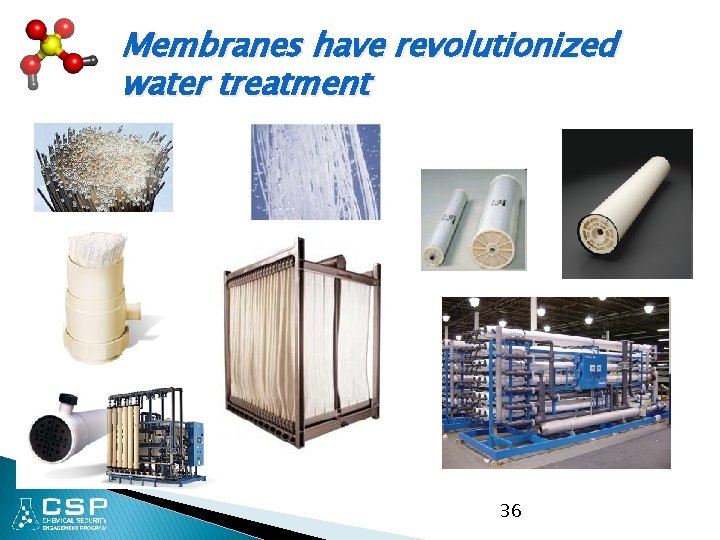
Membranes have revolutionized water treatment 36
- Slides: 36