
Introduction to medical virology Viral structure and Classification






- Slides: 41
Introduction to medical virology “Viral structure and Classification” Dr. Abdulkarim Alhetheel Assistant Professor in Microbiology Unit College of Medicine & KKUH
OBJECTIVES Ø General characteristics of viruses. Ø Structure & symmetry of viruses. Ø Classification of viruses. Ø Steps of virus replication. Ø Laboratory diagnosis of viral infections.
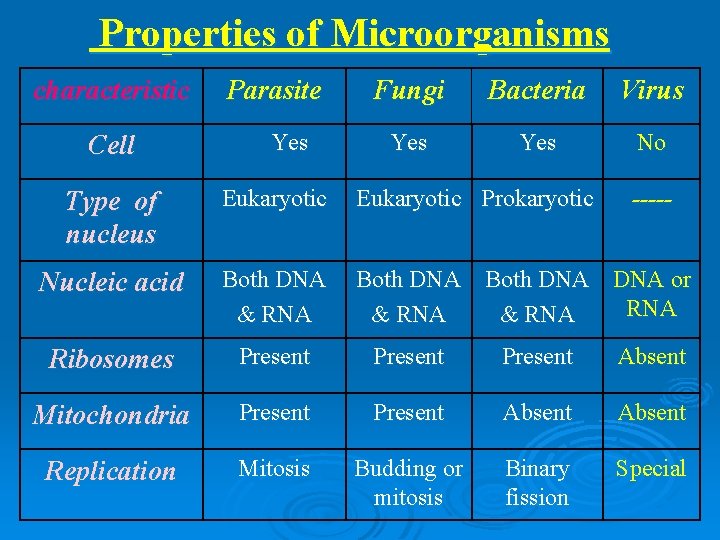
Properties of Microorganisms characteristic Cell Parasite Yes Fungi Bacteria Virus Yes No Type of nucleus Eukaryotic Prokaryotic ----- Nucleic acid Both DNA & RNA Both DNA DNA or RNA & RNA Ribosomes Present Absent Mitochondria Present Absent Replication Mitosis Budding or mitosis Binary fission Special
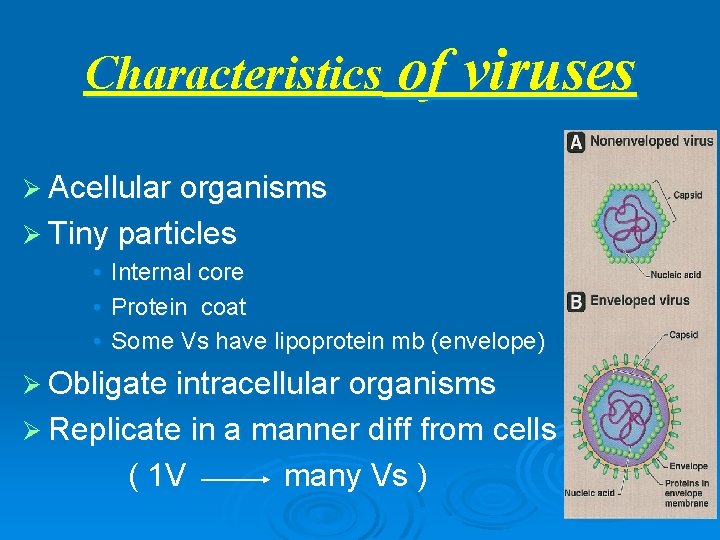
Characteristics of viruses Ø Acellular organisms Ø Tiny particles • Internal core • Protein coat • Some Vs have lipoprotein mb (envelope) Ø Obligate intracellular organisms Ø Replicate in a manner diff from cells ( 1 V many Vs )
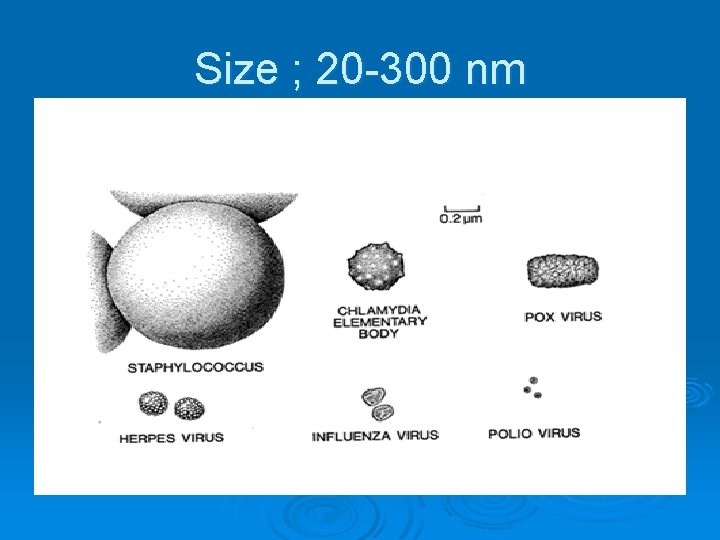
Size ; 20 -300 nm
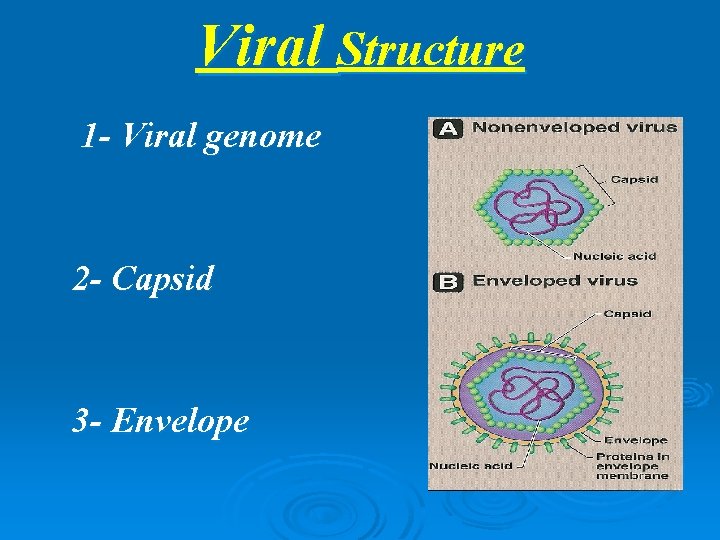
Viral Structure 1 - Viral genome 2 - Capsid 3 - Envelope
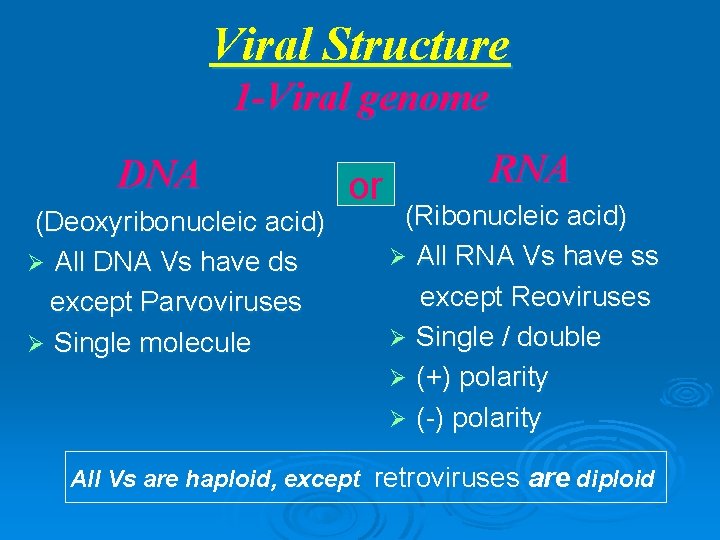
Viral Structure 1 -Viral genome DNA (Deoxyribonucleic acid) Ø All DNA Vs have ds except Parvoviruses Ø Single molecule or RNA (Ribonucleic acid) Ø All RNA Vs have ss except Reoviruses Ø Single / double Ø (+) polarity Ø (-) polarity All Vs are haploid, except retroviruses are diploid
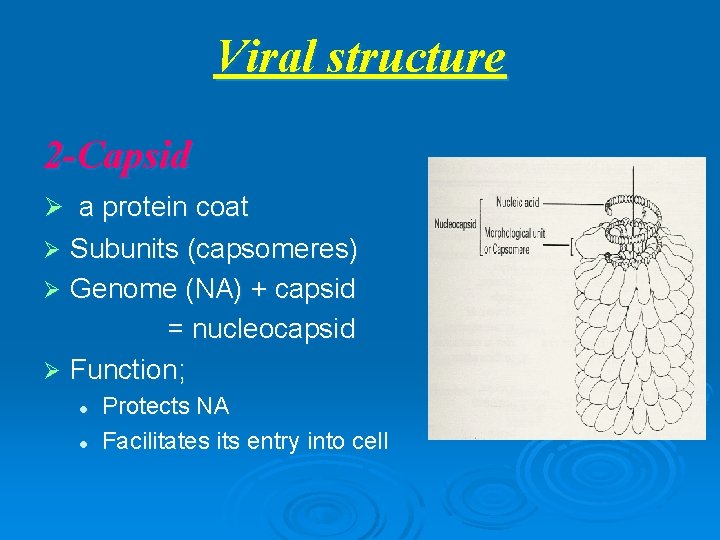
Viral structure 2 -Capsid Ø a protein coat Subunits (capsomeres) Ø Genome (NA) + capsid = nucleocapsid Ø Function; Ø l l Protects NA Facilitates its entry into cell
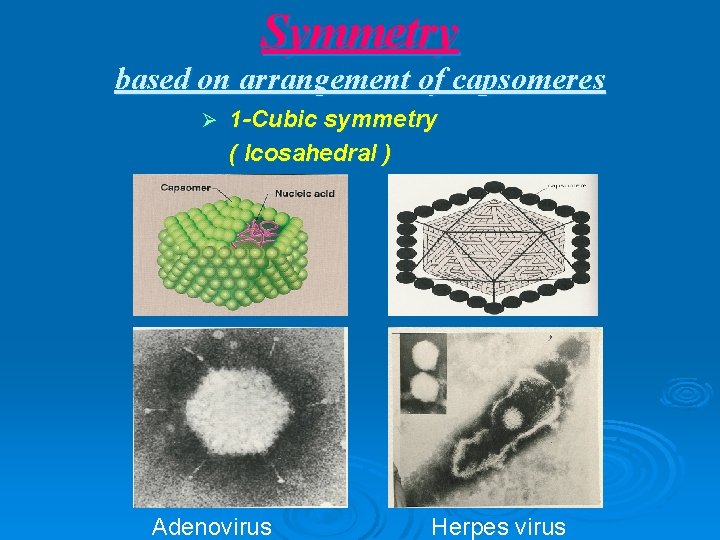
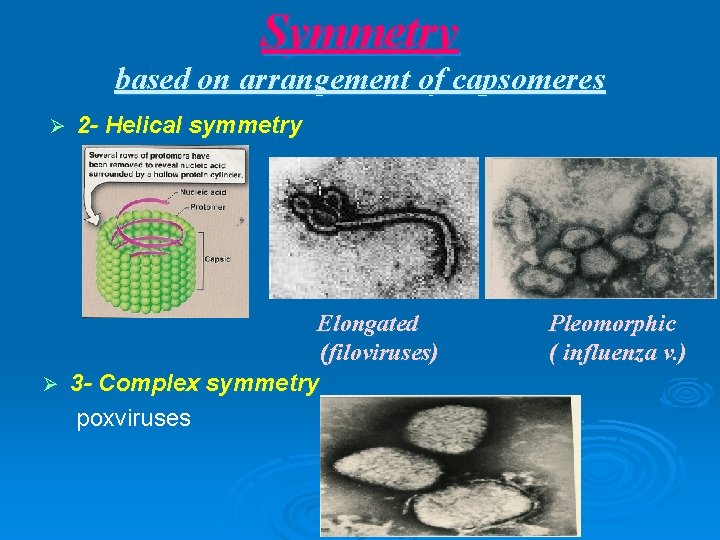
Symmetry based on arrangement of capsomeres Ø Cubic symmetry ( Icosahederal ) Ø Helical symmetry Ø Complex symmetry
Symmetry based on arrangement of capsomeres Ø 1 -Cubic symmetry ( Icosahedral ) Adenovirus Herpes virus
Symmetry based on arrangement of capsomeres Ø 2 - Helical symmetry Elongated (filoviruses) Ø 3 - Complex symmetry poxviruses Pleomorphic ( influenza v. )
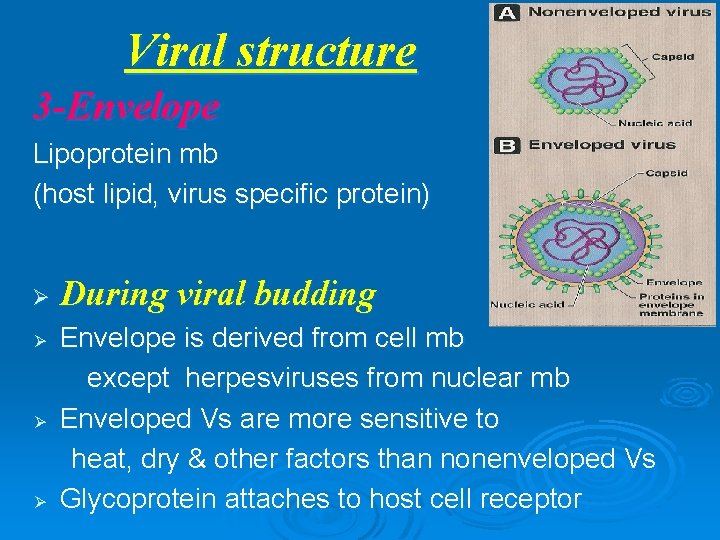
Viral structure 3 -Envelope Lipoprotein mb (host lipid, virus specific protein) Ø Ø During viral budding Envelope is derived from cell mb except herpesviruses from nuclear mb Enveloped Vs are more sensitive to heat, dry & other factors than nonenveloped Vs Glycoprotein attaches to host cell receptor
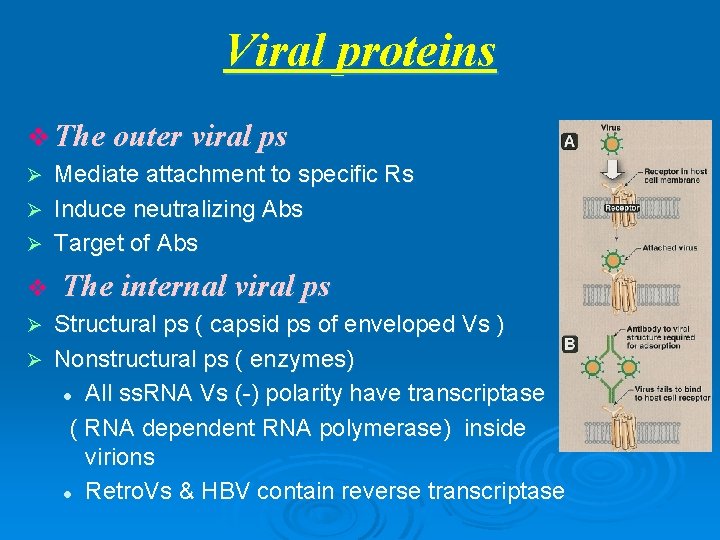
Viral proteins v The outer viral ps Mediate attachment to specific Rs Ø Induce neutralizing Abs Ø Target of Abs Ø v The internal viral ps Structural ps ( capsid ps of enveloped Vs ) Ø Nonstructural ps ( enzymes) l All ss. RNA Vs (-) polarity have transcriptase ( RNA dependent RNA polymerase) inside virions l Retro. Vs & HBV contain reverse transcriptase Ø
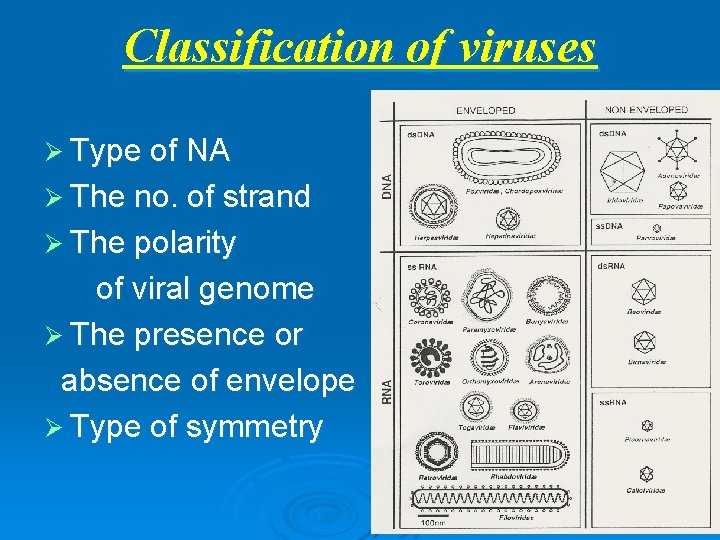
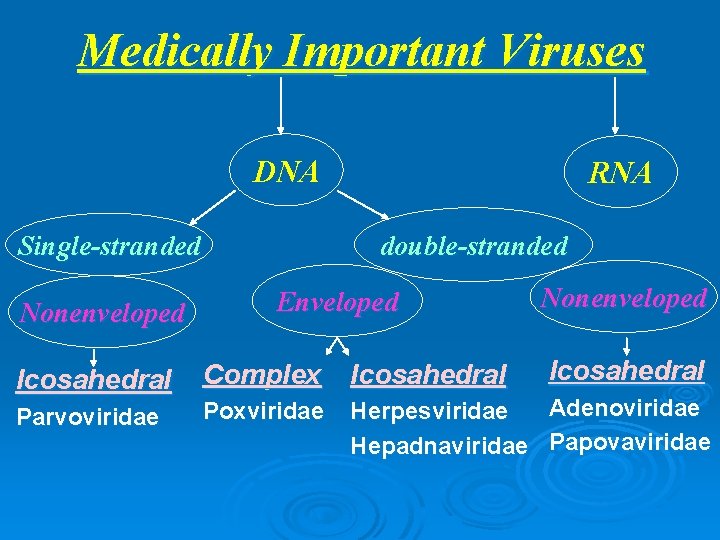
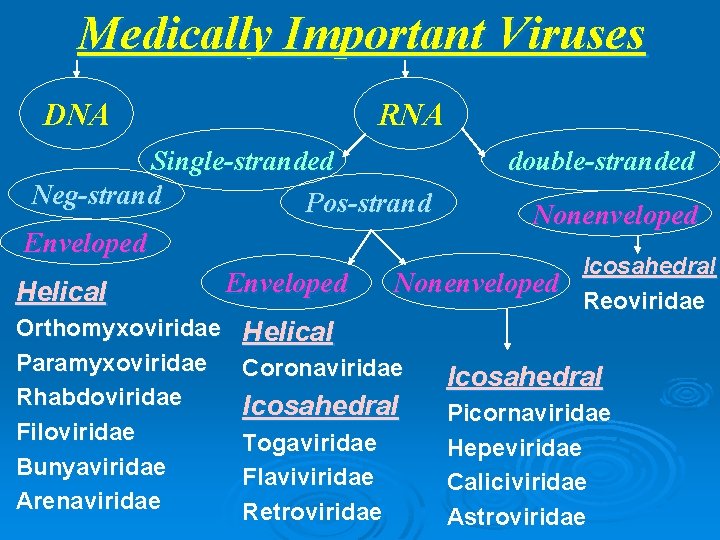
Classification of viruses Ø Type of NA Ø The no. of strand Ø The polarity of viral genome Ø The presence or absence of envelope Ø Type of symmetry
Medically Important Viruses DNA Single-stranded Nonenveloped RNA double-stranded Enveloped Nonenveloped Icosahedral Complex Icosahedral Parvoviridae Poxviridae Adenoviridae Herpesviridae Hepadnaviridae Papovaviridae
Medically Important Viruses DNA RNA Single-stranded Neg-strand Pos-strand Enveloped Helical Orthomyxoviridae Paramyxoviridae Rhabdoviridae Filoviridae Bunyaviridae Arenaviridae Enveloped double-stranded Nonenveloped Icosahedral Nonenveloped Reoviridae Helical Coronaviridae Icosahedral Togaviridae Flaviviridae Retroviridae Icosahedral Picornaviridae Hepeviridae Caliciviridae Astroviridae
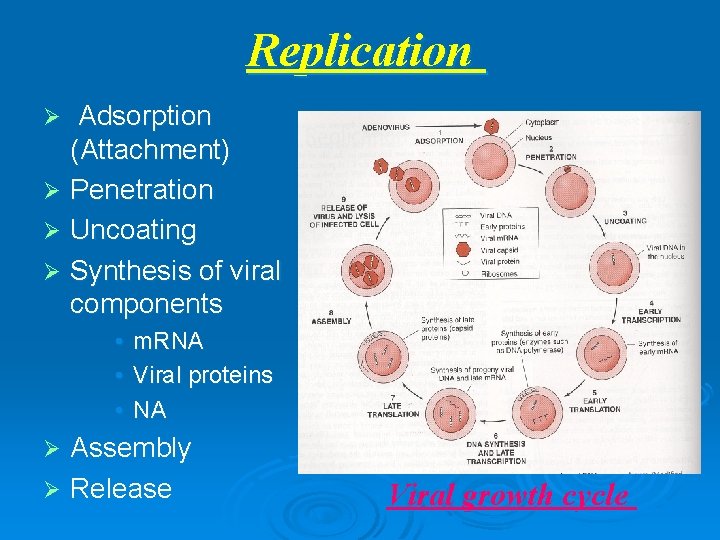
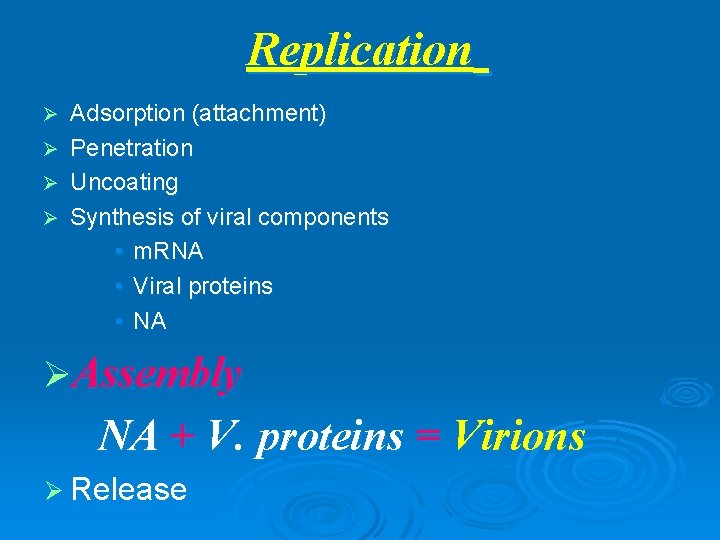
Replication Adsorption (Attachment) Ø Penetration Ø Uncoating Ø Synthesis of viral components Ø • • • m. RNA Viral proteins NA Assembly Ø Release Ø Viral growth cycle
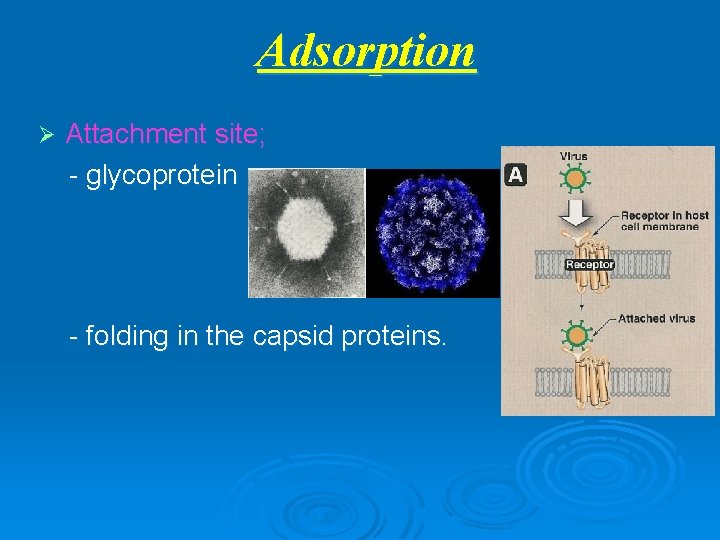
Adsorption Ø Attachment site; - glycoprotein - folding in the capsid proteins.
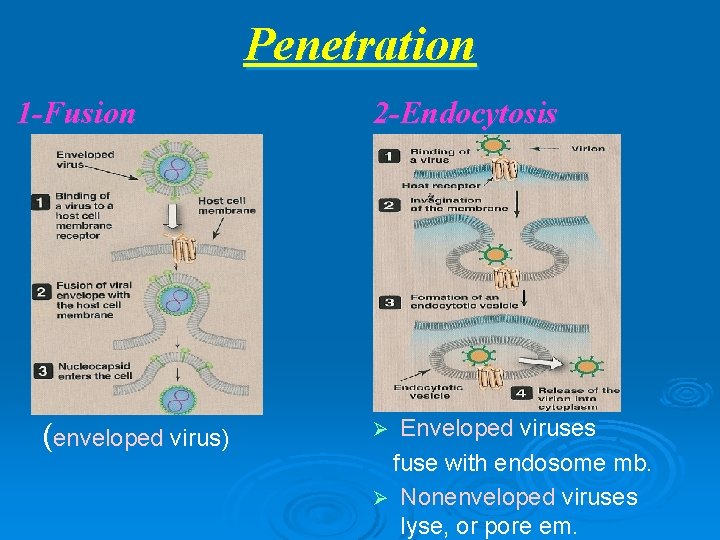
Penetration 1 -Fusion (enveloped virus) 2 -Endocytosis Enveloped viruses fuse with endosome mb. Ø Nonenveloped viruses lyse, or pore em. Ø
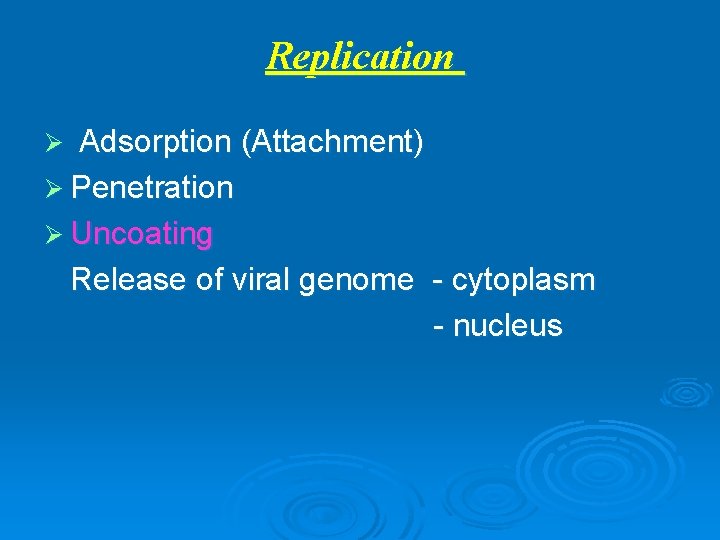
Replication Adsorption (Attachment) Ø Penetration Ø Uncoating Release of viral genome - cytoplasm - nucleus Ø
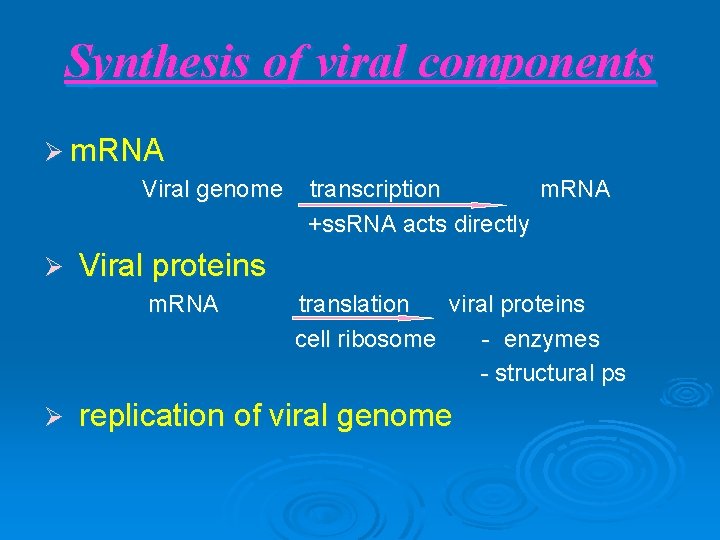
Synthesis of viral components Ø m. RNA Viral genome Ø Viral proteins m. RNA Ø transcription m. RNA +ss. RNA acts directly translation viral proteins cell ribosome - enzymes - structural ps replication of viral genome
Replication Ø Ø Adsorption (attachment) Penetration Uncoating Synthesis of viral components • m. RNA • Viral proteins • NA ØAssembly NA + V. proteins = Virions Ø Release
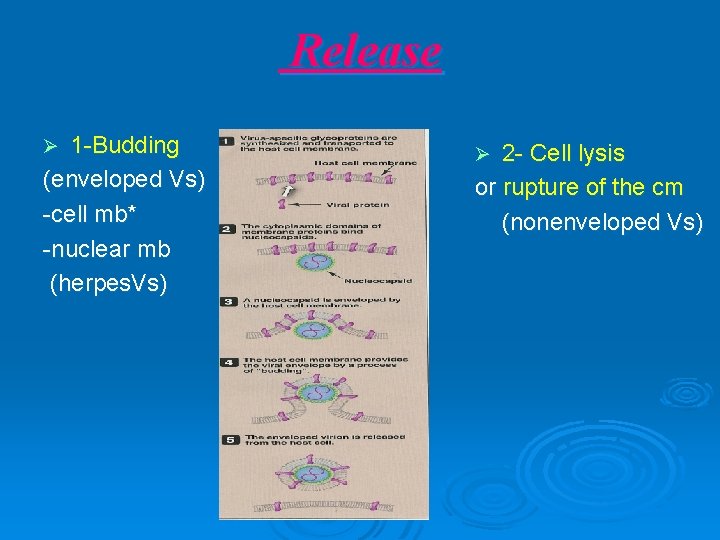
Release 1 -Budding (enveloped Vs) -cell mb* -nuclear mb (herpes. Vs) Ø 2 - Cell lysis or rupture of the cm (nonenveloped Vs) Ø
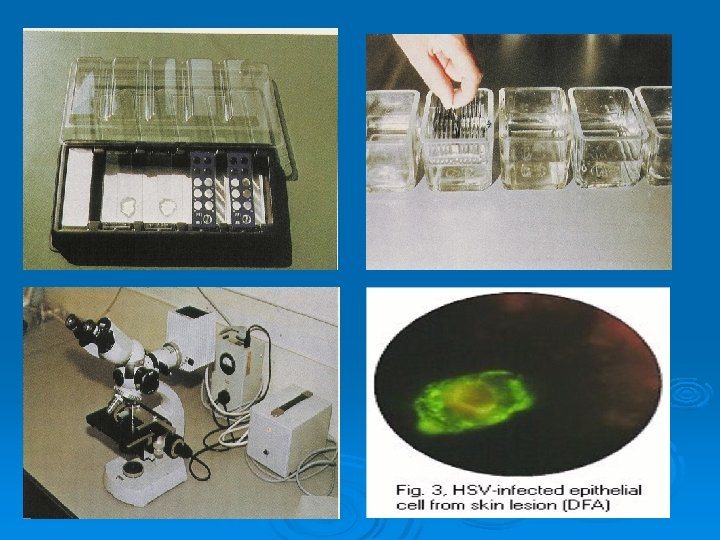
laboratory diagnosis of viral infections Ø Microscopic examination. Ø Cell culture. Ø Serological tests. Ø Detection of viral Ag. Ø Molecular method.
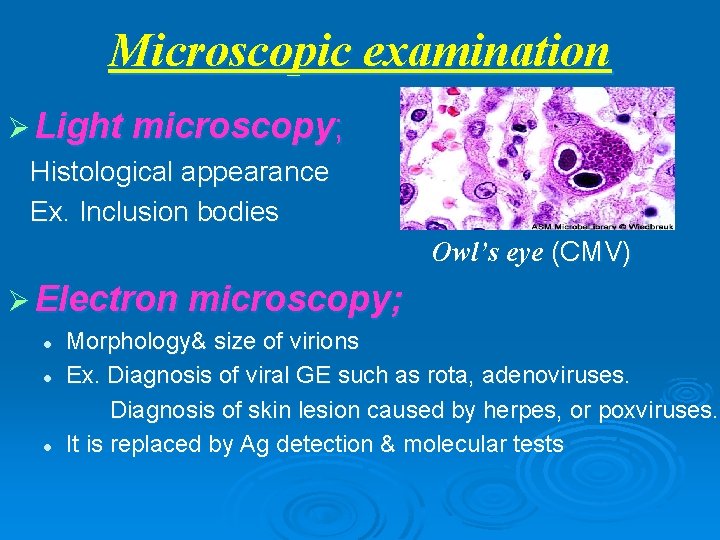
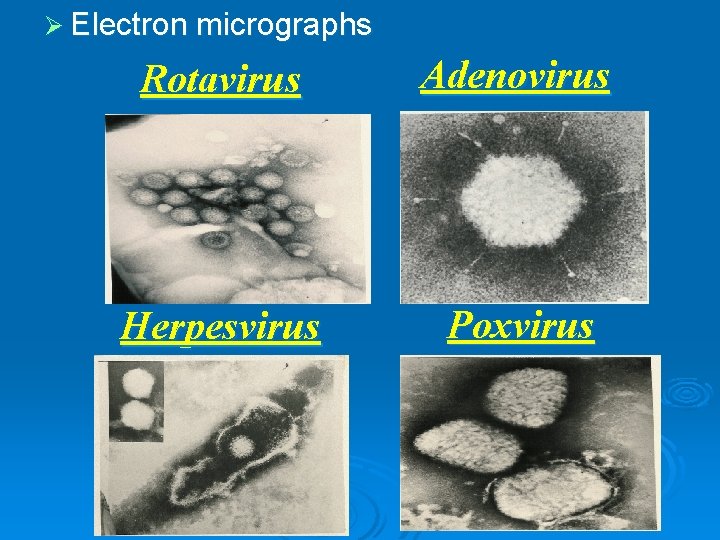
Microscopic examination Ø Light microscopy; Histological appearance Ex. Inclusion bodies Owl’s eye (CMV) Ø Electron microscopy; l l l Morphology& size of virions Ex. Diagnosis of viral GE such as rota, adenoviruses. Diagnosis of skin lesion caused by herpes, or poxviruses. It is replaced by Ag detection & molecular tests
Ø Electron micrographs Rotavirus Adenovirus Herpesvirus Poxvirus
Virus cultivation Ø Laboratory animals Ø Embryonated eggs Ø Cell culture
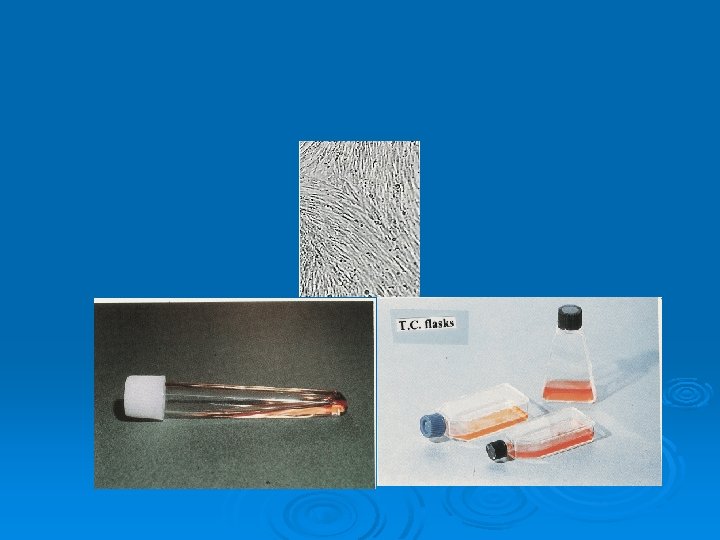
Cell culture No of sub passages Primary C/C 1 or 2 Diploid C/C [semi continuous] 20 to 50 Continuous cell line Indefinite
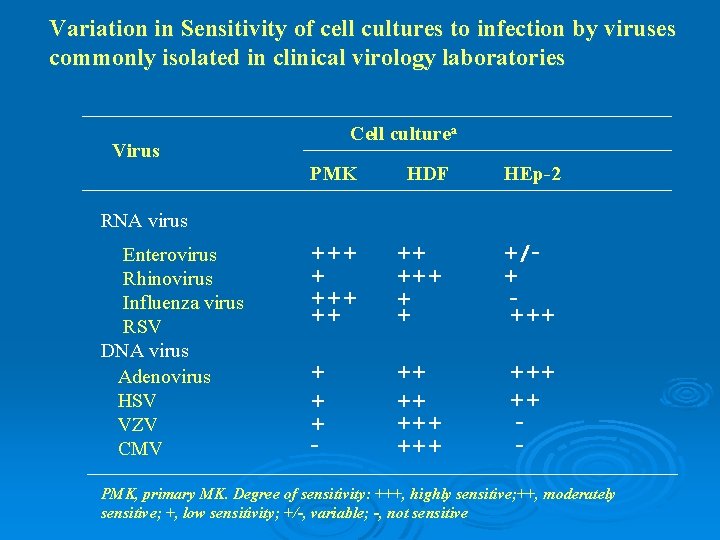
Variation in Sensitivity of cell cultures to infection by viruses commonly isolated in clinical virology laboratories Cell culturea Virus PMK HDF HEp-2 RNA virus Enterovirus Rhinovirus Influenza virus RSV DNA virus Adenovirus HSV VZV CMV +/+ +++ ++ + + + ++ + + - ++ +++ ++ - PMK, primary MK. Degree of sensitivity: +++, highly sensitive; ++, moderately sensitive; +, low sensitivity; +/-, variable; -, not sensitive
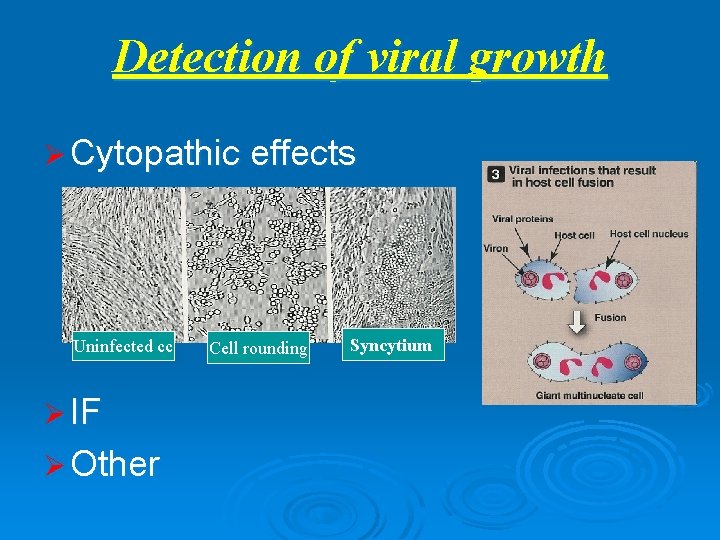
Detection of viral growth Ø Cytopathic effects Uninfected cc Ø IF Ø Other Cell rounding Syncytium
Problems with cell culture Ø Long incubation (up to 5 days) Ø Sensitivity is variable Ø Susceptible to bacterial contamination Ø Some viruses do not grow in cell culture e. g. HCV
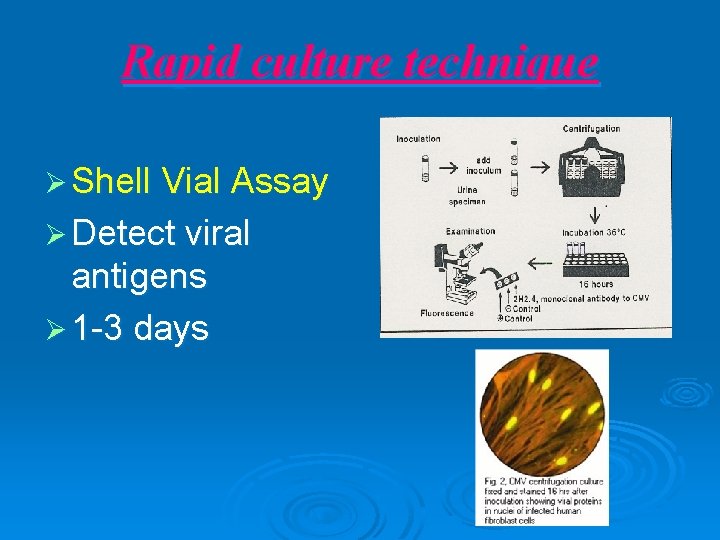
Rapid culture technique Ø Shell Vial Assay Ø Detect viral antigens Ø 1 -3 days
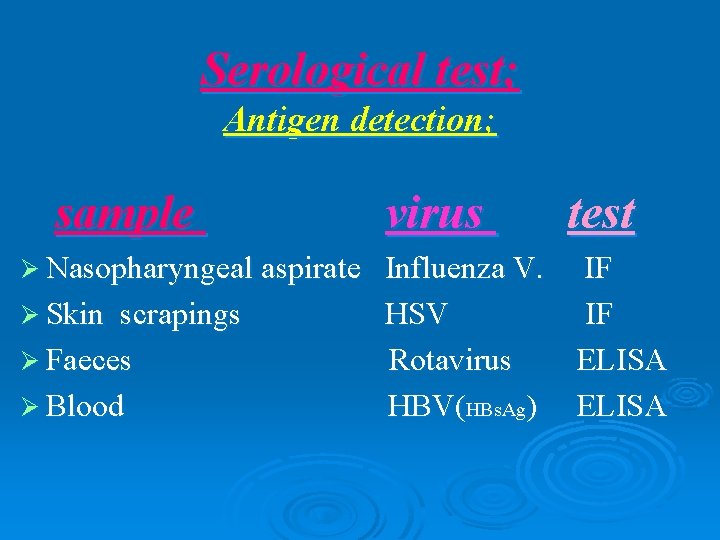
Serological test; Antigen detection; sample Ø Nasopharyngeal aspirate Ø Skin scrapings Ø Faeces Ø Blood virus test Influenza V. IF HSV IF Rotavirus ELISA HBV(HBs. Ag) ELISA
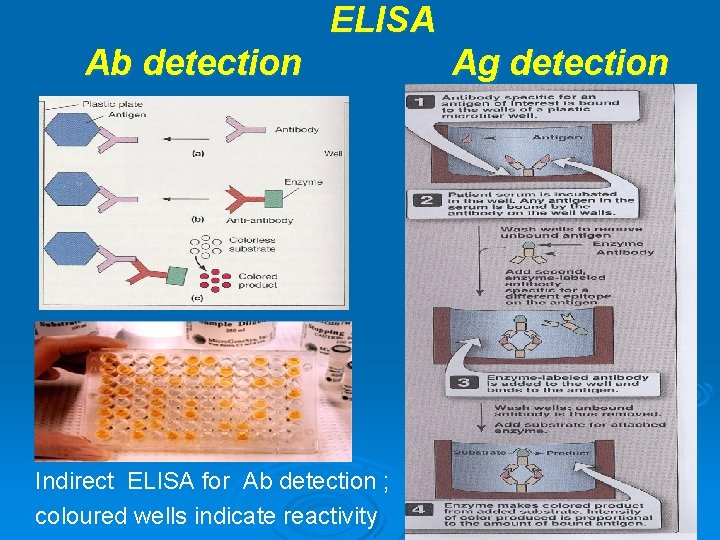
Serological test; Antibody detection; e. g. of techniques Ø Complement fixation test (CFT) Ø Immunofluorescence (IF) Ø Enzyme- linked immunosorbent assay (ELISA) Ø
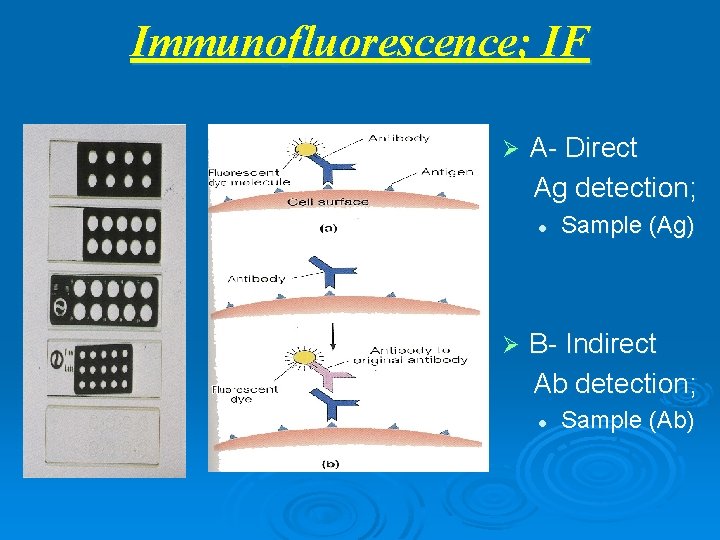
Immunofluorescence; IF Ø A- Direct Ag detection; l Ø Sample (Ag) B- Indirect Ab detection; l Sample (Ab)
ELISA Ab detection Indirect ELISA for Ab detection ; coloured wells indicate reactivity Ag detection
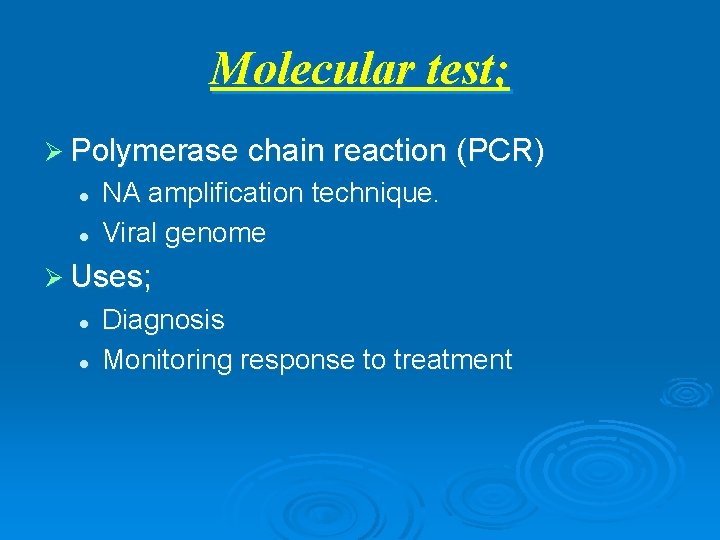
Molecular test; Ø Polymerase chain reaction (PCR) l l NA amplification technique. Viral genome Ø Uses; l l Diagnosis Monitoring response to treatment
Reference book and the relevant page numbers Ø Medical Microbiology and Immunology By: Warren Levinson. 10 th Edition, 2008. Pages; 192 -195, 199 -207, 216 -220, 233 -235. Ø Lippincott’s Illustrated Reviews: Microbiology By: Richard A. Harvey , Pamela C Champe & Bruce D. Fisher 2 nd Edition, 2007. Pages; 233 -242