
Introduction to Medical Terminology Chapter 1 Systems Skeletal
- Slides: 9
Introduction to Medical Terminology Chapter 1
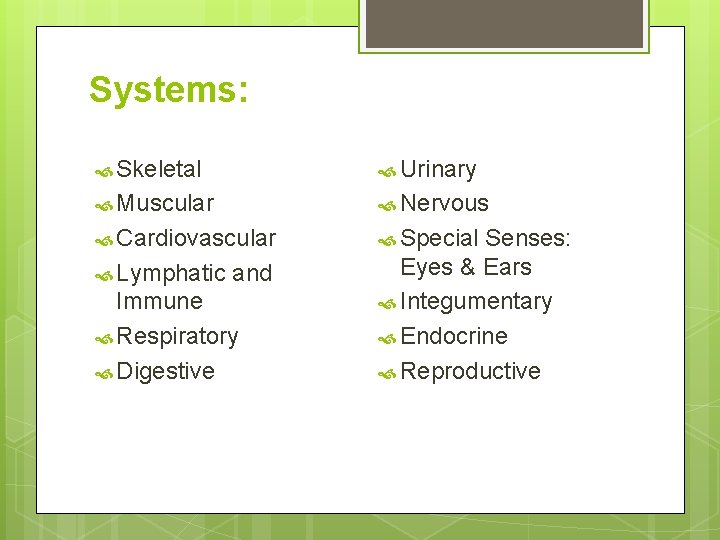
Systems: Skeletal Urinary Muscular Nervous Cardiovascular Special Lymphatic and Immune Respiratory Digestive Senses: Eyes & Ears Integumentary Endocrine Reproductive
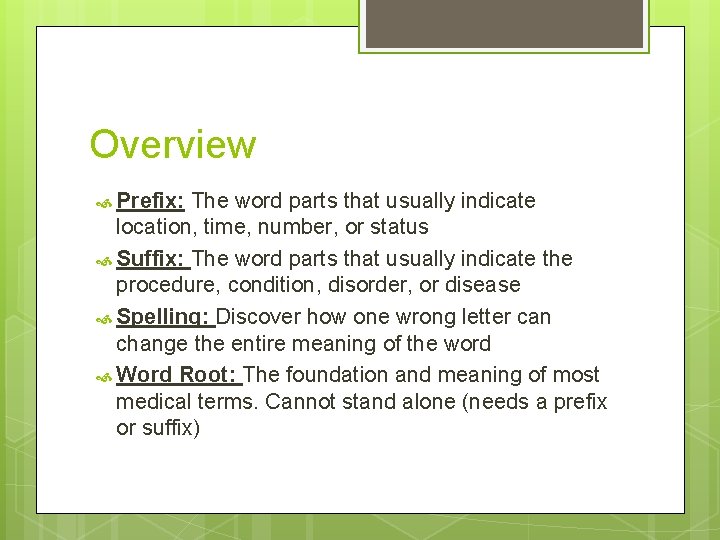
Overview Prefix: The word parts that usually indicate location, time, number, or status Suffix: The word parts that usually indicate the procedure, condition, disorder, or disease Spelling: Discover how one wrong letter can change the entire meaning of the word Word Root: The foundation and meaning of most medical terms. Cannot stand alone (needs a prefix or suffix)
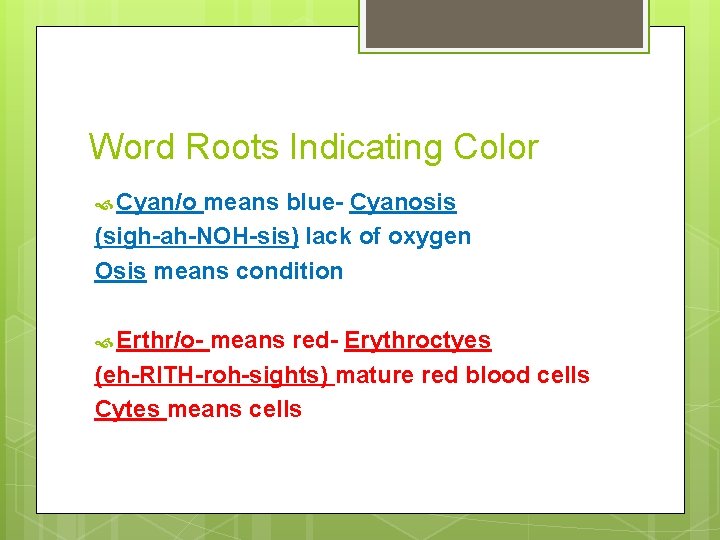
Word Roots Indicating Color Cyan/o means blue- Cyanosis (sigh-ah-NOH-sis) lack of oxygen Osis means condition Erthr/o- means red- Erythroctyes (eh-RITH-roh-sights) mature red blood cells Cytes means cells
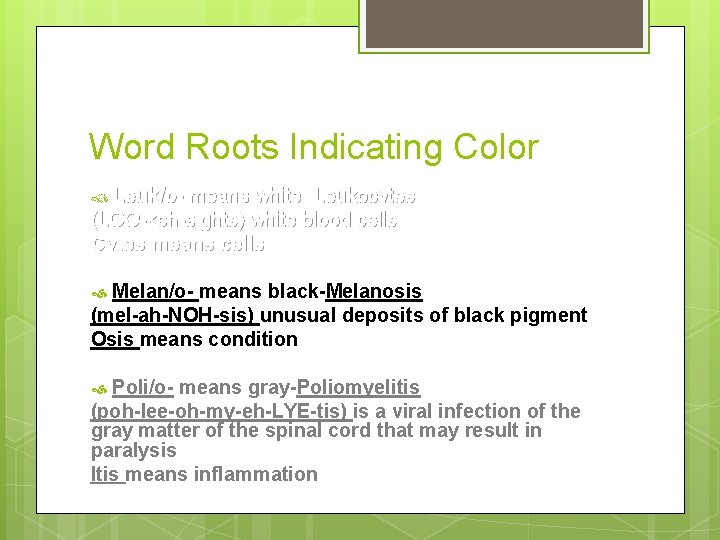
Word Roots Indicating Color Leuk/o- means white- Leukocytes (LOO-koh-sights) white blood cells Cytes means cells Melan/o- means black-Melanosis (mel-ah-NOH-sis) unusual deposits of black pigment Osis means condition Poli/o- means gray-Poliomyelitis (poh-lee-oh-my-eh-LYE-tis) is a viral infection of the gray matter of the spinal cord that may result in paralysis Itis means inflammation
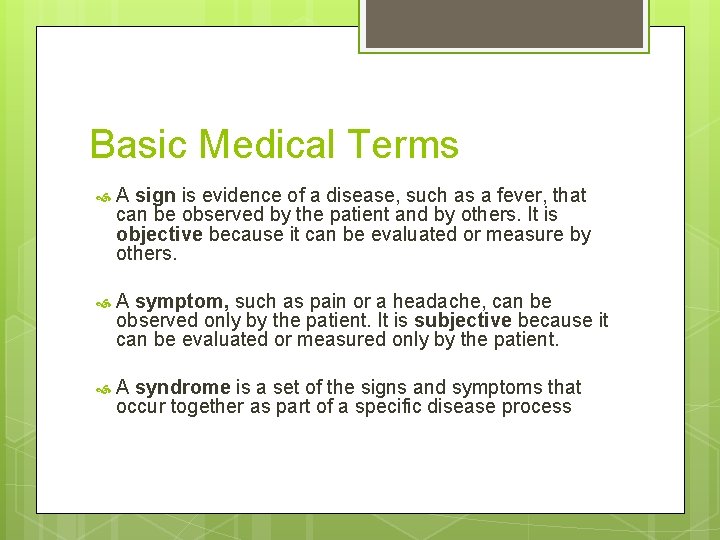
Basic Medical Terms A sign is evidence of a disease, such as a fever, that can be observed by the patient and by others. It is objective because it can be evaluated or measure by others. A symptom, such as pain or a headache, can be observed only by the patient. It is subjective because it can be evaluated or measured only by the patient. A syndrome is a set of the signs and symptoms that occur together as part of a specific disease process
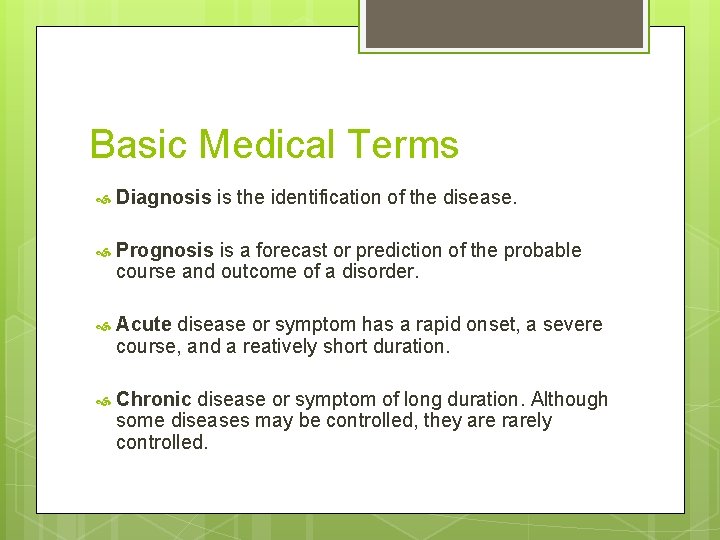
Basic Medical Terms Diagnosis is the identification of the disease. Prognosis is a forecast or prediction of the probable course and outcome of a disorder. Acute disease or symptom has a rapid onset, a severe course, and a reatively short duration. Chronic disease or symptom of long duration. Although some diseases may be controlled, they are rarely controlled.
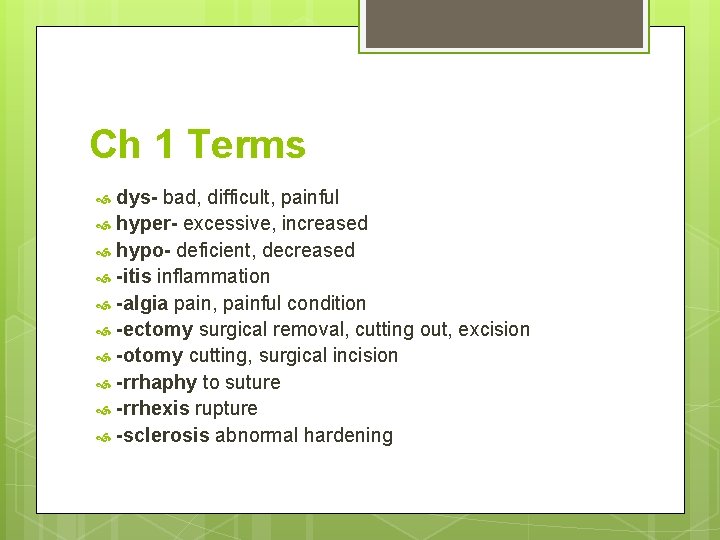
Ch 1 Terms dys- bad, difficult, painful hyper- excessive, increased hypo- deficient, decreased -itis inflammation -algia pain, painful condition -ectomy surgical removal, cutting out, excision -otomy cutting, surgical incision -rrhaphy to suture -rrhexis rupture -sclerosis abnormal hardening
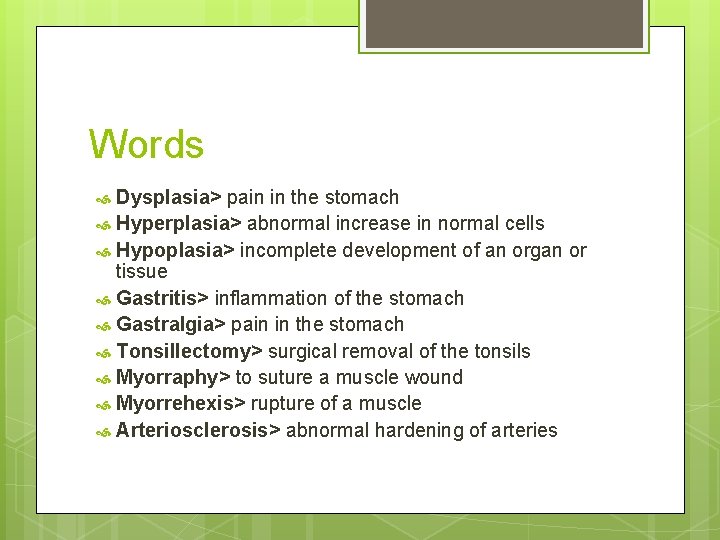
Words Dysplasia> pain in the stomach Hyperplasia> abnormal increase in normal cells Hypoplasia> incomplete development of an organ or tissue Gastritis> inflammation of the stomach Gastralgia> pain in the stomach Tonsillectomy> surgical removal of the tonsils Myorraphy> to suture a muscle wound Myorrehexis> rupture of a muscle Arteriosclerosis> abnormal hardening of arteries