
Introduction to Medical Laboratory Technology Dr Bipin Patel
Introduction to Medical Laboratory Technology Dr Bipin Patel
WHAT IS LABORATORY?
Case Scenario 1 • A 77 year old man presents to the emergency department with fevers and chills. • He has had multiple urinary tract infections in the past and feels that this is “another one”. • He has a history of diabetes mellitus, type 2 with diabetic nephropathy and chronic kidney disease.
Case Scenario 1 • Physical exam is notable for an ill-appearing man with right flank tenderness. • How will the medical laboratory impact this patient’s care?
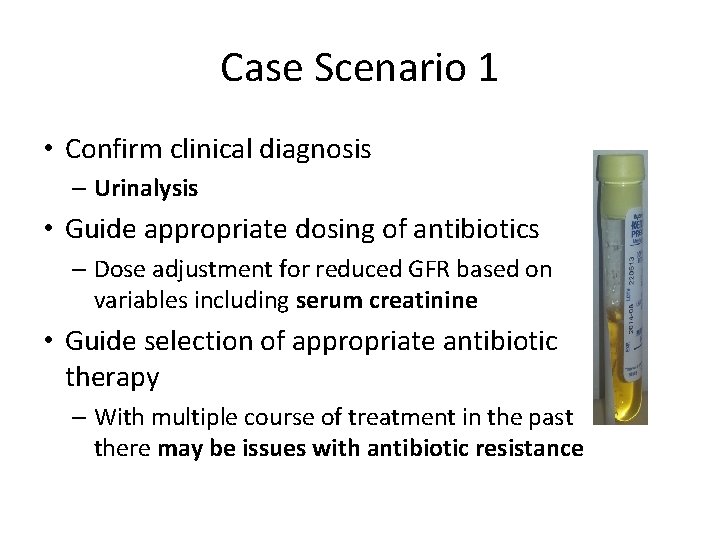
Case Scenario 1 • Confirm clinical diagnosis – Urinalysis • Guide appropriate dosing of antibiotics – Dose adjustment for reduced GFR based on variables including serum creatinine • Guide selection of appropriate antibiotic therapy – With multiple course of treatment in the past there may be issues with antibiotic resistance
What is lab activities? • Today’s clinical laboratory is a complex arena offering an expansive menu of tests which continues to grow. • Hundreds of millions of laboratory tests are performed every year in India.
Role of Lab in Healthcare system? • Total Health Expenditure (THE) for india is estimated at Rs. 4, 83, 259 crores (3. 89% of GDP and Rs. 3, 826 per capita) for the year 2014 15 of which Laboratory and imaging services expenditure is Rs. 21, 058 crores (4. 7% of THE or 0. 16% of GDP).
Role of Lab in Healthcare system? • It is noted in the literature that >70% of the objective data in a patient’s medical record comes from the clinical laboratory.
WHAT is “Laboratory Medicine”? • Laboratory medicine (clinical pathology) is the medical discipline that specializes in the performance, reporting and interpretation of clinical laboratory tests in the provision of high quality patient care.
WHO is “Laboratory Medicine” • Comprised of – Laboratory physicians which includes pathologists, biochemist, microbiologist, histo pathologist, cyto pathologist, hemato pathologist, immuno hematologist, molecular biologist, nuclear medicine expert in in vitro diagnostics etc… – Laboratory scientists, technologists, and technicians, – Laboratory quality officers including quality manager, – Laboratory assistants, Laboratory attendants, – Laboratory equipment engineers etc…
WHO is “Laboratory Medicine” • The laboratory medicine workforce has a vital role in the health care system managing and applying evidence-based, scientific testing techniques to support patient care.
WHO is “Laboratory Medicine” • Each lab may have – one or more laboratory director(s) / Lab in charge(s) / Head of Pathology(ies) / Head of Department(s) and – one or more technical manager(s) /specialist (s) responsible for testing services and – One quality manager of the lab • Some labs require a combined leadership group of 2 3 directors and multiple technical specialists
Types of Technical Areas/ Sections in Lab
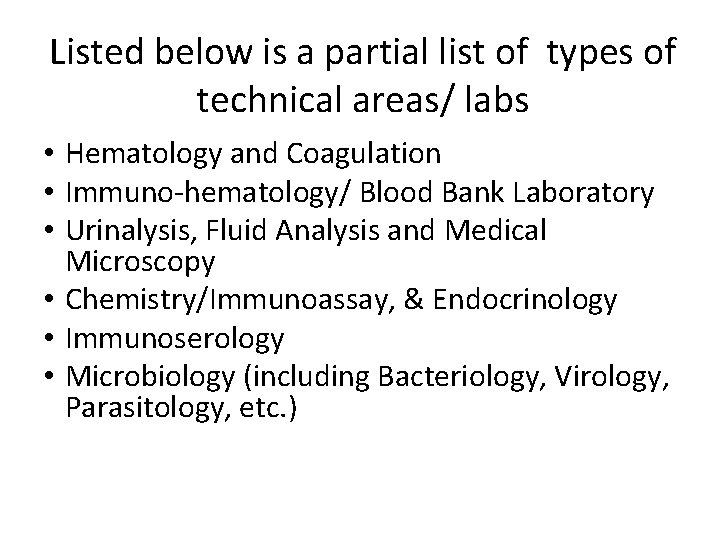
Listed below is a partial list of types of technical areas/ labs • Hematology and Coagulation • Immuno hematology/ Blood Bank Laboratory • Urinalysis, Fluid Analysis and Medical Microscopy • Chemistry/Immunoassay, & Endocrinology • Immunoserology • Microbiology (including Bacteriology, Virology, Parasitology, etc. )
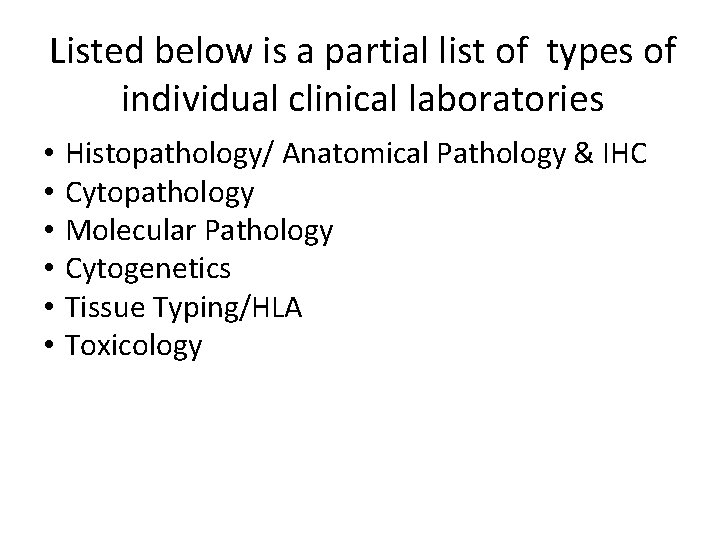
Listed below is a partial list of types of individual clinical laboratories • • • Histopathology/ Anatomical Pathology & IHC Cytopathology Molecular Pathology Cytogenetics Tissue Typing/HLA Toxicology

TYPES OF LABORATORIES
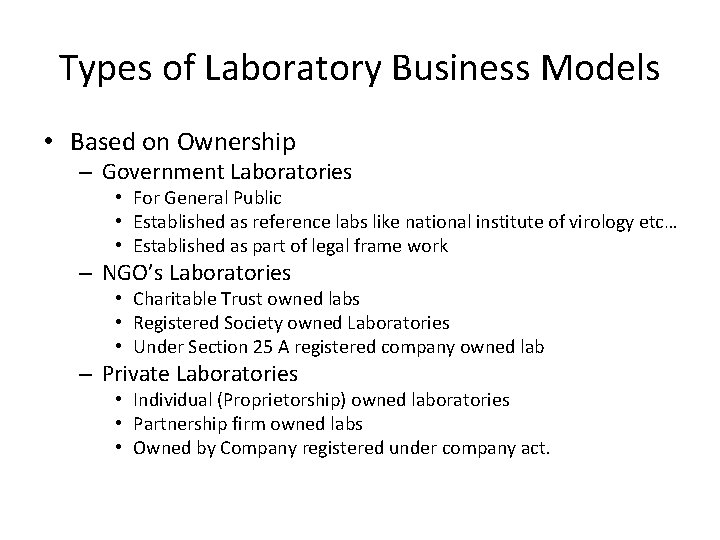
Types of Laboratory Business Models • Based on Ownership – Government Laboratories • For General Public • Established as reference labs like national institute of virology etc… • Established as part of legal frame work – NGO’s Laboratories • Charitable Trust owned labs • Registered Society owned Laboratories • Under Section 25 A registered company owned lab – Private Laboratories • Individual (Proprietorship) owned laboratories • Partnership firm owned labs • Owned by Company registered under company act.
Types of Laboratory Business Models • Based on location/ organizational structure – Stand alone lab – Hospital Based Lab – Part of Chain Lab – Part of CRO
Types of Laboratory Business Models • Based on expertise – Basic Composite Lab (Routine tests) – Routine Biochemistry tests like • Blood Sugar, Renal Function Tests, Liver Function Tests, Amylase, Lipid profile, Cerebro Spinal Fluid (CSF) and other biological fluids (glucose and protein), Oral Glucose Tolerance Test, Electrolytes, Calcium or Phosphate, Hb. A 1 c, any bio chemistry based rapid test. – Routine Hematology tests like • Haemogram, Bleeding Time, Clotting Time, Prothrombin Time, Activated Partial Thromboplastin Time, Blood grouping and matching. – Routine Microbiology tests like • Basic tests like Rapid Test (Point of Care tests) for infection, urine routine examination and microscopy, Hanging drop for Vibrio cholerae, Stool for ova , cyst.
Types of Laboratory Business Models • Based on expertise – Medium Level labs (Specialized tests as defined in clinical establishment act) • Biochemistry tests like Hormone Bioassay, Tumor markers, plasma protein electrophoresis • Hematology tests like Coagulation Assay • Cytopathology tests like PAP smear, Fine Needle Aspiration Cytology(FNAC), sputum and CSF cytology • Microbiology tests like (a)Serological tests for viruses, bacteria, fungi, parasites (b)Cultural Sensitivity tests: Bacterial or fungal (c)Other special stains besides Gram's stain.
Types of Laboratory Business Models • Based on expertise – Advanced Lab – Biochemistry tests like • Coagulation profile, Drug monitoring and toxicology assay, • Molecular genetics, tests for detection of inborn errors of metabolism All other Haematology tests also. Histopathology Examination, Immunohisto chemistry, Molecular genetics Cytopathology tests like Immuno Cytochemistry. Other biological fluid cytology; Ultrasound or CT guided FNAC. – Microbiology tests like – – • Culture sensitivity tests for viruses. • Real Time Polymerase Chain Reaction (RTPCR) tests. • Tissue diagnosis test for infectious diseases.
Who governs Laboratory? • State laws govern laboratory services in India. • National laws are providing guidance to create state laws. • In Gujarat, Clinical Establishment Act passed by Gujarat Assembly regulates laboratory services.
Who governs Laboratory? • Other laws like Indian Medical Act, and • National Health Mission, • Ministry of Health & Family welfare and health education also contributes in regulating laboratory practices in Gujarat & India

ADDITIONAL TERMS
“Reference lab” – In our medical center the lab tests performed at reference labs are often called “send out labs” • Clinical reference laboratories provide testing services for patients and healthcare providers • The labs performed are generally specialized tests that are infrequently ordered or that require specialized equipment
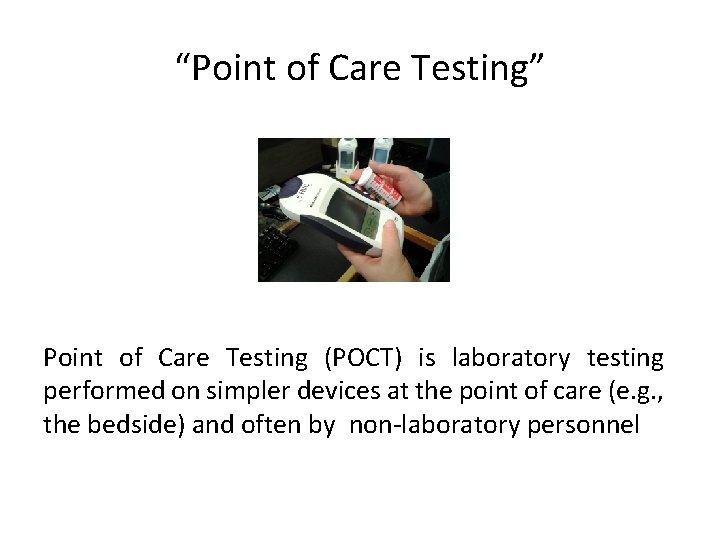
“Point of Care Testing” Point of Care Testing (POCT) is laboratory testing performed on simpler devices at the point of care (e. g. , the bedside) and often by non laboratory personnel
What is the Point of “POCT”? • The key objective of POCT is to produce a result more quickly – Therefore the utility of POCT is in the immediacy of response and effect on medical decision making • Due to advances in technology, clinical needs and a number of other factors, POCT may be the most rapidly growing segment of laboratory testing worldwide
What POCT is available for the following patients? • 24 year old woman with amenorrhea x 2 months? – Urine HCG • 42 year old man with diabetes mellitus? – Glucose, Hgb. A 1 c, urine microalbumin • 63 year old woman with atrial fibrillation on warfarin – INR • 78 year old man presenting to the ED with 10/10 crushing chest pain – Troponin
Case Scenario 2 • A 5 year old boy is at his physician’s office with fever, sore throat and severe pain with swallowing x 2 days. • On physical exam his temperature is 390 C. There is tonsillar erythema and swelling with white exudates. • What point of care test do you think was performed? – A rapid Streptococcal antigen test • The test is positive. How does this impact the care of the patient? – Appropriate antibiotics are prescribed • What if the test were negative? – The physician understands the sensitivity and predictive value of the rapid antigen test. If the clinical suspicion for Streptococcal pharyngitis is high a throat culture would be submitted
Case Scenario 3 • A 5 year old boy is at his physician’s office with low grade fevers, sore throat, runny nose, watery eyes for the past week. • On physical exam he is afebrile. There is minimal tonsillar swelling and erythema without exudates. The boy’s parents insist that he be treated with antibiotics. • The physician has a low clinical suspicion for Streptococcal pharyngitis but does perform a POCT Strep antigen screen. The result is negative. How does this impact patient care? – Support to not provide unnecessary antibiotic therapy for what is likely a viral upper respiratory tract infection
HISTORY OF LABORATORY TESTS
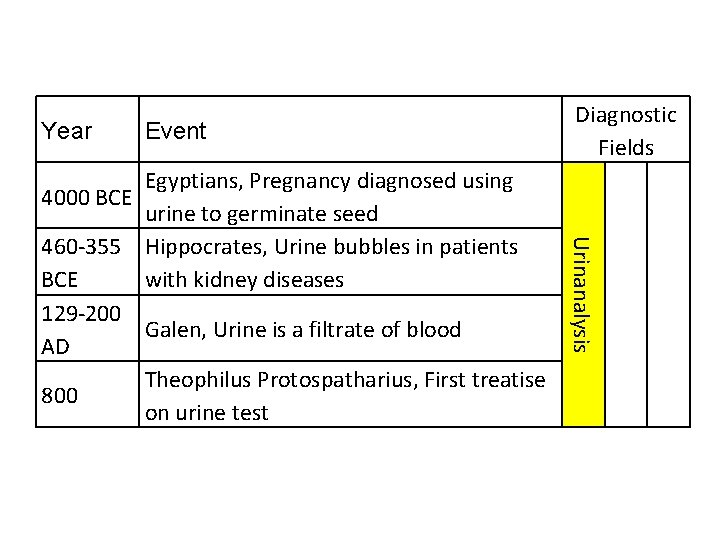
Year Event Urinanalysis Egyptians, Pregnancy diagnosed using 4000 BCE urine to germinate seed 460 355 Hippocrates, Urine bubbles in patients BCE with kidney diseases 129 200 Galen, Urine is a filtrate of blood AD Theophilus Protospatharius, First treatise 800 on urine test Diagnostic Fields
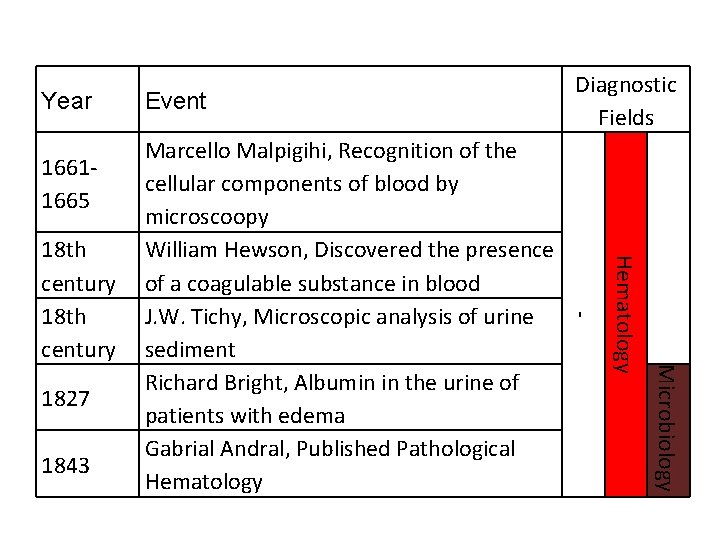
Year 1661 1665 Microbiology 1843 Hematology 1827 Marcello Malpigihi, Recognition of the cellular components of blood by microscoopy William Hewson, Discovered the presence of a coagulable substance in blood J. W. Tichy, Microscopic analysis of urine sediment Richard Bright, Albumin in the urine of patients with edema Gabrial Andral, Published Pathological Hematology 18 th century Event Diagnostic Fields
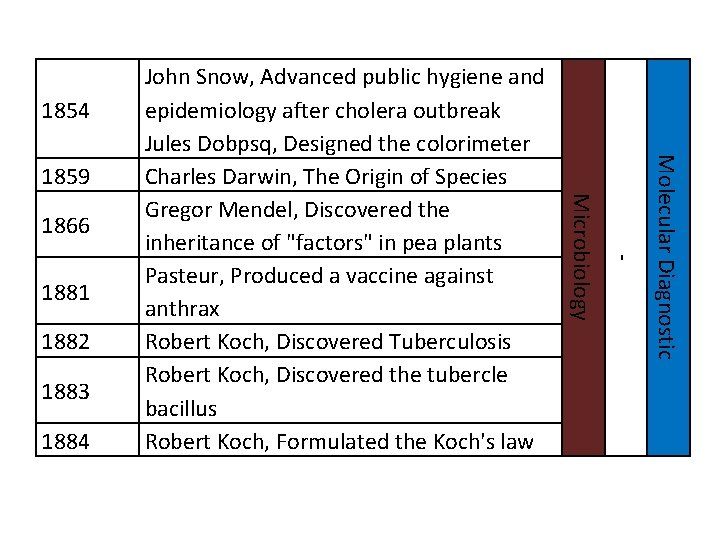
1854 1882 1883 1884 1881 Microbiology 1866 Molecular Diagnostic 1859 John Snow, Advanced public hygiene and epidemiology after cholera outbreak Jules Dobpsq, Designed the colorimeter Charles Darwin, The Origin of Species Gregor Mendel, Discovered the inheritance of "factors" in pea plants Pasteur, Produced a vaccine against anthrax Robert Koch, Discovered Tuberculosis Robert Koch, Discovered the tubercle bacillus Robert Koch, Formulated the Koch's law
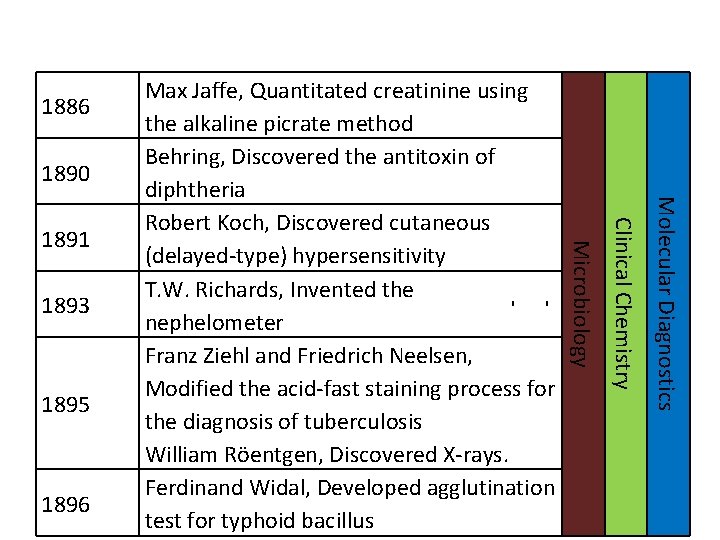
1886 1890 1896 Molecular Diagnostics 1895 Clinical Chemistry 1893 Microbiology 1891 Max Jaffe, Quantitated creatinine using the alkaline picrate method Behring, Discovered the antitoxin of diphtheria Robert Koch, Discovered cutaneous (delayed type) hypersensitivity T. W. Richards, Invented the nephelometer Franz Ziehl and Friedrich Neelsen, Modified the acid fast staining process for the diagnosis of tuberculosis William Röentgen, Discovered X rays. Ferdinand Widal, Developed agglutination test for typhoid bacillus
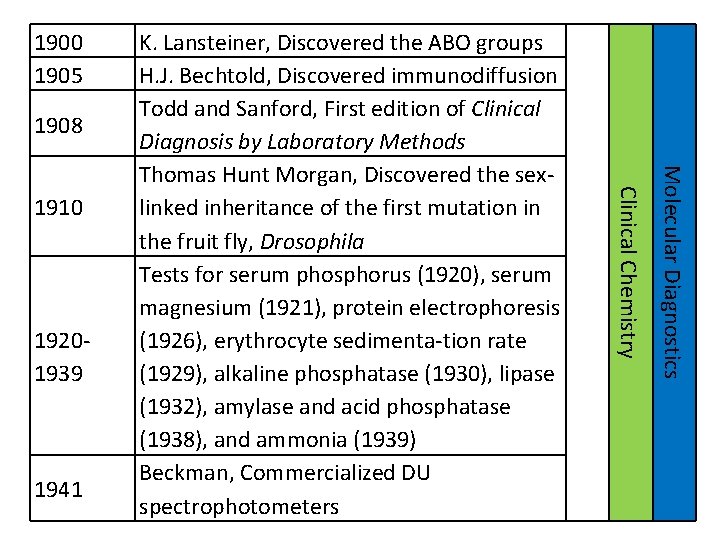
1900 1905 1908 1941 Molecular Diagnostics 1920 1939 Clinical Chemistry 1910 K. Lansteiner, Discovered the ABO groups H. J. Bechtold, Discovered immunodiffusion Todd and Sanford, First edition of Clinical Diagnosis by Laboratory Methods Thomas Hunt Morgan, Discovered the sex linked inheritance of the first mutation in the fruit fly, Drosophila Tests for serum phosphorus (1920), serum magnesium (1921), protein electrophoresis (1926), erythrocyte sedimenta tion rate (1929), alkaline phosphatase (1930), lipase (1932), amylase and acid phosphatase (1938), and ammonia (1939) Beckman, Commercialized DU spectrophotometers
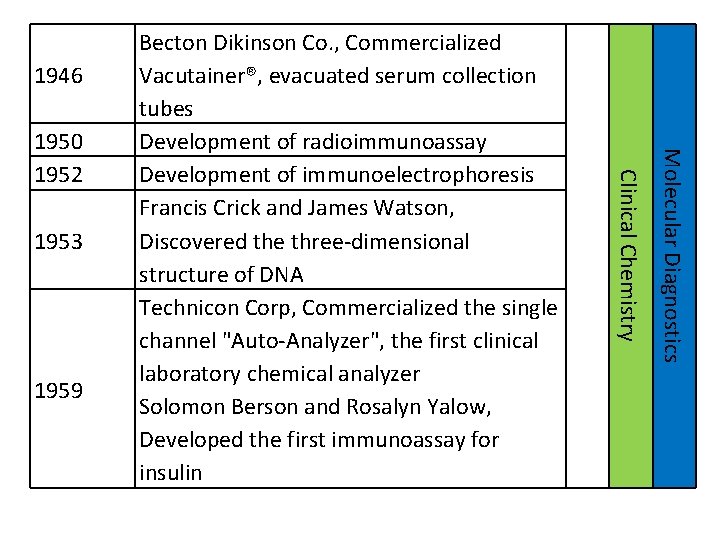
1946 1959 Molecular Diagnostics 1953 Clinical Chemistry 1950 1952 Becton Dikinson Co. , Commercialized Vacutainer®, evacuated serum collection tubes Development of radioimmunoassay Development of immunoelectrophoresis Francis Crick and James Watson, Discovered the three dimensional structure of DNA Technicon Corp, Commercialized the single channel "Auto Analyzer", the first clinical laboratory chemical analyzer Solomon Berson and Rosalyn Yalow, Developed the first immunoassay for insulin
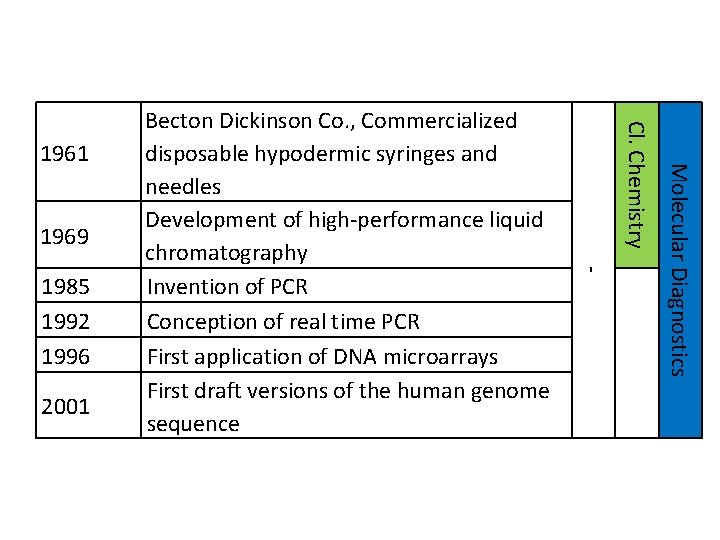
2001 1985 1992 1996 Molecular Diagnostics 1969 Cl. Chemistry 1961 Becton Dickinson Co. , Commercialized disposable hypodermic syringes and needles Development of high performance liquid chromatography Invention of PCR Conception of real time PCR First application of DNA microarrays First draft versions of the human genome sequence
- Slides: 38