
Introduction to Meal Equivalents Choosing a Scale A





- Slides: 11
Introduction to Meal Equivalents
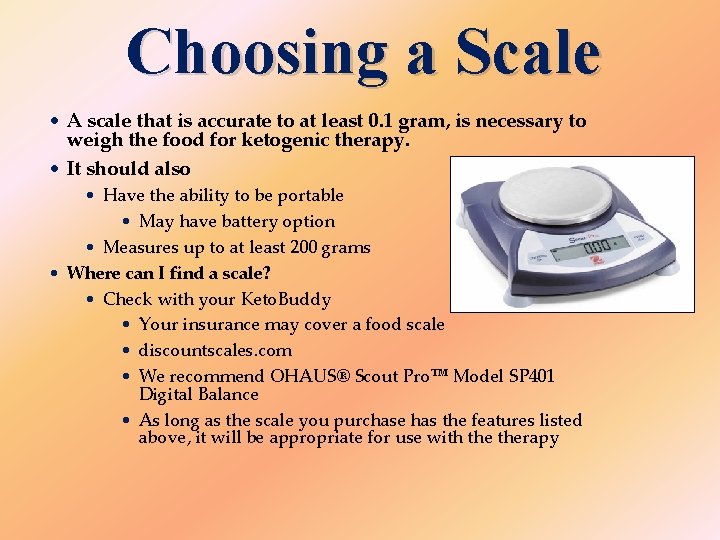
Choosing a Scale • A scale that is accurate to at least 0. 1 gram, is necessary to weigh the food for ketogenic therapy. • It should also • Have the ability to be portable • May have battery option • Measures up to at least 200 grams • Where can I find a scale? • Check with your Keto. Buddy • Your insurance may cover a food scale • discountscales. com • We recommend OHAUS® Scout Pro™ Model SP 401 Digital Balance • As long as the scale you purchase has the features listed above, it will be appropriate for use with therapy
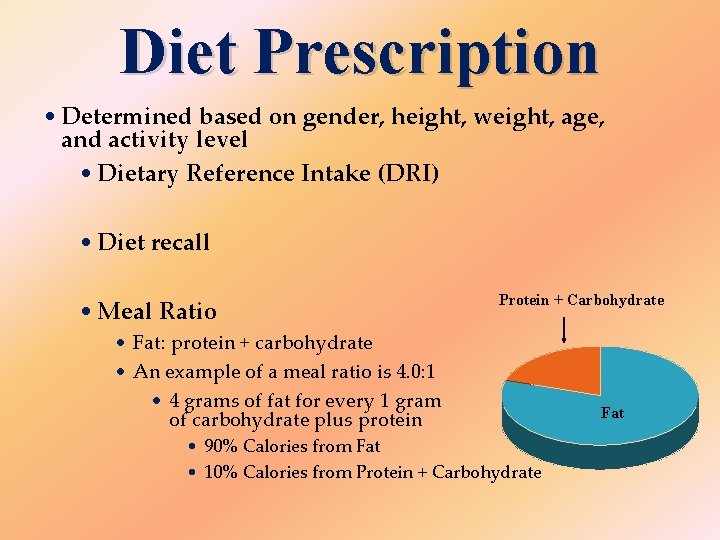
Diet Prescription • Determined based on gender, height, weight, age, and activity level • Dietary Reference Intake (DRI) • Diet recall • Meal Ratio Protein + Carbohydrate • Fat: protein + carbohydrate • An example of a meal ratio is 4. 0: 1 • 4 grams of fat for every 1 gram of carbohydrate plus protein • 90% Calories from Fat • 10% Calories from Protein + Carbohydrate Fat
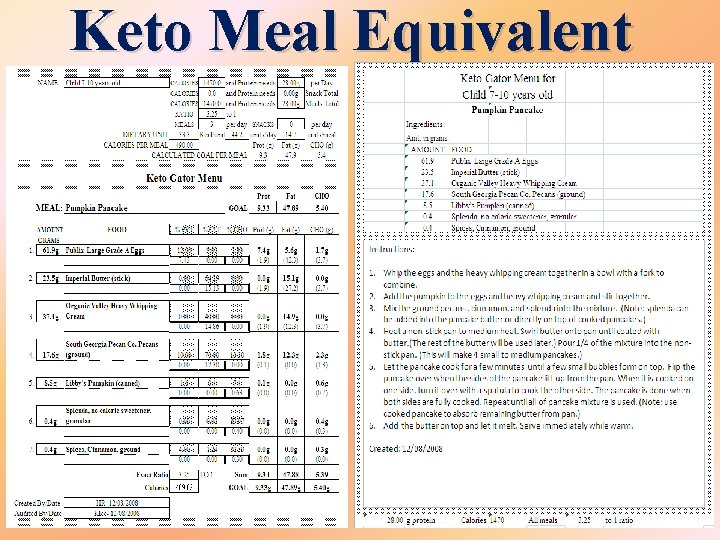
Keto Meal Equivalent
Tube-feeding Products • Keto. Cal® • Microlipid® (safflower oil emulsion) • MCT Oil • Ross Carbohydrate Free (RCF)® • Resource Beneprotein® • Polycose® • Other oils from the grocery store • • • Canola oil Olive oil Safflower oil Coconut oil Flaxseed oil
Healthy Fat Blend • Determined based recommendations of American Heart Association for types of fat • Blend was created with variety of oils to give balanced fat profile • Microlipid® (safflower oil emulsion) • Canola oil • Olive oil • MCT oil • Preliminary study shows a positive effect on blood lipids compared to traditional therapy
General Tips • Vacations • Make some meals ahead of time • Bring foods that may not be accessible • Ask your neurologist for the name of a neurologist near your vacationing location in case of emergency. • Documentation concerning any liquids or other constituents you may be traveling with.
Common Questions • How often does my child have to go to clinic? • How long must my child be on Ketogenic Therapy? • Should I feed my child at the recommended times or whenever my child is hungry? • Can my child have more than 3 meals a day? • What should I do if ketone levels are low? • What should I do if my child becomes too ketotic?
Possible Side Effects of KT • GI disturbances such as diarrhea, constipation, nausea, vomiting. • All of these can be controlled. • Abnormal blood lipids. • From our experience altering the type of fat your child is eating may help alleviate this. • An important note about several of these side effects: Over the past 14 years our Ketogenic Therapy Program has not seen many of these side effects in our patients to the point where they cause complications. However, we want you to be aware of the possible side effects of KT. • If you suspect your child has one of these side effects, contact your Keto. Buddy and/or primary care physician.
What to do if Your Child is Sick While on KT • Call your Keto. Buddy or follow the What to Do If document for sick day management. • Managing sickness while on KT is not any different than managing sickness while not on KT. • Only difference is to try and avoid medications that contain carbohydrate. • “How do I know if my child is presenting symptoms? ” • Try to determine if it is because of the diet or an illness
Remember your Keto. Buddy and the Keto-research team is always available. 10