
Introduction to Mathematical Resilience the growth zone model
![Student experience [the teacher]would shout across the classroom: ‘You can do it! I know](https://slidetodoc.com/presentation_image_h2/37f68a133a48f6539a39afee96939007/image-10.jpg "Student experience [the teacher]would shout across the classroom: ‘You can do it! I know")
- Slides: 20
Introduction to Mathematical Resilience & the growth zone model Sue Johnston-Wilder
Introductions
Aims of this session • To understand why maths anxiety is so prevalent • To begin to understand what we can do about it, for ourselves and our students
Sharing experiences Share your personal experiences of maths learning on the board – put positive experience on the right and negative experiences on the left.
Sharing experiences Negative Positvie
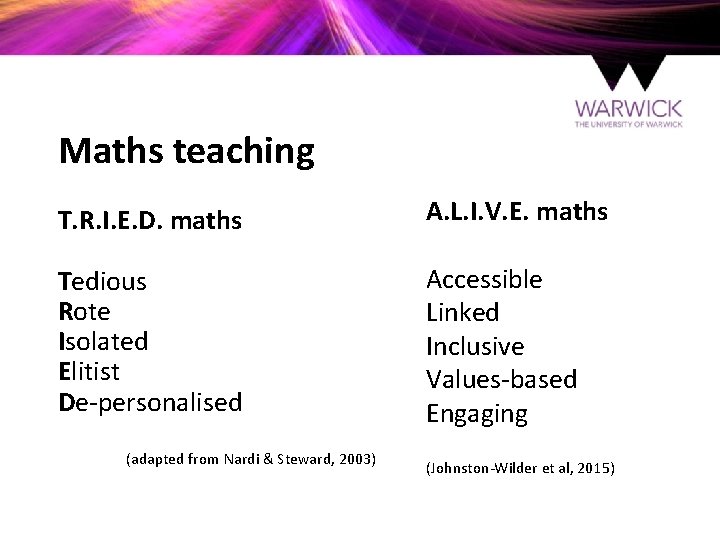
Maths teaching T. R. I. E. D. maths A. L. I. V. E. maths Tedious Rote Isolated Elitist De-personalised Accessible Linked Inclusive Values-based Engaging (adapted from Nardi & Steward, 2003) (Johnston-Wilder et al, 2015)
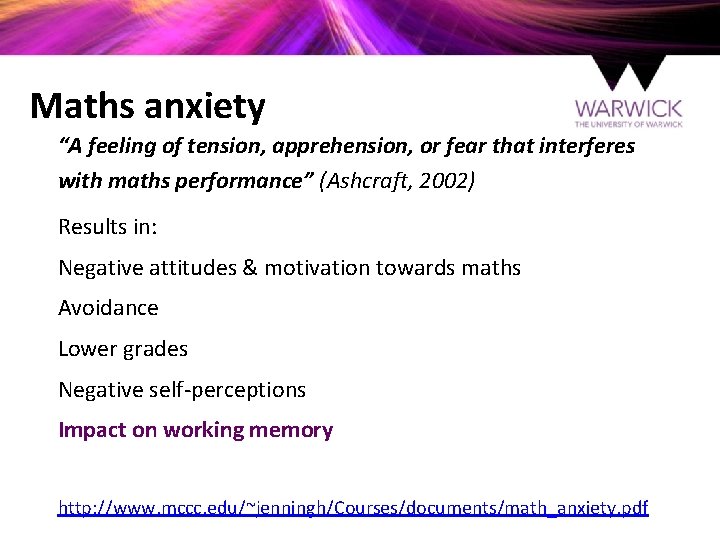
Maths anxiety “A feeling of tension, apprehension, or fear that interferes with maths performance” (Ashcraft, 2002) Results in: Negative attitudes & motivation towards maths Avoidance Lower grades Negative self-perceptions Impact on working memory http: //www. mccc. edu/~jenningh/Courses/documents/math_anxiety. pdf
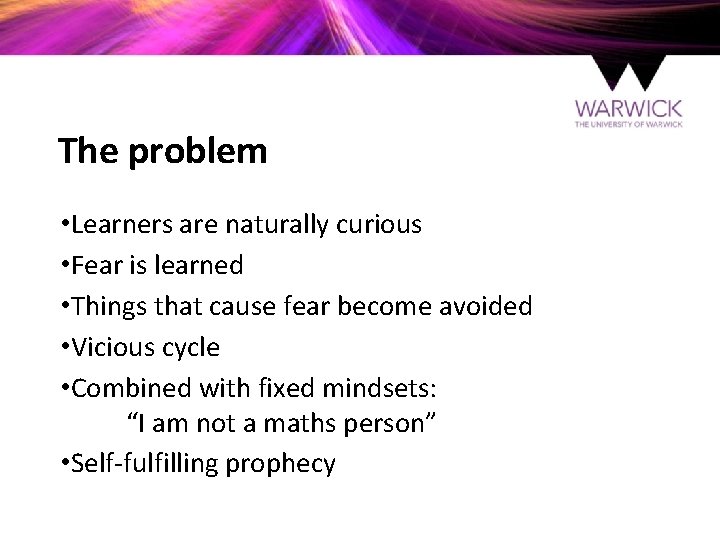
The problem • Learners are naturally curious • Fear is learned • Things that cause fear become avoided • Vicious cycle • Combined with fixed mindsets: “I am not a maths person” • Self-fulfilling prophecy
The facts • As a survival strategy the brain seeks to distinguish challenge from threat to well-being • The brain doesn’t distinguish between physical and social threats, such as being left behind or humiliated or shouted at • Previous threats are remembered • When the brain (sub-consciously) perceives a threat, it responds by fight or flight mode, at least initially
Student experience [the teacher]would shout across the classroom: ‘You can do it! I know you can! (N: 109) [the teacher] would make you stand in front of everyone, and then she would just be, like, “You’re not good, you don’t understand, you’re stupid. (H: 107) I always felt like I was stupid … There were times when I did something, and I knew I’d done it right, but it didn’t make any difference. It didn’t outweigh the other times. (N: 63) Starting maths this year it still gives me chills, (N: 245) ‘Cos even now, you know, that fear of saying ‘Oh I don’t get it! I still don’t get it!’ is still there. (N: 142)
‘It is not just behaviour it is managing fear, it is managing a very deep sense of failure, being rubbish’. ‘In the early stages [of teaching] it’s 90% psychology and only 10% maths’ (Quotations from maths teachers: ETF (2014) ‘Effective Practices in Post-16 Vocational Maths’)
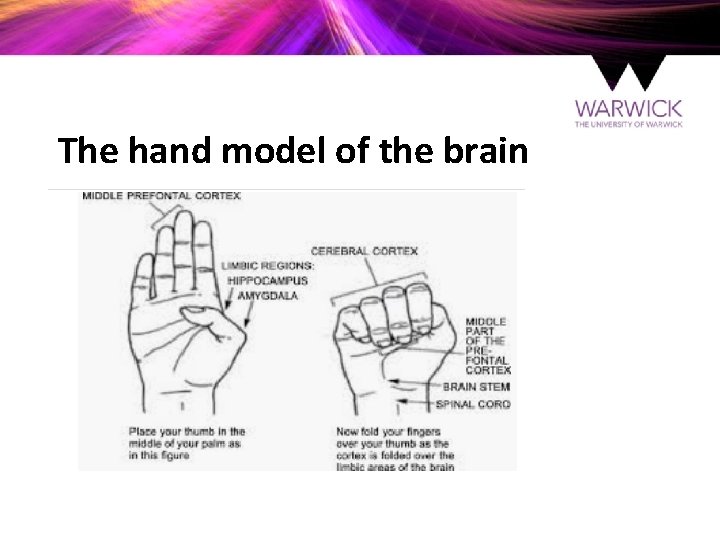
The hand model of the brain
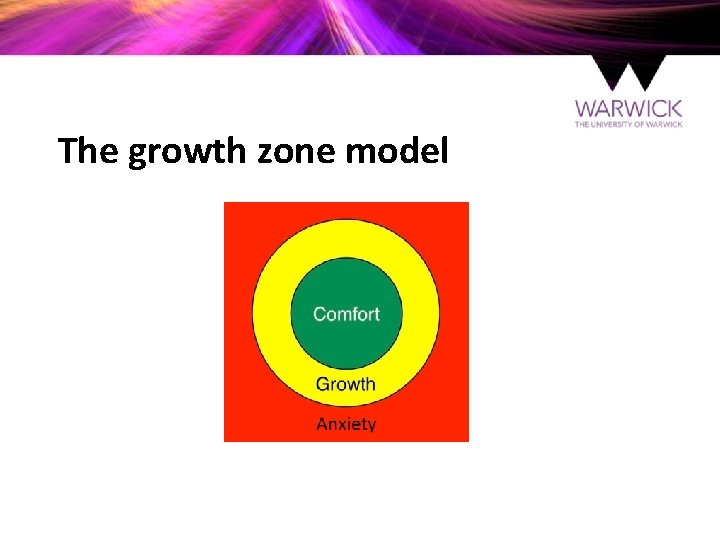
The growth zone model
The growth zone model
The growth zone model • Accept feeling of stupidity in red zone as temporary • How to get out of the red zone? • Building experience of being in and extending the orange zone
Getting out of the red zone • Relaxation response (Benson 2000) • Rest and digest • 5/7 breathing • Focus on 5 things you can hear • Go for a walk • Don’t try to do maths whilst your brain is focused on the “tiger”! • Has anyone met mindfulness? • …
Building the orange zone • Ask questions • Try a simpler example • Support each other • Use the Internet • Expect to get stuck • Expect to make mistakes • Use rough work • . . .
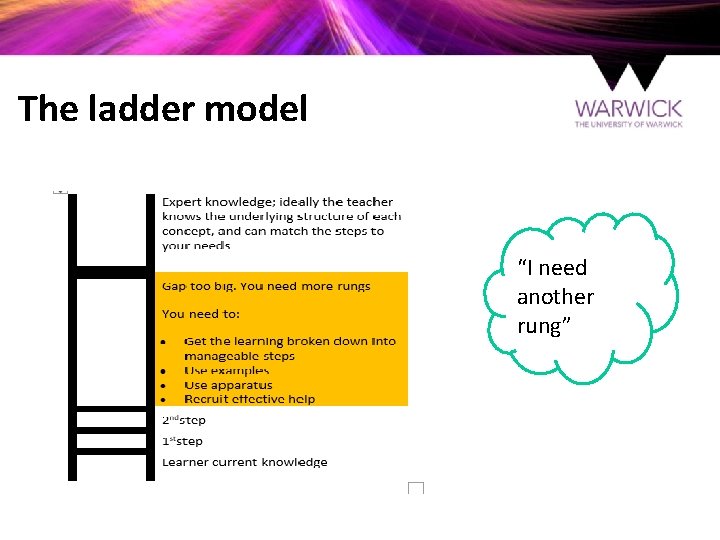
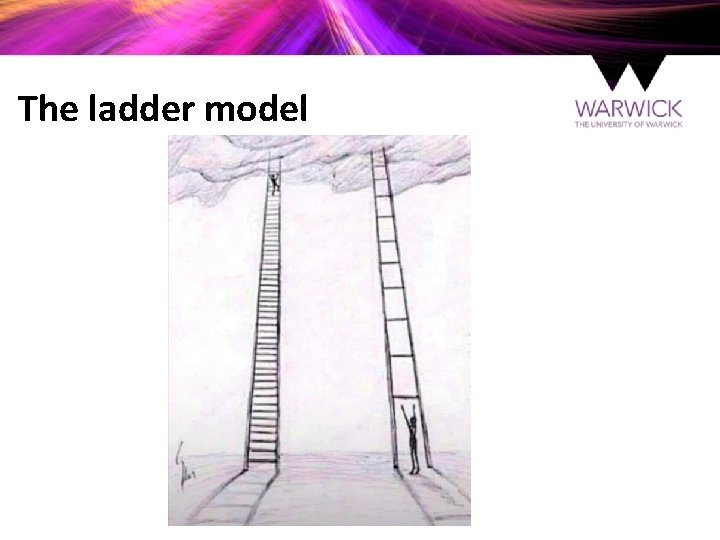
The ladder model To use in the orange zone. “I need another rung”
The ladder model
Tools in practice • Building a shared language for mathematical safeguarding • Red means stop talking and listen! This practice takes a while to develop as a teacher! • Some teachers give each learner a copy of the GZM to use with a coin • Some teachers give learners opportunity to write their own words for the feelings in each zone • How would you use the tools in your own practice?