
Introduction to Manufacturing Processes Pt 1 Principles Of
- Slides: 28
Introduction to Manufacturing Processes Pt. 1 Principles Of Engineering © 2012 Project Lead The Way, Inc.
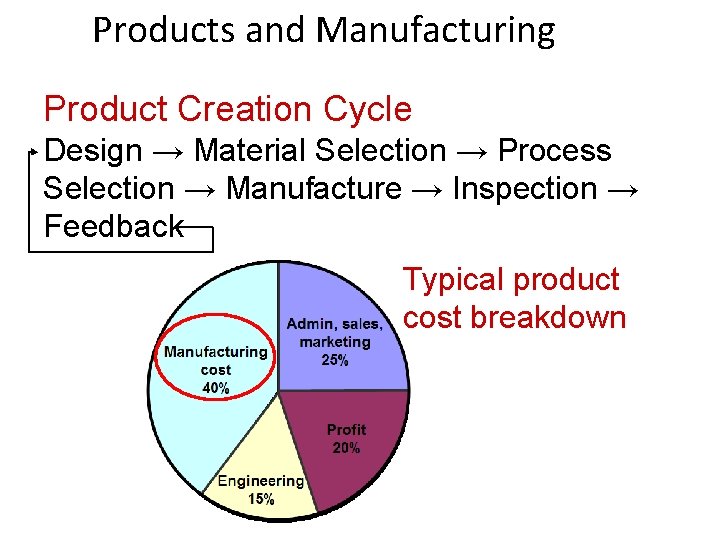
Products and Manufacturing Product Creation Cycle Design → Material Selection → Process Selection → Manufacture → Inspection → Feedback Typical product cost breakdown
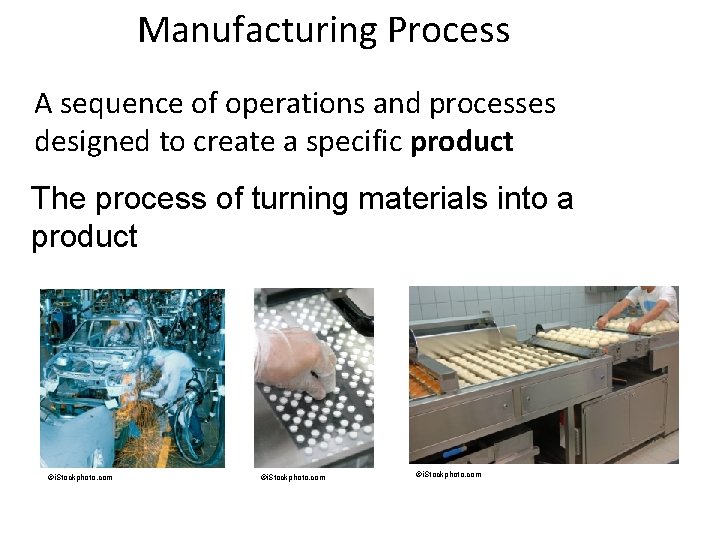
Manufacturing Process A sequence of operations and processes designed to create a specific product The process of turning materials into a product ©i. Stockphoto. com
Engineers in Manufacturing Engineer Select and coordinate specific processes and equipment Industrial Engineer Responsible for the manufacturing system design Materials Engineer Develop and select materials based on desired material properties and manufacturing processes
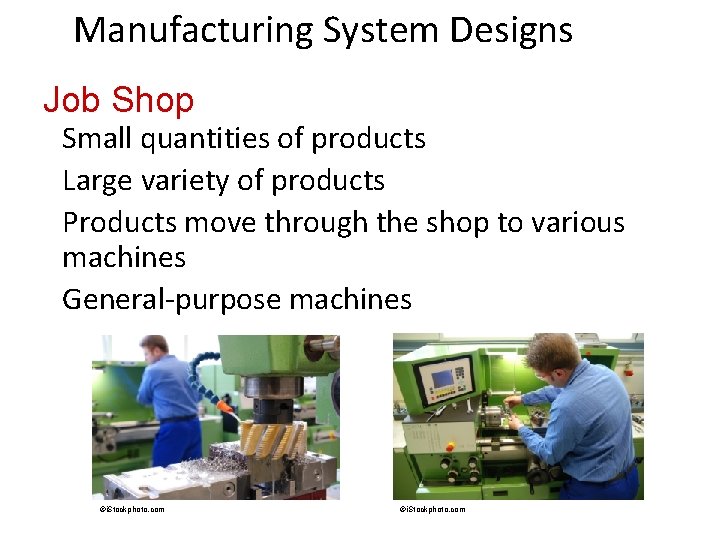
Manufacturing System Designs Job Shop Small quantities of products Large variety of products Products move through the shop to various machines General-purpose machines ©i. Stockphoto. com
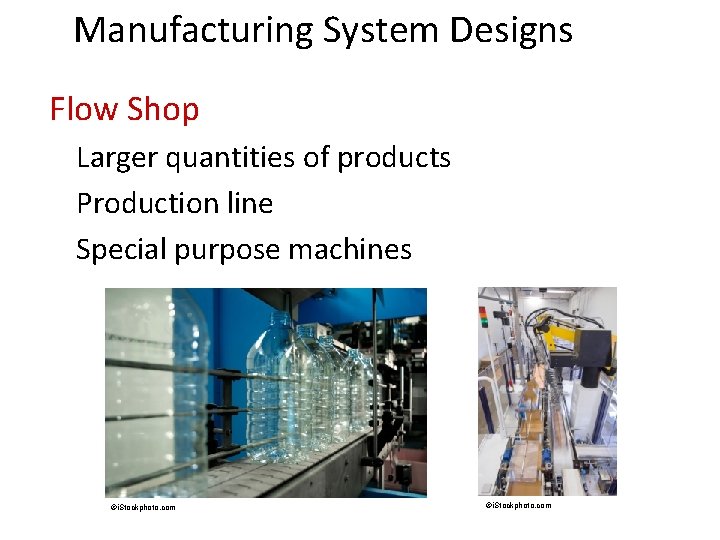
Manufacturing System Designs Flow Shop Larger quantities of products Production line Special purpose machines ©i. Stockphoto. com
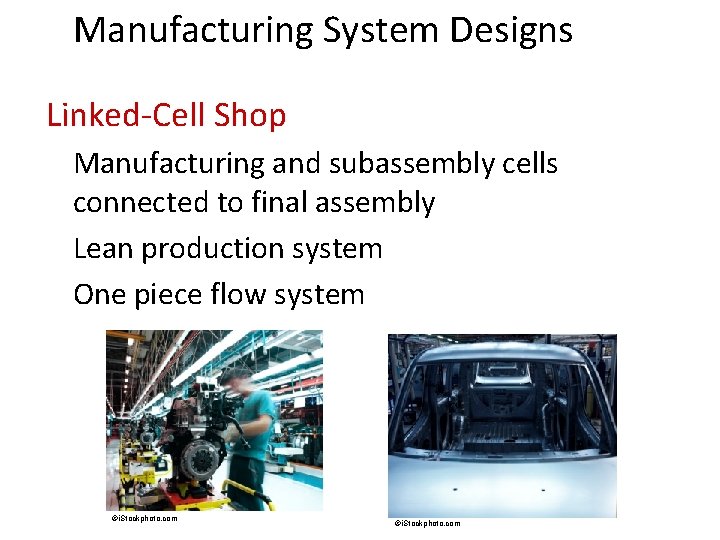
Manufacturing System Designs Linked-Cell Shop Manufacturing and subassembly cells connected to final assembly Lean production system One piece flow system ©i. Stockphoto. com
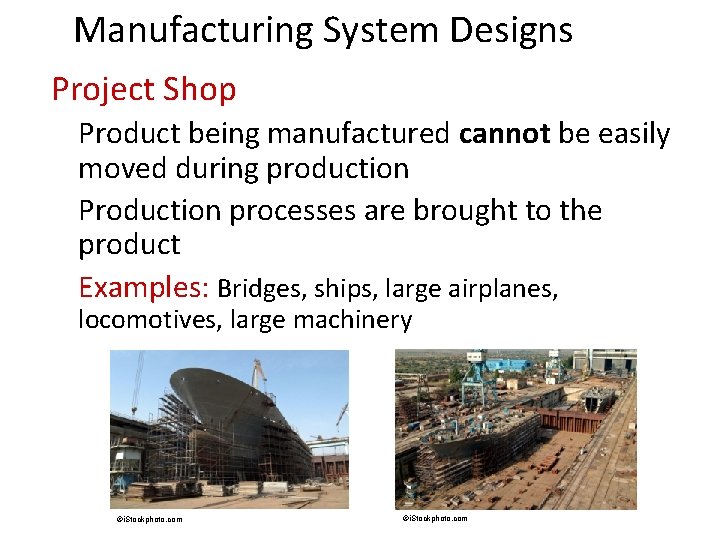
Manufacturing System Designs Project Shop Product being manufactured cannot be easily moved during production Production processes are brought to the product Examples: Bridges, ships, large airplanes, locomotives, large machinery ©i. Stockphoto. com
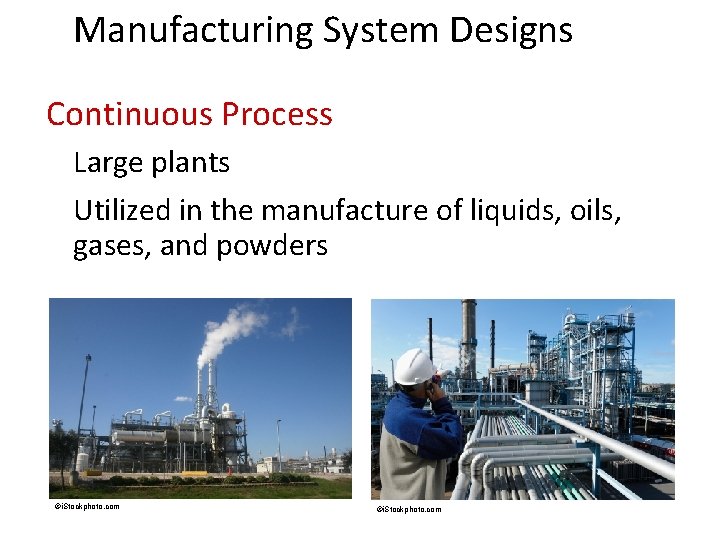
Manufacturing System Designs Continuous Process Large plants Utilized in the manufacture of liquids, oils, gases, and powders ©i. Stockphoto. com
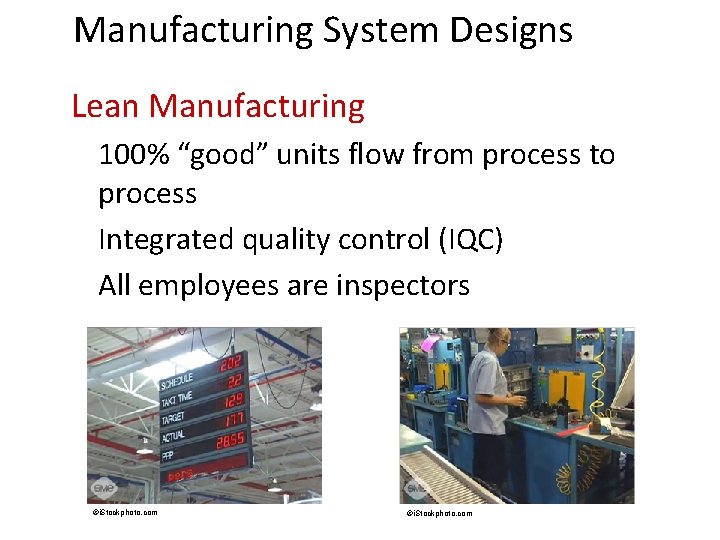
Manufacturing System Designs Lean Manufacturing 100% “good” units flow from process to process Integrated quality control (IQC) All employees are inspectors ©i. Stockphoto. com
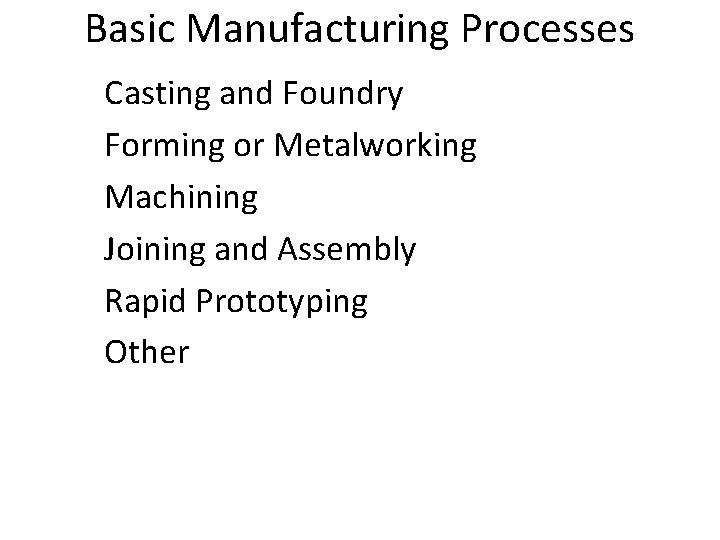
Basic Manufacturing Processes Casting and Foundry Forming or Metalworking Machining Joining and Assembly Rapid Prototyping Other
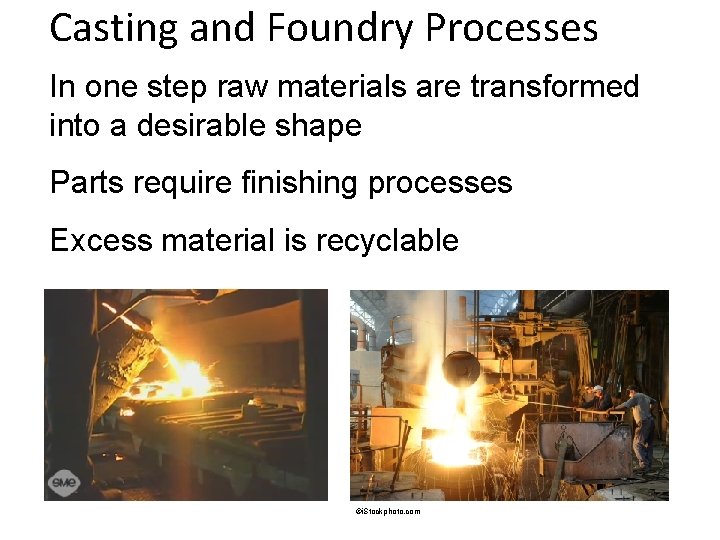
Casting and Foundry Processes In one step raw materials are transformed into a desirable shape Parts require finishing processes Excess material is recyclable ©i. Stockphoto. com
Basic Casting Process A mold is created – A cavity that holds the molten material in a desired shape until it is solidified Multiple-use mold Single-use molds Material is heated to a specified temperature Molten material is poured into a mold cavity Molten material solidifies into the shape of the cavity Casting or mold is removed Casting is cleaned, finished, and inspected
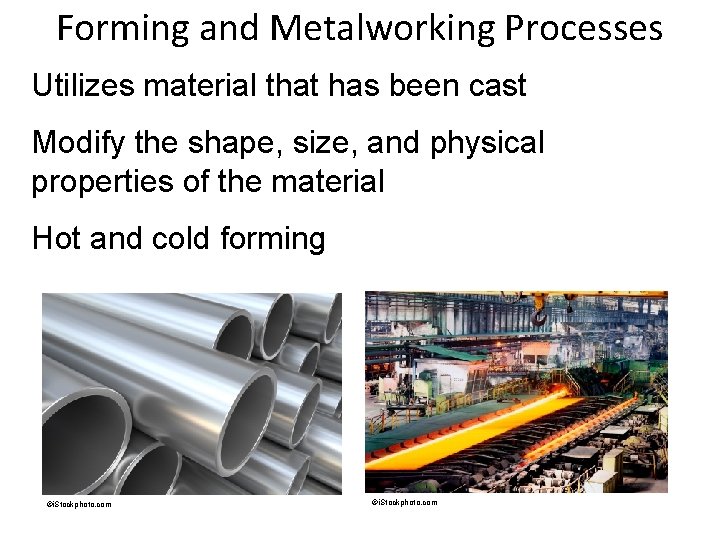
Forming and Metalworking Processes Utilizes material that has been cast Modify the shape, size, and physical properties of the material Hot and cold forming ©i. Stockphoto. com
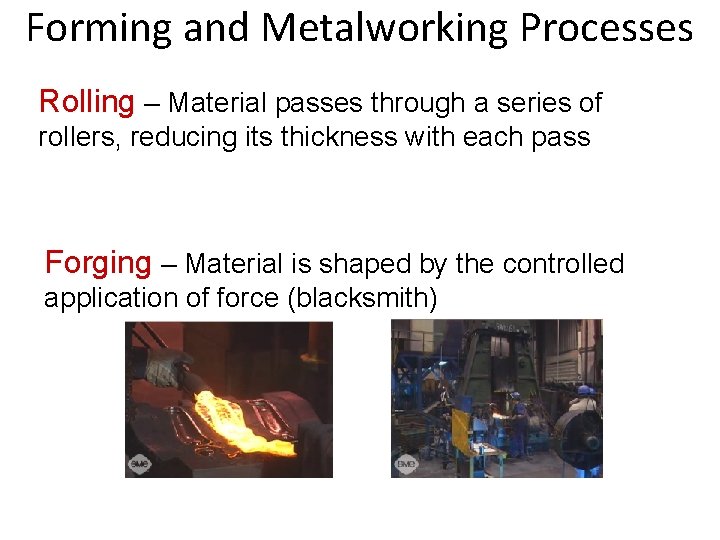
Forming and Metalworking Processes Rolling – Material passes through a series of rollers, reducing its thickness with each pass Forging – Material is shaped by the controlled application of force (blacksmith)
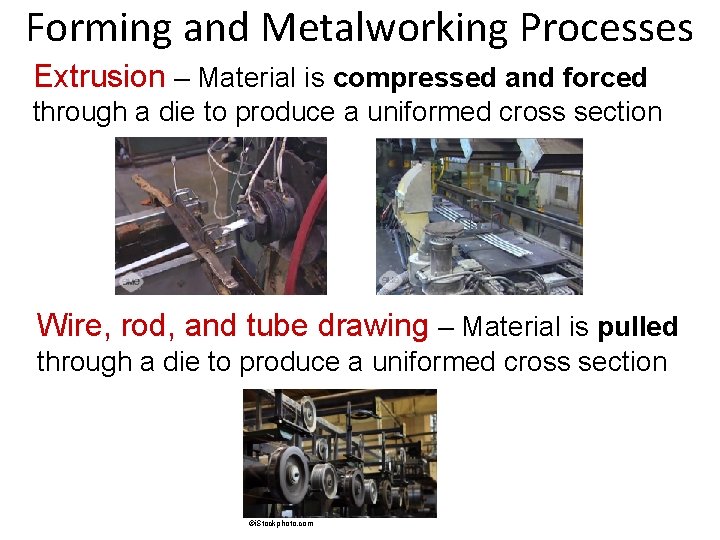
Forming and Metalworking Processes Extrusion – Material is compressed and forced through a die to produce a uniformed cross section Wire, rod, and tube drawing – Material is pulled through a die to produce a uniformed cross section ©i. Stockphoto. com
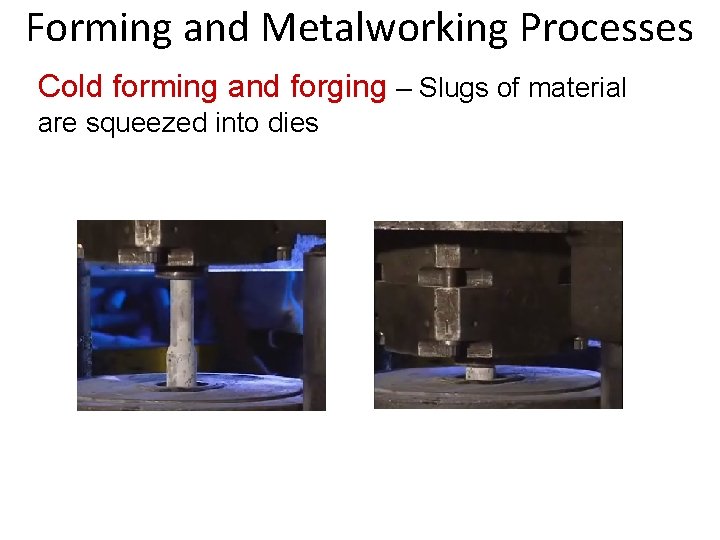
Forming and Metalworking Processes Cold forming and forging – Slugs of material are squeezed into dies
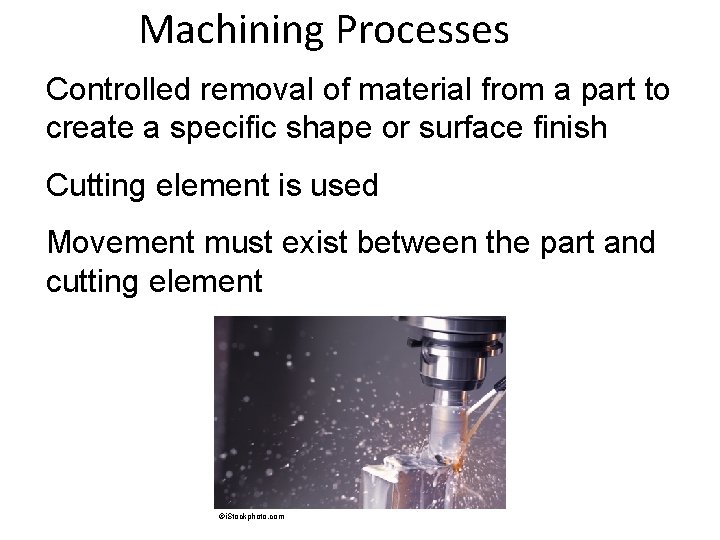
Machining Processes Controlled removal of material from a part to create a specific shape or surface finish Cutting element is used Movement must exist between the part and cutting element ©i. Stockphoto. com
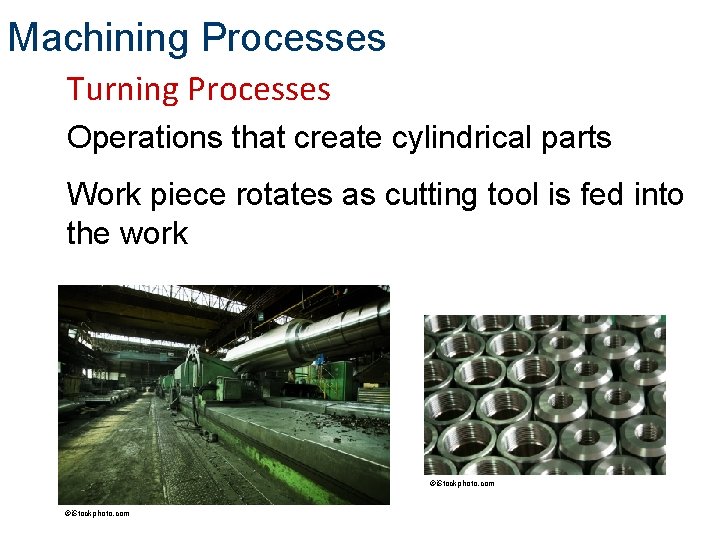
Machining Processes Turning Processes Operations that create cylindrical parts Work piece rotates as cutting tool is fed into the work ©i. Stockphoto. com
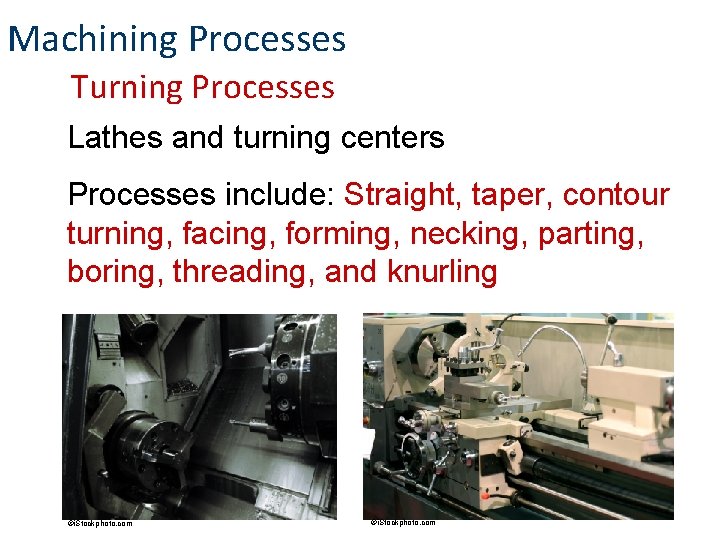
Machining Processes Turning Processes Lathes and turning centers Processes include: Straight, taper, contour turning, facing, forming, necking, parting, boring, threading, and knurling ©i. Stockphoto. com
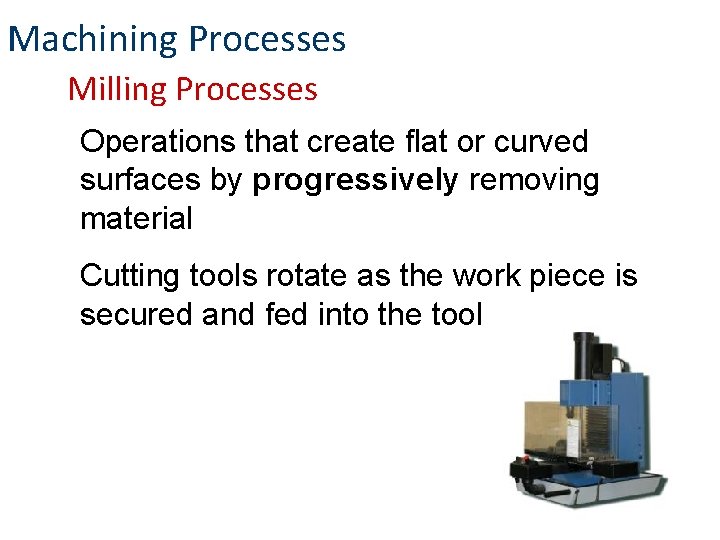
Machining Processes Milling Processes Operations that create flat or curved surfaces by progressively removing material Cutting tools rotate as the work piece is secured and fed into the tool
Machining Processes Mills – Vertical and horizontal Processes include: Surfacing, shaping, forming, slotting, T-slotting, angle, straddle, dovetailing, and slab milling
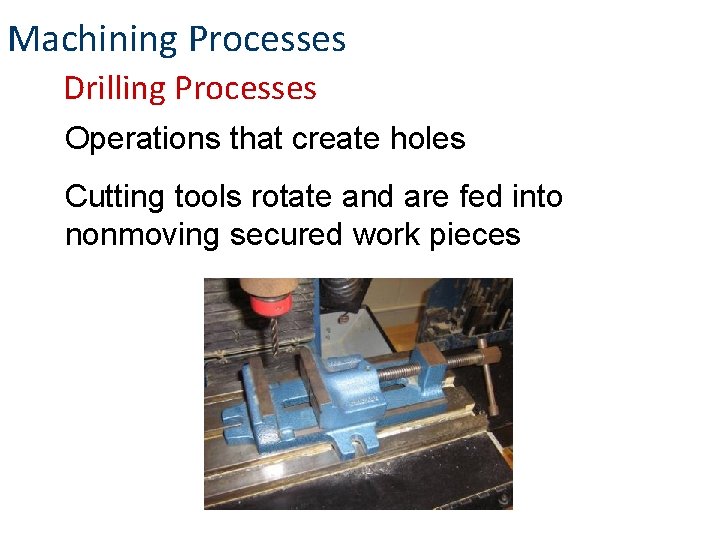
Machining Processes Drilling Processes Operations that create holes Cutting tools rotate and are fed into nonmoving secured work pieces
Machining Processes Drilling and boring machines Processes include: Drilling, counter drilling, step drilling, boring, countersinking, reaming, spot facing, and tapping
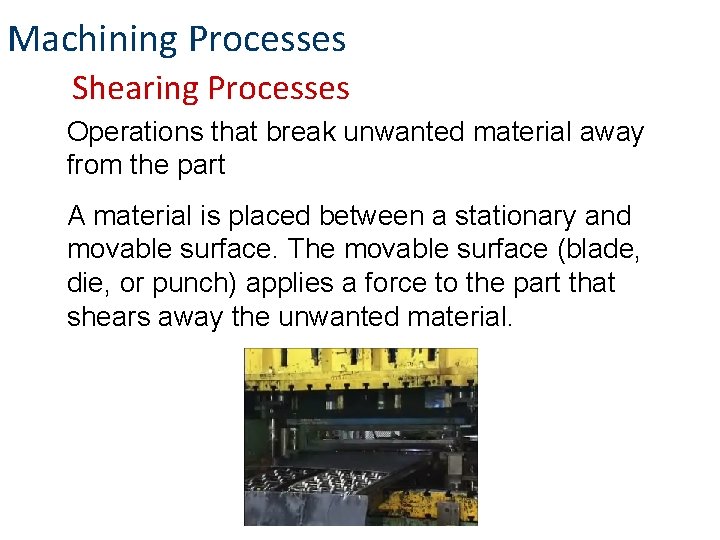
Machining Processes Shearing Processes Operations that break unwanted material away from the part A material is placed between a stationary and movable surface. The movable surface (blade, die, or punch) applies a force to the part that shears away the unwanted material.
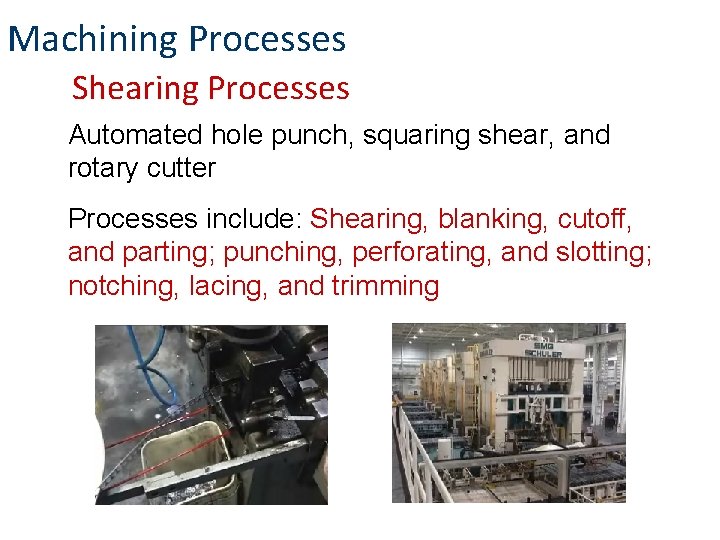
Machining Processes Shearing Processes Automated hole punch, squaring shear, and rotary cutter Processes include: Shearing, blanking, cutoff, and parting; punching, perforating, and slotting; notching, lacing, and trimming
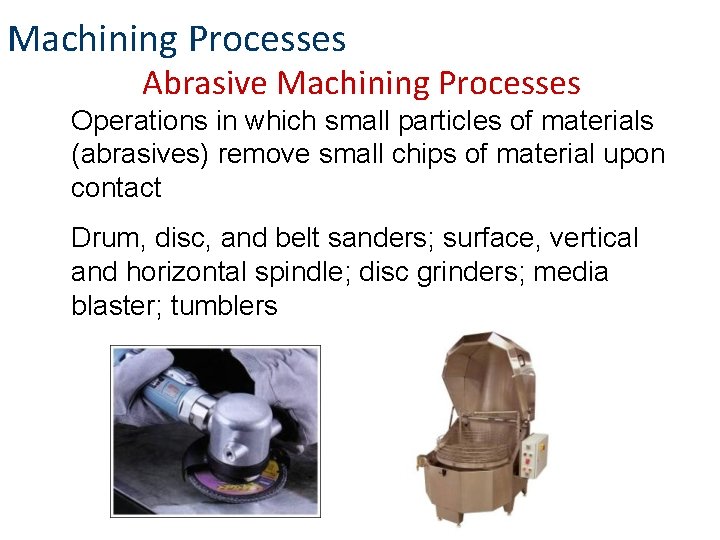
Machining Processes Abrasive Machining Processes Operations in which small particles of materials (abrasives) remove small chips of material upon contact Drum, disc, and belt sanders; surface, vertical and horizontal spindle; disc grinders; media blaster; tumblers
Machining Processes Thermal and Chemical Processes Operations that cut and shape materials through chemical means No mechanical force is used Electrical discharge, electrochemical, laser, electron beam, flame cutting, and plasma-arc cutting Processes include: Grinding, sawing, cutting, machining, milling, blanking, and etching