
INTRODUCTION TO MANUFACTURING Mechanical Behavior Testing and Properties
INTRODUCTION TO MANUFACTURING Mechanical Behavior, Testing, and Properties of Materials (l. u. 2 -2 -10)
Material Behavior � Most manufacturing operations = Mechanical deformation of materials � Materials may behave/respond to the applied forces � In use, a part/product may be subjected to external forces that affect performance � Various tests help determine response/behavior Engr 241 1
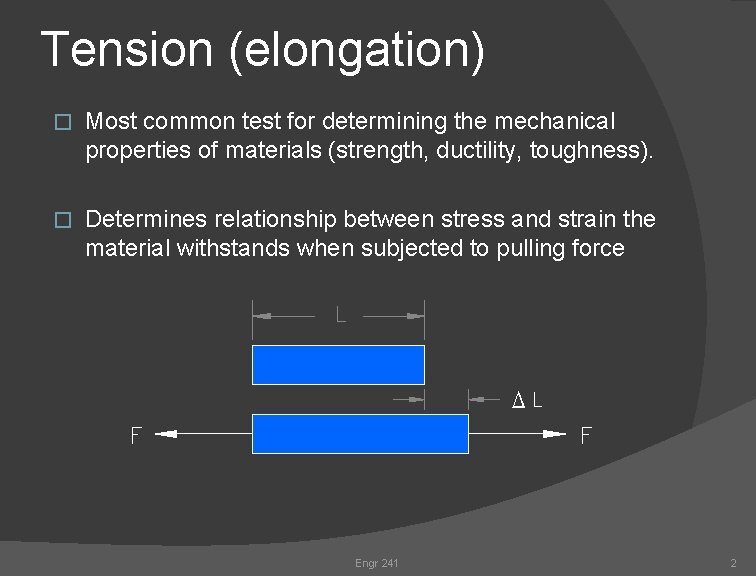
Tension (elongation) � Most common test for determining the mechanical properties of materials (strength, ductility, toughness). � Determines relationship between stress and strain the material withstands when subjected to pulling force Engr 241 2
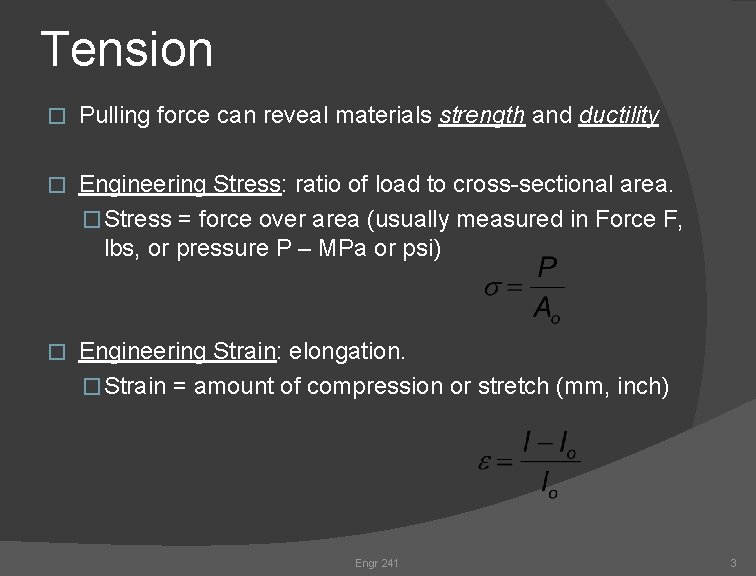
Tension � Pulling force can reveal materials strength and ductility � Engineering Stress: ratio of load to cross-sectional area. �Stress = force over area (usually measured in Force F, lbs, or pressure P – MPa or psi) � Engineering Strain: elongation. �Strain = amount of compression or stretch (mm, inch) Engr 241 3
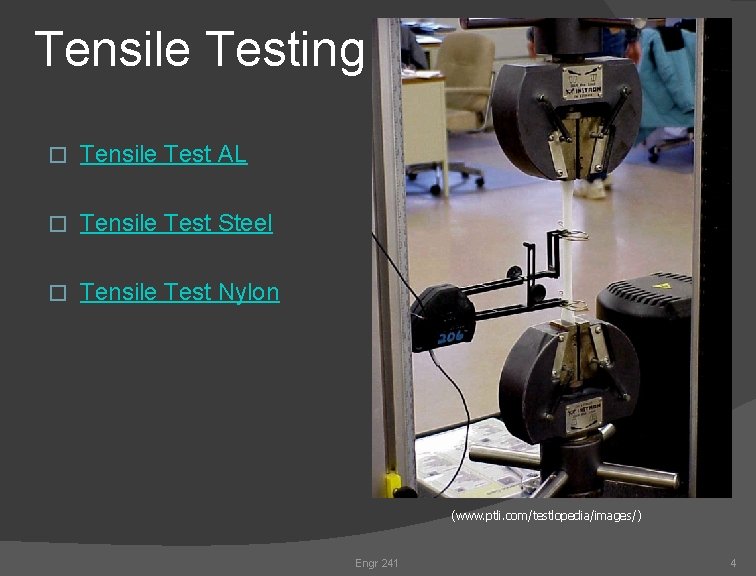
Tensile Testing � Tensile Test AL � Tensile Test Steel � Tensile Test Nylon (www. ptli. com/testlopedia/images/) Engr 241 4
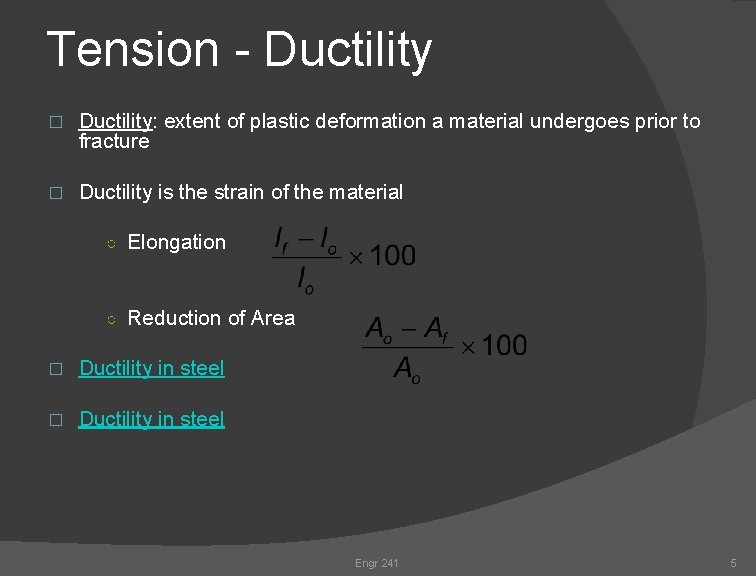
Tension - Ductility � Ductility: extent of plastic deformation a material undergoes prior to fracture � Ductility is the strain of the material ○ Elongation ○ Reduction of Area � Ductility in steel Engr 241 5
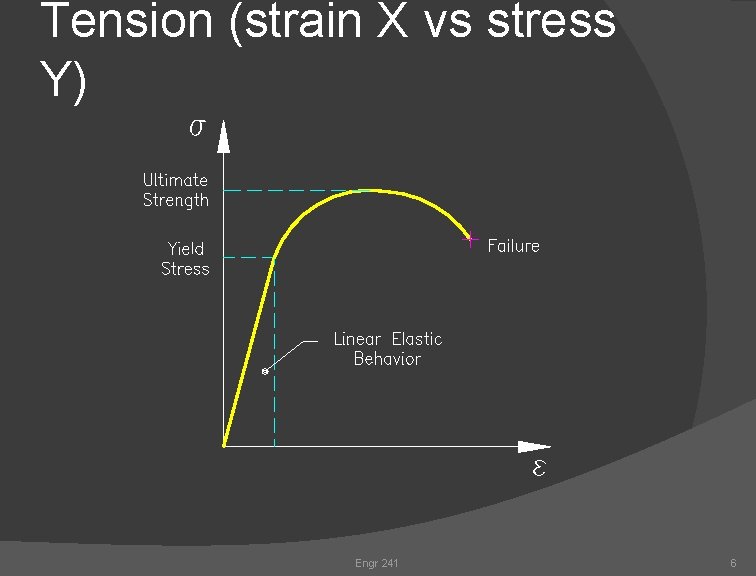
Tension (strain X vs stress Y) Engr 241 6
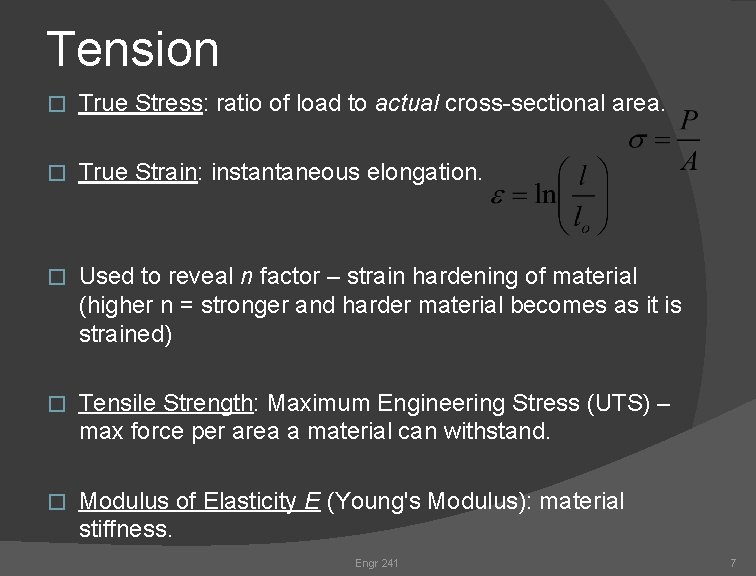
Tension � True Stress: ratio of load to actual cross-sectional area. � True Strain: instantaneous elongation. � Used to reveal n factor – strain hardening of material (higher n = stronger and harder material becomes as it is strained) � Tensile Strength: Maximum Engineering Stress (UTS) – max force per area a material can withstand. � Modulus of Elasticity E (Young's Modulus): material stiffness. Engr 241 7
Compression � Carried out by compressing a cylindrical specimen between two flat plates (opposite to Tension). � Cross-sectional area of the specimen changes along its height, being maximum at the center. � Concrete Testing Engr 241 8
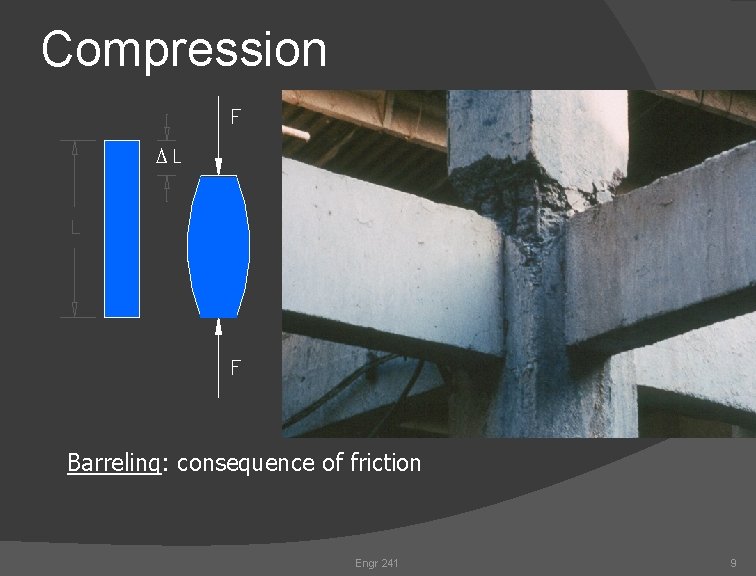
Compression Barreling: consequence of friction Engr 241 9
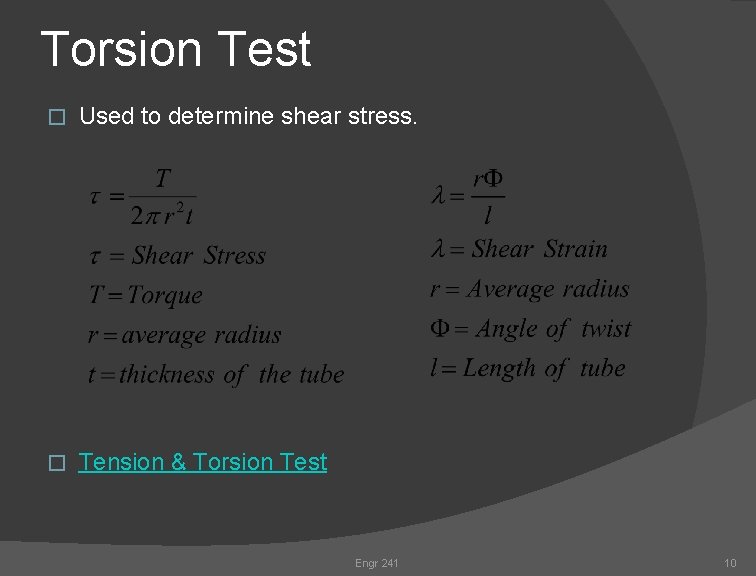
Torsion Test � Used to determine shear stress. � Tension & Torsion Test Engr 241 10
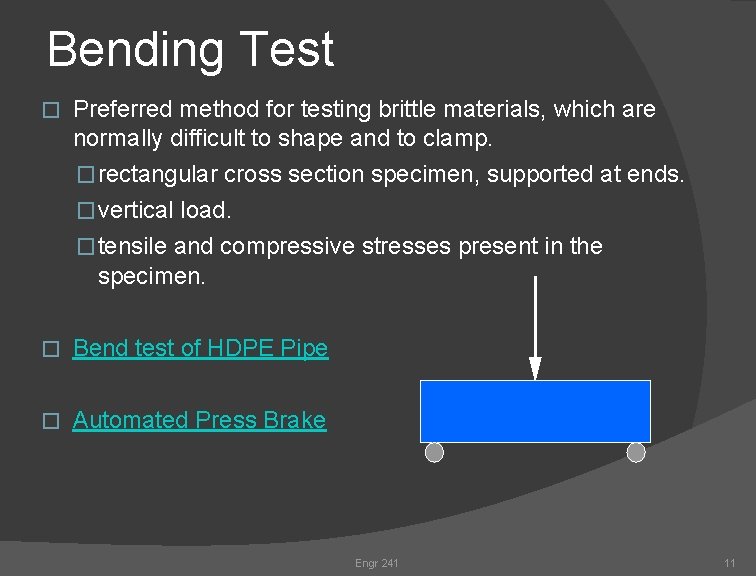
Bending Test � Preferred method for testing brittle materials, which are normally difficult to shape and to clamp. �rectangular cross section specimen, supported at ends. �vertical load. �tensile and compressive stresses present in the specimen. � Bend test of HDPE Pipe � Automated Press Brake Engr 241 11
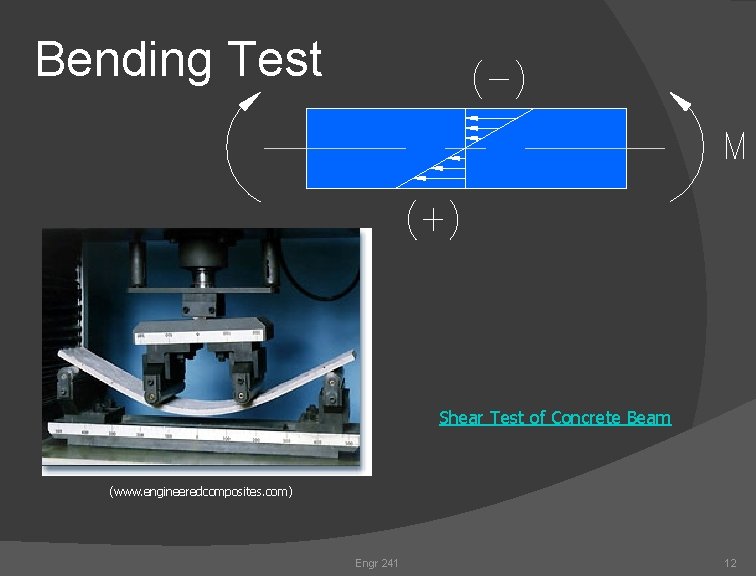
Bending Test Shear Test of Concrete Beam (www. engineeredcomposites. com) Engr 241 12
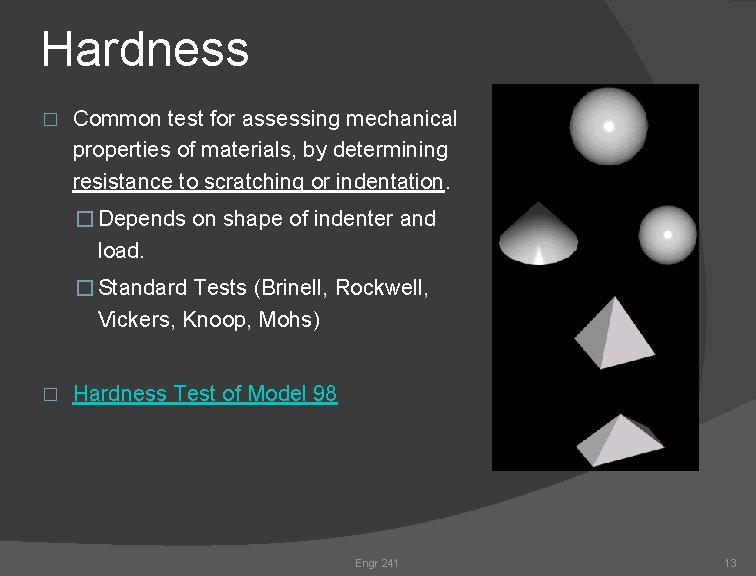
Hardness � Common test for assessing mechanical properties of materials, by determining resistance to scratching or indentation. � Depends on shape of indenter and load. � Standard Tests (Brinell, Rockwell, Vickers, Knoop, Mohs) � Hardness Test of Model 98 Engr 241 13
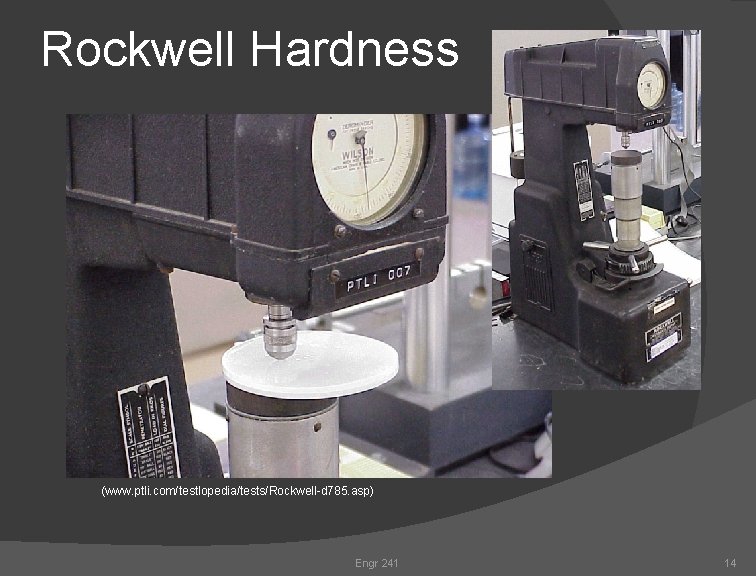
Rockwell Hardness (www. ptli. com/testlopedia/tests/Rockwell-d 785. asp) Engr 241 14
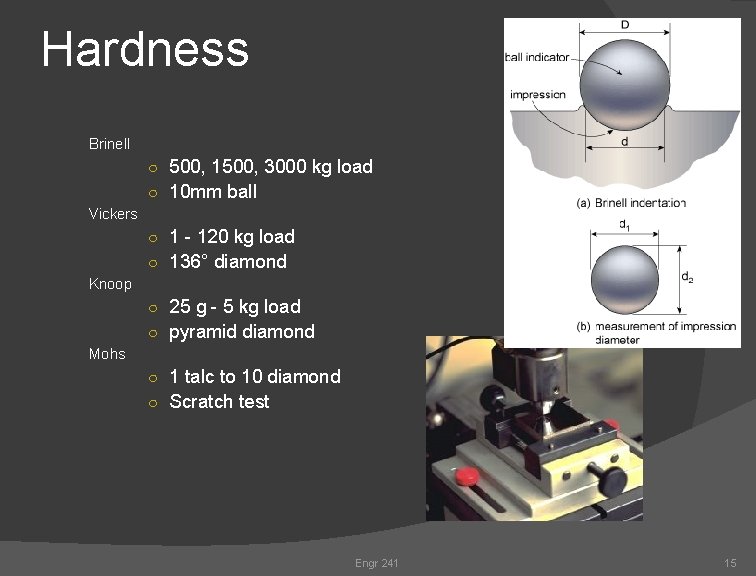
Hardness Brinell ○ 500, 1500, 3000 kg load ○ 10 mm ball Vickers ○ 1 - 120 kg load ○ 136° diamond Knoop ○ 25 g - 5 kg load ○ pyramid diamond Mohs ○ 1 talc to 10 diamond ○ Scratch test Engr 241 15
Rockwell Hardness � Most used and versatile test (measures depth of penetration) � 1/16“ hardened steel ball, B scale (100 kg), F scale (60 kg), G scale (150 kg) � 1 /8“ hardened steel ball, E scale (100 kg) � Diamond Cone, C Scale (150 kg), A Scale (60 kg), D Scale (100 kg) Engr 241 16
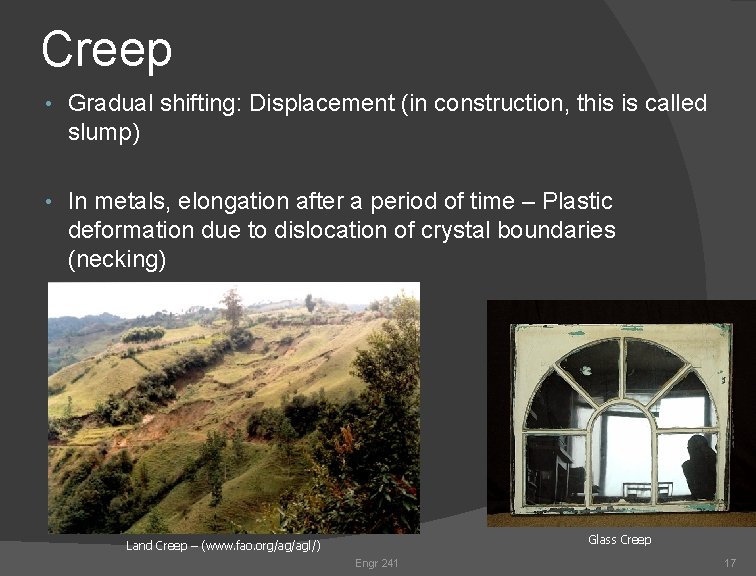
Creep • Gradual shifting: Displacement (in construction, this is called slump) • In metals, elongation after a period of time – Plastic deformation due to dislocation of crystal boundaries (necking) Glass Creep Land Creep – (www. fao. org/ag/agl/) Engr 241 17
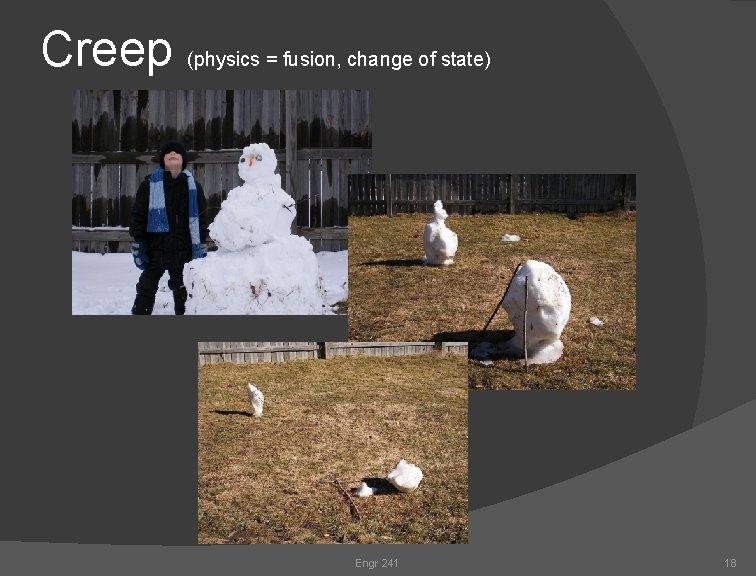
Creep (physics = fusion, change of state) Engr 241 18
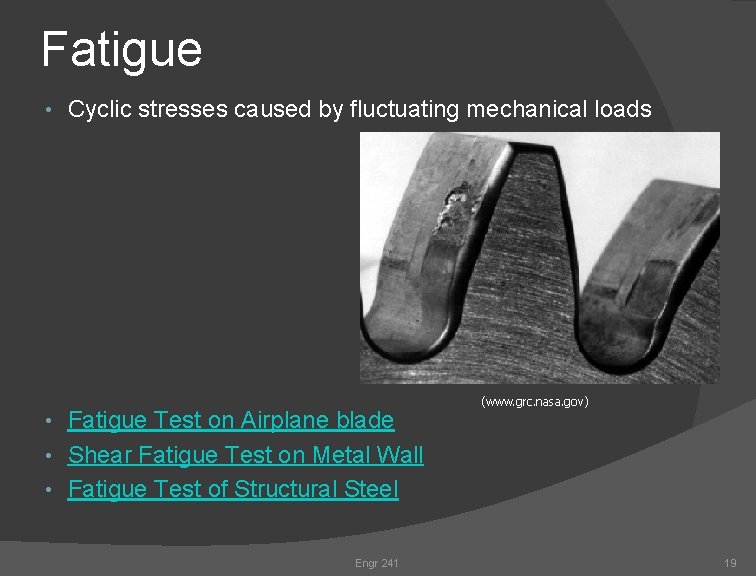
Fatigue • Cyclic stresses caused by fluctuating mechanical loads • Fatigue Test on Airplane blade (www. grc. nasa. gov) • Shear Fatigue Test on Metal Wall • Fatigue Test of Structural Steel Engr 241 19
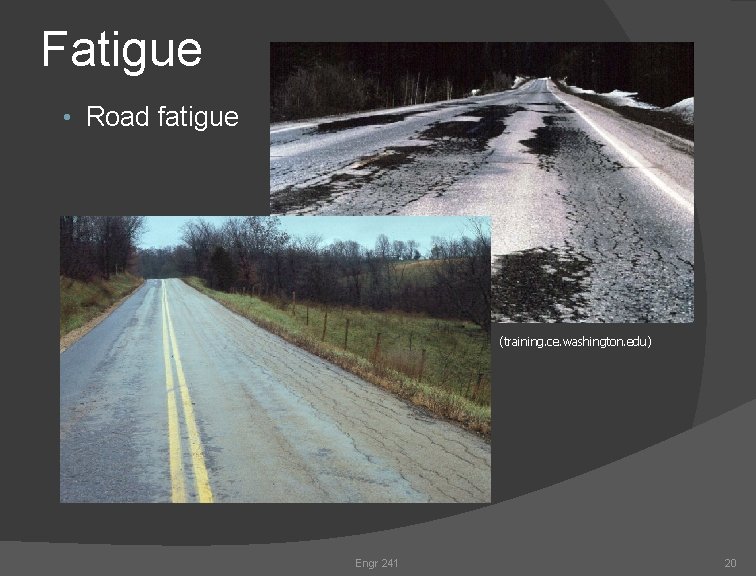
Fatigue • Road fatigue (training. ce. washington. edu) Engr 241 20
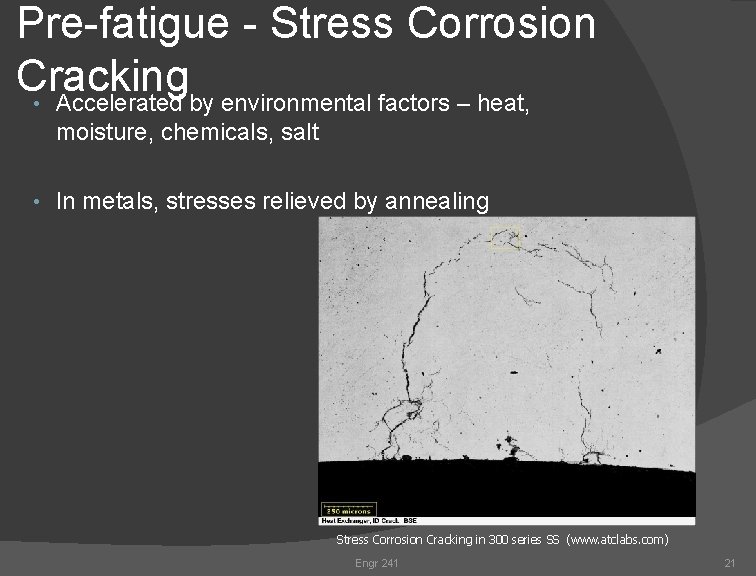
Pre-fatigue - Stress Corrosion Cracking • Accelerated by environmental factors – heat, moisture, chemicals, salt • In metals, stresses relieved by annealing Stress Corrosion Cracking in 300 series SS (www. atclabs. com) Engr 241 21
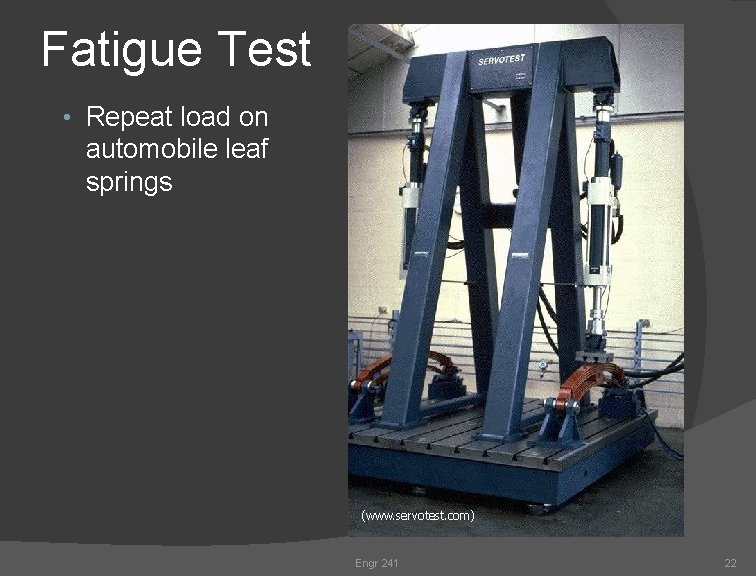
Fatigue Test • Repeat load on automobile leaf springs (www. servotest. com) Engr 241 22
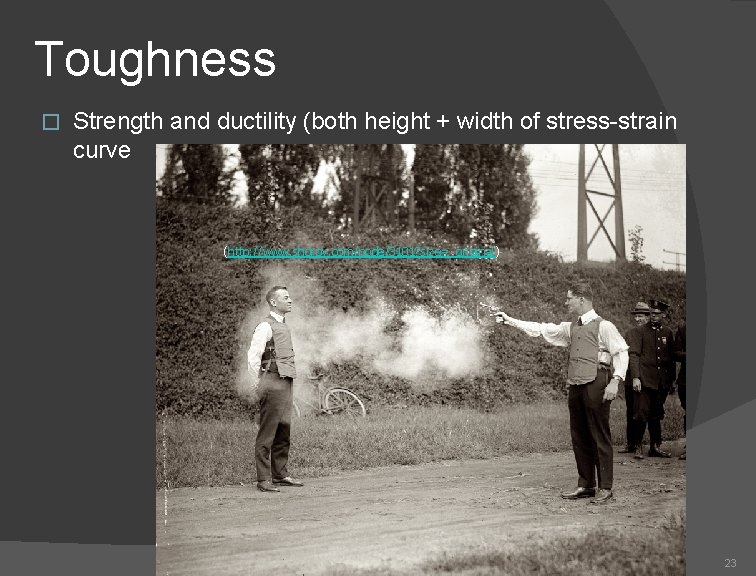
Toughness � Strength and ductility (both height + width of stress-strain curve (http: //www. shorpy. com/node/3101? size=_original) Engr 241 23
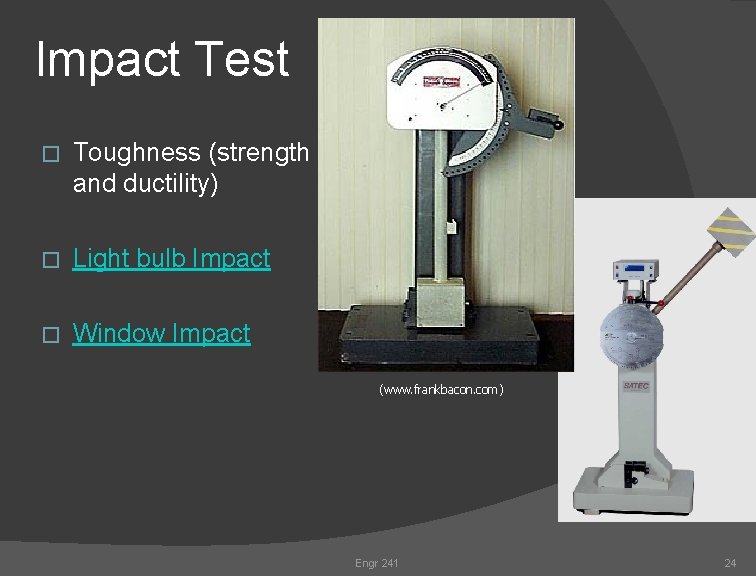
Impact Test � Toughness (strength and ductility) � Light bulb Impact � Window Impact (www. frankbacon. com) Engr 241 24
Residual Stress � After processing, materials can undergo residual stress � Stresses that remain within the part after it has been formed and all external forces have been removed. �Tensile vs. compressive stresses �Stress Cracking �Stress-Corrosion Cracking � Residual stresses may be reduced by annealing or by further deformation. Engr 241 25
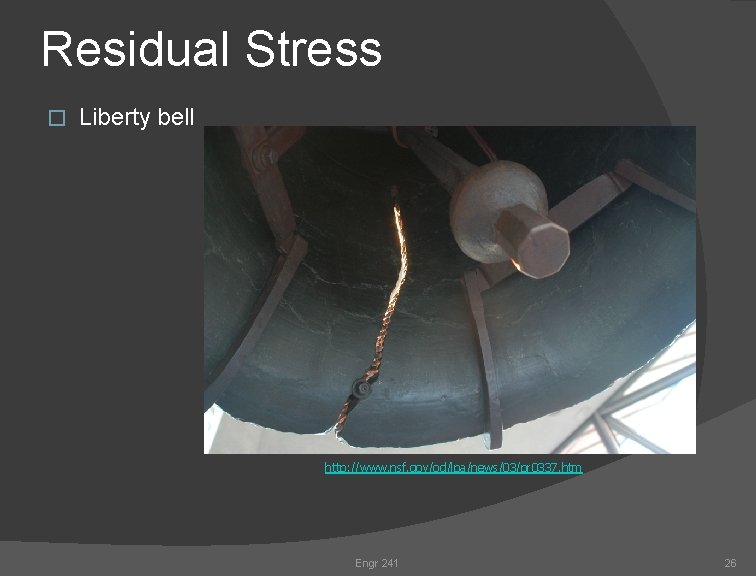
Residual Stress � Liberty bell http: //www. nsf. gov/od/lpa/news/03/pr 0337. htm Engr 241 26
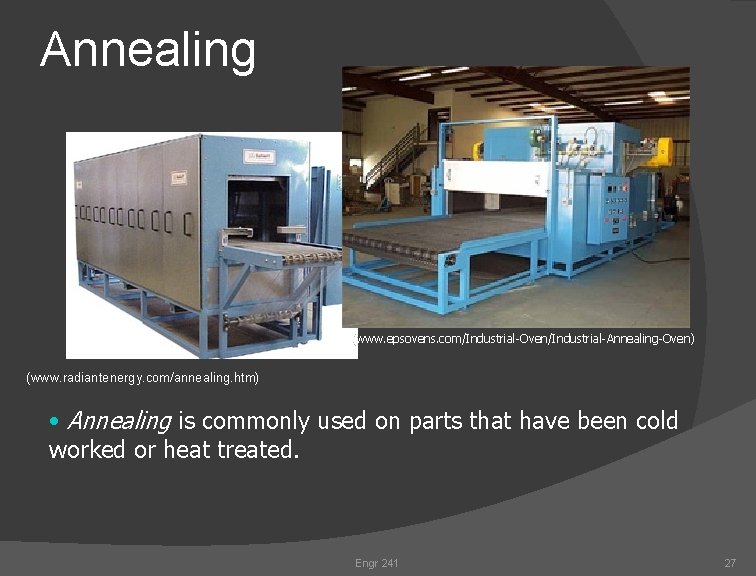
Annealing (www. epsovens. com/Industrial-Oven/Industrial-Annealing-Oven) (www. radiantenergy. com/annealing. htm) • Annealing is commonly used on parts that have been cold worked or heat treated. Engr 241 27
Material Failure � When is material failure good/desired? � What are catalysts/causes for material failure? � What are material properties that influence material failure? � Gallopin' Gertie Engr 241 28

Topic Support � Material failure in electrical generating equipment http: //www. matcoinc. com/electric_power. html � Material Defects in Jewelry - http: //www. ganoksin. com/borisat/nenam/wgc-die- struck. htm Engr 241 29
- Slides: 30