
Introduction to Management Information Systems Chapter 7 IS
- Slides: 28
Introduction to Management Information Systems Chapter 7 IS within Organization HTM 304 Fall 07
Learning Objectives Understand the history of Information Systems and three types of Information Systems Functional Information Systems: -- Features and Problems Integrated Applications Why Integrate? (Value Chain Model) Three major integrated systems: CRM, ERP, & EAI 2
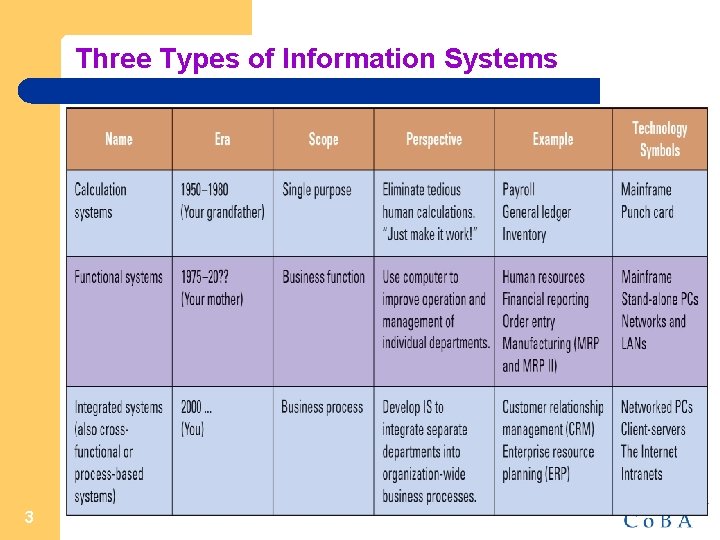
Three Types of Information Systems 3
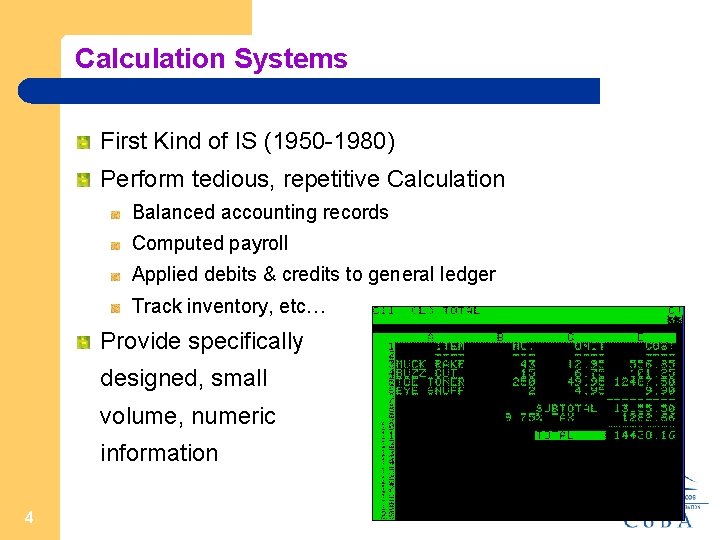
Calculation Systems First Kind of IS (1950 -1980) Perform tedious, repetitive Calculation Balanced accounting records Computed payroll Applied debits & credits to general ledger Track inventory, etc… Provide specifically designed, small volume, numeric information 4
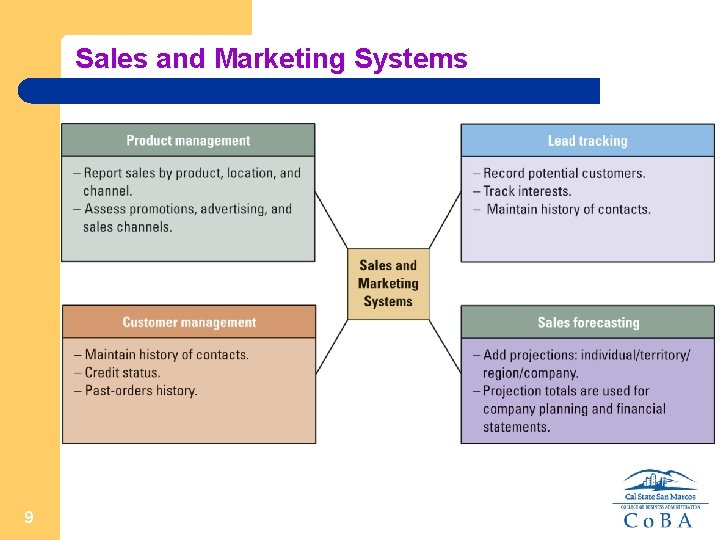
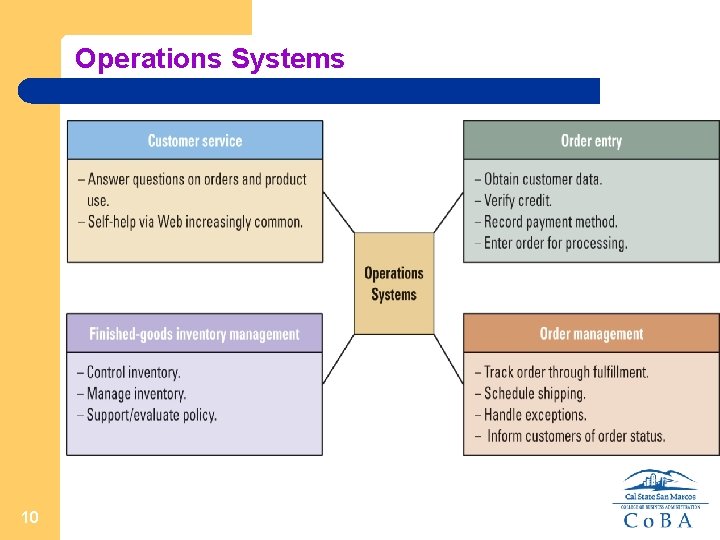
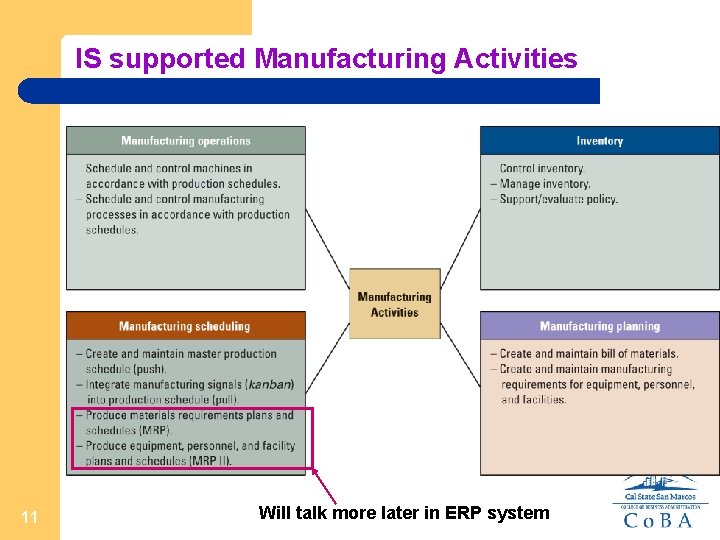
Functional Systems As the technology evolve, every department develops their own Information Systems “Single Function” -- independent Payroll system Student registration systems Computer inventory management systems Automate the process for each functional area (Maintaining the same process, streamlining it…) Sales and marketing Manufacturing Human Resources Finance, Etc. 5
Example: Human Resources Systems Support recruitment, compensation, evaluation, and development of organization’s employees Recruiting methods may be simple or complex Compensation includes payroll, processing and tracking vacation, sick leave, health care, other benefits Employee evaluation includes publication of job and skill descriptions and performance evaluations Development and training activities vary HR system concerns every employee in the organization. You should check the website before you accept the job offer… 6 CSUSM HR Webpage: http: //www. csusm. edu/HR/
7
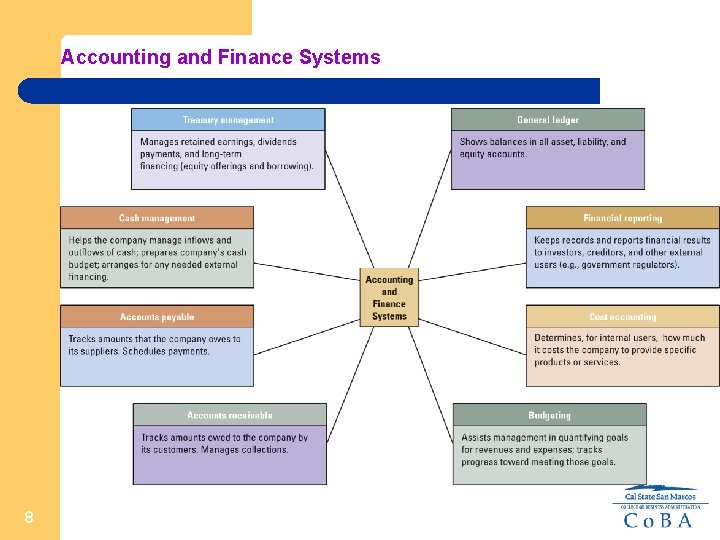
Accounting and Finance Systems 8
Sales and Marketing Systems 9
Operations Systems 10
IS supported Manufacturing Activities 11 Will talk more later in ERP system
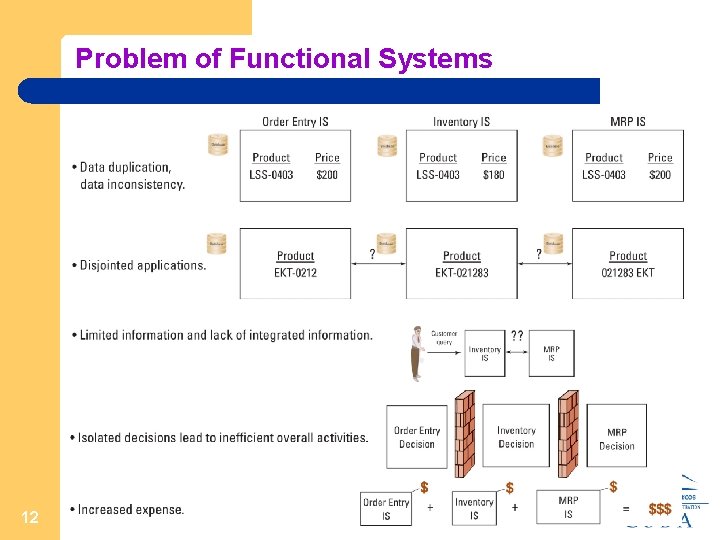
Problem of Functional Systems (inconsistent coding) 12
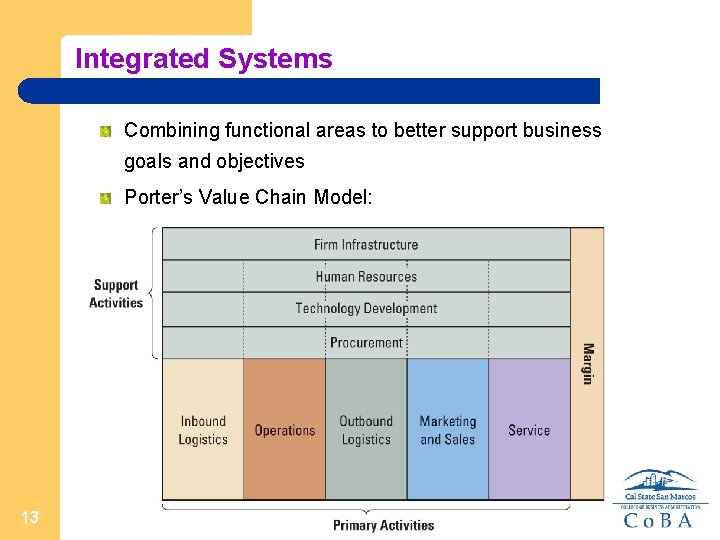
Integrated Systems Combining functional areas to better support business goals and objectives Porter’s Value Chain Model: 13
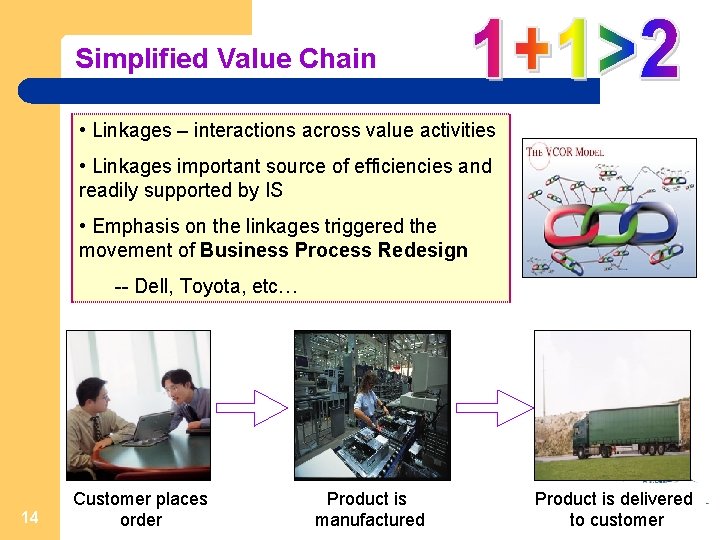
Simplified Value Chain • Linkages – interactions across value activities • Linkages important source of efficiencies and readily supported by IS • Emphasis on the linkages triggered the movement of Business Process Redesign -- Dell, Toyota, etc… 14 Customer places order Product is manufactured Product is delivered to customer
Business Process Redesign Value chain – network of value-creating activities is foundation business process design, or business process redesign (BPR) Organizations should not automate or improve existing functional systems Organizations should instead PLUNGE Create new, more efficient, business processes Integrate activities of all departments involved in value chain 15
The Challenges of Business Process Redesign Projects expensive and difficult 1. Highly trained systems analysts interview key personnel from many departments and document existing system and alternatives 2. Managers review results and try to develop new, improved processes 3. New information systems developed to implement new business processes Employee resistance to change Cannot know ahead of time how effective the new processes are Few successes, and many others failed… 16
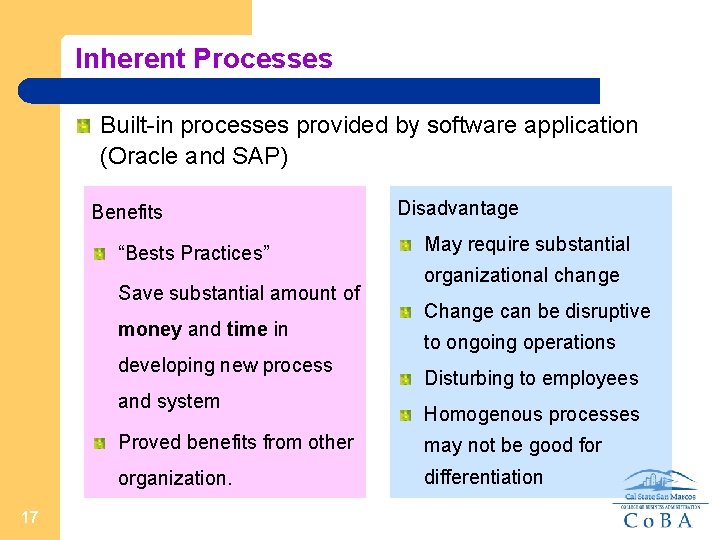
Inherent Processes Built-in processes provided by software application (Oracle and SAP) Benefits “Bests Practices” Save substantial amount of money and time in developing new process and system 17 Disadvantage May require substantial organizational change Change can be disruptive to ongoing operations Disturbing to employees Homogenous processes Proved benefits from other may not be good for organization. differentiation
Business Process Application Vendors Page 210, MIS in Use 7 -1 Largest market share: Oracle/SAP. 18
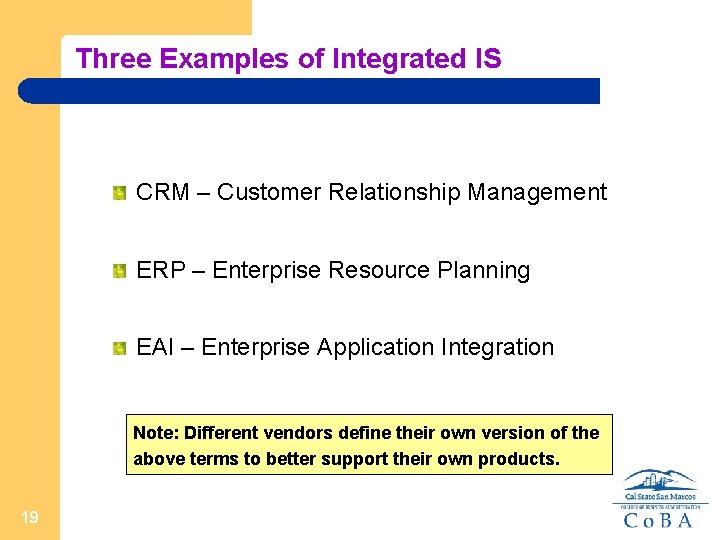
Three Examples of Integrated IS CRM – Customer Relationship Management ERP – Enterprise Resource Planning EAI – Enterprise Application Integration Note: Different vendors define their own version of the above terms to better support their own products. 19
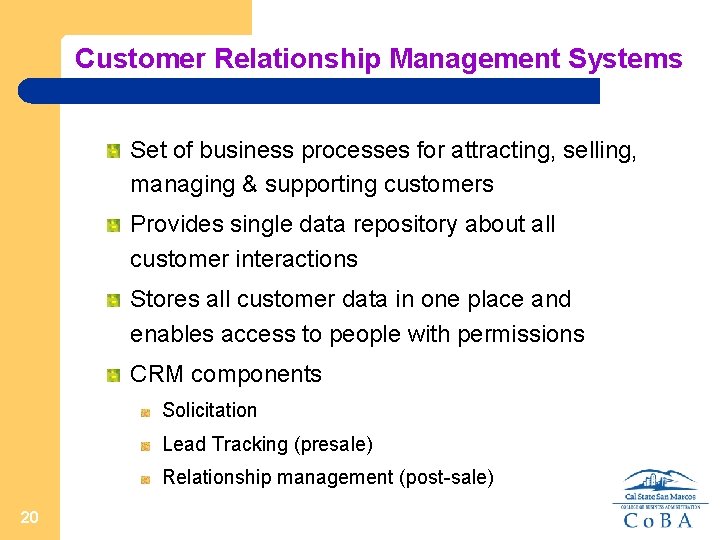
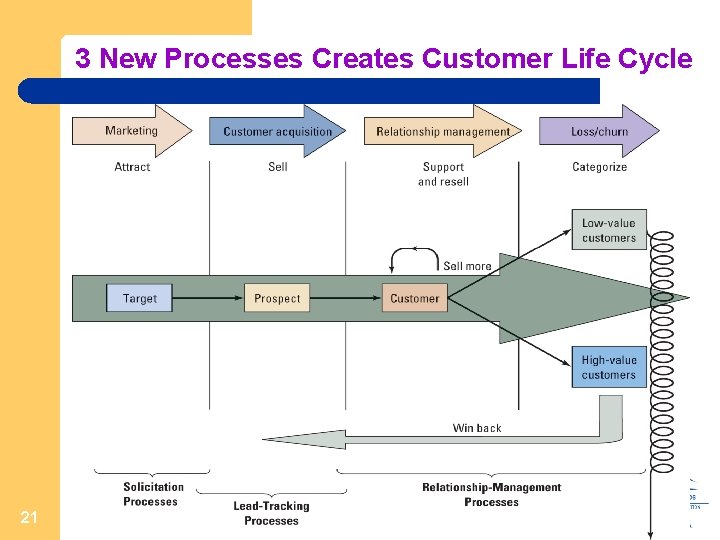
Customer Relationship Management Systems Set of business processes for attracting, selling, managing & supporting customers Provides single data repository about all customer interactions Stores all customer data in one place and enables access to people with permissions CRM components Solicitation Lead Tracking (presale) Relationship management (post-sale) 20
3 New Processes Creates Customer Life Cycle 21
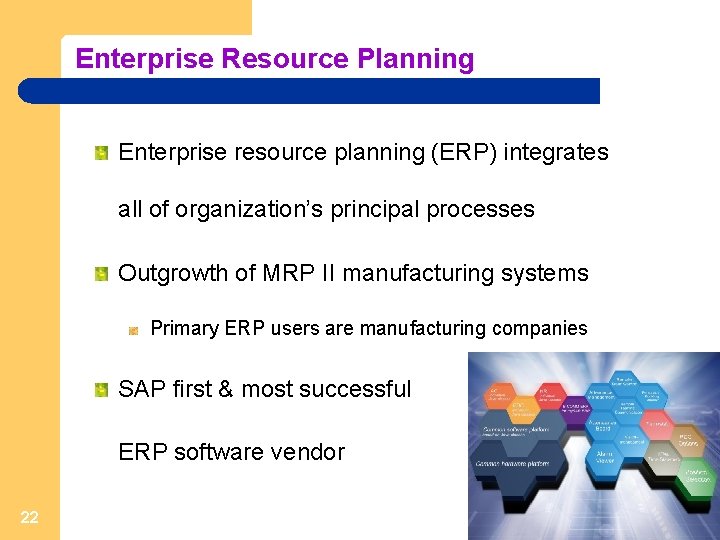
Enterprise Resource Planning Enterprise resource planning (ERP) integrates all of organization’s principal processes Outgrowth of MRP II manufacturing systems Primary ERP users are manufacturing companies SAP first & most successful ERP software vendor 22
MRP MRPII ERP MRP (material requirements planning) An Information System that plans the need for materials and inventories of materials used in the manufacturing process Does not include the planning of personnel, equipment, or facilities requirements. BOM (Bill-of-Material) List of product materials and subassemblies. (see figure 7 -8, page 203) MRP II (manufacturing resource planning) Follow-on to MRP that includes the planning of materials, personnel, and machinery. limited cross-functional. . Push ERP: All the resources in the entire company 23 Defined processes to link the resources. (see page 212)
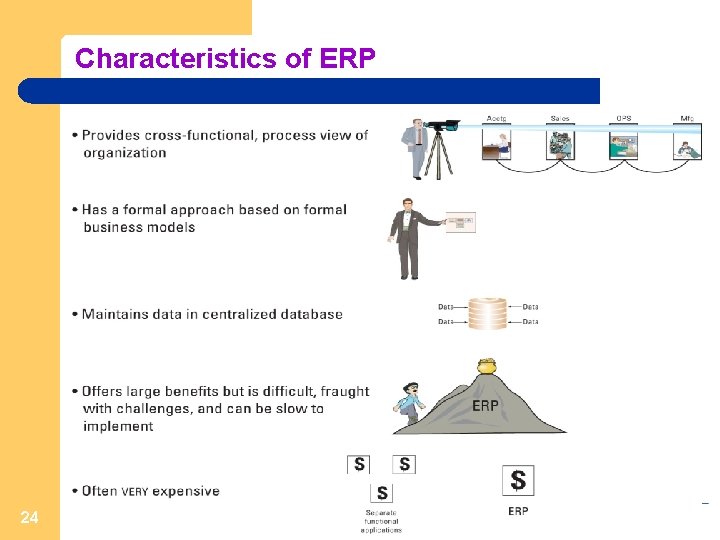
Characteristics of ERP 24
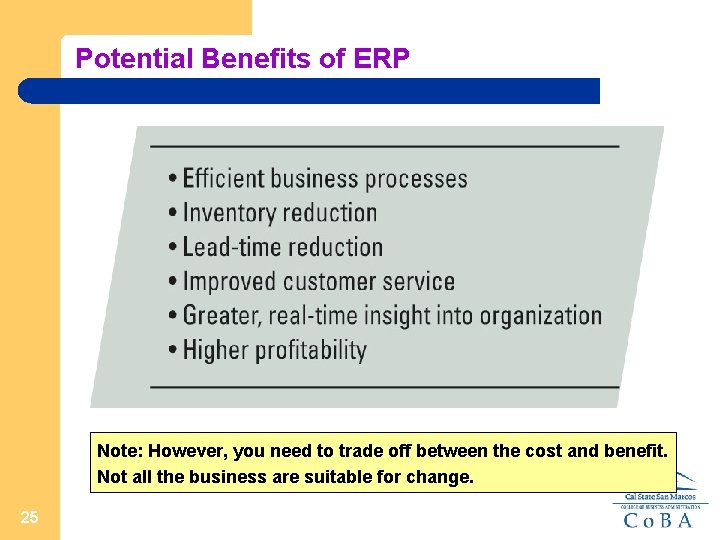
Potential Benefits of ERP Note: However, you need to trade off between the cost and benefit. Not all the business are suitable for change. 25
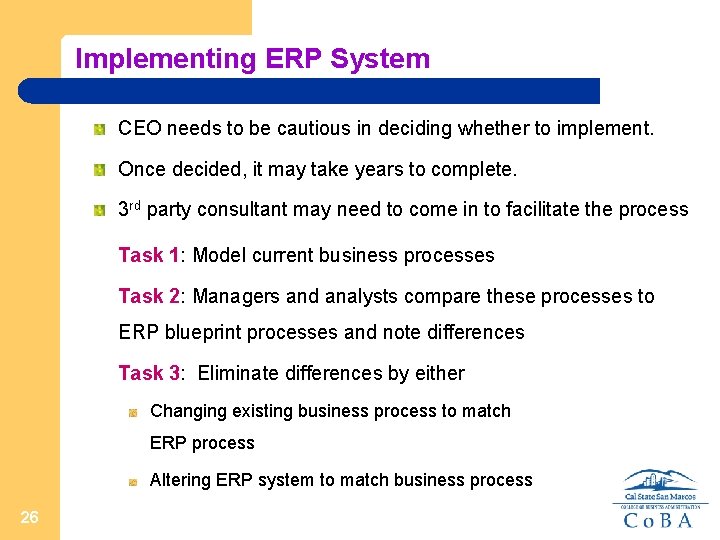
Implementing ERP System CEO needs to be cautious in deciding whether to implement. Once decided, it may take years to complete. 3 rd party consultant may need to come in to facilitate the process Task 1: Model current business processes Task 2: Managers and analysts compare these processes to ERP blueprint processes and note differences Task 3: Eliminate differences by either Changing existing business process to match ERP process Altering ERP system to match business process 26
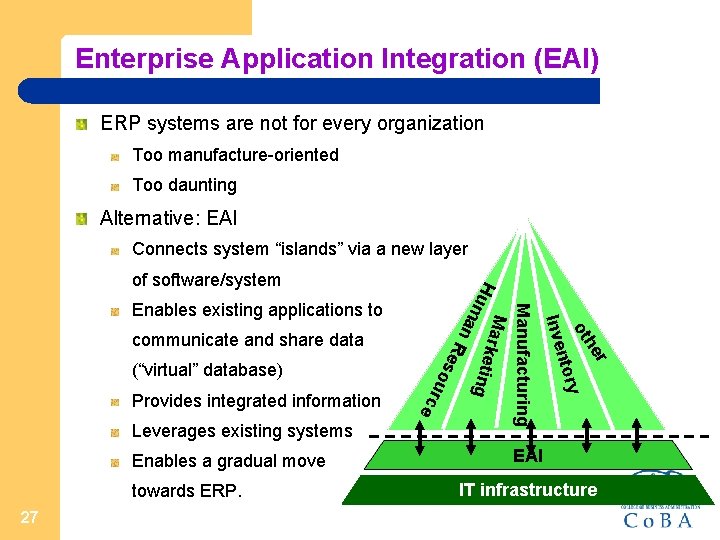
Enterprise Application Integration (EAI) ERP systems are not for every organization Too manufacture-oriented Too daunting Alternative: EAI Connects system “islands” via a new layer he r 27 y towards ERP. ot Enables a gradual move s Leverages existing systems e Provides integrated information ou rc (“virtual” database) n to r n. R e communicate and share data I n ve Enables existing applications to Manufacturing Ma r k H e t i u ng ma of software/system EAI IT infrastructure
Key Terms and Concepts Bill of materials (BOM) Business process design Calculation systems Cross-departmental systems / Cross-functional systems Customer relationship management (CRM) Customer Life Cycle Enterprise application integration (EAI) Enterprise resource planning (ERP) Functional systems (examples) Inherent processes Integrated systems Linkages MRP/MRP II 28 Value chain