
Introduction to Macroeconomics The difference between microeconomics and
Introduction to Macroeconomics • The difference between microeconomics and macroeconomics. • Issues related to macroeconomics (output growth, unemployment, inflation and deflation) • Public policies in solving macroeconomic problems.
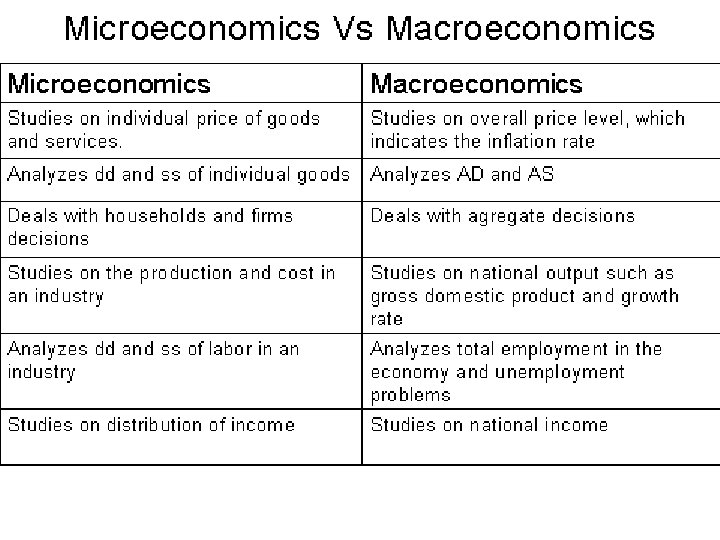
• Microeconomics: examines the functioning of individual industries and the behavior of individual decision making units – firms and households • Macroeconomics: the study of how the whole economy works. Macroeconomics deals with aggregates such as aggregate C and I, and looks at the overall level of prices instead of individual prices. • Economic issues: – Current issues • Economic growth (Gross Domestic Product = National Income) / reducing the unemployment rate. • Deflation and unemployment • Control inflation and price stability – General price level (CPI) – a measure of inflation – Public policies to reduce certain problems in the economy – External Economy: (X & M)
• Public policies & Tools to reduce economic problems. – Fiscal policy: deals with government spending, G and taxes, T – Monetary policy: deals with money supply (Ms) and bank rate (r). – Direct controls: focus directly on the cause of the problem – controlling prices by setting controlled items, controlling wages, increasing AS by improving the productivity, giving subsidies. – International trade policy: related to exports (X) and imports (M) • control foreign exchange for balance trade stability.
Macroeconomic objectives: 1. Full employment or reducing the unemployment rate. Unemployment rate = the % of people in the labor force who are without jobs and are actively seeking jobs. 2. Control inflation or maintaining price: inflation = an increase in the general price level in the economy. Inflation will reduce the value of money or the purchasing power of money. 3. Achieving a steady rate of economic growth: rate of economic growth = the % increase in the real output over a 12 month period.
4. Better quality of life = an increase in the amount of goods and services as well as a better living environment (less polution, more green, less flood, less crime). 5. A balance in the balance of payment: to maintain the external value of the country’s currency and economic stability.
- Slides: 6