
Introduction to Logistics Exactly What is Logistics Business
Introduction to Logistics
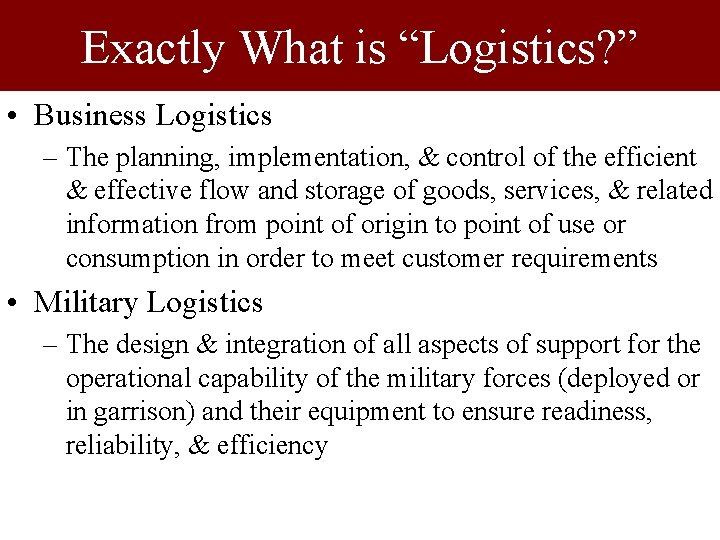
Exactly What is “Logistics? ” • Business Logistics – The planning, implementation, & control of the efficient & effective flow and storage of goods, services, & related information from point of origin to point of use or consumption in order to meet customer requirements • Military Logistics – The design & integration of all aspects of support for the operational capability of the military forces (deployed or in garrison) and their equipment to ensure readiness, reliability, & efficiency
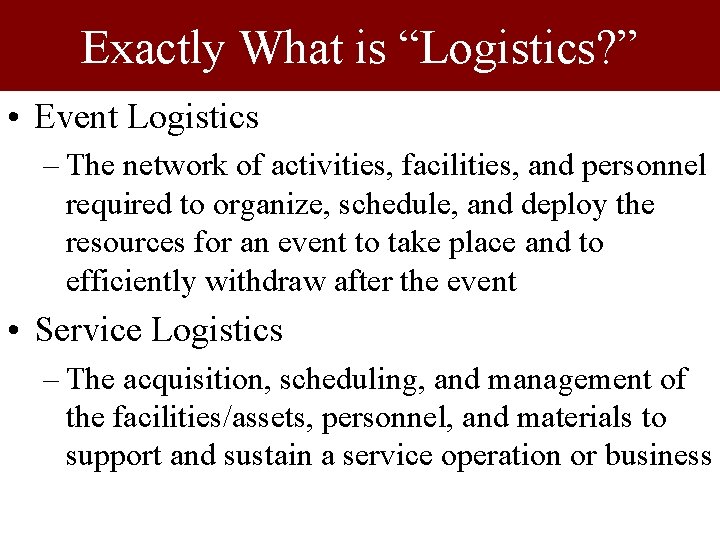
Exactly What is “Logistics? ” • Event Logistics – The network of activities, facilities, and personnel required to organize, schedule, and deploy the resources for an event to take place and to efficiently withdraw after the event • Service Logistics – The acquisition, scheduling, and management of the facilities/assets, personnel, and materials to support and sustain a service operation or business
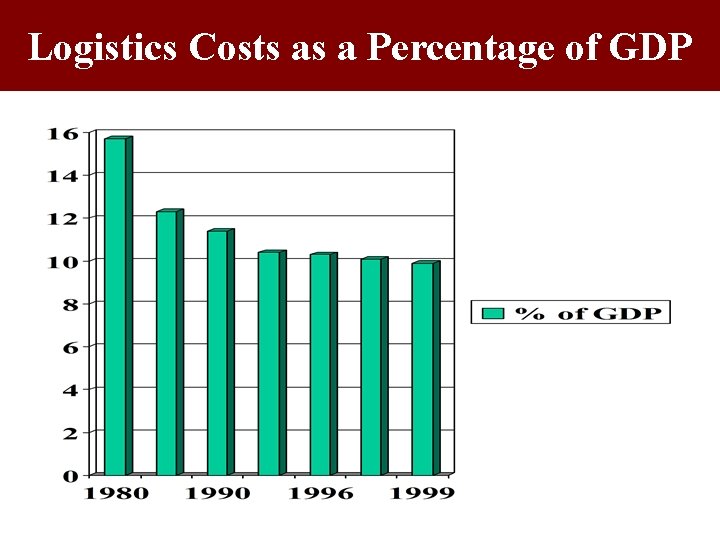
Logistics Costs as a Percentage of GDP
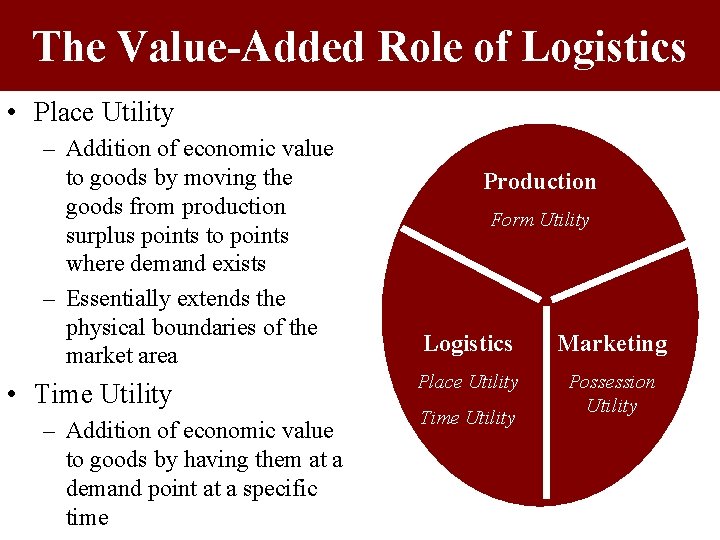
The Value-Added Role of Logistics • Place Utility – Addition of economic value to goods by moving the goods from production surplus points to points where demand exists – Essentially extends the physical boundaries of the market area • Time Utility – Addition of economic value to goods by having them at a demand point at a specific time Production Form Utility Logistics Marketing Place Utility Possession Utility Time Utility
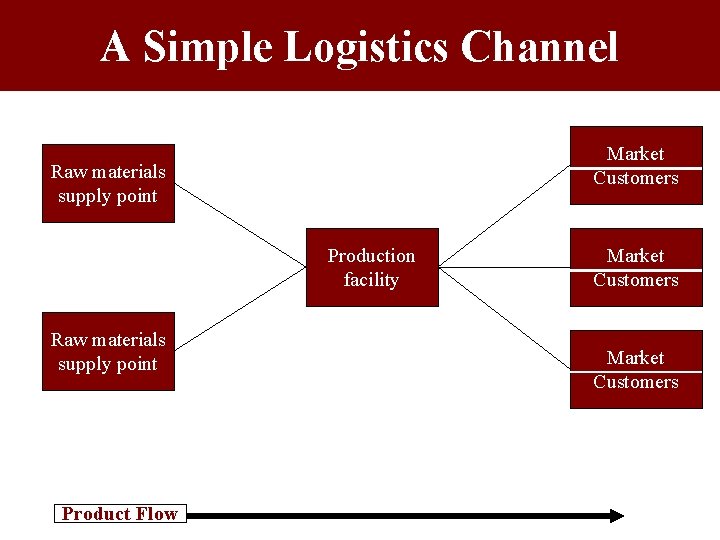
A Simple Logistics Channel Market Customers Raw materials supply point Production facility Raw materials supply point Product Flow Market Customers
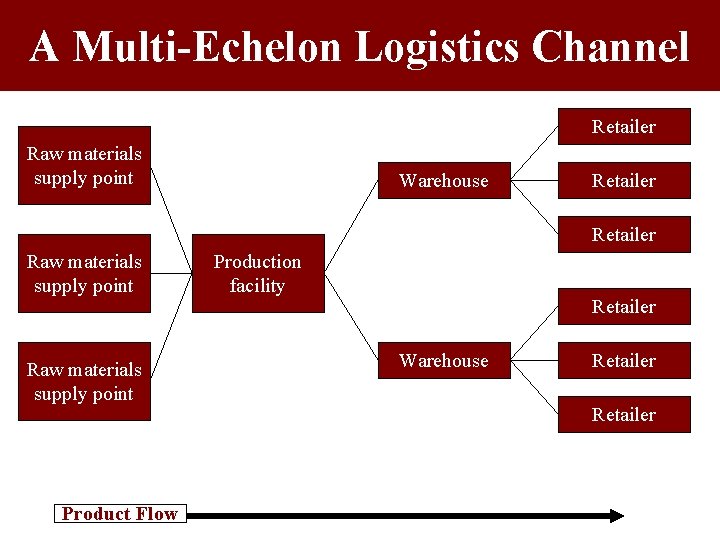
A Multi-Echelon Logistics Channel Retailer Raw materials supply point Warehouse Retailer Raw materials supply point Product Flow Production facility Retailer Warehouse Retailer
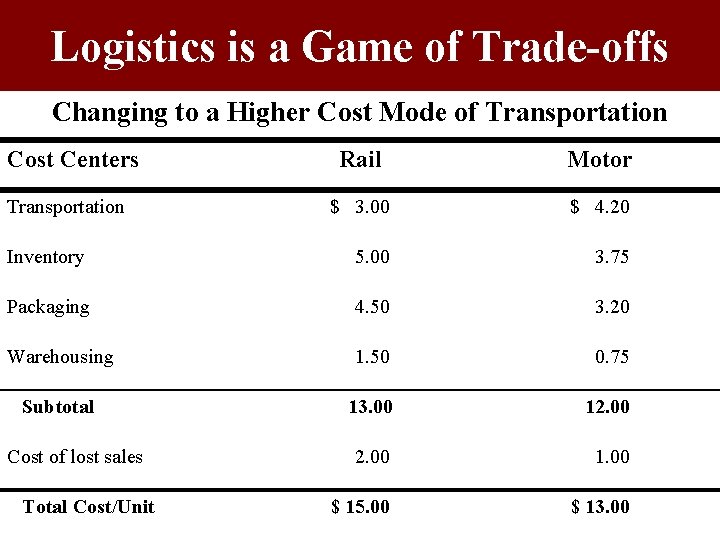
Logistics is a Game of Trade-offs Changing to a Higher Cost Mode of Transportation Cost Centers Rail Motor $ 3. 00 $ 4. 20 Inventory 5. 00 3. 75 Packaging 4. 50 3. 20 Warehousing 1. 50 0. 75 Subtotal 13. 00 12. 00 1. 00 $ 15. 00 $ 13. 00 Transportation Cost of lost sales Total Cost/Unit
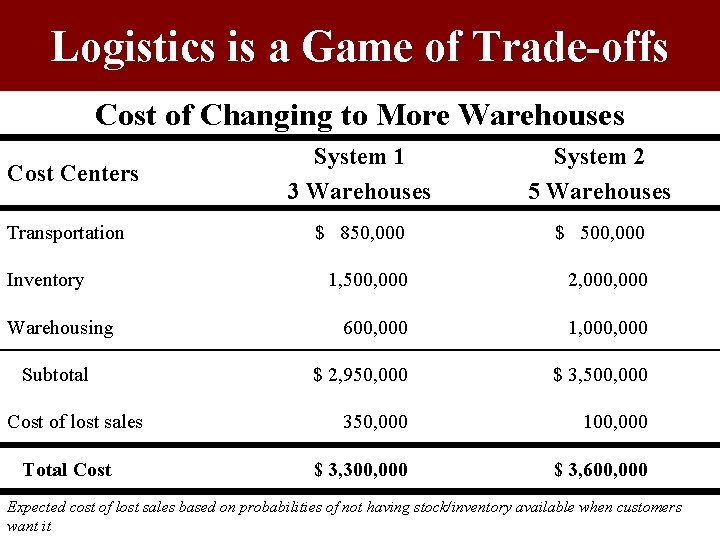
Logistics is a Game of Trade-offs Cost of Changing to More Warehouses Cost Centers Transportation Inventory Warehousing Subtotal Cost of lost sales Total Cost System 1 3 Warehouses System 2 5 Warehouses $ 850, 000 $ 500, 000 1, 500, 000 2, 000 600, 000 1, 000 $ 2, 950, 000 $ 3, 500, 000 350, 000 100, 000 $ 3, 300, 000 $ 3, 600, 000 Expected cost of lost sales based on probabilities of not having stock/inventory available when customers want it
Factors Influencing Logistics Cost • Competitive Relationships – Order cycle time • Time it takes for a customer to receive an order once it has been placed • The shorter the cycle, the less inventory is required – Substitutability • The more substitutable a product is, the more willing customers are to use a competitor’s product in the event of stockouts – Cost of lost sales • In order to reduce the cost of lost sales, more inventory typically must be carried – Transportation costs • More expensive modes of transportation help reduce – inventory costs – cost of lost sales – order cycle time
Factors Influencing Logistics Cost • Product Relationships – Higher Dollar Value of the Goods • Transportation rates: costs the carrier more to reimburse in the event of damage, hence transportation rates are generally higher • Warehousing costs: more money tied up in inventory & storage risk increases • Packaging costs: more protective packaging must be used – Product Density • An item that is lightweight compared to the space it occupies has low density (I. e. , household furniture) • Higher density products generally have lower warehousing & transportation costs
Factors Influencing Logistics Cost • Product Relationships – Susceptibility to Damage • The higher the risk of damage, the higher the transportation costs and warehousing costs – Special Handling Requirements • As the specialized handling requirements increase, transportation costs & warehousing costs increase
Factors Influencing Logistics Cost • Spatial Relationships – Location of fixed points in the logistics system with respect to market and supply points – Impacts landed cost and extent of market
- Slides: 13