
Introduction to light and the electromagnetic spectrum What
- Slides: 22
Introduction to light and the electromagnetic spectrum
What is Light? ?
What is Light? Light is electromagnetic radiation within a certain portion of the electromagnetic spectrum. The word usually refers to visible light, which is visible to the human eye and is responsible for the sense of sight. PROPERTIES OF LIGHT: 1) Light travels at high speeds • 3. 0 x 108 m/s • 7. 5 times around the Earth in 1 second!!!
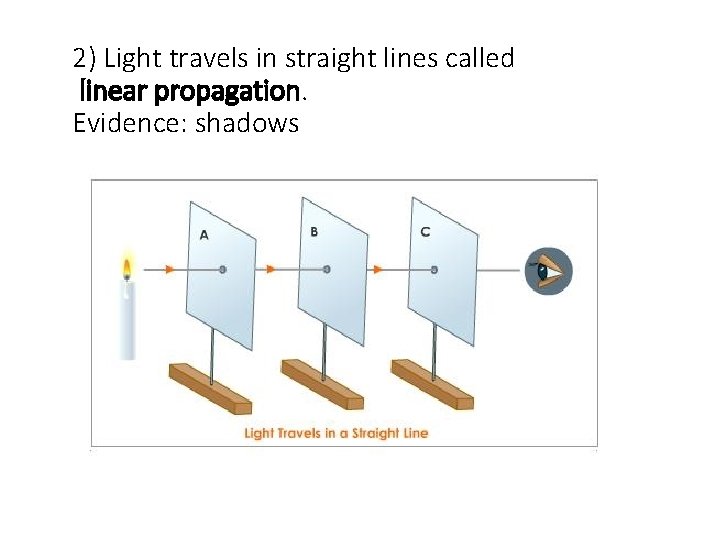
2) Light travels in straight lines called linear propagation. Evidence: shadows
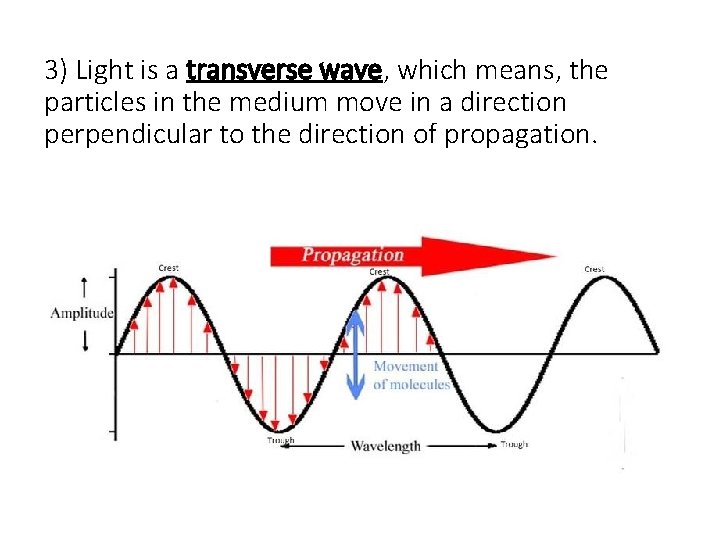
3) Light is a transverse wave, which means, the particles in the medium move in a direction perpendicular to the direction of propagation.
Light – An Electromagnetic Wave • Light is a form of energy that radiates as an ELECTROMAGNETIC WAVE • Does not require a medium • EM waves include: • Radio waves, x-rays, microwaves, radar, UV light, etc. • VISIBLE LIGHT are EM waves that the human eye can detect
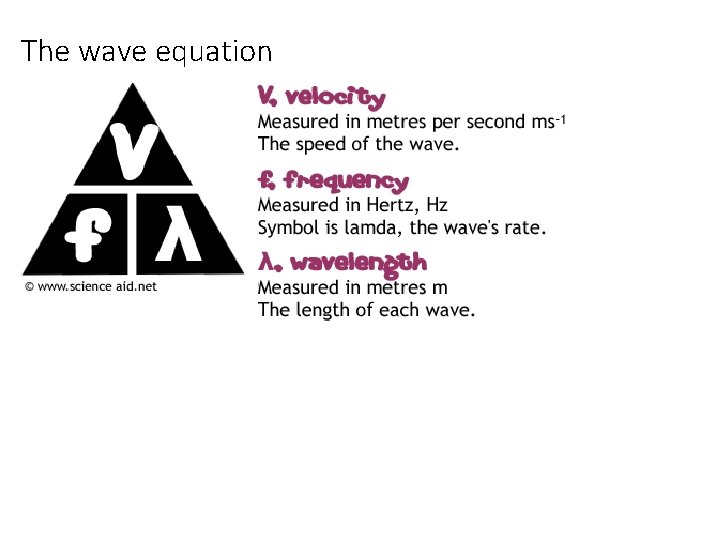
The wave equation
Light – An Electromagnetic Wave
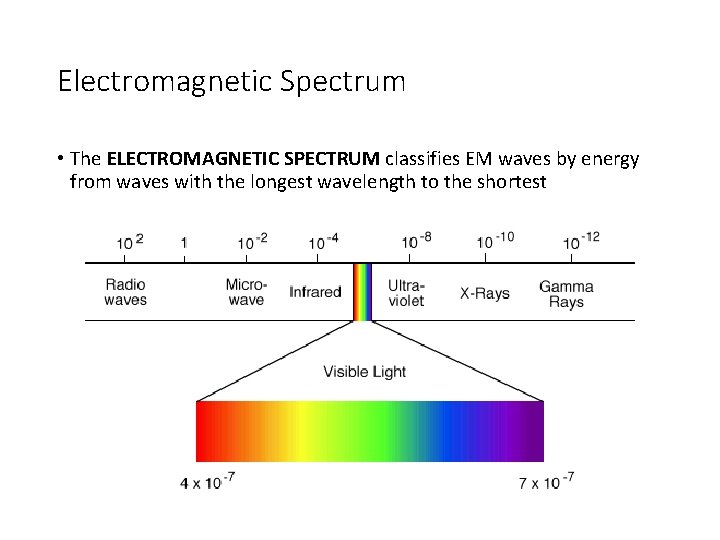
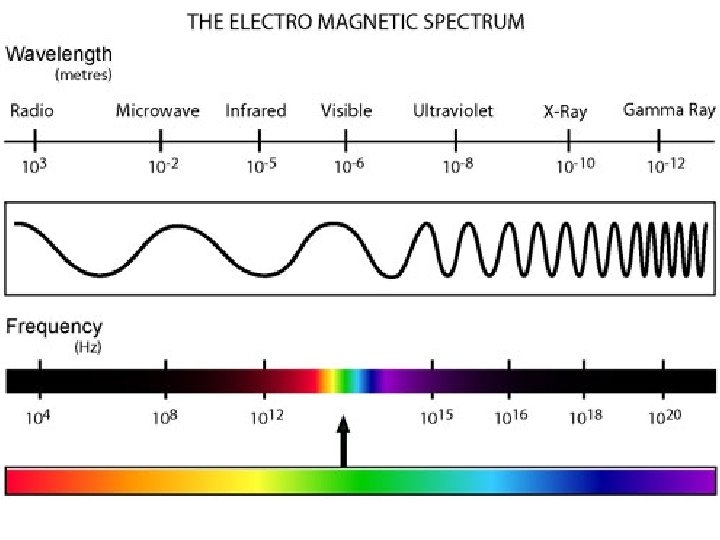
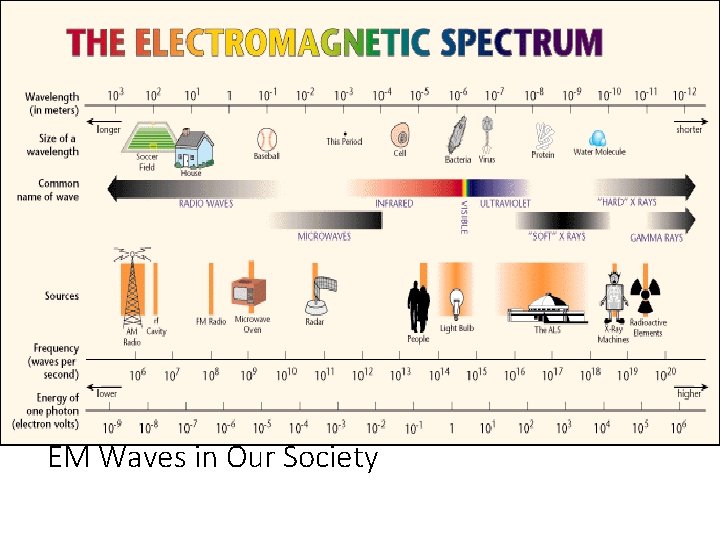
Electromagnetic Spectrum • The ELECTROMAGNETIC SPECTRUM classifies EM waves by energy from waves with the longest wavelength to the shortest
EM Waves in Our Society
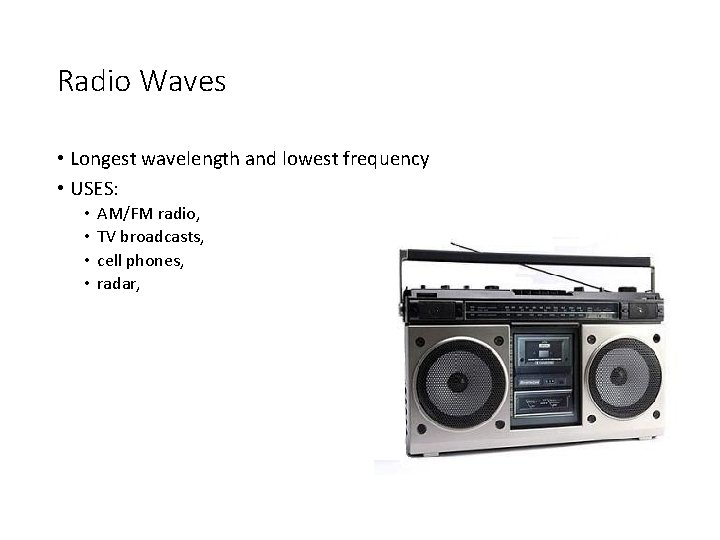
Radio Waves • Longest wavelength and lowest frequency • USES: • • AM/FM radio, TV broadcasts, cell phones, radar,
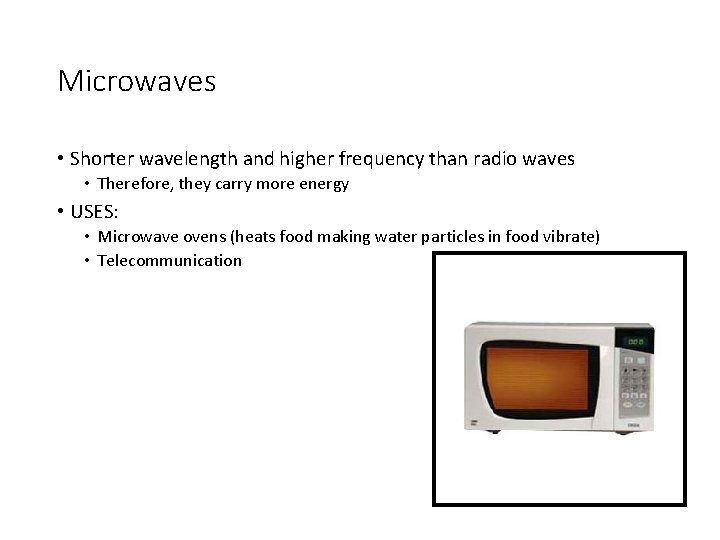
Microwaves • Shorter wavelength and higher frequency than radio waves • Therefore, they carry more energy • USES: • Microwave ovens (heats food making water particles in food vibrate) • Telecommunication
http: //www. youtube. com/watch? v=jgjx 4 JROj. R 4 http: //www. youtube. com/watch? v=Kso. VEe. Jg 3 TY
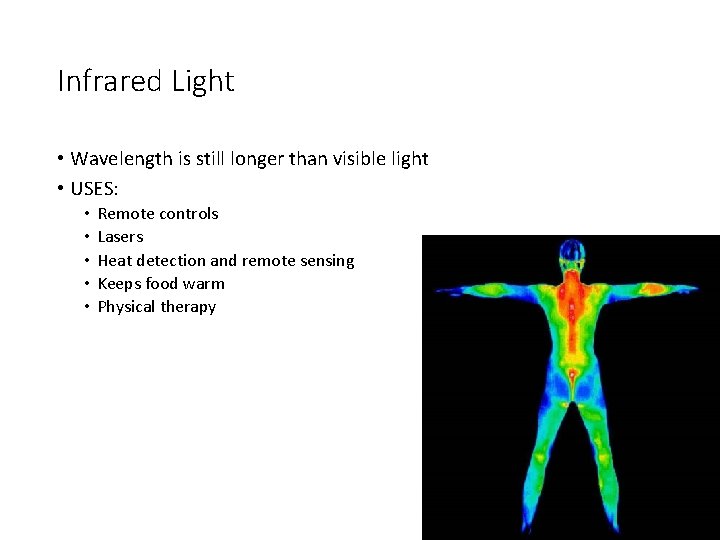
Infrared Light • Wavelength is still longer than visible light • USES: • • • Remote controls Lasers Heat detection and remote sensing Keeps food warm Physical therapy
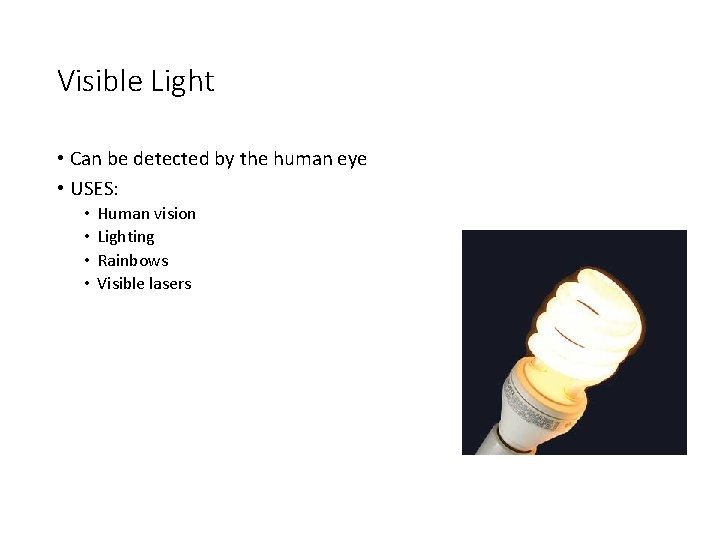
Visible Light • Can be detected by the human eye • USES: • • Human vision Lighting Rainbows Visible lasers
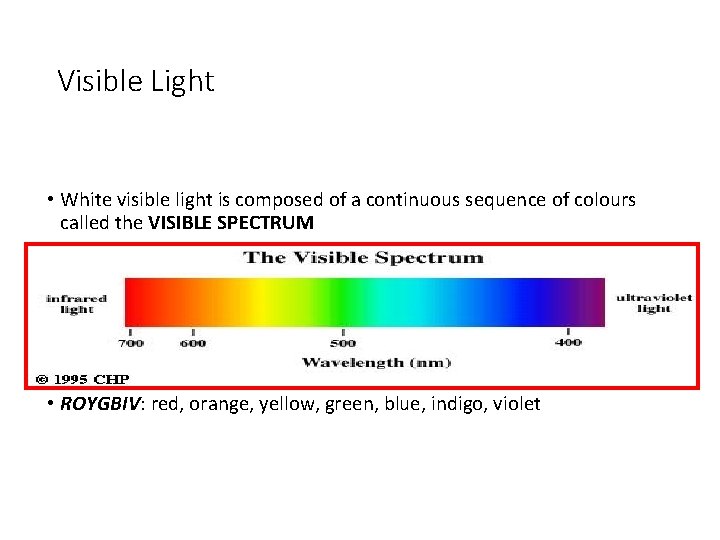
Visible Light • White visible light is composed of a continuous sequence of colours called the VISIBLE SPECTRUM • ROYGBIV: red, orange, yellow, green, blue, indigo, violet
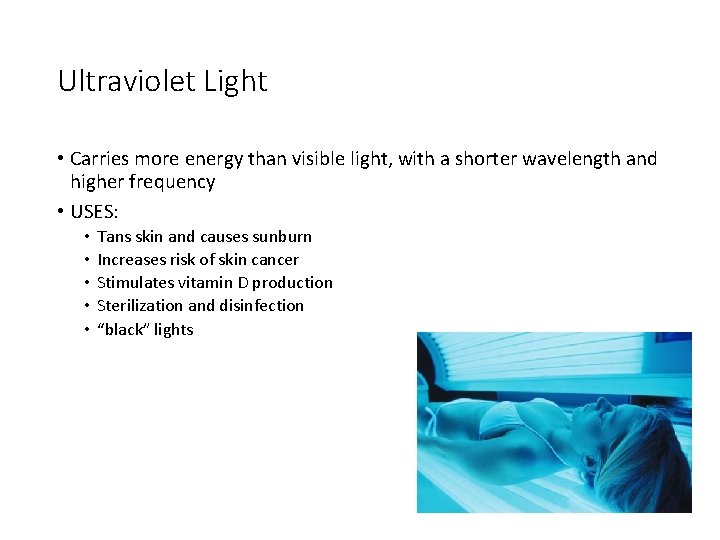
Ultraviolet Light • Carries more energy than visible light, with a shorter wavelength and higher frequency • USES: • • • Tans skin and causes sunburn Increases risk of skin cancer Stimulates vitamin D production Sterilization and disinfection “black” lights
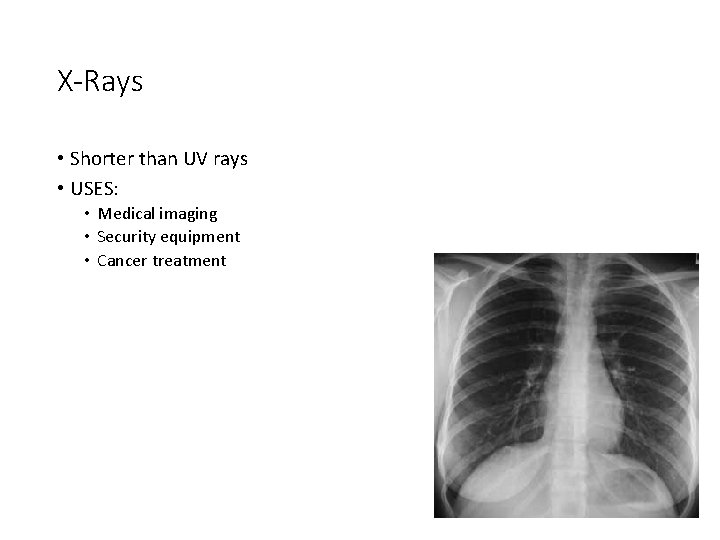
X-Rays • Shorter than UV rays • USES: • Medical imaging • Security equipment • Cancer treatment
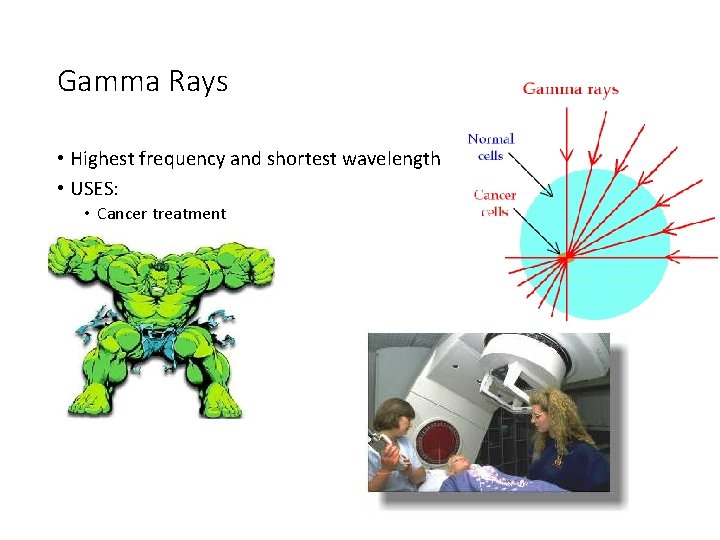
Gamma Rays • Highest frequency and shortest wavelength • USES: • Cancer treatment
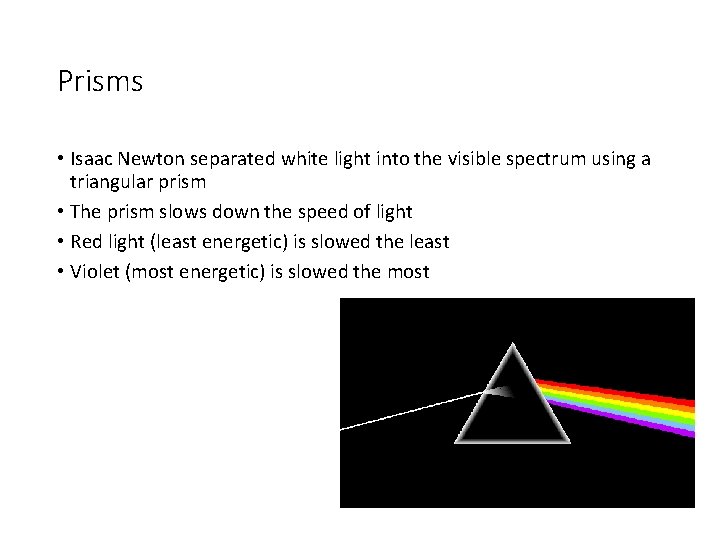
Prisms • Isaac Newton separated white light into the visible spectrum using a triangular prism • The prism slows down the speed of light • Red light (least energetic) is slowed the least • Violet (most energetic) is slowed the most