
Introduction to Life Science What is Life Levels

- Slides: 61
Introduction to Life Science What is Life? Levels of Organization Life Functions
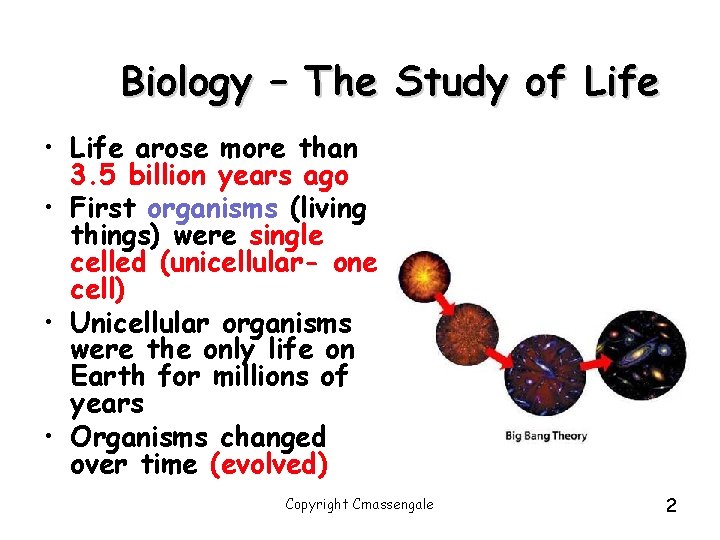
Biology – The Study of Life • Life arose more than 3. 5 billion years ago • First organisms (living things) were single celled (unicellular- one cell) • Unicellular organisms were the only life on Earth for millions of years • Organisms changed over time (evolved) Copyright Cmassengale 2
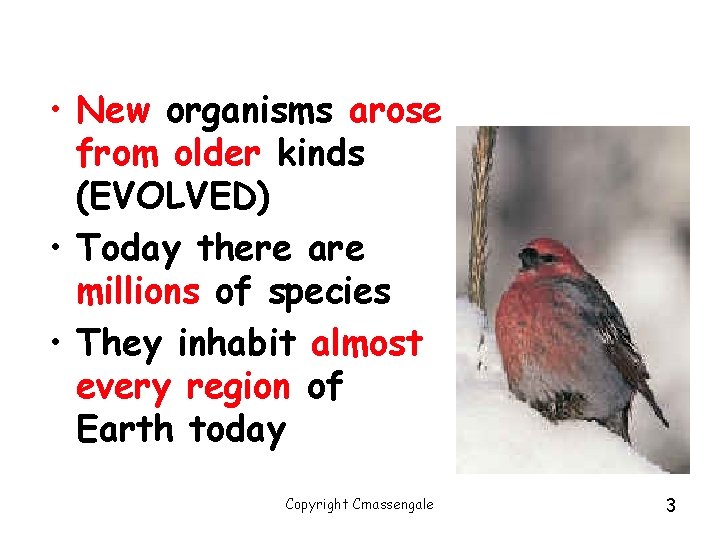
• New organisms arose from older kinds (EVOLVED) • Today there are millions of species • They inhabit almost every region of Earth today Copyright Cmassengale 3
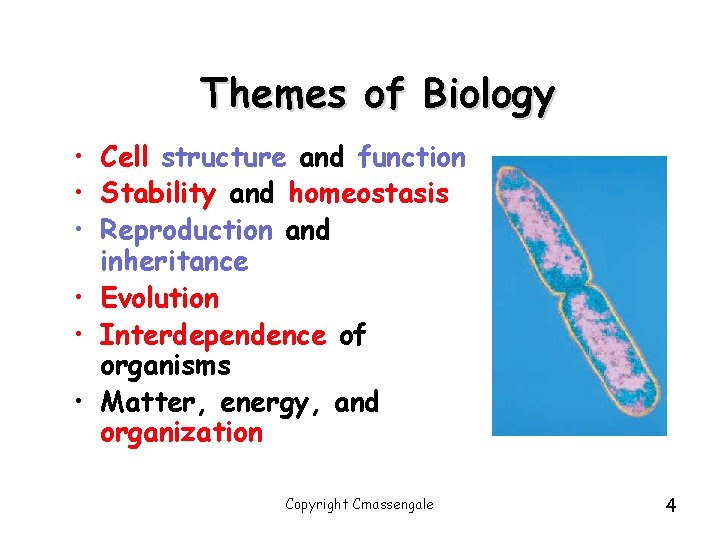
Themes of Biology • Cell structure and function • Stability and homeostasis • Reproduction and inheritance • Evolution • Interdependence of organisms • Matter, energy, and organization Copyright Cmassengale 4
Quick Think……. 1. Compare and contrast structure and function. 2. What is the difference between development and evolution?
What is Life?
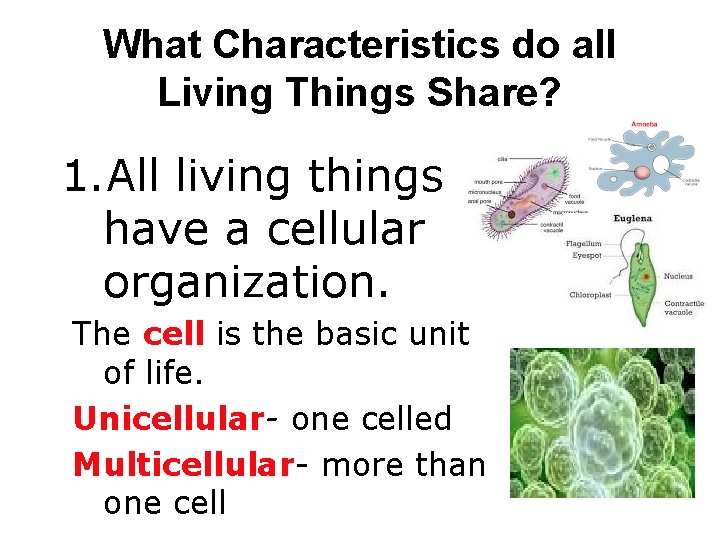
What Characteristics do all Living Things Share? 1. All living things have a cellular organization. The cell is the basic unit of life. Unicellular- one celled Multicellular- more than one cell
Think Fast…. 1. Give an example of a multicellular organism. 2. Give an example of a unicellular organism.
2. Cells are composed of chemicals. Water- the most abundant Carbohydrates- for energy Proteins and lipids- building materials Nucleic Acids- contain genetic material
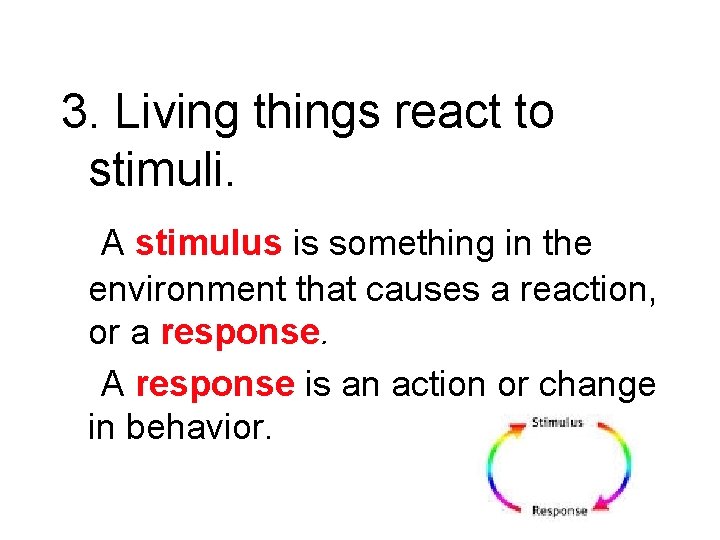
3. Living things react to stimuli. A stimulus is something in the environment that causes a reaction, or a response. A response is an action or change in behavior.
Think Fast…. . 1. What is the difference between a stimulus and a response? Give an example of each.
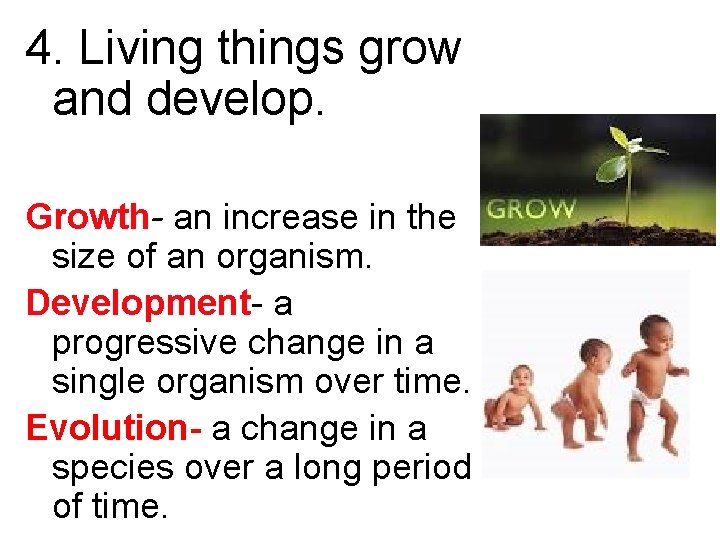
4. Living things grow and develop. Growth- an increase in the size of an organism. Development- a progressive change in a single organism over time. Evolution- a change in a species over a long period of time.
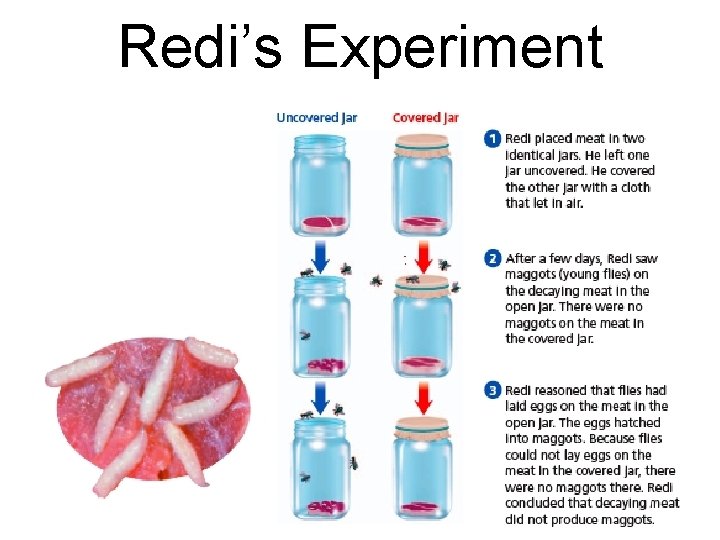
5. All living things have the ability to reproduce. All living things arise from other living things. The theory of Spontaneous Generation, which proposed that life can appear spontaneously from non-living things, was disproved by experiments performed by Redi and Pasteur.
Life Comes from Life • Living things come from living things. • 400 years ago people though that living things came from non-living things (Spontaneous Generation). • Francisco Redi, Louis Pasteur did experiments to disprove this theory.
Redi’s Experiment
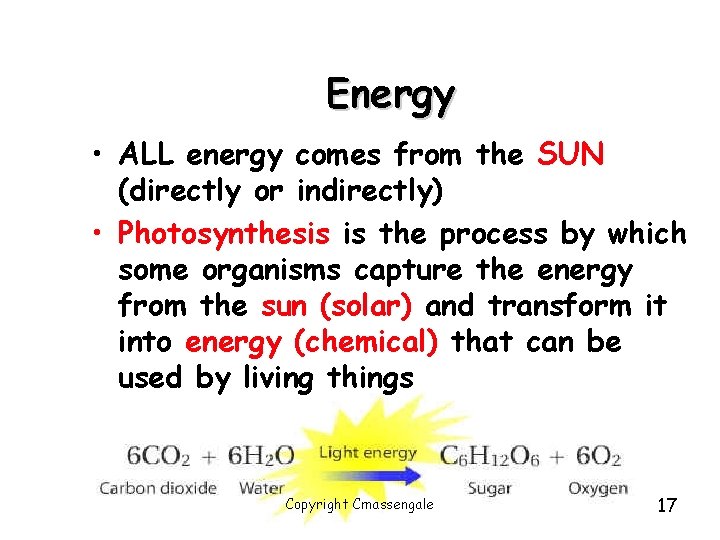
6. All living things use energy. • Energy is used to nourish, repair and create new cells. • We obtain energy from converting the foods that we eat into energy that can be used by the cells. • All energy comes originally from the SUN.
Energy • ALL energy comes from the SUN (directly or indirectly) • Photosynthesis is the process by which some organisms capture the energy from the sun (solar) and transform it into energy (chemical) that can be used by living things Copyright Cmassengale 17
Think Fast……… 1. Energy comes directly, or indirectly, from the ______. 2. During Photosynthesis, the energy from the sun starts out as ______energy and ends up as ______ energy that can be used by living things.
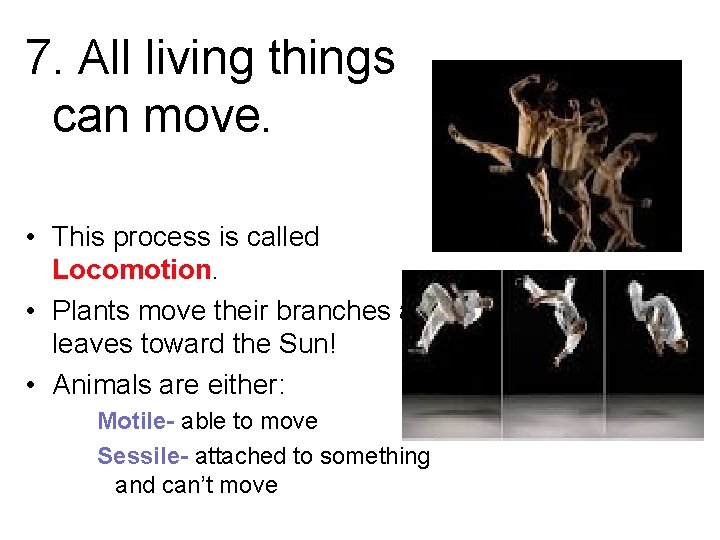
7. All living things can move. • This process is called Locomotion. • Plants move their branches and leaves toward the Sun! • Animals are either: Motile- able to move Sessile- attached to something and can’t move
Think Fast……. 1. Give an example of an organism that is mobile, and an example of an organism that is sessile.
What do All Living Things Need to Survive? 1. Water**** 2. Food 3. Living space 4. Stable internal conditions (Homeostasis)
Think Fast ……. 1. Compare and contrast homeostasis and metabolism.
Let’s go to the Video!
Levels of Organization
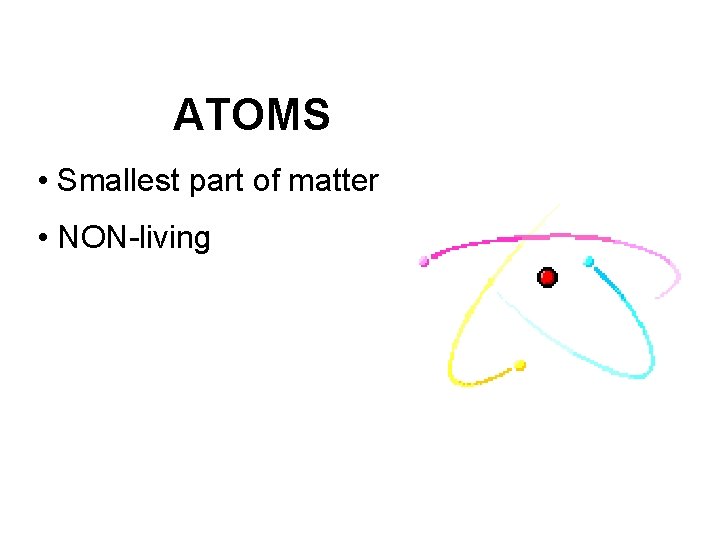
ATOMS • Smallest part of matter • NON-living
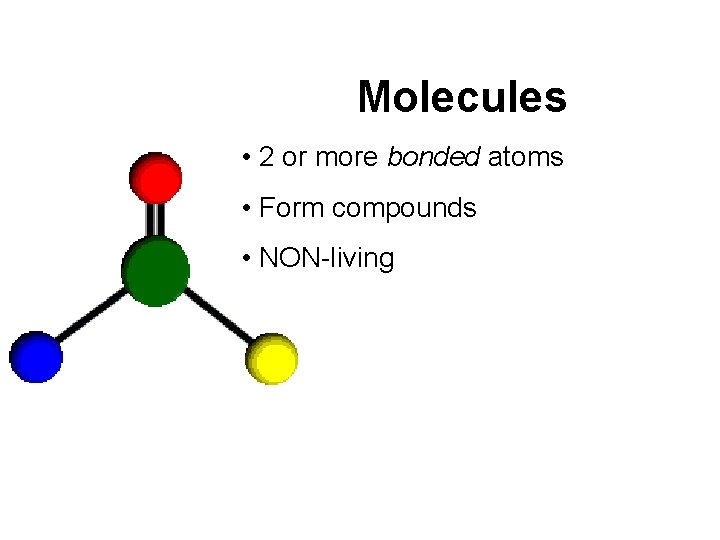
Molecules • 2 or more bonded atoms • Form compounds • NON-living
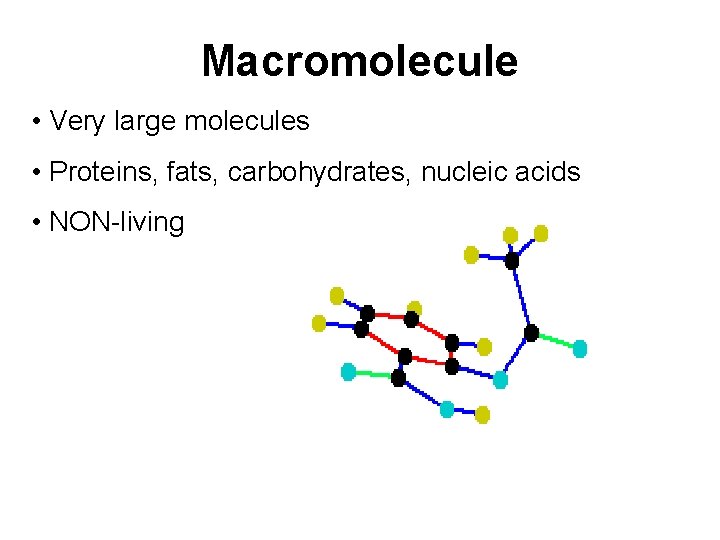
Macromolecule • Very large molecules • Proteins, fats, carbohydrates, nucleic acids • NON-living
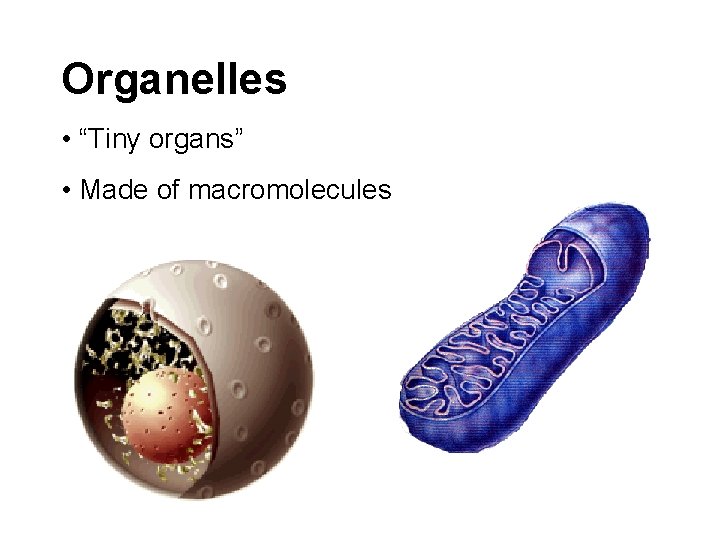
Organelles • “Tiny organs” • Made of macromolecules
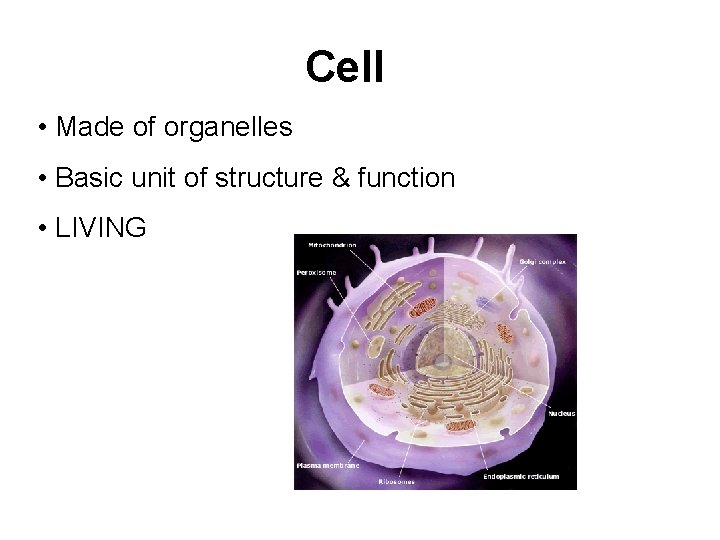
Cell • Made of organelles • Basic unit of structure & function • LIVING
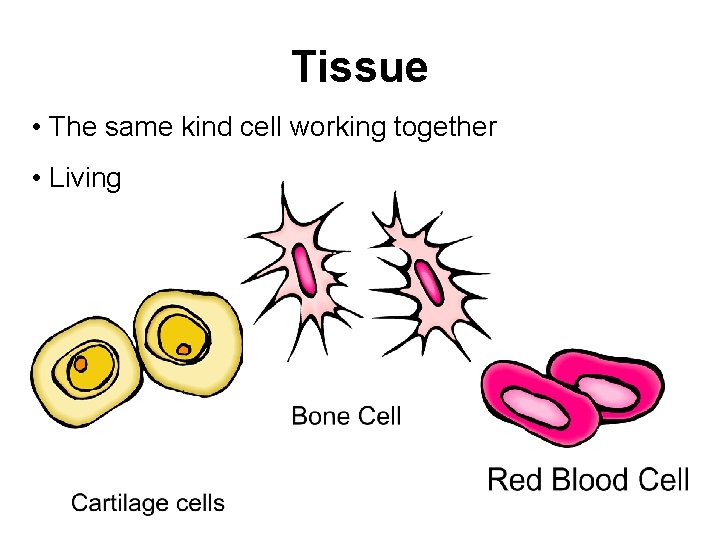
Tissue • The same kind cell working together • Living
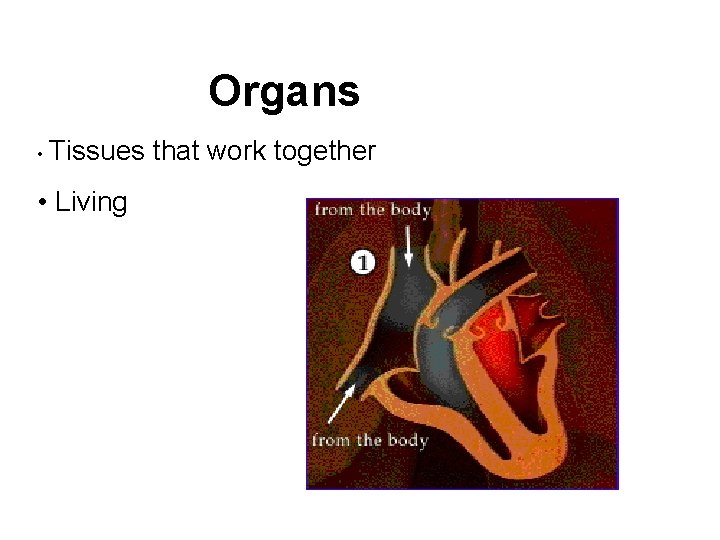
Organs • Tissues • Living that work together
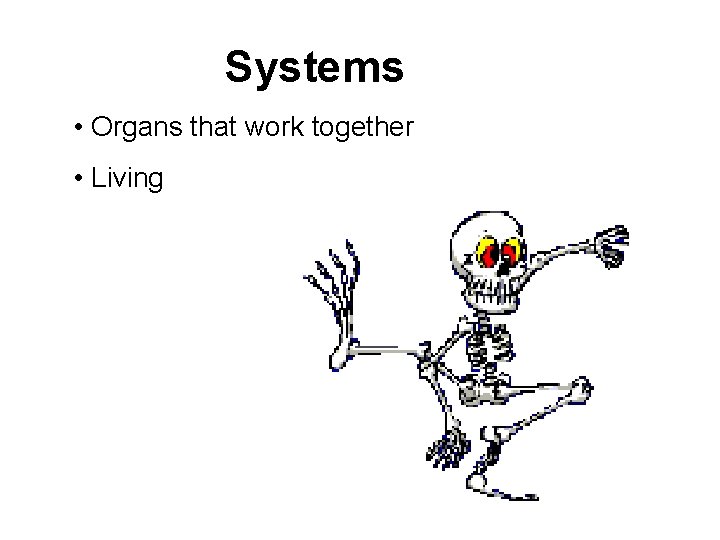
Systems • Organs that work together • Living
Think Fast… 1. Gives 2 examples of each of the following: a. b. c. d. Cell Tissue Organ system
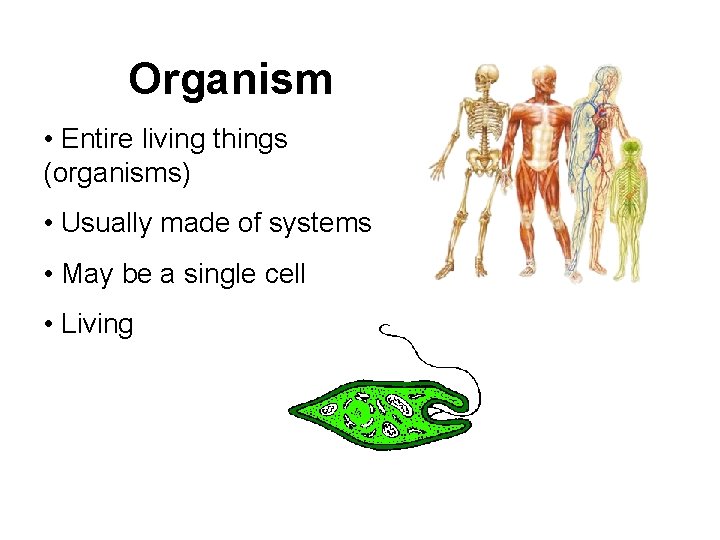
Organism • Entire living things (organisms) • Usually made of systems • May be a single cell • Living
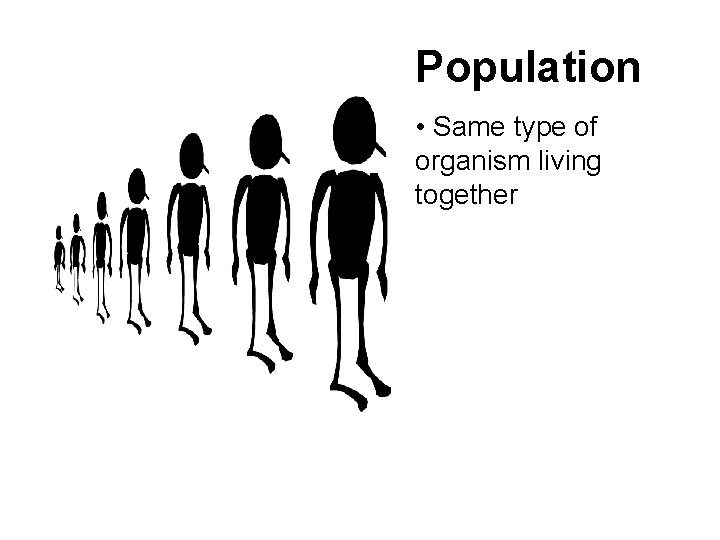
Population • Same type of organism living together
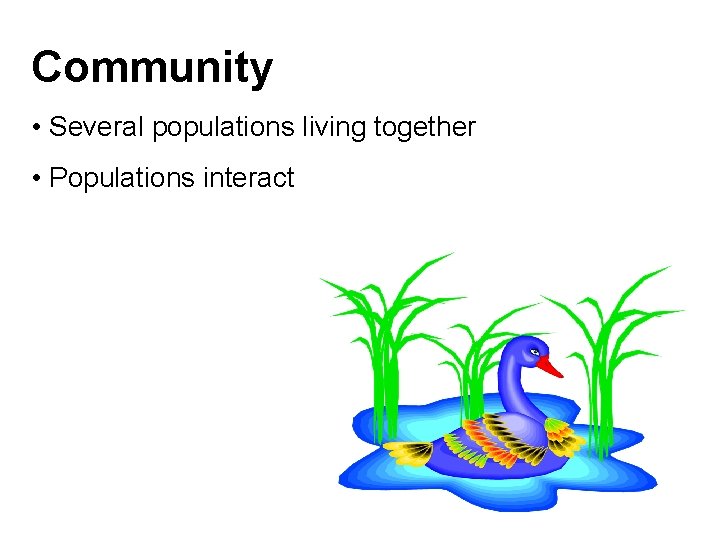
Community • Several populations living together • Populations interact
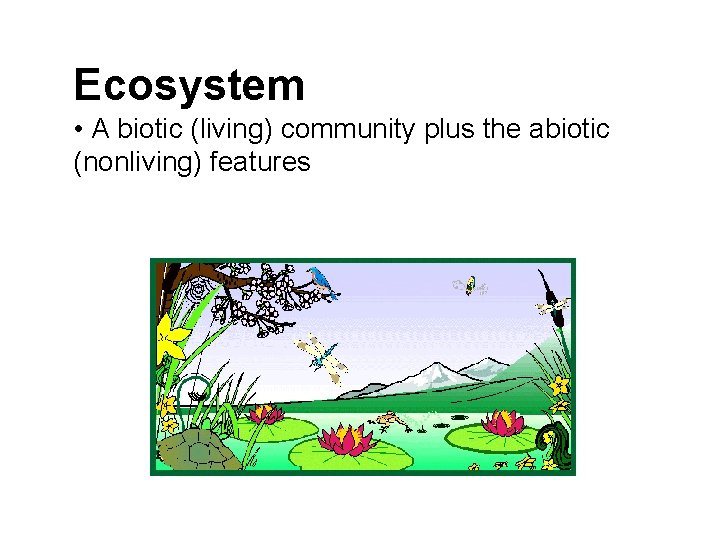
Ecosystem • A biotic (living) community plus the abiotic (nonliving) features
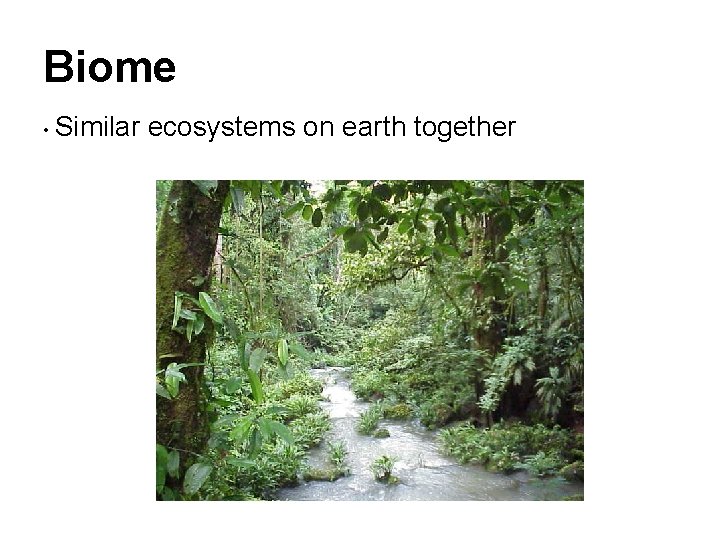
Biome • Similar ecosystems on earth together
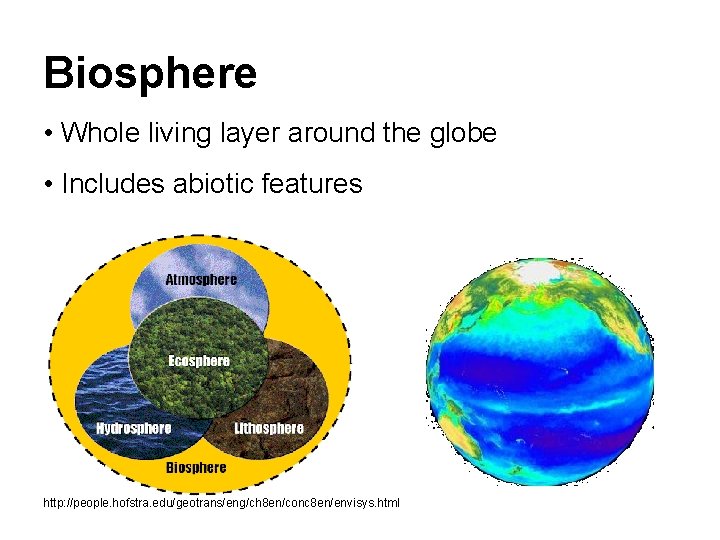
Biosphere • Whole living layer around the globe • Includes abiotic features http: //people. hofstra. edu/geotrans/eng/ch 8 en/conc 8 en/envisys. html
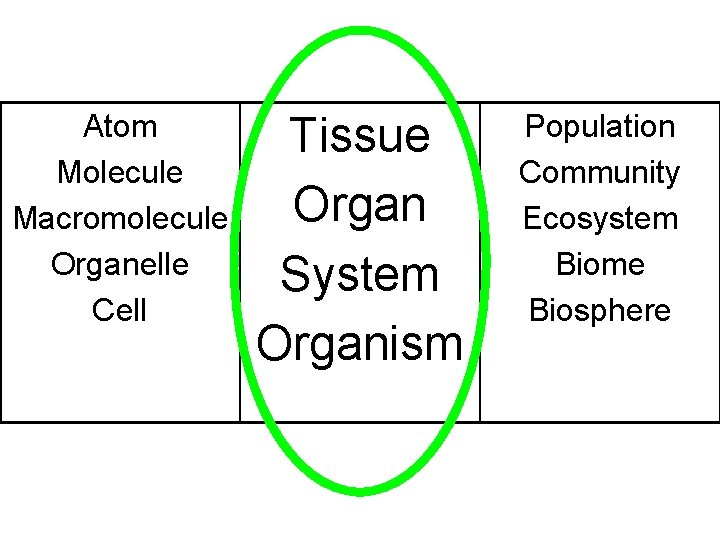
Atom Molecule Macromolecule Organelle Cell Tissue Organ System Organism Population Community Ecosystem Biome Biosphere
Life Functions
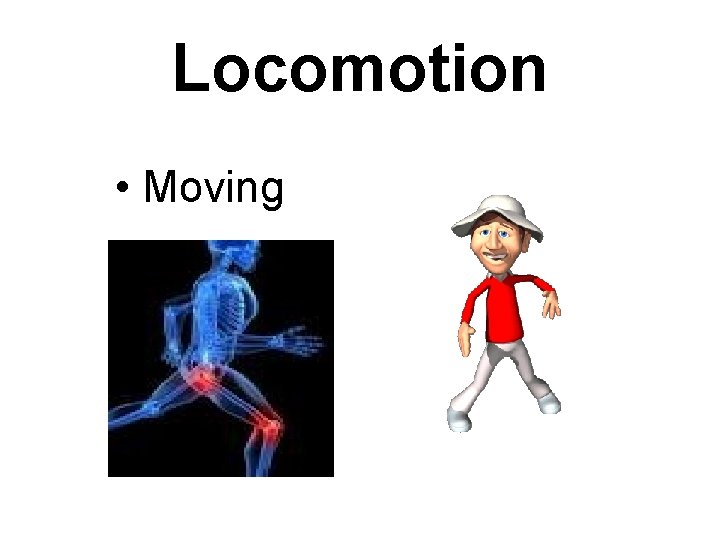
Locomotion • Moving
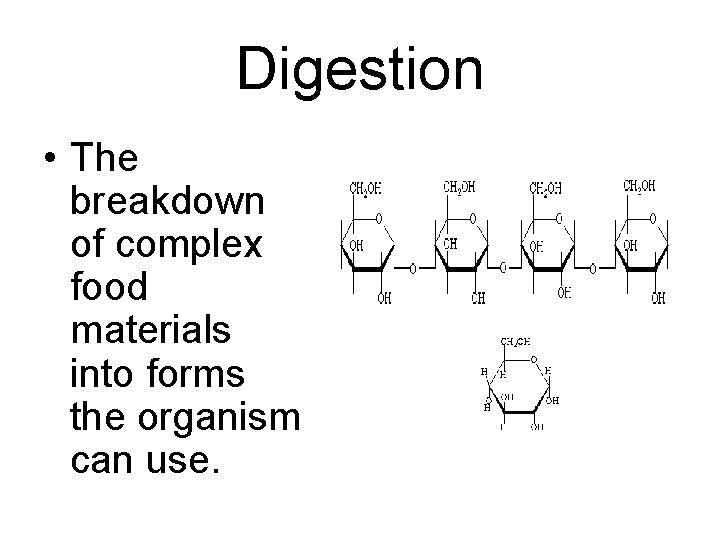
Digestion • The breakdown of complex food materials into forms the organism can use.
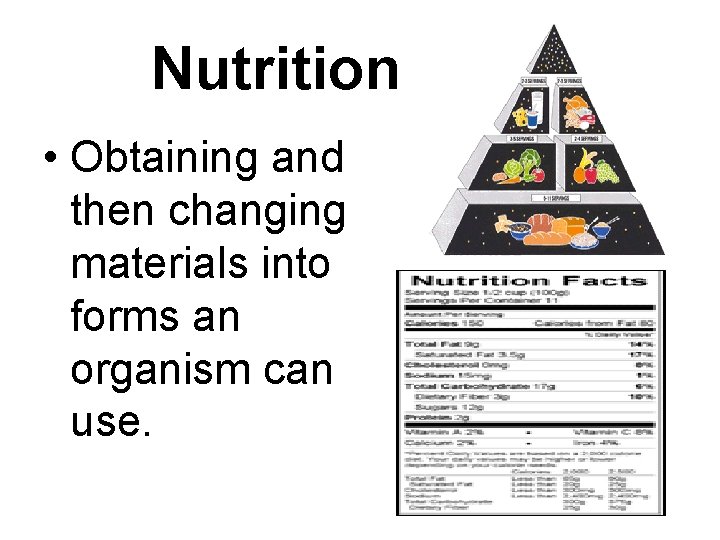
Nutrition • Obtaining and then changing materials into forms an organism can use.
Egestion • Elimination of indigestible, solid material.
Absorption • Process by which substances are taken into the cells of an organism
Assimilation • Incorporation of materials into the body of an organism
Circulation • Process by which material are moved throughout an organism
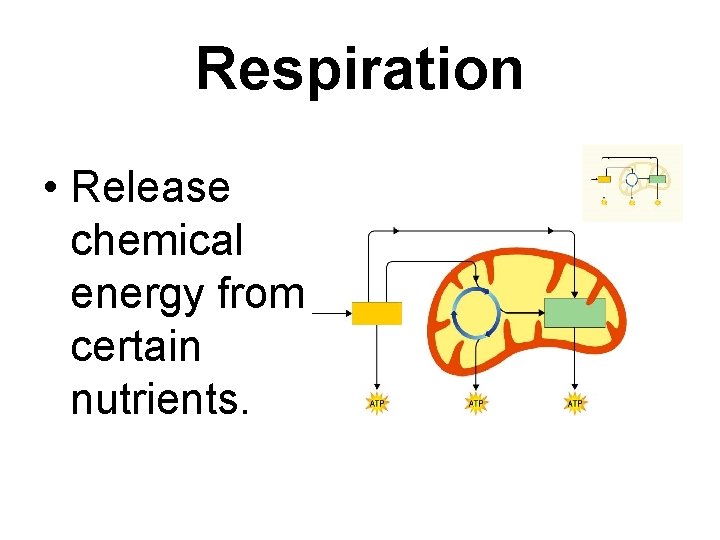
Respiration • Release chemical energy from certain nutrients.
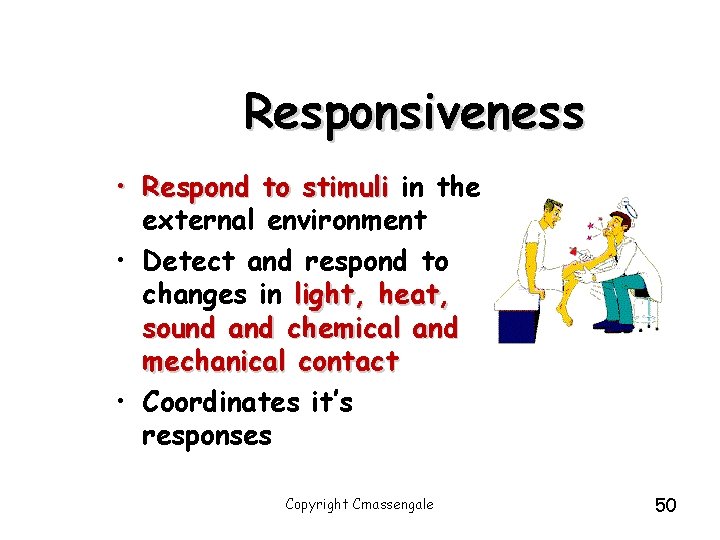
Responsiveness • Respond to stimuli in the external environment • Detect and respond to changes in light, heat, sound and chemical and mechanical contact • Coordinates it’s responses Copyright Cmassengale 50
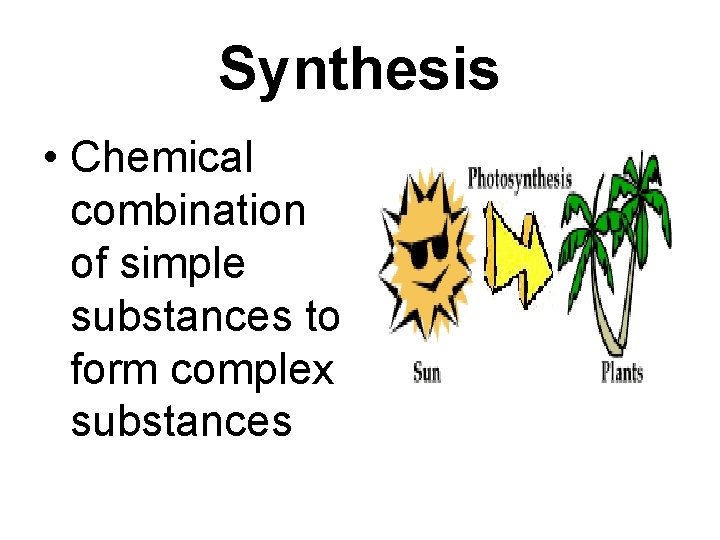
Synthesis • Chemical combination of simple substances to form complex substances
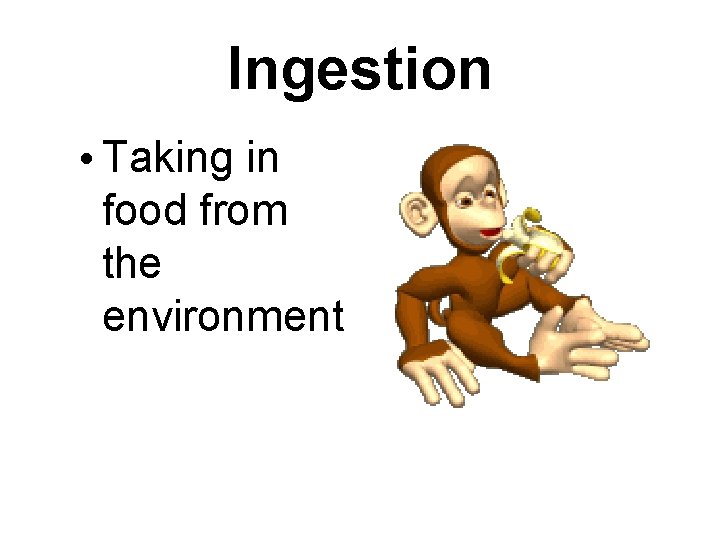
Ingestion • Taking in food from the environment
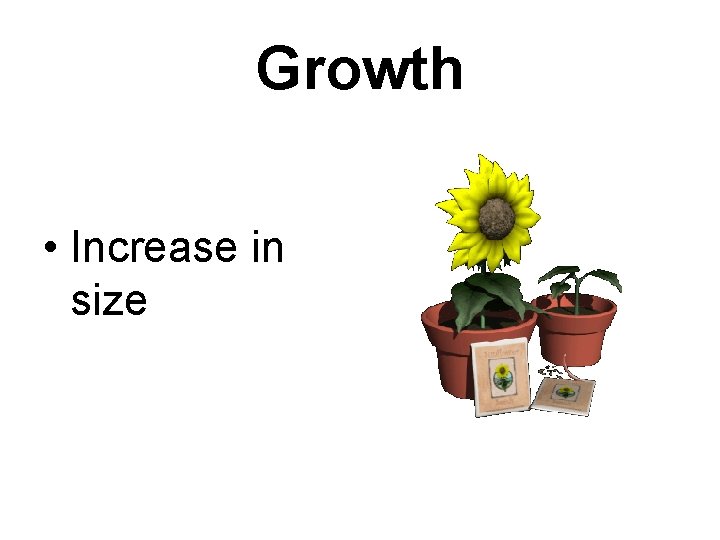
Growth • Increase in size
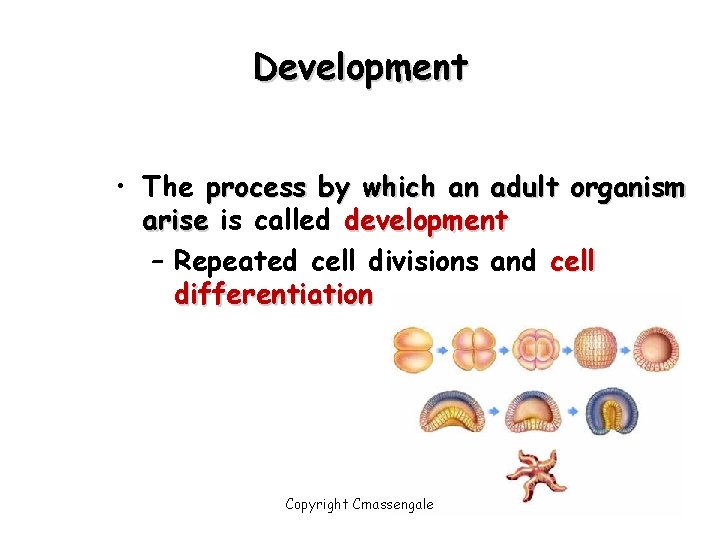
Development • The process by which an adult organism arise is called development – Repeated cell divisions and cell differentiation Copyright Cmassengale 54
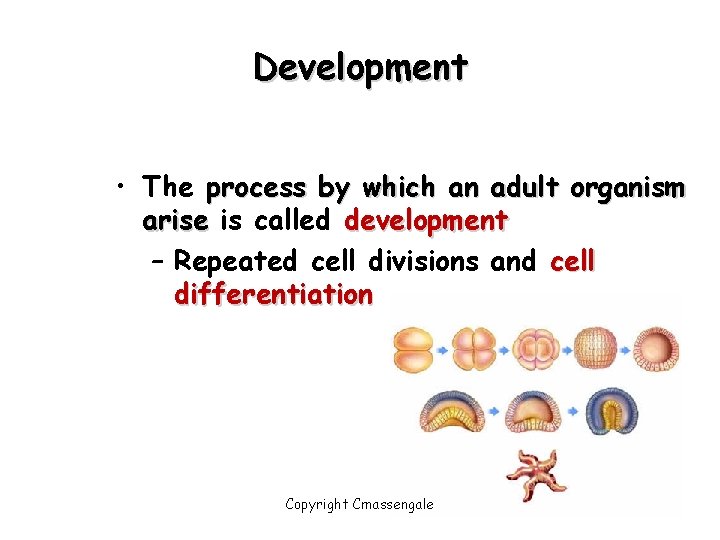
Development • The process by which an adult organism arise is called development – Repeated cell divisions and cell differentiation Copyright Cmassengale 55
Homeostasis • Maintaining a stable balanced internal environment
Excretion • Removal of cellular metabolic waste by an organism (CO 2, H 2 O)
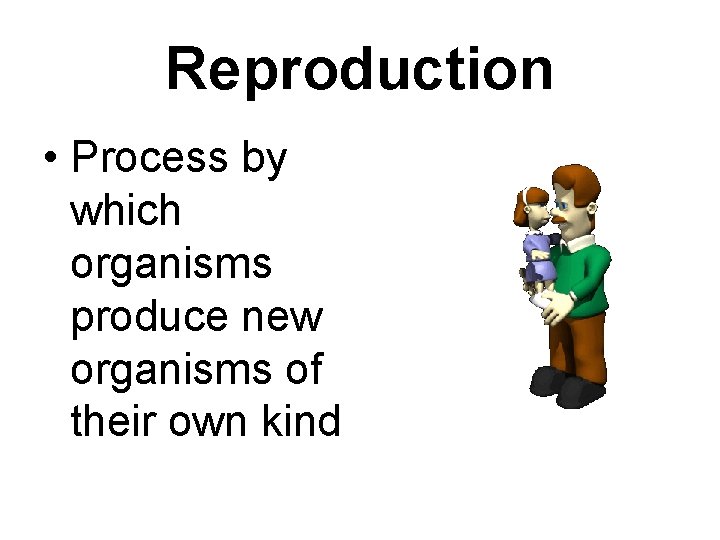
Reproduction • Process by which organisms produce new organisms of their own kind
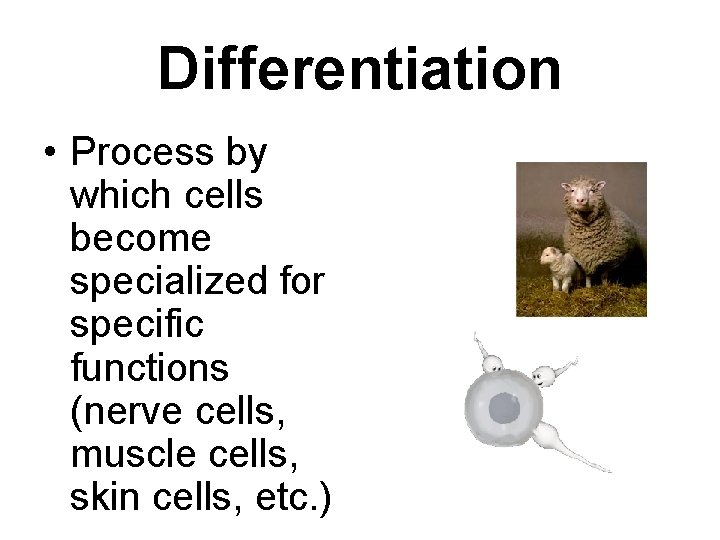
Differentiation • Process by which cells become specialized for specific functions (nerve cells, muscle cells, skin cells, etc. )
Metabolism • The sum total of all the reactions occurring within the cells of an organism
Immunity • The ability of an organism to fight off foreign invaders