
INTRODUCTION TO LESSON STUDY What is lesson study
- Slides: 12
INTRODUCTION TO LESSON STUDY
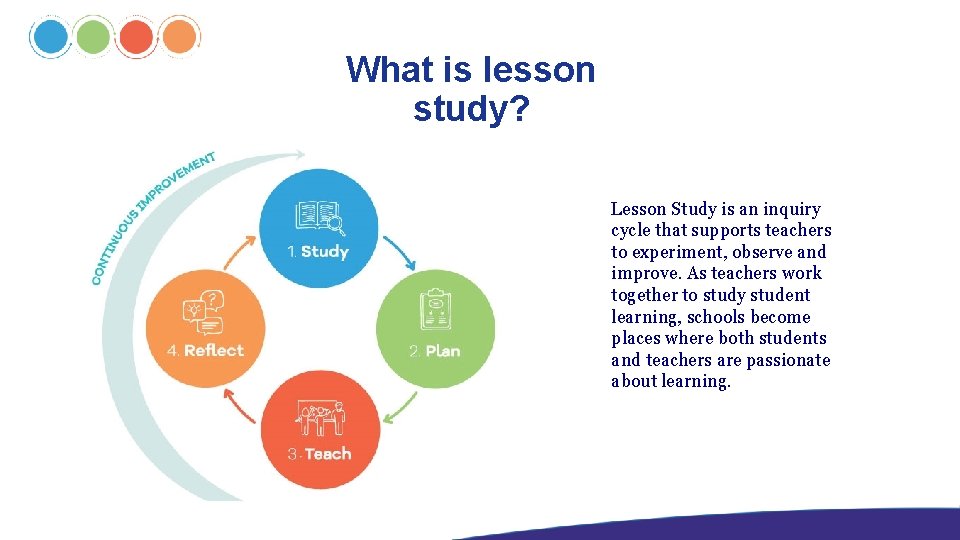
What is lesson study? Lesson Study is an inquiry cycle that supports teachers to experiment, observe and improve. As teachers work together to study student learning, schools become places where both students and teachers are passionate about learning.
Teaching Gap Improving something as complex and culturally embedded as teaching requires the efforts of all the players, including students, parents, and politicians. But teachers must be the primary driving force behind change. They are best positioned to understand the problems that students face and to generate possible solutions. James Stigler and James Hiebert, The Teaching Gap, 1999, p. 13
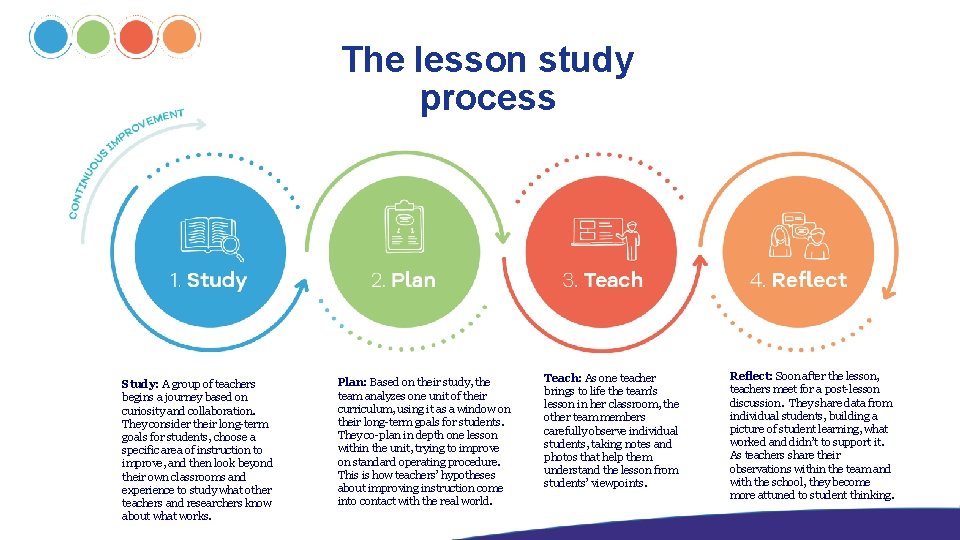
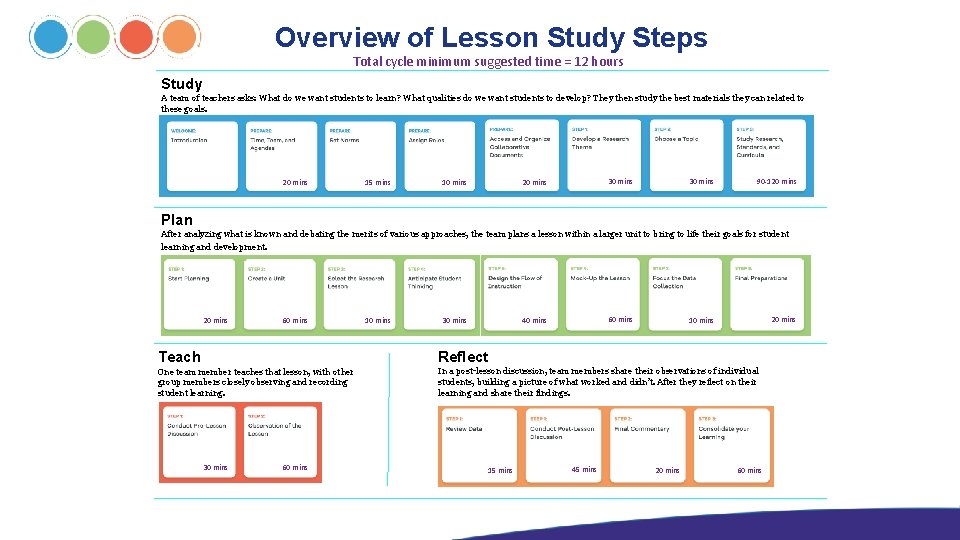
The lesson study process Study: A group of teachers begins a journey based on curiosity and collaboration. They consider their long-term goals for students, choose a specific area of instruction to improve, and then look beyond their own classrooms and experience to study what other teachers and researchers know about what works. Plan: Based on their study, the team analyzes one unit of their curriculum, using it as a window on their long-term goals for students. They co-plan in depth one lesson within the unit, trying to improve on standard operating procedure. This is how teachers’ hypotheses about improving instruction come into contact with the real world. Teach: As one teacher brings to life the team’s lesson in her classroom, the other team members carefully observe individual students, taking notes and photos that help them understand the lesson from students’ viewpoints. Reflect: Soon after the lesson, teachers meet for a post-lesson discussion. They share data from individual students, building a picture of student learning, what worked and didn’t to support it. As teachers share their observations within the team and with the school, they become more attuned to student thinking.
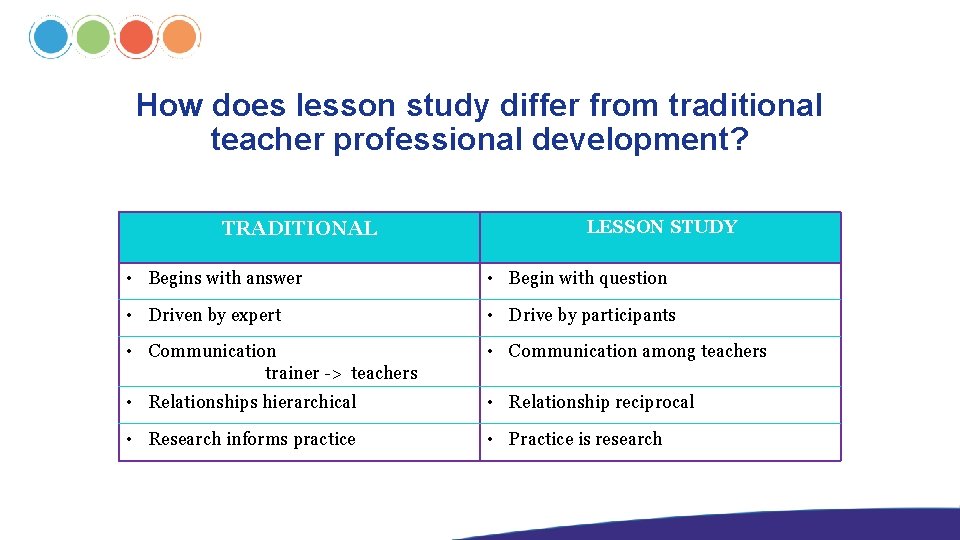
How does lesson study differ from traditional teacher professional development? TRADITIONAL LESSON STUDY • Begins with answer • Begin with question • Driven by expert • Drive by participants • Communication trainer -> teachers • Communication among teachers • Relationships hierarchical • Relationship reciprocal • Research informs practice • Practice is research
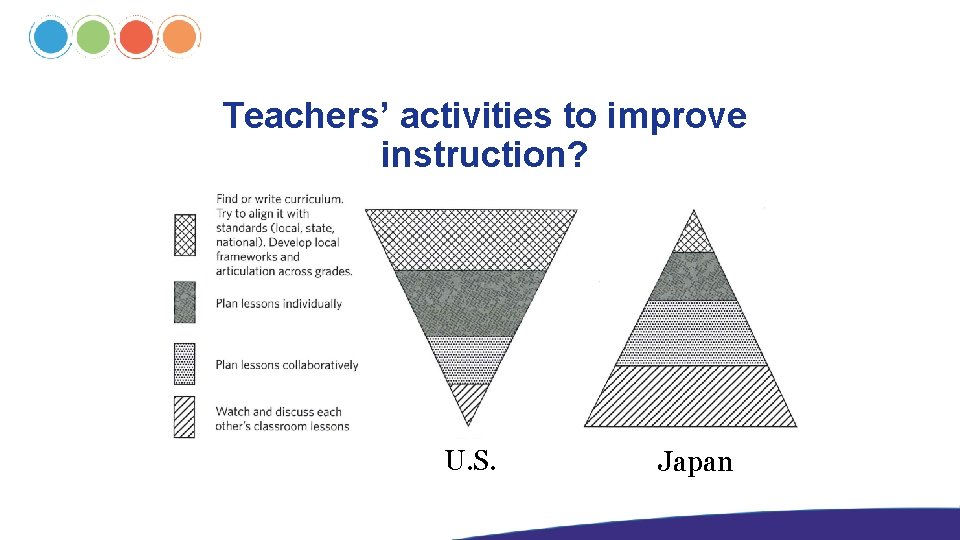
Teachers’ activities to improve instruction? U. S. Japan
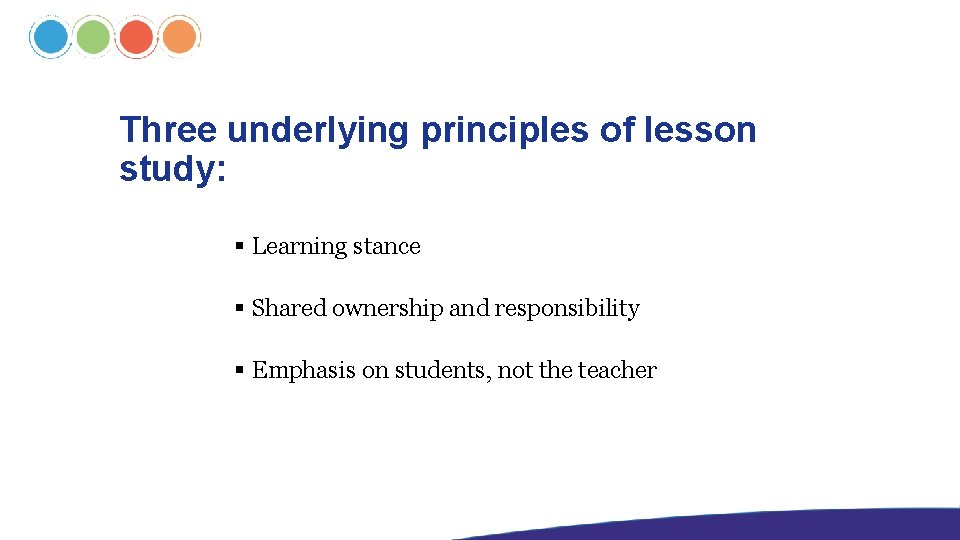
Three underlying principles of lesson study: § Learning stance § Shared ownership and responsibility § Emphasis on students, not the teacher
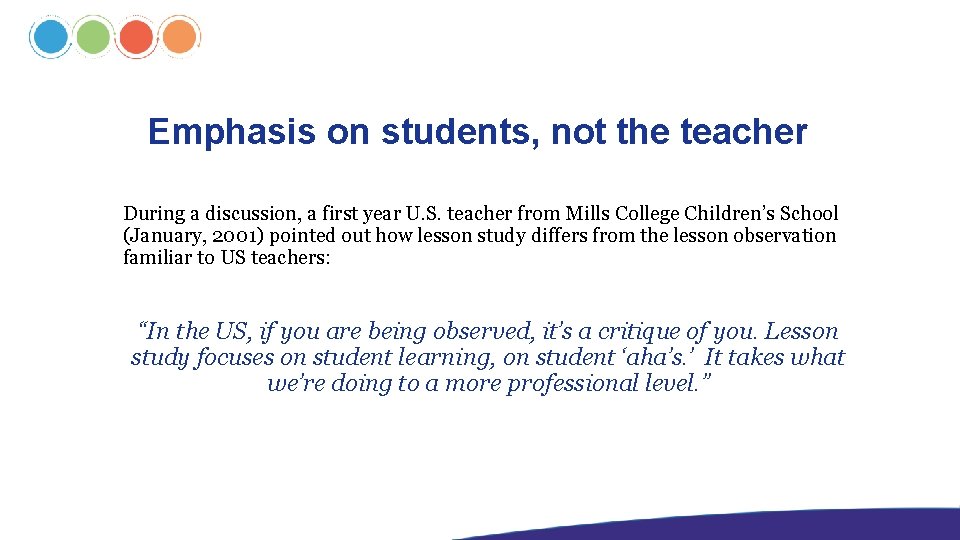
Emphasis on students, not the teacher During a discussion, a first year U. S. teacher from Mills College Children’s School (January, 2001) pointed out how lesson study differs from the lesson observation familiar to US teachers: “In the US, if you are being observed, it’s a critique of you. Lesson study focuses on student learning, on student ‘aha’s. ’ It takes what we’re doing to a more professional level. ”
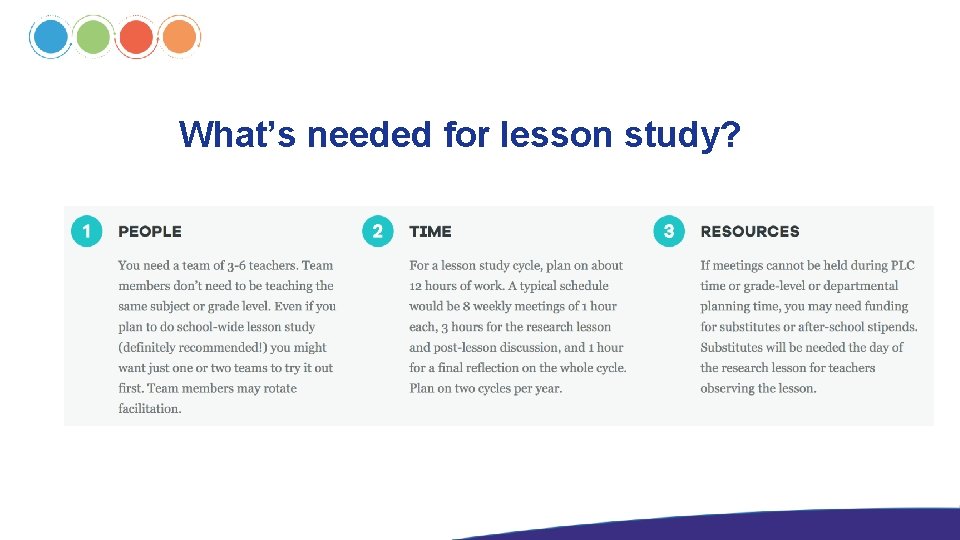
What’s needed for lesson study?
Overview of Lesson Study Steps Total cycle minimum suggested time = 12 hours Study A team of teachers asks: What do we want students to learn? What qualities do we want students to develop? They then study the best materials they can related to these goals. 20 mins 15 mins 30 mins 20 mins 10 mins 30 mins 90 -120 mins Plan After analyzing what is known and debating the merits of various approaches, the team plans a lesson within a larger unit to bring to life their goals for student learning and development. 20 mins 60 mins 10 mins 60 mins 40 mins 30 mins 20 mins 10 mins Teach Reflect One team member teaches that lesson, with other group members closely observing and recording student learning. In a post-lesson discussion, team members share their observations of individual students, building a picture of what worked and didn’t. After they reflect on their learning and share their findings. 30 mins 60 mins 15 mins 45 mins 20 mins 60 mins
www. lessonresearch. net