
Introduction to LDC Presented by Kelly Philbeck kelly
Introduction to LDC! Presented by: Kelly Philbeck kelly. philbeck@education. ky. gov
Materials & Resources are on www. kellyphilbeck. com 2
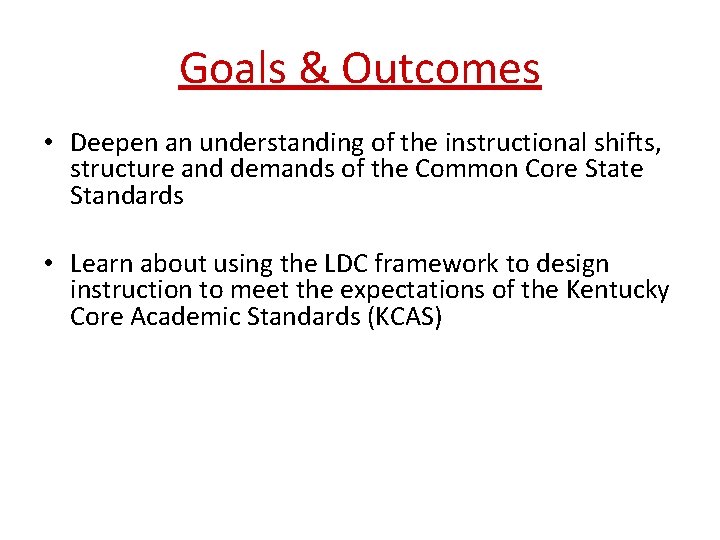
Goals & Outcomes • Deepen an understanding of the instructional shifts, structure and demands of the Common Core State Standards • Learn about using the LDC framework to design instruction to meet the expectations of the Kentucky Core Academic Standards (KCAS)
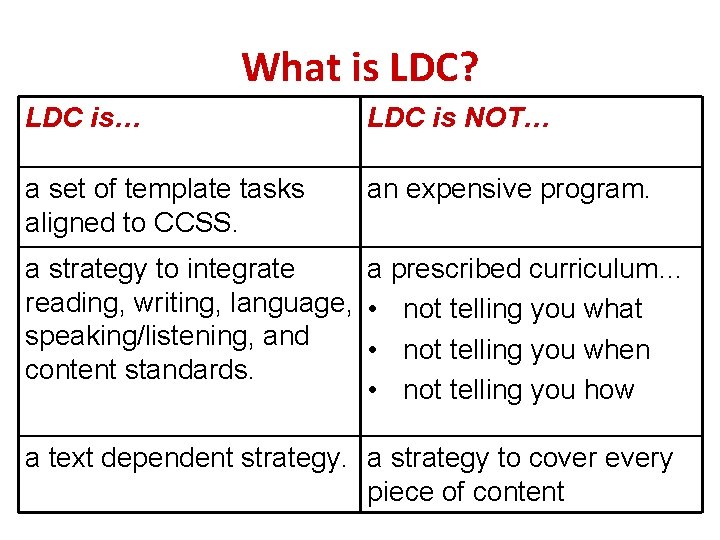
What is LDC? LDC is… LDC is NOT… a set of template tasks aligned to CCSS. an expensive program. a strategy to integrate a prescribed curriculum… reading, writing, language, • not telling you what speaking/listening, and • not telling you when content standards. • not telling you how a text dependent strategy. a strategy to cover every piece of content
LDC is NOT Every Assignment • LDC is NOT every assignment. • LDC is the kind of assignment for when you think students should write in response to reading. – “reading”(e. g. , articles, videos, artworks, timelines, data sets, stories)

How Can I Use LDC? 05/30/13 LDC 6
Writing Program Reviews: C&I • 2 b) Curriculum integrates the strands of literacy (reading, writing, speaking, listening, and language use) to apply communication skills to meaningful work across content areas. • 2 e) Curriculum provides opportunities for students to actively use knowledge as it is being learned through applying the skills of critical thinking, problem solving and creativity to content knowledge and collaborating and communicating locally and/or globally. • 3 b) Students research information to seek a new or deeper understanding based on inquiry around a topic and demonstrate new understanding through products that may be used by others for further understanding of the topic.
Formative & Summative Assessments • 1 b) Teachers consistently implement plan to monitor student progress in writing and communication skills consistent with grade-level writing standards, formative assessments, and respond to evidence through revised instruction. • 1 c) Teachers, peers, and others provide regular, specific feedback on student’s writing and communication products as part of a constructive feedback process that is subsequently applied by students to improve their communications and initiate student-directed learning.
Instructional Shifts Required by the Common Core § Increasing rigor and relevance § Sharing responsibility of teaching reading and writing across content areas § Building knowledge through content-rich nonfiction and informational text § Reading, writing, speaking and listening grounded in evidence from texts § Practicing regularly with complex text and its academic vocabulary § Emphasizing 3 modes of academic writing 05/30/13 9
Literacy Shifts: Key Evidence https: //www. youtube. com/watch? v=JDz. TOyx. RGLI&list=PL 913348 FFD 75155 C 6
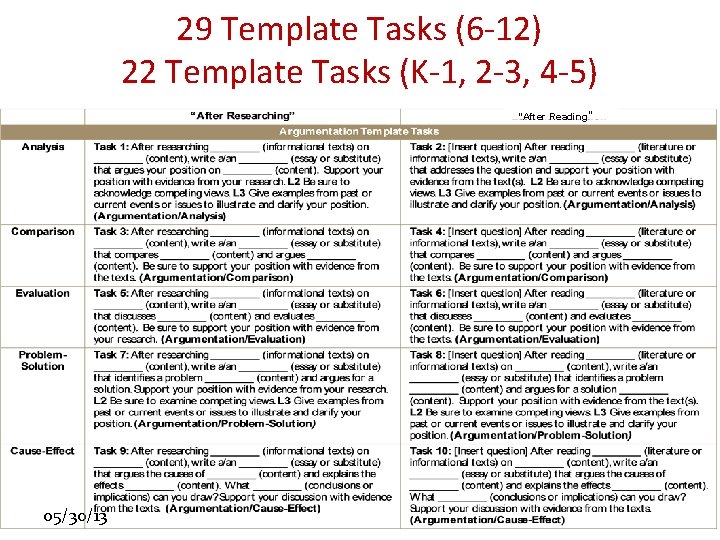
29 Template Tasks (6 -12) 22 Template Tasks (K-1, 2 -3, 4 -5) “After Reading” 05/30/13
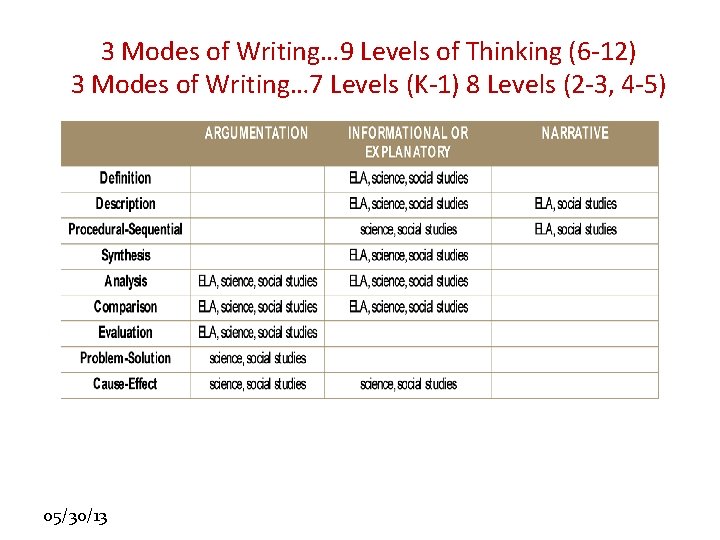
3 Modes of Writing… 9 Levels of Thinking (6 -12) 3 Modes of Writing… 7 Levels (K-1) 8 Levels (2 -3, 4 -5) 05/30/13
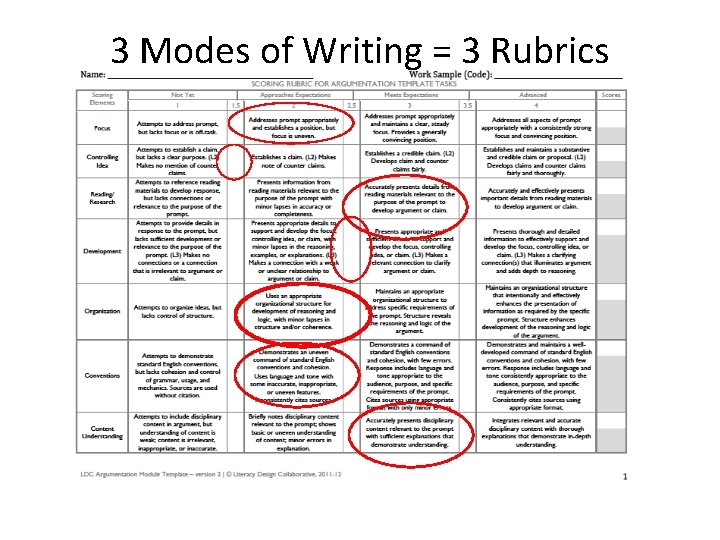
3 Modes of Writing = 3 Template Rubrics LDC Rubric for Argumentation Tasks
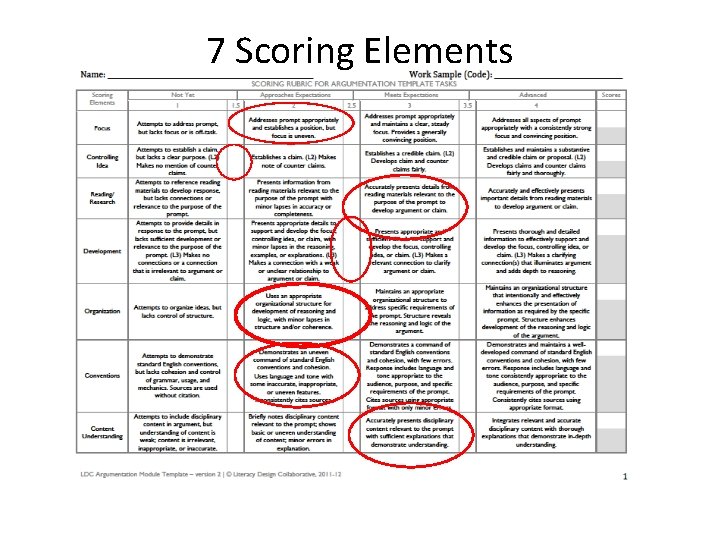
7 Scoring Elements LDC Rubric for Argumentation Template Tasks
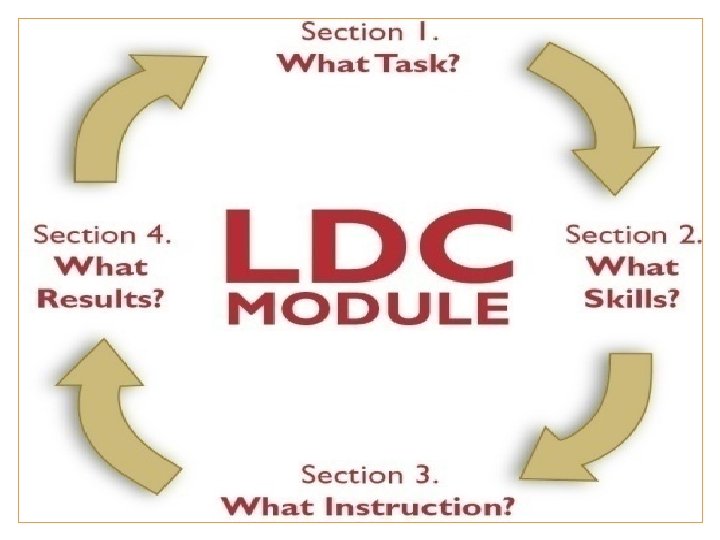
8 Demands=Cognitive Challenges (6 -12) 7 Demands=Cognitive Challenges (K-5) • • D 1 Be sure to ______ (acknowledge; refute) competing views. (Argumentation) D 2 Give (an example; # of examples) from past or current (events; issues) to illustrate and clarify your position. (Argumentation or Informational/Explanatory) D 3 What ____ (conclusions; implications) can you draw? (Argumentation or Informational/Explanatory) D 4 In your discussion, address the credibility and origin of sources in view of your research topic. (Argumentation or Informational/Explanatory) D 5 Identify any gaps or unanswered questions. (Argumentation or Informational/Explanatory) D 6 Use ____ (stylistic devices) to develop your work. (Argumentation or Informational/Explanatory or Narrative) D 7 Use ____ (techniques) to convey multiple storylines. (Argumentation or Informational/Explanatory or Narrative) D 8 Include ____ (e. g. bibliography, citations, references, endnotes). (Argumentation or Informational/Explanatory)
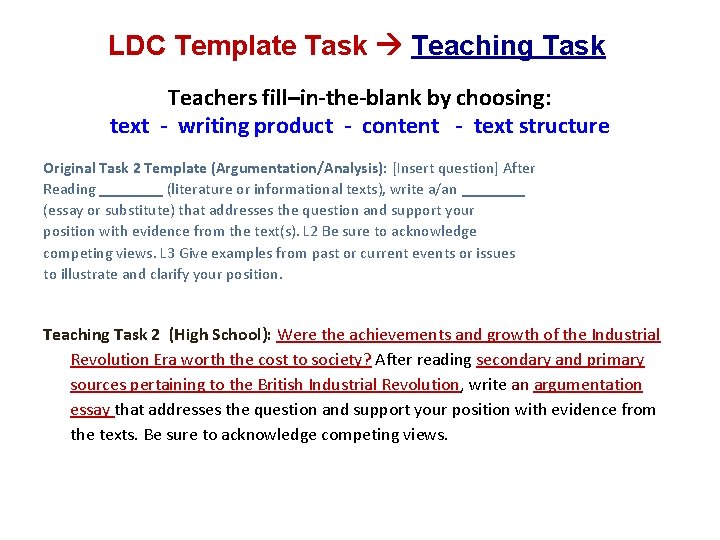
LDC Template Task Teaching Task Teachers fill–in-the-blank by choosing: text - writing product - content - text structure Original Task 2 Template (Argumentation/Analysis): [Insert question] After Reading ____ (literature or informational texts), write a/an ____ (essay or substitute) that addresses the question and support your position with evidence from the text(s). L 2 Be sure to acknowledge competing views. L 3 Give examples from past or current events or issues to illustrate and clarify your position. Teaching Task 2 (High School): Were the achievements and growth of the Industrial Revolution Era worth the cost to society? After reading secondary and primary sources pertaining to the British Industrial Revolution, write an argumentation essay that addresses the question and support your position with evidence from the texts. Be sure to acknowledge competing views.
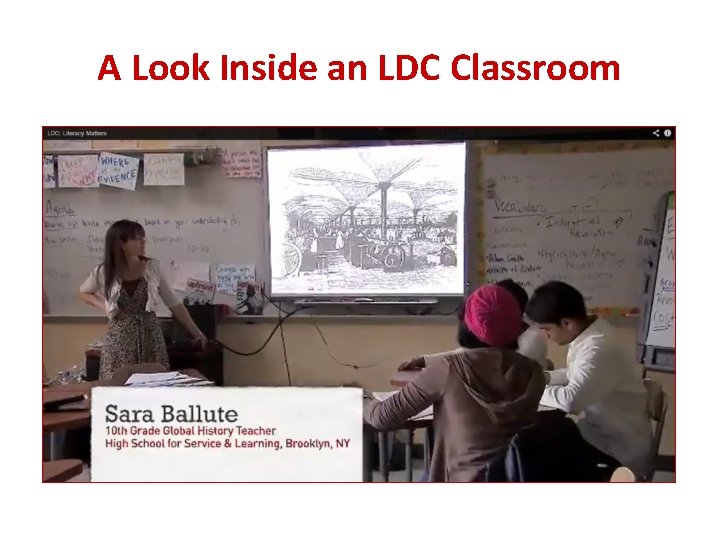
A Look Inside an LDC Classroom
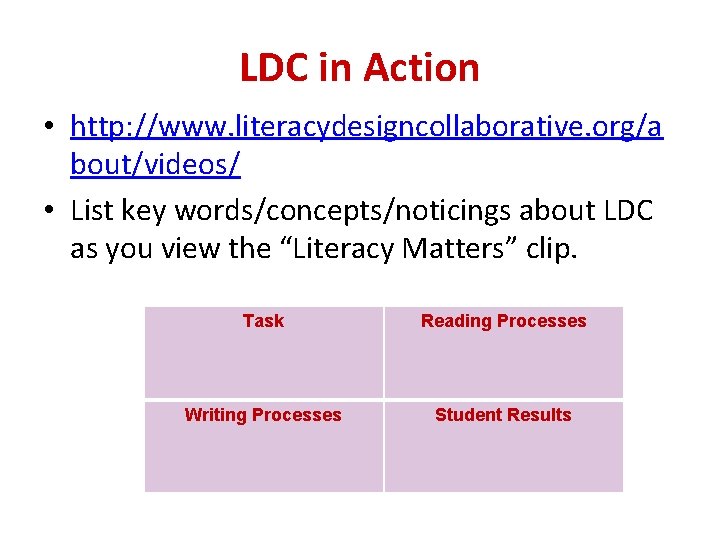
LDC in Action • http: //www. literacydesigncollaborative. org/a bout/videos/ • List key words/concepts/noticings about LDC as you view the “Literacy Matters” clip. 05/30/13 Task Reading Processes Writing Processes Student Results
Reflection Questions • After watching Literacy Matters, which of your standards/topics essential to your discipline would be a good fit for LDC? • How could you use LDC as a tool in your school/classroom?
Questions? Kelly Philbeck LDC Instructional Specialist Kentucky Department of Education kelly. philbeck@education. ky. gov
- Slides: 20