
Introduction to Latin America Physical Geography Agenda Latin

- Slides: 30
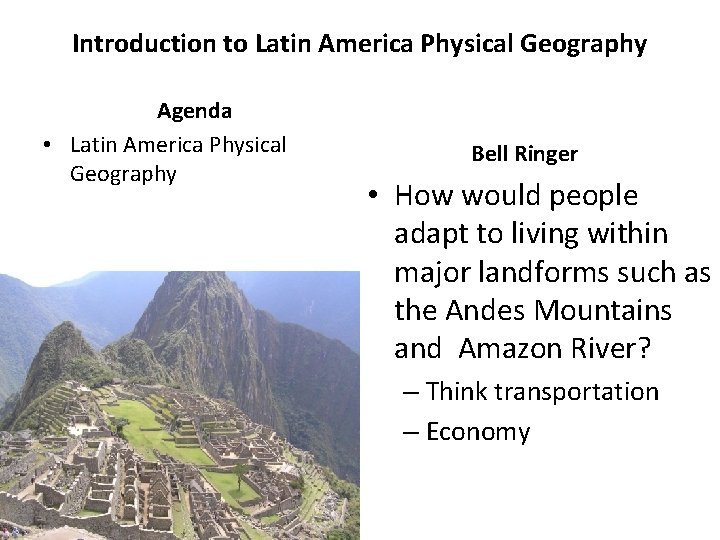
Introduction to Latin America Physical Geography Agenda • Latin America Physical Geography Bell Ringer • How would people adapt to living within major landforms such as the Andes Mountains and Amazon River? – Think transportation – Economy
South America Physical Geography EXTREME DIVERSITY
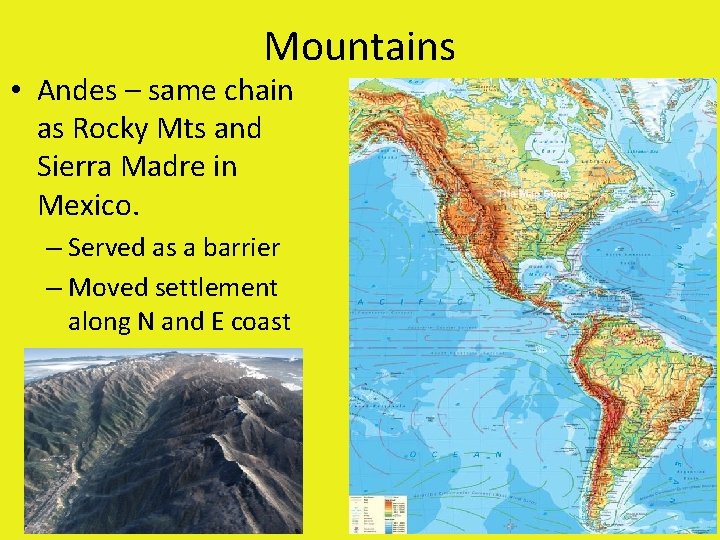
Mountains • Andes – same chain as Rocky Mts and Sierra Madre in Mexico. – Served as a barrier – Moved settlement along N and E coast
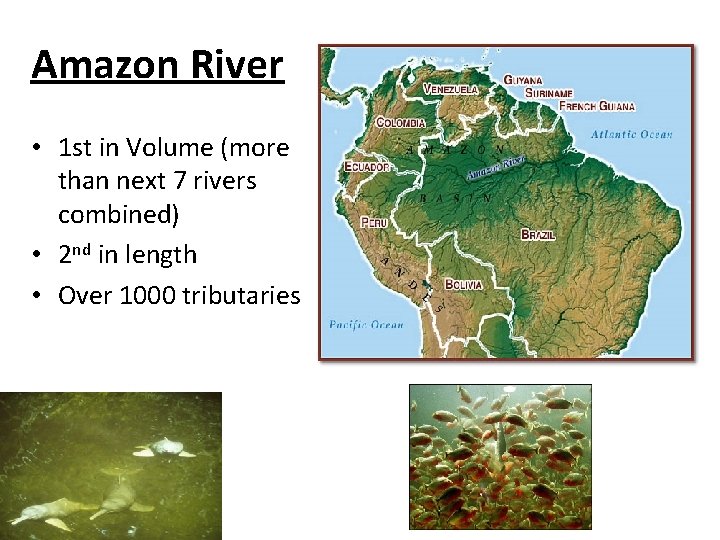
Amazon River • 1 st in Volume (more than next 7 rivers combined) • 2 nd in length • Over 1000 tributaries
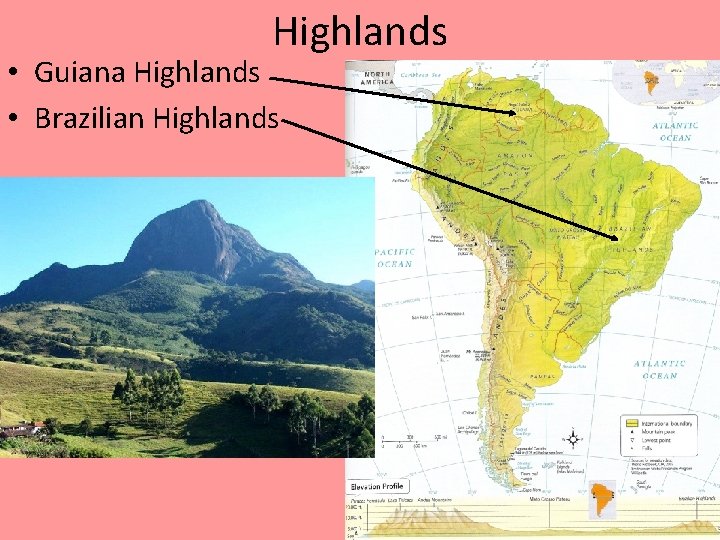
Highlands • Guiana Highlands • Brazilian Highlands
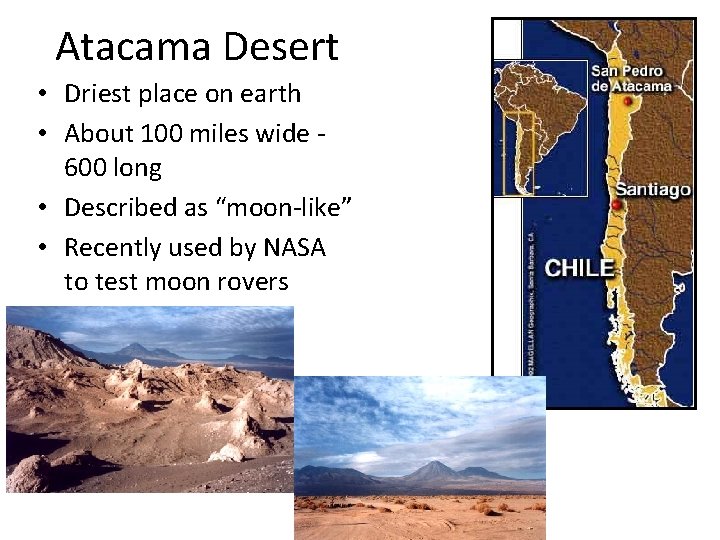
Atacama Desert • Driest place on earth • About 100 miles wide 600 long • Described as “moon-like” • Recently used by NASA to test moon rovers
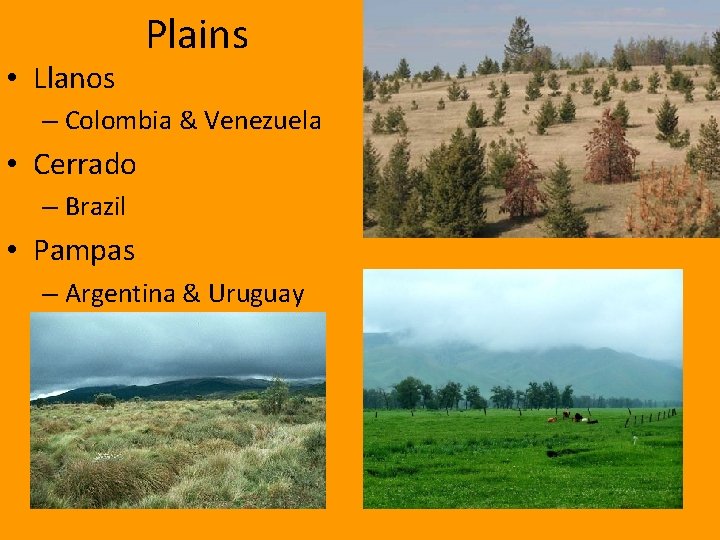
• Llanos Plains – Colombia & Venezuela • Cerrado – Brazil • Pampas – Argentina & Uruguay
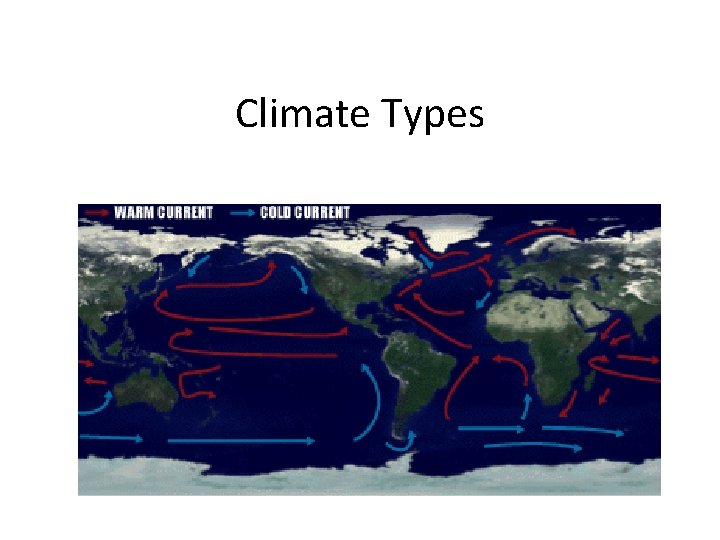
Climate Types
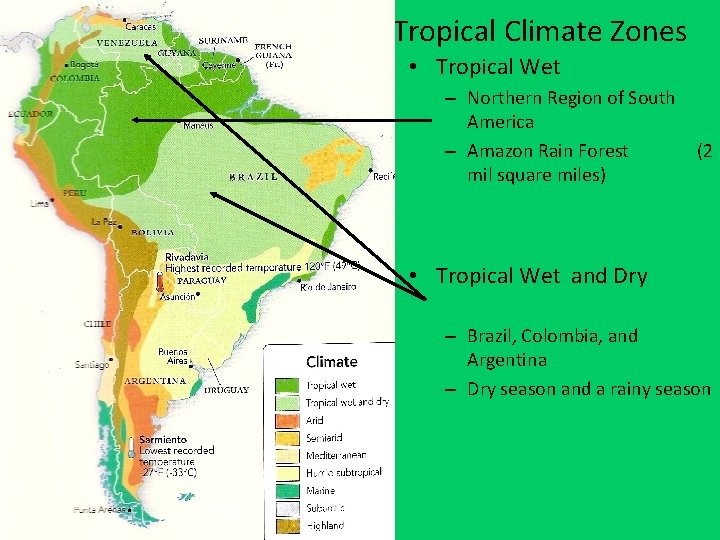
Tropical Climate Zones • Tropical Wet – Northern Region of South America – Amazon Rain Forest mil square miles) (2 • Tropical Wet and Dry – Brazil, Colombia, and Argentina – Dry season and a rainy season
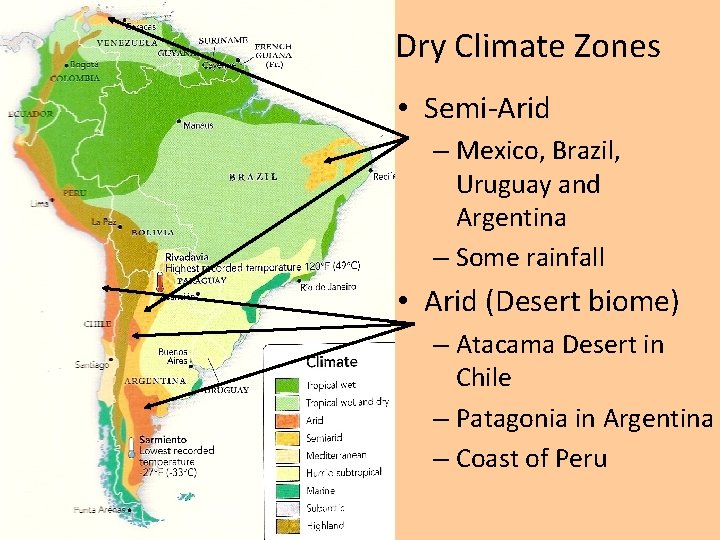
Dry Climate Zones • Semi-Arid – Mexico, Brazil, Uruguay and Argentina – Some rainfall • Arid (Desert biome) – Atacama Desert in Chile – Patagonia in Argentina – Coast of Peru
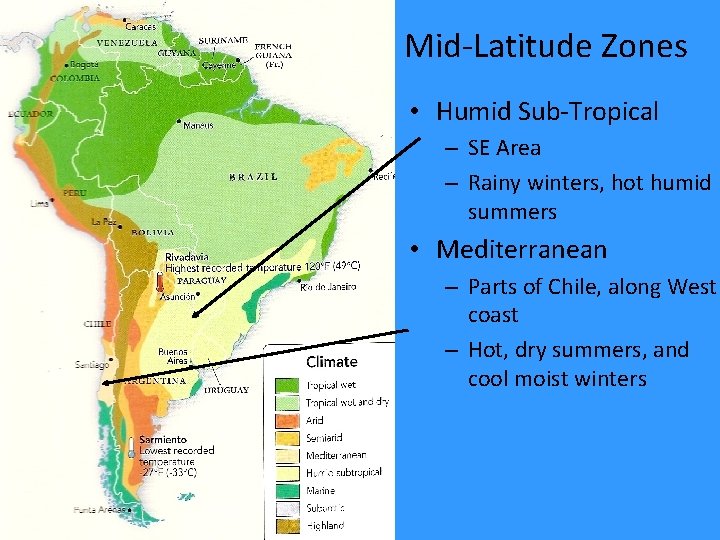
Mid-Latitude Zones • Humid Sub-Tropical – SE Area – Rainy winters, hot humid summers • Mediterranean – Parts of Chile, along West coast – Hot, dry summers, and cool moist winters
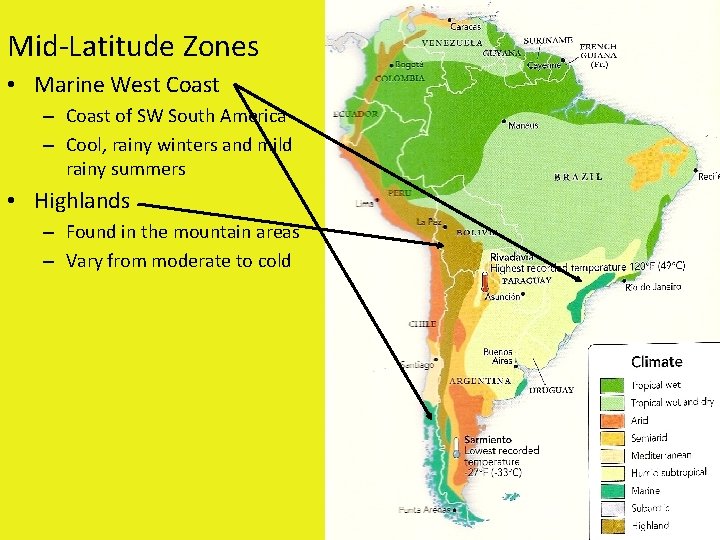
Mid-Latitude Zones • Marine West Coast – Coast of SW South America – Cool, rainy winters and mild rainy summers • Highlands – Found in the mountain areas – Vary from moderate to cold
Current Issues in Latin America • • Deforestation Urbanization Tourism Human/environment interaction
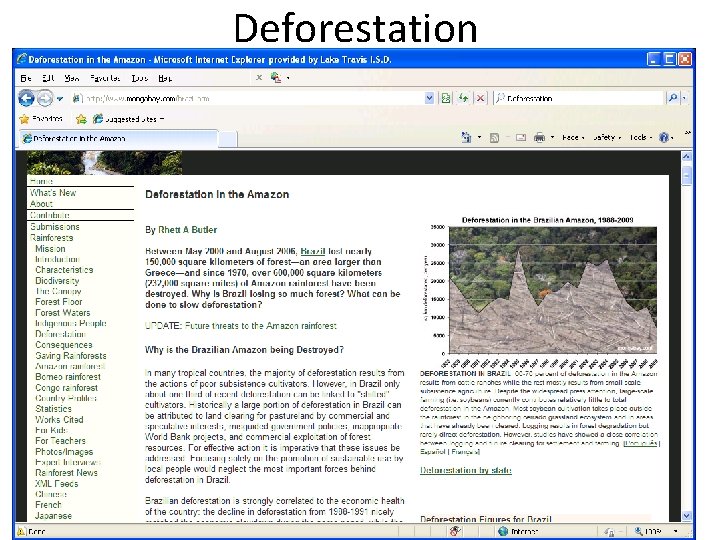
Deforestation
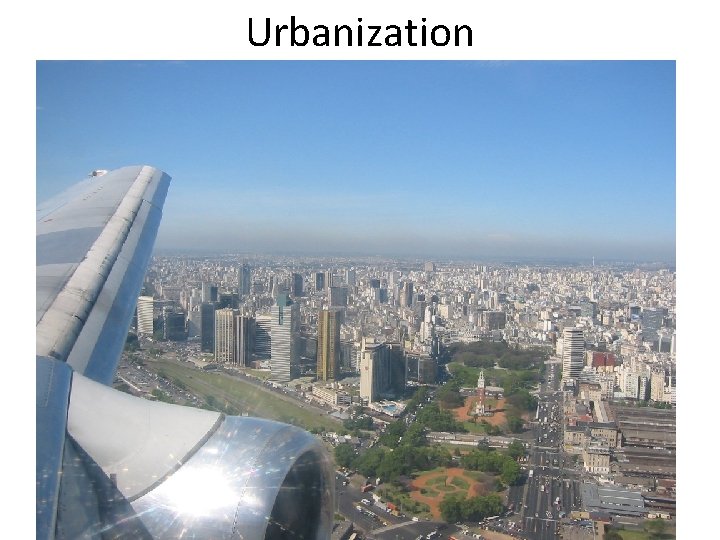
Urbanization
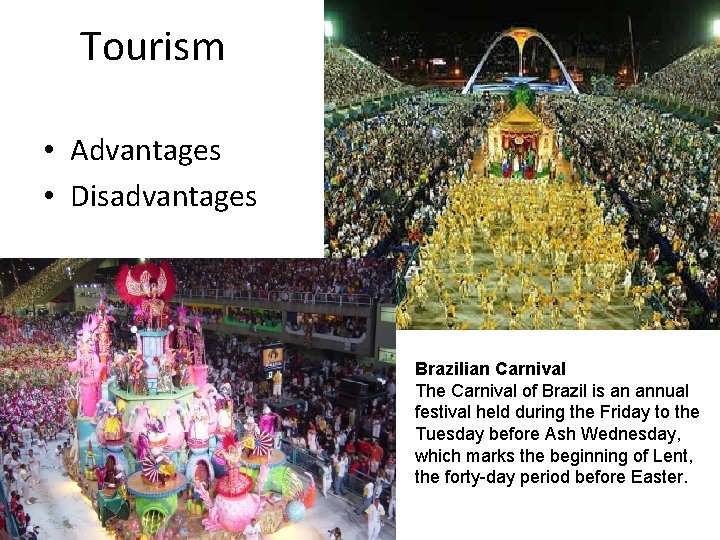
Tourism • Advantages • Disadvantages Brazilian Carnival The Carnival of Brazil is an annual festival held during the Friday to the Tuesday before Ash Wednesday, which marks the beginning of Lent, the forty-day period before Easter.
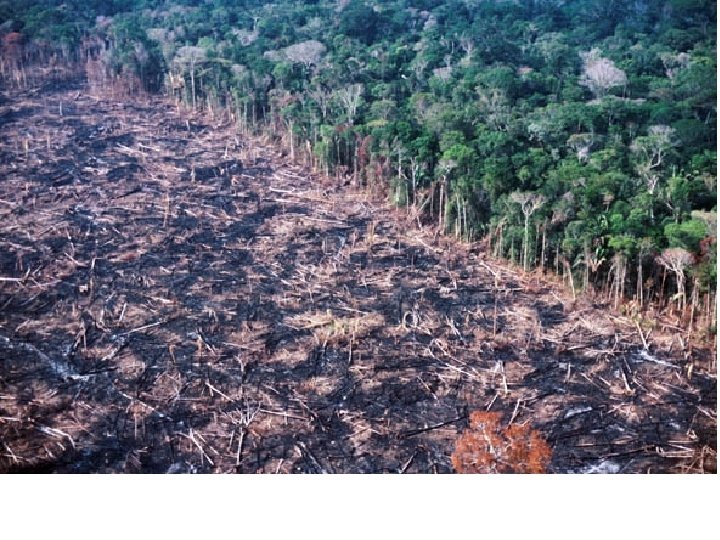
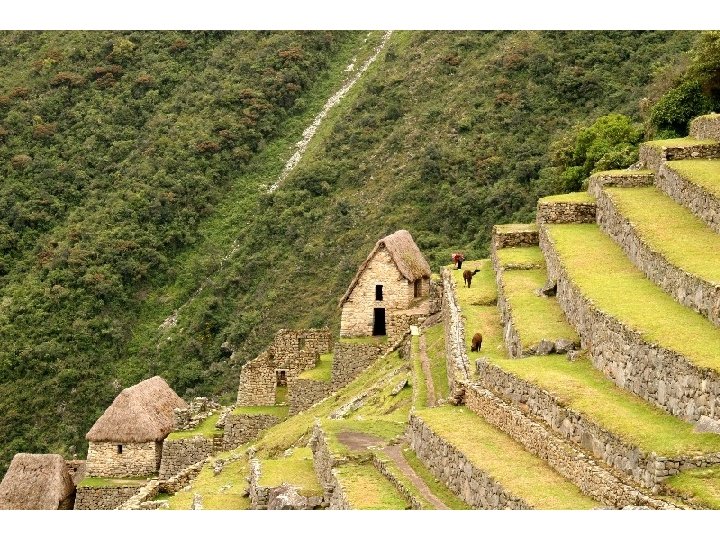
Human Environment Interaction Agriculture • Slash and Burn – Cut down trees and brush – Burn – Plant Crops – Move to new area • Terraced Farming – Grow crops on hillsides – Reduces soil erosion
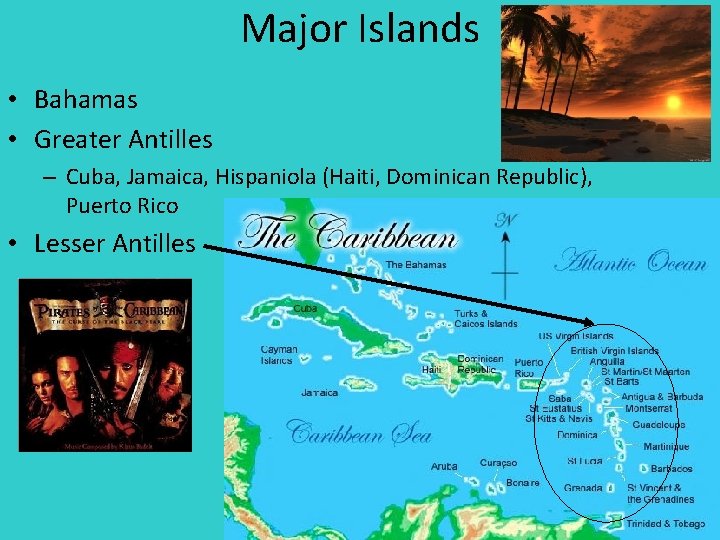
Major Islands • Bahamas • Greater Antilles – Cuba, Jamaica, Hispaniola (Haiti, Dominican Republic), Puerto Rico • Lesser Antilles
Unique Physical Features
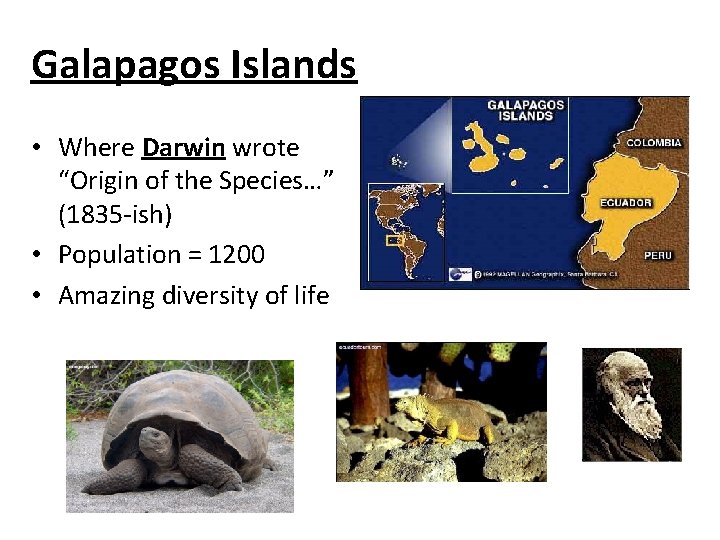
Galapagos Islands • Where Darwin wrote “Origin of the Species…” (1835 -ish) • Population = 1200 • Amazing diversity of life
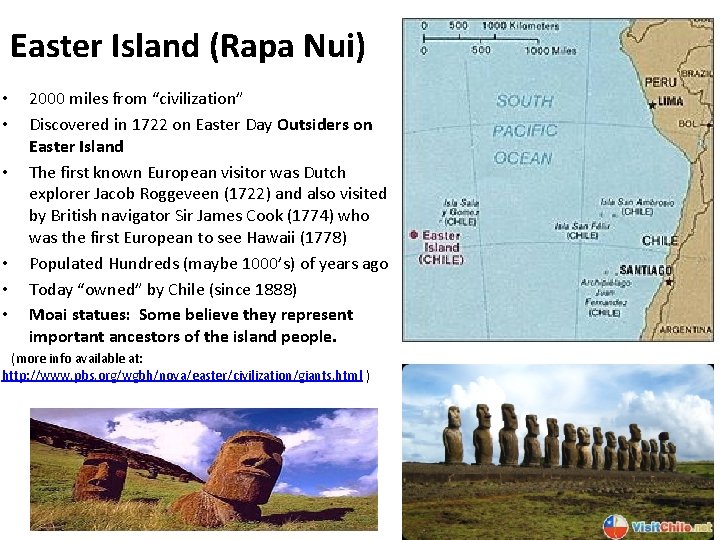
Easter Island (Rapa Nui) • • • 2000 miles from “civilization” Discovered in 1722 on Easter Day Outsiders on Easter Island The first known European visitor was Dutch explorer Jacob Roggeveen (1722) and also visited by British navigator Sir James Cook (1774) who was the first European to see Hawaii (1778) Populated Hundreds (maybe 1000’s) of years ago Today “owned” by Chile (since 1888) Moai statues: Some believe they represent important ancestors of the island people. (more info available at: http: //www. pbs. org/wgbh/nova/easter/civilization/giants. html )
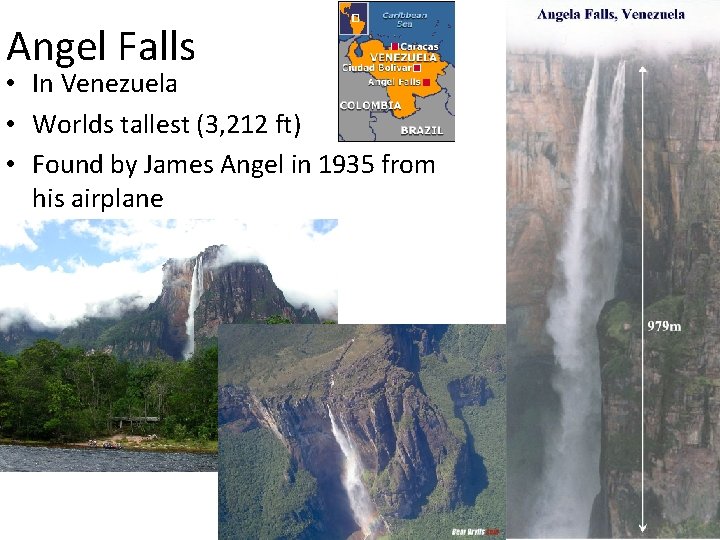
Angel Falls • In Venezuela • Worlds tallest (3, 212 ft) • Found by James Angel in 1935 from his airplane
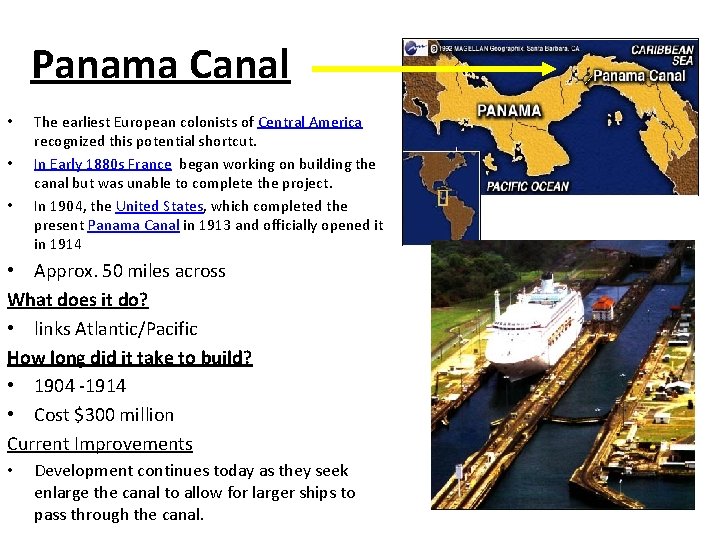
Panama Canal • • • The earliest European colonists of Central America recognized this potential shortcut. In Early 1880 s France began working on building the canal but was unable to complete the project. In 1904, the United States, which completed the present Panama Canal in 1913 and officially opened it in 1914 • Approx. 50 miles across What does it do? • links Atlantic/Pacific How long did it take to build? • 1904 -1914 • Cost $300 million Current Improvements • Development continues today as they seek enlarge the canal to allow for larger ships to pass through the canal.
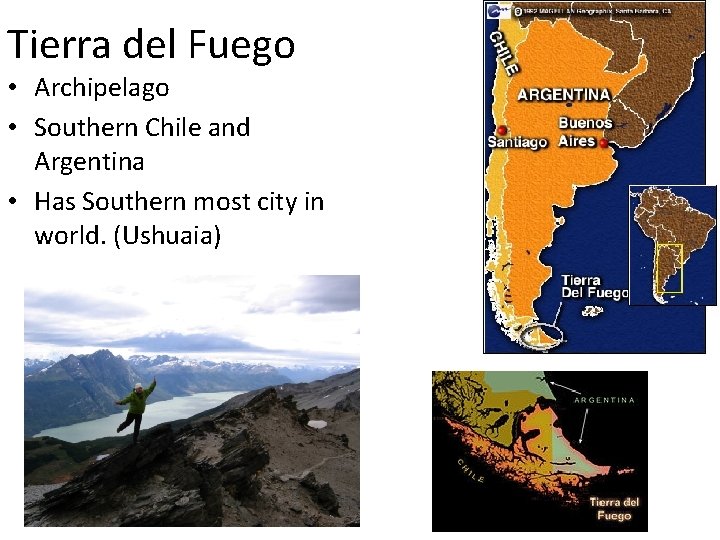
Tierra del Fuego • Archipelago • Southern Chile and Argentina • Has Southern most city in world. (Ushuaia)
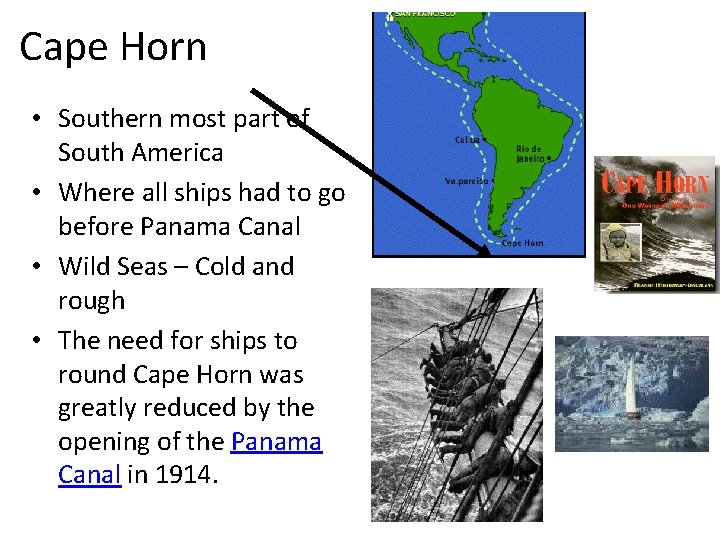
Cape Horn • Southern most part of South America • Where all ships had to go before Panama Canal • Wild Seas – Cold and rough • The need for ships to round Cape Horn was greatly reduced by the opening of the Panama Canal in 1914.
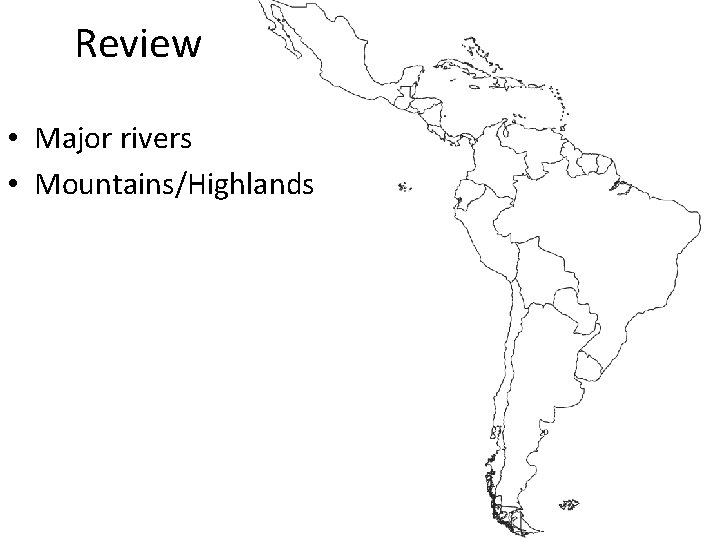
Review • Major rivers • Mountains/Highlands
Galapagos Islands Movie Response • Using what you remember from the film, Describe why the Galapagos Islands are such a unique place. Use specific examples from the film. • ¾ of a Page minimum.