
Introduction to Knowledge Engineering What is Knowledge Engineering

- Slides: 31
Introduction to Knowledge Engineering What is Knowledge Engineering? History & Terminology Introduction
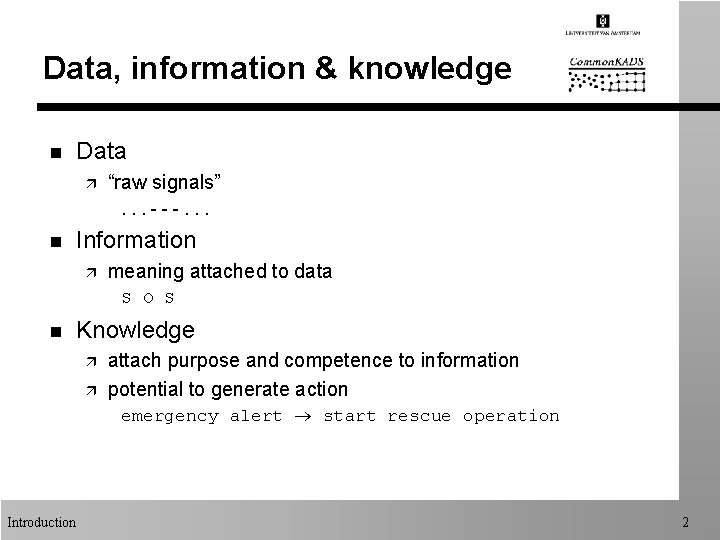
Data, information & knowledge n Data ä “raw signals”. . . ---. . . n Information ä meaning attached to data S O S n Knowledge ä ä attach purpose and competence to information potential to generate action emergency alert ® start rescue operation Introduction 2
Knowledge engineering process of ä ä eliciting, structuring, formalizing, operationalizing information and knowledge involved in a knowledgeintensive problem domain, in order to construct a program that can perform a difficult task adequately Introduction 3
Problems in knowledge engineering n n n complex information and knowledge is difficult to observe experts and other sources differ multiple representations: ä ä Introduction textbooks graphical representations heuristics skills 4
Importance of proper knowledge engineering n Knowledge is valuable and often outlives a particular implementation ä n n knowledge management Errors in a knowledge-base can cause serious problems Heavy demands on extendibility and maintenance ä Introduction changes over time 5
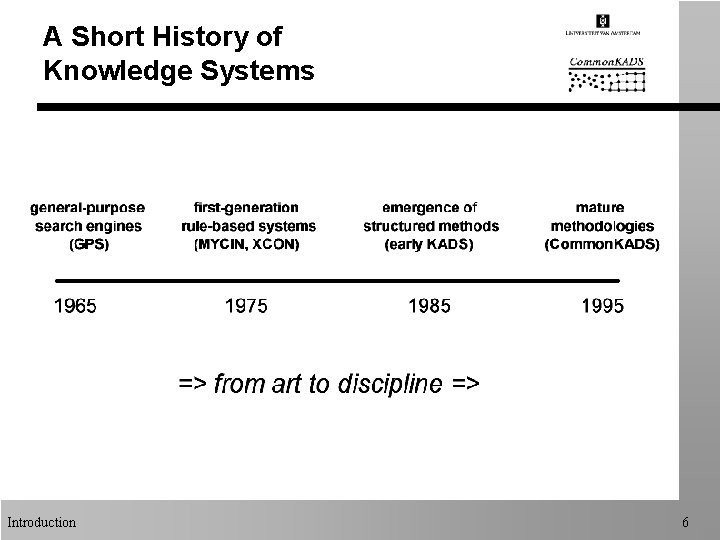
A Short History of Knowledge Systems Introduction 6
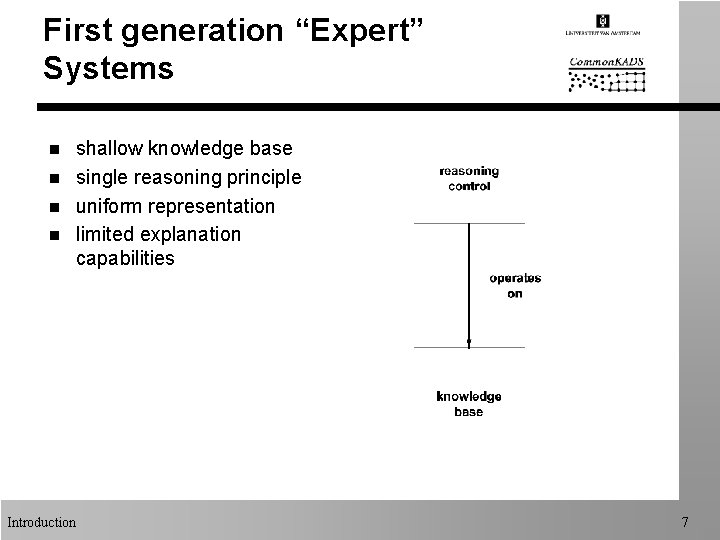
First generation “Expert” Systems n n shallow knowledge base single reasoning principle uniform representation limited explanation capabilities Introduction 7
Transfer View of KE n Extracting knowledge from a human expert ä n “mining the jewels in the expert’s head”’ Transferring this knowledge into KS. ä ä Introduction expert is asked what rules are applicable translation of natural language into rule format 8
Problems with transfer view The knowledge providers, the knowledge engineer and the knowledge-system developer should share ä ä a common view on the problem solving process and a common vocabulary in order to make knowledge transfer a viable way of knowledge engineering Introduction 9
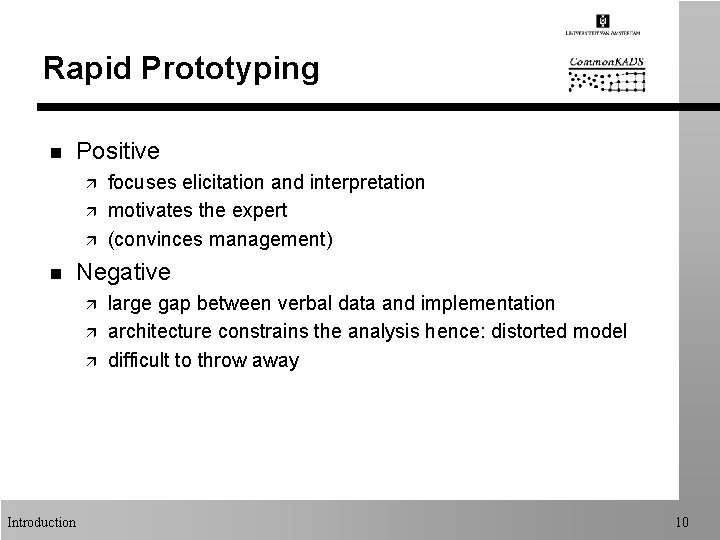
Rapid Prototyping n Positive ä ä ä n focuses elicitation and interpretation motivates the expert (convinces management) Negative ä ä ä Introduction large gap between verbal data and implementation architecture constrains the analysis hence: distorted model difficult to throw away 10
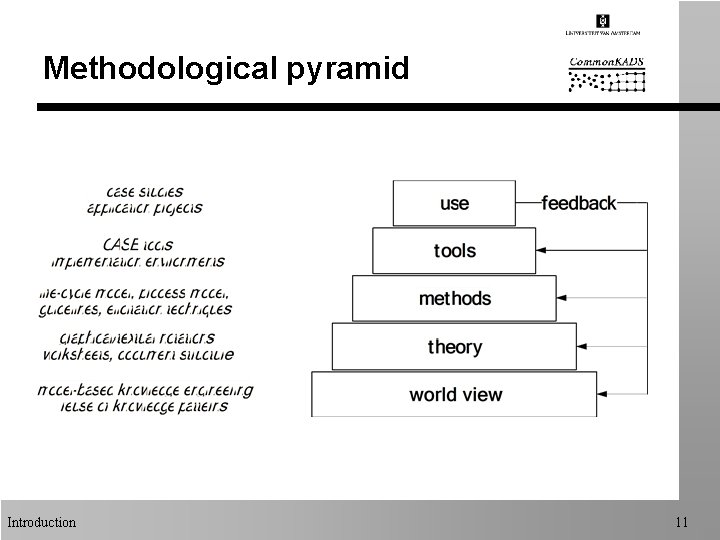
Methodological pyramid Introduction 11
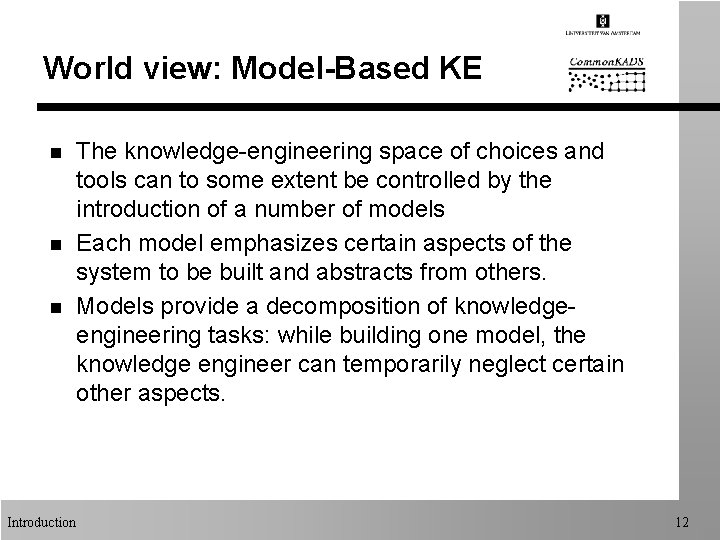
World view: Model-Based KE n n n The knowledge-engineering space of choices and tools can to some extent be controlled by the introduction of a number of models Each model emphasizes certain aspects of the system to be built and abstracts from others. Models provide a decomposition of knowledgeengineering tasks: while building one model, the knowledge engineer can temporarily neglect certain other aspects. Introduction 12
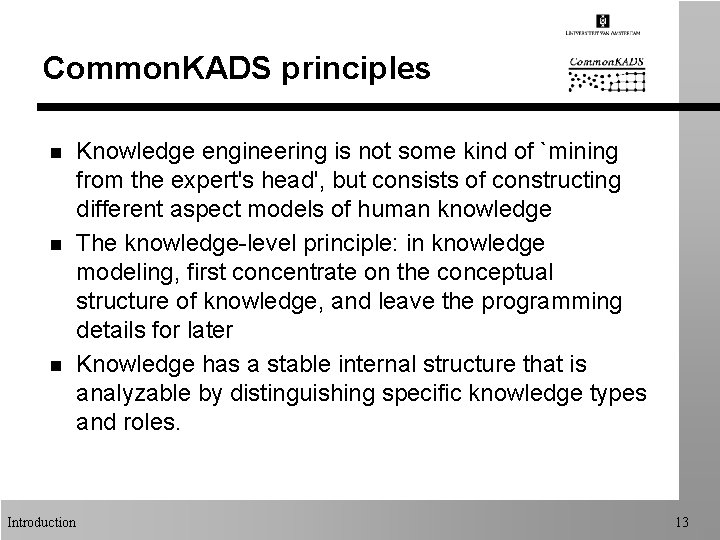
Common. KADS principles n n n Knowledge engineering is not some kind of `mining from the expert's head', but consists of constructing different aspect models of human knowledge The knowledge-level principle: in knowledge modeling, first concentrate on the conceptual structure of knowledge, and leave the programming details for later Knowledge has a stable internal structure that is analyzable by distinguishing specific knowledge types and roles. Introduction 13
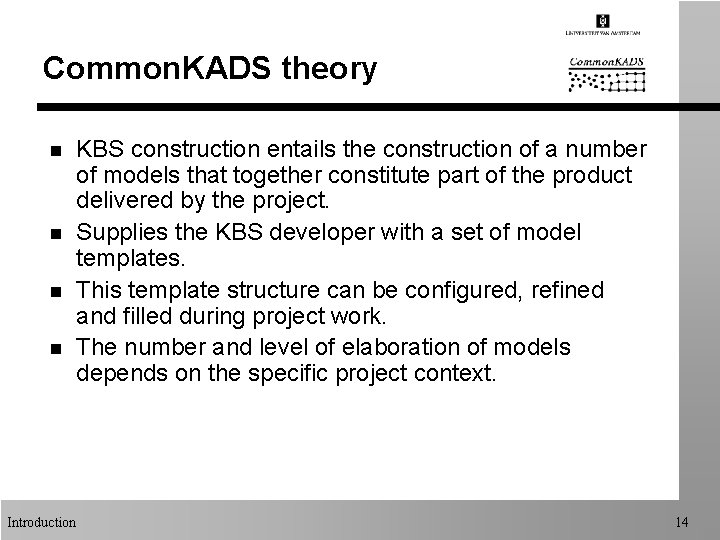
Common. KADS theory n n KBS construction entails the construction of a number of models that together constitute part of the product delivered by the project. Supplies the KBS developer with a set of model templates. This template structure can be configured, refined and filled during project work. The number and level of elaboration of models depends on the specific project context. Introduction 14
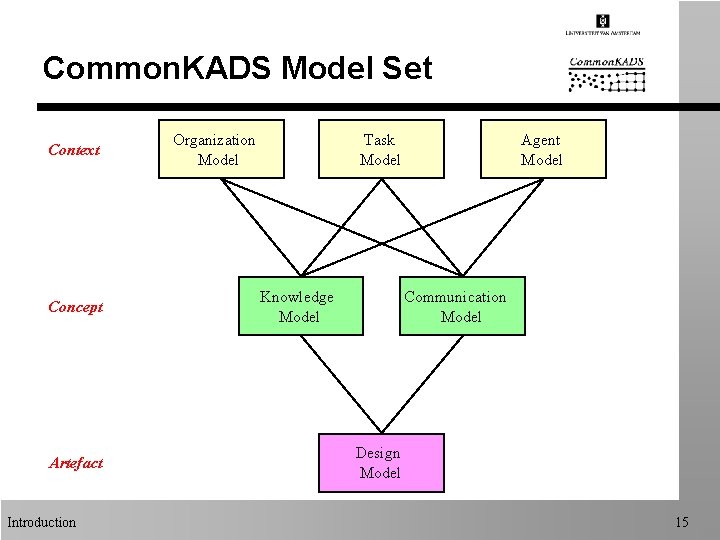
Common. KADS Model Set Context Concept Artefact Introduction Organization Model Task Model Knowledge Model Agent Model Communication Model Design Model 15
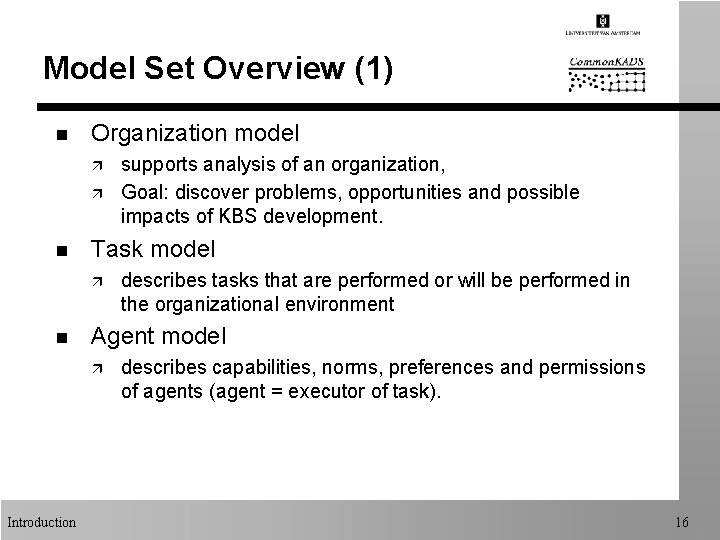
Model Set Overview (1) n Organization model ä ä n Task model ä n describes tasks that are performed or will be performed in the organizational environment Agent model ä Introduction supports analysis of an organization, Goal: discover problems, opportunities and possible impacts of KBS development. describes capabilities, norms, preferences and permissions of agents (agent = executor of task). 16
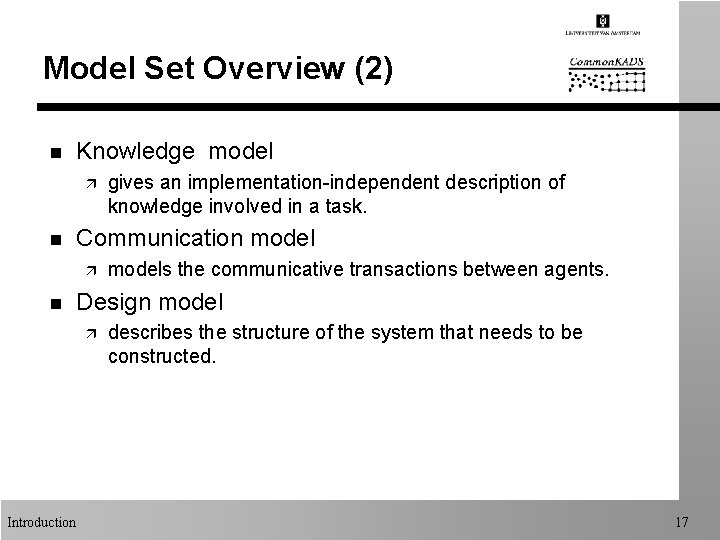
Model Set Overview (2) n Knowledge model ä n Communication model ä n gives an implementation-independent description of knowledge involved in a task. models the communicative transactions between agents. Design model ä Introduction describes the structure of the system that needs to be constructed. 17
Principles of the Model Set n n n Divide and conquer. Configuration of an adequate model set for a specific application. Models evolve through well defined states. The model set supports project management. Model development is driven by project objectives and risk. Models can be developed in parallel. Introduction 18
Models exist in various forms n Model template ä n Model instance ä n objects manipulated during a project. Model versions ä n predefined, fixed structure, can be configured versions of a model instance can exist. Multiple model instances ä ä Introduction separate instances can be developed example: ''current'' and ''future'' organization 19
The Product n Instantiated models ä n Additional documentation ä n represent the important aspects of the environment and the delivered knowledge based system. information not represented in the filled model templates (e. g. project management information) Software Introduction 20
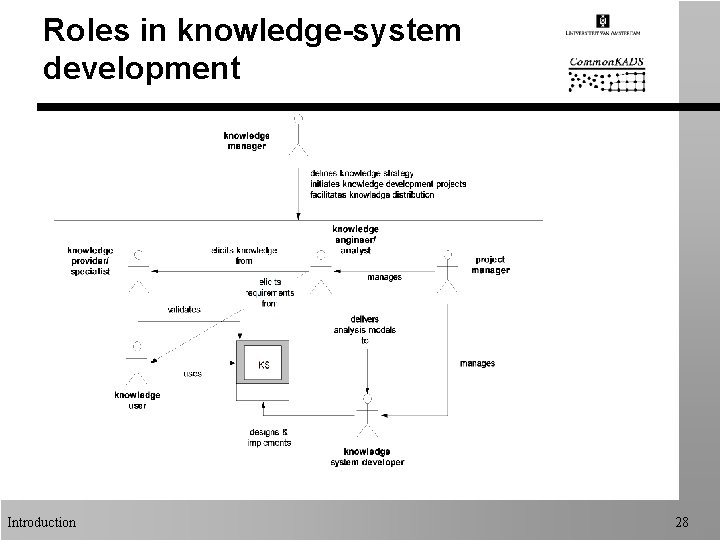
Roles in knowledge-system development n n n knowledge provider knowledge engineer/analyst knowledge system developer knowledge user project manager knowledge manager N. B. many-to-many relations between roles and people Introduction 21
Knowledge provider/specialist n n n “traditional” expert person with extensive experience in an application domain can provide also plan for domain familiarization ä n n “where would you advise a beginner to start? ” inter-provider differences are common need to assure cooperatio Introduction 22
Knowledge engineer n n n specific kind of system analyst should avoid becoming an "expert" plays a liaison function between application domain and system Introduction 23
Knowledge-system developer n n n person that implements a knowledge system on a particular target platform needs to have general design/implementation expertise needs to understand knowledge analysis ä n but only on the “use”-level role is often played by knowledge engineer Introduction 24
Knowledge user n Primary users ä n Secondary users ä n n are affected indirectly by the system Level of skill/knowledge is important factor May need extensive interacting facilities ä n interact with the prospective system explanation His/her work is often affected by the system ä Introduction consider attitude / active tole 25
Project manager n n responsible for planning, scheduling and monitoring development work liaises with client typically medium-size projects (4 -6 people) profits from structured approach Introduction 26
Knowledge manager n n background role monitors organizational purpose of ä ä n n n system(s) developed in a project knowledge assets developed/refined initiates (follow-up) projects should play key role in reuse may help in setting up the right project team Introduction 27
Roles in knowledge-system development Introduction 28
Terminology n Domain ä some area of interest banking, food industry, photocopiers, car manufacturing n Task ä something that needs to be done by an agent monitor a process; create a plan; analyze deviant behavior n Agent ä the executor of a task in a domain typically either a human or some software system Introduction 29
Terminology n Application ä n Application domain ä n The context provided by the combination of a task and a domain in which this task is carried out by agents The particular area of interest involved in an application Application task ä Introduction The (top-level) task that needs to be performed in a certain application 30
Terminology n knowledge system (KS) ä n system that solves a real-life problem using knowledge about the application domain and the application task expert system ä Introduction knowledge system that solves a problem which requires a considerable amount of expertise, when solved by humans. 31