
Introduction to Ion Chromatography By Greg Langland CCSF

Introduction to Ion Chromatography By Greg Langland CCSF EMSA 30 A
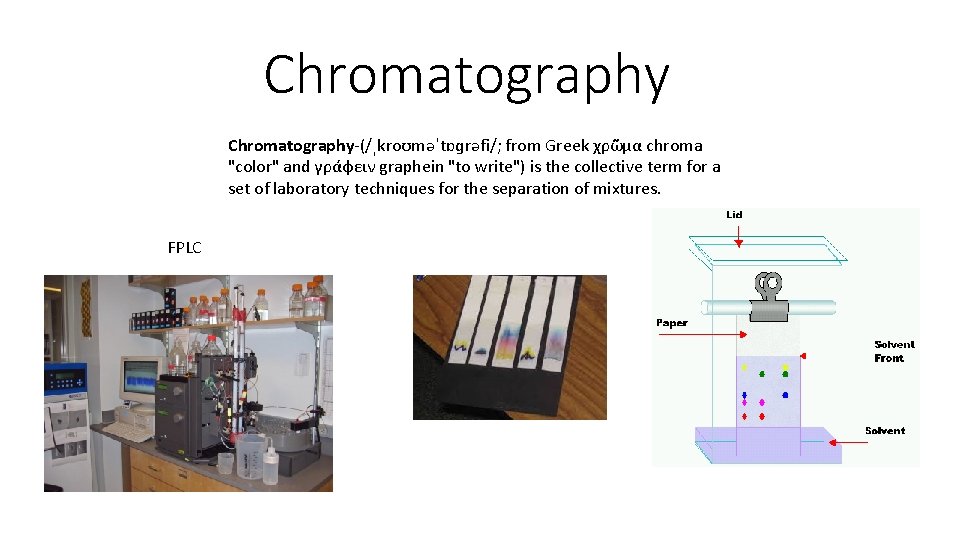
Chromatography-(/ˌkroʊməˈtɒɡrəfi/; from Greek χρῶμα chroma "color" and γράφειν graphein "to write") is the collective term for a set of laboratory techniques for the separation of mixtures. FPLC
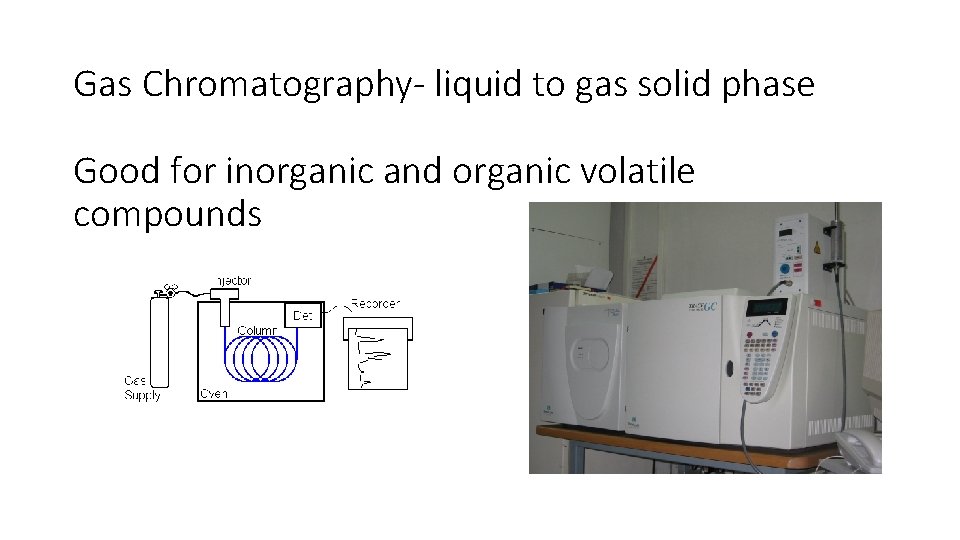
Gas Chromatography- liquid to gas solid phase Good for inorganic and organic volatile compounds
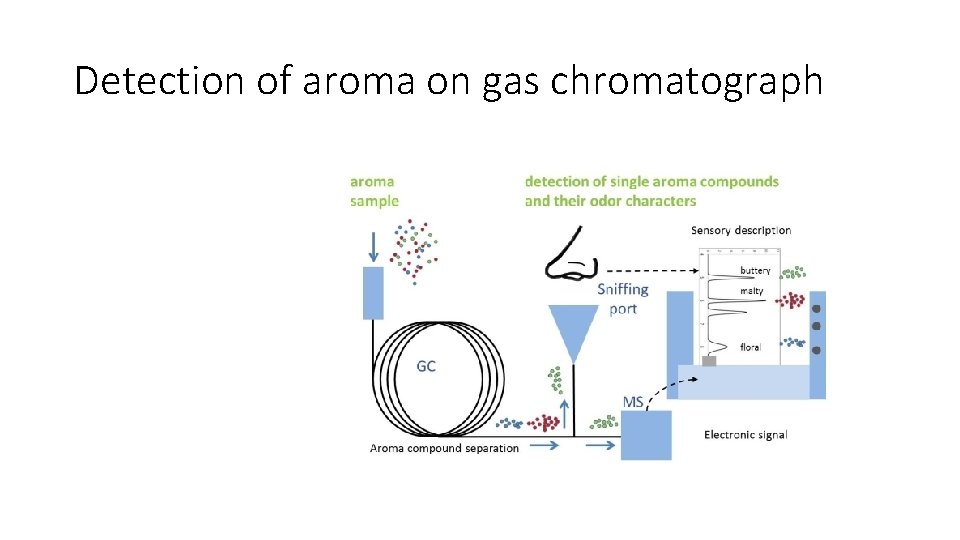
Detection of aroma on gas chromatograph
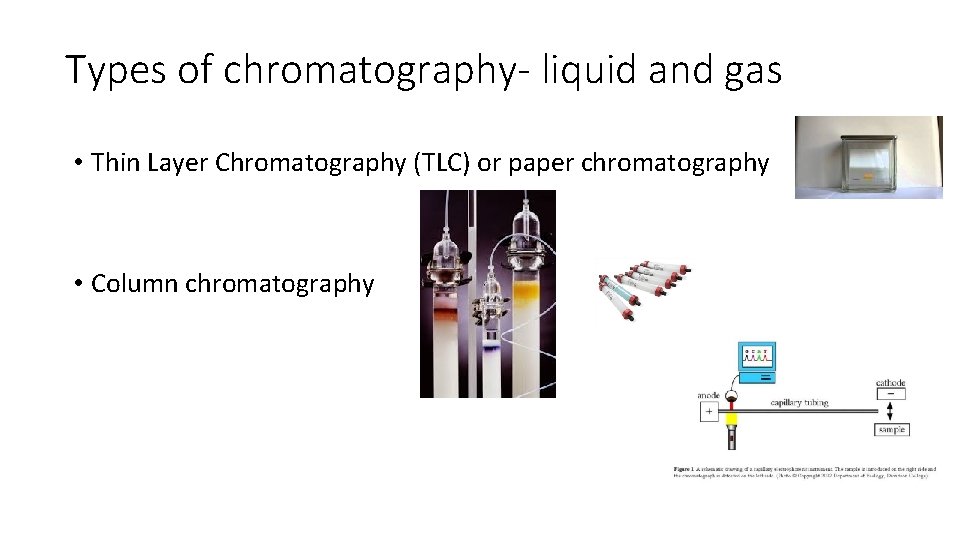
Types of chromatography- liquid and gas • Thin Layer Chromatography (TLC) or paper chromatography • Column chromatography
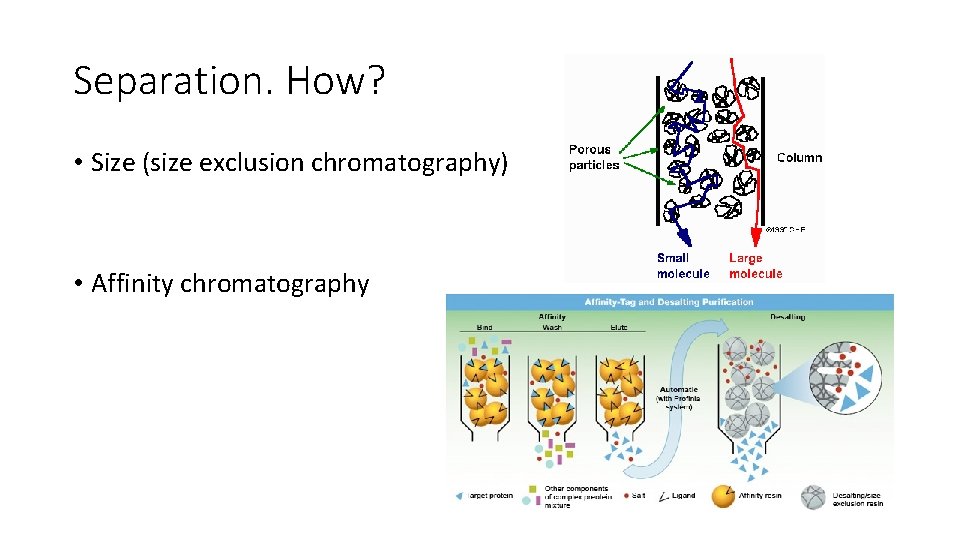
Separation. How? • Size (size exclusion chromatography) • Affinity chromatography
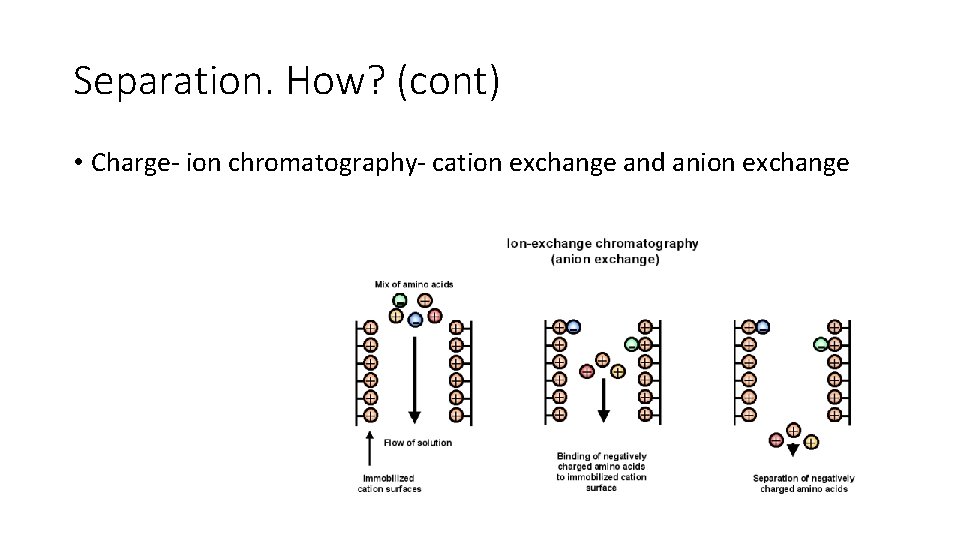
Separation. How? (cont) • Charge- ion chromatography- cation exchange and anion exchange
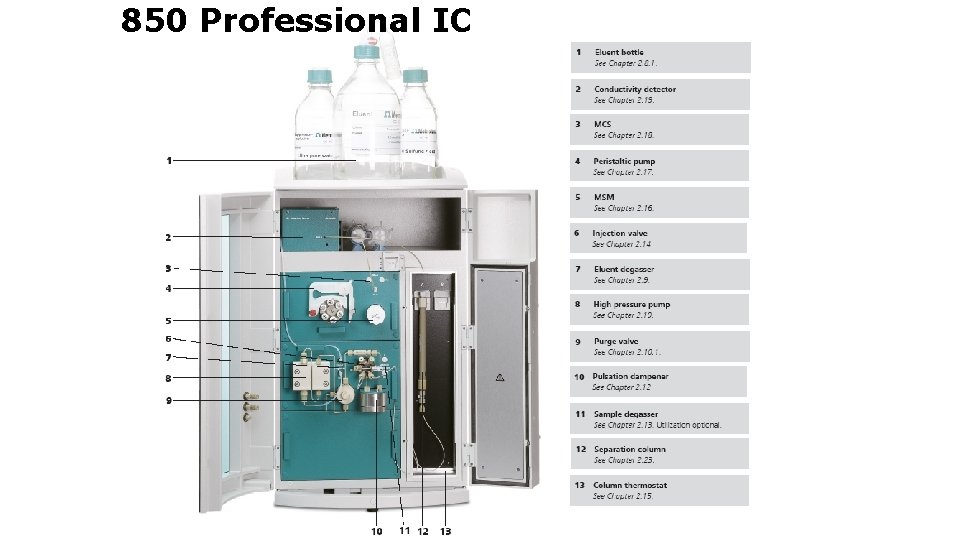
850 Professional IC
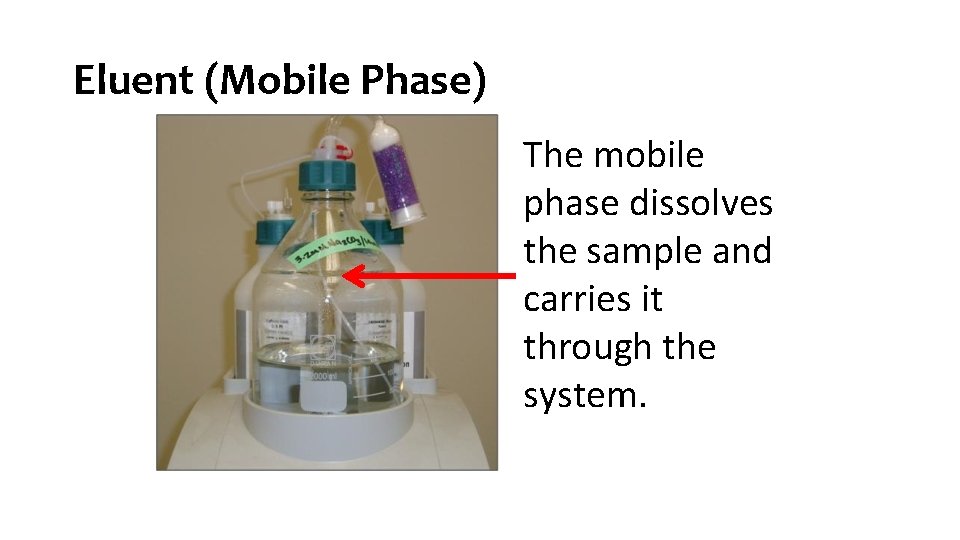
Eluent (Mobile Phase) The mobile phase dissolves the sample and carries it through the system.
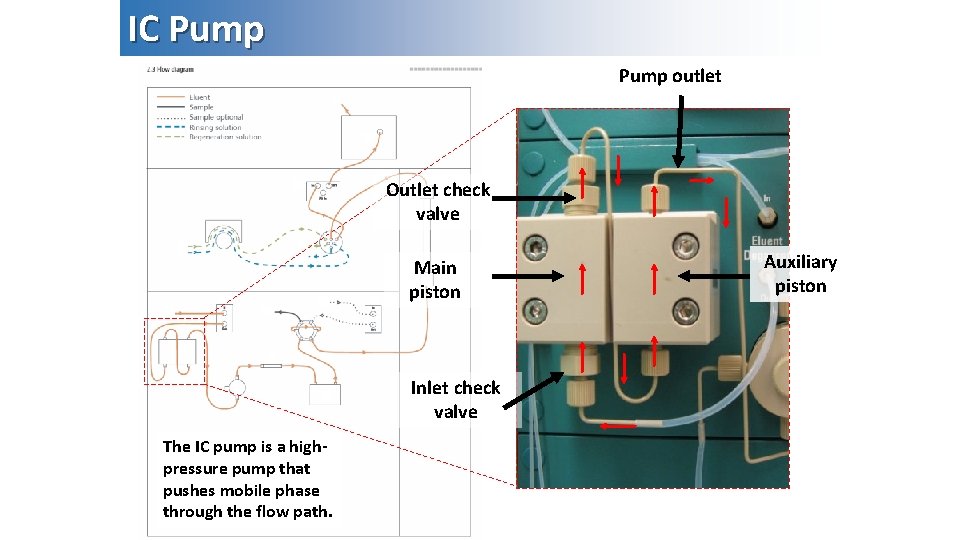
IC Pump outlet Outlet check valve Main piston Inlet check valve The IC pump is a highpressure pump that pushes mobile phase through the flow path. Auxiliary piston
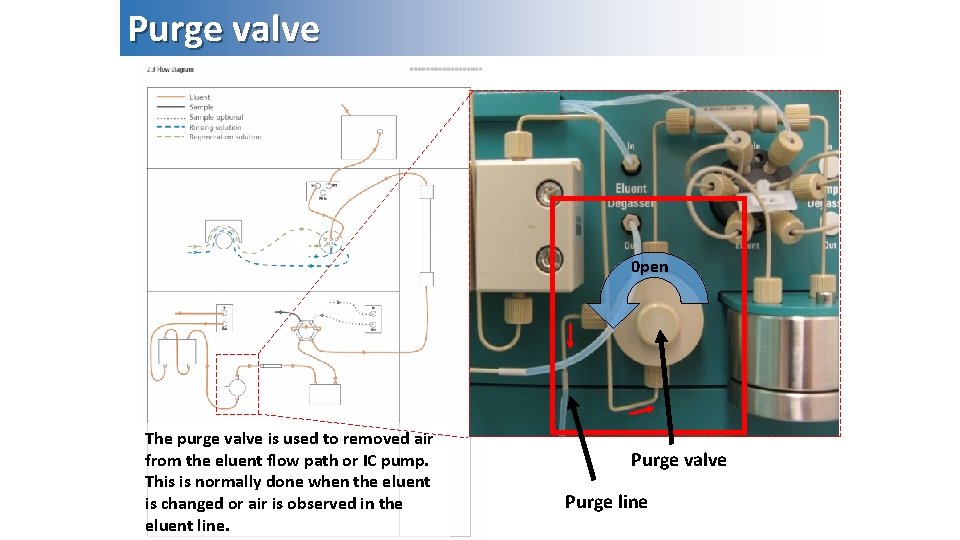
Purge valve 0 pen The purge valve is used to removed air from the eluent flow path or IC pump. This is normally done when the eluent is changed or air is observed in the eluent line. Purge valve Purge line
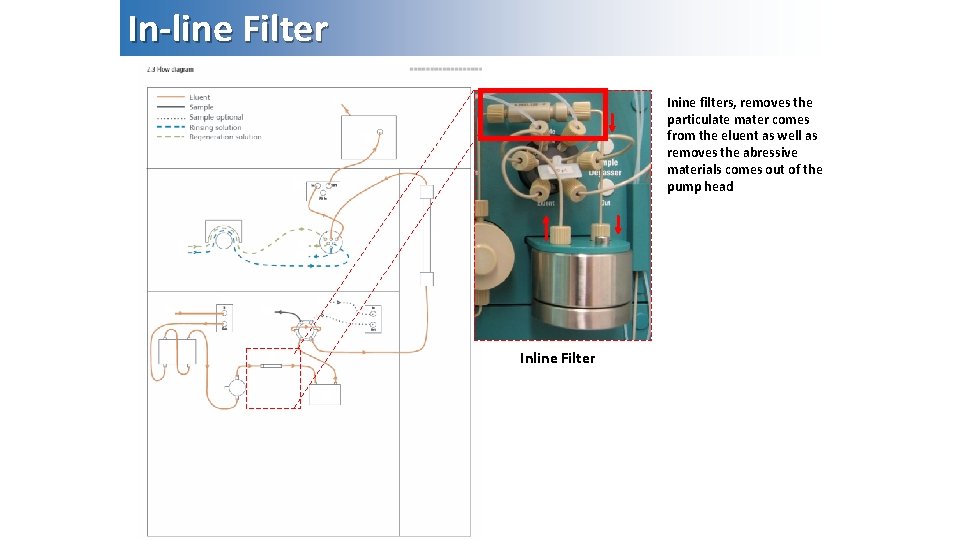
In-line Filter Inine filters, removes the particulate mater comes from the eluent as well as removes the abressive materials comes out of the pump head Inline Filter
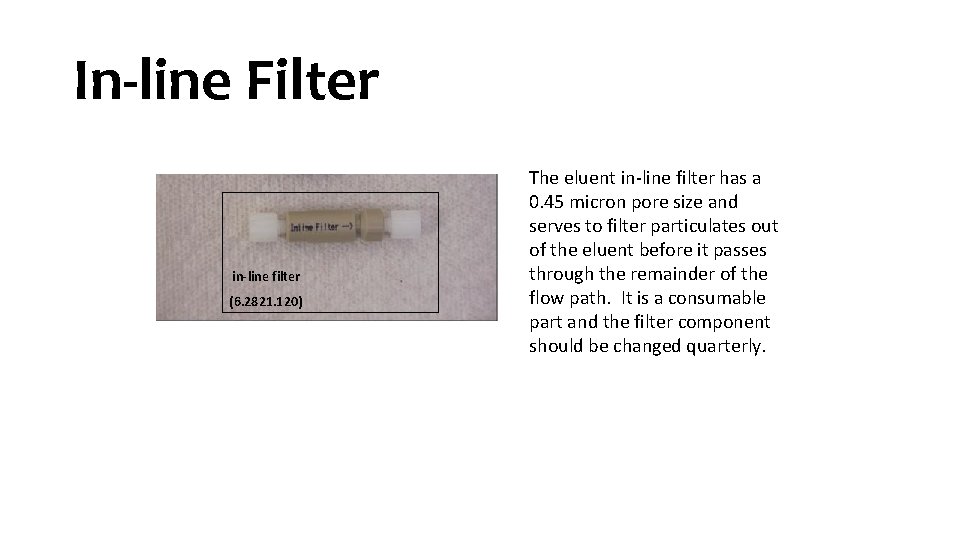
In-line Filter in-line filter (6. 2821. 120) The eluent in-line filter has a 0. 45 micron pore size and serves to filter particulates out of the eluent before it passes through the remainder of the flow path. It is a consumable part and the filter component should be changed quarterly.
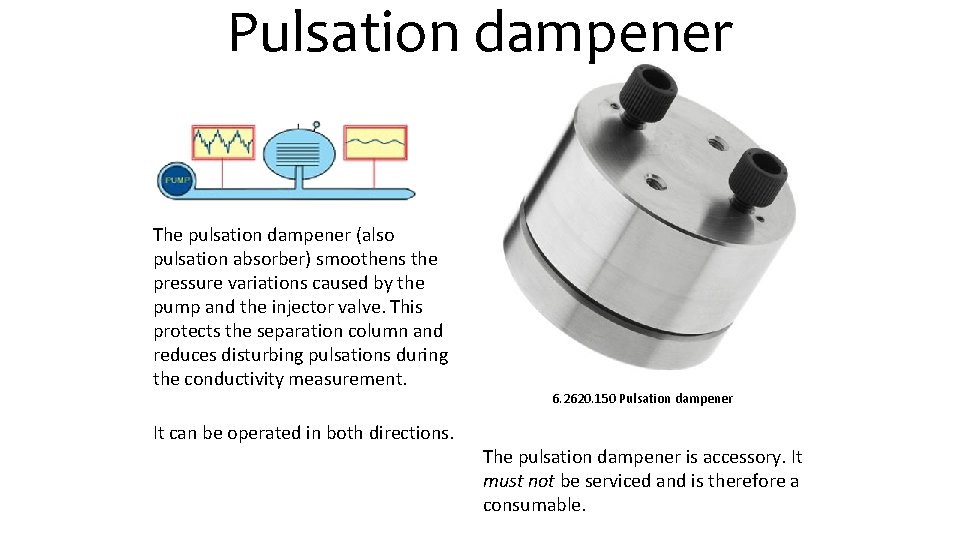
Pulsation dampener The pulsation dampener (also pulsation absorber) smoothens the pressure variations caused by the pump and the injector valve. This protects the separation column and reduces disturbing pulsations during the conductivity measurement. It can be operated in both directions. 6. 2620. 150 Pulsation dampener The pulsation dampener is accessory. It must not be serviced and is therefore a consumable.

Injection valve Sample in Sample loop (20 u. L) Out to guard column and separation column Sample waste Eluent in from pulsation absorber FILL sample outlet INJECT sample inlet sample outlet sample inlet Sample Loop pump column
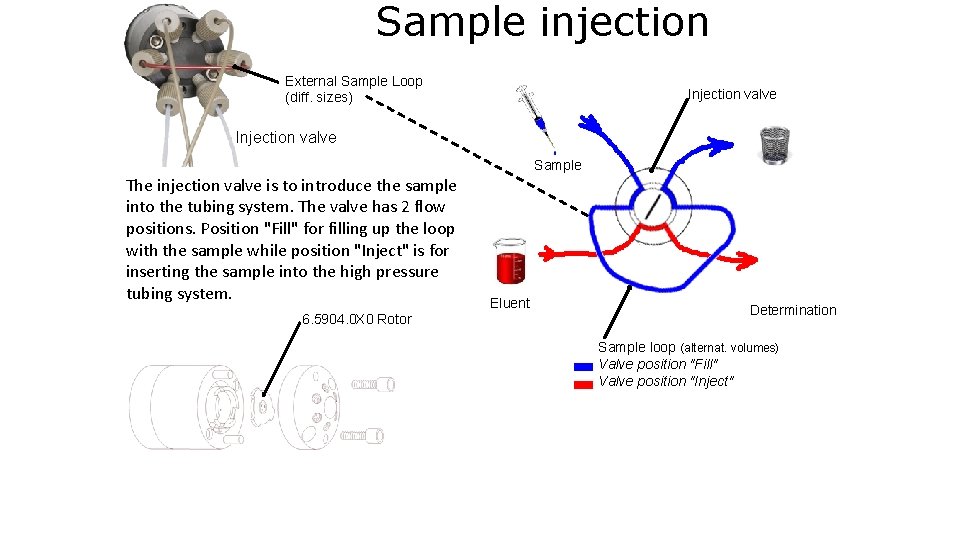
Sample injection External Sample Loop (diff. sizes) Injection valve Sample The injection valve is to introduce the sample into the tubing system. The valve has 2 flow positions. Position "Fill" for filling up the loop with the sample while position "Inject" is for inserting the sample into the high pressure tubing system. 6. 5904. 0 X 0 Rotor Eluent Determination Sample loop (alternat. volumes) Valve position "Fill" Valve position "Inject"
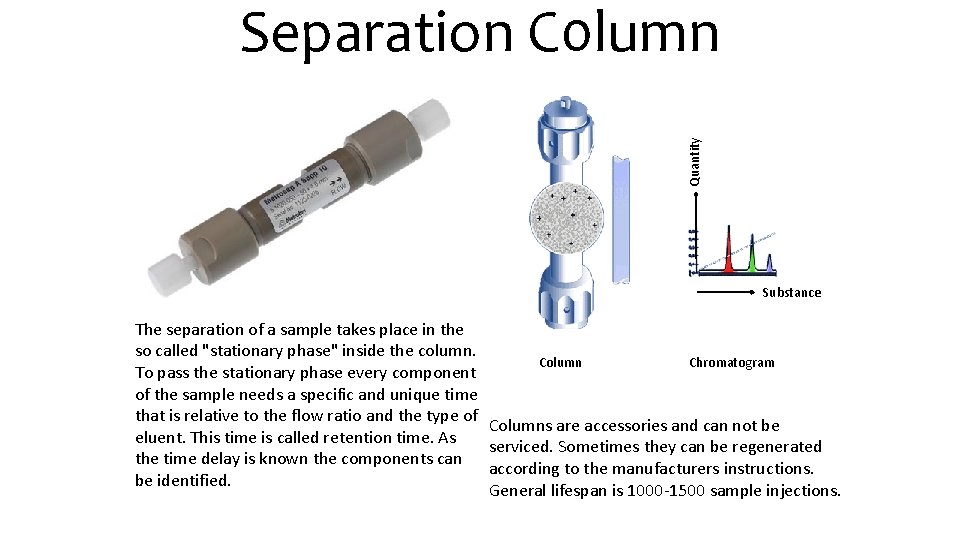
Quantity Separation C 0 lumn Substance The separation of a sample takes place in the so called "stationary phase" inside the column. Column Chromatogram To pass the stationary phase every component of the sample needs a specific and unique time that is relative to the flow ratio and the type of Columns are accessories and can not be eluent. This time is called retention time. As serviced. Sometimes they can be regenerated the time delay is known the components can according to the manufacturers instructions. be identified. General lifespan is 1000 -1500 sample injections.
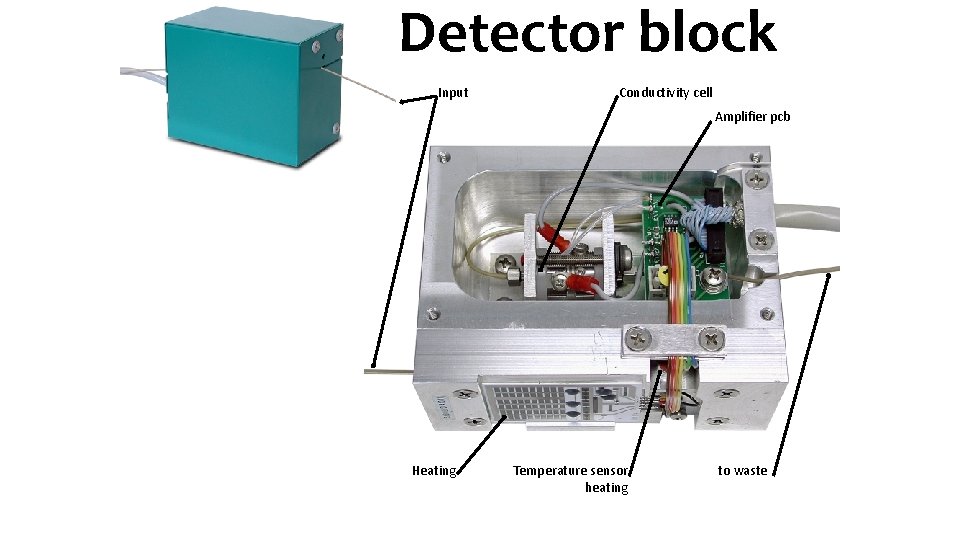
Detector block Input Conductivity cell Amplifier pcb Heating Temperature sensor heating to waste
How to make a 1 part per million solution. • If we have one ug (microgram) of a substance in a total of one gram (that is one million micrograms), then we have a 1 ug/g mixture (one part substance in one million parts sample). Other equilvalent units are: ng/mg mg/kg These are on a "weight-to-weight" basis. This is often labeled w/w.
Youtube help for calculating parts per million https: //www. youtube. com/watch? v=qgh. Mjk. Qcr. Rk https: //www. youtube. com/watch? v=C 6 fsn 2 ZNSA 4
- Slides: 20