
INTRODUCTION TO INVERSE TRIG FUNCTIONS OnetoOne Functions and
- Slides: 21
INTRODUCTION TO INVERSE TRIG FUNCTIONS One-to-One Functions and Their Inverses Copyright © Cengage Learning. All rights reserved.
Objectives ► One-to-One Functions ► The Inverse of a Function ► Inverse Trig Functions 2
Definition of Function A function is a rule. To talk about a function, we need to give it a name. We will use letters such as f, g, h, . . . to represent functions. For example, we can use the letter f to represent a rule as follows: “ f ” is the rule “square the number” 3
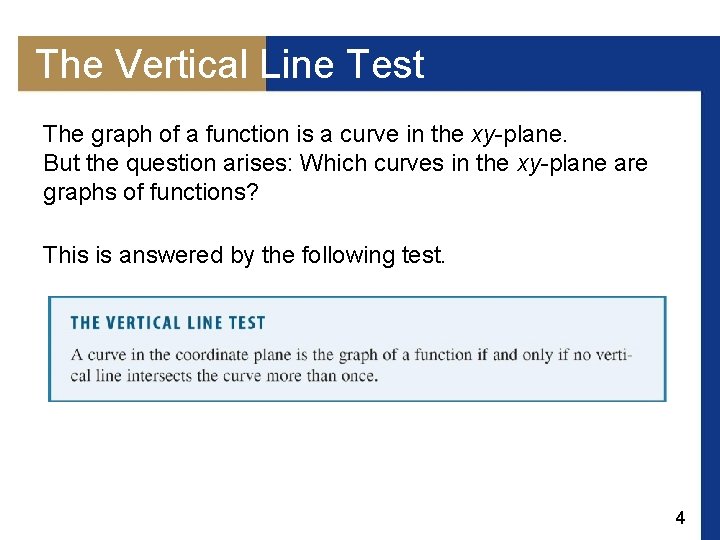
The Vertical Line Test The graph of a function is a curve in the xy-plane. But the question arises: Which curves in the xy-plane are graphs of functions? This is answered by the following test. 4
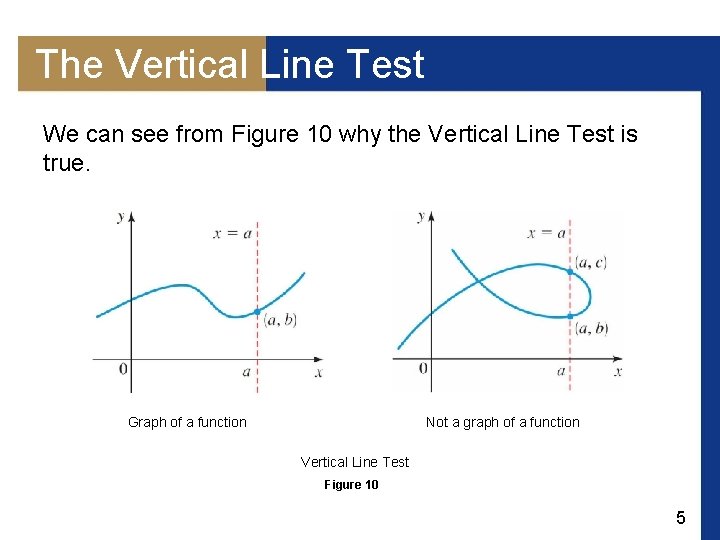
The Vertical Line Test We can see from Figure 10 why the Vertical Line Test is true. Graph of a function Not a graph of a function Vertical Line Test Figure 10 5
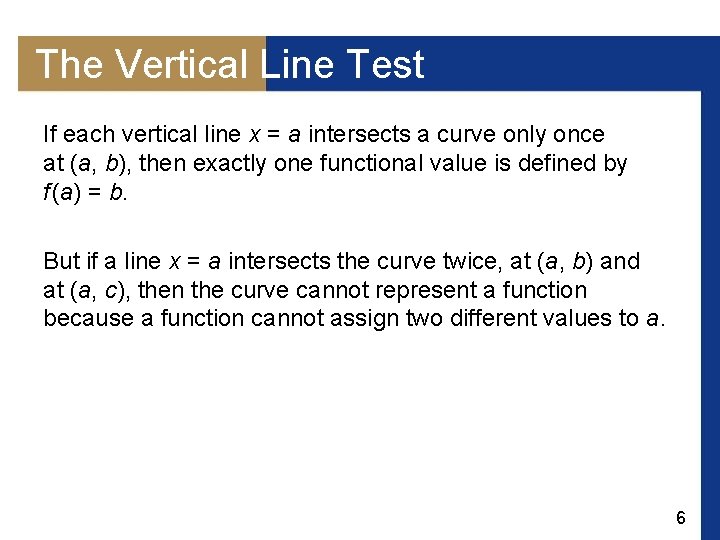
The Vertical Line Test If each vertical line x = a intersects a curve only once at (a, b), then exactly one functional value is defined by f (a) = b. But if a line x = a intersects the curve twice, at (a, b) and at (a, c), then the curve cannot represent a function because a function cannot assign two different values to a. 6
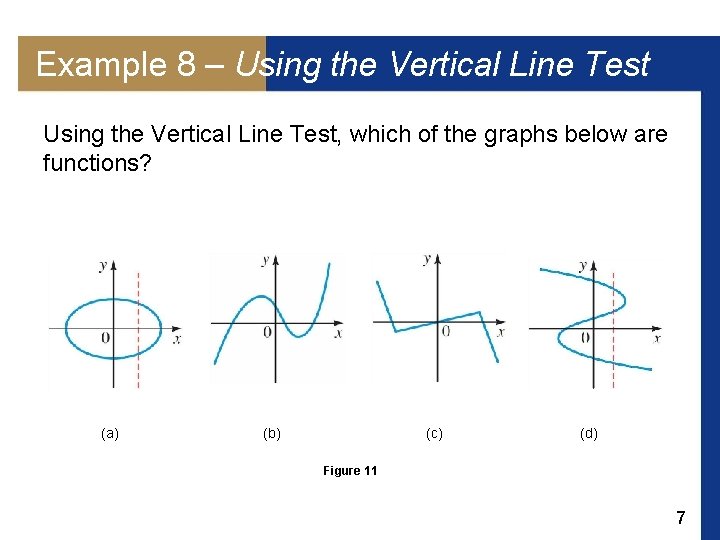
Example 8 – Using the Vertical Line Test, which of the graphs below are functions? (a) (b) (c) (d) Figure 11 7
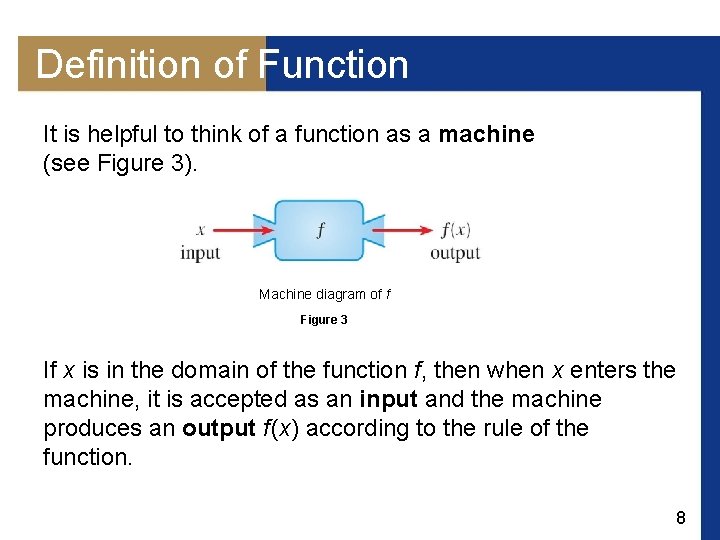
Definition of Function It is helpful to think of a function as a machine (see Figure 3). Machine diagram of f Figure 3 If x is in the domain of the function f, then when x enters the machine, it is accepted as an input and the machine produces an output f (x) according to the rule of the function. 8
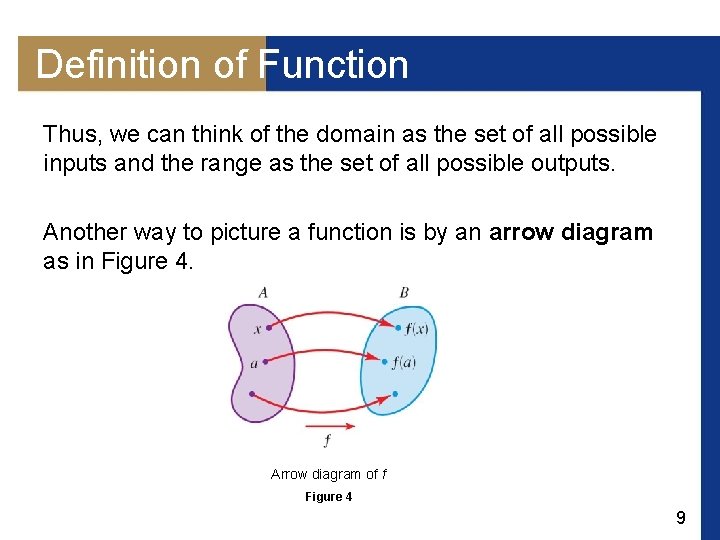
Definition of Function Thus, we can think of the domain as the set of all possible inputs and the range as the set of all possible outputs. Another way to picture a function is by an arrow diagram as in Figure 4. Arrow diagram of f Figure 4 9
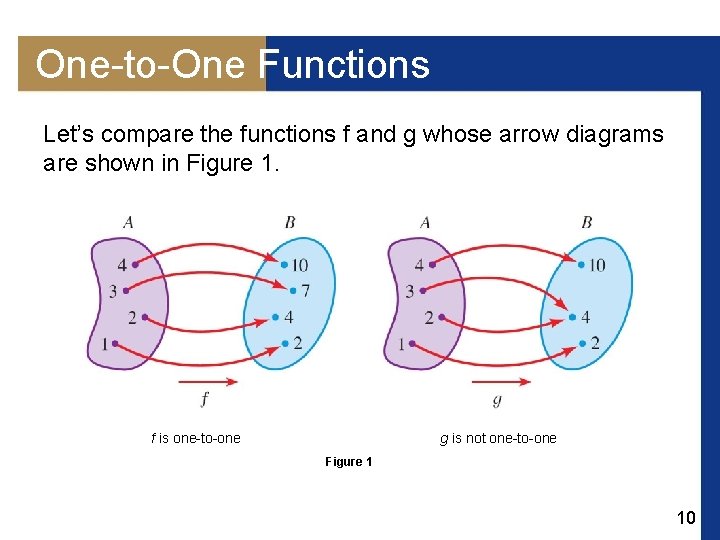
One-to-One Functions Let’s compare the functions f and g whose arrow diagrams are shown in Figure 1. f is one-to-one g is not one-to-one Figure 1 10
One-to-One Functions Note that f never takes on the same value twice (any two numbers in A have different images), whereas g does take on the same value twice (both 2 and 3 have the same image, 4). In symbols, g (2) = g (3) but f (x 1) ≠ f (x 2) whenever x 1 ≠ x 2. Functions that have this latter property are called one-to-one. 11
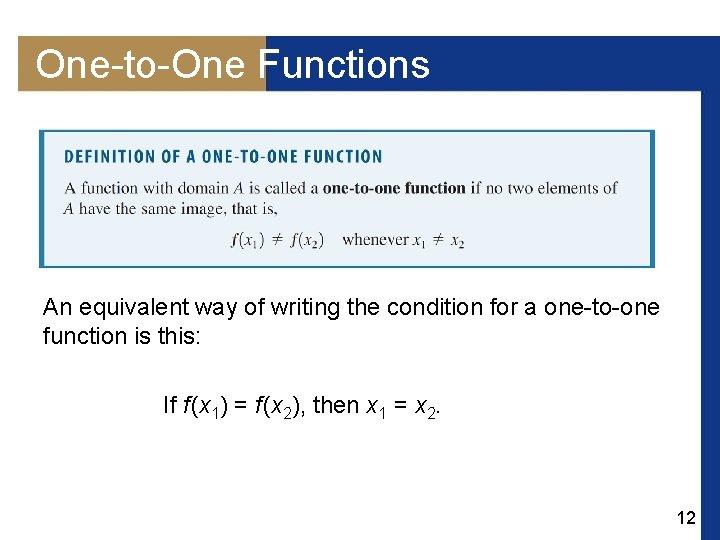
One-to-One Functions An equivalent way of writing the condition for a one-to-one function is this: If f (x 1) = f (x 2), then x 1 = x 2. 12
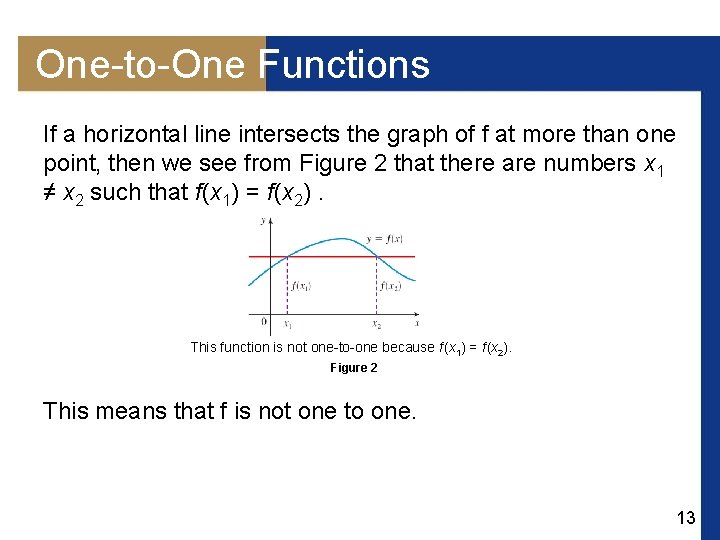
One-to-One Functions If a horizontal line intersects the graph of f at more than one point, then we see from Figure 2 that there are numbers x 1 ≠ x 2 such that f (x 1) = f (x 2). This function is not one-to-one because f (x 1) = f (x 2). Figure 2 This means that f is not one to one. 13
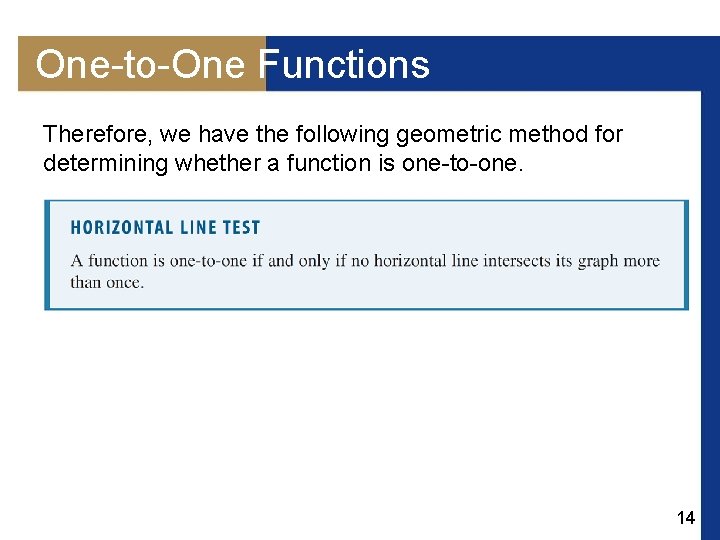
One-to-One Functions Therefore, we have the following geometric method for determining whether a function is one-to-one. 14
The Inverse of a Function 15
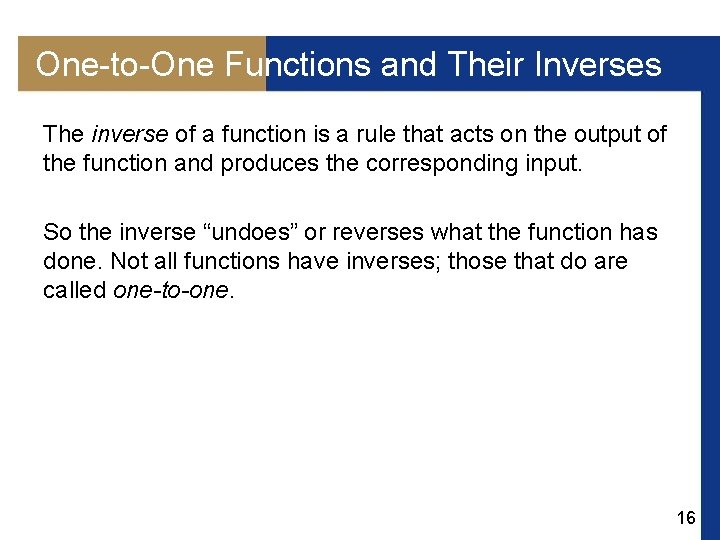
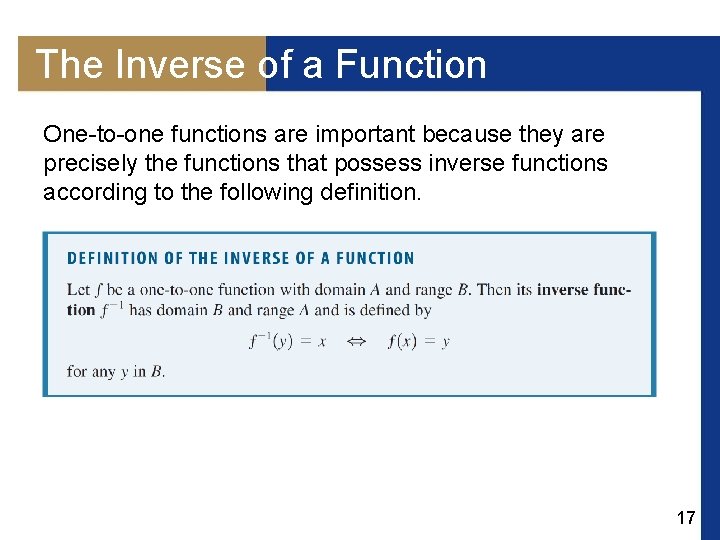
One-to-One Functions and Their Inverses The inverse of a function is a rule that acts on the output of the function and produces the corresponding input. So the inverse “undoes” or reverses what the function has done. Not all functions have inverses; those that do are called one-to-one. 16
The Inverse of a Function One-to-one functions are important because they are precisely the functions that possess inverse functions according to the following definition. 17
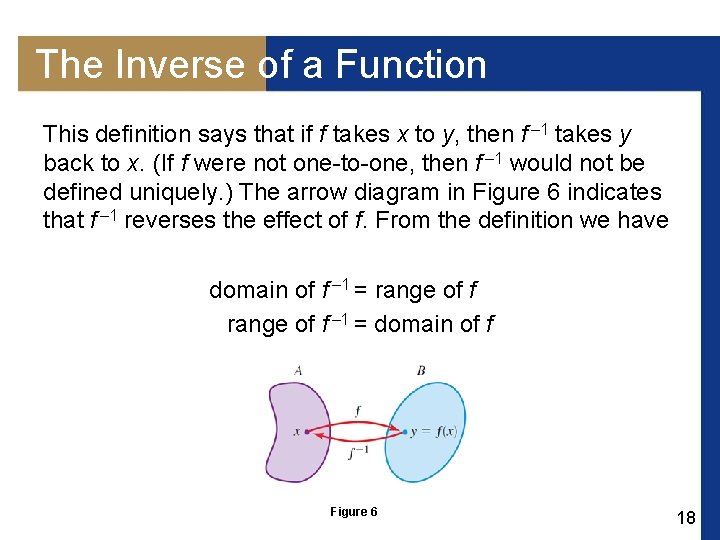
The Inverse of a Function This definition says that if f takes x to y, then f – 1 takes y back to x. (If f were not one-to-one, then f – 1 would not be defined uniquely. ) The arrow diagram in Figure 6 indicates that f – 1 reverses the effect of f. From the definition we have domain of f – 1 = range of f – 1 = domain of f Figure 6 18
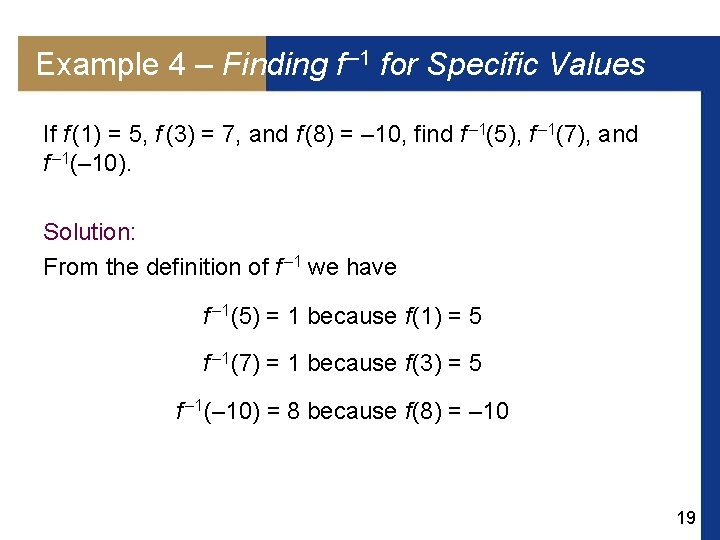
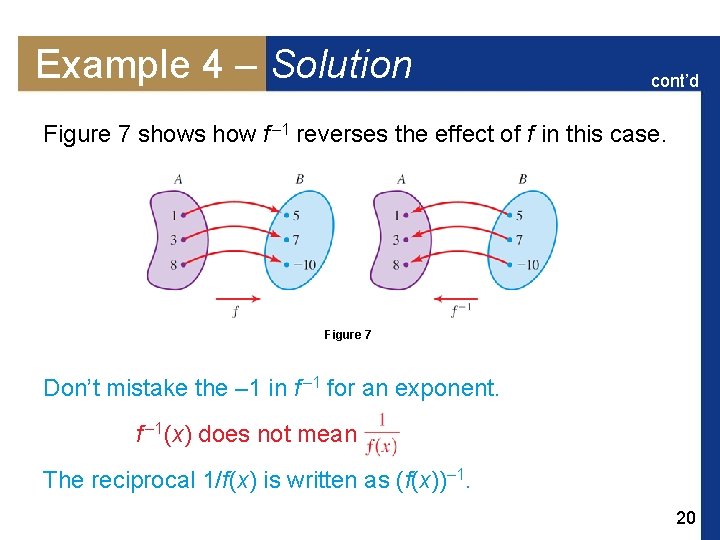
Example 4 – Finding f – 1 for Specific Values If f (1) = 5, f (3) = 7, and f (8) = – 10, find f – 1(5), f – 1(7), and f – 1(– 10). Solution: From the definition of f – 1 we have f – 1 (5) = 1 because f (1) = 5 f – 1 (7) = 1 because f (3) = 5 f – 1 (– 10) = 8 because f (8) = – 10 19
Example 4 – Solution cont’d Figure 7 shows how f – 1 reverses the effect of f in this case. Figure 7 Don’t mistake the – 1 in f – 1 for an exponent. f – 1 (x) does not mean The reciprocal 1/f(x) is written as (f(x))– 1. 20
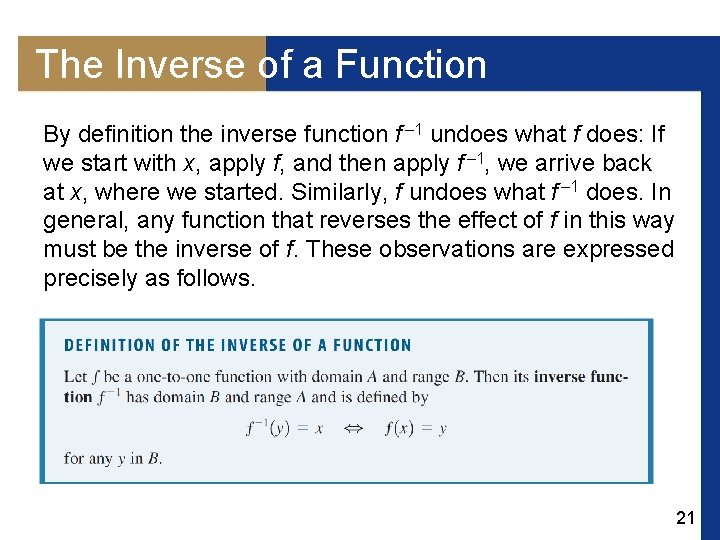
The Inverse of a Function By definition the inverse function f – 1 undoes what f does: If we start with x, apply f, and then apply f – 1, we arrive back at x, where we started. Similarly, f undoes what f – 1 does. In general, any function that reverses the effect of f in this way must be the inverse of f. These observations are expressed precisely as follows. 21