
Introduction to Inherently Safer Design Prepared for Safety
- Slides: 71
Introduction to Inherently Safer Design Prepared for Safety and Chemical Engineering Education (SACHE) by: Dennis C. Hendershot Rohm and Haas Company, retired ©American Institute of Chemical Engineers, 2006 1
Introduction to Inherently Safer Design What is inherently safer design? n Inherent - “existing in something as a permanent and inseparable element. . . ” Eliminate or minimize hazards rather than control hazards n Safety based on physical and chemical properties of the system, not “add-on” safety devices and systems n “Safer” – not “Safe” 2
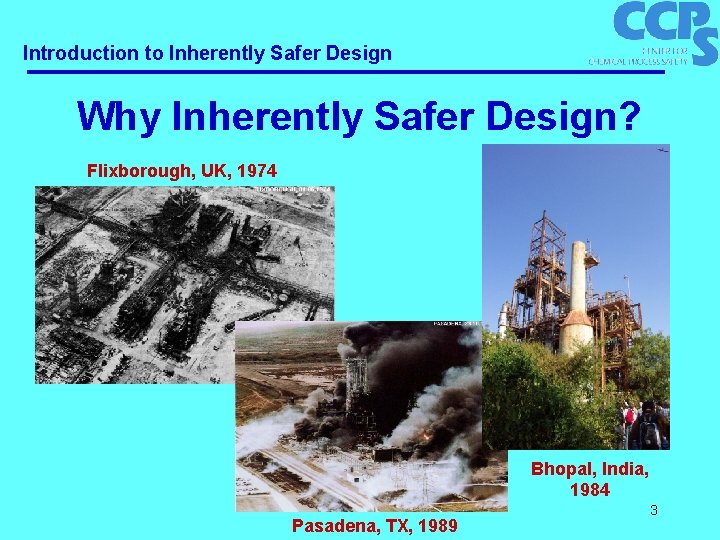
Introduction to Inherently Safer Design Why Inherently Safer Design? Flixborough, UK, 1974 Bhopal, India, 1984 Pasadena, TX, 1989 3
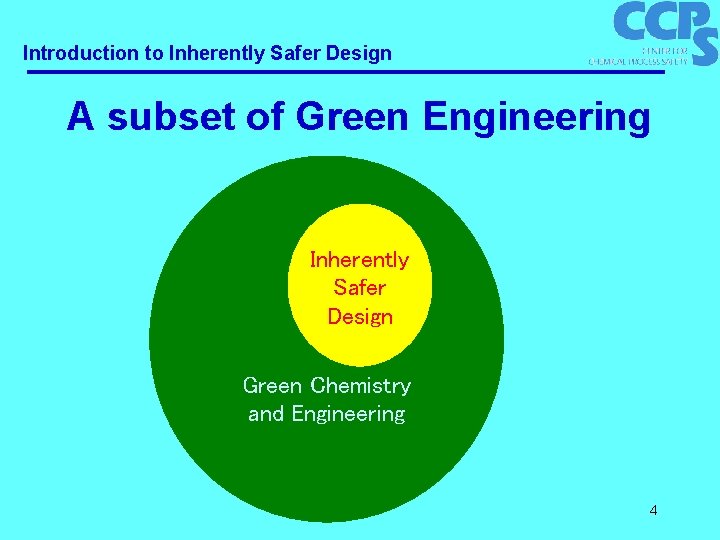
Introduction to Inherently Safer Design A subset of Green Engineering Inherently Safer Design Green Chemistry and Engineering 4
Introduction to Inherently Safer Design History of inherently safer design n Not really a new concept – elimination of hazards has a long history n Second half of 20 th Century chemical industry – increased hazards from huge, world scale petrochemical plants – Concern about cost and reliability of traditional “add on” safety systems – Trevor Kletz – ICI (1977) – Is there a better way? n Eliminate or dramatically reduce hazards 5
Introduction to Inherently Safer Design Hazard An inherent physical or chemical characteristic that has the potential for causing harm to people, the environment, or property (CCPS, 1992). n Hazards are intrinsic to a material, or its conditions of use. n Examples n – Phosgene - toxic by inhalation – Acetone - flammable – High pressure steam - potential energy due to pressure, high temperature 6
Introduction to Inherently Safer Design To eliminate hazards: n Eliminate the material n Change the conditions of use 7
Introduction to Inherently Safer Design Chemical Process Safety Strategies n Inherent n Passive n Active n Procedural 8
Introduction to Inherently Safer Design Inherent Eliminate or reduce the hazard by changing the process or materials which are nonhazardous or less hazardous n Integral to the product, process, or plant cannot be easily defeated or changed without fundamentally altering the process or plant design n EXAMPLE n – Substituting water for a flammable solvent (latex paints compared to oil base paints) 9
Introduction to Inherently Safer Design Passive n Minimize hazard using process or equipment design features which reduce frequency or consequence without the active functioning of any device n EXAMPLE – Containment dike around a hazardous material storage tank 10
Introduction to Inherently Safer Design Active Controls, safety interlocks, automatic shut down systems n Multiple active elements n – Sensor - detect hazardous condition – Logic device - decide what to do – Control element - implement action Prevent incidents, or mitigate the consequences of incidents n EXAMPLES n – High level alarm in a tank shuts automatic feed valve – A sprinkler system which extinguishes a fire 11
Introduction to Inherently Safer Design Procedural n Standard operating procedures, safety rules and standard procedures, emergency response procedures, training n EXAMPLE – Confined space entry procedures 12
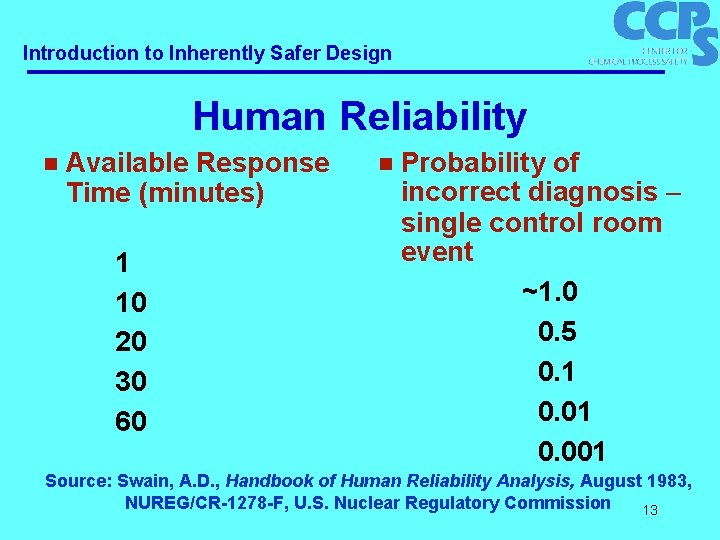
Introduction to Inherently Safer Design Human Reliability n Available Response Time (minutes) 1 10 20 30 60 n Probability of incorrect diagnosis – single control room event ~1. 0 0. 5 0. 1 0. 001 Source: Swain, A. D. , Handbook of Human Reliability Analysis, August 1983, NUREG/CR-1278 -F, U. S. Nuclear Regulatory Commission 13
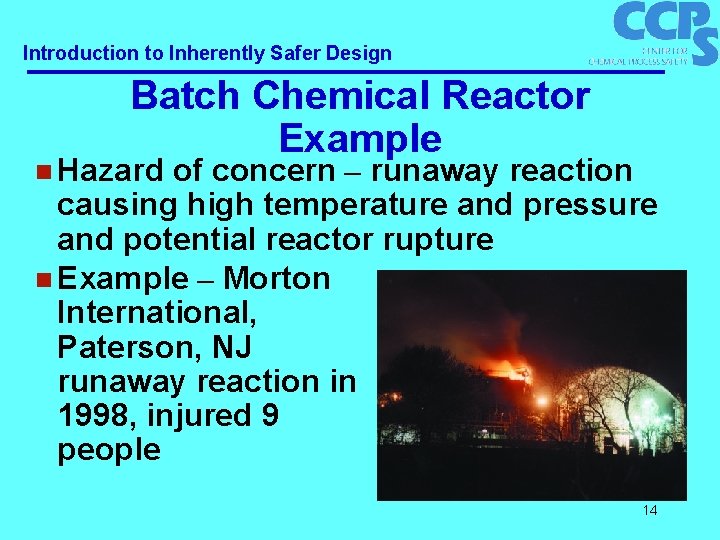
Introduction to Inherently Safer Design Batch Chemical Reactor Example n Hazard of concern – runaway reaction causing high temperature and pressure and potential reactor rupture n Example – Morton International, Paterson, NJ runaway reaction in 1998, injured 9 people 14
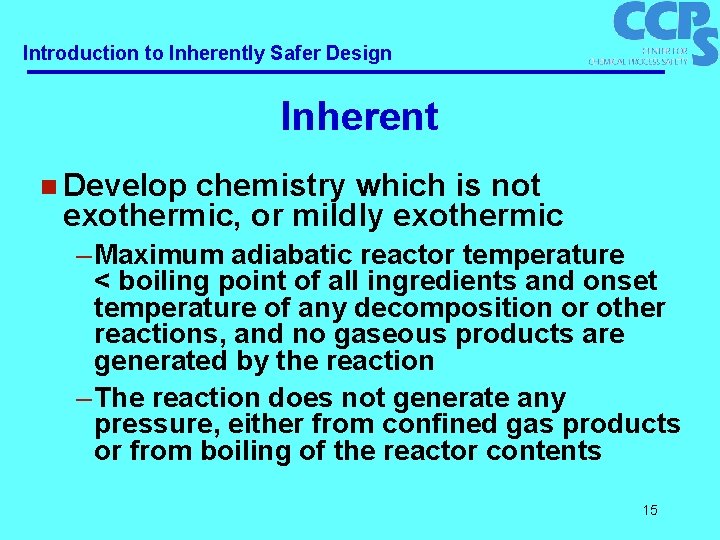
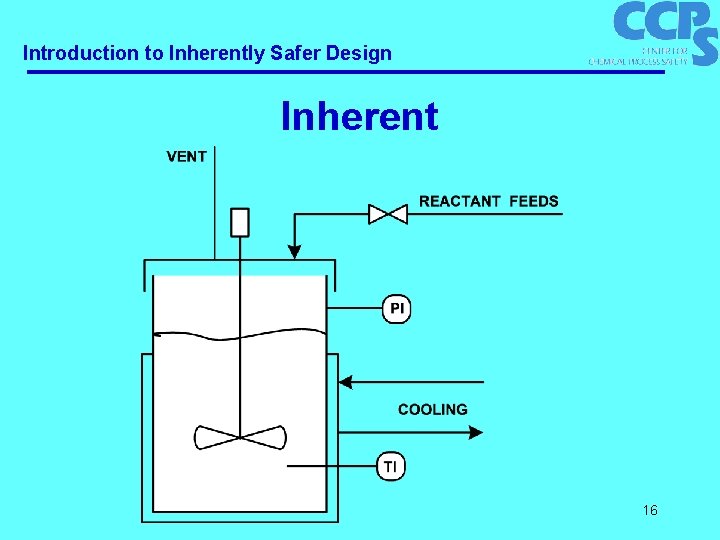
Introduction to Inherently Safer Design Inherent n Develop chemistry which is not exothermic, or mildly exothermic – Maximum adiabatic reactor temperature < boiling point of all ingredients and onset temperature of any decomposition or other reactions, and no gaseous products are generated by the reaction – The reaction does not generate any pressure, either from confined gas products or from boiling of the reactor contents 15
Introduction to Inherently Safer Design Inherent 16
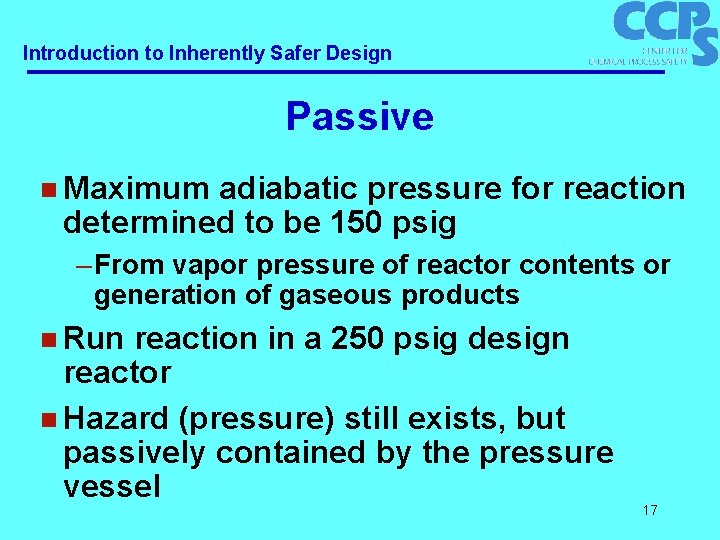
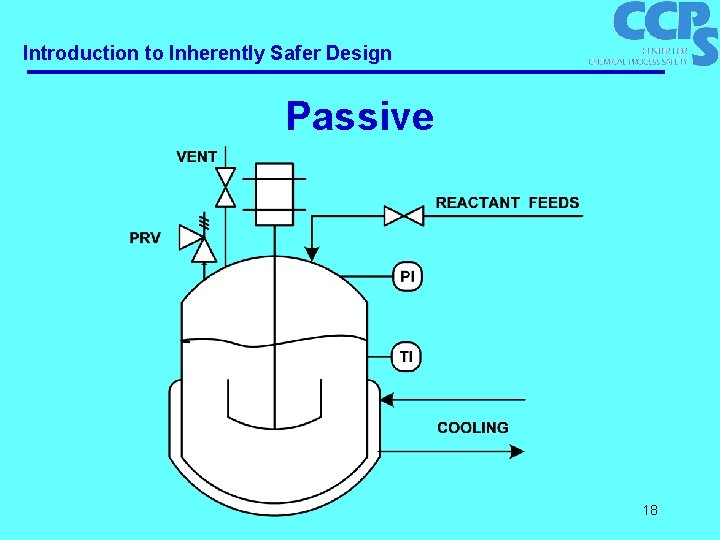
Introduction to Inherently Safer Design Passive n Maximum adiabatic pressure for reaction determined to be 150 psig – From vapor pressure of reactor contents or generation of gaseous products n Run reaction in a 250 psig design reactor n Hazard (pressure) still exists, but passively contained by the pressure vessel 17
Introduction to Inherently Safer Design Passive 18
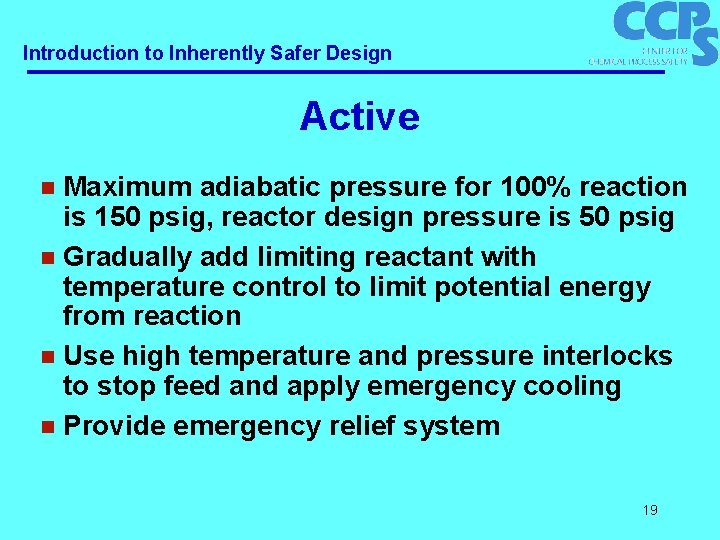
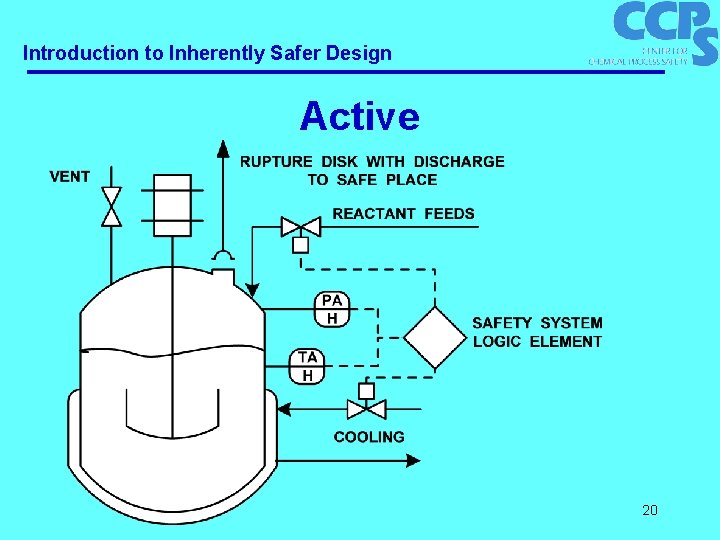
Introduction to Inherently Safer Design Active Maximum adiabatic pressure for 100% reaction is 150 psig, reactor design pressure is 50 psig n Gradually add limiting reactant with temperature control to limit potential energy from reaction n Use high temperature and pressure interlocks to stop feed and apply emergency cooling n Provide emergency relief system n 19
Introduction to Inherently Safer Design Active 20
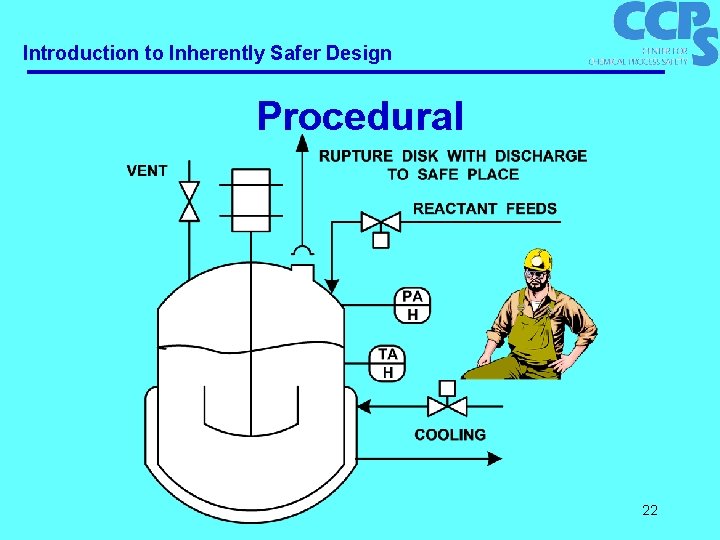
Introduction to Inherently Safer Design Procedural n Maximum adiabatic pressure for 100% reaction is 150 psig, reactor design pressure is 50 psig n Gradually add limiting reactant with temperature control to limit potential energy from reaction n Train operator to observe temperature, stop feeds and apply cooling if temperature exceeds critical operating limit 21
Introduction to Inherently Safer Design Procedural 22
Introduction to Inherently Safer Design Which strategy should we use? n Generally, reliability: in order of robustness and – Inherent – Passive – Active – Procedural n But - there is a place and need for ALL of these strategies in a complete safety program 23
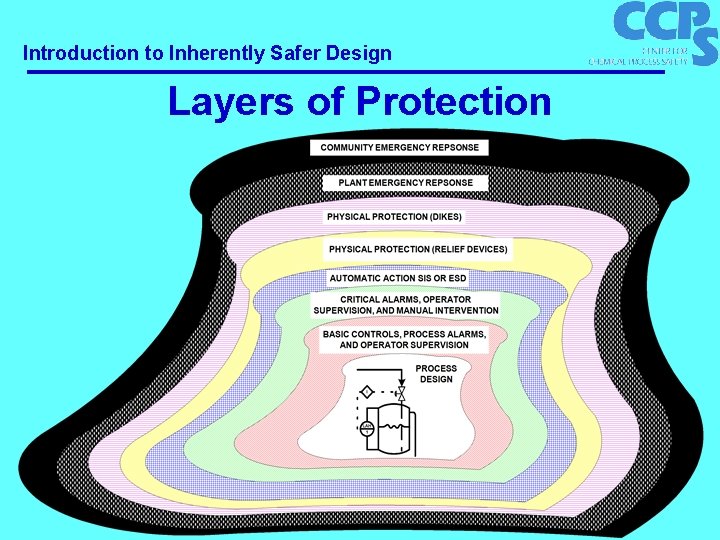
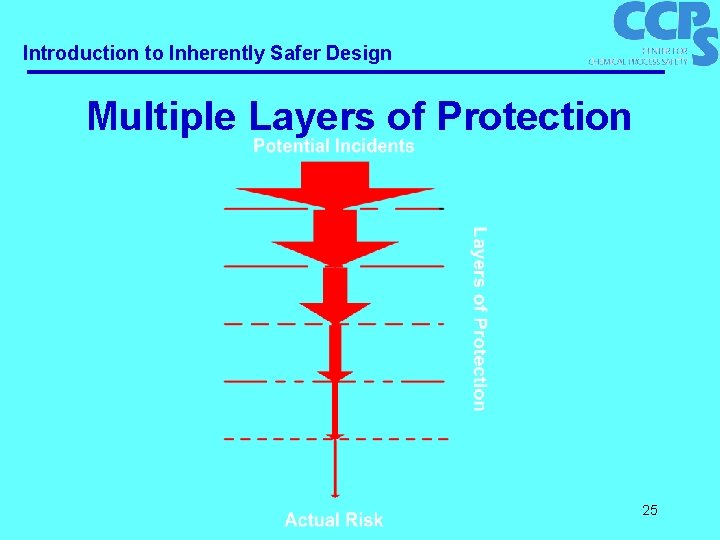
Introduction to Inherently Safer Design Layers of Protection 24
Introduction to Inherently Safer Design Multiple Layers of Protection 25
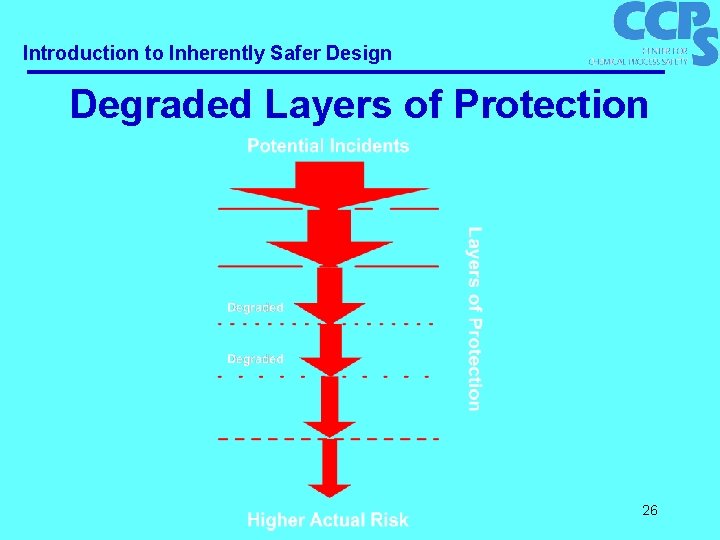
Introduction to Inherently Safer Design Degraded Layers of Protection 26
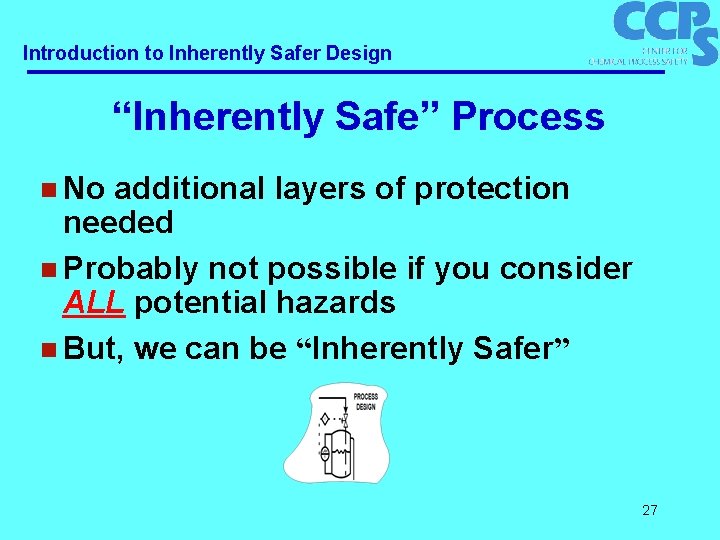
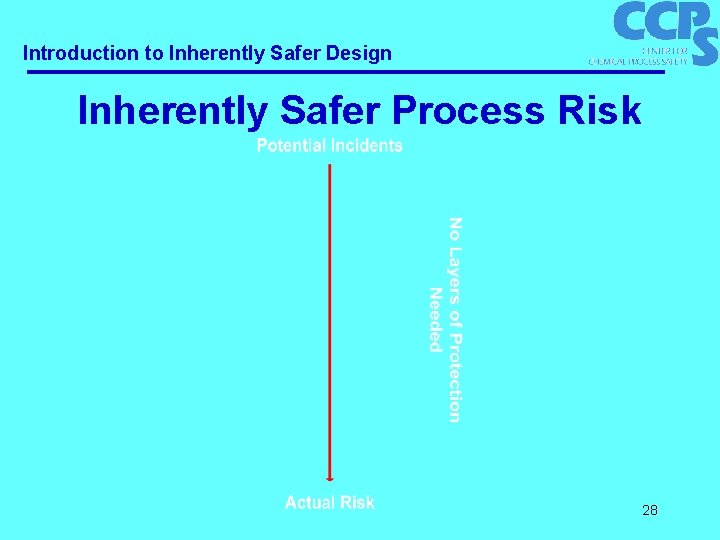
Introduction to Inherently Safer Design “Inherently Safe” Process n No additional layers of protection needed n Probably not possible if you consider ALL potential hazards n But, we can be “Inherently Safer” 27
Introduction to Inherently Safer Design Inherently Safer Process Risk 28
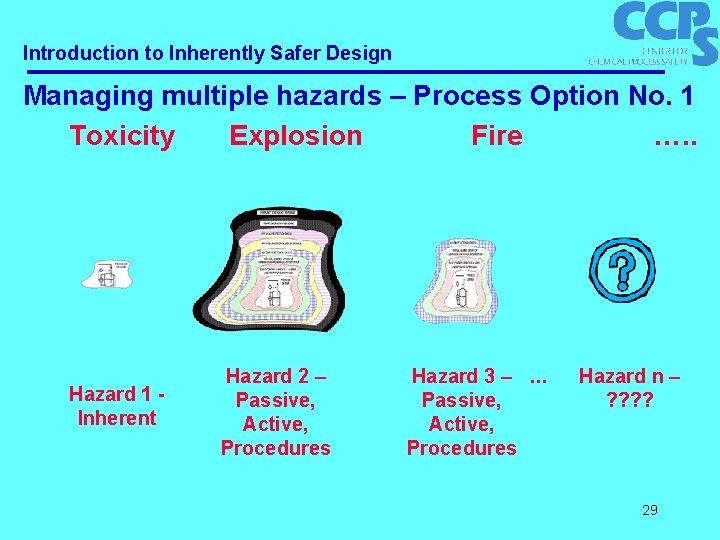
Introduction to Inherently Safer Design Managing multiple hazards – Process Option No. 1 Toxicity Explosion Fire …. . Hazard 1 Inherent Hazard 2 – Passive, Active, Procedures Hazard 3 – … Passive, Active, Procedures Hazard n – ? ? 29
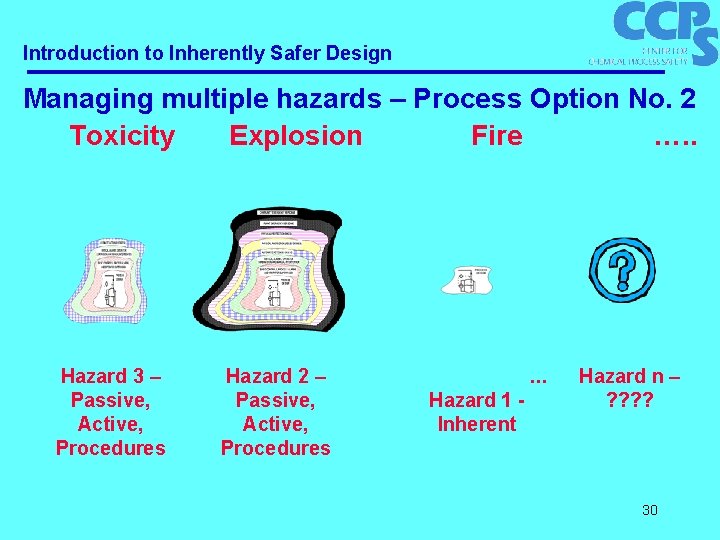
Introduction to Inherently Safer Design Managing multiple hazards – Process Option No. 2 Toxicity Explosion Fire …. . Hazard 3 – Passive, Active, Procedures Hazard 2 – Passive, Active, Procedures … Hazard 1 Inherent Hazard n – ? ? 30
Inherently Safer Design Strategies 31
Introduction to Inherently Safer Design Strategies n Minimize n Moderate n Substitute n Simplify 32
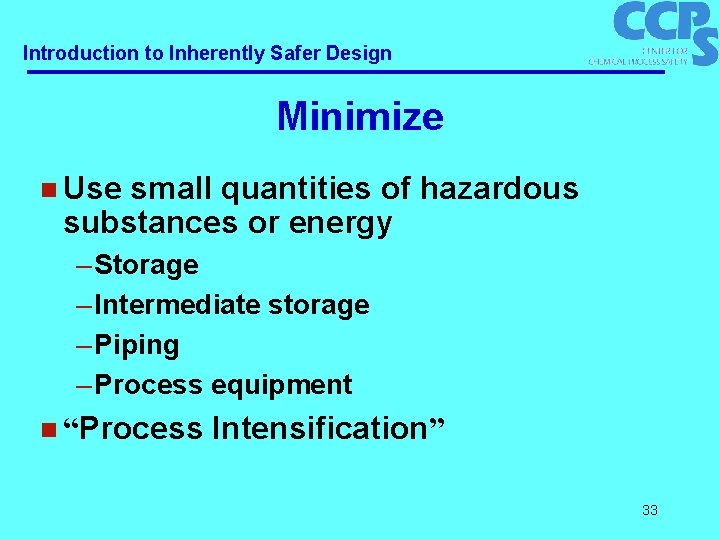
Introduction to Inherently Safer Design Minimize n Use small quantities of hazardous substances or energy – Storage – Intermediate storage – Piping – Process equipment n “Process Intensification” 33
Introduction to Inherently Safer Design Benefits n Reduced consequence of incident (explosion, fire, toxic material release) n Improved effectiveness and feasibility of other protective systems – for example: – Secondary containment – Reactor dump or quench systems 34
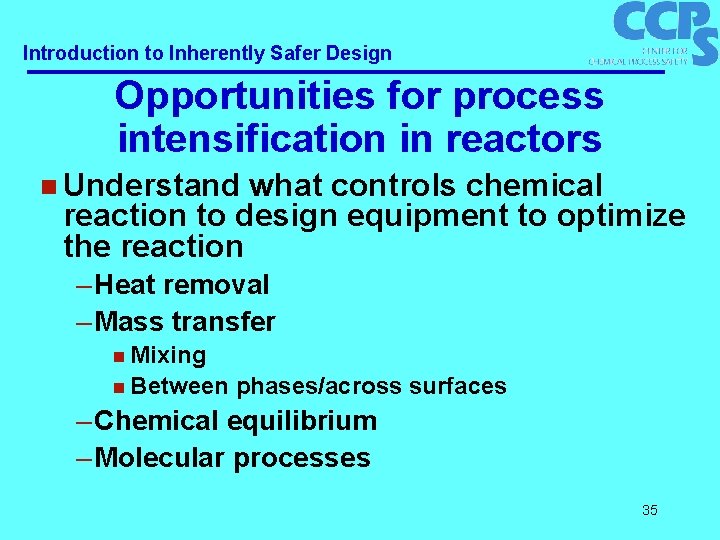
Introduction to Inherently Safer Design Opportunities for process intensification in reactors n Understand what controls chemical reaction to design equipment to optimize the reaction – Heat removal – Mass transfer n Mixing n Between phases/across surfaces – Chemical equilibrium – Molecular processes 35
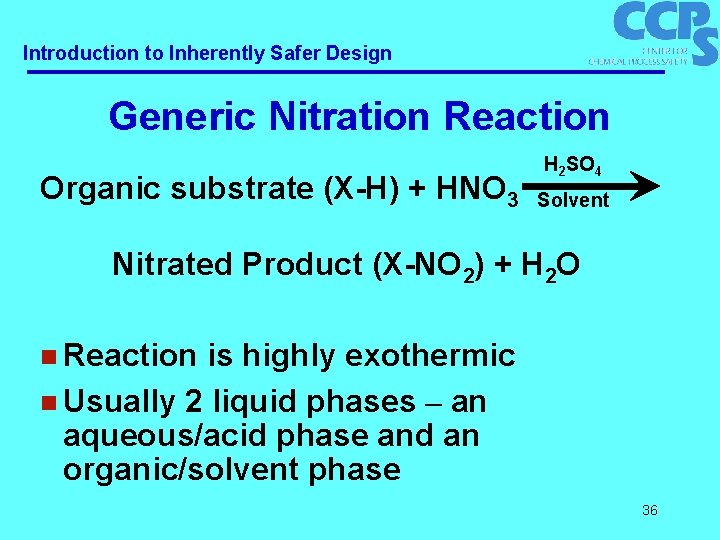
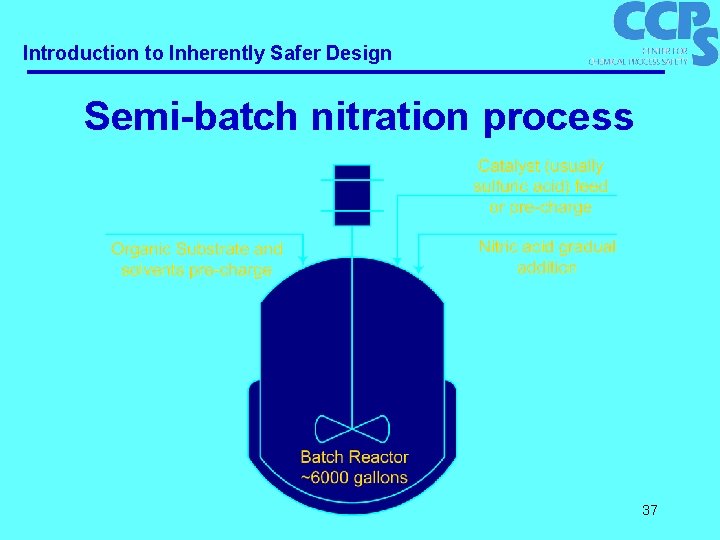
Introduction to Inherently Safer Design Generic Nitration Reaction Organic substrate (X-H) + HNO 3 H 2 SO 4 Solvent Nitrated Product (X-NO 2) + H 2 O n Reaction is highly exothermic n Usually 2 liquid phases – an aqueous/acid phase and an organic/solvent phase 36
Introduction to Inherently Safer Design Semi-batch nitration process 37
Introduction to Inherently Safer Design What controls the rate of this reaction? n Mixing – bringing reactants into contact with each other n Mass transfer – from acid/aqueous phase (nitric acid) to organic phase (organic substrate) n Heat removal 38
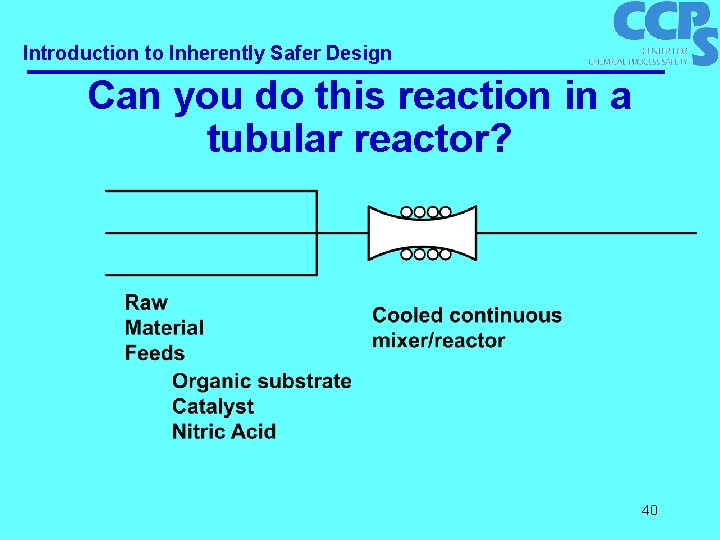
Introduction to Inherently Safer Design CSTR Nitration Process 39
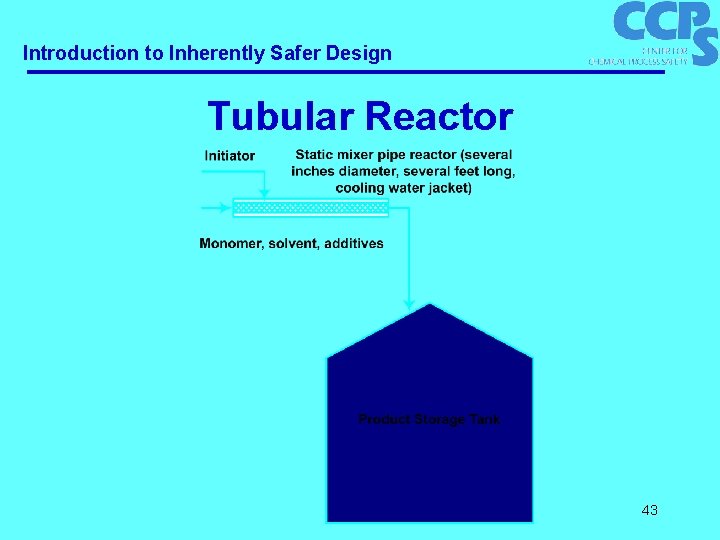
Introduction to Inherently Safer Design Can you do this reaction in a tubular reactor? 40
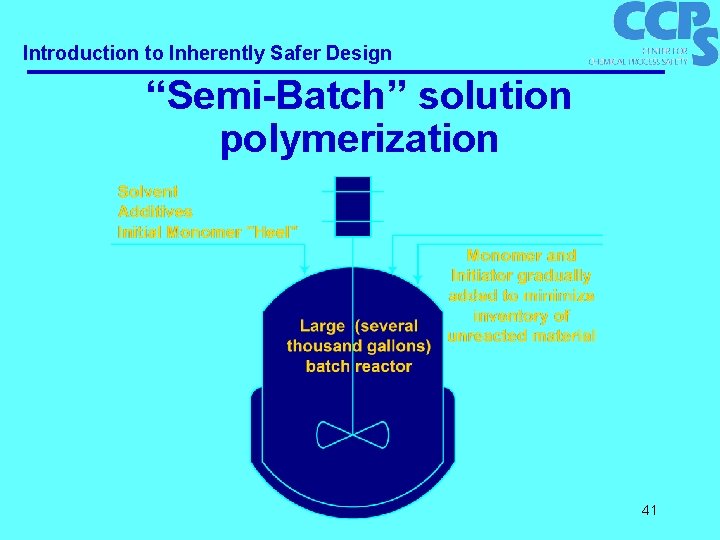
Introduction to Inherently Safer Design “Semi-Batch” solution polymerization 41
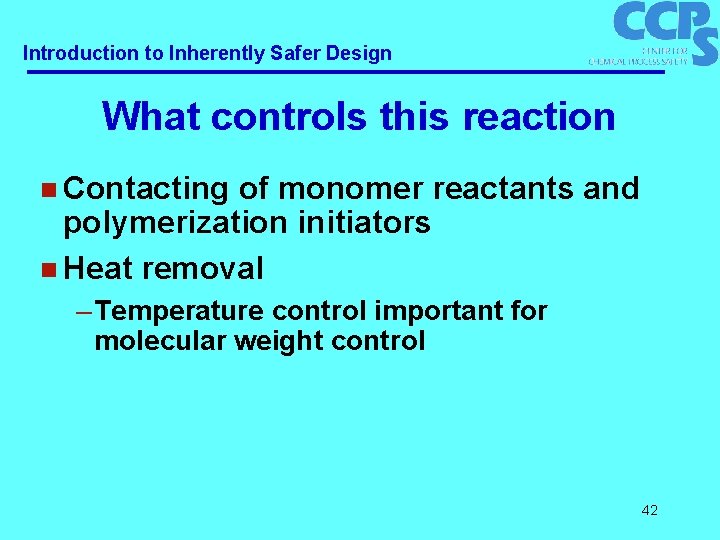
Introduction to Inherently Safer Design What controls this reaction n Contacting of monomer reactants and polymerization initiators n Heat removal – Temperature control important for molecular weight control 42
Introduction to Inherently Safer Design Tubular Reactor 43
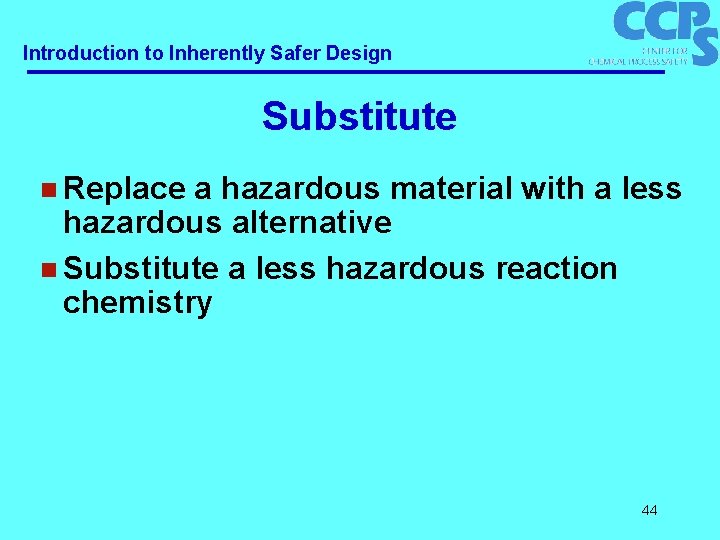
Introduction to Inherently Safer Design Substitute n Replace a hazardous material with a less hazardous alternative n Substitute a less hazardous reaction chemistry 44
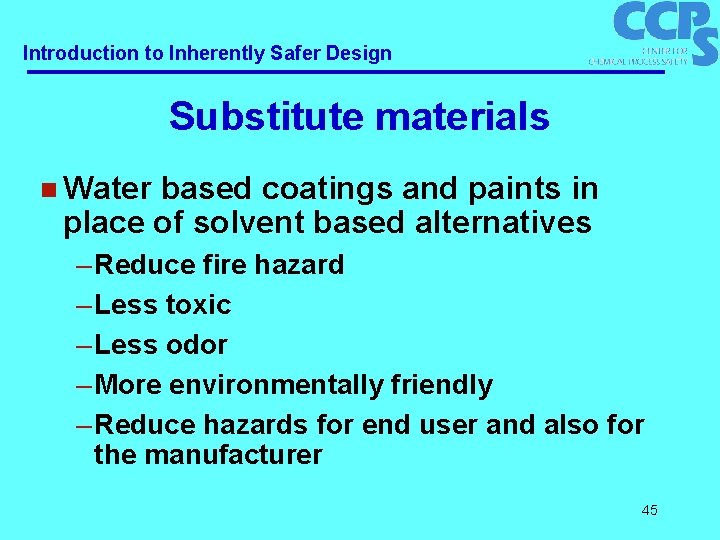
Introduction to Inherently Safer Design Substitute materials n Water based coatings and paints in place of solvent based alternatives – Reduce fire hazard – Less toxic – Less odor – More environmentally friendly – Reduce hazards for end user and also for the manufacturer 45
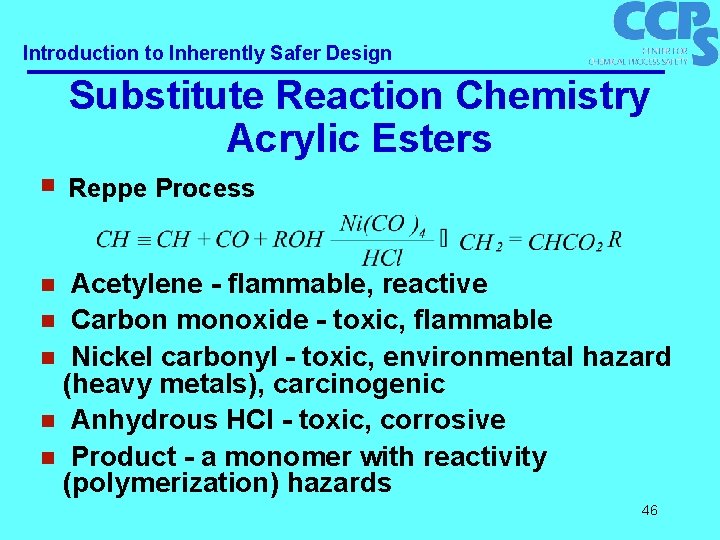
Introduction to Inherently Safer Design Substitute Reaction Chemistry Acrylic Esters n Reppe Process Acetylene - flammable, reactive n Carbon monoxide - toxic, flammable n Nickel carbonyl - toxic, environmental hazard (heavy metals), carcinogenic n Anhydrous HCl - toxic, corrosive n Product - a monomer with reactivity (polymerization) hazards n 46
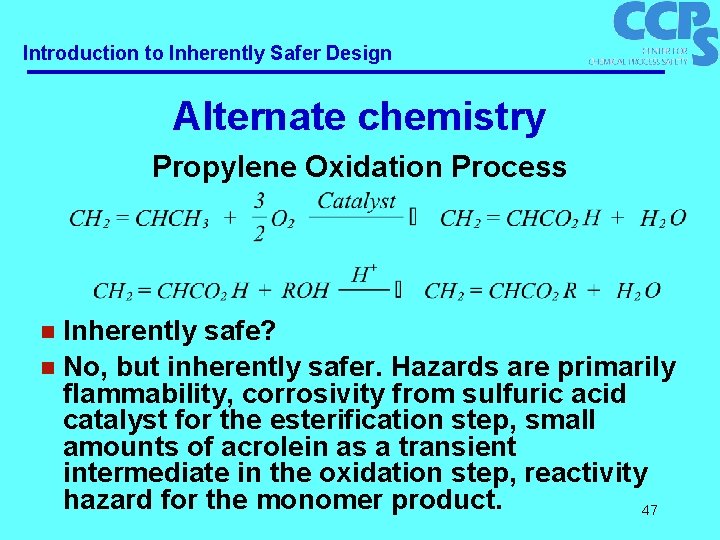
Introduction to Inherently Safer Design Alternate chemistry Propylene Oxidation Process Inherently safe? n No, but inherently safer. Hazards are primarily flammability, corrosivity from sulfuric acid catalyst for the esterification step, small amounts of acrolein as a transient intermediate in the oxidation step, reactivity hazard for the monomer product. 47 n
Introduction to Inherently Safer Design Moderate n Dilution n Refrigeration n Less severe processing conditions 48
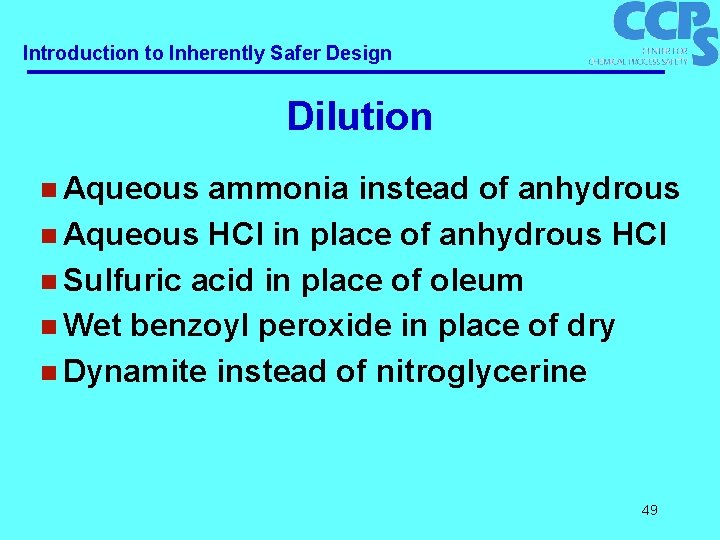
Introduction to Inherently Safer Design Dilution n Aqueous ammonia instead of anhydrous n Aqueous HCl in place of anhydrous HCl n Sulfuric acid in place of oleum n Wet benzoyl peroxide in place of dry n Dynamite instead of nitroglycerine 49
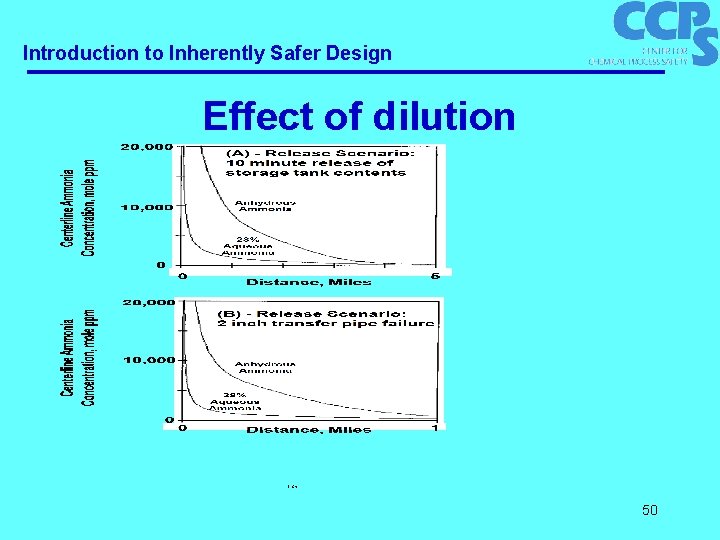
Introduction to Inherently Safer Design Effect of dilution 50
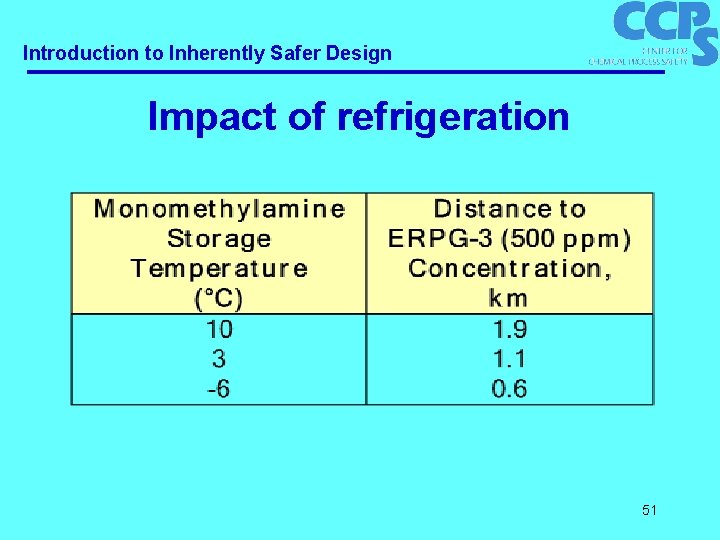
Introduction to Inherently Safer Design Impact of refrigeration 51
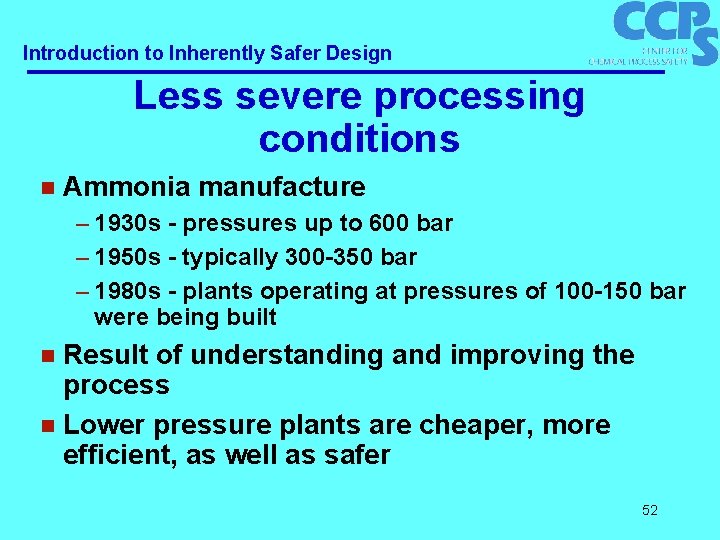
Introduction to Inherently Safer Design Less severe processing conditions n Ammonia manufacture – 1930 s - pressures up to 600 bar – 1950 s - typically 300 -350 bar – 1980 s - plants operating at pressures of 100 -150 bar were being built Result of understanding and improving the process n Lower pressure plants are cheaper, more efficient, as well as safer n 52
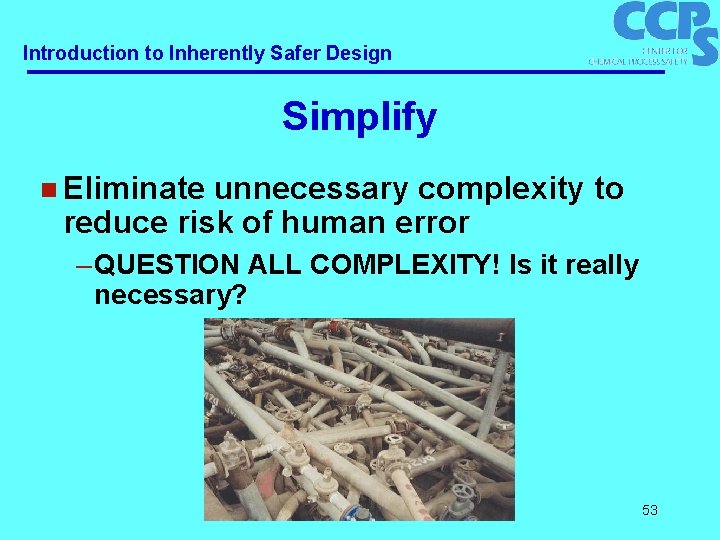
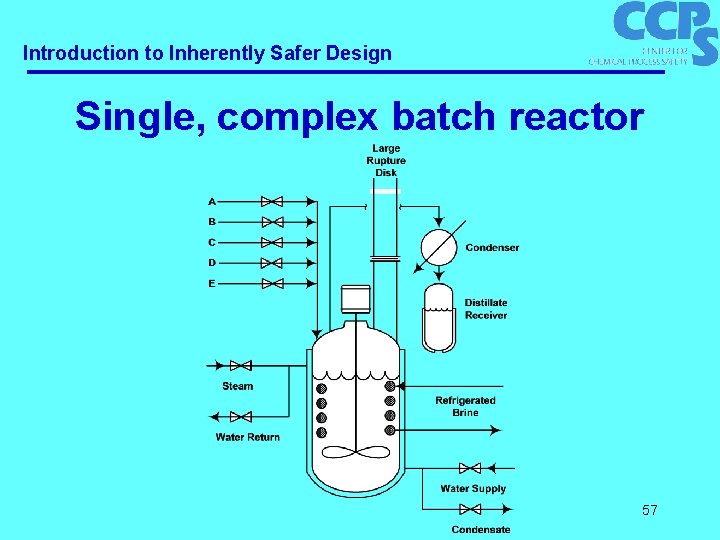
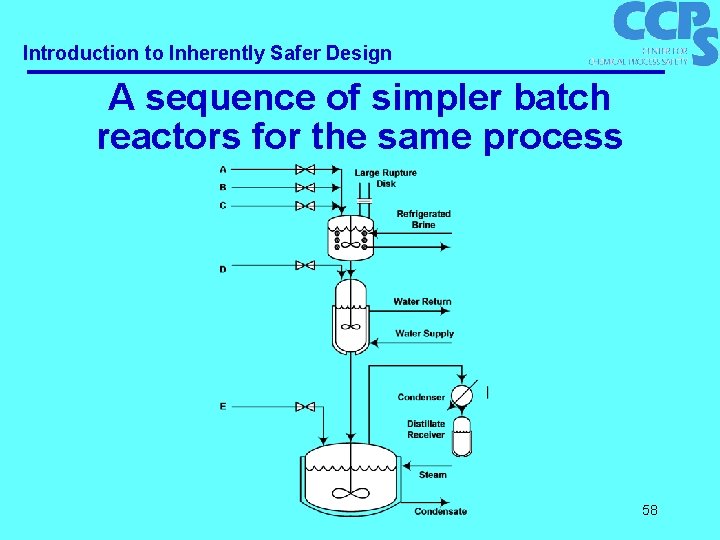
Introduction to Inherently Safer Design Simplify n Eliminate unnecessary complexity to reduce risk of human error – QUESTION ALL COMPLEXITY! Is it really necessary? 53
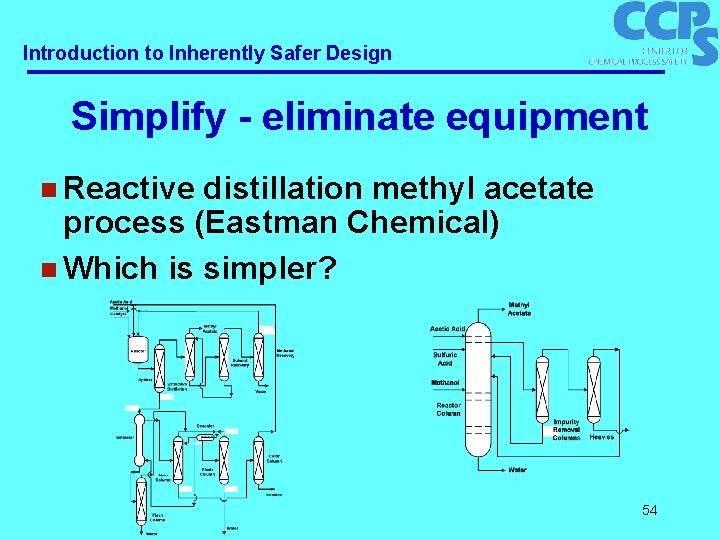
Introduction to Inherently Safer Design Simplify - eliminate equipment n Reactive distillation methyl acetate process (Eastman Chemical) n Which is simpler? 54
Introduction to Inherently Safer Design Modified methyl acetate process n Fewer vessels n Fewer pumps n Fewer flanges n Fewer instruments n Fewer valves n Less piping n. . . 55
Introduction to Inherently Safer Design But, it isn’t simpler in every way n Reactive distillation column itself is more complex n Multiple unit operations occur within one vessel n More complex to design n More difficult to control and operate 56
Introduction to Inherently Safer Design Single, complex batch reactor 57
Introduction to Inherently Safer Design A sequence of simpler batch reactors for the same process 58
Inherent Safety Considerations through the Process Life Cycle (Use manufacture of acrylate esters as an example) 59
Introduction to Inherently Safer Design Research n Basic technology – Reppe process – Propylene oxidation followed by esterification – Other alternatives n propane based n Others - ? ? 60
Introduction to Inherently Safer Design Process Development n Implementation of selected technology – Oxidation catalyst options n n n Temperature Pressure Selectivity Impurities Catalyst hazards – Esterification catalyst options n n Sulfuric acid Ion exchange resins or other immobilized acid functionality catalysts 61
Introduction to Inherently Safer Design Preliminary Plant Design n Plant location – Plant site options – Plant layout on selected site n Consider – People – Property – Environmentally sensitive locations 62
Introduction to Inherently Safer Design Detailed Plant Design n Equipment size n Inventory of raw materials n Inventory of process intermediates n One large train vs. multiple smaller trains n Specific equipment location n… 63
Introduction to Inherently Safer Design Detailed Equipment Design n Inventory of hazardous material in each equipment item n Heat transfer media (temperature, pressure, fluid) n Pipe size, length, construction (flanged, welded, screwed pipe) n …… 64
Introduction to Inherently Safer Design Operation friendly” operating procedures n Management of change n “User – Consider inherently safer options when making modifications – Identify opportunities for improving inherent safety based on operating experience, improvements in technology and knowledge 65
Introduction to Inherently Safer Design When to consider Inherent Safety? n Start early in process research and development n NEVER STOP looking for inherently safer design and operating improvements 66
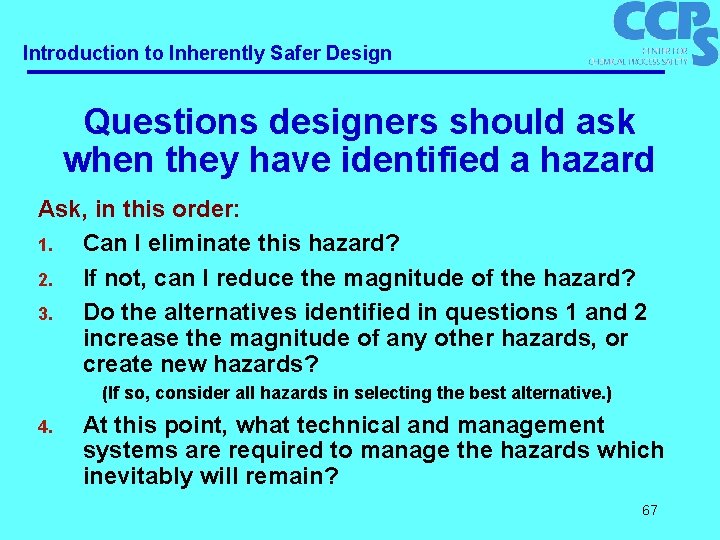
Introduction to Inherently Safer Design Questions designers should ask when they have identified a hazard Ask, in this order: 1. Can I eliminate this hazard? 2. If not, can I reduce the magnitude of the hazard? 3. Do the alternatives identified in questions 1 and 2 increase the magnitude of any other hazards, or create new hazards? (If so, consider all hazards in selecting the best alternative. ) 4. At this point, what technical and management systems are required to manage the hazards which inevitably will remain? 67
Introduction to Inherently Safer Design and Regulations n Contra Costa County, CA Industrial Safety Ordinance (1999) – Requires evaluation of inherently safer technologies – Reviewed by enforcement agencies – Allows consideration of feasibility and economics n New Jersey Department of the Environment (2005) – Facilities covered by the New Jersey Toxic Catastrophe Prevention Act (TCPA) must review the practicality of adopting inherently safer technology as an approach to reducing the potential impact of a terrorist attack n United States Federal requirements – Several “chemical security” bills which include requirements for consideration of inherently safer design have been introduced in Congress, but, as of June 2006 none of these have been enacted. 68
Introduction to Inherently Safer Design Resources n Kletz, T. A. , Process Plants - A Handbook for Inherently Safer Design, Taylor and Francis, London, 1998. n Inherently Safer Chemical Processes - A Life Cycle Approach, American Institute of Chemical Engineers, New York, 1996. – Note: A second edition is being written in 2006. 69
Introduction to Inherently Safer Design Resources n Guidelines for Engineering Design for Process Safety, Chapter 2 “Inherently Safer Plants. ” American Institute of Chemical Engineers, New York, 1993. n Guidelines for Design Solutions for Process Equipment Failures, American Institute of Chemical Engineers, New York, 1998. 70
Introduction to Inherently Safer Design Resources n INSIDE Project and INSET Toolkit, Commission of the European Community, 1997 - available for download from: http: //www. aeat-safety-andrisk. com/html/inset. html n Extensive journal and conference proceedings literature 71