
Introduction to Implementation Science Implementation Planning Beaverton School
Introduction to Implementation Science & Implementation Planning Beaverton School District - April 14, 2016
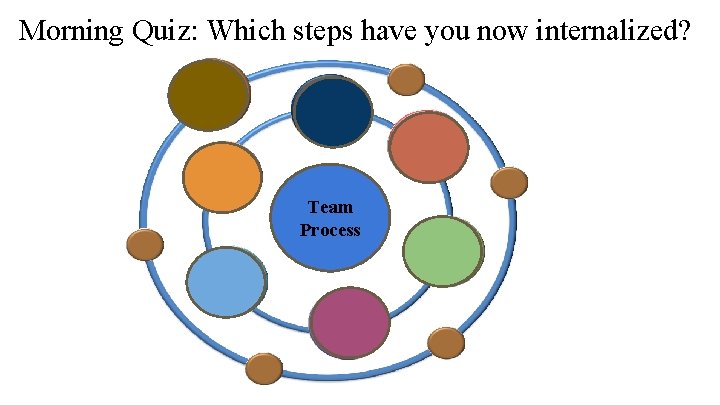
Morning Quiz: Which steps have you now internalized? Team Process
Objectives: 1. Build shared understanding about implementation science 1. Work collaboratively to determine the boundaries of learning teams 1. Provide an opportunity for supported implementation planning
Using our knowledge of Assessment for Learning (CASL, Stiggins) 1. Where are we going? 2. Where are we now? 3. How can we close the gap?
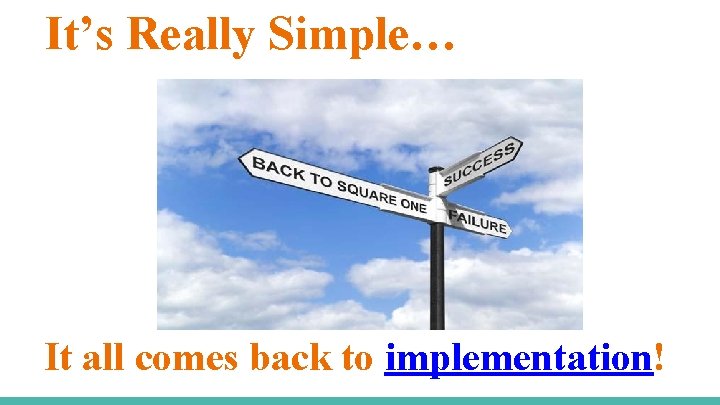
It’s Really Simple… It all comes back to implementation!
The BIG Why? “The job of every school district is to make certain that supportive conditions are in place to ensure standards-based practices are implemented in every school, in every classroom, every day. ” “To ensure all district and school staff understand implement standards-based practices, district and school leaders must commit to a system-wide infrastructure of support that builds the capacity of teachers and monitors and sustain effective classroom practices. ” - Scaling Up ODE EBISS 2015
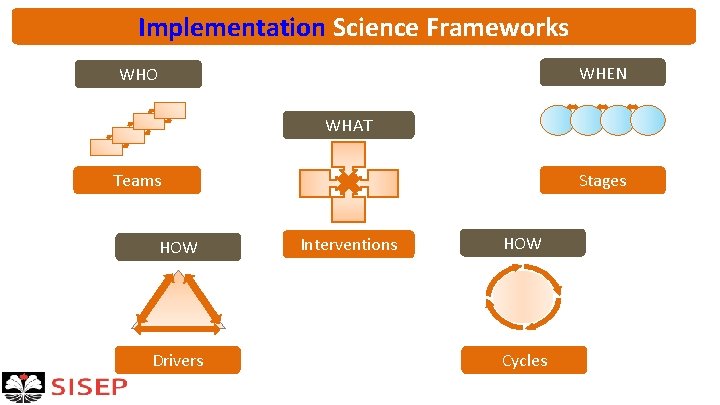
Implementation Science Frameworks WHEN WHO WHAT Stages Teams HOW Drivers Interventions HOW Cycles
Using our knowledge of Assessment for Learning (- CASL, Stiggins) 1. Where are we going? … Defining the practice
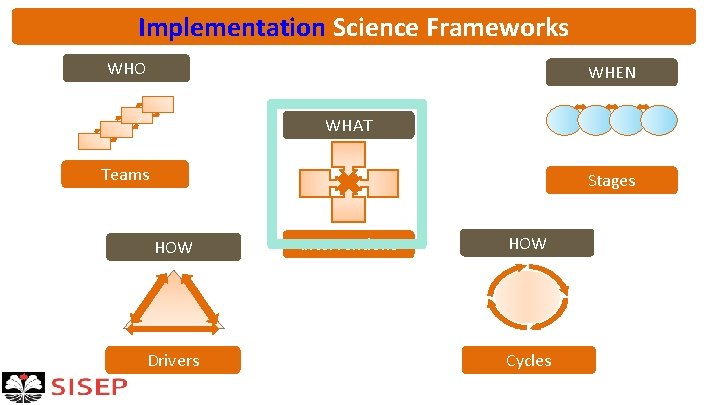
Implementation Science Frameworks WHO WHEN WHAT Teams Stages HOW Drivers Interventions HOW Cycles
Define It. . . What is a learning team? Be ready to share your answer

What are the risks if we “water it down? ”
Time to Discuss! As a table, decide if this should be an allowable use of learning team time and hold up one color card. Be ready to tell WHY! Yes No OK, But Only For a Short Time
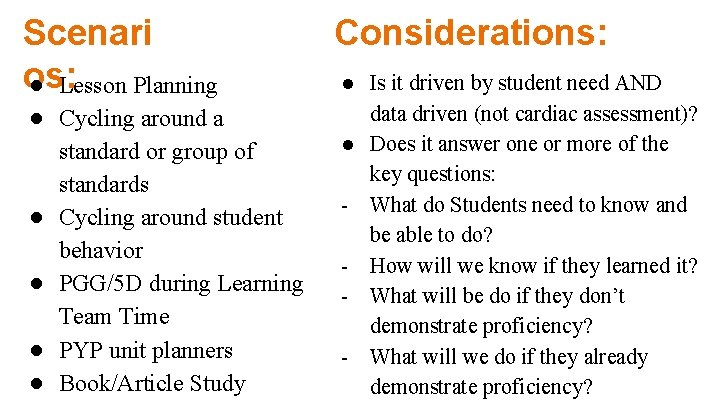
Scenari os: ● Lesson Planning ● Cycling around a standard or group of standards ● Cycling around student behavior ● PGG/5 D during Learning Team Time ● PYP unit planners ● Book/Article Study Considerations: ● Is it driven by student need AND data driven (not cardiac assessment)? ● Does it answer one or more of the key questions: - What do Students need to know and be able to do? - How will we know if they learned it? - What will be do if they don’t demonstrate proficiency? - What will we do if they already demonstrate proficiency?
Time to Discuss! As a table, decide if this should be an allowable use of learning team time and hold up one color card. Be ready to tell WHY! Yes No OK, But Only For a Short Time
Using the Process: Step 2 Collect and Chart Consider where your teams are currently working, Chart into these categories: - Meeting: Completing cycles regularly with notable increases in student achievement - Approaching: Completing cycles regularly without notable increase in student achievement - Far To Go: Working through cycles slowly with some gaps and student achievement is variable - Intervention: Not completing cycles, stuck or struggling with specific elements prevents them from moving forward
Using our knowledge of Assessment for Learning (- CASL, Stiggins) 2. Where are we now? Our current reality. . . … as a district?
Using the Process: Step 3 Analyze and Prioritize Consider the teams in the column you selected. 1. List Strengths (What are the teams doing well? ) 1. List Errors/Misconceptions/Concerns (What are the teams struggling with? ) 3. Make Inferences (What do the teams know/understand/not understand that is leading to the items listed above? )
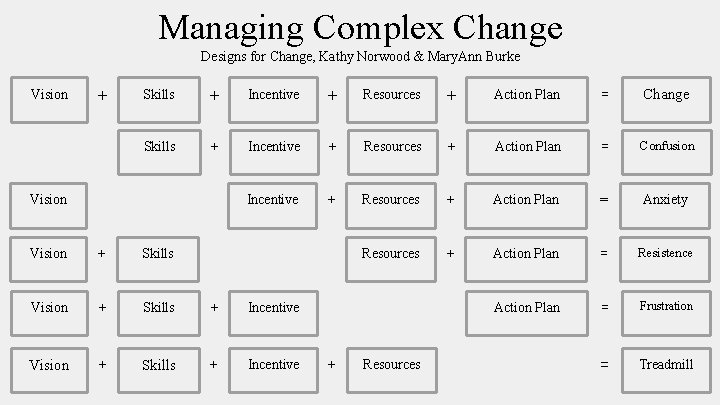
Managing Complex Change Designs for Change, Kathy Norwood & Mary. Ann Burke Vision + Skills + Incentive + Resources + Action Plan = Change Skills + Incentive + Resources + Action Plan = Confusion Incentive + Resources + Action Plan = Anxiety Resources + Action Plan = Resistence Action Plan = Frustration = Treadmill Vision + Skills + Incentive + Resources
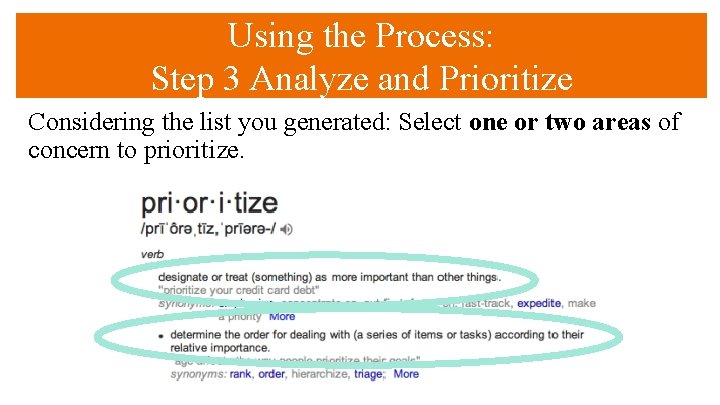
Using the Process: Step 3 Analyze and Prioritize Considering the list you generated: Select one or two areas of concern to prioritize.
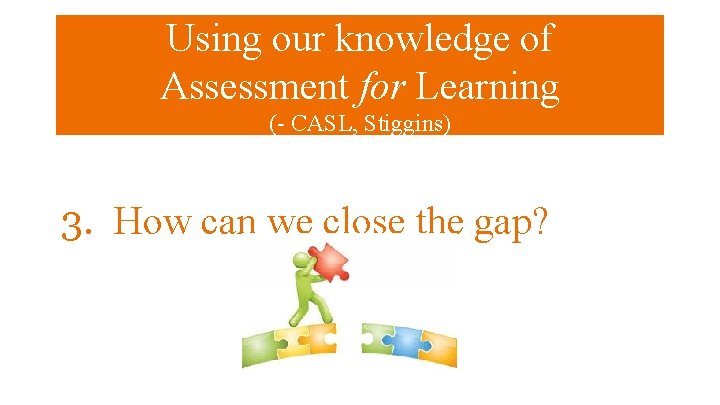
Using our knowledge of Assessment for Learning (- CASL, Stiggins) 3. How can we close the gap?

Time For An Action Plan
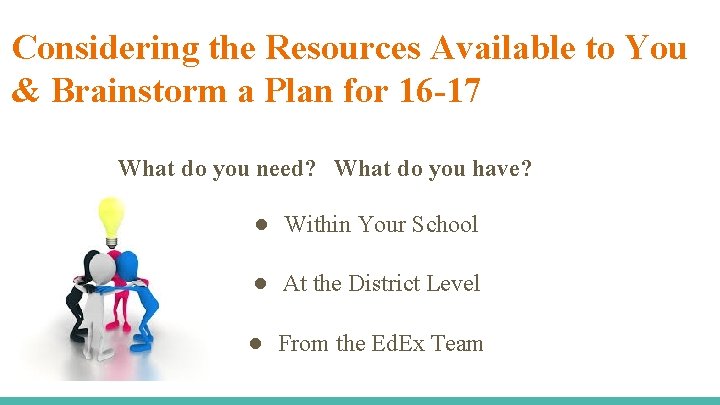
Considering the Resources Available to You & Brainstorm a Plan for 16 -17 What do you need? What do you have? ● Within Your School ● At the District Level ● From the Ed. Ex Team
Things to Consider. . . ● ● ● ● ● Options for building assessment literacy (SAI) Resources that can be reallocated Increasing coaching support How can we give more time or make the time more efficient? Options for technology supports Adjusting physical meeting space What MUST we monitor? How can we give better feedback? Clarifying expectations What else?

Time to Expand the Plan What do you need to move teams forward?
Last few items. . . 1. Make sure your school name is on your plan sheet as this will be returned to you. 1. We will work together to make the best possible plan given the resources available. 1. Keep up the good work!

www. educationalexcellence. org
Admin: Reflection & Feedback Ticket out the Door 1. I want to remember… 2. My next tiny step will be…. 3. My next BIG step will be…
Please be back from lunch and ready to start at 1: 00 pm
Introduction to Implementation Science & Implementation Planning Beaverton School District - April 14, 2016
Objectives: 1. Build shared understanding about implementation science 1. Work collaboratively to determine the boundaries of learning teams. 1. Provide an opportunity for supported implementation planning
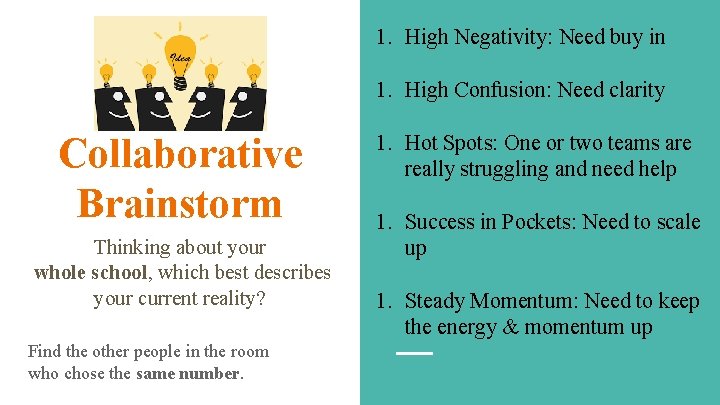
1. High Negativity: Need buy in 1. High Confusion: Need clarity Collaborative Brainstorm Thinking about your whole school, which best describes your current reality? Find the other people in the room who chose the same number. 1. Hot Spots: One or two teams are really struggling and need help 1. Success in Pockets: Need to scale up 1. Steady Momentum: Need to keep the energy & momentum up
Brainstorm Reminders: 1. Write down everything! 2. There are no bad ideas! 3. Don’t get stuck on the details of one idea! 4. Remember mosquito! Please remember tothe make your poster detailed enough to stand alone!

Speed Dating! You have 3 minutes to “date” each poster. After discussing as a group: Your favorite thing about this date. One question you have for your date. One comment that could make your date more appealing.
Ongoing Implementation Plan Take 10 minutes to reflect on the plans for your individual school: 1. Drop, Keep, Add to your plan options 2. Be ready to share!
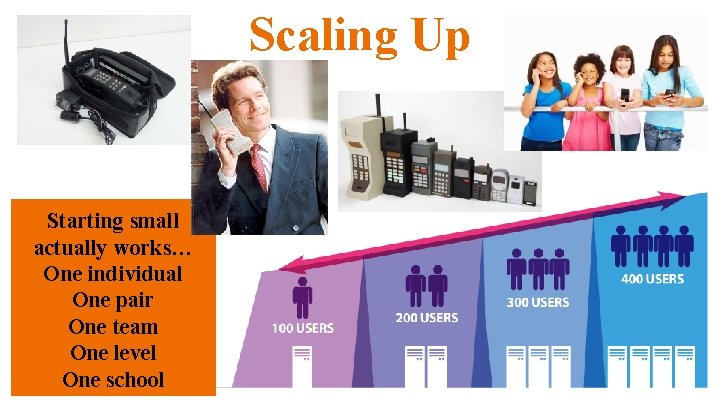
Scaling Up Starting small actually works… One individual One pair One team One level One school
Let’s Celebrate Take 3 strips of paper, one success story on each � A School Success � A Team or Teacher Success � A Personal Success
Reflection & Feedback Ticket out the Door 1. I want to remember… 2. My next tiny step will be…. 3. My next BIG step will be…
- Slides: 38