
Introduction to Human Rights DIGNITY AND EQUALITY FOR

- Slides: 29
Introduction to Human Rights DIGNITY AND EQUALITY FOR ALL Yolande Tomlinson, Ph. D. , US Human Rights Network Dina Tyson, National Center for Civil & Human Rights Khalidah Guy, National Center for Civil & Human Rights
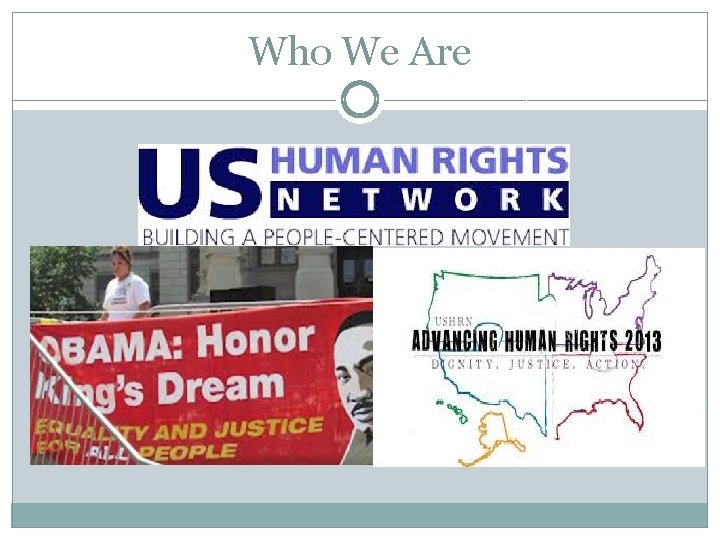
Who We Are
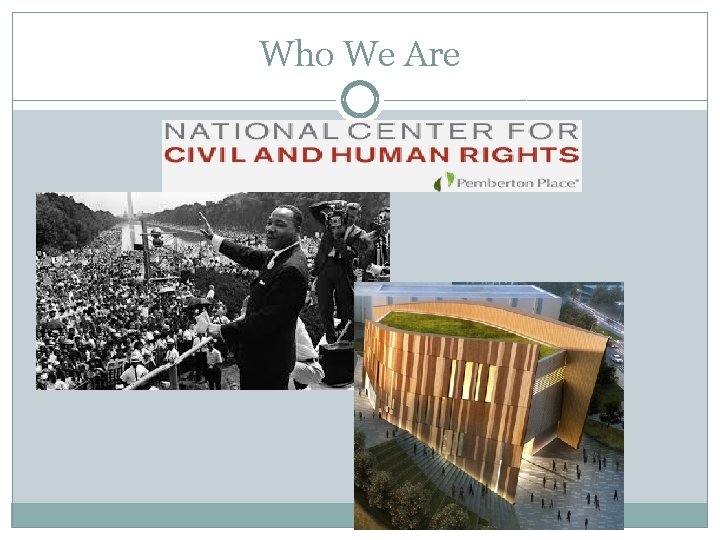
Who We Are
Agenda �What are human rights Standards Tools �Case Studies: Quiz �Youth Declaration of Rights �Action
Ground Rules Ø Ø Ø This is a safe space Step up/step back One diva, one mic [W. A. I. T. ] Circle of knowledge Questions & additions
Goals �Provide an introduction to human rights principles; �Provide the tools for you to be able to Articulate a basic understanding of human rights; Understand how human rights apply to everyday life; Be able to frame one or two key issue(s) as human rights issues; and Identify human rights violations; �Lay the groundwork for further engagement with human rights; �Provide opportunities beyond this workshop for you to apply what you have learned.
Introductions Song Scramble
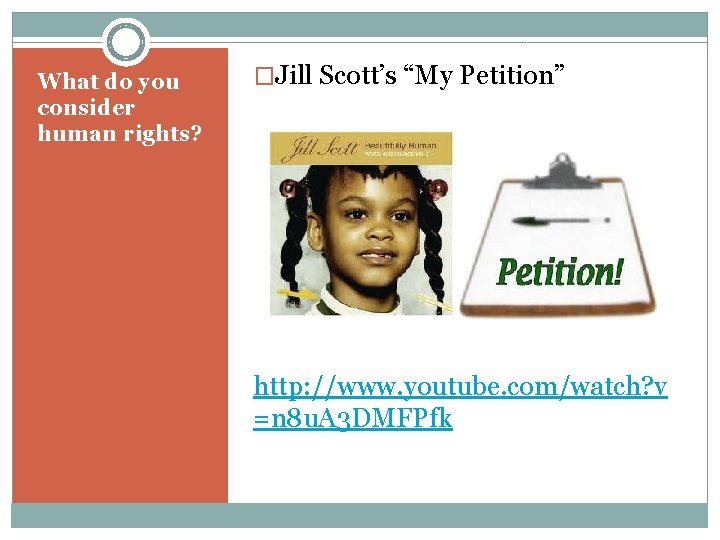
What do you consider human rights? �Jill Scott’s “My Petition” http: //www. youtube. com/watch? v =n 8 u. A 3 DMFPfk
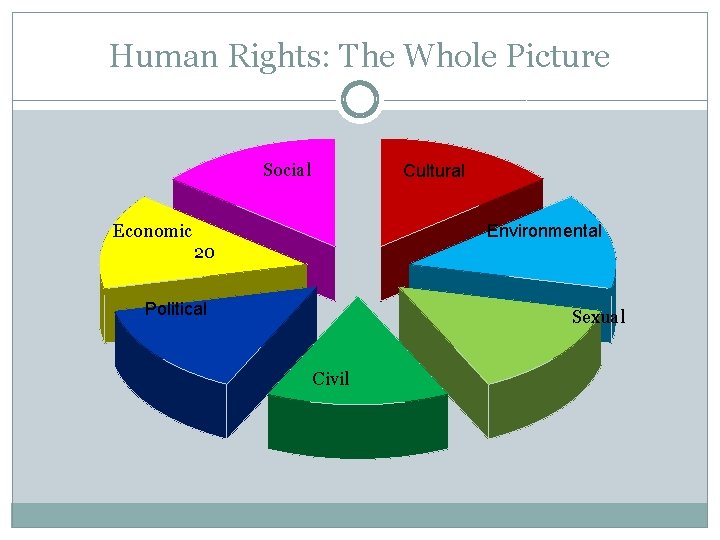
Human Rights: The Whole Picture Social Cultural Environmental Economic 20 Political Sexual Civil
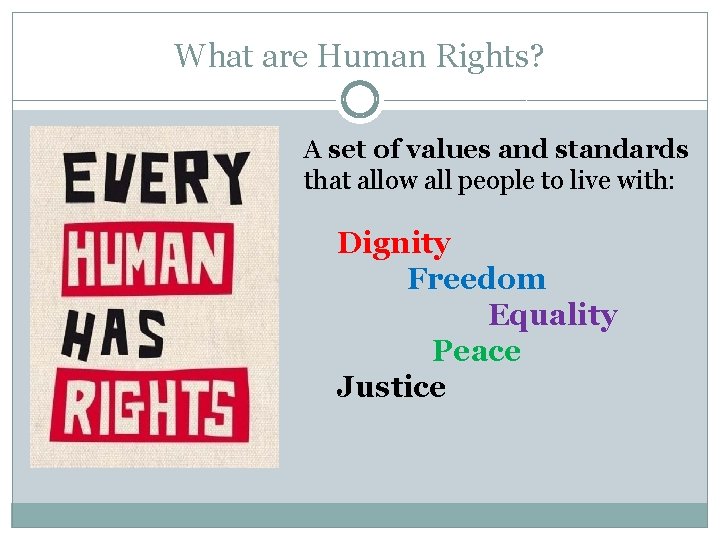
What are Human Rights? A set of values and standards that allow all people to live with: Dignity Freedom Equality Peace Justice
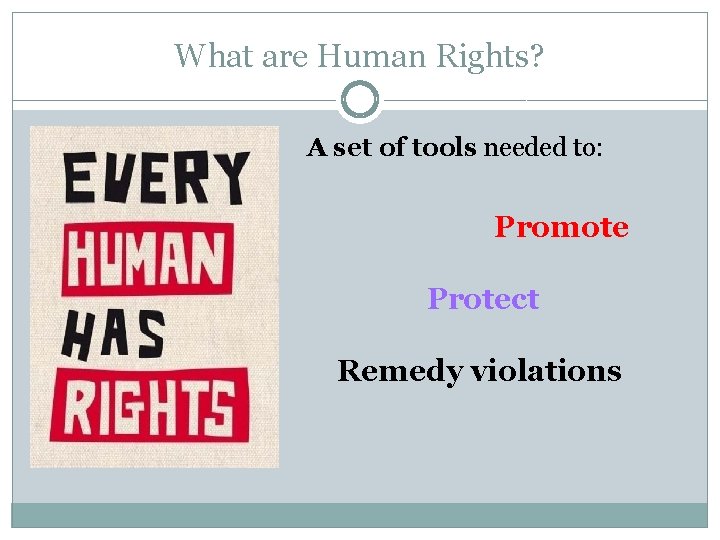
What are Human Rights? A set of tools needed to: Promote Protect Remedy violations
Where do human rights originate? �Originate within us, as humans Come from human needs and desires �From people fighting for them Indigenous Peoples in America Africans enslaved in the Americas Women’s right to vote Workers fighting for protection on the job World War II (WWII) Restoration of voting rights to formerly-incarcerated persons �Promoted and protected in international law
Universal Declaration of Human Rights (UDHR) “Whereas recognition of the inherent dignity and of the equal and inalienable rights of all members of the human family is the foundation of freedom, justice and peace in the world” – Preamble to the UDHR
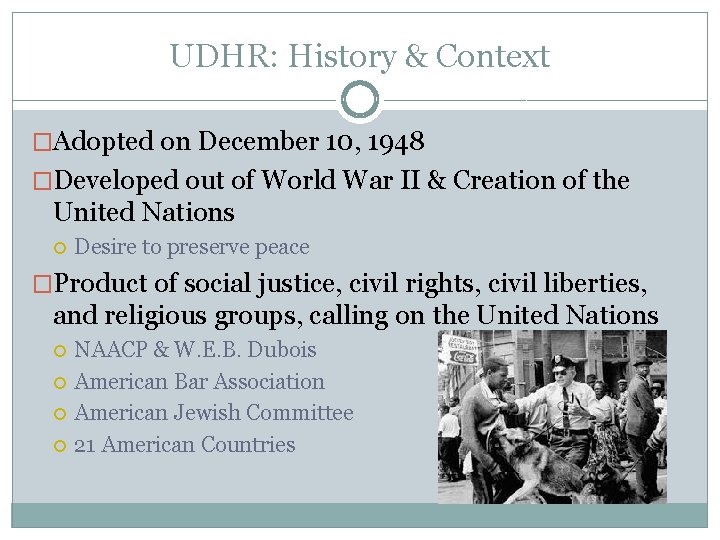
UDHR: History & Context �Adopted on December 10, 1948 �Developed out of World War II & Creation of the United Nations Desire to preserve peace �Product of social justice, civil rights, civil liberties, and religious groups, calling on the United Nations NAACP & W. E. B. Dubois American Bar Association American Jewish Committee 21 American Countries
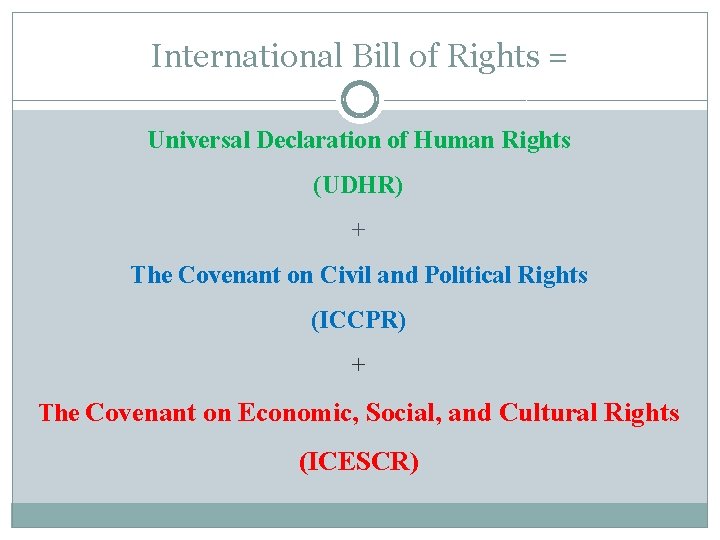
International Bill of Rights = Universal Declaration of Human Rights (UDHR) + The Covenant on Civil and Political Rights (ICCPR) + The Covenant on Economic, Social, and Cultural Rights (ICESCR)
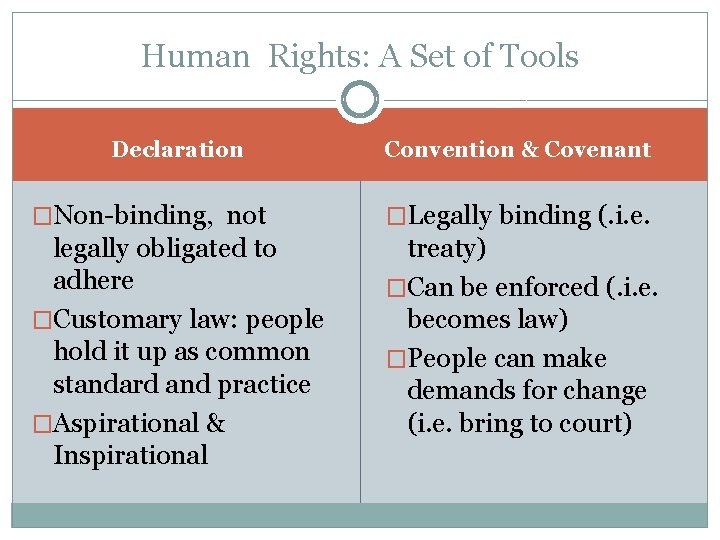
Human Rights: A Set of Tools Declaration Convention & Covenant �Non-binding, not �Legally binding (. i. e. legally obligated to adhere �Customary law: people hold it up as common standard and practice �Aspirational & Inspirational treaty) �Can be enforced (. i. e. becomes law) �People can make demands for change (i. e. bring to court)
Human Rights: A Set of Tools Respect Protect Fulfill Government cannot take away your rights or stop you for enjoying those rights Government must prevent others (individuals or corporations) from violating your rights Must take positive actions to contribute to your enjoyment of basic human rights
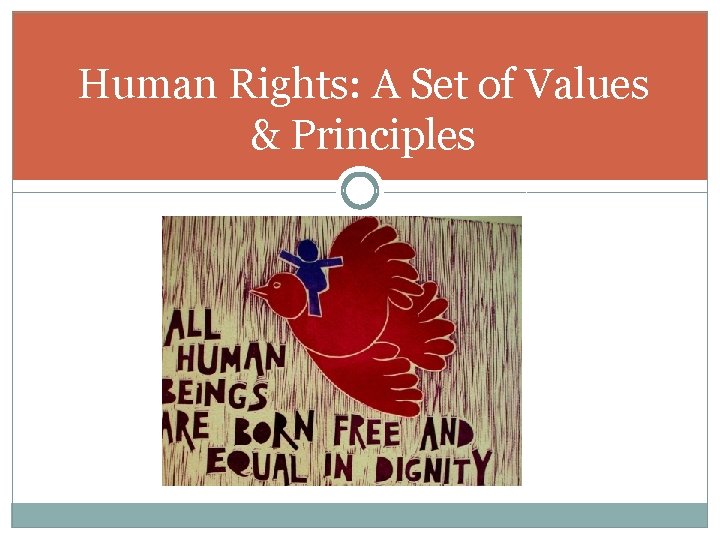
Human Rights: A Set of Values & Principles
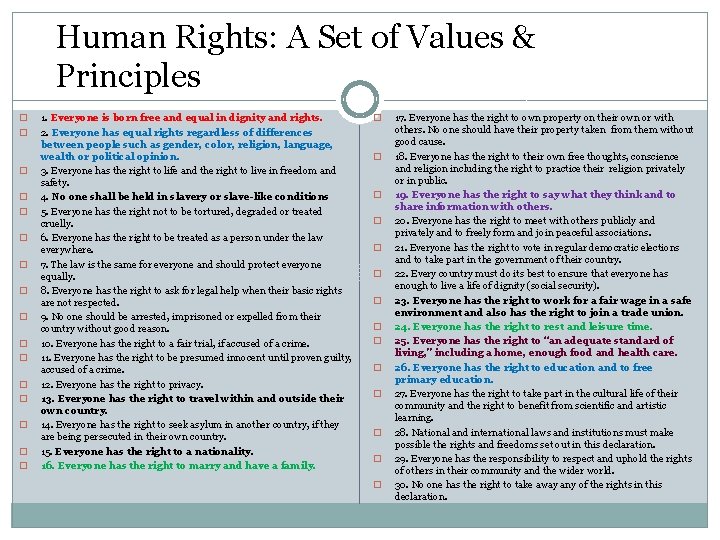
Human Rights: A Set of Values & Principles � � � � 1. Everyone is born free and equal in dignity and rights. 2. Everyone has equal rights regardless of differences between people such as gender, color, religion, language, wealth or political opinion. 3. Everyone has the right to life and the right to live in freedom and safety. 4. No one shall be held in slavery or slave-like conditions 5. Everyone has the right not to be tortured, degraded or treated cruelly. 6. Everyone has the right to be treated as a person under the law everywhere. 7. The law is the same for everyone and should protect everyone equally. 8. Everyone has the right to ask for legal help when their basic rights are not respected. 9. No one should be arrested, imprisoned or expelled from their country without good reason. 10. Everyone has the right to a fair trial, if accused of a crime. 11. Everyone has the right to be presumed innocent until proven guilty, accused of a crime. 12. Everyone has the right to privacy. 13. Everyone has the right to travel within and outside their own country. 14. Everyone has the right to seek asylum in another country, if they are being persecuted in their own country. 15. Everyone has the right to a nationality. 16. Everyone has the right to marry and have a family. � � � � 17. Everyone has the right to own property on their own or with others. No one should have their property taken from them without good cause. 18. Everyone has the right to their own free thoughts, conscience and religion including the right to practice their religion privately or in public. 19. Everyone has the right to say what they think and to share information with others. 20. Everyone has the right to meet with others publicly and privately and to freely form and join peaceful associations. 21. Everyone has the right to vote in regular democratic elections and to take part in the government of their country. 22. Every country must do its best to ensure that everyone has enough to live a life of dignity (social security). 23. Everyone has the right to work for a fair wage in a safe environment and also has the right to join a trade union. 24. Everyone has the right to rest and leisure time. 25. Everyone has the right to “an adequate standard of living, ” including a home, enough food and health care. 26. Everyone has the right to education and to free primary education. 27. Everyone has the right to take part in the cultural life of their community and the right to benefit from scientific and artistic learning. 28. National and international laws and institutions must make possible the rights and freedoms set out in this declaration. 29. Everyone has the responsibility to respect and uphold the rights of others in their community and the wider world. 30. No one has the right to take away any of the rights in this declaration.
Know your (human) rights: Case Studies �Government: School-to-Prison Pipeline �Corporation: Environmental (In)Justice �Private actors: Homeless LGBT Youth
Case Study: School-to-Prison Pipeline �Inadequate resources in public schools 2 nd rate schools �“Zero Tolerance”: Expulsion and suspension for minor incidences 1. 7 Mil (‘ 74) to 3. 1 Mil (2000) �Targets Black, Latino, LGBTQ students and students with disabilities �Increased reliance on police in schools �In Ohio, up to 80% of court-involved cases do not have lawyers
Case Study: Environmental (In)justice �Children more vulnerable to changes in the environment �Study found over 200 industrial chemicals and pollutants in babies’ umbilical chord �Cancer is leading cause of death among children �Increases in rates of: Asthma, obesity & neurological disorders among children �Hazardous waste and landfills located most closely to Black and Indigenous communities (regardless of income)
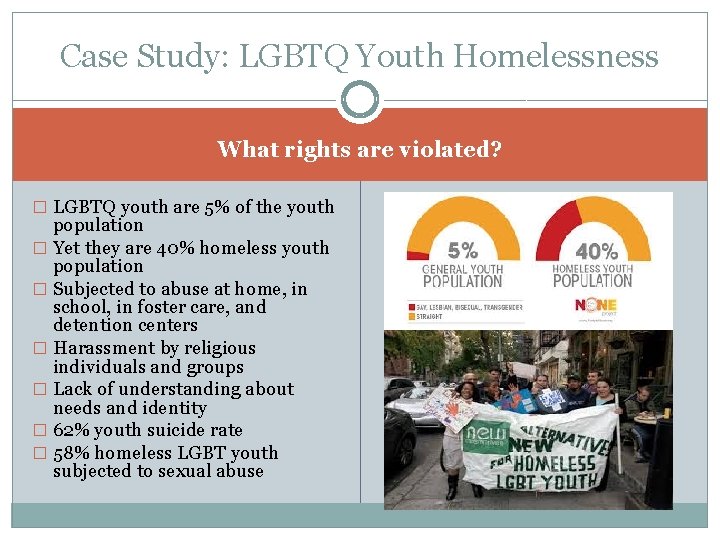
Case Study: LGBTQ Youth Homelessness What rights are violated? � LGBTQ youth are 5% of the youth population � Yet they are 40% homeless youth population � Subjected to abuse at home, in school, in foster care, and detention centers � Harassment by religious individuals and groups � Lack of understanding about needs and identity � 62% youth suicide rate � 58% homeless LGBT youth subjected to sexual abuse
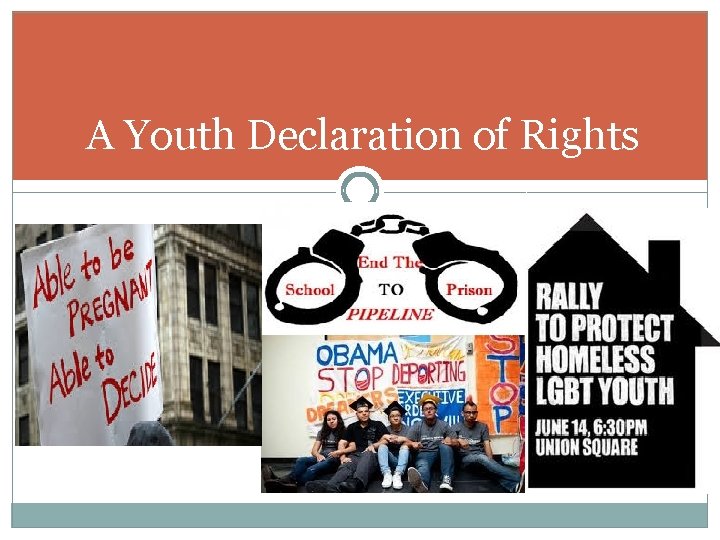
A Youth Declaration of Rights
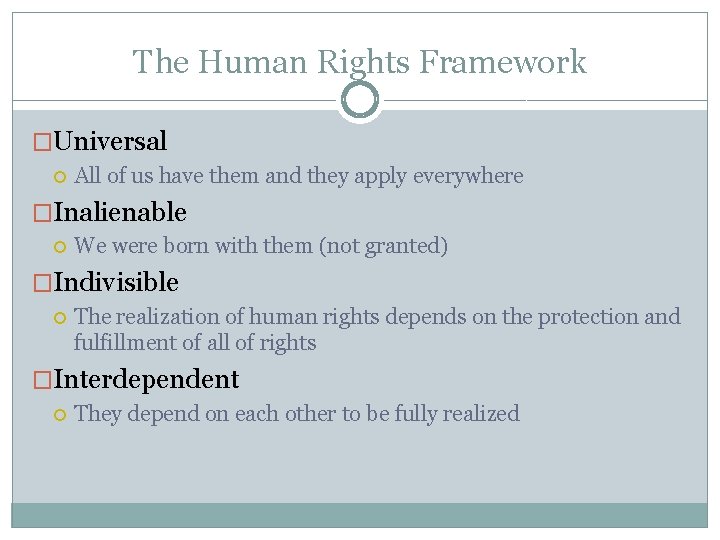
The Human Rights Framework �Universal All of us have them and they apply everywhere �Inalienable We were born with them (not granted) �Indivisible The realization of human rights depends on the protection and fulfillment of all of rights �Interdependent They depend on each other to be fully realized
The Human Rights Framework �The floor, not the ceiling �Evolving �There is NO government or society on earth that has realized all of these rights. There is no utopia.
Why are human rights important? �Unifies and connects all of our issues �Everyone is covered; no one is undeserving �Says government has a role play in ending human suffering and inequality �Calls for changes to systems, not just policies �Puts control in the hands of people
Spreading the Word Share your knowledge on social media Tweet using the hashtags: #Advancing. Rights @USHRN @NCCHR Talk to Conference Attendees
Thank You! DINA TYSON KHALIDAH GUY dtyson@civilandhumanrights. org khalidahguy@yahoo. com 404 -991 -6973 YOLANDE TOMLINSON, PH. D. YTOMLINSON@USHRNETWORK. ORG 404 -588 -9761 (EXT. 105) http: //www. civilandhumanrights. org www. ushrnetwork. org