
Introduction to Human Resource Management Dr Aruna Gamage

- Slides: 36
Introduction to Human Resource Management Dr. Aruna Gamage Senior Lecturer University of Sri Jayewardenepura
Learning Outcomes What is an organization? What is Management? What is Human Resource Management? Generic Purpose of HRM Strategic Goals of HRM and Objectives of HRM Functions of HRM Responsibility of HRM 2
Organization It is an economic or social entity composed of a group of people who interact with each other for the purpose of achieving a common goal. 3
Organization may be either profit oriented or non-profit oriented. It may belong to public sector or private sector. Any how, the basic building block of any organization is its people 4
What is Management? Getting things done through others (People) Management is the efficient and effective utilization of resources to achieve goals of an organization. 5
Management is the process of planning, organizing, leading and controlling of human, physical, informational monetary resources in order and to achieve organizational goals effectively and efficiently. 6
What is Human Resource Management ? HRM is the efficient and effective utilization of Human Resources to achieve goals of an organization. 7
Organizational goals Goals refer to desired targets to be achieved in future. The basic goal of any organization should ideally be to serve the human society. In order to achieve the above-mentioned basic goal, the organization establishes specific goals. 8
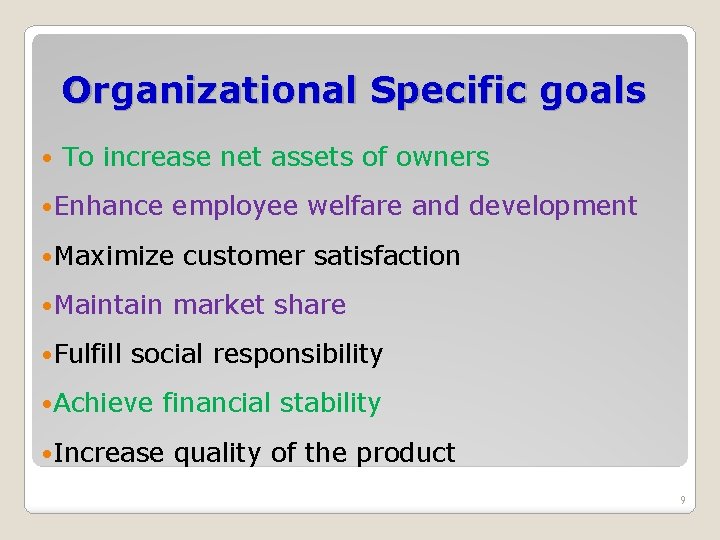
Organizational Specific goals To increase net assets of owners Enhance employee welfare and development Maximize Maintain Fulfill customer satisfaction market share social responsibility Achieve financial stability Increase quality of the product 9
Human Resources are employees who work for the Organization being concerned. It is not an overstatement that HR is the most significant resource compared with other resources such as financial resource, physical resources etc. 10
Unique characteristics of HR It is animate, active and living It has the ability to think, feel and react Its value appreciate with the passage of time It has the ability to influence on determining their wages and salaries 11
Unique characteristics of HR It has the ability to organize as unions Behavior is complex and unpredictable Creativity Human and innovative power resource make decisions about all other resources 12
Discuss “Other resources make things possible, but only human resource make things happen” 13
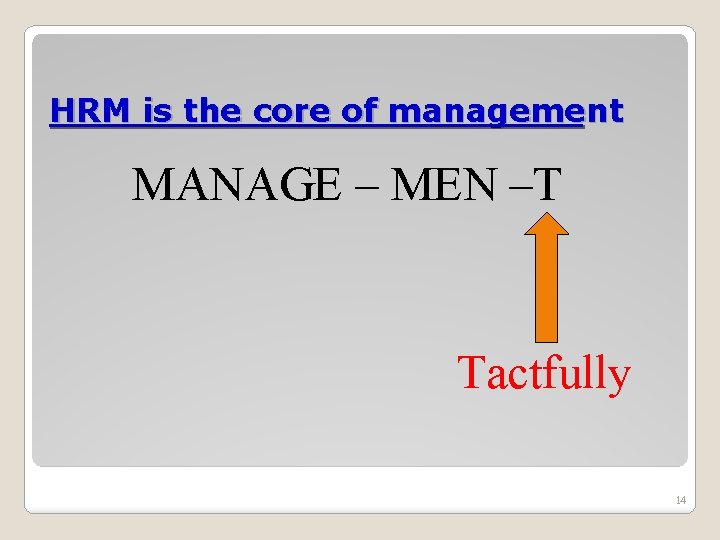
HRM is the core of management MANAGE – MEN –T Tactfully 14
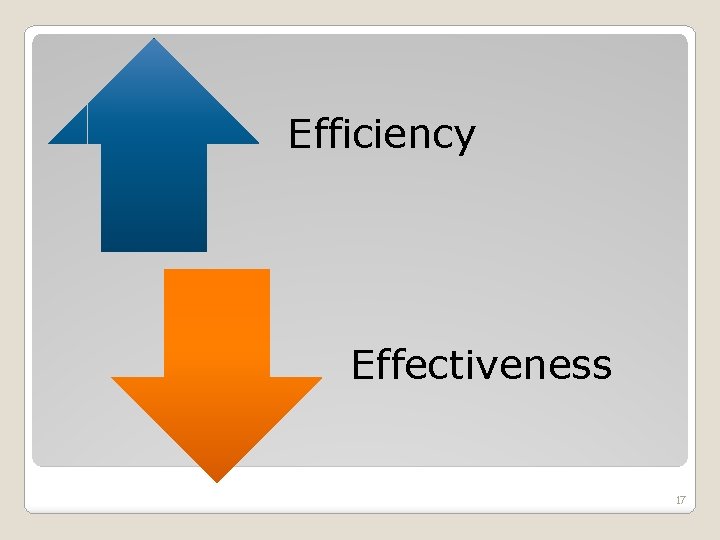
Efficiency This is all about “doing things right”. Efficiency is connected with the use of inputs. If anything is done with a minimum use of resources with no wastage and dumps, the way it is done is efficient. 15
Effectiveness It is about “doing the right thing”. Effectiveness denotes that resources must be used to achieve intended objectives within the intended time constraints. 16
Efficiency Effectiveness 17
Efficient utilization of HR Optimum use of employees by eradicating or minimizing wastage. It means utilizing the right employee in the right number at the right time at the right cost. 18
Effective utilization of HR Use of HR for organizational effectiveness, which is the extent to which organizational goals have been realized. It involves utilization of employees to accomplish goals of the organization. 19
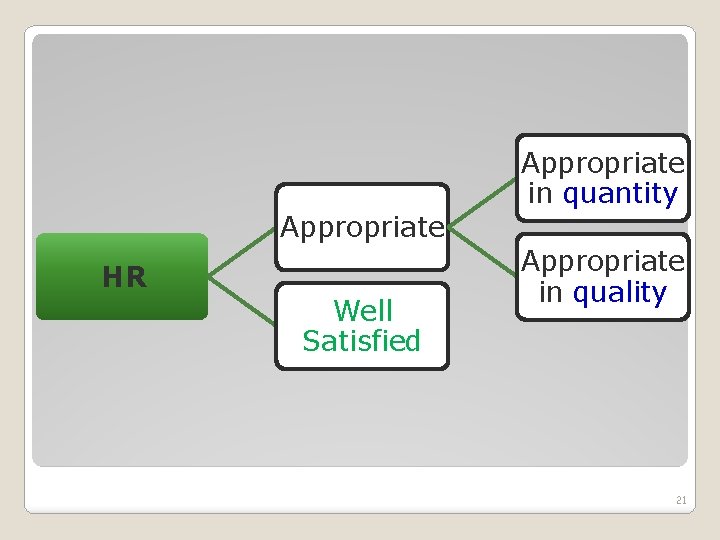
Generic Purpose of HRM The Generic Purpose of HRM is to generate and retain an appropriate and contented workforce, which gives the maximum individual contribution to the Organizational success. 20
Appropriate in quantity Appropriate HR Well Satisfied Appropriate in quality 21
Strategic goals of HRM To improve Employee Productivity Employee Development To increase Quality of Work Life To ensure Legal Compliance 22
To improve employee productivity Employee productivity is the ratio between employee outputs to employee inputs. Employee productivity improvement must be achieved for the progress of success. Thus, productivity improvement means doing better tomorrow than today. 23
Employee Development Employee development refers to the provision of opportunities as many as possible to accomplish employees’ personal objectives, improvement of their career development through the development of knowledge, skills and attitudes. 24
To increase quality of work life This is intended that the degree of employees’ participation or involvement in making employment decisions is increased. Specially regarding the decisions which affect them. 25
To ensure legal compliance HRM in an organization must be performed in compliance with legitimate provisions imposed by labour laws. 26
Objectives of HRM To procure right people, at the right time to do the right job To retrain the more appropriate employees with the organization To control employee cost To motivate employees To get and improve employee commitment 27
Functions of HRM Job Design Job Analysis Human Power Planning Recruitment Selection Hiring Induction Performance Evaluation 28
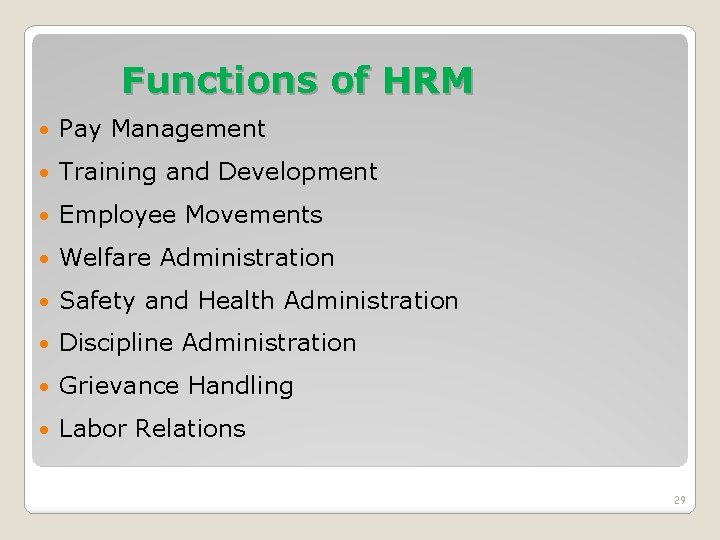
Functions of HRM Pay Management Training and Development Employee Movements Welfare Administration Safety and Health Administration Discipline Administration Grievance Handling Labor Relations 29
Relationship among HR functions HRM functions are interrelated. For example, pay management can be done successfully by doing job successfully. Performance analysis evaluation gives inputs to perform the function of training and development. 30
Relationship among HR functions Some HRM functions are interdependent. Success of a one function has a direct impact determining the success of another function. 31
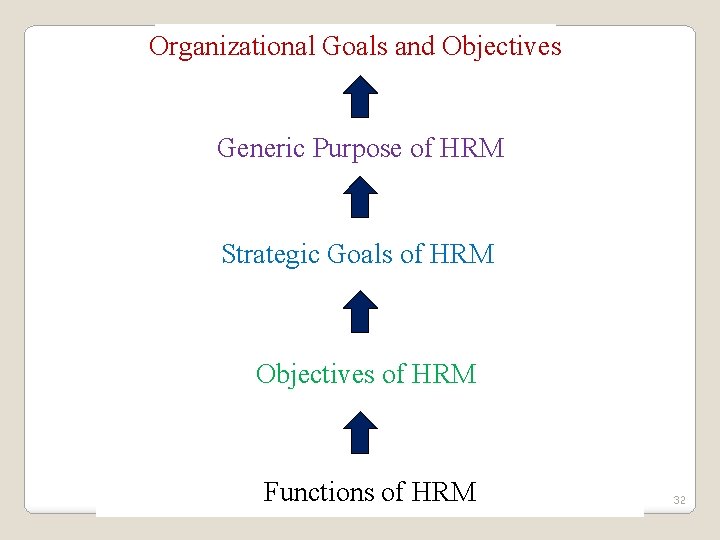
Organizational Goals and Objectives Generic Purpose of HRM Strategic Goals of HRM Objectives of HRM Functions of HRM 32
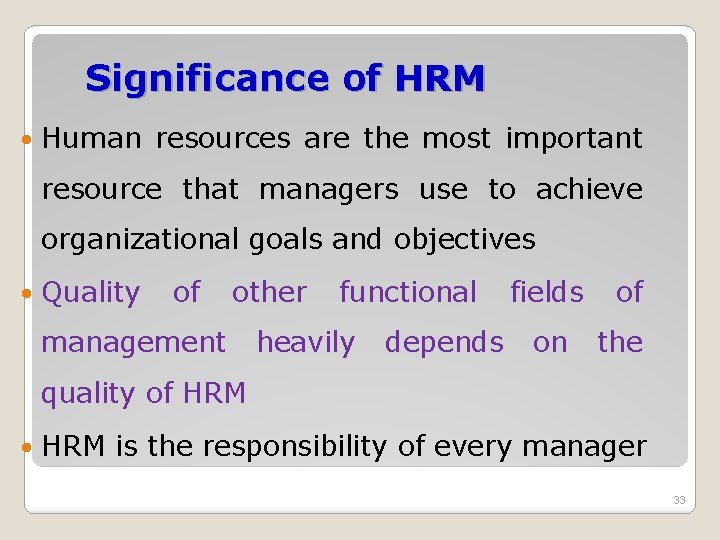
Significance of HRM Human resources are the most important resource that managers use to achieve organizational goals and objectives Quality of other management functional heavily depends fields on of the quality of HRM is the responsibility of every manager 33
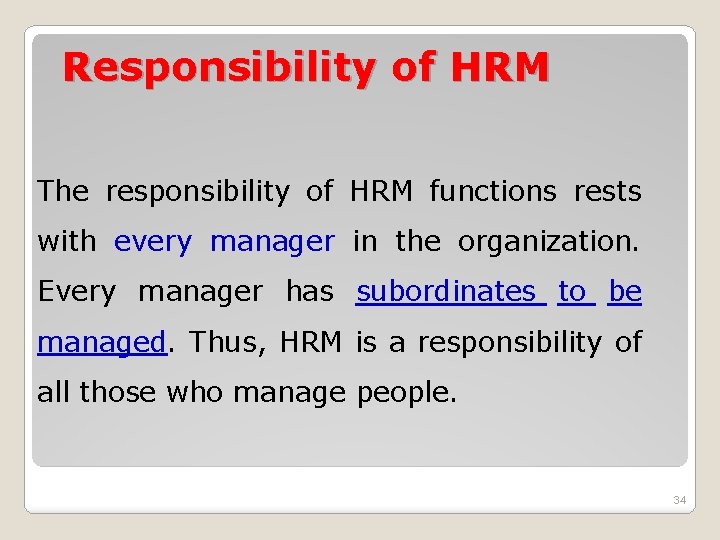
Responsibility of HRM The responsibility of HRM functions rests with every manager in the organization. Every manager has subordinates to be managed. Thus, HRM is a responsibility of all those who manage people. 34
35
Thank you 36