
INTRODUCTION TO HUMAN RESOURCE MANAGEMENT CHAPTER 1 MANAGEMENT
- Slides: 17
INTRODUCTION TO HUMAN RESOURCE MANAGEMENT CHAPTER 1
MANAGEMENT PROCESS Planning Organising Staffing Leading Controlling
HUMAN RESOURCE MANAGEMENT HRM is the process of acquiring, training, appraising, and compensating employees and of attending to their labour relations, health & safety, and fairness concerns.
HRM TASKS Conducting job analyses Planning labour needs & recruiting candidates Selecting job candidates Orienting and training new employees Managing wages and salaries Providing incentives and benefits Appraising performance Communicating Training employees Building employee relations
WHY IS HRM IMPORTANT TO ALL MANAGERS?
Avoid personnel mistakes Improve Profits and Performance Non-HR managers might spend time as a human resource manager. HR for small businesses
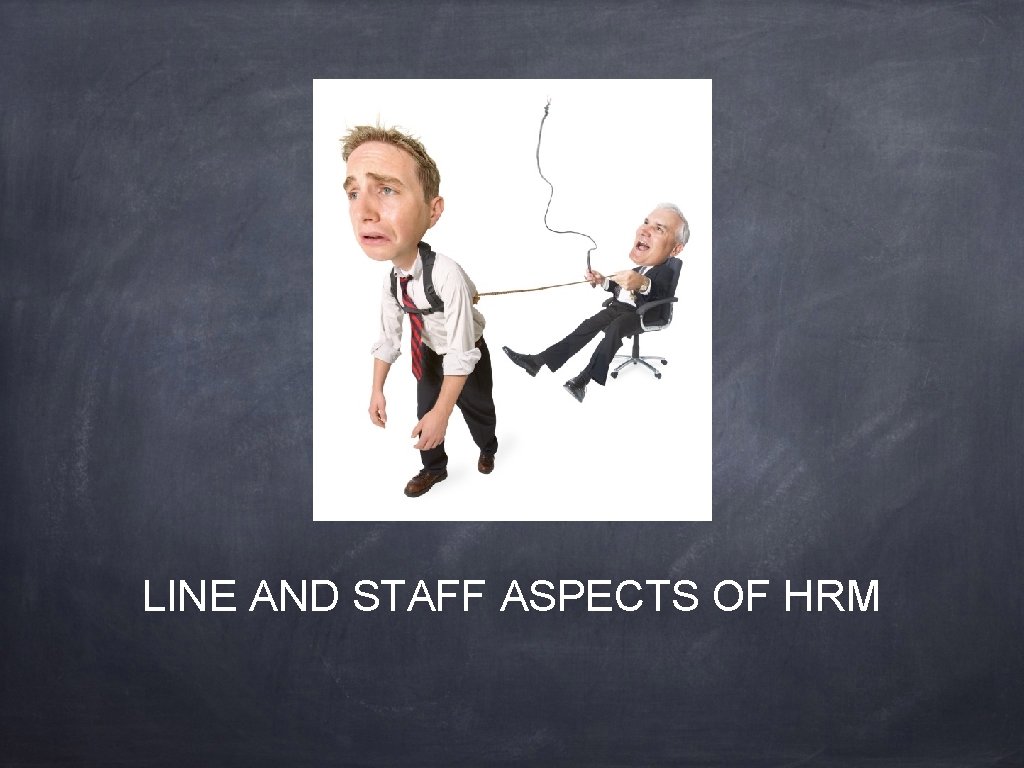
LINE AND STAFF ASPECTS OF HRM
Line Authority - Traditionally gives managers the right to issue orders to other managers or employees. Staff Authority - Gives a manager the right to advise other managers or employees.
LINE MANAGERS’ HRM RESPONSIBILITIES Placing the right person for the right job Starting new employees in the organisation Training employees for the jobs that are new to them Improving the job performance of each person Develop creative cooperation and smooth working relationships Interpreting company’s policies and procedures Controlling labour costs Developing the abilities of each person Creating and maintaining departmental morale Protecting employees’ health and physical conditions
THE TRENDS SHAPING HRM Workforce Trends in how people work Technological Trends Globalisation Trends Economic Trends
WORKFORCE TRENDS Workforce Demographics and Diversity Trends More diverse workforce The ageing workforce Nontraditional workers Gen Y employees
TRENDS IN HOW PEOPLE WORK On-demand workers Extended workforces Human Capital
GLOBALISATION TRENDS Cross-border taxes and tariffs Economic free trade areas Increased international competition New markets
ECONOMIC TRENDS Great Recession of 2007 -2009 Labour Force Trends The Unbalanced Labour Force
TECHNOLOGY TRENDS 5 main types of digital technologies. Social Media Mobile applications Gaming Cloud Computing Data Analytics
HR AND PERFORMANCE
HR and Performance Measurement HR and Evidence-Based Management (actual measurements, existing data, research studies) High-Performance Work Systems (HPWS) HR and adding value (HR value proposition)