
Introduction to Human Relations Dinda Rakhma Fitriani M
- Slides: 25
Introduction to Human Relations Dinda Rakhma Fitriani M. I. Kom
Why you Communicate 1966 - Psychologist William Schutz Interpersonal Needs Theory which asserts that our tendency to create and sustain relationships depends on how well they meet three basic needs.
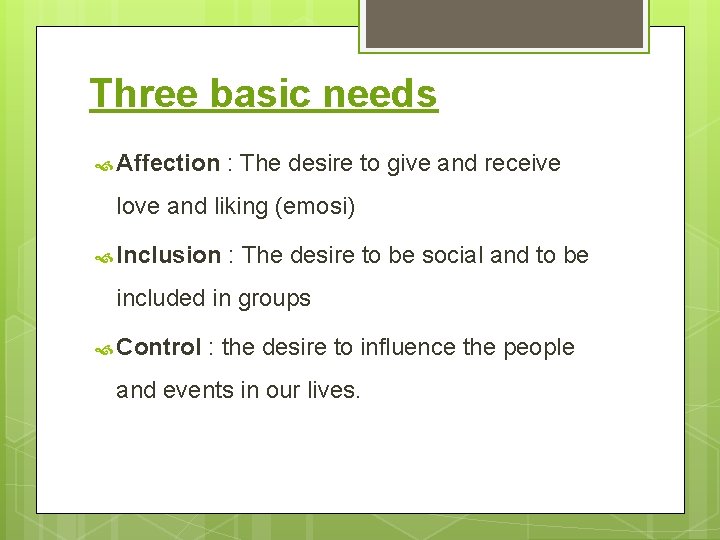
Three basic needs Affection : The desire to give and receive love and liking (emosi) Inclusion : The desire to be social and to be included in groups Control : the desire to influence the people and events in our lives.
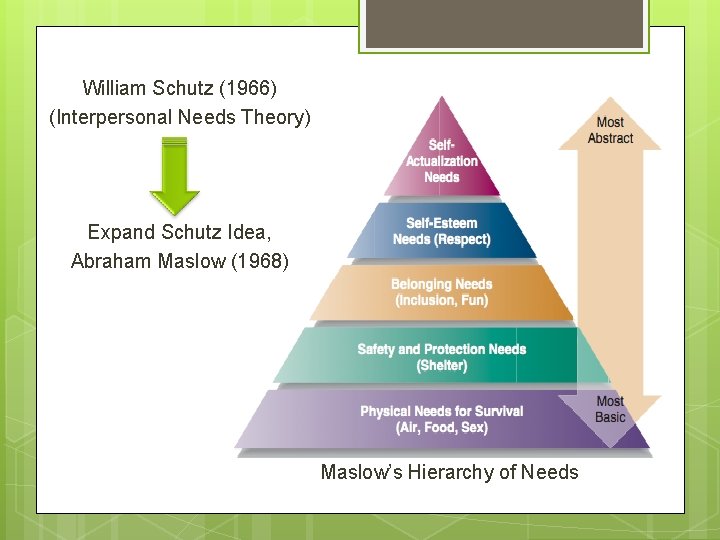
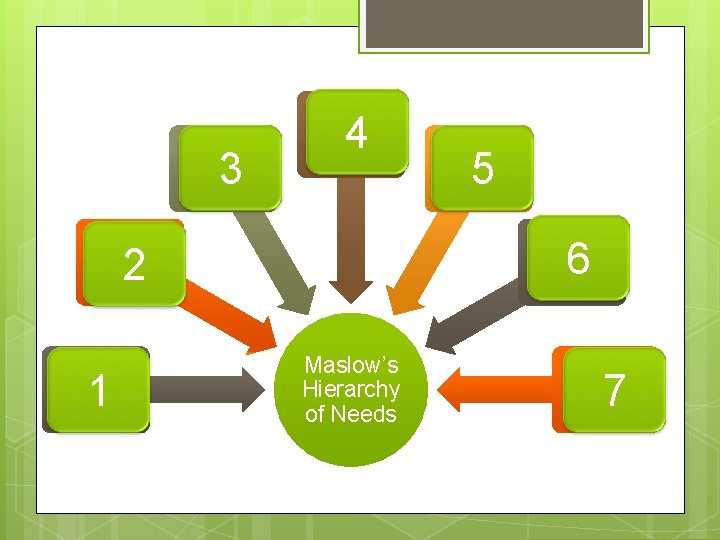
William Schutz (1966) (Interpersonal Needs Theory) Expand Schutz Idea, Abraham Maslow (1968) Maslow’s Hierarchy of Needs
different social classes 3 different sexual orientations 4 6 different spiritual commitments different genders 2 1 different ethnicities 5 different ages Maslow’s Hierarchy of Needs 7 abilities
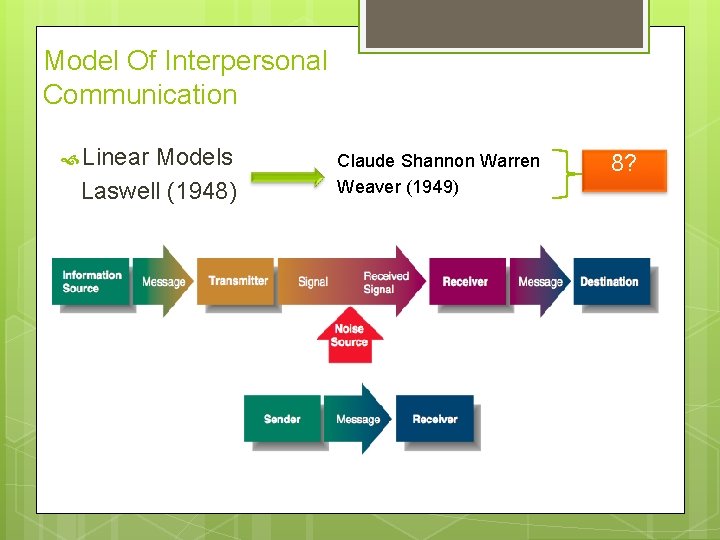
Model Of Interpersonal Communication Linear Models Laswell (1948) Claude Shannon Warren Weaver (1949) Noise 8?
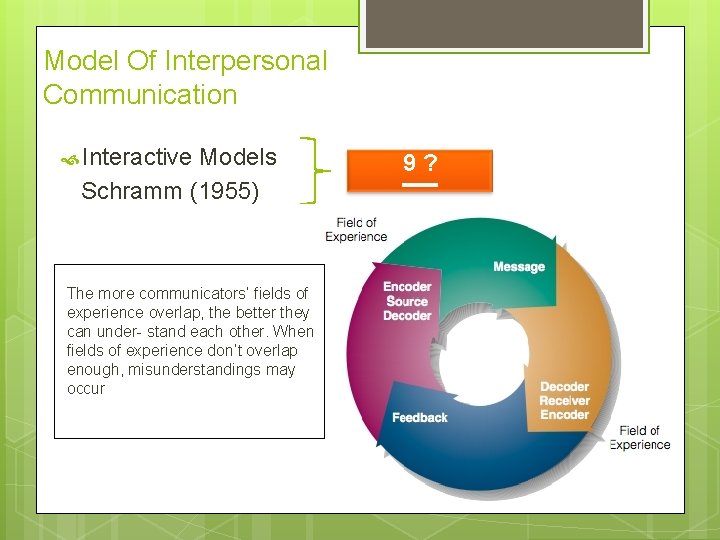
Model Of Interpersonal Communication Interactive Models Schramm (1955) The more communicators’ fields of experience overlap, the better they can under- stand each other. When fields of experience don’t overlap enough, misunderstandings may occur Feedback 9?
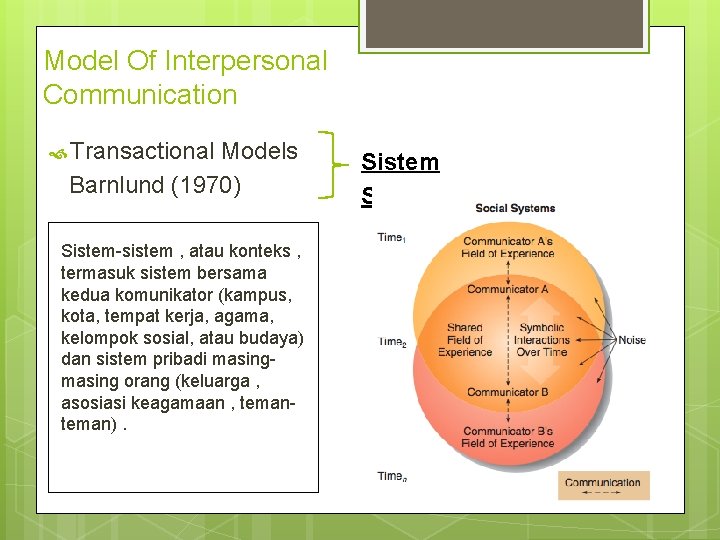
Model Of Interpersonal Communication Transactional Models Barnlund (1970) Sistem-sistem , atau konteks , termasuk sistem bersama kedua komunikator (kampus, kota, tempat kerja, agama, kelompok sosial, atau budaya) dan sistem pribadi masing orang (keluarga , asosiasi keagamaan , teman). Sistem Sosial
“People don’t care how much you know until they know how much you care ” _Zig Ziglar_ (author, motivational speaker)
Definition Human Relations : “The study of relationship among people, will help you interact effectively with others, can be used to improve personal, career effectiveness” ⑩ Berlaku untuk konteks komunikasi apa saja?
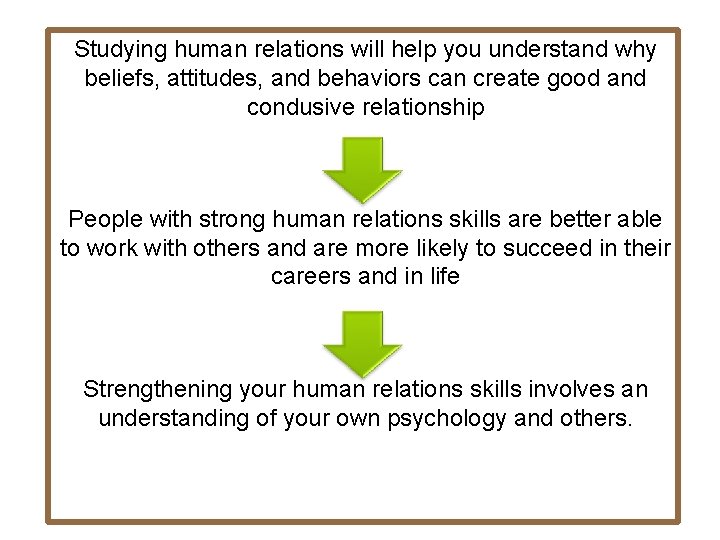
Studying human relations will help you understand why beliefs, attitudes, and behaviors can create good and condusive relationship People with strong human relations skills are better able to work with others and are more likely to succeed in their careers and in life Strengthening your human relations skills involves an understanding of your own psychology and others.
Ability is what you are capable of doing. Motivation determines what you do. Attitude determines how well you do it. _Lou Holtz_
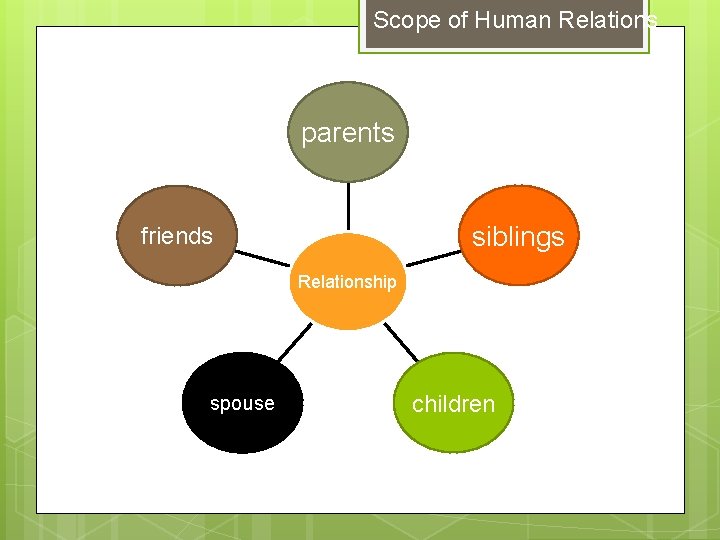
Scope of Human Relations parents siblings friends Relationship spouse children
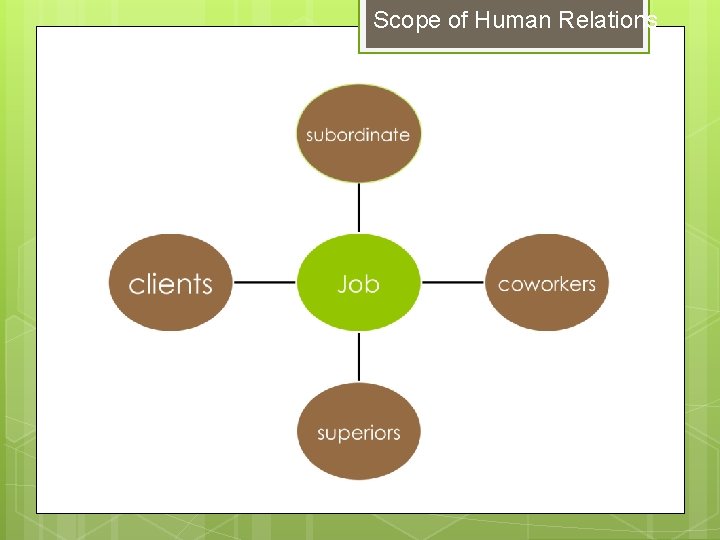
Scope of Human Relations
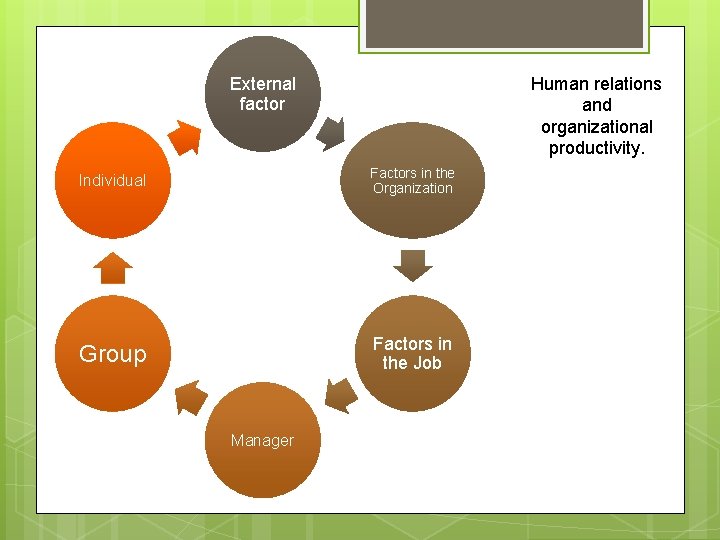
Human relations and organizational productivity. External factor Individual Factors in the Organization Group Factors in the Job Manager
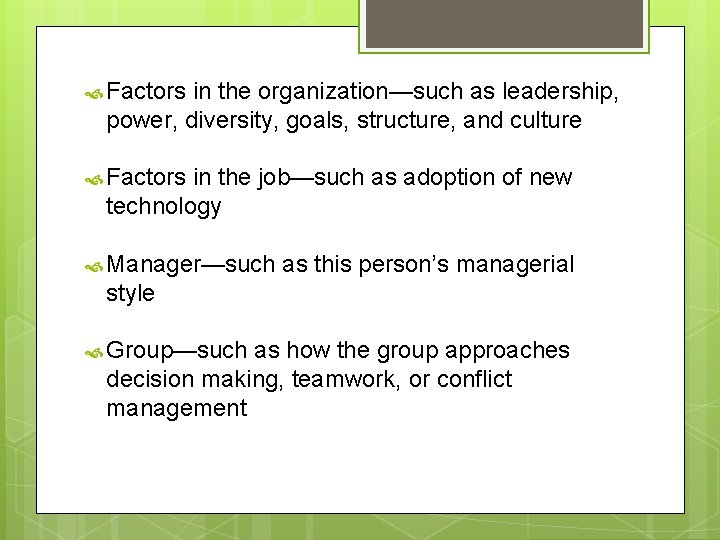
Factors in the organization—such as leadership, power, diversity, goals, structure, and culture Factors in the job—such as adoption of new technology Manager—such as this person’s managerial style Group—such as how the group approaches decision making, teamwork, or conflict management
Individual—such as this person’s learning and management of his or her feelings and those of others (emotional intelligence). His or her attitudes, perception, motivation, and communication ability/style. Ethics, eti- quette, career advancement strategies, and goal setting. Openness to change, respect for employee rights, and work/life balance
Human Relations Factor Cognitive skills Ex : decision making, problem solving, critical thinking, creativity, innovation Relationship skills Ex : influence & negotiation, communication, listening, and trust building Personal capabilities Ex : adaptibility, flexibility, resilience, your degree of integrity and honesty, your approach to self development
Human relation is “Helpful and interesting because it is about you and your interactions with others”
11? Give examples from your own experiences, movies, or TV shows of successful and unsuccessful human relations. What lessons can you learn from these?
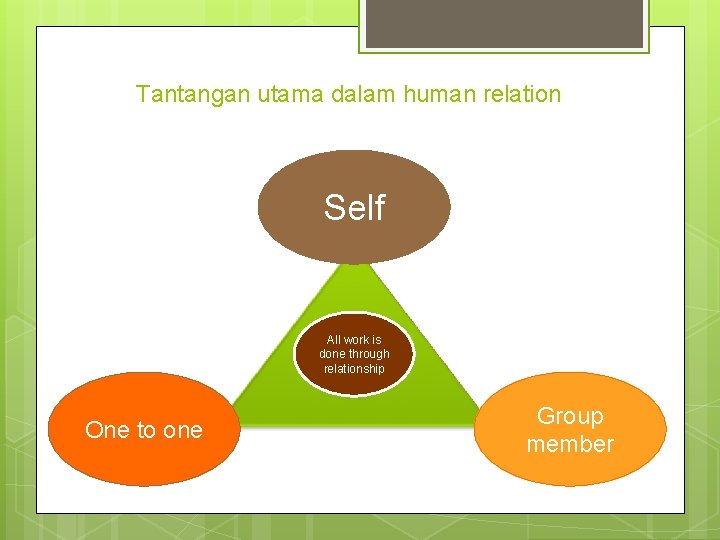
Tantangan utama dalam human relation Self All work is done through relationship One to one Group member
The 1 st relationship is the one with ourselves. “people who have negative feelings about their abilities and who engage in constant self criticism must struggle to maintain a good relationship with themselves”
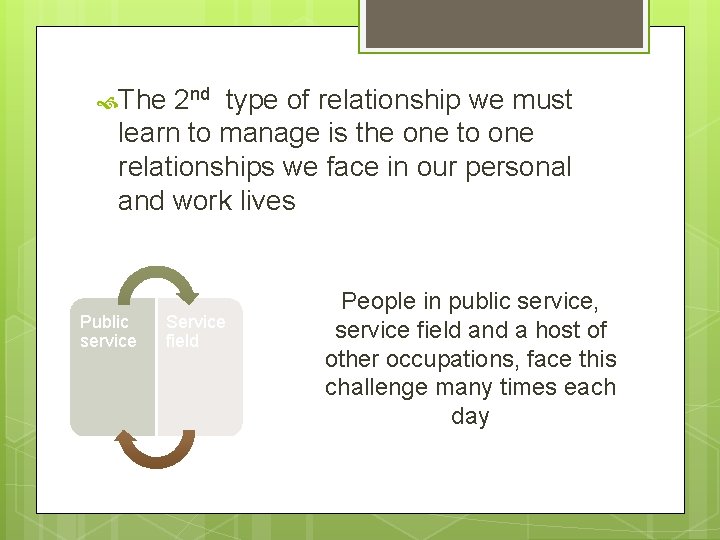
The 2 nd type of relationship we must learn to manage is the one to one relationships we face in our personal and work lives Public service Service field People in public service, service field and a host of other occupations, face this challenge many times each day
The 3 rd challenge we face is the management of relationship with members of a group “as already noted, many workers are assigned to a team on either a full time or a part time basis. lack of cooperation among team member can result in quality problems and production”