
Introduction to Human Anatomy Physiology ANATOMY the study
- Slides: 44
Introduction to Human Anatomy& Physiology
ANATOMY - the study of the structure (morphology, form) of body parts. · Histology - the microscopic study of tissues. · Cytology - the microscopic study of cells. PHYSIOLOGY - the study of the function of body parts.
Life Processes Distinguish Living from Non-Living Things. • • • Movement Responsiveness Growth Reproduction Respiration Digestion Absorption Circulation Assimilation Excretion
Mental Mapping (use characteristics to categorize the following) • • • I am walking to Mc. Donalds Movement Responsiveness I stop at the traffic light I am getting taller Growth Respiration I am breathing air I get a hamburger and eat it Digestion • My body absorbs nutrients from hamburger Absorption • The nutrients I absorbed from hamburger is turned into things my body needs Assimilation • Eventually I go to the restroom Excretion • Someday I may reproduce Reproduction
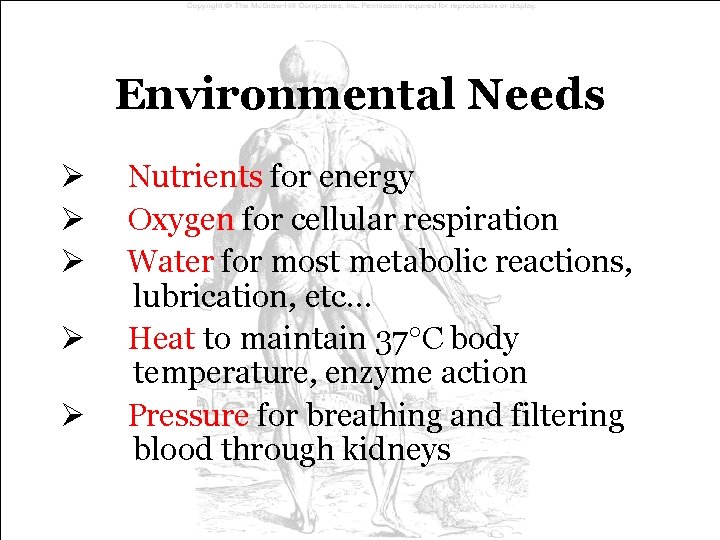
Environmental Needs Ø Ø Ø Nutrients for energy Oxygen for cellular respiration Water for most metabolic reactions, lubrication, etc… Heat to maintain 37 C body temperature, enzyme action Pressure for breathing and filtering blood through kidneys
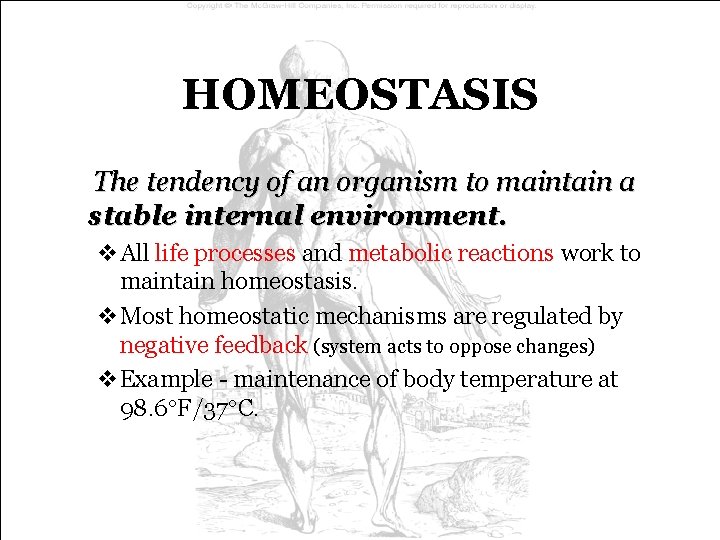
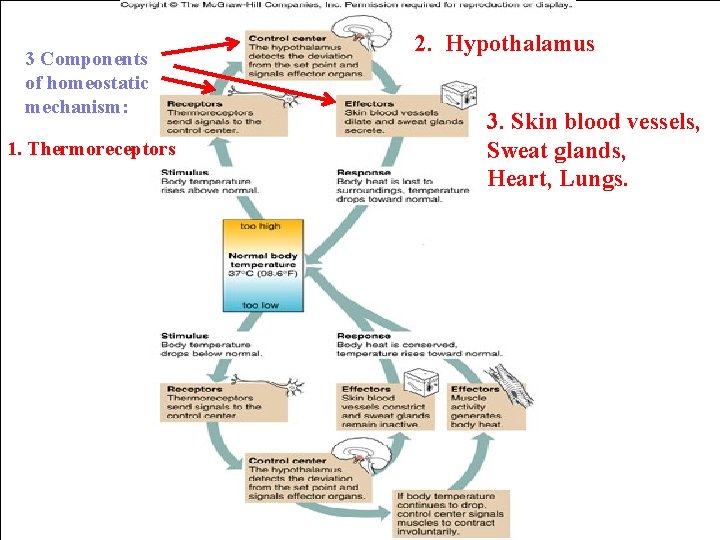
HOMEOSTASIS The tendency of an organism to maintain a stable internal environment. v. All life processes and metabolic reactions work to maintain homeostasis. v. Most homeostatic mechanisms are regulated by negative feedback (system acts to oppose changes) v. Example - maintenance of body temperature at 98. 6 F/37 C.
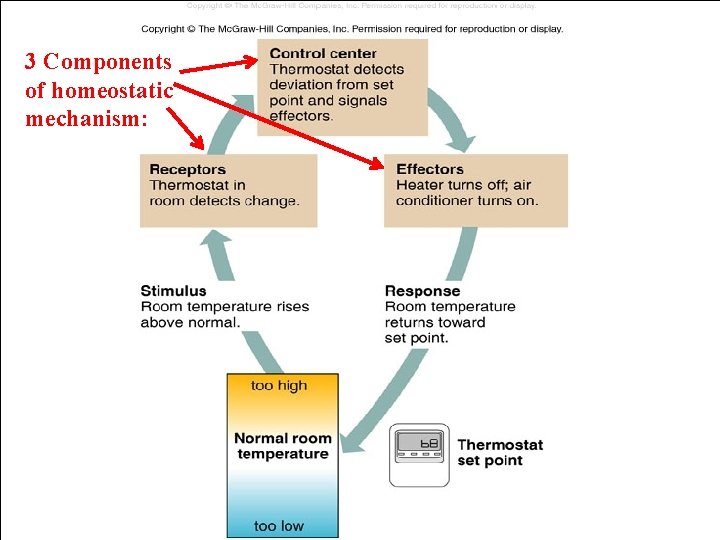
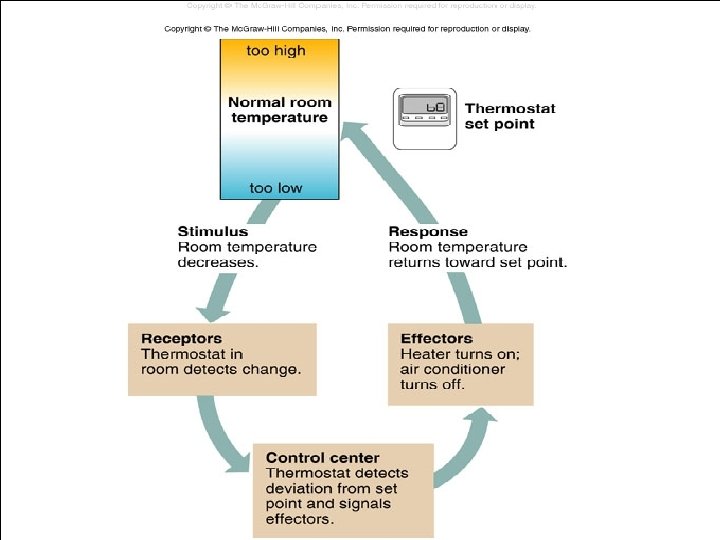
3 Components of homeostatic mechanism:
3 Components of homeostatic mechanism: 1. Thermoreceptors 2. Hypothalamus 3. Skin blood vessels, Sweat glands, Heart, Lungs.
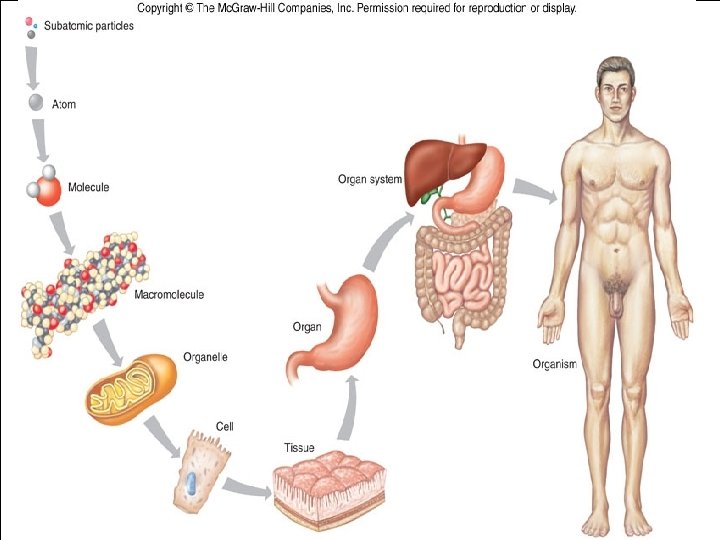
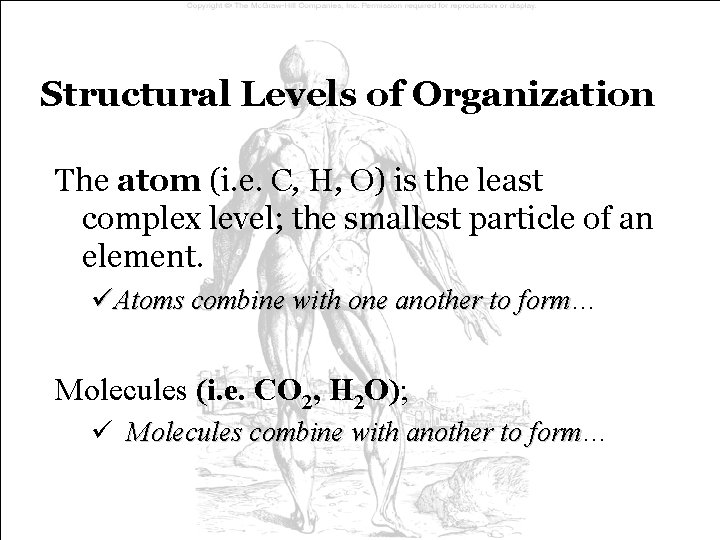
Structural Levels of Organization The atom (i. e. C, H, O) is the least complex level; the smallest particle of an element. üAtoms combine with one another to form… form Molecules (i. e. CO 2, H 2 O); ü Molecules combine with another to form… form
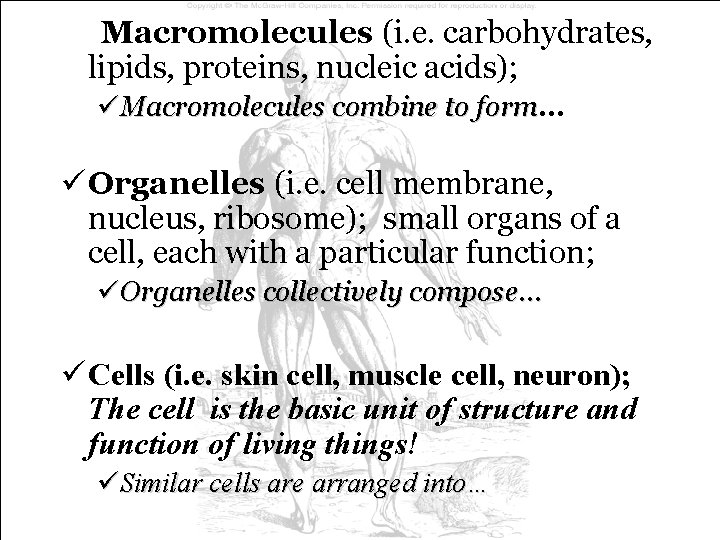
Macromolecules (i. e. carbohydrates, lipids, proteins, nucleic acids); üMacromolecules combine to form… form ü Organelles (i. e. cell membrane, nucleus, ribosome); small organs of a cell, each with a particular function; üOrganelles collectively compose… ü Cells (i. e. skin cell, muscle cell, neuron); The cell is the basic unit of structure and function of living things! üSimilar cells are arranged into…
Tissues (i. e. epithelia, connective, muscle, nervous); üTwo or more tissues combine to form… Organs (i. e. skin, heart, brain); üTwo or more organs combine to form… Organ systems (i. e. integumentary, cardiovascular), The eleven organ systems collectively form the… The human organism; the most complex level of organization.
Divisions of the Human Body • Axial Portion Head Neck Trunk Appendicular Portion Arms Legs Axial Portion is divided into 2 major cavities. (organs within these cavities are referred to as viscera. )
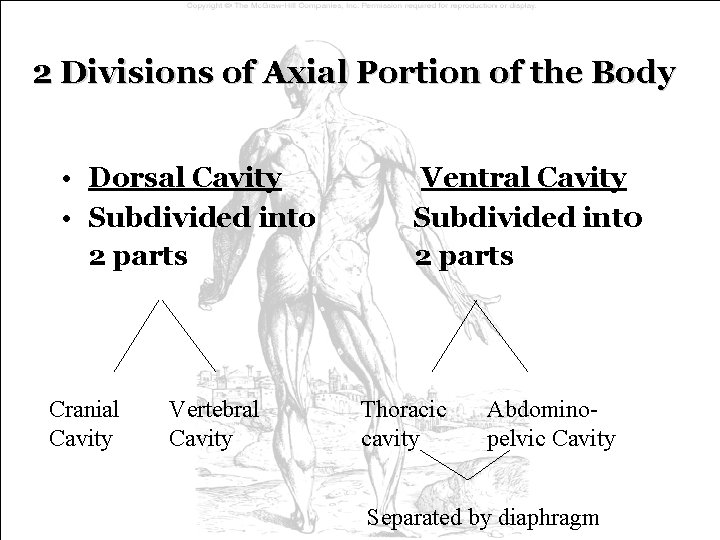
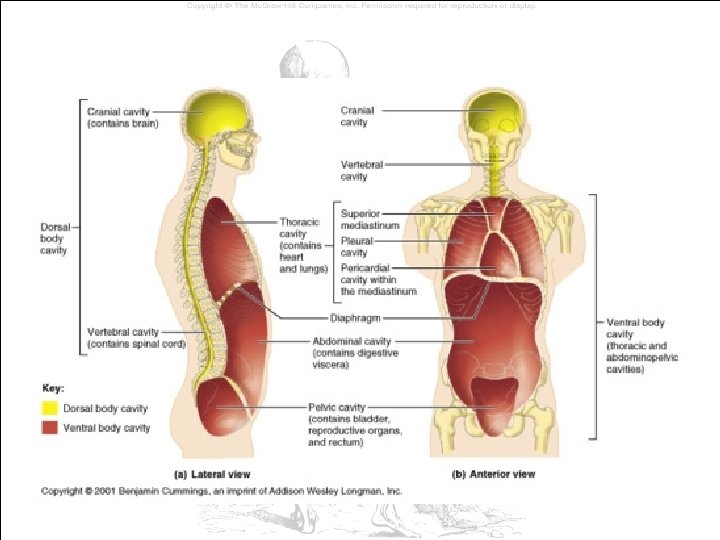
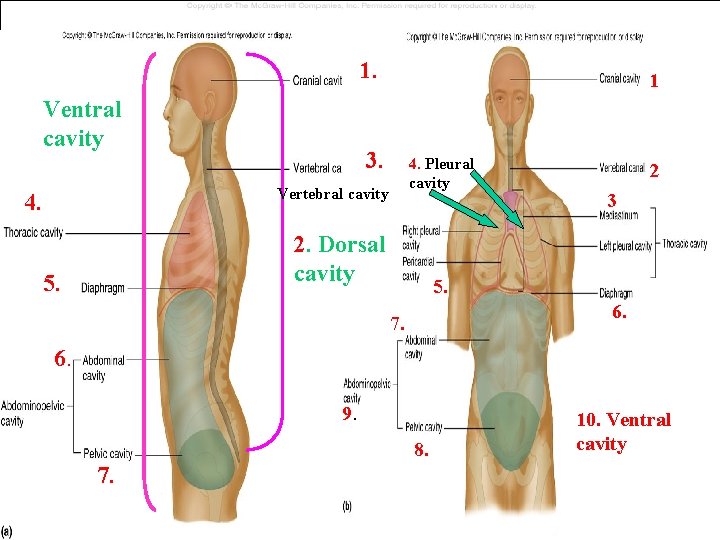
2 Divisions of Axial Portion of the Body • Dorsal Cavity • Subdivided into 2 parts Cranial Cavity Vertebral Cavity Ventral Cavity Subdivided int 0 2 parts Thoracic cavity Abdominopelvic Cavity Separated by diaphragm
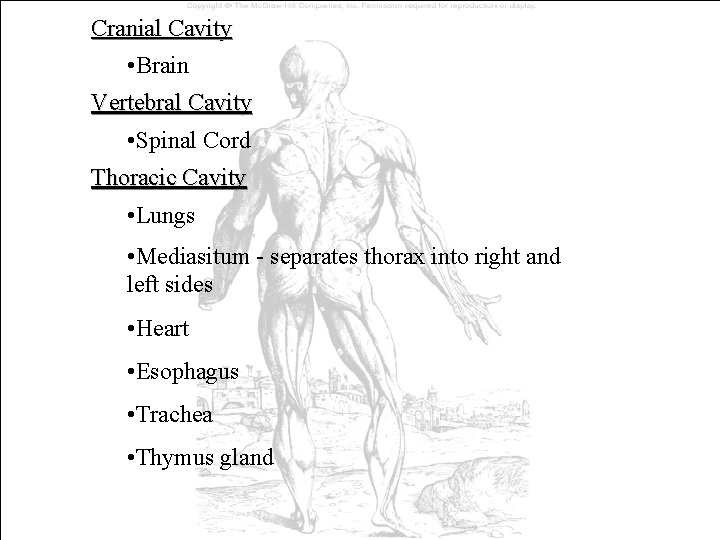
Cranial Cavity • Brain Vertebral Cavity • Spinal Cord Thoracic Cavity • Lungs • Mediasitum - separates thorax into right and left sides • Heart • Esophagus • Trachea • Thymus gland
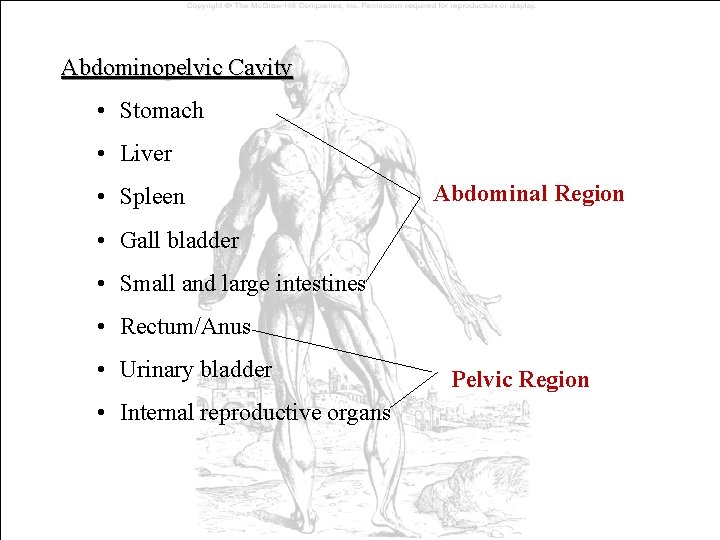
Abdominopelvic Cavity • Stomach • Liver • Spleen Abdominal Region • Gall bladder • Small and large intestines • Rectum/Anus • Urinary bladder • Internal reproductive organs Pelvic Region
1. Ventral cavity 1 3. 4. Pleural cavity Vertebral cavity 4. 2. Dorsal cavity 5. 2 3 5. 6. 7. 6. 9. 8. 7. 10. Ventral cavity
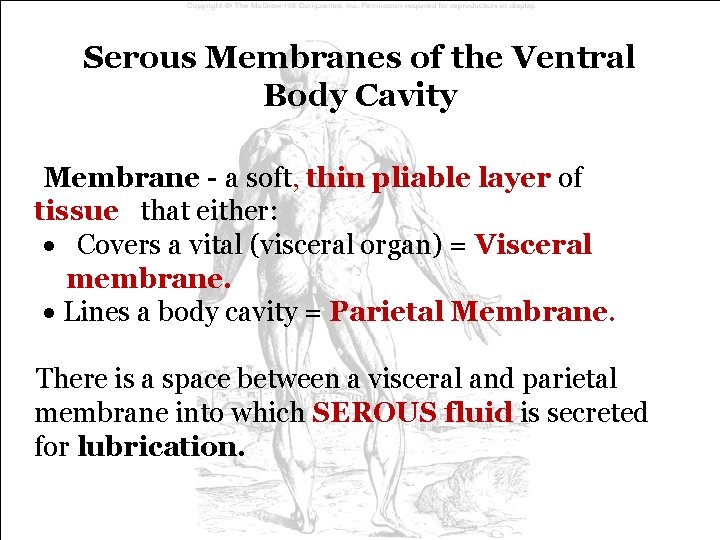
Serous Membranes of the Ventral Body Cavity Membrane - a soft, thin pliable layer of tissue that either: · Covers a vital (visceral organ) = Visceral membrane. · Lines a body cavity = Parietal Membrane. There is a space between a visceral and parietal membrane into which SEROUS fluid is secreted for lubrication.
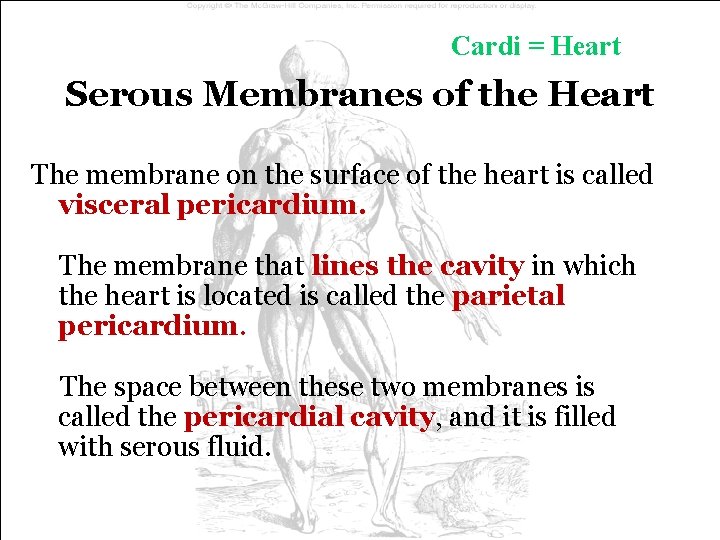
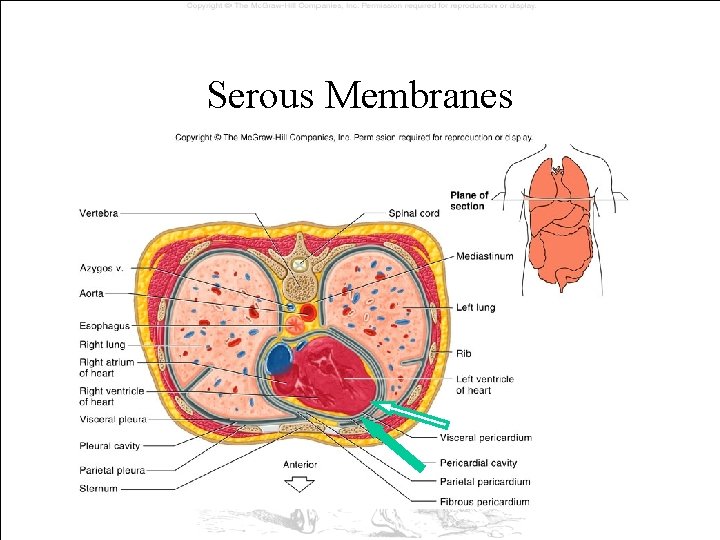
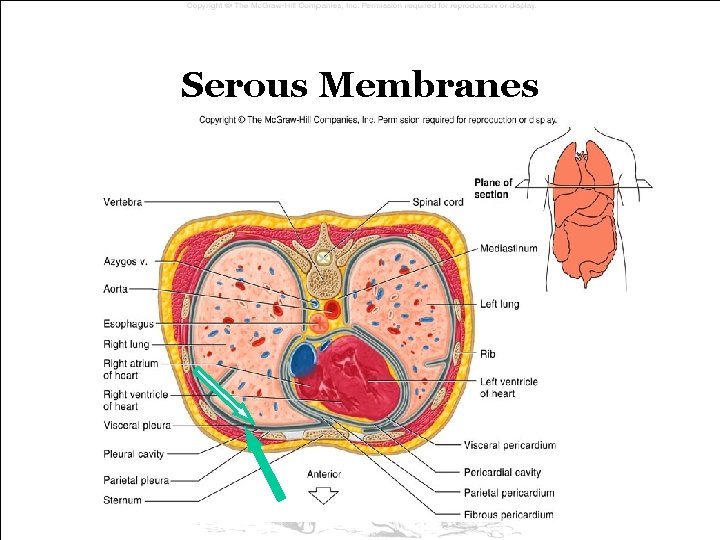
Cardi = Heart Serous Membranes of the Heart The membrane on the surface of the heart is called visceral pericardium. The membrane that lines the cavity in which the heart is located is called the parietal pericardium. The space between these two membranes is called the pericardial cavity, and it is filled with serous fluid.
Serous Membranes
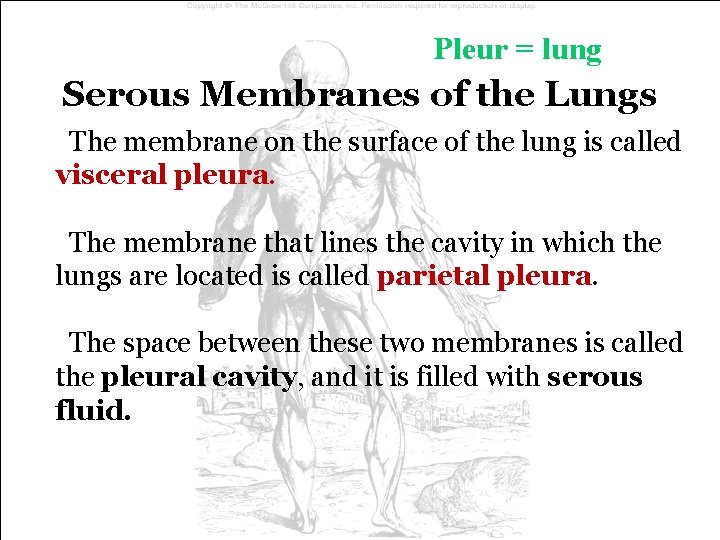
Pleur = lung Serous Membranes of the Lungs The membrane on the surface of the lung is called visceral pleura. The membrane that lines the cavity in which the lungs are located is called parietal pleura. The space between these two membranes is called the pleural cavity, and it is filled with serous fluid.
Serous Membranes
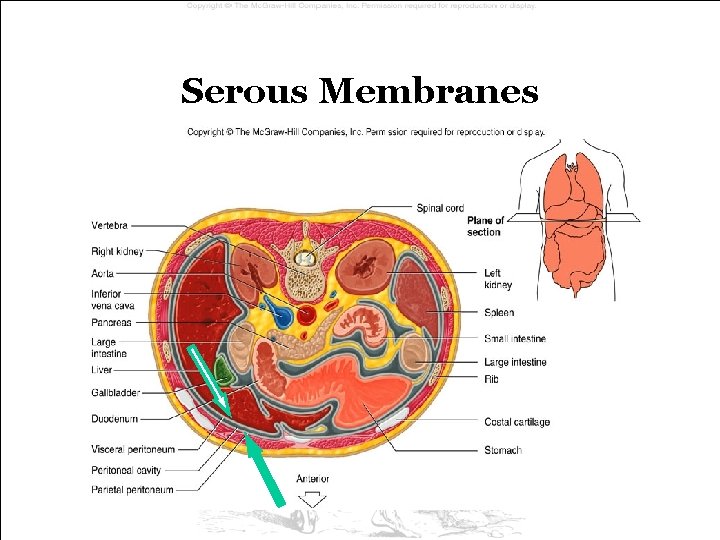
Serous Membranes of the Abdominal Organs: The membrane on the surface of the liver, stomach, etc. is called visceral peritoneum. The membrane that lines the abdominal cavity is called parietal peritoneum. The space between these two membranes is called the peritoneal cavity, and it is filled with serous fluid
Serous Membranes
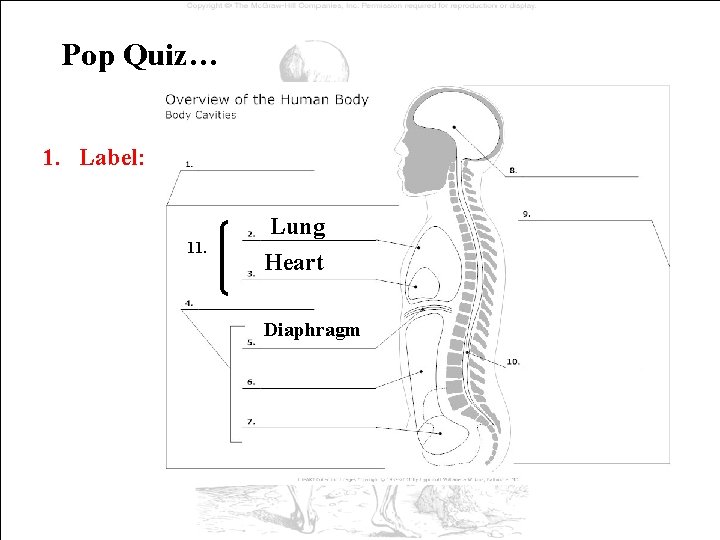
Pop Quiz… 1. Label: 11. Lung Heart Diaphragm
12. Draw a picture to show the axial and appendicular portions of the body. Give the correct terms: 13. Membrane that covers the heart 14. The study of the function of the body parts. 15. The membrane that lines the abdominal cavity.
Anatomical Terminology Definition - a language used to describe the relative position of body parts; needed for communication. • Anatomical position - standing erect, face forward, palms forward • It is helpful in as much as they allow medical staff to speak to each other and view images (X-ray or MRI) without having to continuously clarify meanings.
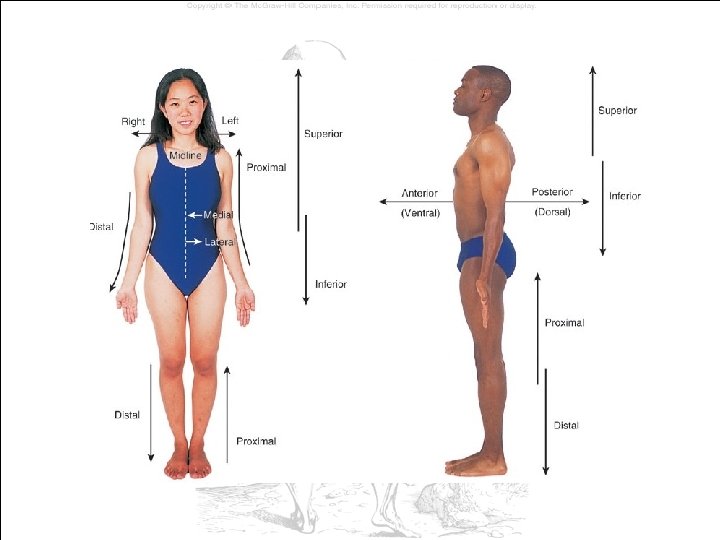
Terms Referring to Direction/Relative Position 1. Superior = above; Inferior = below; 2. Anterior = front; Posterior = back; 3. Medial = Center; Lateral = side; 4. Cephalad = head; Caudal = tail; 5. Ventral = front; Dorsal = back 6. Proximal = closer to trunk of body or other point of reference; (Elbow proximal to wrist) Distal = farther from trunk of the body or other point of reference (Fingers are distal to the wrist); 7. Superficial = surface; Deep = internal.
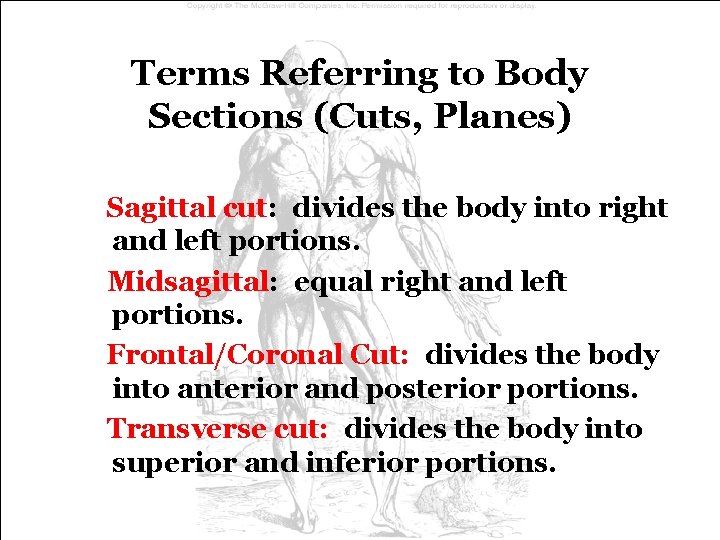
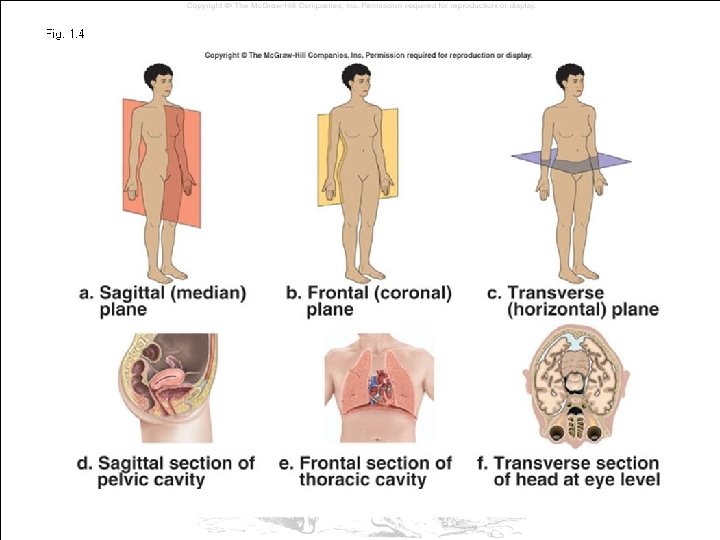
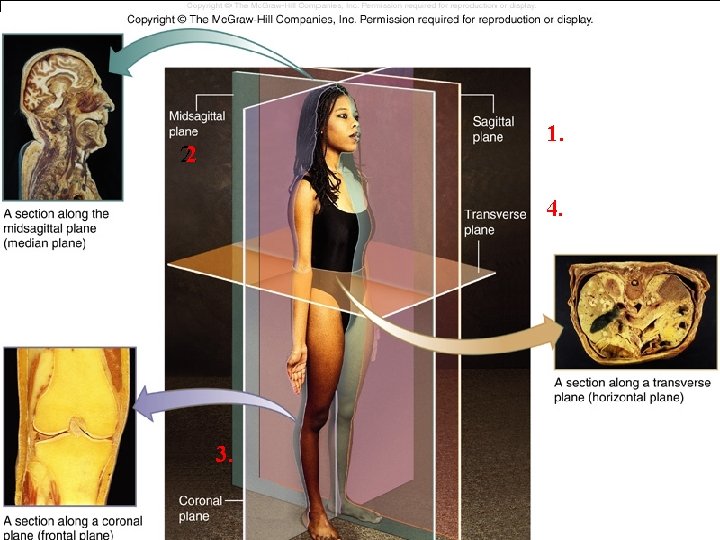
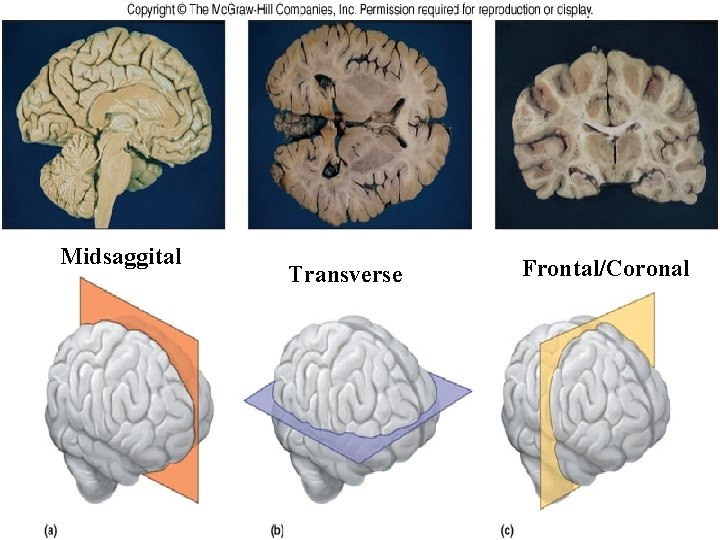
Terms Referring to Body Sections (Cuts, Planes) Sagittal cut: divides the body into right and left portions. Midsagittal: equal right and left portions. Frontal/Coronal Cut: divides the body into anterior and posterior portions. Transverse cut: divides the body into superior and inferior portions.
1. 2. 2 4. 3.
Midsaggital Transverse Frontal/Coronal
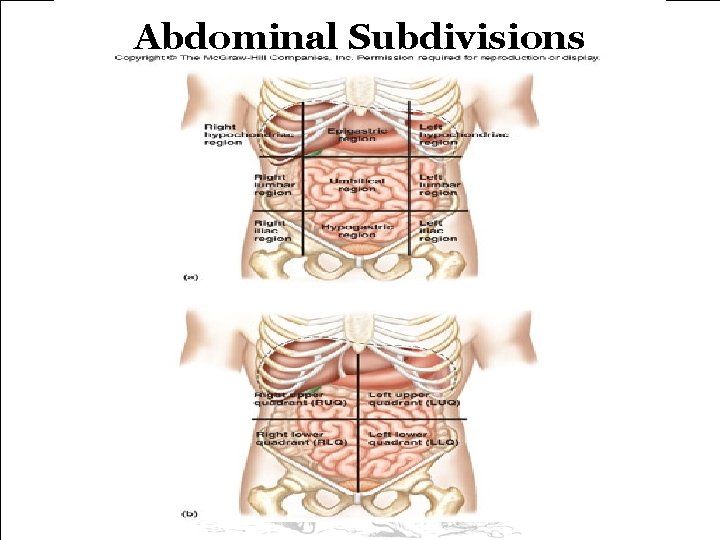
Abdominal Subdivisions
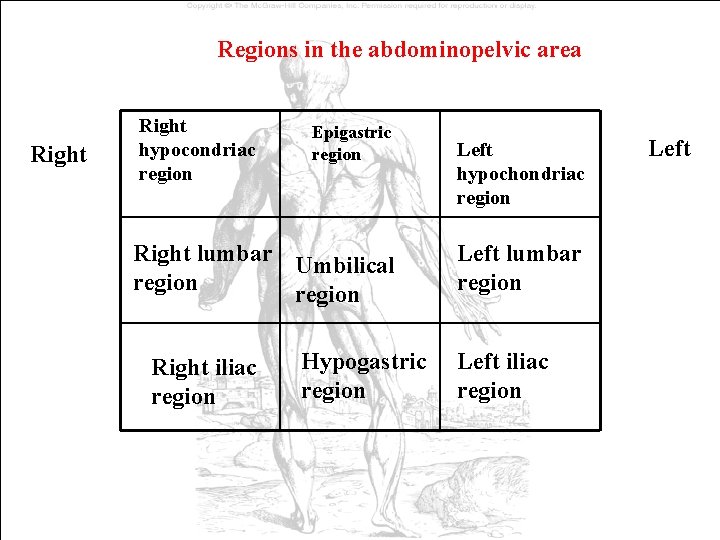
Regions in the abdominopelvic area Right hypocondriac region Epigastric region Right lumbar Umbilical region Right iliac region Hypogastric region Left hypochondriac region Left lumbar region Left iliac region Left
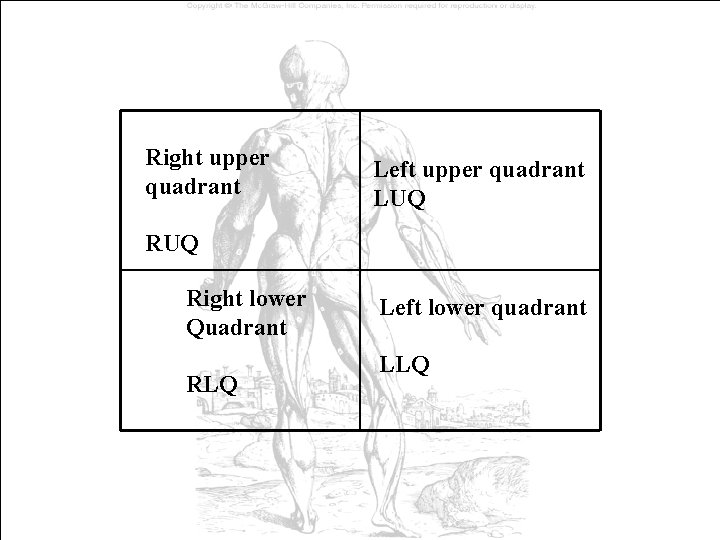
Right upper quadrant Left upper quadrant LUQ Right lower Quadrant RLQ Left lower quadrant LLQ
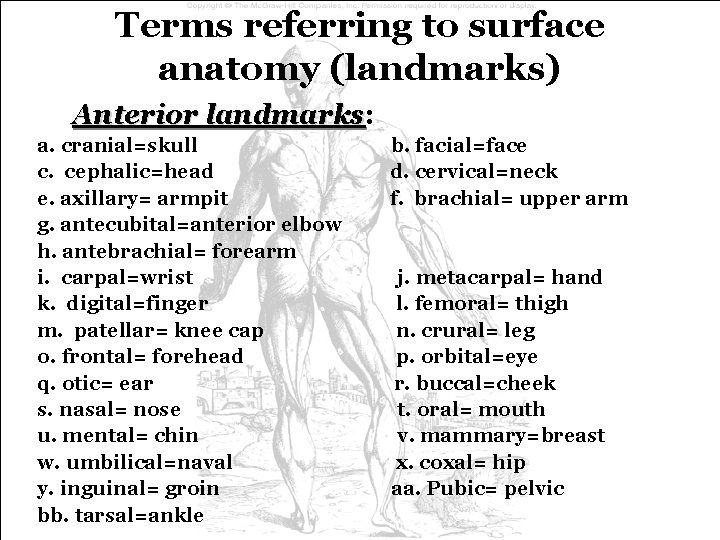
Terms referring to surface anatomy (landmarks) Anterior landmarks: landmarks a. cranial=skull c. cephalic=head e. axillary= armpit g. antecubital=anterior elbow h. antebrachial= forearm i. carpal=wrist k. digital=finger m. patellar= knee cap o. frontal= forehead q. otic= ear s. nasal= nose u. mental= chin w. umbilical=naval y. inguinal= groin bb. tarsal=ankle b. facial=face d. cervical=neck f. brachial= upper arm j. metacarpal= hand l. femoral= thigh n. crural= leg p. orbital=eye r. buccal=cheek t. oral= mouth v. mammary=breast x. coxal= hip aa. Pubic= pelvic
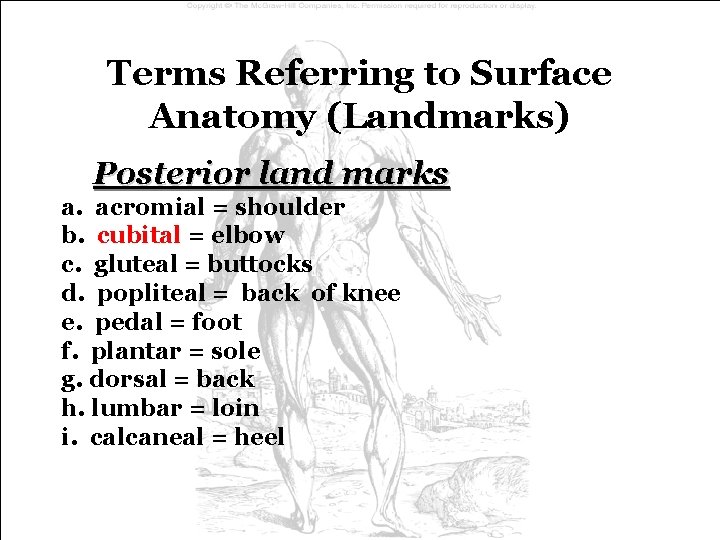
Terms Referring to Surface Anatomy (Landmarks) Posterior land marks a. acromial = shoulder b. cubital = elbow c. gluteal = buttocks d. popliteal = back of knee e. pedal = foot f. plantar = sole g. dorsal = back h. lumbar = loin i. calcaneal = heel
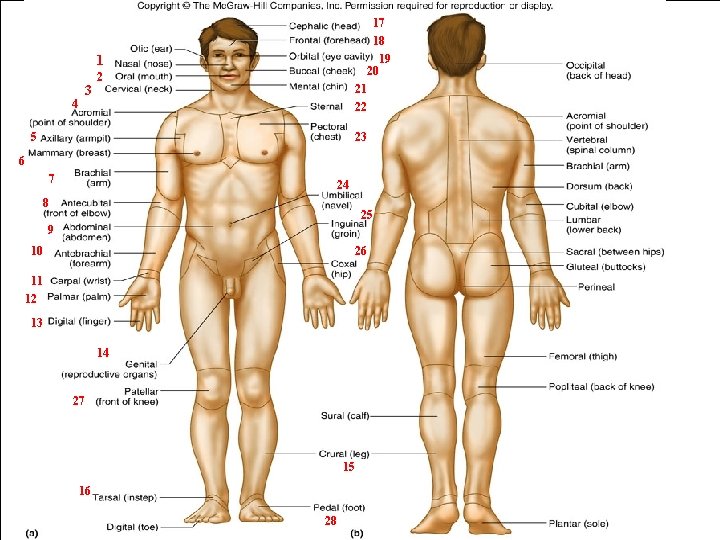
17 18 19 20 1 3 4 2 21 22 5 23 6 7 24 8 25 9 10 26 11 12 13 14 27 15 16 28
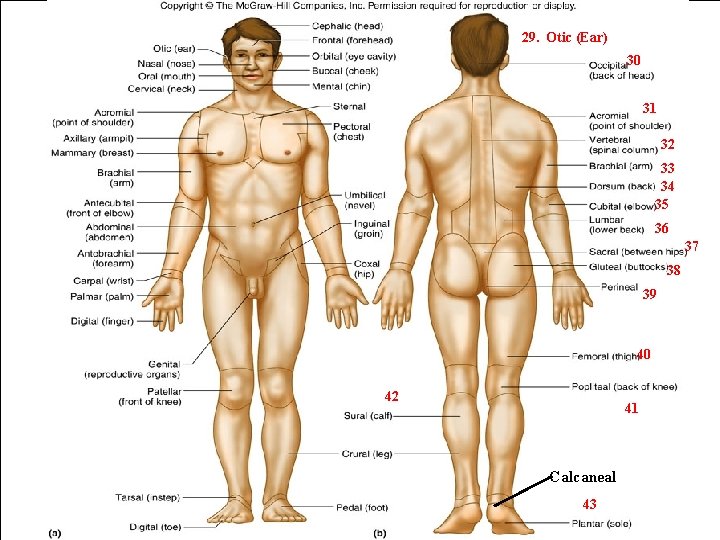
29. Otic (Ear) 30 31 32 33 34 35 36 37 38 39 40 42 41 Calcaneal 43