
Introduction to Human Anatomy and Physiology Chapter 1




- Slides: 37
Introduction to Human Anatomy and Physiology (Chapter 1) Notes for these slides can be printed.
In 2007, Kati Mori took part in the London Marathon – her fourth, and the hottest on record, with temperatures peaking at 75 F. Conscious of the repeated advice to maintain fluid intake, she took frequent drinks at the water stations along the route. By the 18 th mile, Kati felt bad but was determined to finish, Near the end, she needed help from other runners to stay upright; hours later she was in the hospital, suffering from severe diarrhea, headache, vomiting and increasing confusion, with her legs endlessly mimicking a running motion. “I thought I was still in the marathon, ” she says. Essential Question: What happened to Kati Mori at the London Marathon?
Anatomy – the structure of body parts (also called Morphology) Physiology – the function of the body parts, what they do and how they do it The structure determines the function.
Characteristics of Living Things 1. Movement - self initiated change in position, motion of internal parts 2. Responsiveness - Ability to sense changes and react to them 3. Growth - increase in body size 4. Reproduction - Parents produce offspring / passing DNA to new individuals 5. Respiration - Obtaining oxygen (O 2), using it to release energy from food substances, and getting rid of wastes
6. Digestion - Chemically changing (breaking down) food substances, and getting rid of wastes 7. Absorption - Passage of Digested products (food substances) through membranes and into body fluids 8. Circulation - Movement of substances throughout the body 9. Assimilation - Changing absorbed substances into chemically different substances 10. Excretion - Removal of wastes
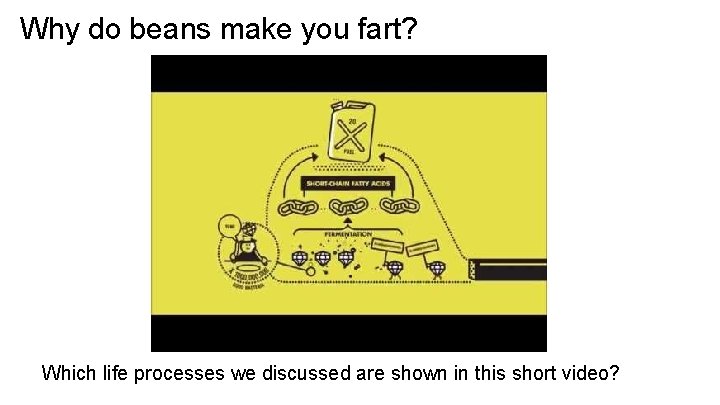
Why do beans make you fart? Which life processes we discussed are shown in this short video?
Review the list of life processes and consider Kati Mori’s symptoms. Choose three of the processes that you think might be related.
Metabolism = all the chemical changes that occur in the body to maintain life. Ultimately all of these processes require ENERGY How do we obtain energy?
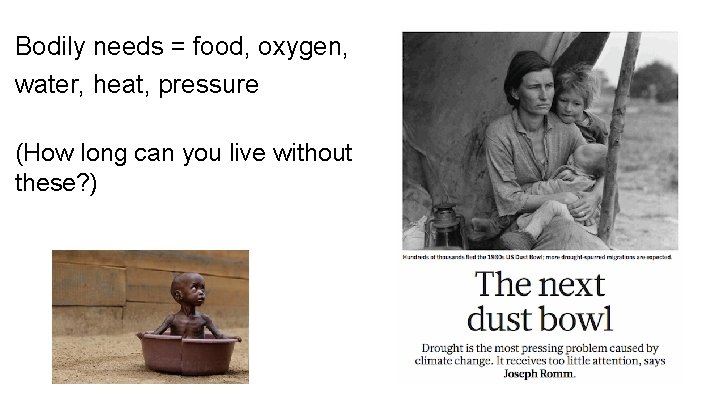
Bodily needs = food, oxygen, water, heat, pressure (How long can you live without these? )
Homeostasis = tendency of the body to maintain a stable, balanced, internal environment. “Sameness” Energy is required to keep the body in working order. Where does this energy come from?
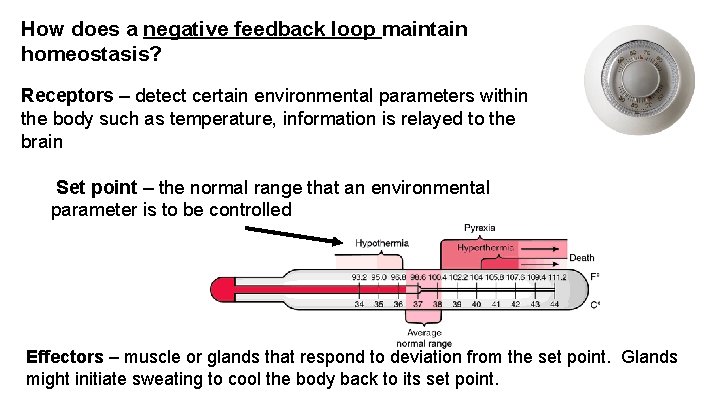
How does a negative feedback loop maintain homeostasis? Receptors – detect certain environmental parameters within the body such as temperature, information is relayed to the brain Set point – the normal range that an environmental parameter is to be controlled Effectors – muscle or glands that respond to deviation from the set point. Glands might initiate sweating to cool the body back to its set point.
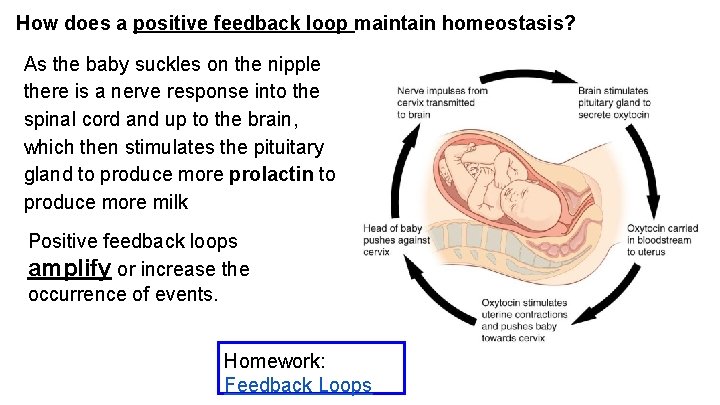
How does a positive feedback loop maintain homeostasis? As the baby suckles on the nipple there is a nerve response into the spinal cord and up to the brain, which then stimulates the pituitary gland to produce more prolactin to produce more milk Positive feedback loops amplify or increase the occurrence of events. Homework: Feedback Loops
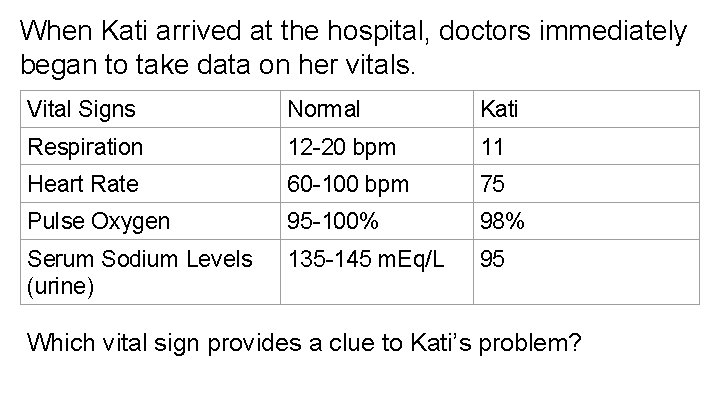
When Kati arrived at the hospital, doctors immediately began to take data on her vitals. Vital Signs Normal Kati Respiration 12 -20 bpm 11 Heart Rate 60 -100 bpm 75 Pulse Oxygen 95 -100% 98% Serum Sodium Levels (urine) 135 -145 m. Eq/L 95 Which vital sign provides a clue to Kati’s problem?
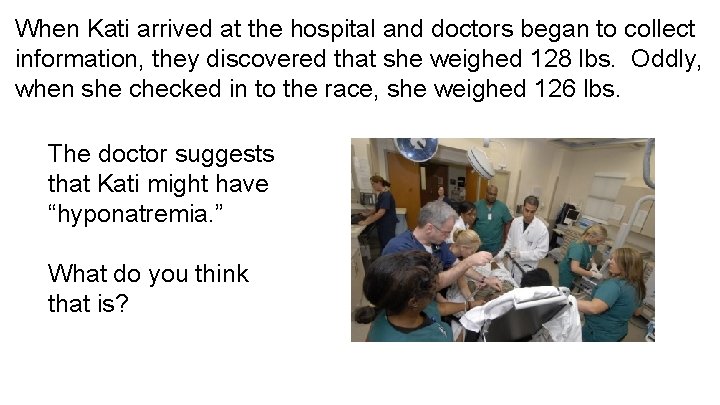
When Kati arrived at the hospital and doctors began to collect information, they discovered that she weighed 128 lbs. Oddly, when she checked in to the race, she weighed 126 lbs. The doctor suggests that Kati might have “hyponatremia. ” What do you think that is?
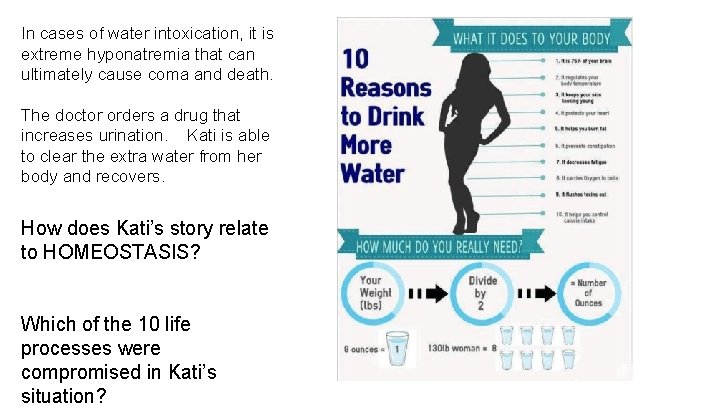
In cases of water intoxication, it is extreme hyponatremia that can ultimately cause coma and death. The doctor orders a drug that increases urination. Kati is able to clear the extra water from her body and recovers. How does Kati’s story relate to HOMEOSTASIS? Which of the 10 life processes were compromised in Kati’s situation?
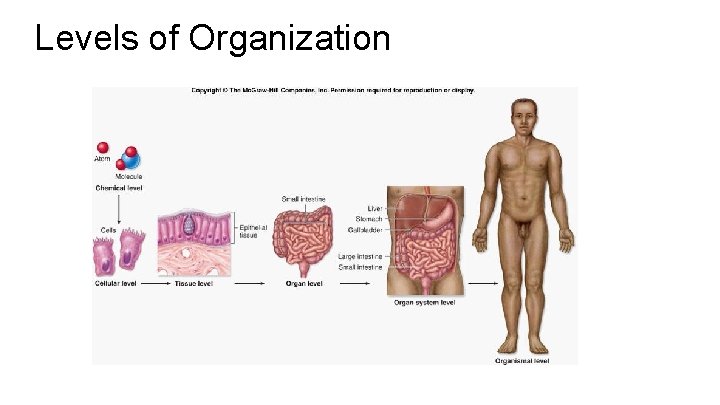
Levels of Organization
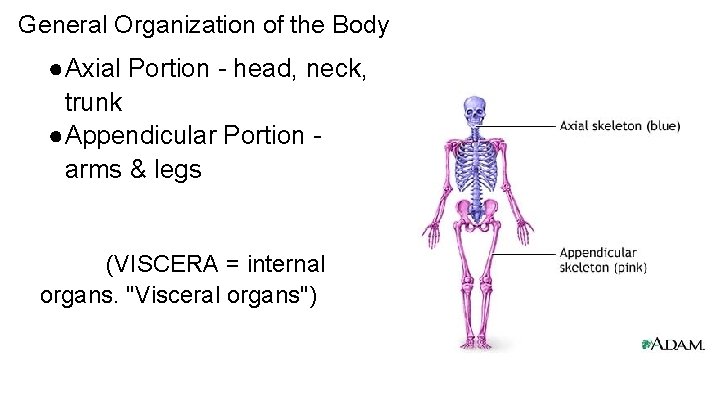
General Organization of the Body ●Axial Portion - head, neck, trunk ●Appendicular Portion arms & legs (VISCERA = internal organs. "Visceral organs")
EVISCERATE Popular in horror movies and games Photo Source: https: //www. flickr. com/photos/pietroizzo/7478162336/in/photostream/
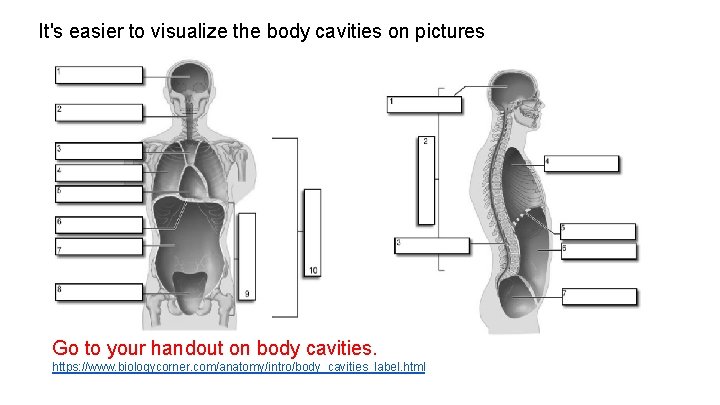
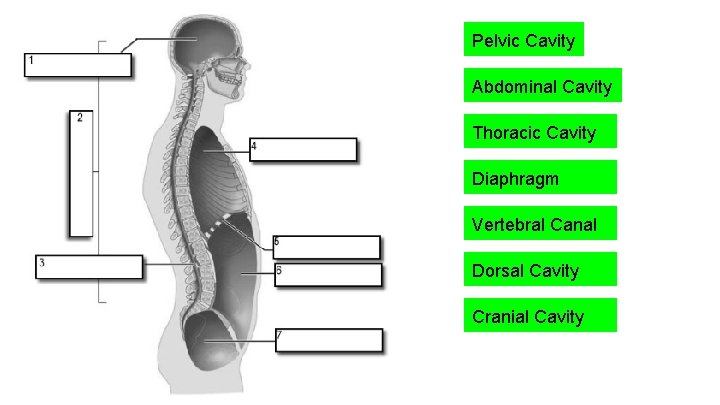
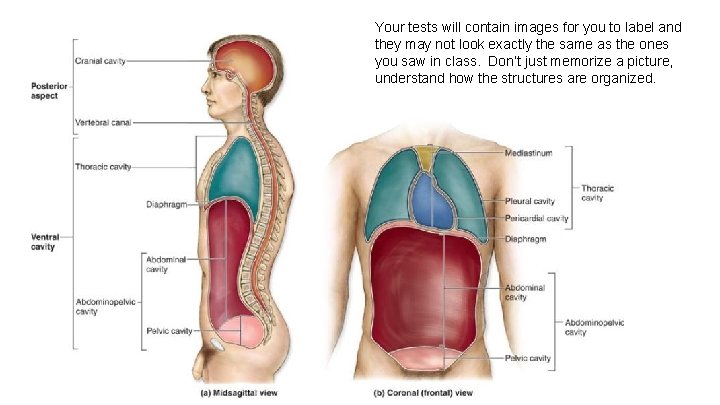
Body Cavities Dorsal = back side Ventral = front side Thoracic = chest (heart, trachea, lungs. . ) Abdomen = stomach area (spleen, intestines) Pelvic = lower abdomen (bladder, reproductive organs) DIAPHRAGM: Separates the thoracic and pelvic region
It's easier to visualize the body cavities on pictures Go to your handout on body cavities. https: //www. biologycorner. com/anatomy/intro/body_cavities_label. html
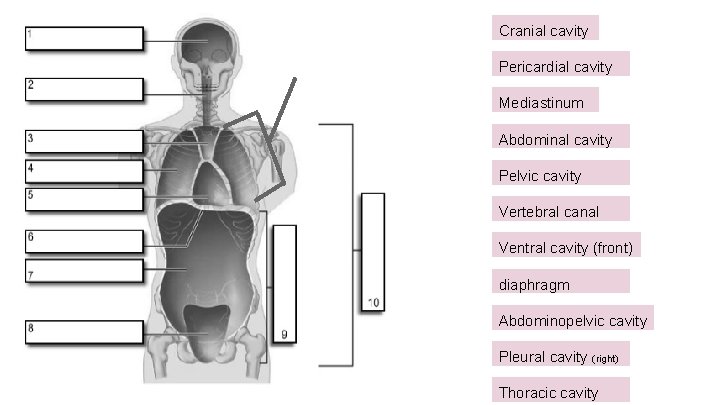
Cranial cavity Pericardial cavity Mediastinum Abdominal cavity Pelvic cavity Vertebral canal Ventral cavity (front) diaphragm Abdominopelvic cavity Pleural cavity (right) Thoracic cavity
Pelvic Cavity Abdominal Cavity Thoracic Cavity Diaphragm Vertebral Canal Dorsal Cavity Cranial Cavity
Your tests will contain images for you to label and they may not look exactly the same as the ones you saw in class. Don’t just memorize a picture, understand how the structures are organized.
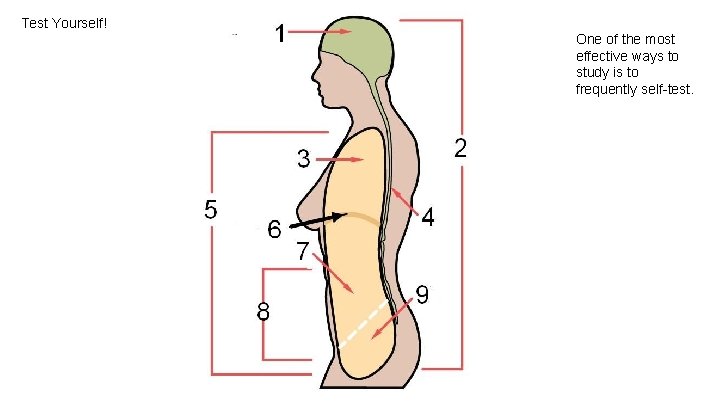
Test Yourself! One of the most effective ways to study is to frequently self-test.
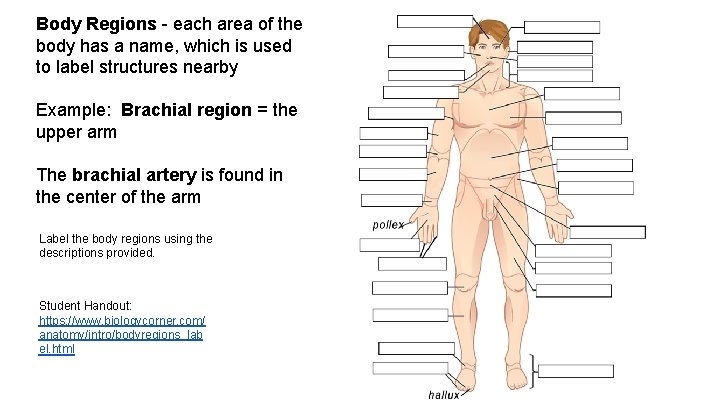
Body Regions - each area of the body has a name, which is used to label structures nearby Example: Brachial region = the upper arm The brachial artery is found in the center of the arm Label the body regions using the descriptions provided. Student Handout: https: //www. biologycorner. com/ anatomy/intro/bodyregions_lab el. html
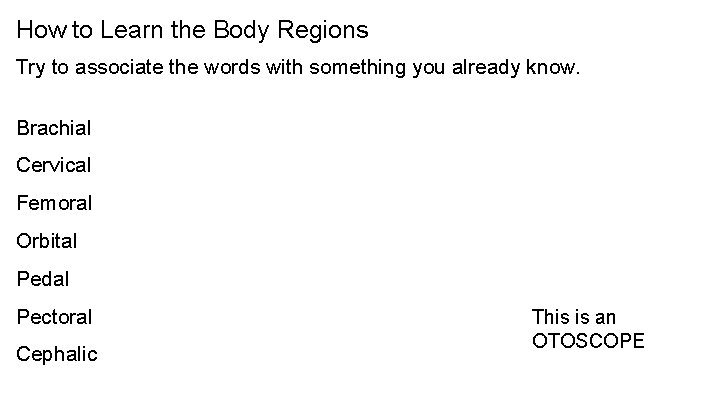
How to Learn the Body Regions Try to associate the words with something you already know. Brachial Cervical Femoral Orbital Pedal Pectoral Cephalic This is an OTOSCOPE
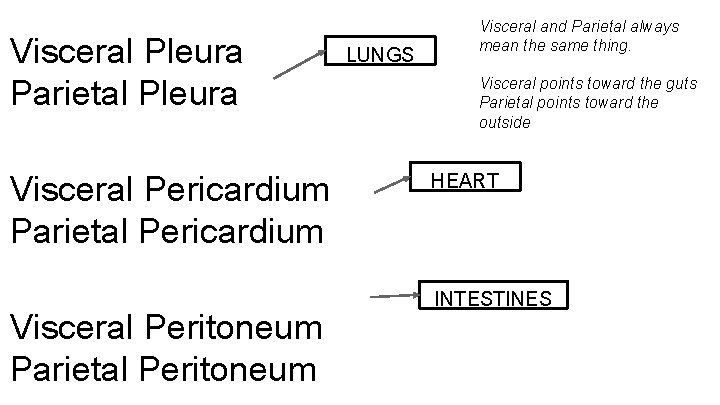
MEMBRANES Serous Membrane - two layers, covers organs Outer layer = parietal Inner layer = visceral (lines the organs) Serous fluid – lubricating fluid
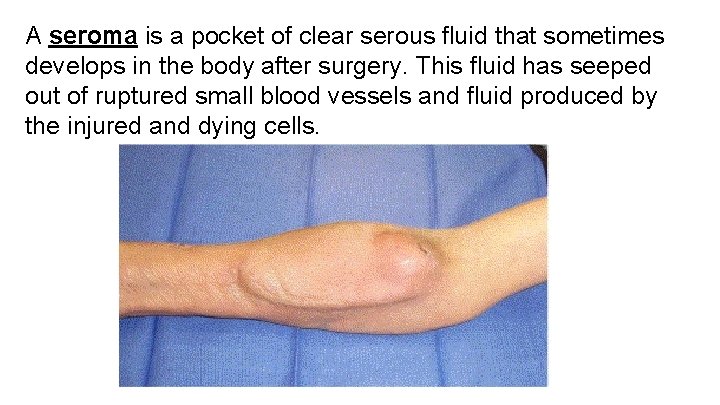
A seroma is a pocket of clear serous fluid that sometimes develops in the body after surgery. This fluid has seeped out of ruptured small blood vessels and fluid produced by the injured and dying cells.
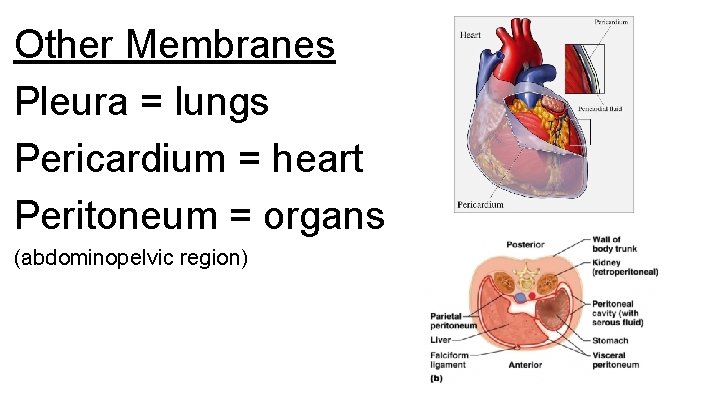
Other Membranes Pleura = lungs Pericardium = heart Peritoneum = organs (abdominopelvic region)
Visceral Pleura Parietal Pleura Visceral Pericardium Parietal Pericardium Visceral Peritoneum Parietal Peritoneum LUNGS Visceral and Parietal always mean the same thing. Visceral points toward the guts Parietal points toward the outside HEART INTESTINES
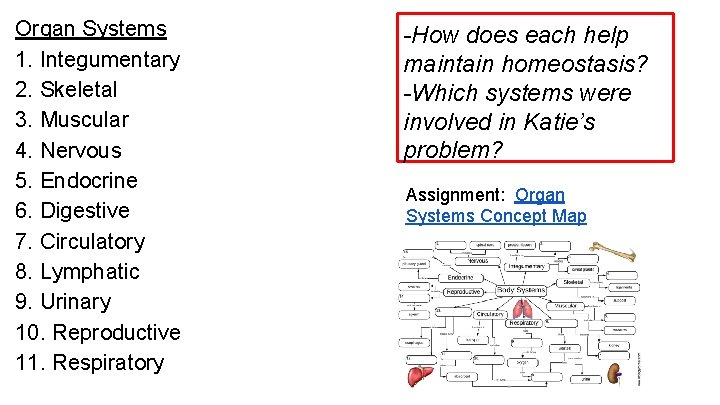
Organ Systems 1. Integumentary 2. Skeletal 3. Muscular 4. Nervous 5. Endocrine 6. Digestive 7. Circulatory 8. Lymphatic 9. Urinary 10. Reproductive 11. Respiratory -How does each help maintain homeostasis? -Which systems were involved in Katie’s problem? Assignment: Organ Systems Concept Map
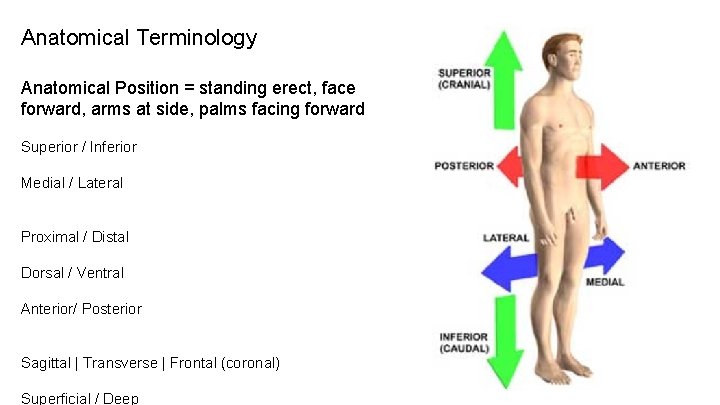
Anatomical Terminology Anatomical Position = standing erect, face forward, arms at side, palms facing forward Superior / Inferior Medial / Lateral Proximal / Distal Dorsal / Ventral Anterior/ Posterior Sagittal | Transverse | Frontal (coronal) Superficial / Deep
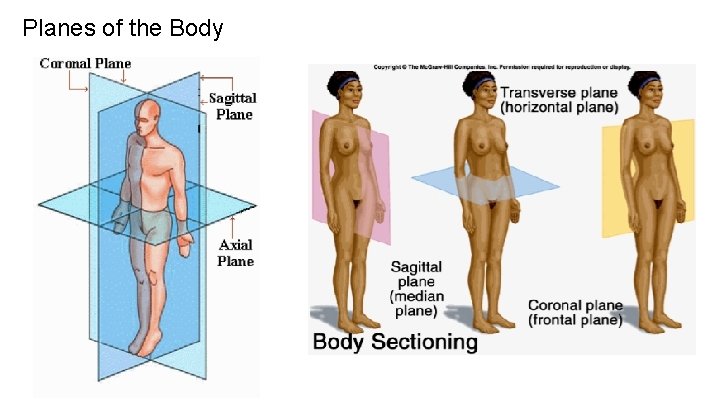
Planes of the Body
A really sharp pane of glass fell on this unfortunate character. From the movie “Thirteen Ghosts” - What kind of cut is this?
Unfortunate passengers on “Ghost Ship. ”
Unfortunate cow. What kind of cut is this?
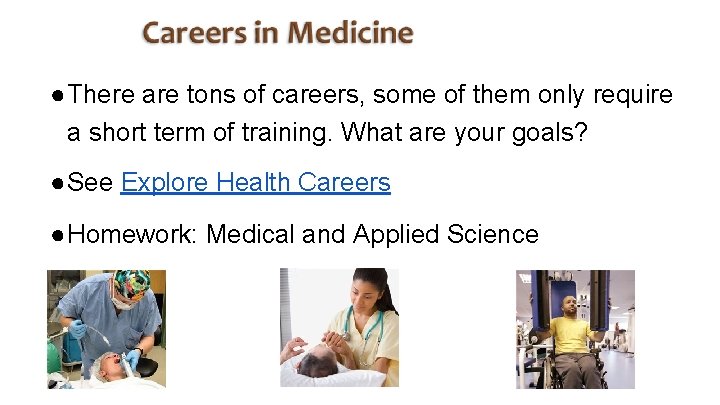
●There are tons of careers, some of them only require a short term of training. What are your goals? ●See Explore Health Careers ●Homework: Medical and Applied Science