
Introduction to History and Physical Exam Robert Woodward
Introduction to History and Physical Exam Robert Woodward, MD MBA Program Coodinator Clinical Practice Preceptorship
Goal and Objectives • Goal: – To introduce the student to the history and physical exam • Objectives: – The student shall be able to recognize components of the routine history and physical exam – The student shall feel comfortable observing a physical exam in the preceptor’s office
History • Inpatient – – – Chief Complaint History of Present Illness Past Medical History Social History Review of Systems • Outpatient (SOAP note) – – Subjective Objective Assessment Plan
Components • Vital Signs – BP, RR, Temp, Pulse – ? Pain Scale • General Appearance – Age, nutrition, clean, etc • HEENT and Neck • Pulmonary and Thorax • • • Cardiovascular Abdominal Peripheral Vascular Musculoskeletal Neurological Genital/Rectal – Breasts and Axillae
Vital Signs • • Pulse- Take radial pulse and count beats for 1 min Respiratory Rate- Count Respirations for 1 min Temperature- In adults, use oral thermometer! Blood Pressure
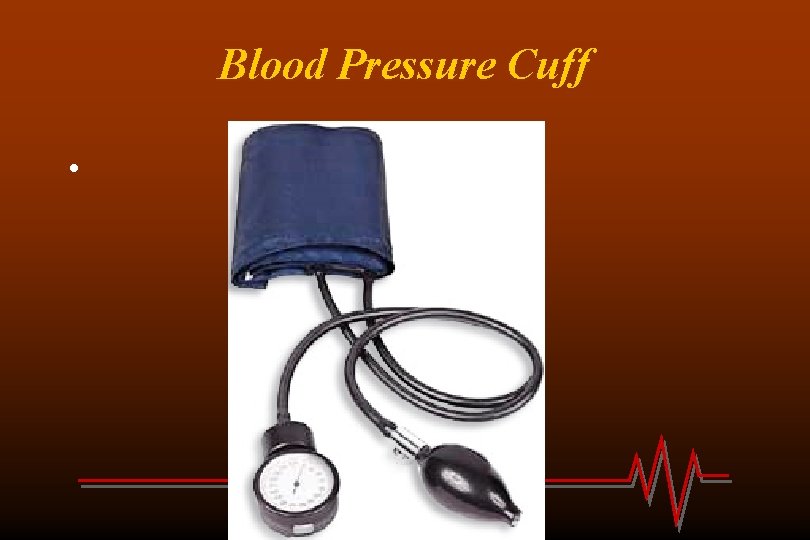
Blood Pressure Cuff •
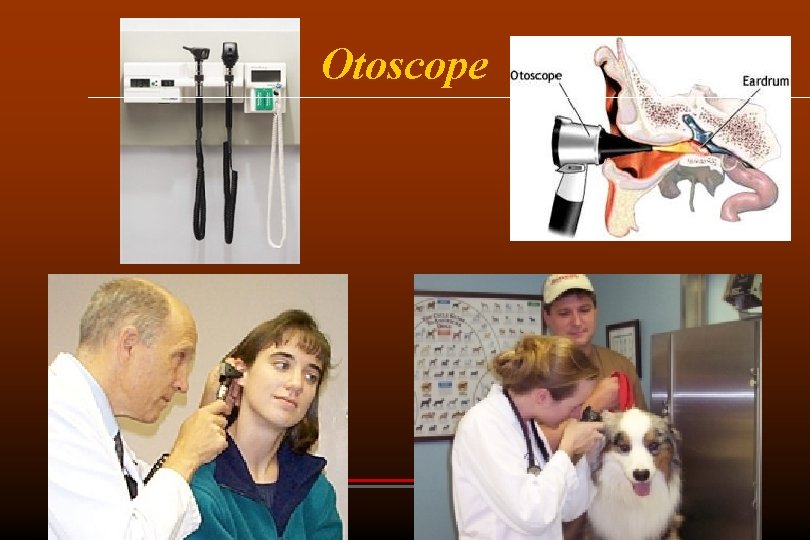
Otoscope

Normal Eardrum
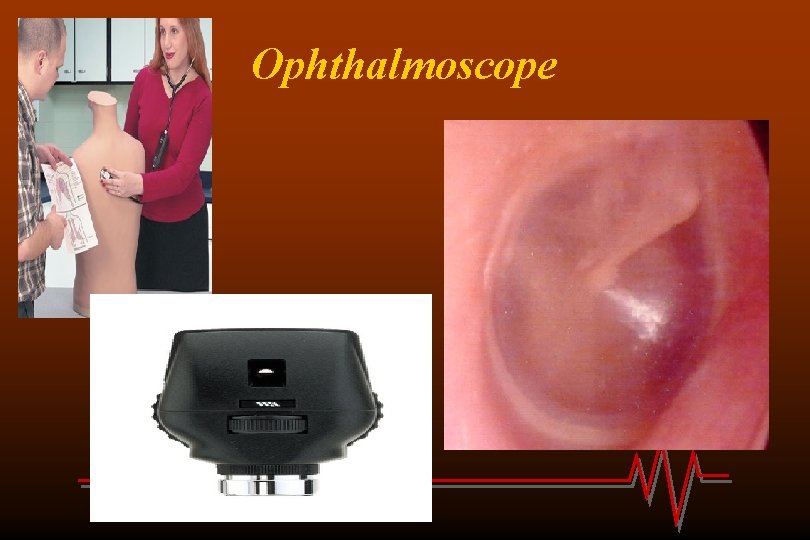
Ophthalmoscope
HEENT and Neck • Head –inspect and palpate • Ears- external and internal • Eyes- inspect, check fundi, pupil reflexes, peripheral vision • Nose- inspect and palpate • Throat- inspect with light and tongue depressor – (brush your teeth) • Neck- feel for lymph nodes and thyroid
Pulmonary • • Lungs- 3 lobes on right, 2 on left Inspection (to look) for deformities Palpation (to touch) for masses, vibration Percussion (to tap on) – Cut your finger nails • Auscultation (to listen to a body part with a stethoscope) both front and back
Auscultation • Lung – Alternate both sides and go down the back and do lower lateral areas – Test for Bronchophony- “ 99”-loud and clear • Normal is muffled and indistinct through chest wall – Test for Ergophony “EE”- sounds like “AY” • Normal is a muffled long “E” sound – Whispered Pectoriloquy- whispers heard clearly • Normal is faint and indistinct

Auscultation
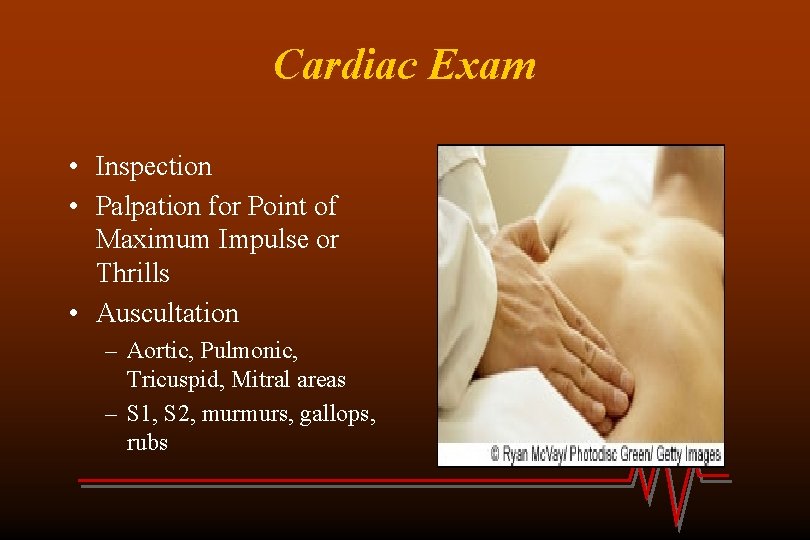
Cardiac Exam • Inspection • Palpation for Point of Maximum Impulse or Thrills • Auscultation – Aortic, Pulmonic, Tricuspid, Mitral areas – S 1, S 2, murmurs, gallops, rubs
Abdominal Exam • • • Inspection Auscultation**** Percussion Light and Deep Palpation Liver Span, Spleen Special tests – Eg. for appendicitis
Musculoskeletal Exam • • Inspection Tone Palpation Range of Motion – Passive and Active • Strength
Neurological Exam • • Mental Status (Mini Mental Status Exam) Cranial Nerves I-XII Muscle Tone Strength Reflexes- Bicep, Tricep, Brachioradialis, Knee, Ankle Sensation- Pain, Cold, Soft Touch, Vibration Higher Cerebral Function Cerebellar Function- Coordination
Contact Physicians • Schedule visit in: – October – November/December – January/February – March/April • Get White Jacket – Consider getting stethescope
- Slides: 18